
Key Features of the Judicial Branch PURPOSE Interpreting
Key Features of the Judicial Branch • PURPOSE: Interpreting and applying national law; ensuring laws are Constitutional • Supreme Court is the only one specifically mentioned in Constitution
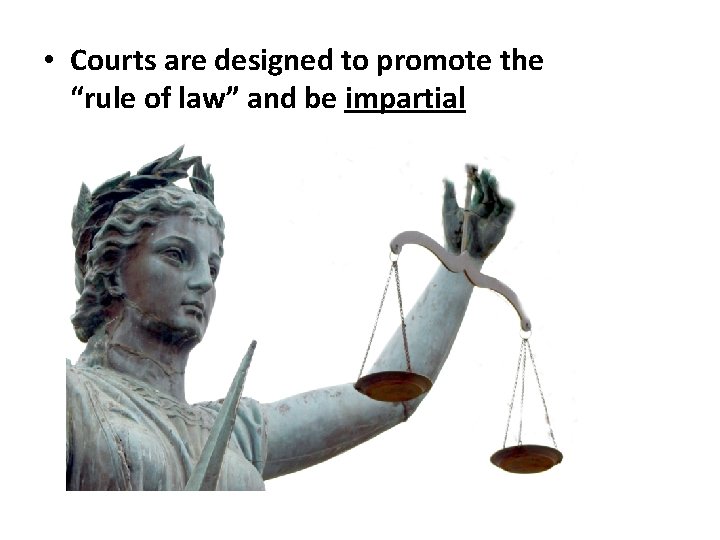
• Courts are designed to promote the “rule of law” and be impartial
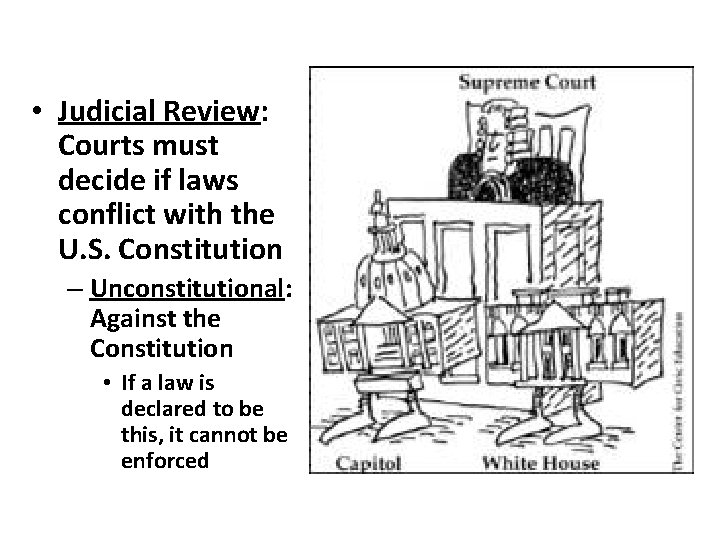
• Judicial Review: Courts must decide if laws conflict with the U. S. Constitution – Unconstitutional: Against the Constitution • If a law is declared to be this, it cannot be enforced
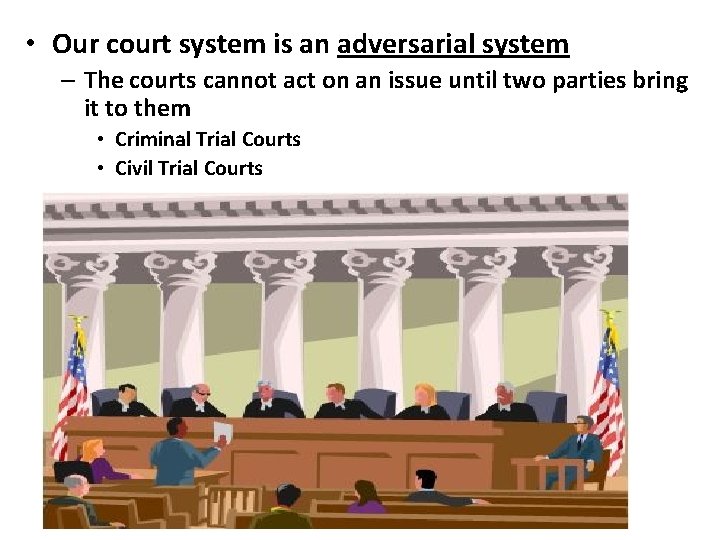
• Our court system is an adversarial system – The courts cannot act on an issue until two parties bring it to them • Criminal Trial Courts • Civil Trial Courts
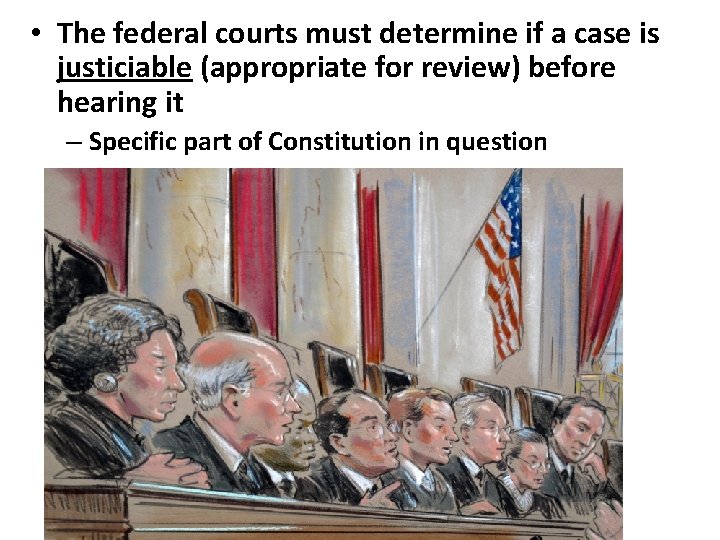
• The federal courts must determine if a case is justiciable (appropriate for review) before hearing it – Specific part of Constitution in question
– They cannot rule on political matters, only legal questions – Expected parties involved in a federal case need standing before they can bring a case • Personal interest being threatened
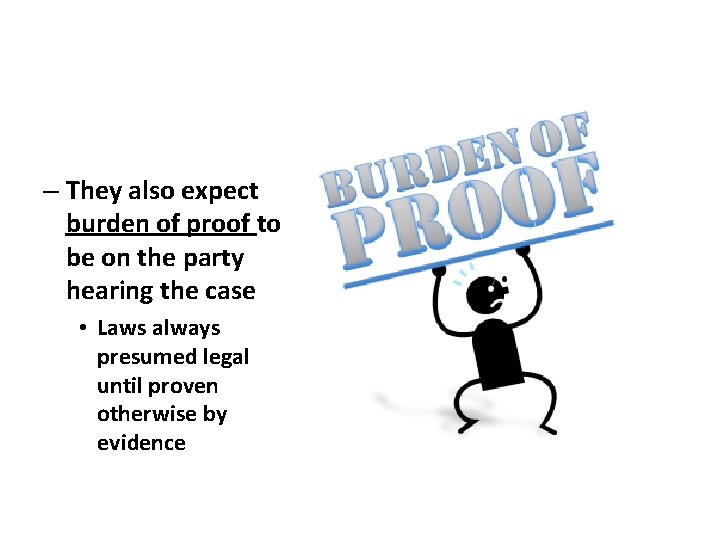
– They also expect burden of proof to be on the party hearing the case • Laws always presumed legal until proven otherwise by evidence
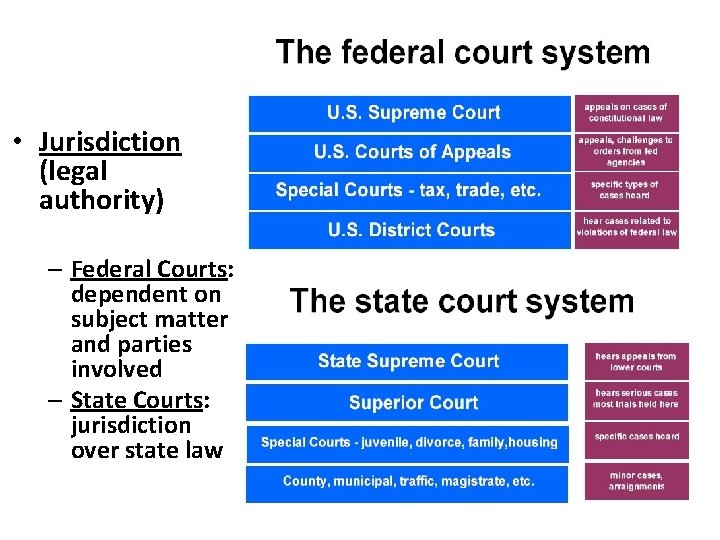
• Jurisdiction (legal authority) – Federal Courts: dependent on subject matter and parties involved – State Courts: jurisdiction over state law
• Limited Jurisdiction (Fed. Govt. ) mostly includes: – Subject matter tied to U. S. Constitution – Subject matter tied to federal laws – Subject matter tied to treaty of federal govt. -- Subject matter involving maritime law
– Party is the federal government – Party is an ambassador, foreign minister, or consul – Parties are different state governments – Parties are citizens from different states – Parties are a foreign government vs. a state – Parties are foreign citizen vs. state resident
- Slides: 10