
KEY FEATURES OF A SENSIBLE DIET FOR ACHIEVING
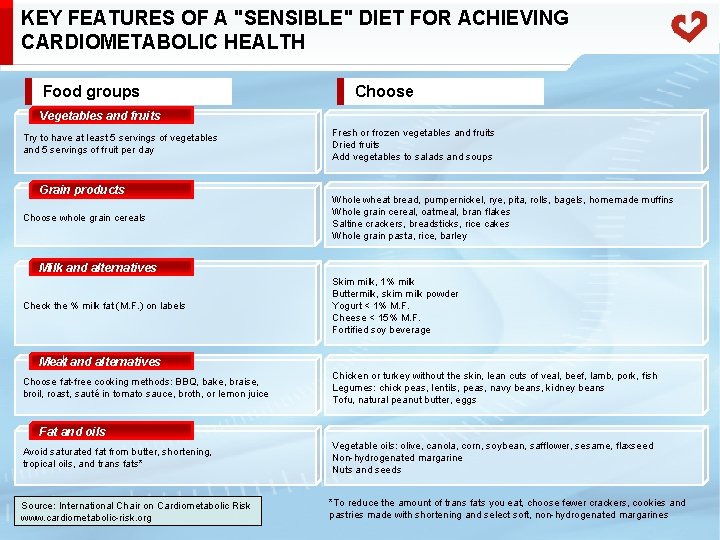
KEY FEATURES OF A "SENSIBLE" DIET FOR ACHIEVING CARDIOMETABOLIC HEALTH Food groups Choose Vegetables and fruits Try to have at least 5 servings of vegetables and 5 servings of fruit per day Grain products Choose whole grain cereals Fresh or frozen vegetables and fruits Dried fruits Add vegetables to salads and soups Whole wheat bread, pumpernickel, rye, pita, rolls, bagels, homemade muffins Whole grain cereal, oatmeal, bran flakes Saltine crackers, breadsticks, rice cakes Whole grain pasta, rice, barley Milk and alternatives Check the % milk fat (M. F. ) on labels Skim milk, 1% milk Buttermilk, skim milk powder Yogurt < 1% M. F. Cheese < 15% M. F. Fortified soy beverage Meat and alternatives Choose fat-free cooking methods: BBQ, bake, braise, broil, roast, sauté in tomato sauce, broth, or lemon juice Chicken or turkey without the skin, lean cuts of veal, beef, lamb, pork, fish Legumes: chick peas, lentils, peas, navy beans, kidney beans Tofu, natural peanut butter, eggs Fat and oils Avoid saturated fat from butter, shortening, tropical oils, and trans fats* Vegetable oils: olive, canola, corn, soybean, safflower, sesame, flaxseed Non-hydrogenated margarine Nuts and seeds Source: International Chair on Cardiometabolic Risk www. cardiometabolic-risk. org *To reduce the amount of trans fats you eat, choose fewer crackers, cookies and pastries made with shortening and select soft, non-hydrogenated margarines
- Slides: 1