
Key elements of understanding Free and Open Source




- Slides: 49
Key elements of understanding Free and Open Source Software (FOSS) Prepared for the Senior Executive Team at Wits University Prof Derek W. Keats Deputy Vice Chancellor (Knowledge & Information Management) The University of the Witwatersrand, Johannesburg http: //kim. wits. ac. za derek. keats@wits. ac. za Dudes, just say FOSS
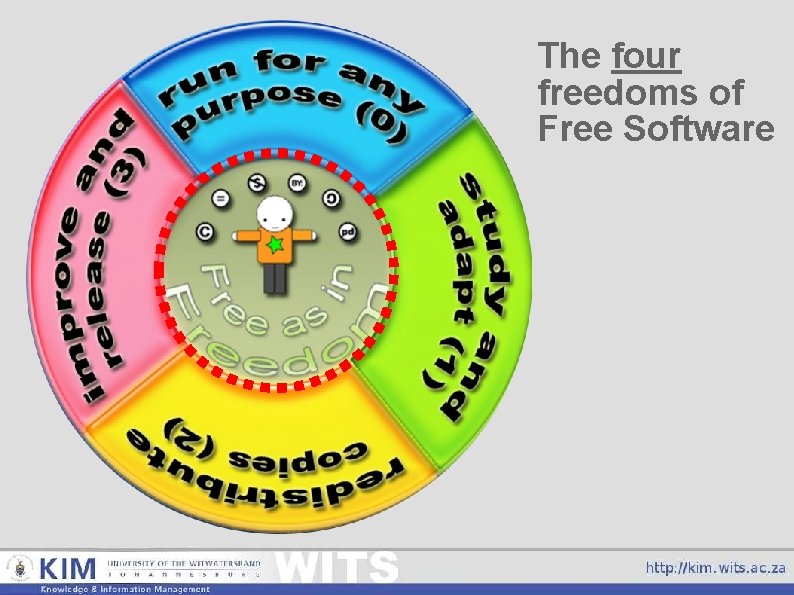
The four freedoms of Free Software
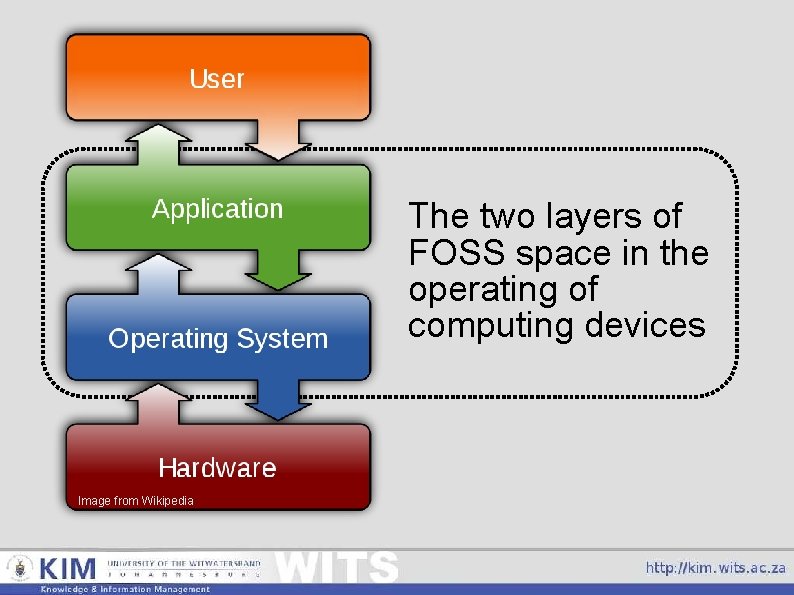
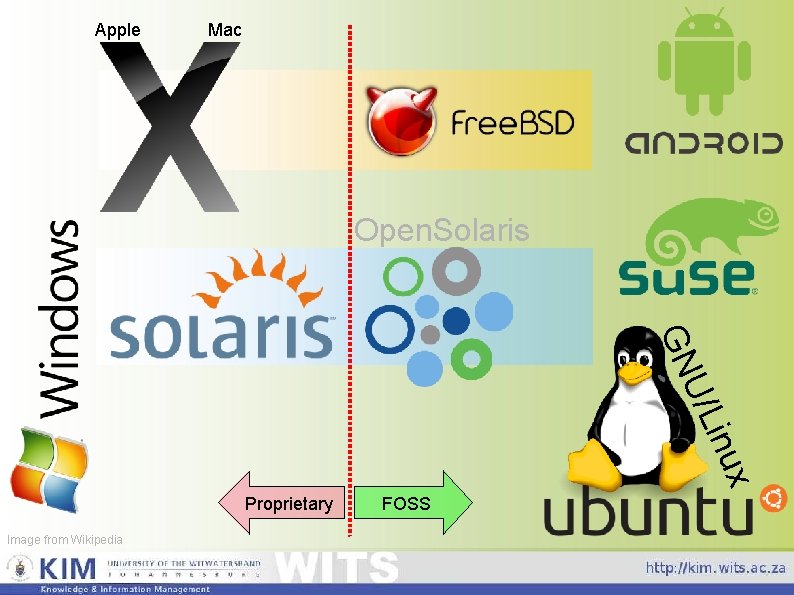
The two layers of FOSS space in the operating of computing devices Image from Wikipedia
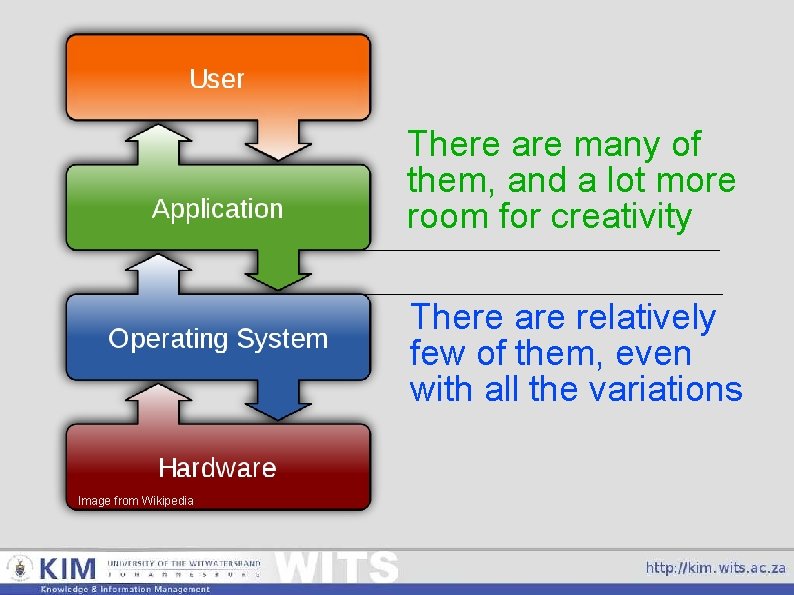
There are many of them, and a lot more room for creativity There are relatively few of them, even with all the variations Image from Wikipedia
Apple Mac Open. Solaris inu U/L GN x Proprietary Image from Wikipedia FOSS
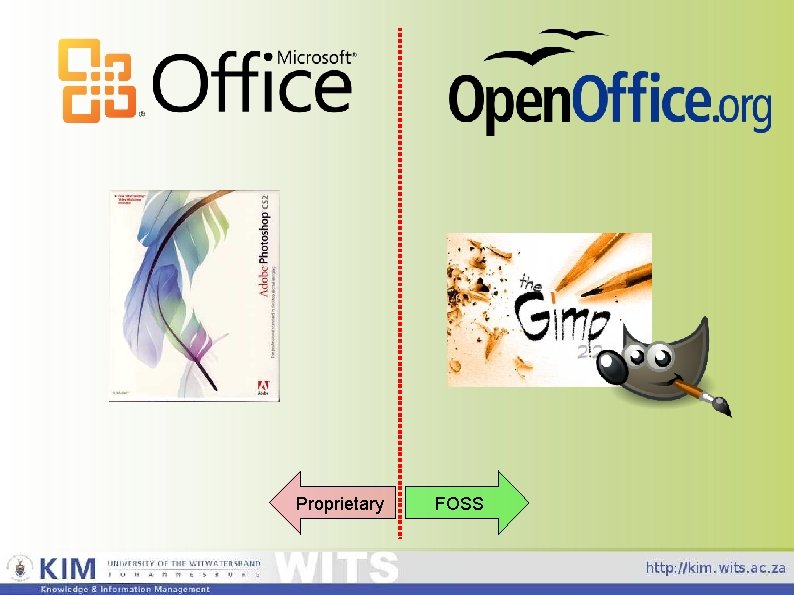
Proprietary FOSS
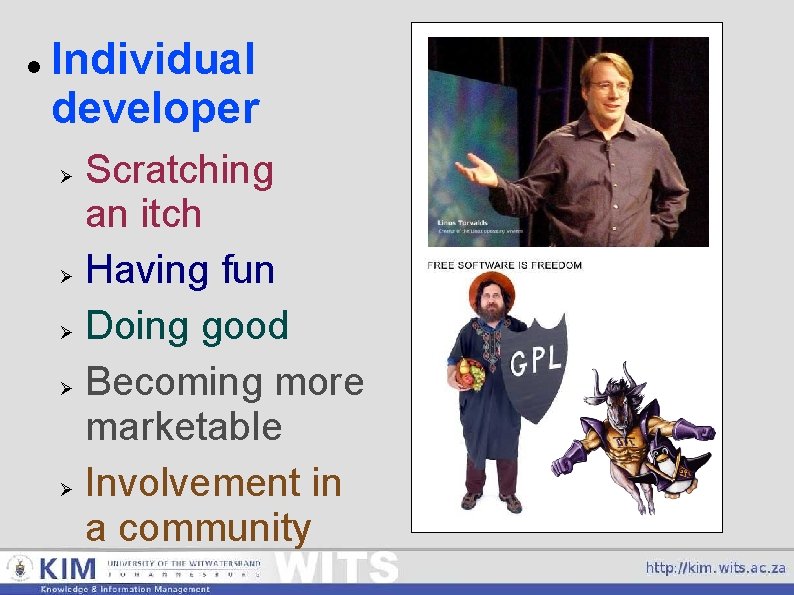
Individual developer Scratching an itch Having fun Doing good Becoming more marketable Involvement in a community
Hardware makers
Businesses based on services
Businesses built on a FOSS stack
User organizations (communities) Rhodes The Open University Tufts
Major foundation & private sector players initiative Foundation
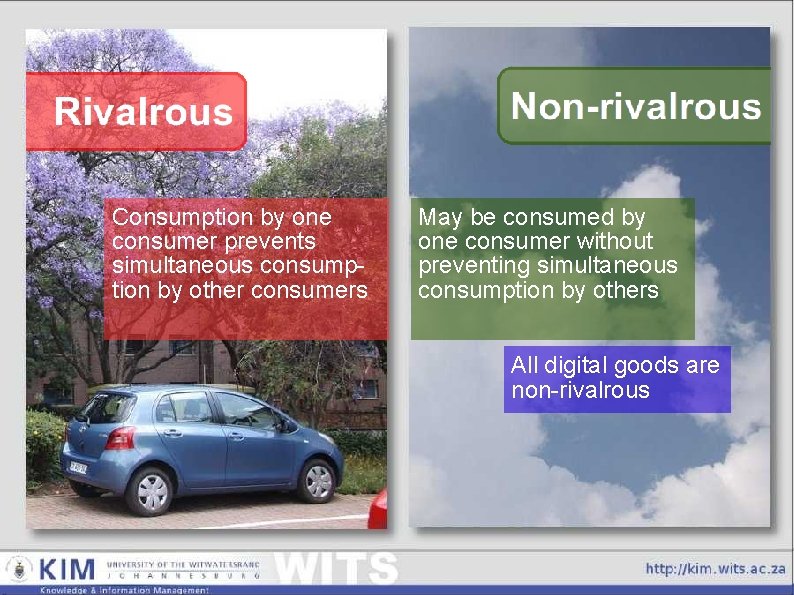
Consumption by one consumer prevents simultaneous consumption by other consumers May be consumed by one consumer without preventing simultaneous consumption by others All digital goods are non-rivalrous
In a competitive economy, prices decrease to just above the marginal cost of production
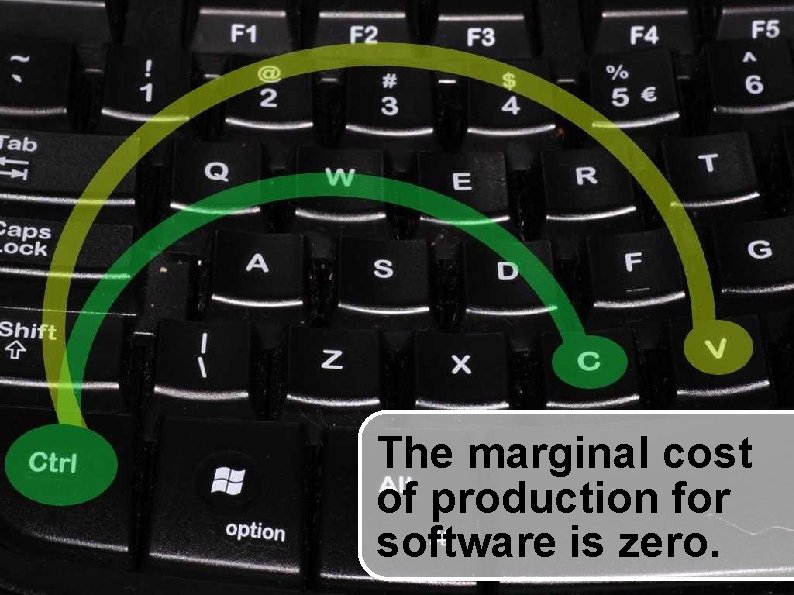
The marginal cost of production for software is zero.
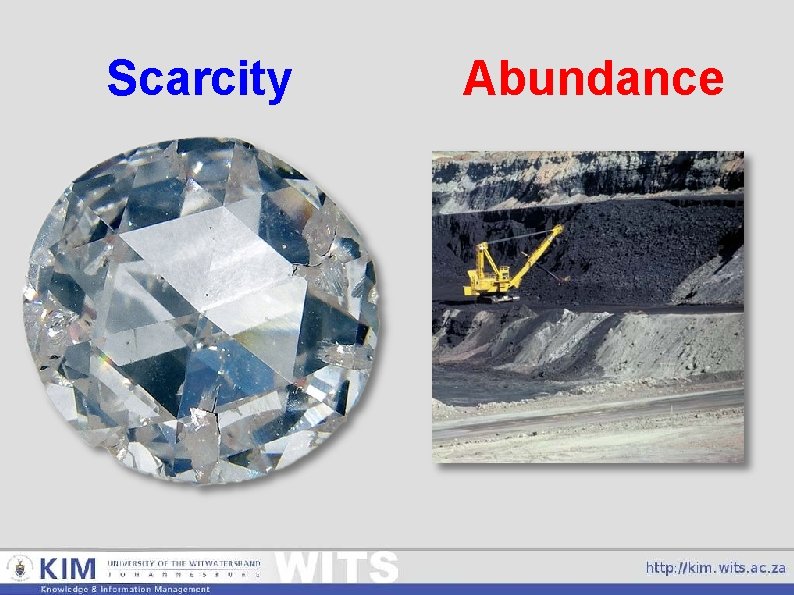
Scarcity Abundance
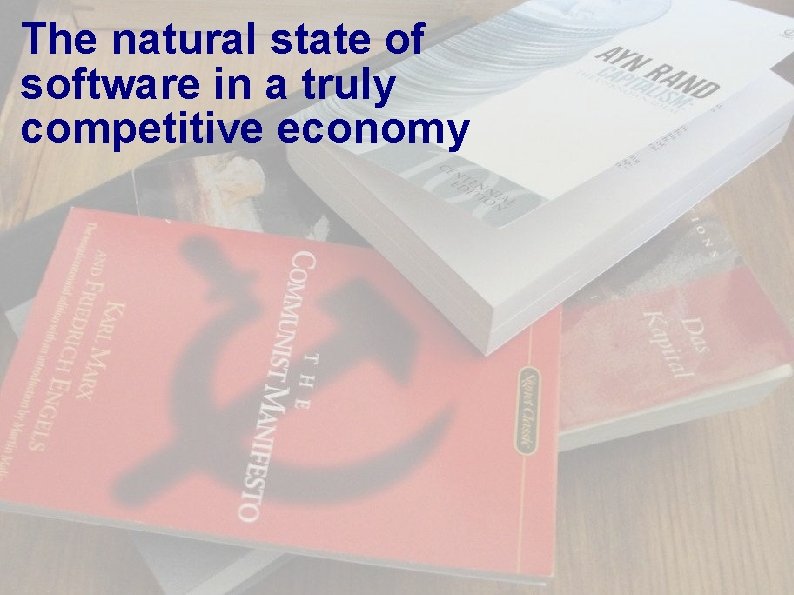
The natural state of software in a truly competitive economy
users can be a major source of innovation Eric von Hippel, Professor & Head of the Innovation and Entrepreneurship Group at the MIT Sloan School of Management
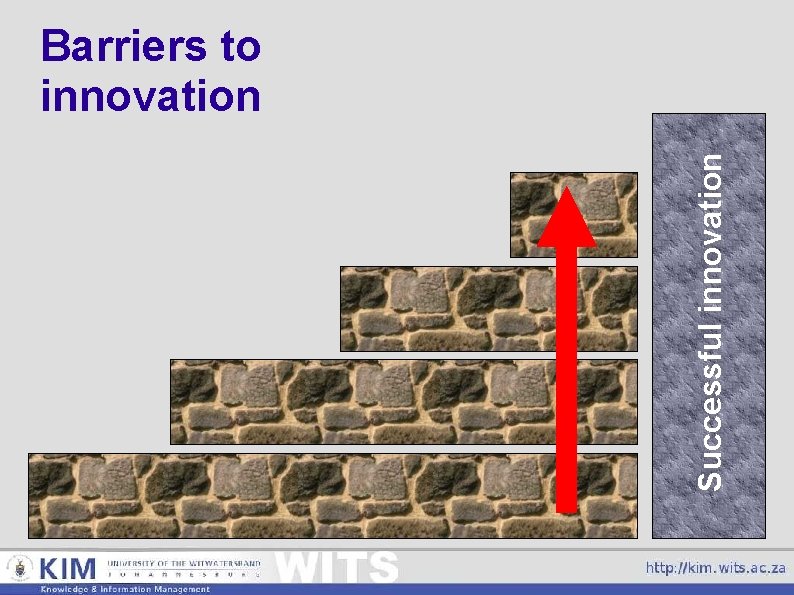
Successful innovation Barriers to innovation
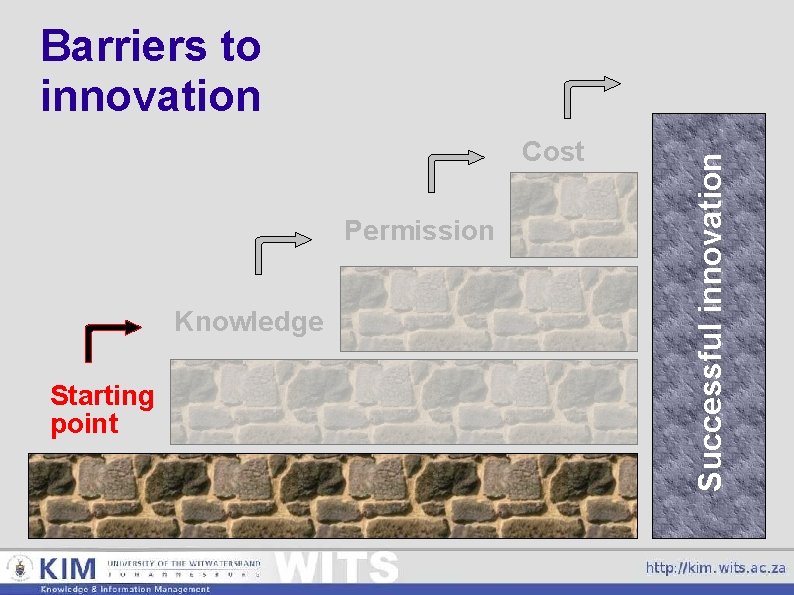
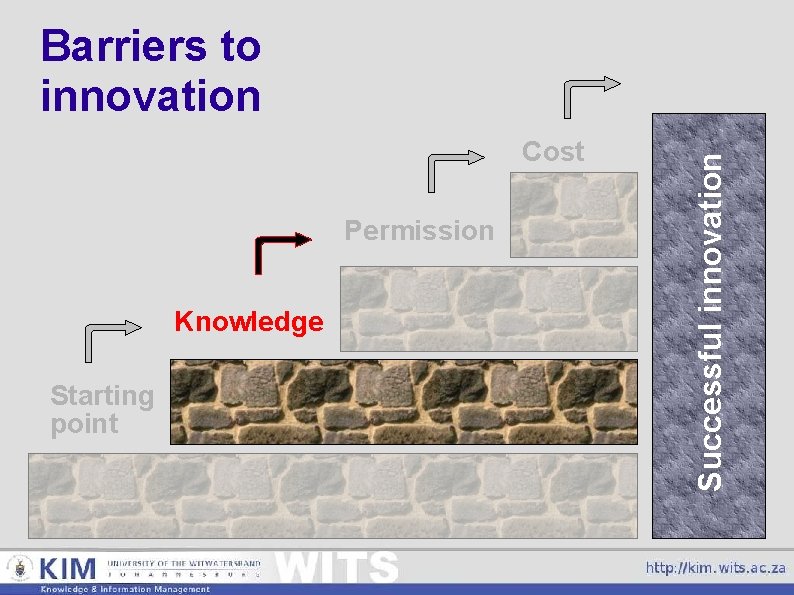
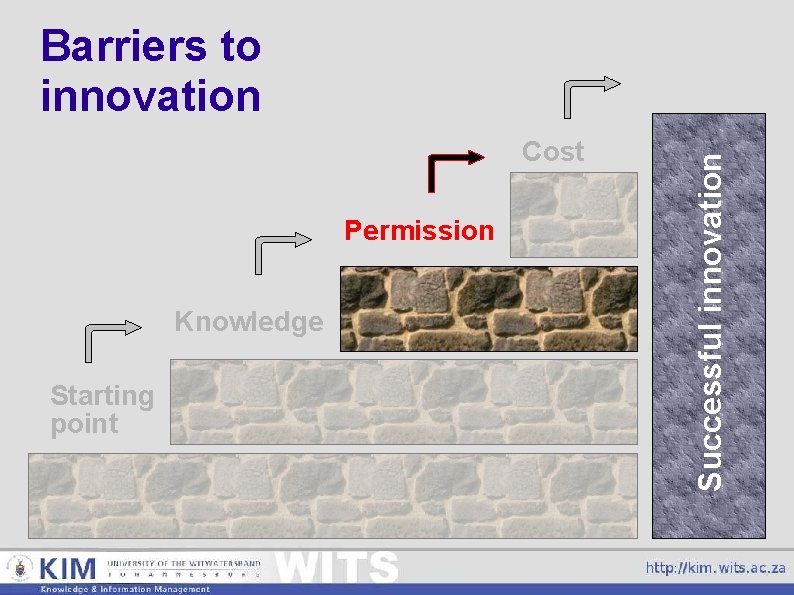
Cost Permission Knowledge Starting point Successful innovation Barriers to innovation
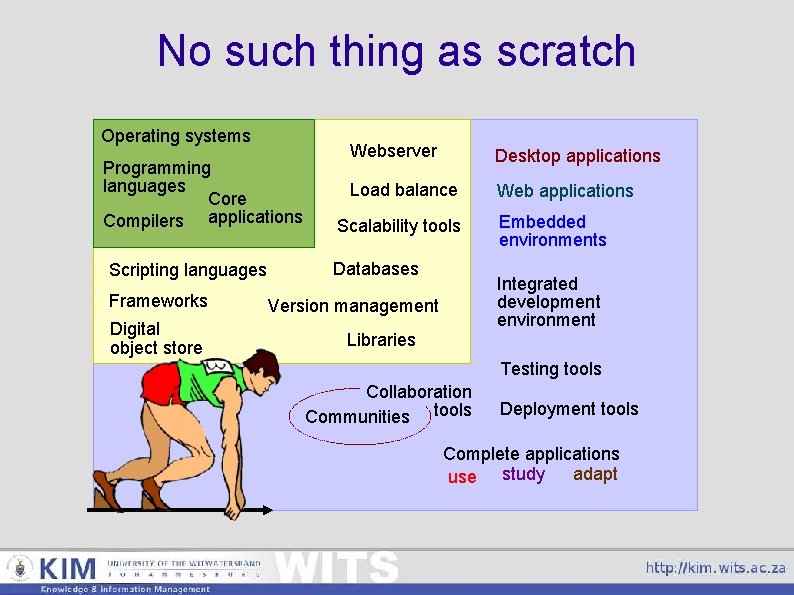
No such thing as scratch Operating systems Programming languages Core Compilers applications Scripting languages Frameworks Digital object store Webserver Desktop applications Load balance Web applications Scalability tools Databases Embedded environments Integrated development environment Version management Libraries Testing tools Collaboration Communities tools Deployment tools Complete applications adapt use study
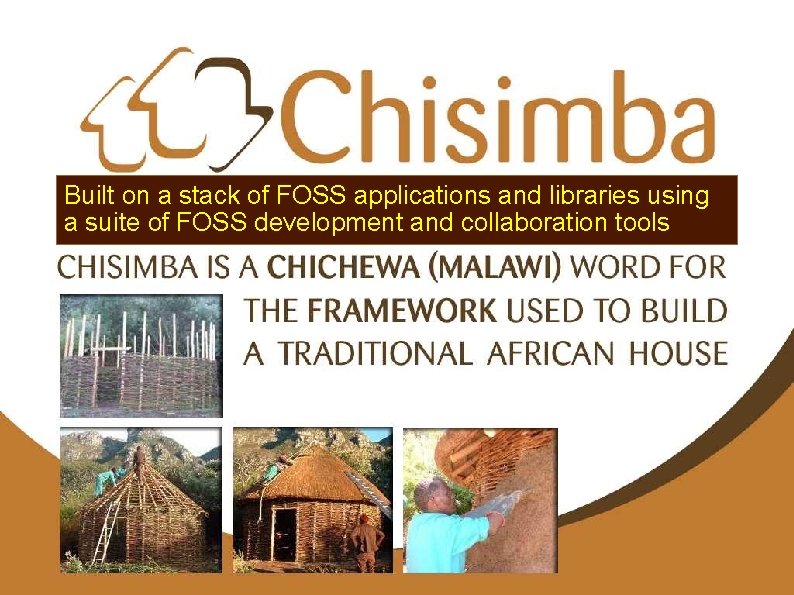
Built on a stack of FOSS applications and libraries using a suite of FOSS development and collaboration tools
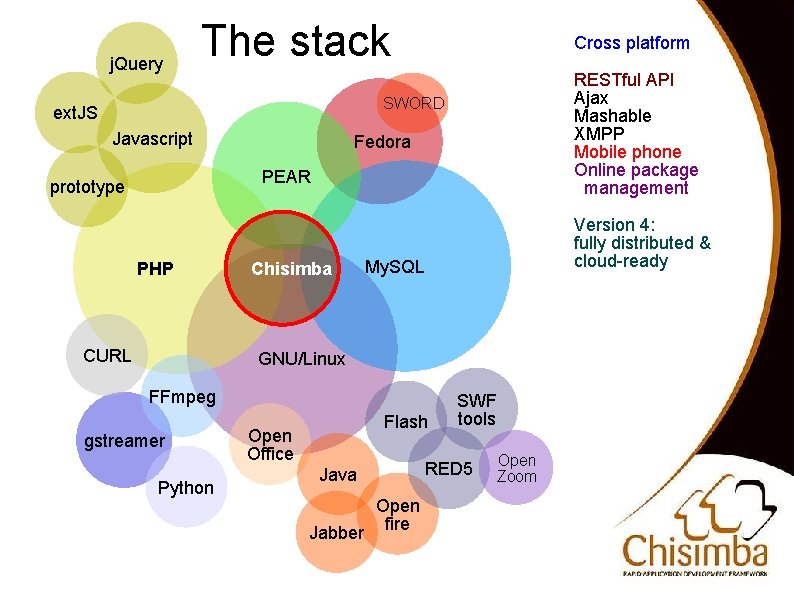
j. Query The stack Cross platform RESTful API Ajax Mashable XMPP Mobile phone Online package management SWORD ext. JS Javascript Fedora PEAR prototype PHP CURL Chisimba Version 4: fully distributed & cloud-ready My. SQL GNU/Linux FFmpeg gstreamer Python Flash Open Office RED 5 Java Jabber SWF tools Open fire Open Zoom
Cost Permission Knowledge Starting point Successful innovation Barriers to innovation
Knowledge When you have an idea, limited coding experience, and few resources, how do you learn to code it? Free Software as a learning resource Dissect Study Use Community as a learning resource return $obj. Twitter-> show($find, TRUE);
Cost Permission Knowledge Starting point Successful innovation Barriers to innovation
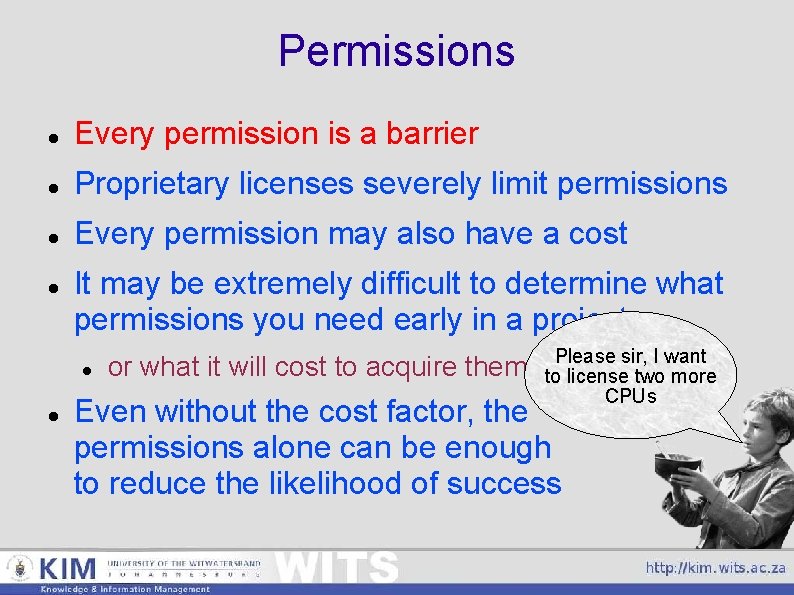
Permissions Every permission is a barrier Proprietary licenses severely limit permissions Every permission may also have a cost It may be extremely difficult to determine what permissions you need early in a project or what it will cost to acquire them Please sir, I want to license two more CPUs Even without the cost factor, the permissions alone can be enough to reduce the likelihood of success
Cost Permission Knowledge Starting point Successful innovation Barriers to innovation
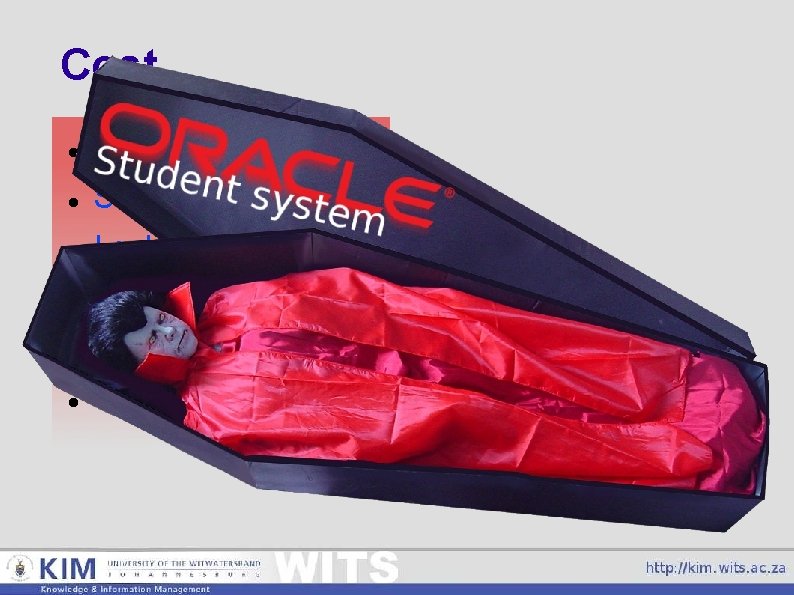
Cost Start-up costs Scaling out costs Lock-in costs Maleability costs Abandonment costs Uncertainty barrier
A wealth-creation perspective
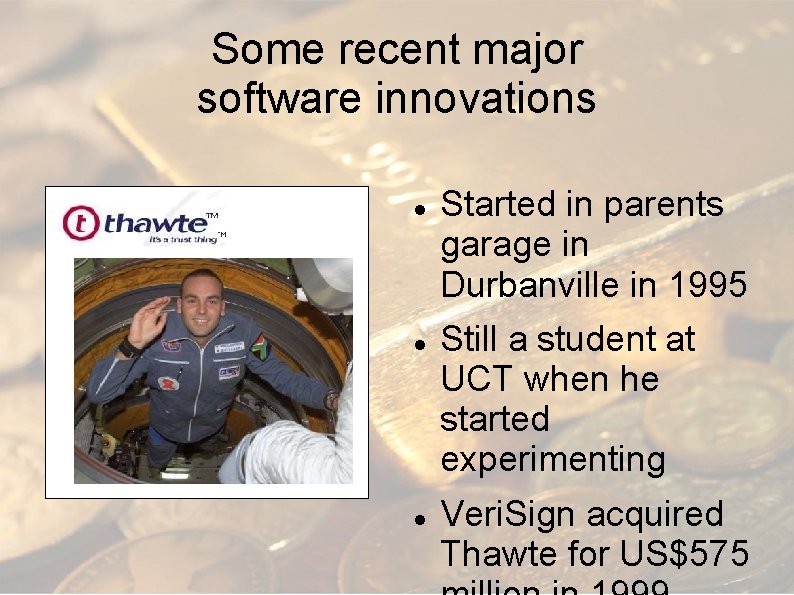
Some recent major software innovations Started in parents garage in Durbanville in 1995 Still a student at UCT when he started experimenting Veri. Sign acquired Thawte for US$575
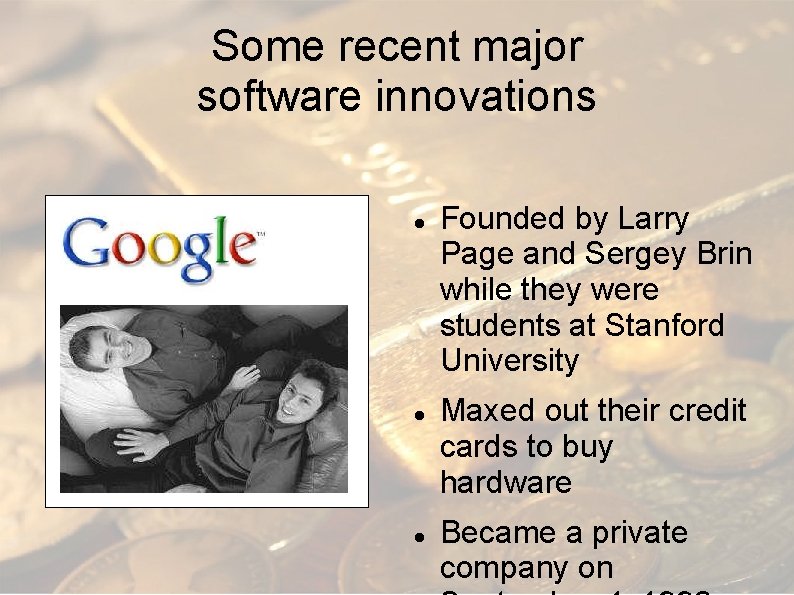
Some recent major software innovations Founded by Larry Page and Sergey Brin while they were students at Stanford University Maxed out their credit cards to buy hardware Became a private company on
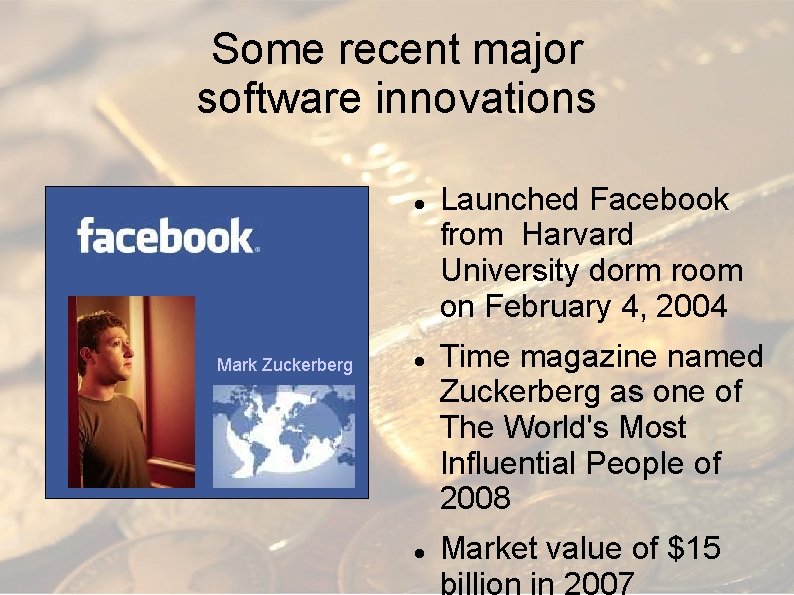
Some recent major software innovations Mark Zuckerberg Launched Facebook from Harvard University dorm room on February 4, 2004 Time magazine named Zuckerberg as one of The World's Most Influential People of 2008 Market value of $15
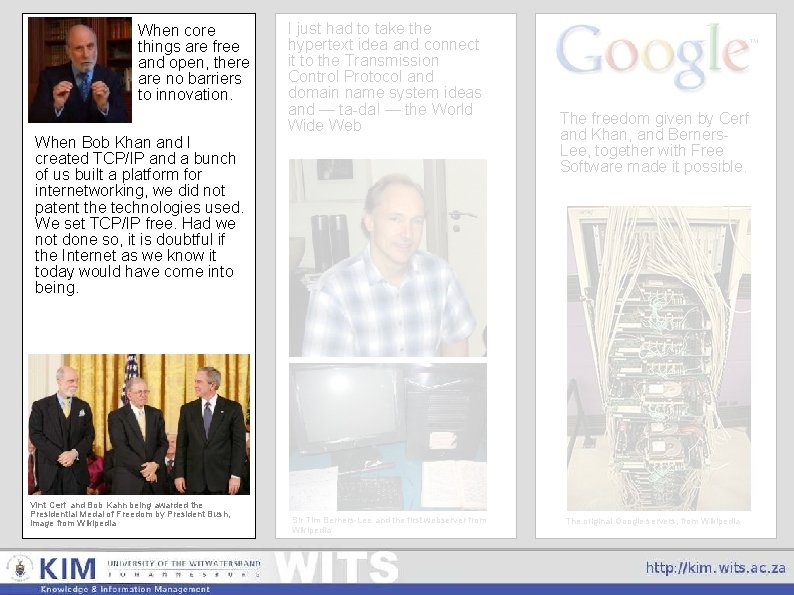
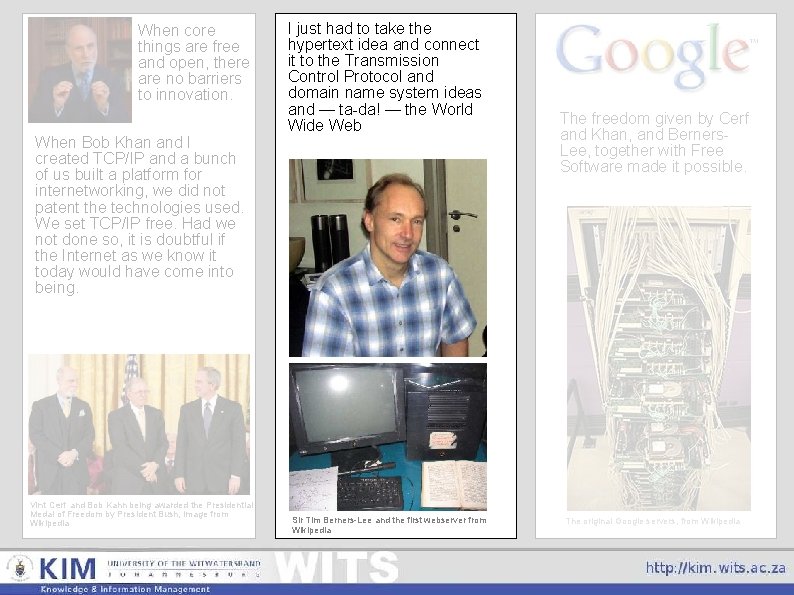
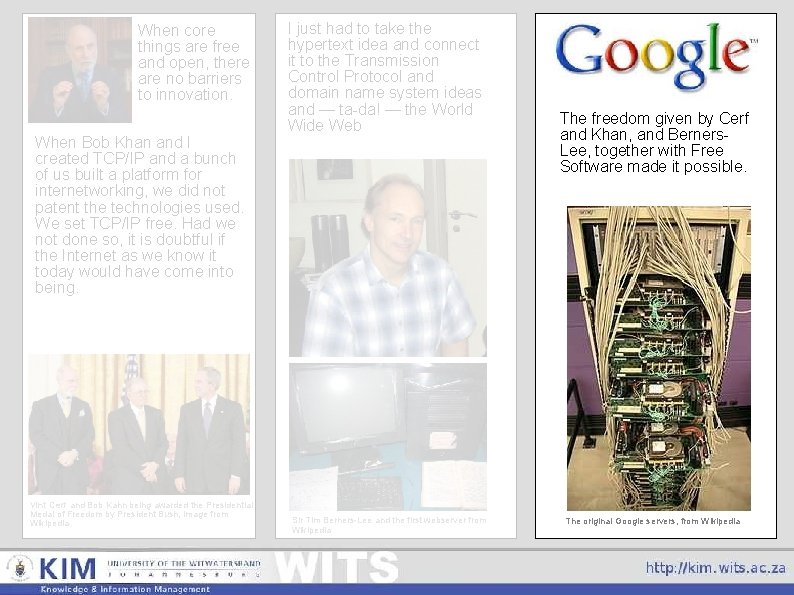
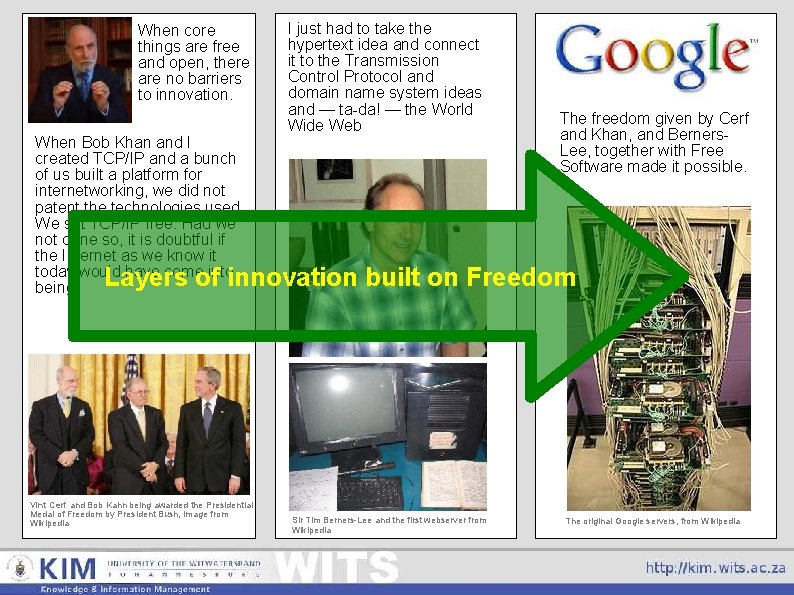
When core things are free and open, there are no barriers to innovation. When Bob Khan and I created TCP/IP and a bunch of us built a platform for internetworking, we did not patent the technologies used. We set TCP/IP free. Had we not done so, it is doubtful if the Internet as we know it today would have come into being. Vint Cerf and Bob Kahn being awarded the Presidential Medal of Freedom by President Bush, image from Wikipedia I just had to take the hypertext idea and connect it to the Transmission Control Protocol and domain name system ideas and — ta-da! — the World Wide Web Sir Tim Berners-Lee and the first webserver from Wikipedia The freedom given by Cerf and Khan, and Berners. Lee, together with Free Software made it possible. The original Google servers, from Wikipedia
When core things are free and open, there are no barriers to innovation. When Bob Khan and I created TCP/IP and a bunch of us built a platform for internetworking, we did not patent the technologies used. We set TCP/IP free. Had we not done so, it is doubtful if the Internet as we know it today would have come into being. Vint Cerf and Bob Kahn being awarded the Presidential Medal of Freedom by President Bush, image from Wikipedia I just had to take the hypertext idea and connect it to the Transmission Control Protocol and domain name system ideas and — ta-da! — the World Wide Web Sir Tim Berners-Lee and the first webserver from Wikipedia The freedom given by Cerf and Khan, and Berners. Lee, together with Free Software made it possible. The original Google servers, from Wikipedia
When core things are free and open, there are no barriers to innovation. When Bob Khan and I created TCP/IP and a bunch of us built a platform for internetworking, we did not patent the technologies used. We set TCP/IP free. Had we not done so, it is doubtful if the Internet as we know it today would have come into being. Vint Cerf and Bob Kahn being awarded the Presidential Medal of Freedom by President Bush, image from Wikipedia I just had to take the hypertext idea and connect it to the Transmission Control Protocol and domain name system ideas and — ta-da! — the World Wide Web Sir Tim Berners-Lee and the first webserver from Wikipedia The freedom given by Cerf and Khan, and Berners. Lee, together with Free Software made it possible. The original Google servers, from Wikipedia
When core things are free and open, there are no barriers to innovation. When Bob Khan and I created TCP/IP and a bunch of us built a platform for internetworking, we did not patent the technologies used. We set TCP/IP free. Had we not done so, it is doubtful if the Internet as we know it today would have come into being. I just had to take the hypertext idea and connect it to the Transmission Control Protocol and domain name system ideas and — ta-da! — the World Wide Web The freedom given by Cerf and Khan, and Berners. Lee, together with Free Software made it possible. Layers of innovation built on Freedom Vint Cerf and Bob Kahn being awarded the Presidential Medal of Freedom by President Bush, image from Wikipedia Sir Tim Berners-Lee and the first webserver from Wikipedia The original Google servers, from Wikipedia
Why FOSS for Wits?
FOSS is not new to Wits Our java applications are foss based WAMS (departmental mark system) meal booking system traffic system, etc Academic departments Student labs with Linux Digital arts Electrical engineering Computer Science
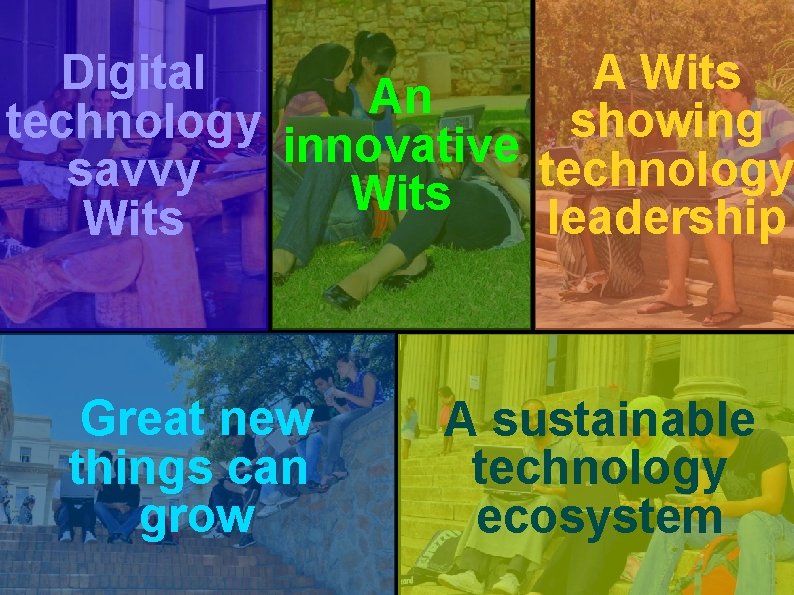
A Wits Digital An technology innovative showing technology savvy Wits leadership Wits Great new things can grow A sustainable technology ecosystem
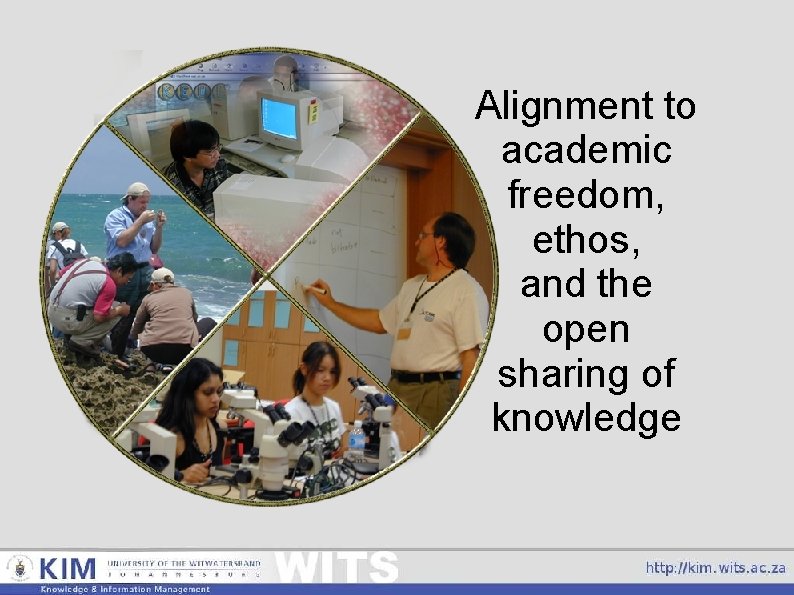
Alignment to academic freedom, ethos, and the open sharing of knowledge
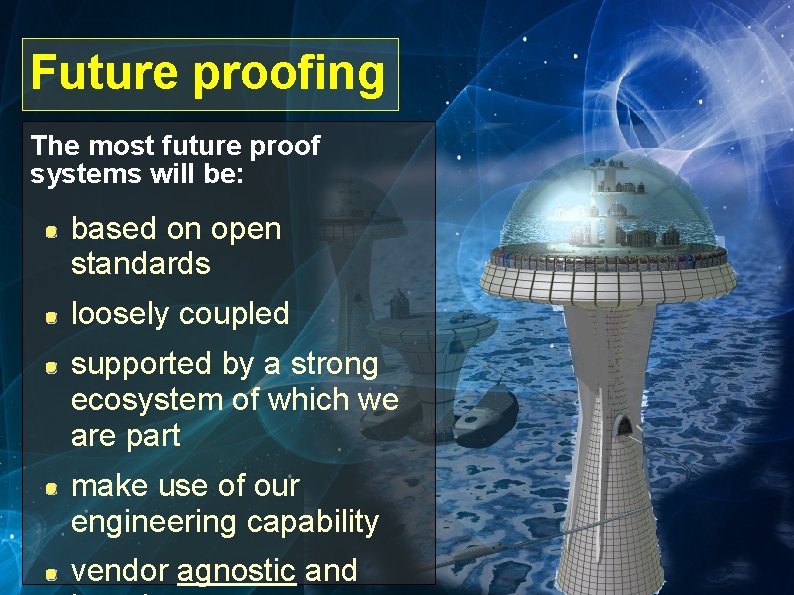
Future proofing The most future proof systems will be: based on open standards loosely coupled supported by a strong ecosystem of which we are part make use of our engineering capability vendor agnostic and
Innovation “We need to create an environment that supports and encourages innovation so that we can get another 'Google' or 'Sun' from our midst. Not possible when the environment is restricted. ”
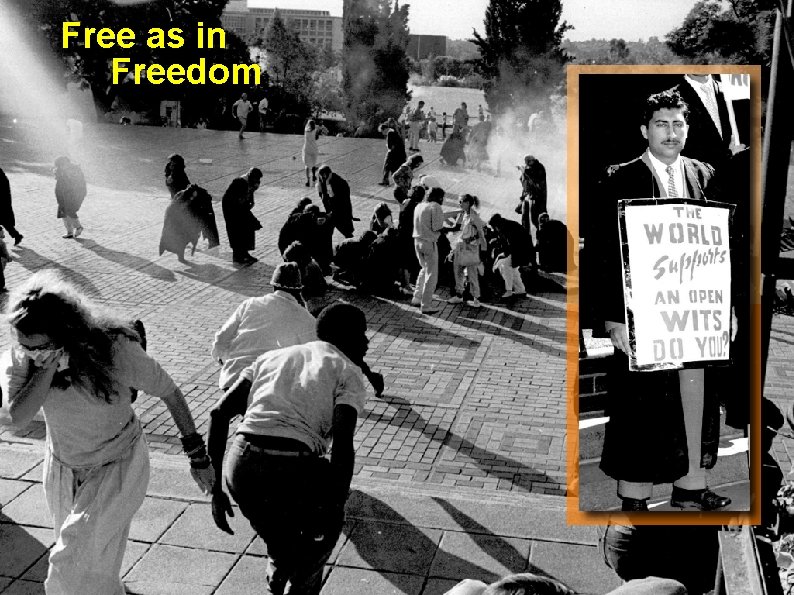
Free as in Freedom
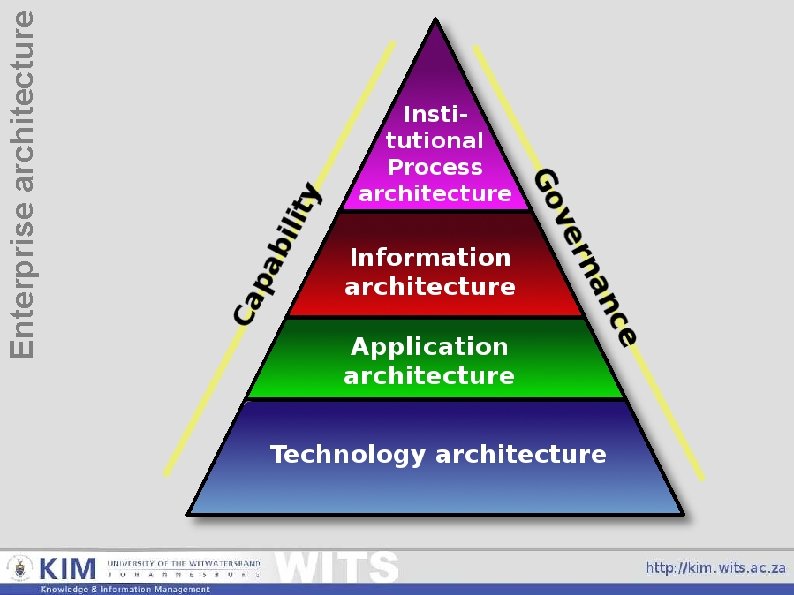
Enterprise architecture
Attribution file: http: //www. dkeats. com/usrfiles/users/ 1563080430/attribution/attrib. txt