
Key Elements of a Comprehensive DSM Programme Presentation
- Slides: 36
Key Elements of a Comprehensive DSM Programme Presentation at Forum of Regulators Lawrence Berkeley Laboratory Team Mahesh Patankar, Ph. D, CMVP; Director – Market Innovations (Asia) – Customized Energy Solutions and Cathie Murray; Regulatory Assistance Program November 16, 2010
Outline � Part 1: Recapping need for DSM initiatives � Part 2: DSM design and implementation plans � Part 3: Key attributes of DSM programs (and plans) � Part 4: Structure of DSM plan and program design document November 2010 2
Part 1 – Recapping need for DSM implementation
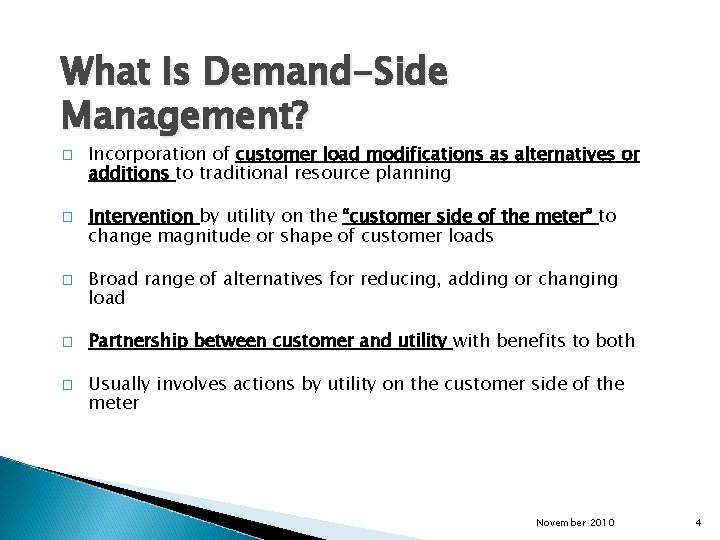
What Is Demand-Side Management? � � � Incorporation of customer load modifications as alternatives or additions to traditional resource planning Intervention by utility on the “customer side of the meter” to change magnitude or shape of customer loads Broad range of alternatives for reducing, adding or changing load Partnership between customer and utility with benefits to both Usually involves actions by utility on the customer side of the meter November 2010 4
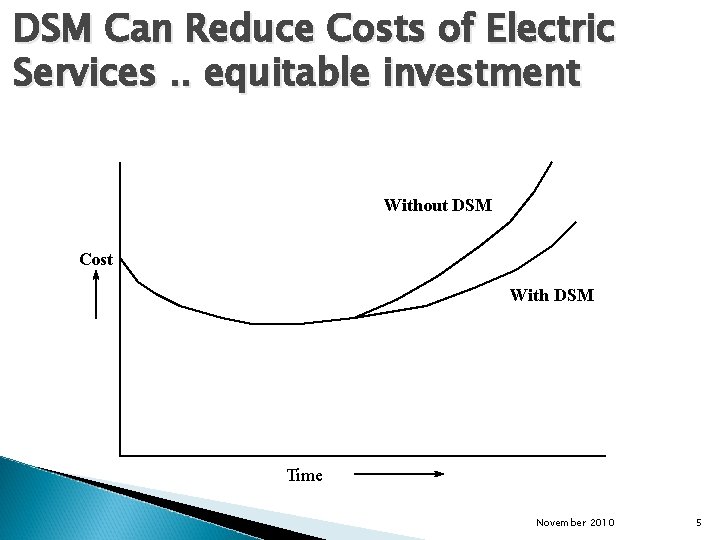
DSM Can Reduce Costs of Electric Services. . equitable investment Without DSM Cost With DSM Time November 2010 5
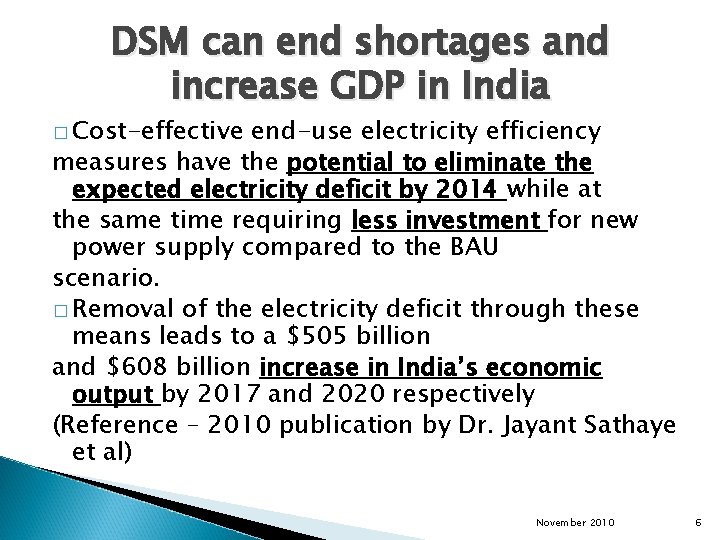
DSM can end shortages and increase GDP in India � Cost-effective end-use electricity efficiency measures have the potential to eliminate the expected electricity deficit by 2014 while at the same time requiring less investment for new power supply compared to the BAU scenario. � Removal of the electricity deficit through these means leads to a $505 billion and $608 billion increase in India’s economic output by 2017 and 2020 respectively (Reference – 2010 publication by Dr. Jayant Sathaye et al) November 2010 6
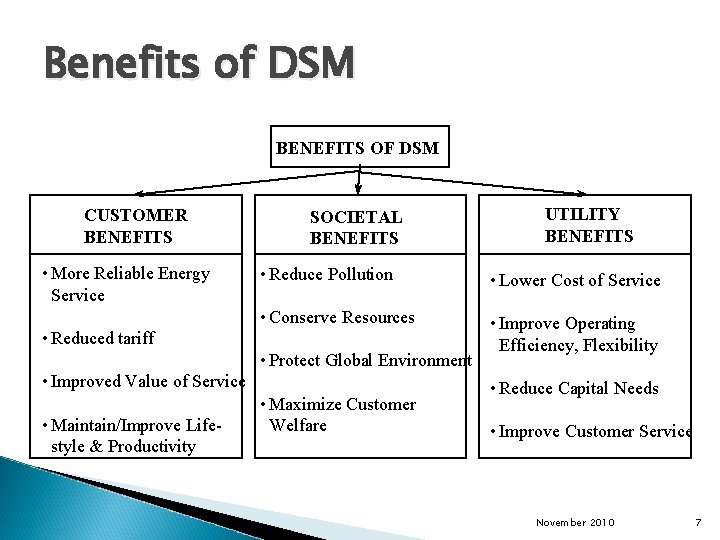
Benefits of DSM BENEFITS OF DSM CUSTOMER BENEFITS • More Reliable Energy Service SOCIETAL BENEFITS • Reduce Pollution • Lower Cost of Service • Conserve Resources • Improve Operating Efficiency, Flexibility • Reduced tariff • Protect Global Environment • Improved Value of Service • Maintain/Improve Lifestyle & Productivity UTILITY BENEFITS • Maximize Customer Welfare • Reduce Capital Needs • Improve Customer Service November 2010 7
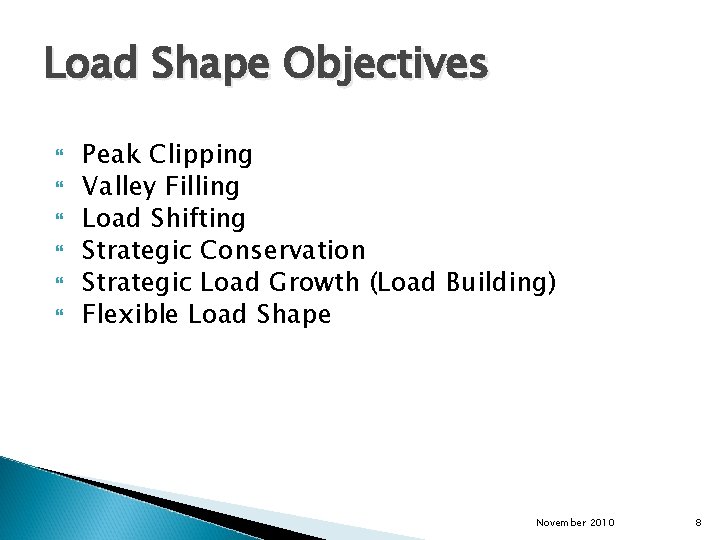
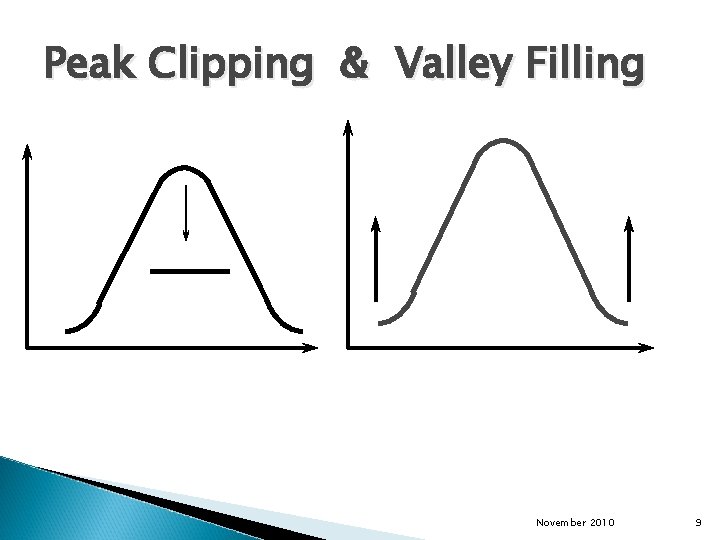
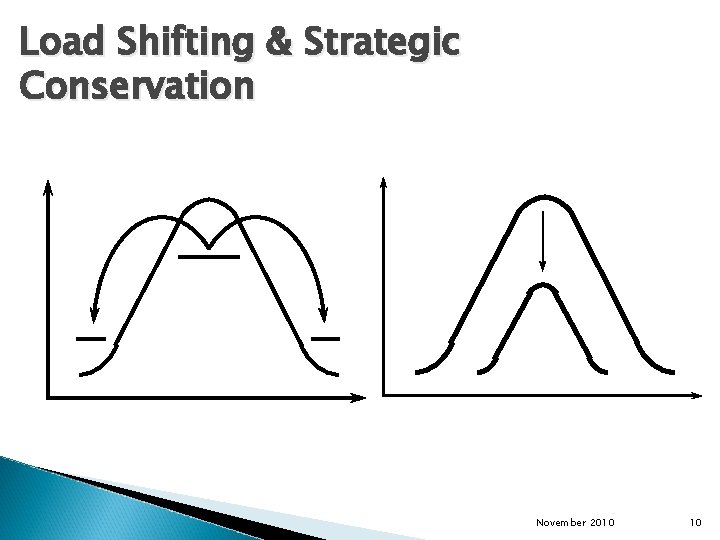
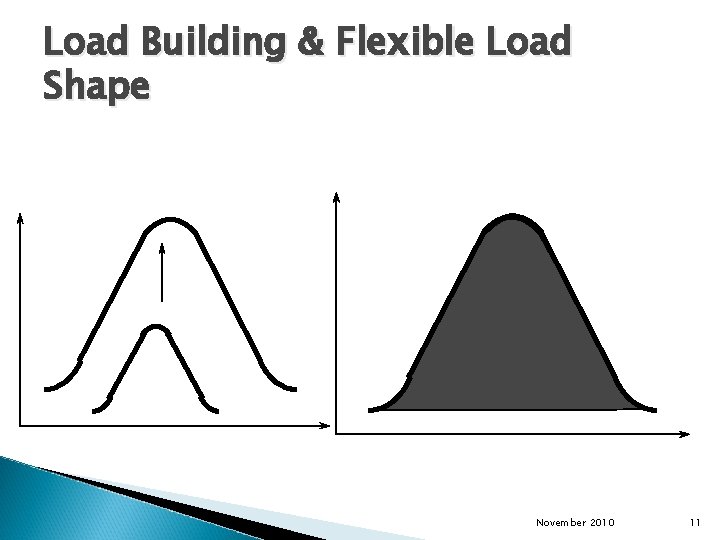
Load Shape Objectives Peak Clipping Valley Filling Load Shifting Strategic Conservation Strategic Load Growth (Load Building) Flexible Load Shape November 2010 8
Peak Clipping & Valley Filling November 2010 9
Load Shifting & Strategic Conservation November 2010 10
Load Building & Flexible Load Shape November 2010 11
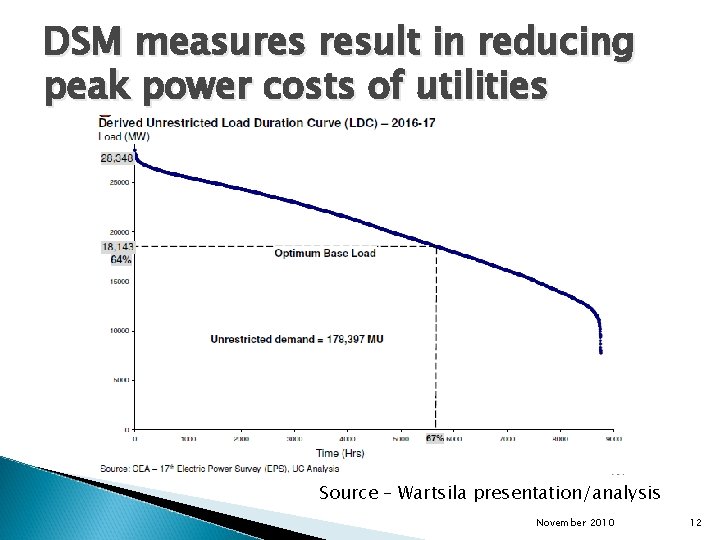
DSM measures result in reducing peak power costs of utilities Source – Wartsila presentation/analysis November 2010 12
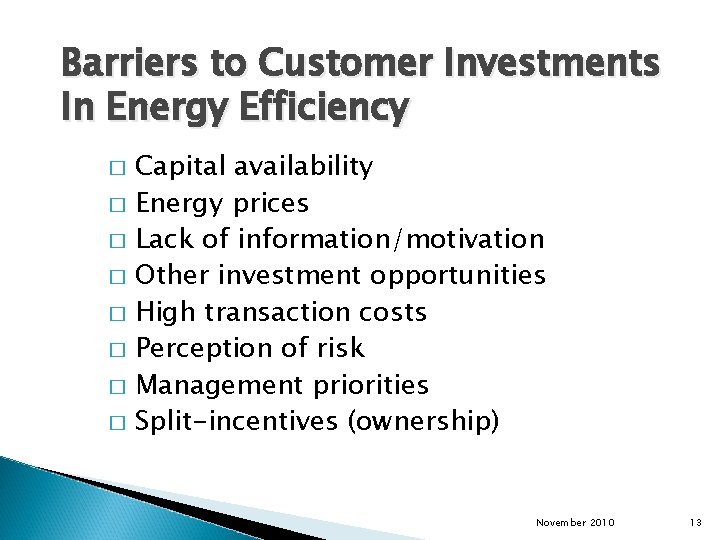
Barriers to Customer Investments In Energy Efficiency � � � � Capital availability Energy prices Lack of information/motivation Other investment opportunities High transaction costs Perception of risk Management priorities Split-incentives (ownership) November 2010 13
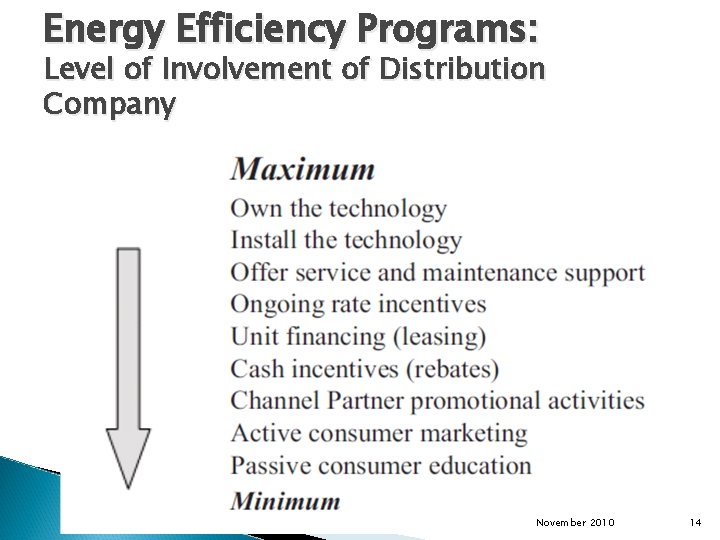
Energy Efficiency Programs: Level of Involvement of Distribution Company November 2010 14
Part 2 – DSM design and implementation plans
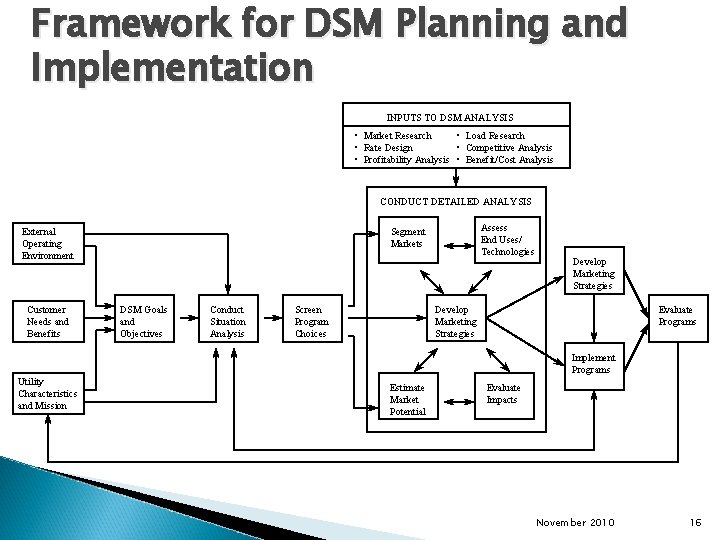
Framework for DSM Planning and Implementation INPUTS TO DSM ANALYSIS • Market Research • Load Research • Rate Design • Competitive Analysis • Profitability Analysis • Benefit/Cost Analysis CONDUCT DETAILED ANALYSIS External Operating Environment Customer Needs and Benefits Assess End Uses/ Technologies Segment Markets DSM Goals and Objectives Conduct Situation Analysis Screen Program Choices Develop Marketing Strategies Evaluate Programs Implement Programs Utility Characteristics and Mission Estimate Market Potential Evaluate Impacts November 2010 16
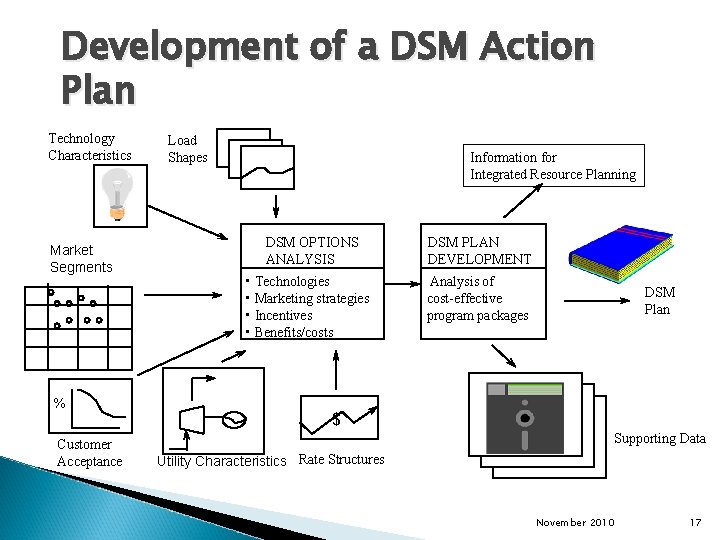
Development of a DSM Action Plan Technology Characteristics Market Segments % Customer Acceptance Load Shapes Information for Integrated Resource Planning DSM OPTIONS ANALYSIS • Technologies • Marketing strategies • Incentives • Benefits/costs DSM PLAN DEVELOPMENT Analysis of cost-effective program packages DSM Plan $ Supporting Data Utility Characteristics Rate Structures November 2010 17
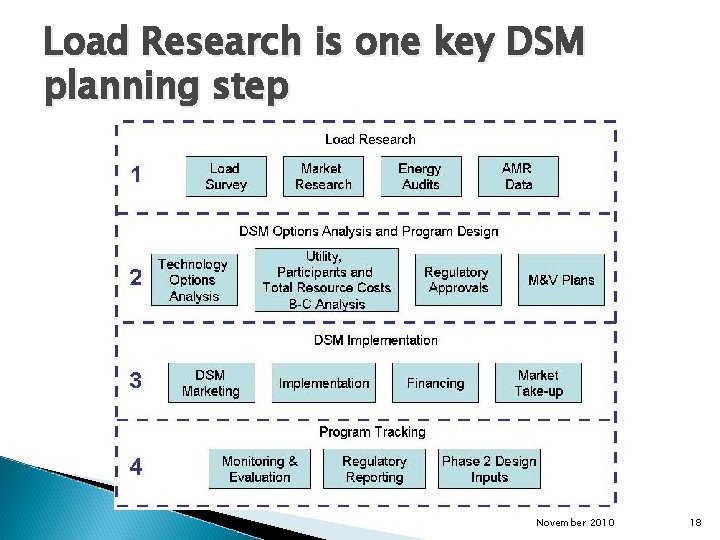
Load Research is one key DSM planning step November 2010 18
DSM regulatory framework has evolved over the years � Forum of Regulators issued a Draft Model DSM Regulations document ◦ http: //www. forumofregulators. gov. in/ � Maharashtra Electricity Regulatory Commission issued 2 regulations ◦ http: //www. mercindia. org. in/Regulations. htm ◦ DSM Implementation Framework Regulation ◦ Cost-effectiveness Assessment Regulation November 2010 19
Part 3 – DSM design and implementation plans
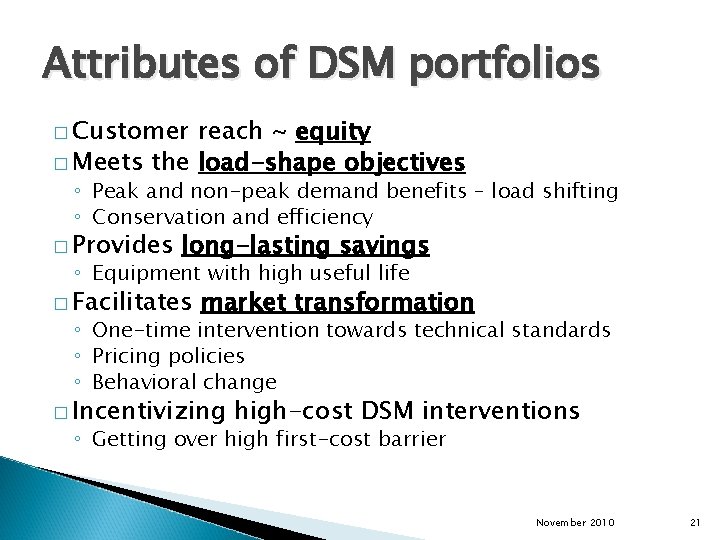
Attributes of DSM portfolios � Customer reach ~ equity � Meets the load-shape objectives ◦ Peak and non-peak demand benefits – load shifting ◦ Conservation and efficiency � Provides long-lasting savings ◦ Equipment with high useful life � Facilitates market transformation ◦ One-time intervention towards technical standards ◦ Pricing policies ◦ Behavioral change � Incentivizing high-cost DSM interventions ◦ Getting over high first-cost barrier November 2010 21
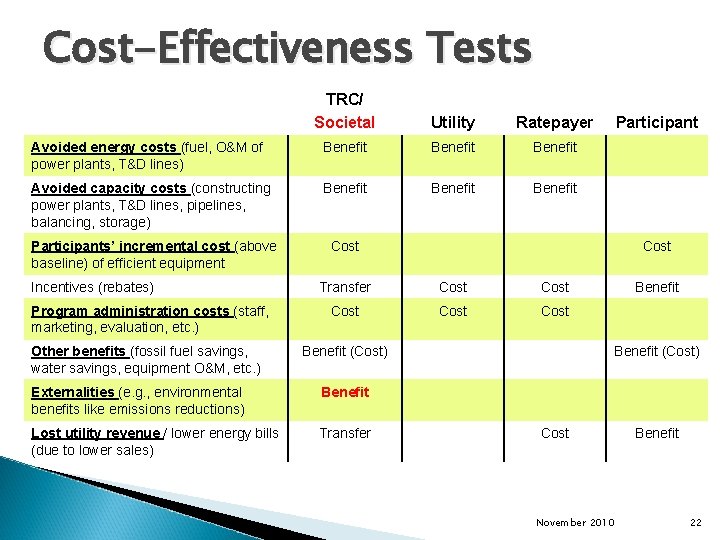
Cost-Effectiveness Tests TRC/ Societal Utility Ratepayer Avoided energy costs (fuel, O&M of power plants, T&D lines) Benefit Avoided capacity costs (constructing power plants, T&D lines, pipelines, balancing, storage) Benefit Participants’ incremental cost (above baseline) of efficient equipment Cost Incentives (rebates) Cost Transfer Cost Program administration costs (staff, marketing, evaluation, etc. ) Cost Other benefits (fossil fuel savings, water savings, equipment O&M, etc. ) Benefit (Cost) Externalities (e. g. , environmental benefits like emissions reductions) Benefit Lost utility revenue / lower energy bills (due to lower sales) Transfer Participant Benefit (Cost) Cost November 2010 Benefit 22
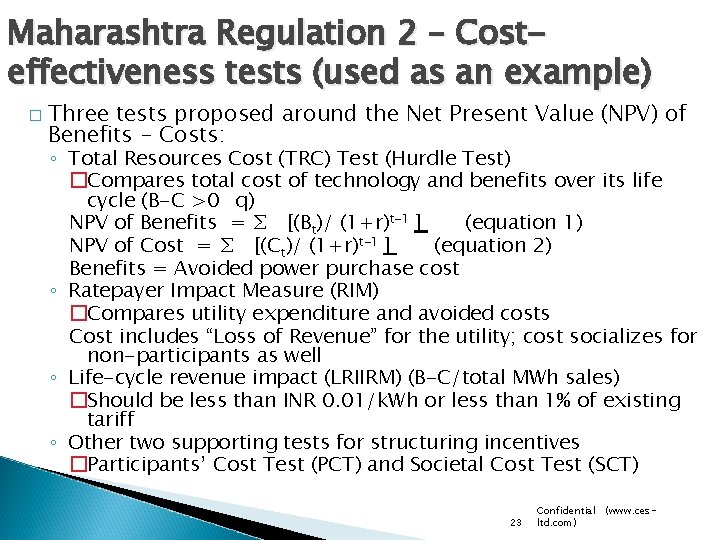
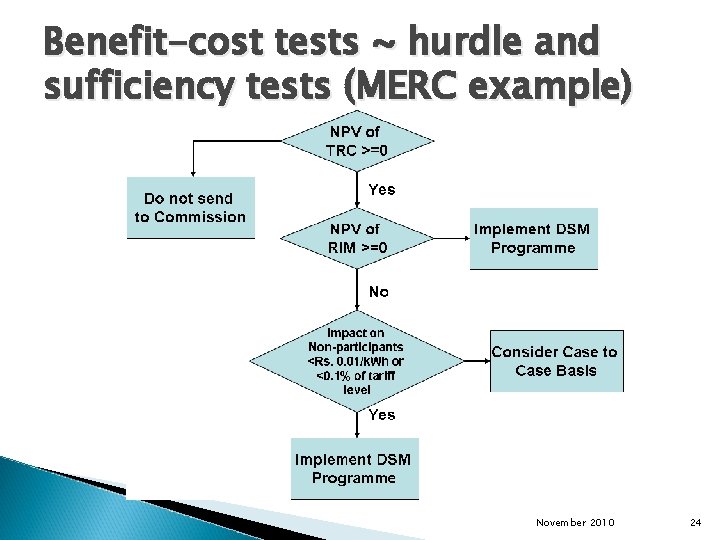
Maharashtra Regulation 2 – Costeffectiveness tests (used as an example) � Three tests proposed around the Net Present Value (NPV) of Benefits - Costs: ◦ Total Resources Cost (TRC) Test (Hurdle Test) �Compares total cost of technology and benefits over its life cycle (B-C >0 q) NPV of Benefits = ∑ [(Bt)/ (1+r)t-1 ] (equation 1) NPV of Cost = ∑ [(Ct)/ (1+r)t-1 ] (equation 2) Benefits = Avoided power purchase cost ◦ Ratepayer Impact Measure (RIM) �Compares utility expenditure and avoided costs Cost includes “Loss of Revenue” for the utility; cost socializes for non-participants as well ◦ Life-cycle revenue impact (LRIIRM) (B-C/total MWh sales) �Should be less than INR 0. 01/k. Wh or less than 1% of existing tariff ◦ Other two supporting tests for structuring incentives �Participants’ Cost Test (PCT) and Societal Cost Test (SCT) 23 Confidential (www. cesltd. com)
Benefit-cost tests ~ hurdle and sufficiency tests (MERC example) November 2010 24
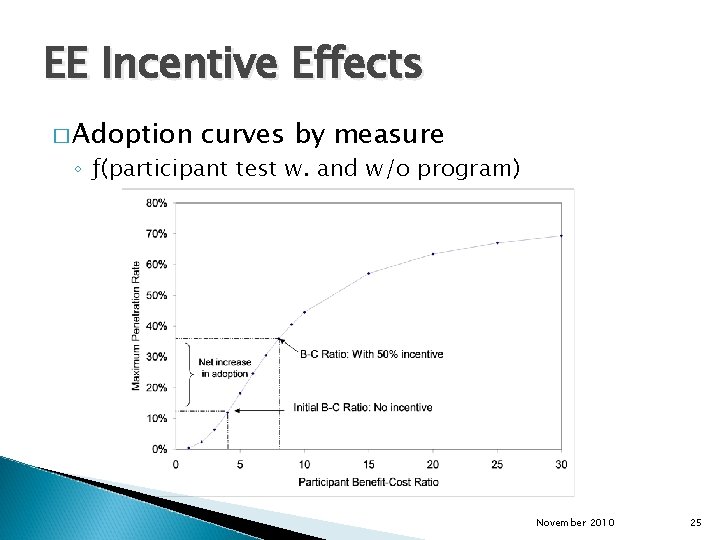
EE Incentive Effects � Adoption curves by measure ◦ ƒ(participant test w. and w/o program) November 2010 25
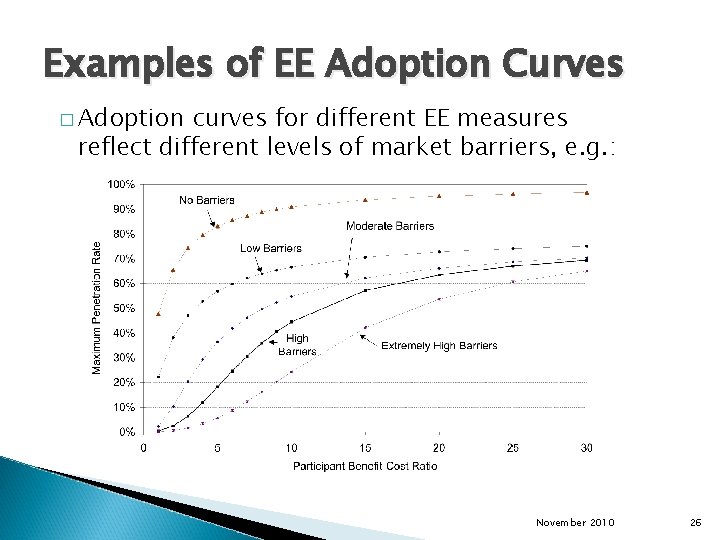
Examples of EE Adoption Curves � Adoption curves for different EE measures reflect different levels of market barriers, e. g. : November 2010 26
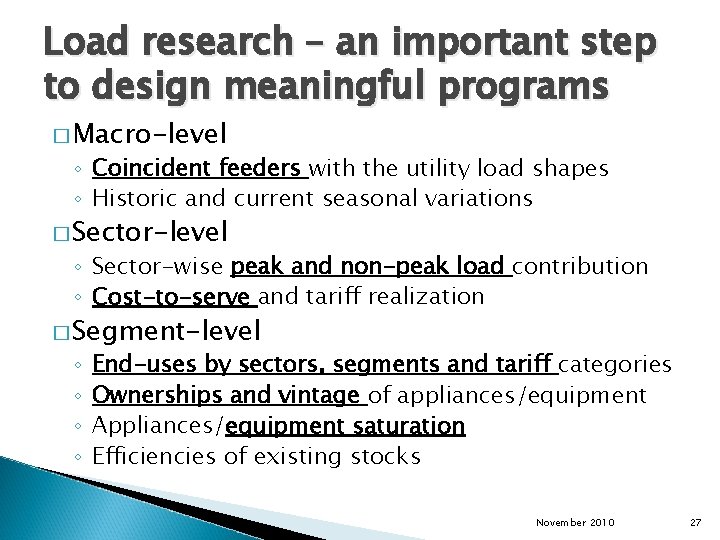
Load research – an important step to design meaningful programs � Macro-level ◦ Coincident feeders with the utility load shapes ◦ Historic and current seasonal variations � Sector-level ◦ Sector-wise peak and non-peak load contribution ◦ Cost-to-serve and tariff realization � Segment-level ◦ ◦ End-uses by sectors, segments and tariff categories Ownerships and vintage of appliances/equipment Appliances/equipment saturation Efficiencies of existing stocks November 2010 27
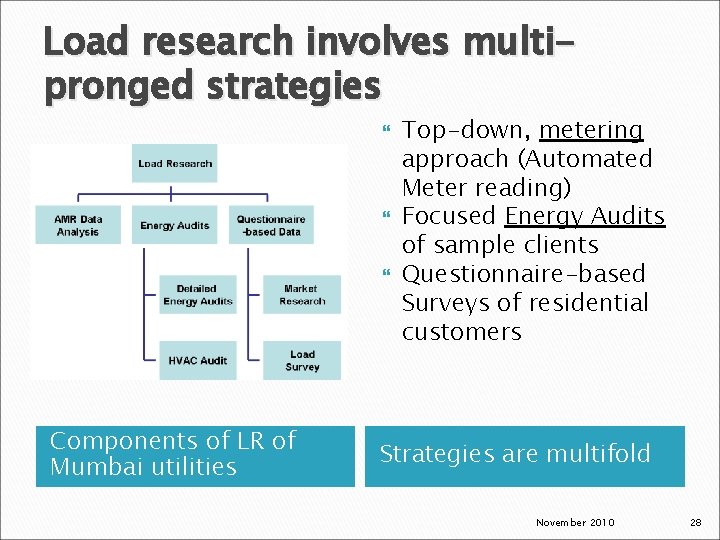
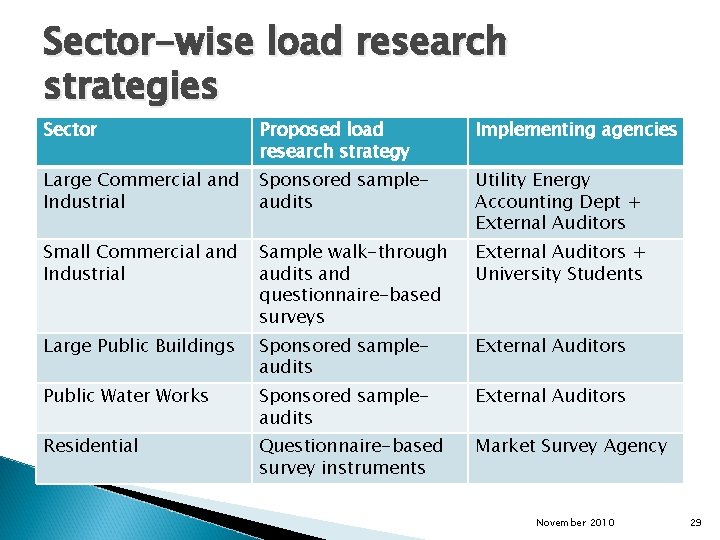
Load research involves multipronged strategies Components of LR of Mumbai utilities Top-down, metering approach (Automated Meter reading) Focused Energy Audits of sample clients Questionnaire-based Surveys of residential customers Strategies are multifold November 2010 28
Sector-wise load research strategies Sector Proposed load research strategy Implementing agencies Large Commercial and Industrial Sponsored sampleaudits Utility Energy Accounting Dept + External Auditors Small Commercial and Industrial Sample walk-through audits and questionnaire-based surveys External Auditors + University Students Large Public Buildings Sponsored sampleaudits External Auditors Public Water Works Sponsored sampleaudits External Auditors Residential Questionnaire-based survey instruments Market Survey Agency November 2010 29
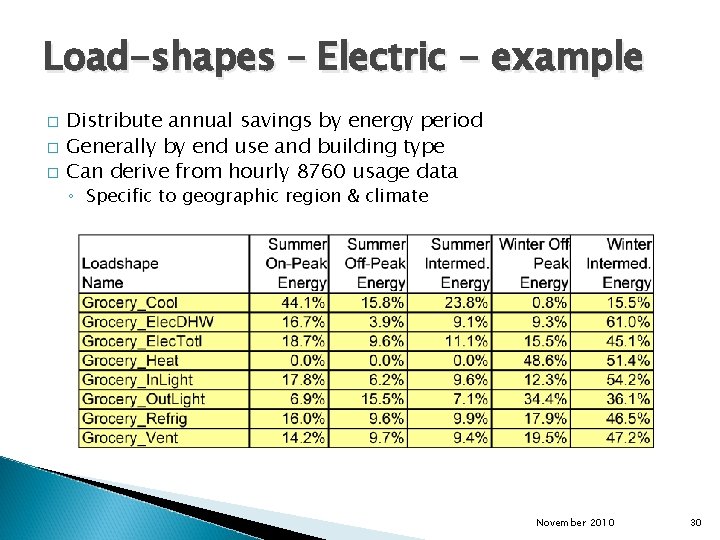
Load-shapes – Electric - example � � � Distribute annual savings by energy period Generally by end use and building type Can derive from hourly 8760 usage data ◦ Specific to geographic region & climate November 2010 30
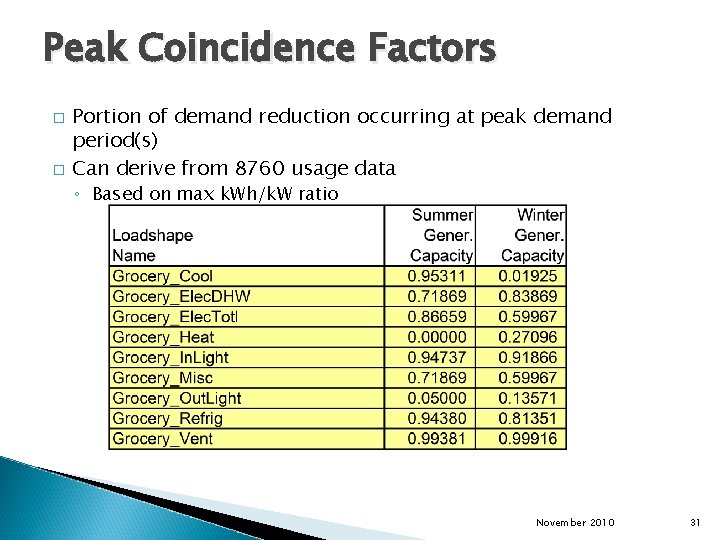
Peak Coincidence Factors � � Portion of demand reduction occurring at peak demand period(s) Can derive from 8760 usage data ◦ Based on max k. Wh/k. W ratio November 2010 31
Part 4 – Example of DSM program design document
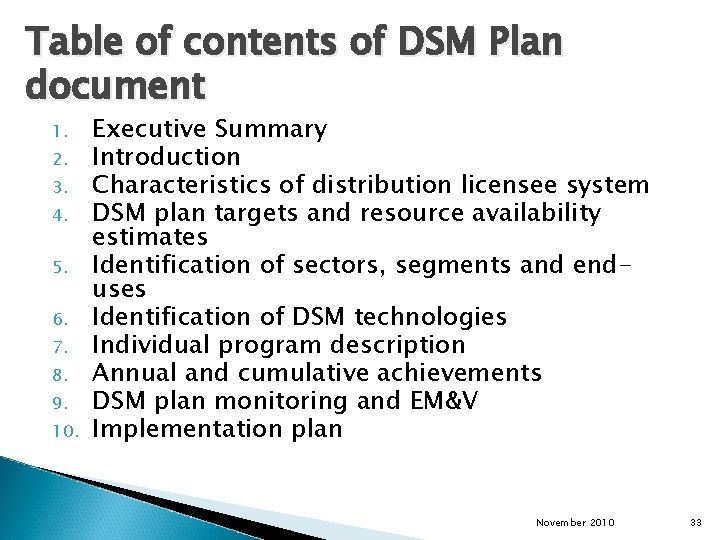
Table of contents of DSM Plan document 1. 2. 3. 4. 5. 6. 7. 8. 9. 10. Executive Summary Introduction Characteristics of distribution licensee system DSM plan targets and resource availability estimates Identification of sectors, segments and enduses Identification of DSM technologies Individual program description Annual and cumulative achievements DSM plan monitoring and EM&V Implementation plan November 2010 33
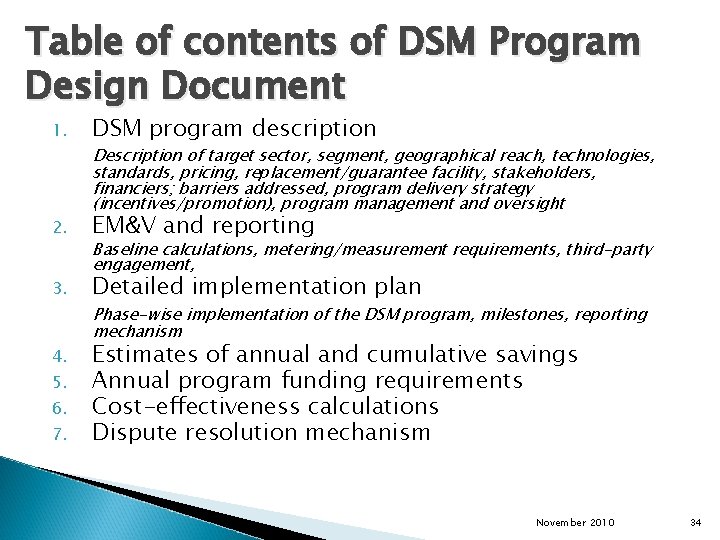
Table of contents of DSM Program Design Document 1. DSM program description 2. EM&V and reporting 3. 4. 5. 6. 7. Description of target sector, segment, geographical reach, technologies, standards, pricing, replacement/guarantee facility, stakeholders, financiers; barriers addressed, program delivery strategy (incentives/promotion), program management and oversight Baseline calculations, metering/measurement requirements, third-party engagement, Detailed implementation plan Phase-wise implementation of the DSM program, milestones, reporting mechanism Estimates of annual and cumulative savings Annual program funding requirements Cost-effectiveness calculations Dispute resolution mechanism November 2010 34
References � LBNL training at FOR and utilities � USAID ECO II presentations November 2010 35
� Questions? � Contact details – mpatankar@ces-ltd. com cmurray@raponline. org November 2010 36