
Key Concept 5 1 Industrialism and Global Capitalism
Key Concept 5. 1 – Industrialism and Global Capitalism
Industrial Revolution What is it? • • • Civilizations no longer principally ag/rural Mass production of goods Move toward urbanization Capitalism reigned supreme Changed life in Europe – How ppl work, where they lived – Forced West to spread practices to colonies to exploit them
History of the Industrial Revolution • Began in Great Britain in mid 1700 s • Causes – 2 nd Agricultural revolution • Improved farming techniques • Half of pop left for city jobs • Needed a way to get good crops w/ half the workers – Why so much better crop yields? • Potatoes and corn from New World • Chemical fertilizers (big deal)
Cause: Why did the pop grow? 50% growth from 1700 -1800 • • More food available Improved medical care Nutrition hygiene
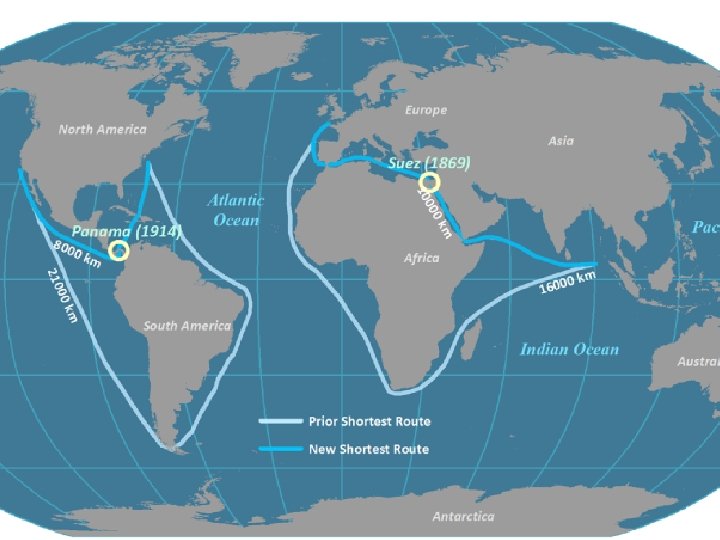
Cause: Technology improvements • Steam power • Steel • Factory system (Henry Ford – Assembly line) – Put factory near water for power source • Suez and Panama Canals – Made sea travel much quicker • New inventions for textile industry – Cotton Gin – Eli Whitney – process cotton quickly
5. 1 Quiz A 1. What term can be referred to a change to in the way people live where they went from primarily living agricultural lives to living more factory-based lives? 2. By what percentage did population increase between 1600 and 1700? 3. A major change in the Second Agricultural Revolution occurred with the invention of ____-based fertilizers.
5. 1 quiz B 1. Roughly, when did the Industrial Revolution begin? 2. In which country did the Industrial Revolution begin? 3. What to seas are connected by the Suez Canal?
Social Causes • Protestant work ethic – Earthly success is a sign of personal salvation • God likes people who work hard • Domestic system is not as effective – Women weave cotton and make textiles at home – Sell to middlemen • Urbanization – people moving to cities – For factory jobs – Land being bought up by rich – Cities get HUGE
Spread of the Industrial Revolution • Starts in England • Spreads to Western Europe, Russia, US, and to Japan
Why didn’t the IR start somewhere else? • Western Europe had materials (or access to materials), a reason to innovate and skilled labor
Financial Cause: Adam Smith • Wrote Wealth of Nations • Let open market determine demand for goods and services • Laissez faire capitalism “Let them do” – government removes self from econ process • Father of Capitalism
5. 2 Quiz A 1. From what language is ‘lassiez faire’? 2. In the beginning of the Industrial Revolution, which was the first fully Asian country to industrialize. 3. What did Henry Ford use to power his first factories?
5. 2 Quiz B 1. By what means of transportation did the Industrial Revolution primarily spread? 2. What is the name of Adam Smith’s book? 3. What kind of products were made in the domestic system?
Capitalism Spreads • Qing China and Ottoman Empire resist capitalism – Stay agricultural – SPOILER, that’s make them weak in 1900 s • Remember, merchants below peasants in China
More Financial Causes • Banks, lending instiutions and investors grew • More money coming into countries and businesses led to widespread economic growth and more big businesses
Philosophical Cause: John Stuart Mill • Wrote Utilitarianism • People should be utilitarian (useful, beneficial to society) • But, like Smith, he said the government should make no law against any action unless it harms another’s rights
More about Industrial Revolution • Steam engine is used in every economic field – Steam ships, railroads • Electricity, telegraph spreading widely by end of 1800 s • Electricity eventually overtakes steam and coal as energy sources • Factory system replaces domestic “putting out system” (women working from home) • Eli Whitney creates interchangeable parts • Assembly line becomes the norm in factories
Transformative Effects of Industrial Revolution • Asians/African provide labor in mines and plantations • Transportation revolution – Locomotive 1820 – Steamship 1807 – Internal combustion engine 1885 -car – Airplane 1903
Social Effects of IR • New classes • Working class (proletariat) – Term coined by Marx – Bourgeoisie (bor ZWAH zee) was the ruling class who kept the proletariat down – Long hours 14 hour days, 6 day weeks – Disgusting, crowded living conditions – Child labor common • Rise of the middle class – Merchants, bankers, factory owners (Bourgeoisie) • Status becomes more about wealth than family position
• New family model – Smaller b/c no need for farming families – Women still in home • Women and child labor goes down as factories become more efficient – Industrial working class
IR in Japan (Meiji Restoration) • Lack of resources (like England) • Went outward to get natural resources – Southeast Asia, parts of China/Russia – Caused minor drama there – *spoiler, Japan is going to have lots a drama in unit 6* • Japanese “factory girls” – Sent from country to city to work in silk factories – Unsafe working conditions – Patriarchy led to male supervisors mistreating them
Science in IR • Technology drives IR • Steam engine invented by Robert Fulton • Steam boats, locomotives, factory equipment – Steamed factory equipment modernized the textile industry – Put women out of work • Darwinism challenged traditional ideas of humanity, creation and man’s relationship with Earth
Second Industrial Revolution • • 1850 s Steel Chemicals Electricity
Reactions go Global Capitalism • Marxism (Communism) • Thought up in Unit 5, not started until Unit 6 • Now, on to…. . the AMERICAN slides
Capitalism vs. Communism
Capitalism • An economic system in which the means of production are owned mostly privately. • Capital is invested in the production of goods for profit in a competitive free market.
Classical Economics • The classical tradition in economic thought emerged in Britain in the late 18 th century. • The father of this economic thought, and “The Father of Capitalism” was…
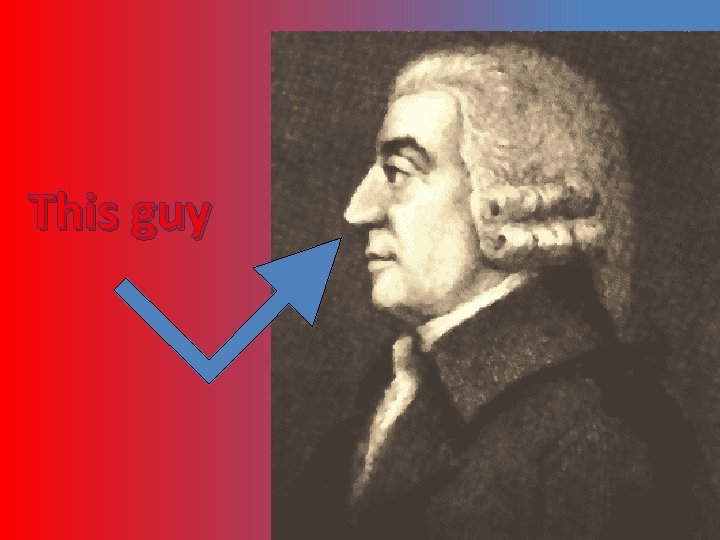
This guy
Adam Smith • A Scottish political economist and moral philosopher (1723 -1790). • His Wealth of Nations (1776) founded the modern discipline of economics and provided the rationale for free trade, and capitalism.
Natural Liberty • In his mid-20 s he began expounding “the obvious and simple system of natural liberty. ” • People should be completely free to trade.
The Invisible Hand • The free market appears chaotic and unrestrained. • Actually, it is guided by “an invisible hand” to produce the right amount and variety of goods. • If a product shortage occurs, the price rises, establishing a profit margin that provides an incentive for others to enter production.
Social Benefit • While human motives are selfish and greedy, the competition in the free market tends to benefit society as a whole by keeping prices low, while still building in an incentive for a wide variety of goods and services.
Laissez-faire • Smith attacked most forms of governments’ interference in the economic process, including tariffs (taxes) on imported goods. • Government restrictions on trade cause inefficiency and high prices. • “Laissez-faire” means “let them do. ”
Self-Interest • It is not from the benevolence of the butcher, the brewer, or the baker that we expect our dinner, but from their regard to their own interest. – Smith, Wealth of Nations
Criticisms of Capitalism • Workers can be treated unfairly. • Some people become very poor. • Some must lose for some to win.
Communism • An ideology that seeks to establish a future classless, stateless social organization, based upon common ownership of the means of production and the absence of private property. • “To each according to their needs. ”
Karl Marx • Karl Marx (1818 -1883) was an immensely influential German philosopher, political economist, and socialist revolutionary. • He is most famous for his analysis of history in terms of class struggles.
Communist Manifesto (1848) • The history of all hitherto existing society is the history of class struggles.
Atheism • Marx was an atheist. • He believed that religion was “the opiate of the people. ” • The owners of capital used religion to keep the peasants and workers subjugated by leading them to think, not of their present misery, of future happiness in heaven.
Communist Paradise • Marx taught that paradise would appear on earth, following the war between the workers(proletariat) and the owners (bourgeoisie). • The proletariats would win the war because the outnumber the bourgeoisie. • After the war, everyone would be equal and there would be no need for anyone to rule anyone else. • Workers would work to help the society, not for personal gain.
The End Justifies the Means • Marx’s moral teaching was that the leaders of the Communist Party were free to commit any crime as long as it served the end—the destruction of capitalism and the ushering in of communism. • The end of governments and capitalism was inevitable.
Revolution • The state is “a committee of the bourgeoisie” and laws are only there to support the capitalists, the ruling class. • Class conflict between the proletariat and the capitalists can only be resolved by violent revolution.
Marx’s History of Economics • Beginning – Primitive communism – Everyone shares, all are provided for • Then – Capitalism – Brought about by private ownership of goods – No more sharing • Then – Socialism – After the big war, we need to wean the capitalists off the old way • Finally – Communism – Everyone shares and everyone is happy – Paradise
Difference between Communism and Socialism • Communism is the end result • Socialism is a stepping stone to get to communism • Socialism is loosely based on capitalism because what you receive from the government is based on how hard you work • In communism, everyone gets the same stuff
• Communism – From each according to their abilities. To each according to their need • Socialism – From each according to their abilities. To each according to their deeds
Criticism of Communism • In the 20 th century, it is estimated that 50 million people were killed in the name of communism. • Most of Marx’s predictions haven’t came true yet. • It is inconsistent with human nature. • It degrades religion.
- Slides: 48