
KEY CONCEPT 1 Every organism has a habitat
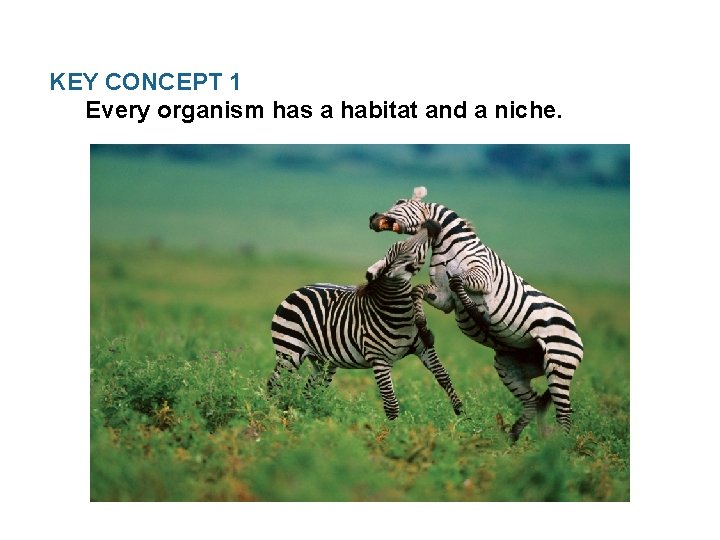
KEY CONCEPT 1 Every organism has a habitat and a niche.
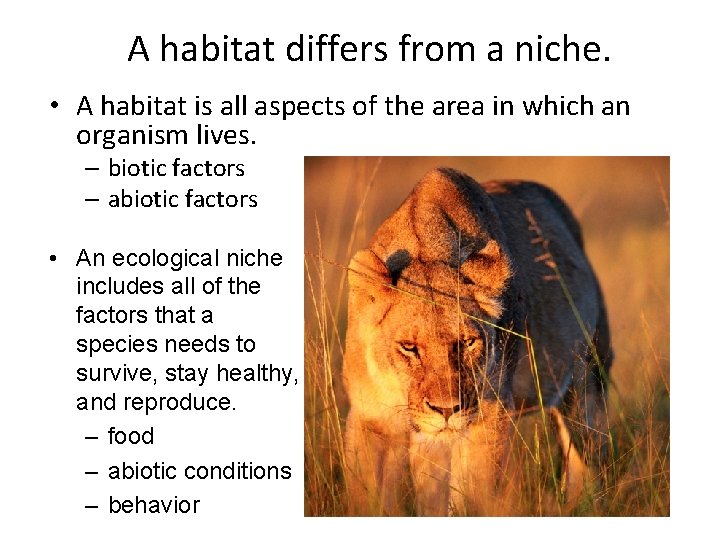
A habitat differs from a niche. • A habitat is all aspects of the area in which an organism lives. – biotic factors – abiotic factors • An ecological niche includes all of the factors that a species needs to survive, stay healthy, and reproduce. – food – abiotic conditions – behavior
Resource availability gives structure to a community. • Species can share habitats and resources. • Competition occurs when two species use resources in the same way. • Competitive exclusion keeps two species from occupying the same niche.
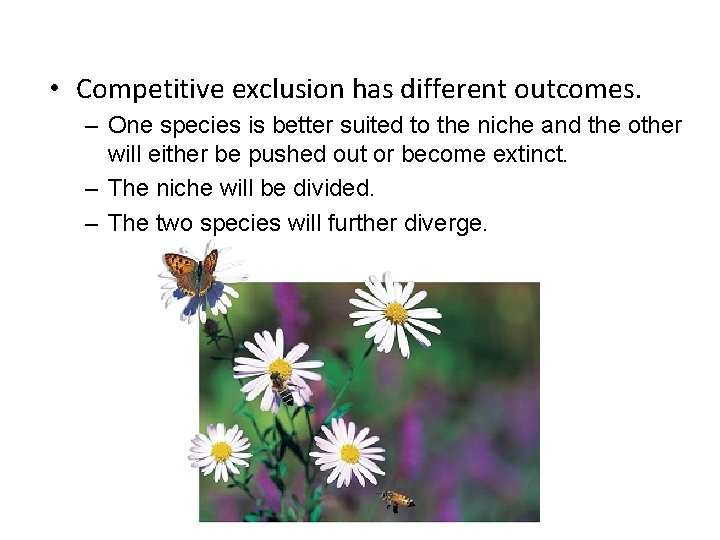
• Competitive exclusion has different outcomes. – One species is better suited to the niche and the other will either be pushed out or become extinct. – The niche will be divided. – The two species will further diverge.
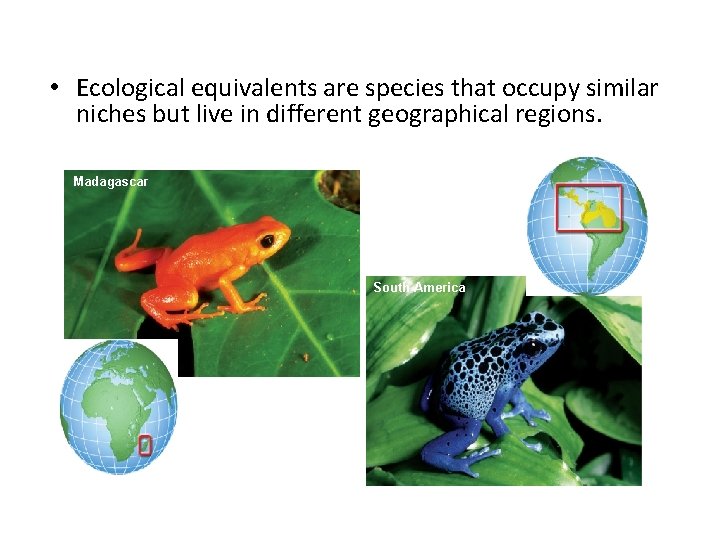
• Ecological equivalents are species that occupy similar niches but live in different geographical regions. Madagascar South America
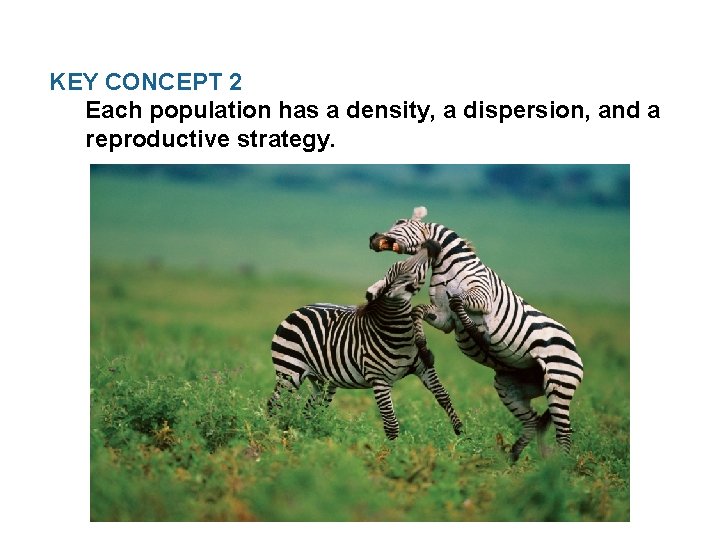
KEY CONCEPT 2 Each population has a density, a dispersion, and a reproductive strategy.
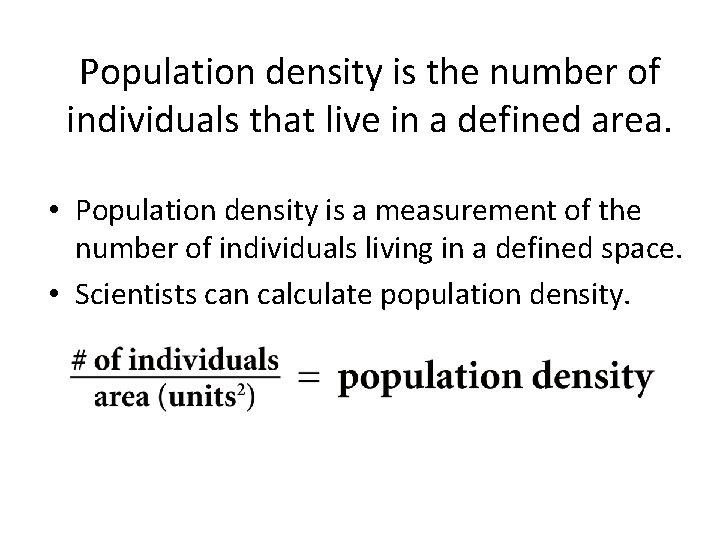
Population density is the number of individuals that live in a defined area. • Population density is a measurement of the number of individuals living in a defined space. • Scientists can calculate population density.
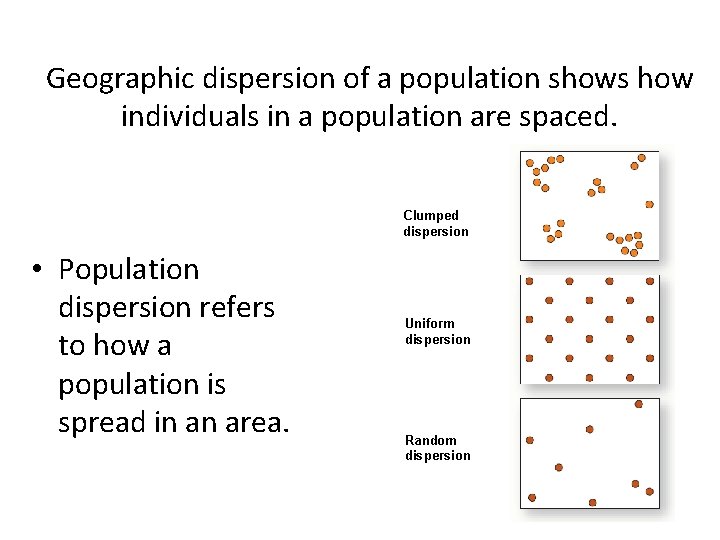
Geographic dispersion of a population shows how individuals in a population are spaced. Clumped dispersion • Population dispersion refers to how a population is spread in an area. Uniform dispersion Random dispersion
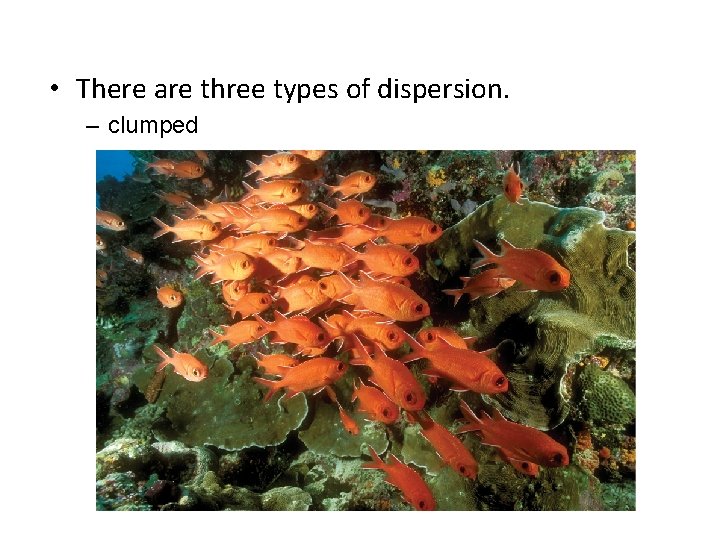
• There are three types of dispersion. – clumped
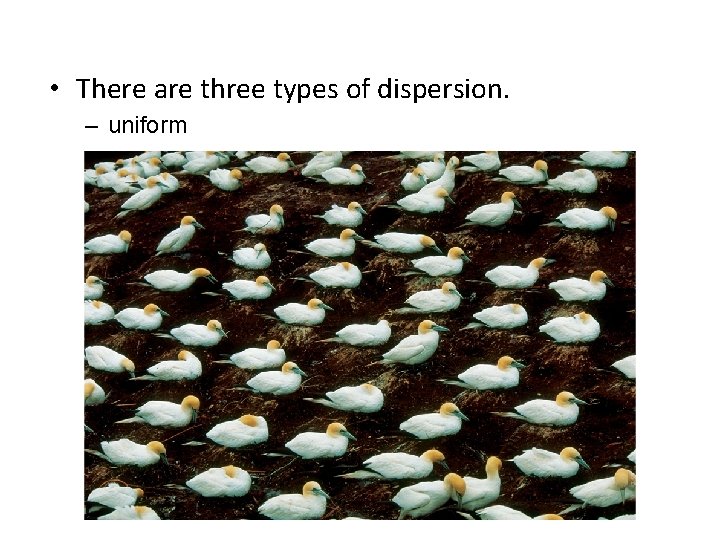
• There are three types of dispersion. – uniform
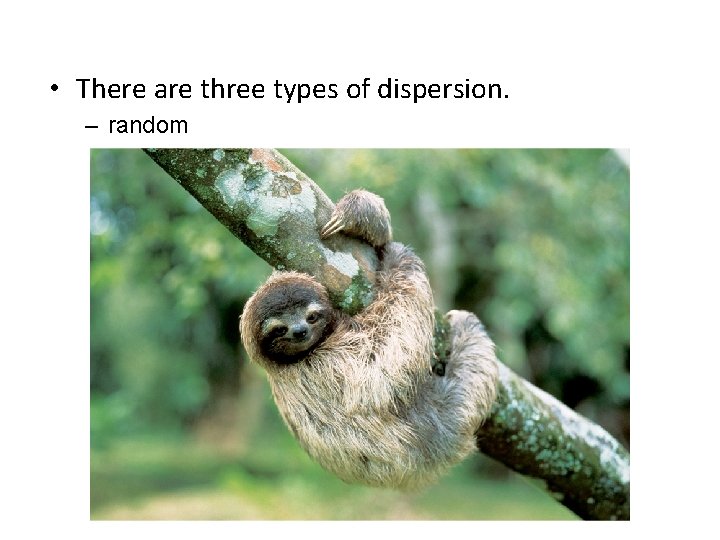
• There are three types of dispersion. – random
KEY CONCEPT 3 Populations grow in predictable patterns.
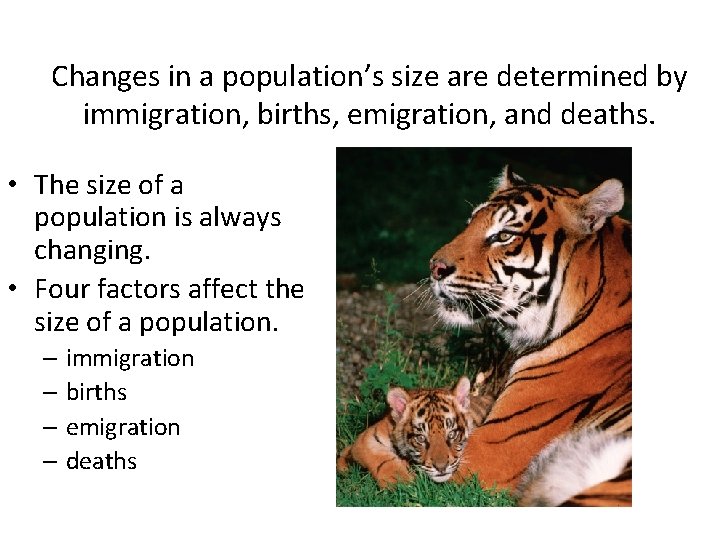
Changes in a population’s size are determined by immigration, births, emigration, and deaths. • The size of a population is always changing. • Four factors affect the size of a population. – immigration – births – emigration – deaths
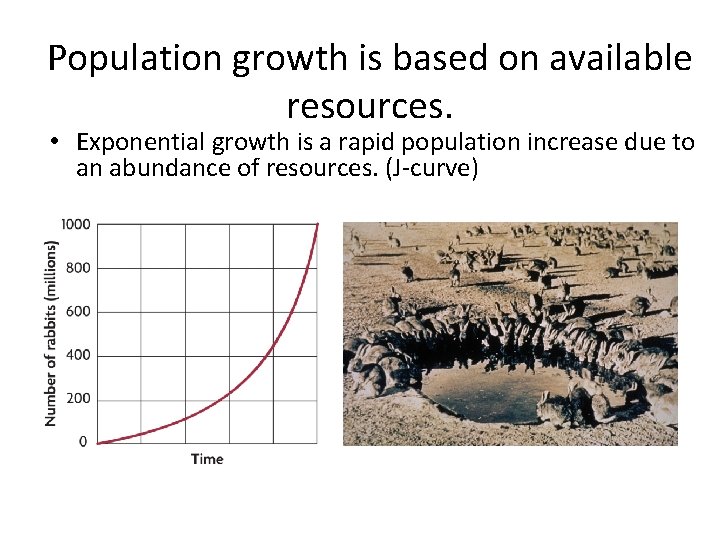
Population growth is based on available resources. • Exponential growth is a rapid population increase due to an abundance of resources. (J-curve)
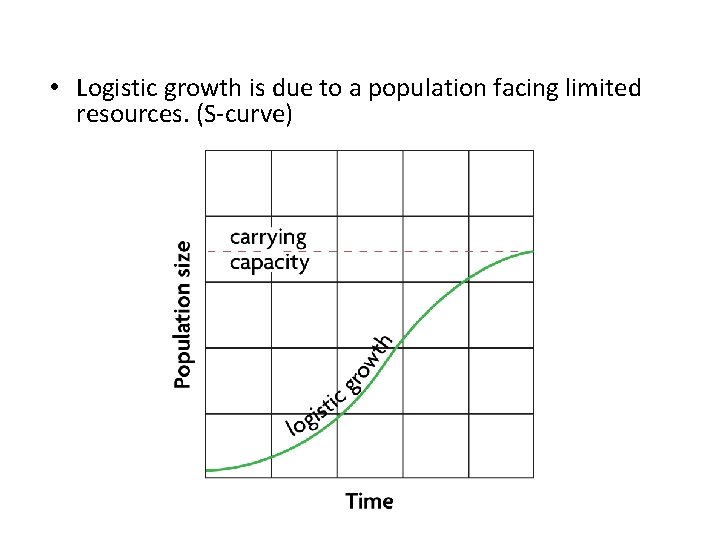
• Logistic growth is due to a population facing limited resources. (S-curve)
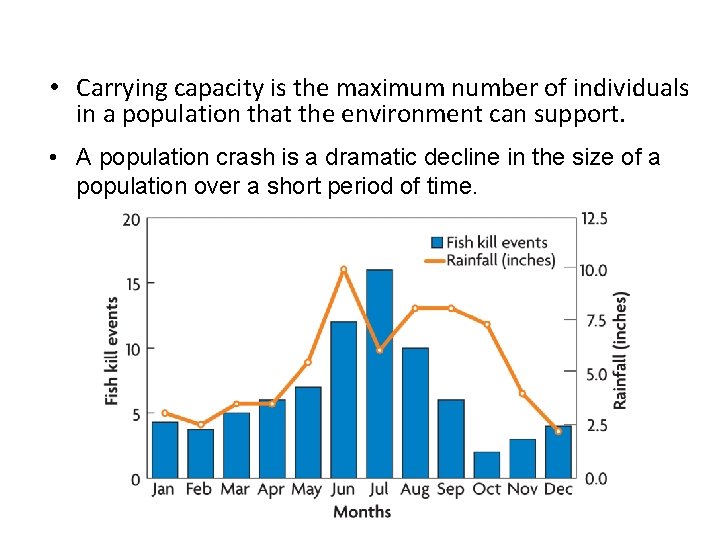
• Carrying capacity is the maximum number of individuals in a population that the environment can support. • A population crash is a dramatic decline in the size of a population over a short period of time.
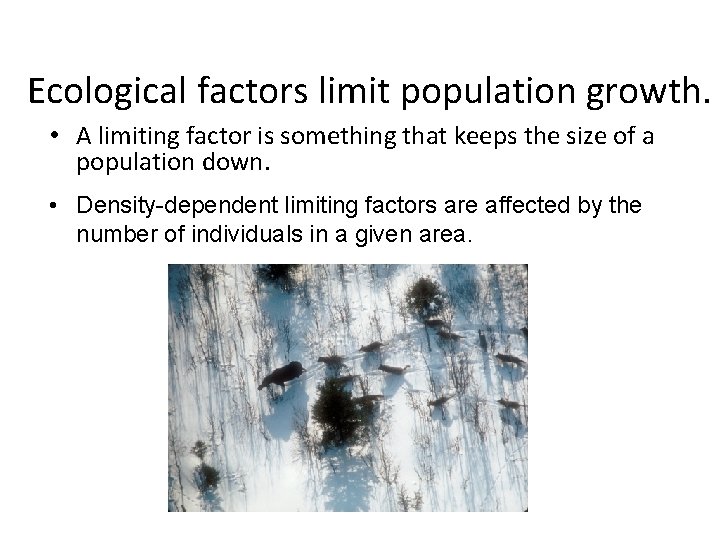
Ecological factors limit population growth. • A limiting factor is something that keeps the size of a population down. • Density-dependent limiting factors are affected by the number of individuals in a given area.
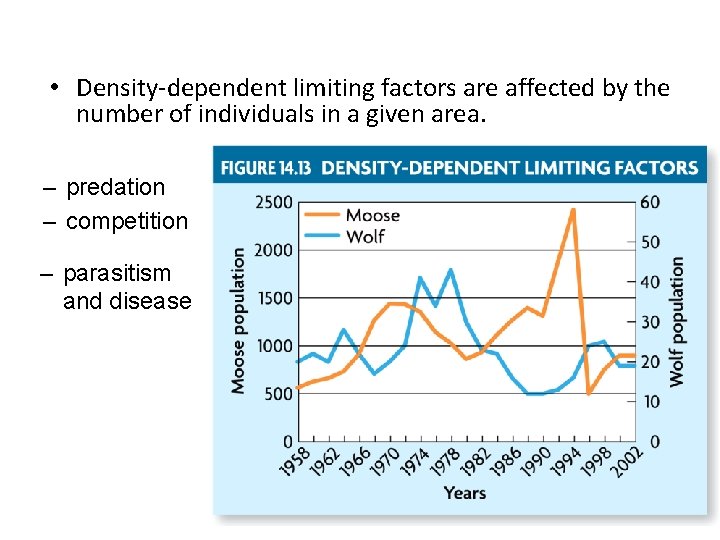
• Density-dependent limiting factors are affected by the number of individuals in a given area. – predation – competition – parasitism and disease
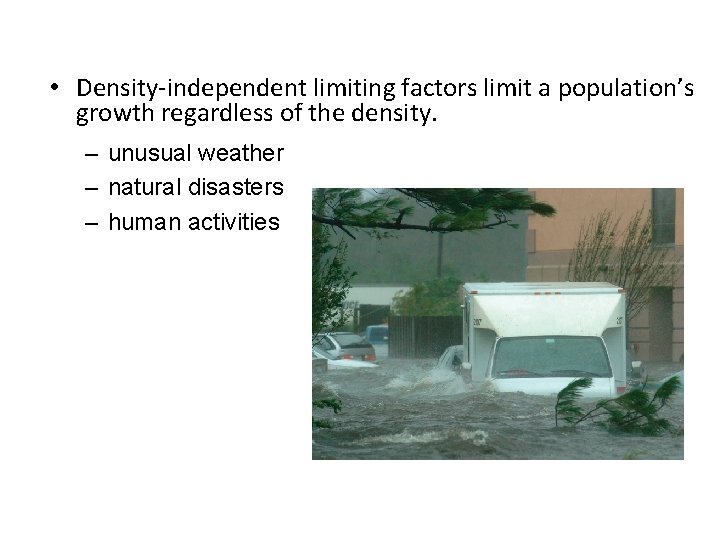
• Density-independent limiting factors limit a population’s growth regardless of the density. – unusual weather – natural disasters – human activities
- Slides: 19