
Key Area 1 7 Cellular Respiration Unit 1
- Slides: 15
Key Area 1. 7 – Cellular Respiration Unit 1 Human Cells Higher Human Biology for Cf. E Miss Aitken
Stages of Respiration • There are three stages of respiration which take place in different parts of the cell: • 1. Glycolysis • 2. Citric Acid Cycle/Krebs Cycle • 3. Electron Transport Chain
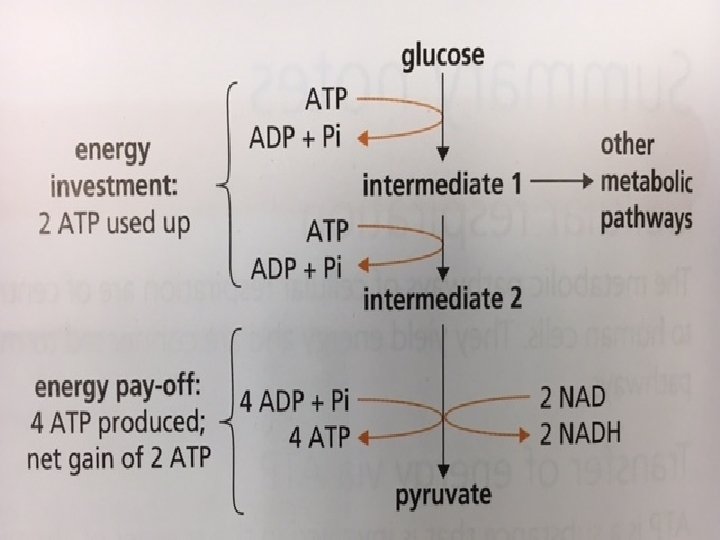
Stage 1: Glycolysis • Glycolysis means “splitting of glucose” • Glycolysis is a series of enzyme-controlled reactions which take place in the cell cytoplasm. • During glycolysis, glucose is broken down into pyruvate. • Oxygen is not required in this step.
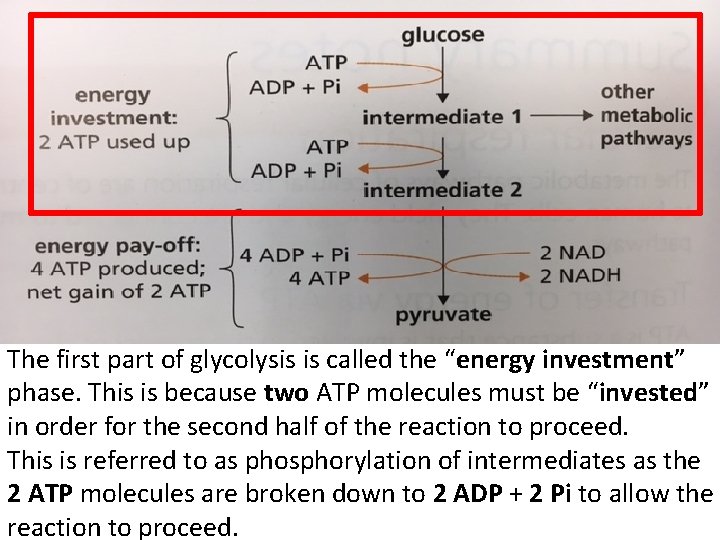
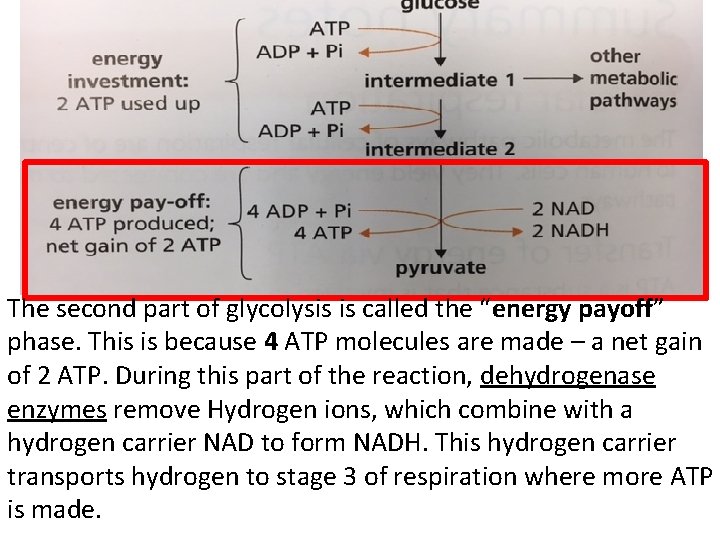
The first part of glycolysis is called the “energy investment” phase. This is because two ATP molecules must be “invested” in order for the second half of the reaction to proceed. This is referred to as phosphorylation of intermediates as the 2 ATP molecules are broken down to 2 ADP + 2 Pi to allow the reaction to proceed.
The second part of glycolysis is called the “energy payoff” phase. This is because 4 ATP molecules are made – a net gain of 2 ATP. During this part of the reaction, dehydrogenase enzymes remove Hydrogen ions, which combine with a hydrogen carrier NAD to form NADH. This hydrogen carrier transports hydrogen to stage 3 of respiration where more ATP is made.
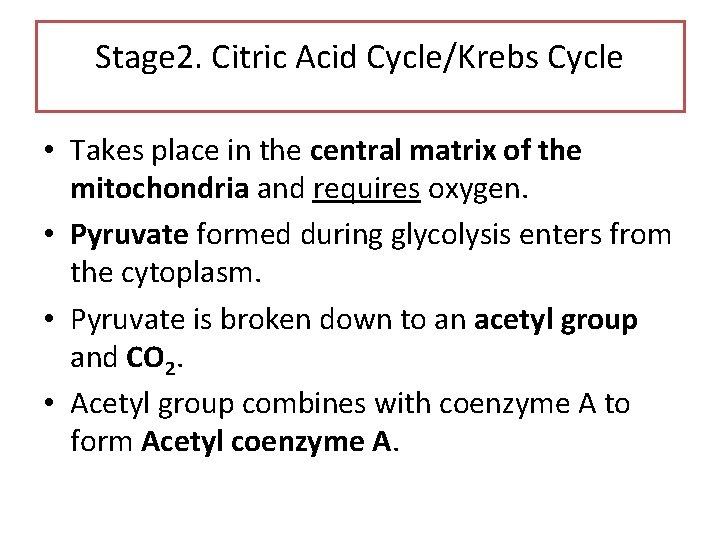
Stage 2. Citric Acid Cycle/Krebs Cycle • Takes place in the central matrix of the mitochondria and requires oxygen. • Pyruvate formed during glycolysis enters from the cytoplasm. • Pyruvate is broken down to an acetyl group and CO 2. • Acetyl group combines with coenzyme A to form Acetyl coenzyme A.
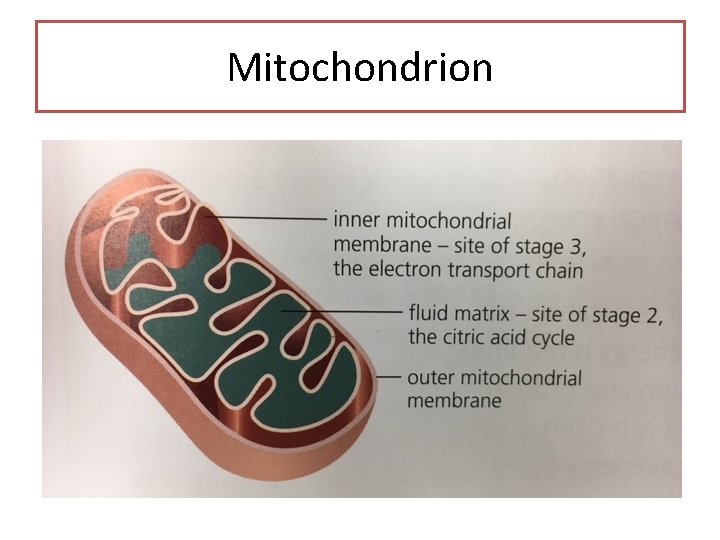
Mitochondrion
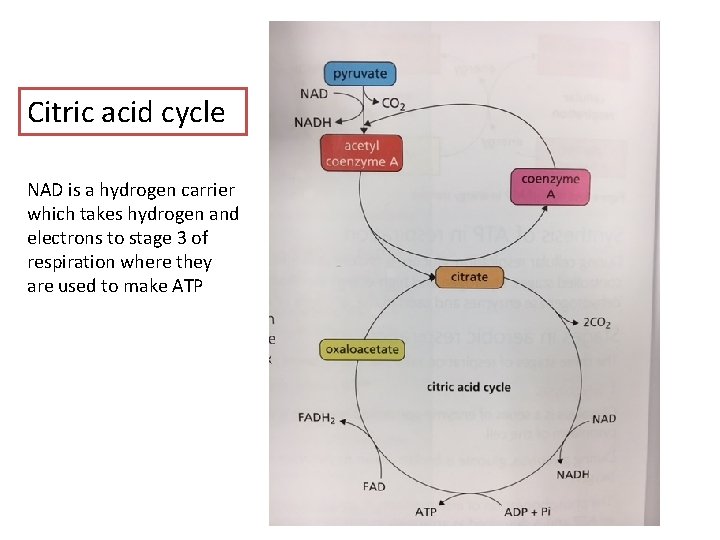
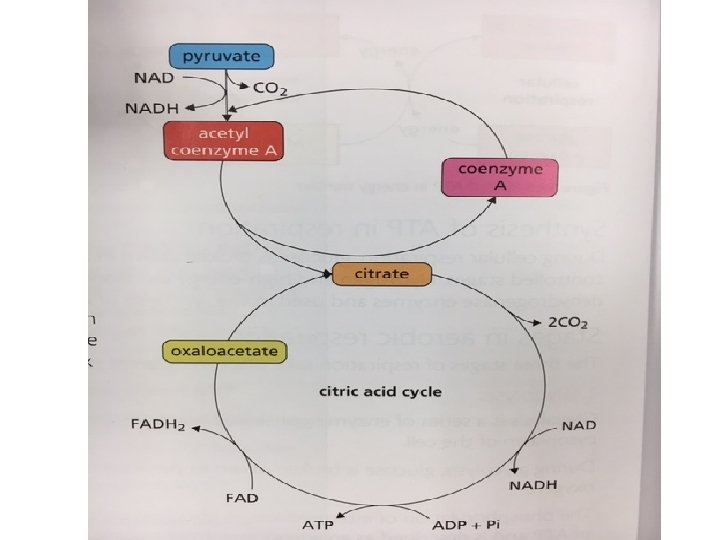
Citric acid cycle (continued) • Acetyl coenzyme A combines with oxaloacetate to form citrate. • Citrate undergoes a series of enzyme steps resulting in one ATP molecule being made. • CO 2 is also released and oxaloacetate is regenerated. • Dehydrogenase enzymes remove hydrogen ions and electrons during the citric acid cycle. • These are carried to stage 3 by coenzyme hydrogen carrier NAD
Citric acid cycle NAD is a hydrogen carrier which takes hydrogen and electrons to stage 3 of respiration where they are used to make ATP
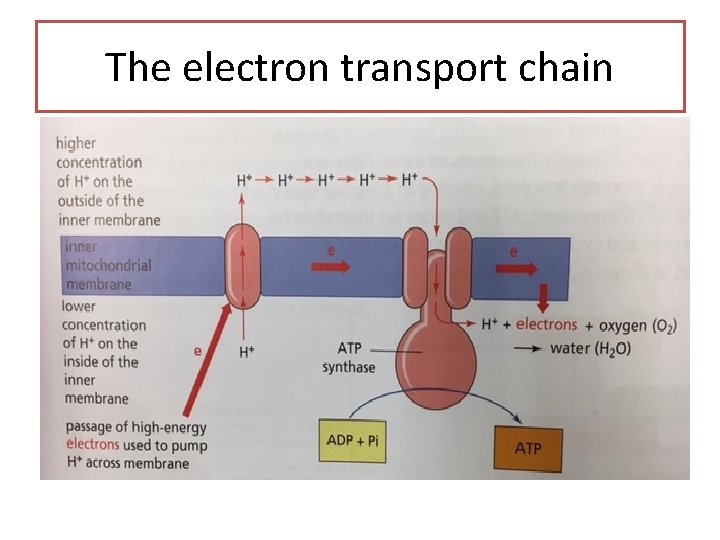
Stage 3: Electron transport chain • Takes place on inner membranes of mitochondria. • Requires oxygen. • Hydrogen and electrons are carried here by NAD from glycolysis and citric acid cycle. • These are then used to form a lot of ATP molecules.
Stage 3: Electron transport chain • Made up of a chain of electron acceptor proteins attached to inner membranes of mitochondria. • High energy electrons from NAD and FAD are passed along chain. • Their energy is used to pump hydrogen ions across inner mitochondrial membranes. • Return flow of hydrogen ions drives the enzyme ATP synthase which results in the synthesis of ATP from ADP and Pi. • Oxygen is the final hydrogen acceptor forming water.
Stage 1 • Name of stage • Process • ATP made and used • Enzymes involved • Carriers involved Key Area 1. 7 Cellular Respiration Stage 3 • Name of stage • Process • How is ATP made? • Enzymes involved Stage 2 • Name of stage • Process • ATP made • Enzymes involved • Carriers involved
The electron transport chain