
Ketamine and its metabolites and their potential use
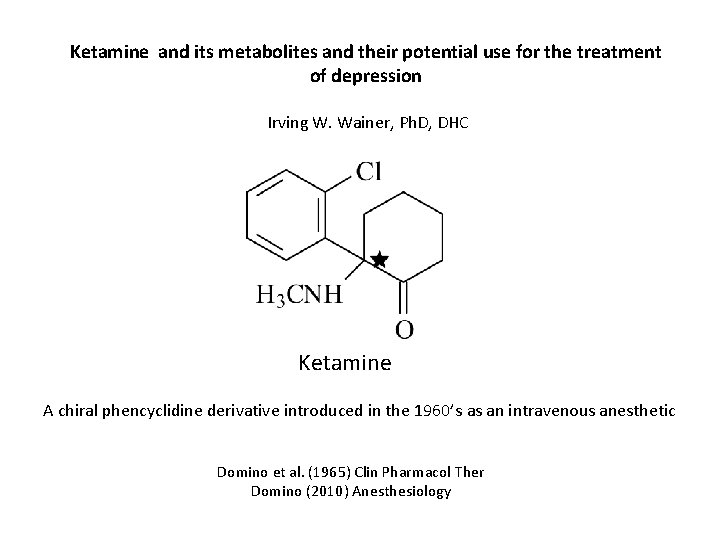
Ketamine and its metabolites and their potential use for the treatment of depression Irving W. Wainer, Ph. D, DHC Ketamine A chiral phencyclidine derivative introduced in the 1960’s as an intravenous anesthetic Domino et al. (1965) Clin Pharmacol Ther Domino (2010) Anesthesiology
(R, S)-Ket is extensively metabolized by cytochrome P 450 enzymes
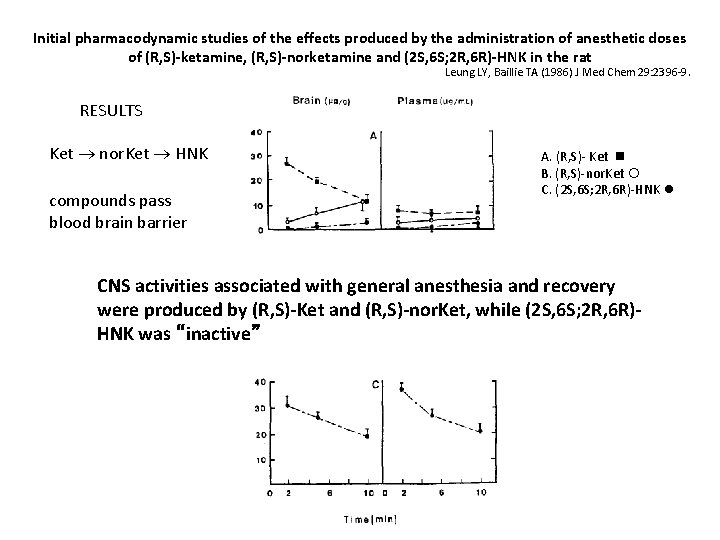
Initial pharmacodynamic studies of the effects produced by the administration of anesthetic doses of (R, S)-ketamine, (R, S)-norketamine and (2 S, 6 S; 2 R, 6 R)-HNK in the rat Leung LY, Baillie TA (1986) J Med Chem 29: 2396 -9. RESULTS Ket nor. Ket HNK compounds pass blood brain barrier A. (R, S)- Ket B. (R, S)-nor. Ket C. (2 S, 6 S; 2 R, 6 R)-HNK CNS activities associated with general anesthesia and recovery were produced by (R, S)-Ket and (R, S)-nor. Ket, while (2 S, 6 S; 2 R, 6 R)HNK was “inactive”
The “ketamine paradigm” • The major metabolite of ketamine is norketamine • The therapeutic activity is due to ketamine and norketamine • (R, S)-Ket and (R, S)-nor. Ket are NMDA inhibitors and this is the basis for their pharmacological effects (R, S)-Ket is an antidepressant agent The administration of a sub-anesthetic dose of (R, S)-Ket (0. 5 mg/Kg as a 40 -min iv infusion) produces rapid (within 2 hr) and sustained (up to 7 days) antidepressant effects in patients suffering from treatment-resistant major depressive disorder and bipolar depression. The “Ketamine paradigm” does not work for sub-anesthetic dosing of (R, S)-Ket It has not been possible to establish pharmacodynamic relationships for the antidepressant effects produced by sub-anesthetic doses of (R, S)-Ket when only the plasma concentrations of (R, S)-Ket and (R, S)-nor. Ket have been modeled.

It is a capital mistake to theorize before one has data. Insensibly one begins to twist facts to suit theories, instead of theories to suit facts. Sherlock Holmes in “A Scandal in Bohemia” Arthur Conan Doyle
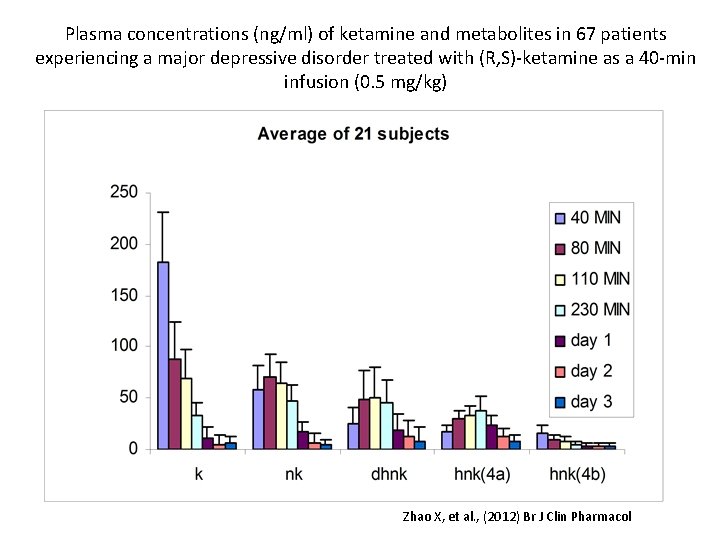
Plasma concentrations (ng/ml) of ketamine and metabolites in 67 patients experiencing a major depressive disorder treated with (R, S)-ketamine as a 40 -min infusion (0. 5 mg/kg) Zhao X, et al. , (2012) Br J Clin Pharmacol
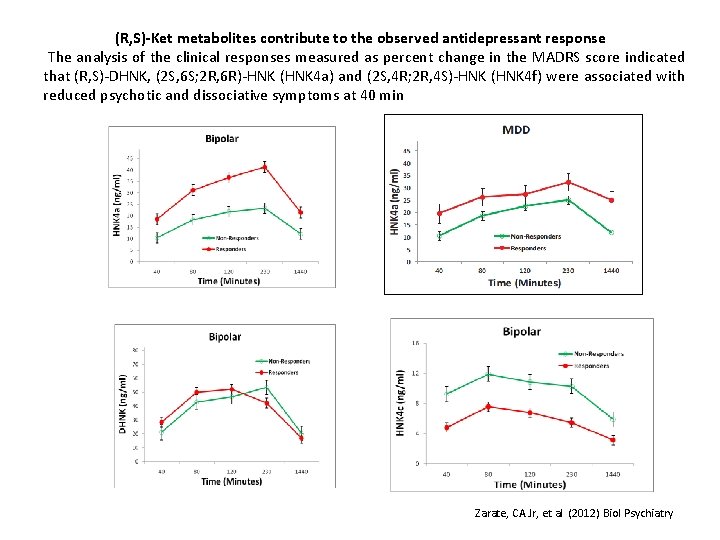
(R, S)-Ket metabolites contribute to the observed antidepressant response The analysis of the clinical responses measured as percent change in the MADRS score indicated that (R, S)-DHNK, (2 S, 6 S; 2 R, 6 R)-HNK (HNK 4 a) and (2 S, 4 R; 2 R, 4 S)-HNK (HNK 4 f) were associated with reduced psychotic and dissociative symptoms at 40 min Zarate, CA Jr, et al (2012) Biol Psychiatry
Are (2 R, 6 R)-HNK and (2 S, 6 S)-HNK antidepressants?

(2 S, 6 S)-HNK and (2 R, 6 R)-HNK decrease depressive-like behaviour Immobility time in a Forced Swim Test The FST is a classic tests of antidepressant efficacy used in behavioral pharmacology. Every known antidepressant drug exert antidepressant effects in this test A positive effect in the FST is expected prior to undertaking human clinical trials. Panos Z, et al. (2106) Nature
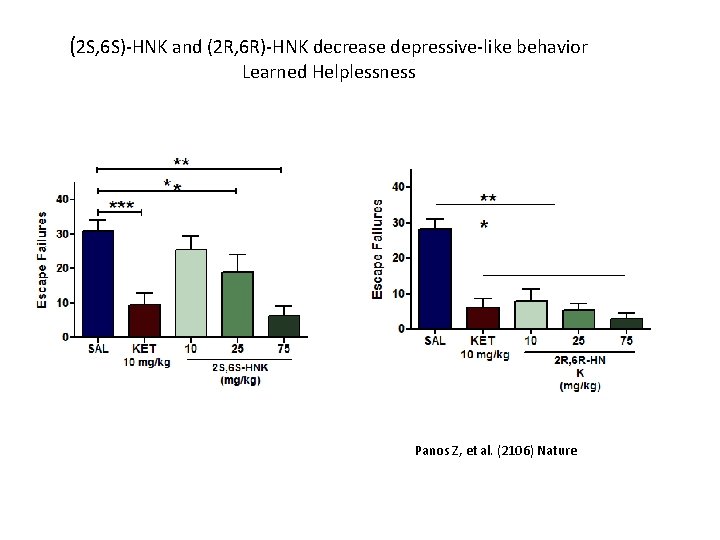
(2 S, 6 S)-HNK and (2 R, 6 R)-HNK decrease depressive-like behavior Learned Helplessness Panos Z, et al. (2106) Nature
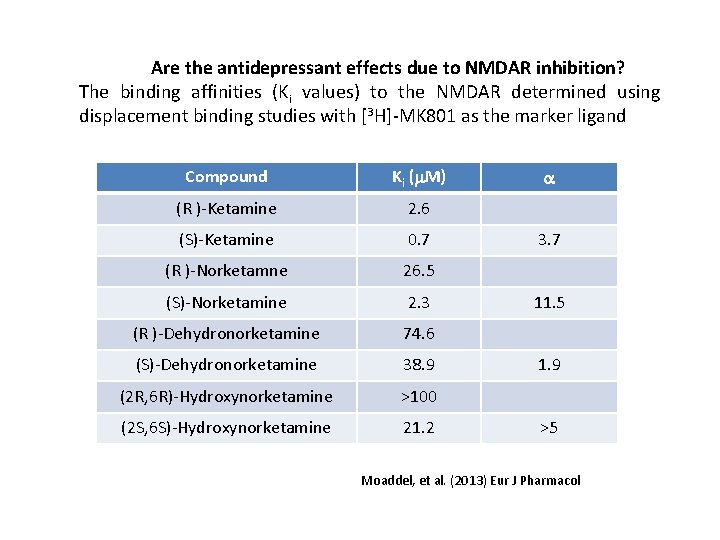
Are the antidepressant effects due to NMDAR inhibition? The binding affinities (Ki values) to the NMDAR determined using displacement binding studies with [3 H]-MK 801 as the marker ligand Compound Ki (m. M) (R )-Ketamine 2. 6 (S)-Ketamine 0. 7 (R )-Norketamne 26. 5 (S)-Norketamine 2. 3 (R )-Dehydronorketamine 74. 6 (S)-Dehydronorketamine 38. 9 (2 R, 6 R)-Hydroxynorketamine >100 (2 S, 6 S)-Hydroxynorketamine 21. 2 a 3. 7 11. 5 1. 9 >5 Moaddel, et al. (2013) Eur J Pharmacol
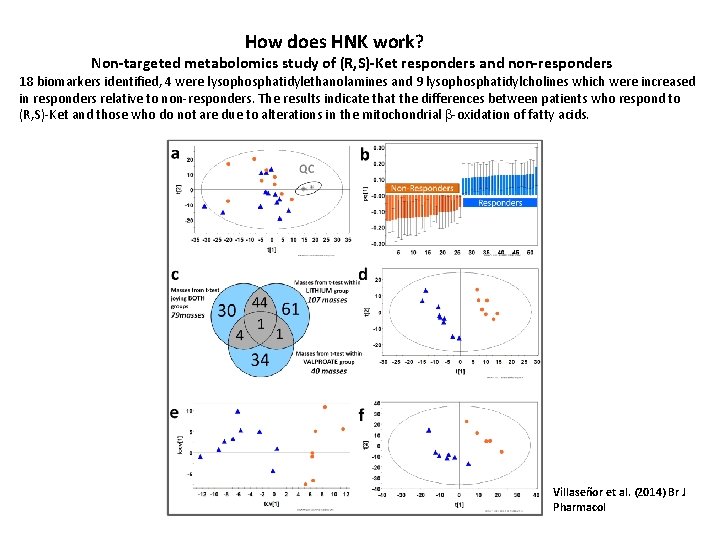
How does HNK work? Non-targeted metabolomics study of (R, S)-Ket responders and non-responders 18 biomarkers identified, 4 were lysophosphatidylethanolamines and 9 lysophosphatidylcholines which were increased in responders relative to non-responders. The results indicate that the differences between patients who respond to (R, S)-Ket and those who do not are due to alterations in the mitochondrial b-oxidation of fatty acids. Villaseñor et al. (2014) Br J Pharmacol
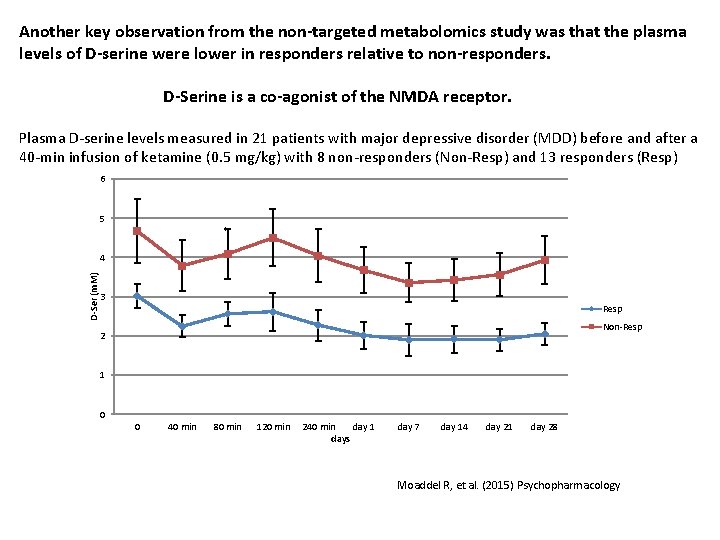
Another key observation from the non-targeted metabolomics study was that the plasma levels of D-serine were lower in responders relative to non-responders. D-Serine is a co-agonist of the NMDA receptor. Plasma D-serine levels measured in 21 patients with major depressive disorder (MDD) before and after a 40 -min infusion of ketamine (0. 5 mg/kg) with 8 non-responders (Non-Resp) and 13 responders (Resp) 6 5 * D-Ser (m. M) 4 3 Resp Non-Resp 2 1 0 0 40 min 80 min 120 min 240 min day 1 days day 7 day 14 day 21 day 28 Moaddel R, et al. (2015) Psychopharmacology
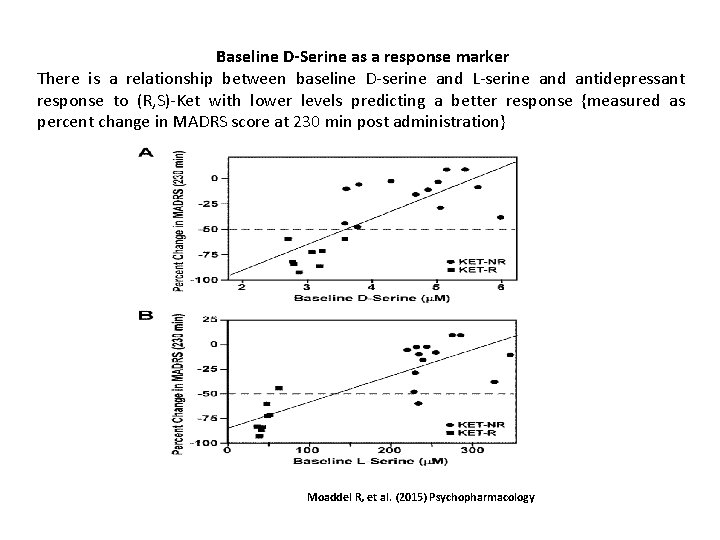
Baseline D-Serine as a response marker There is a relationship between baseline D-serine and L-serine and antidepressant response to (R, S)-Ket with lower levels predicting a better response {measured as percent change in MADRS score at 230 min post administration} Moaddel R, et al. (2015) Psychopharmacology
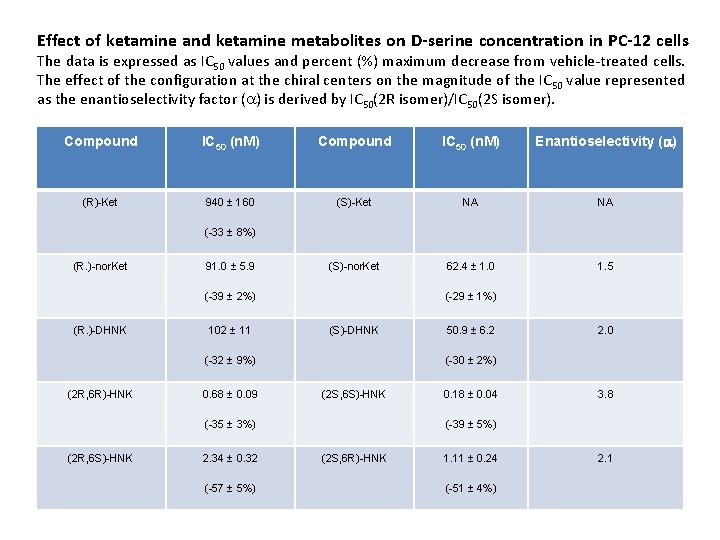
Effect of ketamine and ketamine metabolites on D-serine concentration in PC-12 cells The data is expressed as IC 50 values and percent (%) maximum decrease from vehicle-treated cells. The effect of the configuration at the chiral centers on the magnitude of the IC 50 value represented as the enantioselectivity factor (a) is derived by IC 50(2 R isomer)/IC 50(2 S isomer). Compound IC 50 (n. M) Enantioselectivity (a) (R)-Ket 940 ± 160 (S)-Ket NA NA (S)-nor. Ket 62. 4 ± 1. 0 1. 5 (-33 ± 8%) (R. )-nor. Ket 91. 0 ± 5. 9 (-39 ± 2%) (R. )-DHNK 102 ± 11 (-29 ± 1%) (S)-DHNK (-32 ± 9%) (2 R, 6 R)-HNK 0. 68 ± 0. 09 2. 34 ± 0. 32 (-57 ± 5%) 2. 0 (-30 ± 2%) (2 S, 6 S)-HNK (-35 ± 3%) (2 R, 6 S)-HNK 50. 9 ± 6. 2 0. 18 ± 0. 04 3. 8 (-39 ± 5%) (2 S, 6 R)-HNK 1. 11 ± 0. 24 (-51 ± 4%) 2. 1
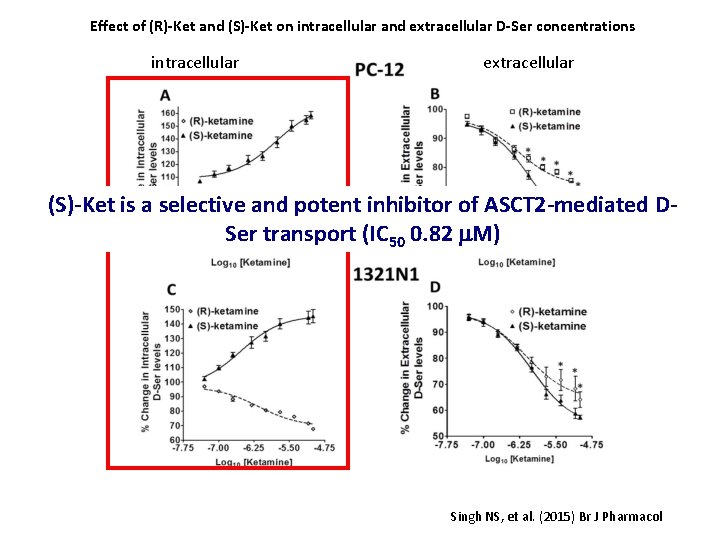
Effect of (R)-Ket and (S)-Ket on intracellular and extracellular D-Ser concentrations intracellular extracellular (S)-Ket is a selective and potent inhibitor of ASCT 2 -mediated DSer transport (IC 50 0. 82 m. M) Singh NS, et al. (2015) Br J Pharmacol
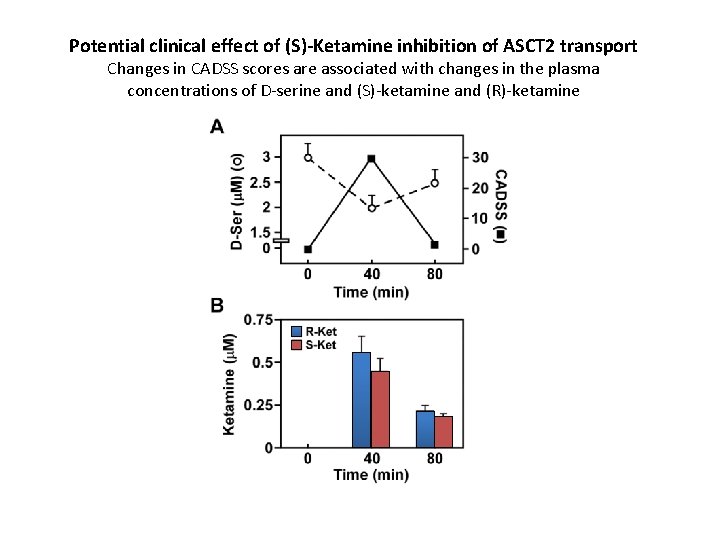
Potential clinical effect of (S)-Ketamine inhibition of ASCT 2 transport Changes in CADSS scores are associated with changes in the plasma concentrations of D-serine and (S)-ketamine and (R)-ketamine
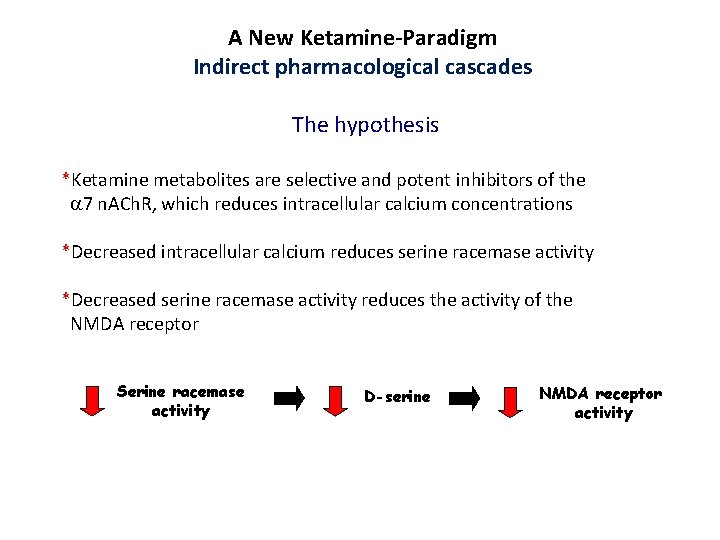
A New Ketamine-Paradigm Indirect pharmacological cascades The hypothesis *Ketamine metabolites are selective and potent inhibitors of the a 7 n. ACh. R, which reduces intracellular calcium concentrations *Decreased intracellular calcium reduces serine racemase activity *Decreased serine racemase activity reduces the activity of the NMDA receptor Serine racemase activity D-serine NMDA receptor activity
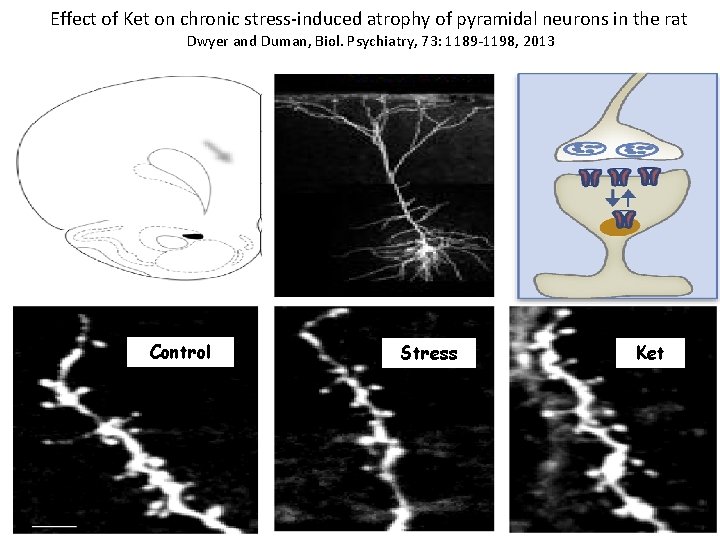
Effect of Ket on chronic stress-induced atrophy of pyramidal neurons in the rat Dwyer and Duman, Biol. Psychiatry, 73: 1189 -1198, 2013 Control Stress Ket
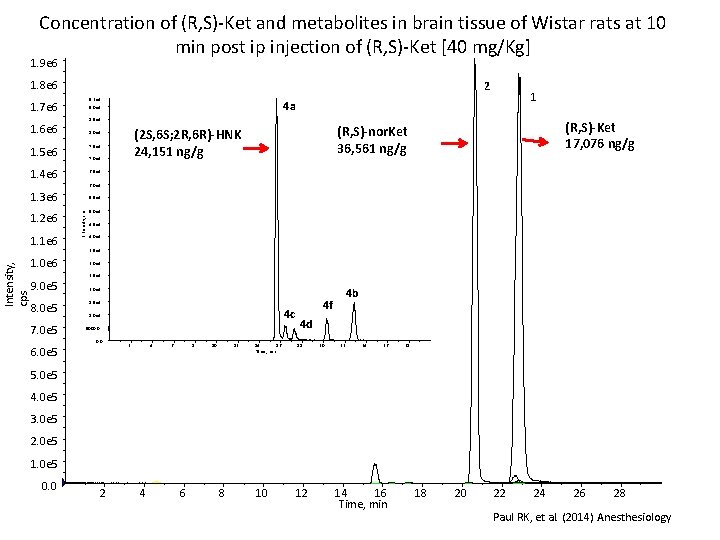
Concentration of (R, S)-Ket and metabolites in brain tissue of Wistar rats at 10 min post ip injection of (R, S)-Ket [40 mg/Kg] 1. 9 e 6 1. 8 e 6 2 9. 3 e 4 1. 7 e 6 8. 5 e 4 1. 6 e 6 7. 5 e 4 1. 4 e 6 6. 5 e 4 7. 0 e 4 (R, S)-Ket 17, 076 ng/g (R, S)-nor. Ket 36, 561 ng/g (2 S, 6 S; 2 R, 6 R)-HNK 24, 151 ng/g 8. 0 e 4 1. 5 e 6 1 4 a 9. 0 e 4 6. 0 e 4 1. 3 e 6 Intensity, cps 1. 1 e 6 1. 0 e 6 9. 0 e 5 8. 0 e 5 7. 0 e 5 Intensity, cps 1. 2 e 6 5. 5 e 4 5. 0 e 4 4. 5 e 4 4. 0 e 4 3. 5 e 4 3. 0 e 4 2. 5 e 4 4 b 2. 0 e 4 4 f 1. 5 e 4 4 c 1. 0 e 4 5000. 0 6. 0 e 5 2 4 6 8 10 12 4 d 14 16 Time, min 18 10 12 20 22 24 26 28 5. 0 e 5 4. 0 e 5 3. 0 e 5 2. 0 e 5 1. 0 e 5 0. 0 2 4 6 8 14 16 Time, min 18 20 22 24 26 28 Paul RK, et al. (2014) Anesthesiology
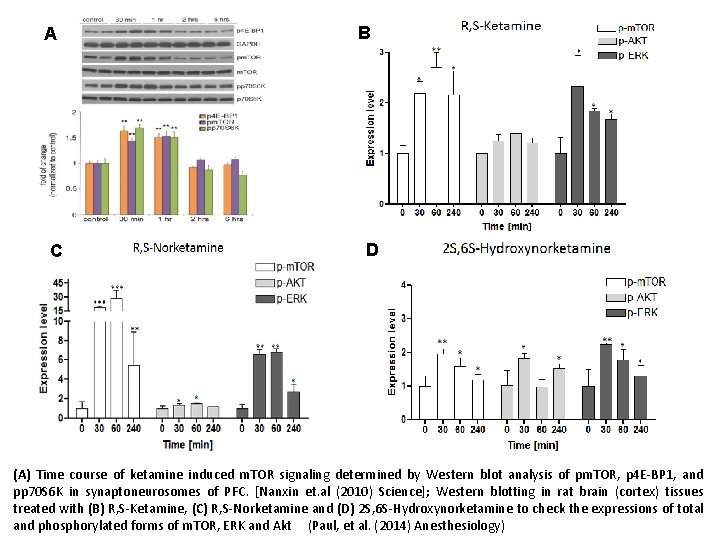
A C B D (A) Time course of ketamine induced m. TOR signaling determined by Western blot analysis of pm. TOR, p 4 E-BP 1, and pp 70 S 6 K in synaptoneurosomes of PFC. [Nanxin et. al (2010) Science]; Western blotting in rat brain (cortex) tissues treated with (B) R, S-Ketamine, (C) R, S-Norketamine and (D) 2 S, 6 S-Hydroxynorketamine to check the expressions of total and phosphorylated forms of m. TOR, ERK and Akt (Paul, et al. (2014) Anesthesiology)
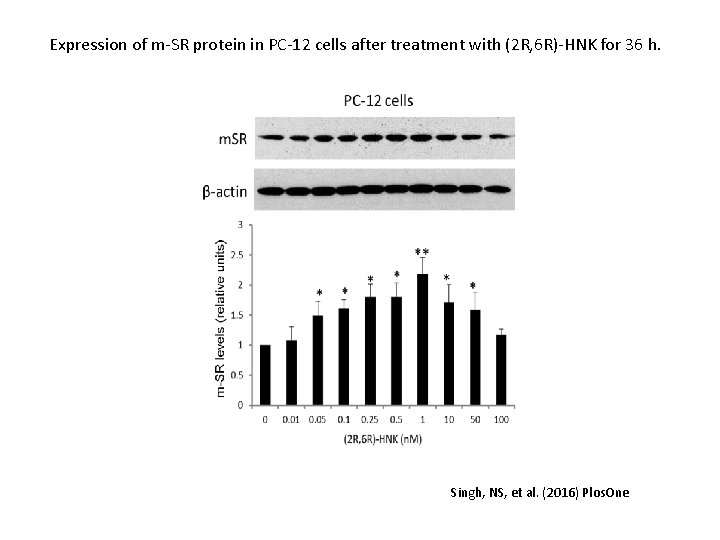
Expression of m-SR protein in PC-12 cells after treatment with (2 R, 6 R)-HNK for 36 h. Singh, NS, et al. (2016) Plos. One
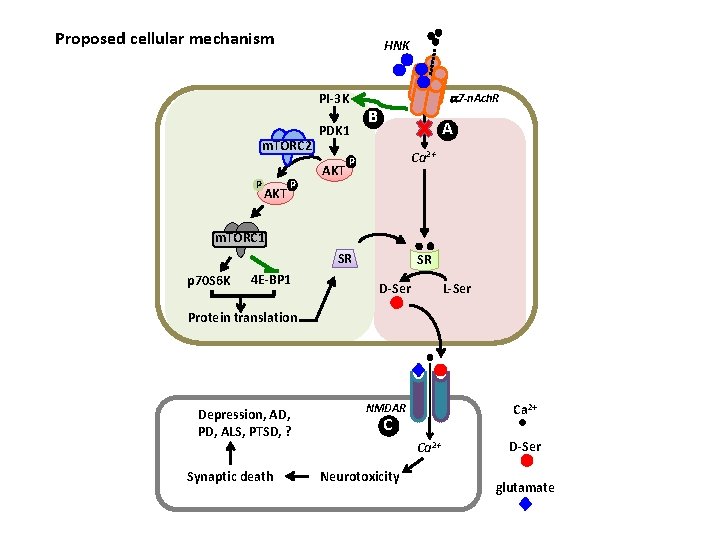
Proposed cellular mechanism HNK PI-3 K m. TORC 2 P AKT P PDK 1 AKT a 7 -n. Ach. R B A Ca 2+ P m. TORC 1 SR p 70 S 6 K 4 E-BP 1 SR D-Ser L-Ser Protein translation Depression, AD, PD, ALS, PTSD, ? Synaptic death Ca 2+ NMDAR C Ca 2+ Neurotoxicity D-Ser glutamate
What about neuropathic pain? We have no direct data regarding ketamine metabolites. However, gabapentin and (S)-pregabalin decrease intracellular D-serine concentrations in PC-12 cells, but do not increase serine racemase expression – a Ca 2+ effect? Singh, et al. (2013) Neurosci Lett
The average plasma concentrations of (R)- and (S)-ketamine and (R)- and (S)-norketamine in 16 CRPS patients receiving a sub-anesthetic dose of (R, S)-ketamine as a 24 h continuous infusion for 5 days and the corresponding mean pain scores. Goldberg ME, et al. (2010) Pain Physician
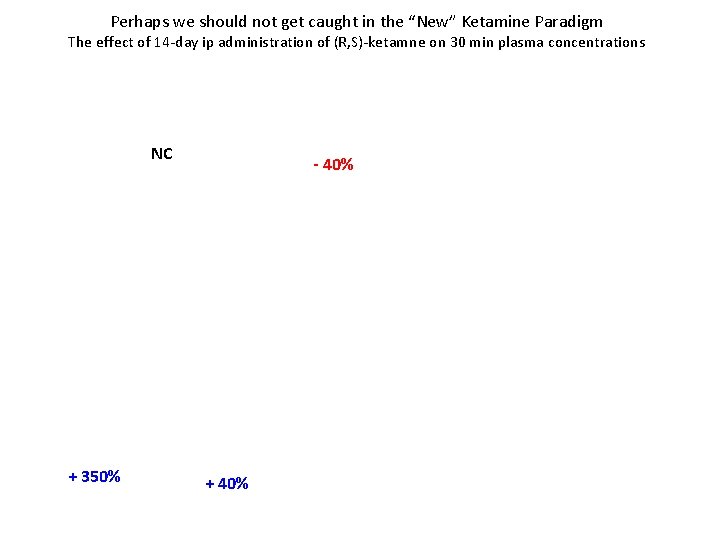
Perhaps we should not get caught in the “New” Ketamine Paradigm The effect of 14 -day ip administration of (R, S)-ketamne on 30 min plasma concentrations NC + 350% - 40% + 40%
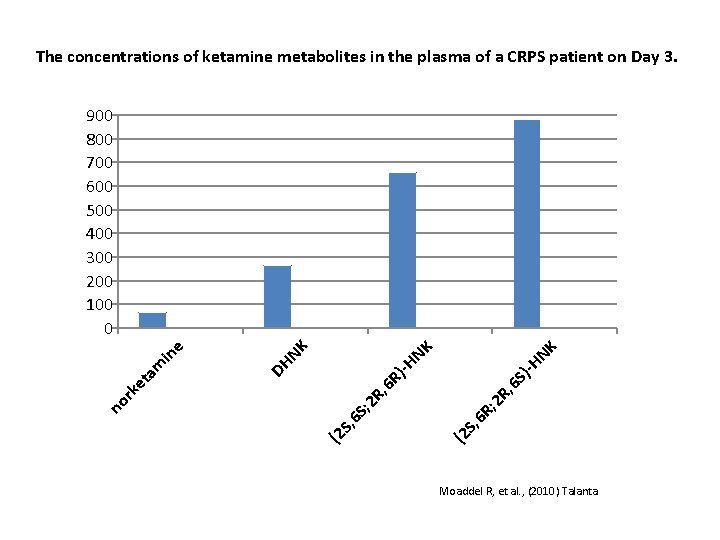
The concentrations of ketamine metabolites in the plasma of a CRPS patient on Day 3. NK 6 S R, ; 2 6 R S, (2 S, 6 S ; 2 R, 6 R )-H NK NK DH (2 no rk et am in e 900 800 700 600 500 400 300 200 100 0 Moaddel R, et al. , (2010) Talanta

- Slides: 28