
Keplers Laws Physics Mrs Coyle Geocentric View Points
- Slides: 17
Kepler’s Laws Physics Mrs. Coyle
Geocentric View Points Aristotle (Greek) 384 -322 BC Ptolemy (Alexandrian Greek) 85 -65 AD
Heliocentric Viewpoints Aristarchus (Greek)310 -230 BC Copernicus (Poland Italy) 1473 -1543 Galileo Galilei (Italian) 1564 -1642
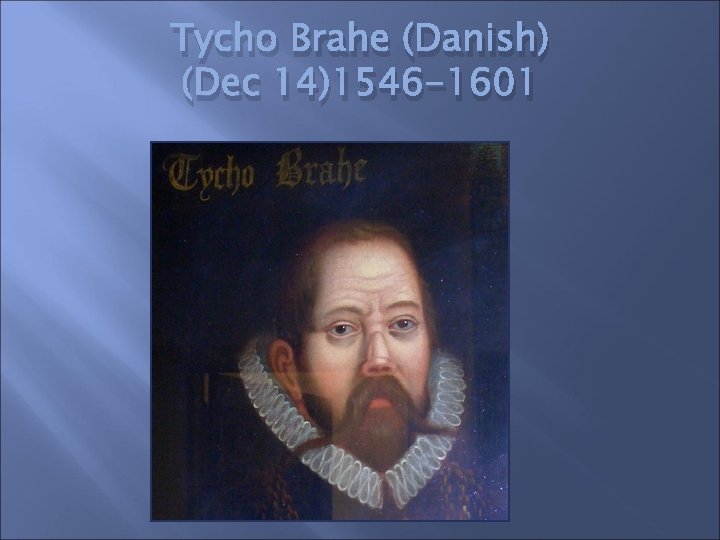
Tycho Brahe (Danish) (Dec 14)1546 -1601
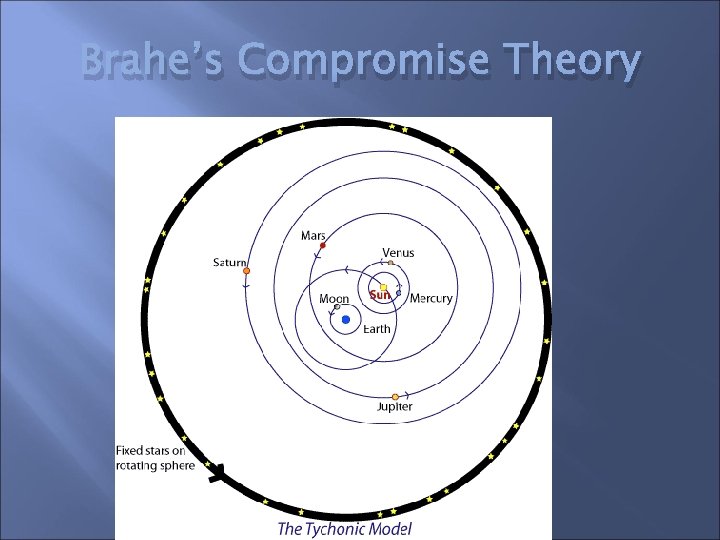
Tycho Brahe (Danish) 1546 -1601 Worked on the Island of Hven near Copenhagen at the Uraniborg Observatory Compromise Theory: The Sun orbits the Earth, but the remaining planets orbit the Sun. Btrahe passed along his observations to Johannes Kepler, his assistant.
Brahe’s Compromise Theory
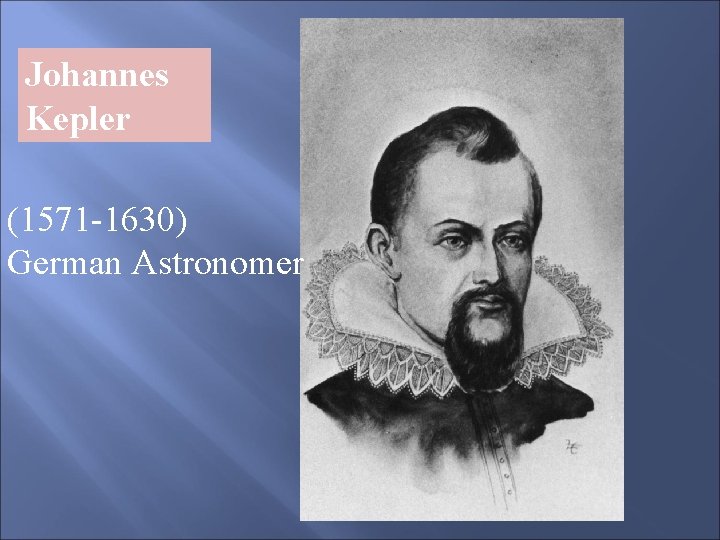
Johannes Kepler (1571 -1630) German Astronomer
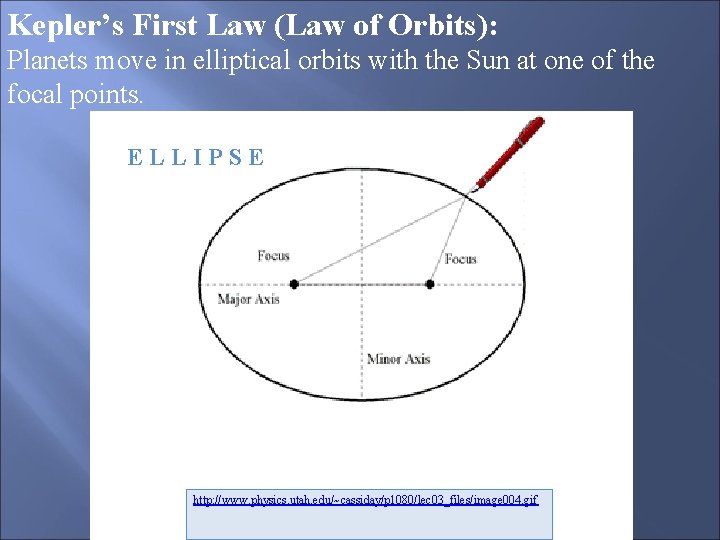
Kepler’s First Law (Law of Orbits): Planets move in elliptical orbits with the Sun at one of the focal points. ELLIPSE http: //www. physics. utah. edu/~cassiday/p 1080/lec 03_files/image 004. gif
Kepler’s Laws Animation http: //astro. unl. edu/naap/pos/animations/kepler. swf
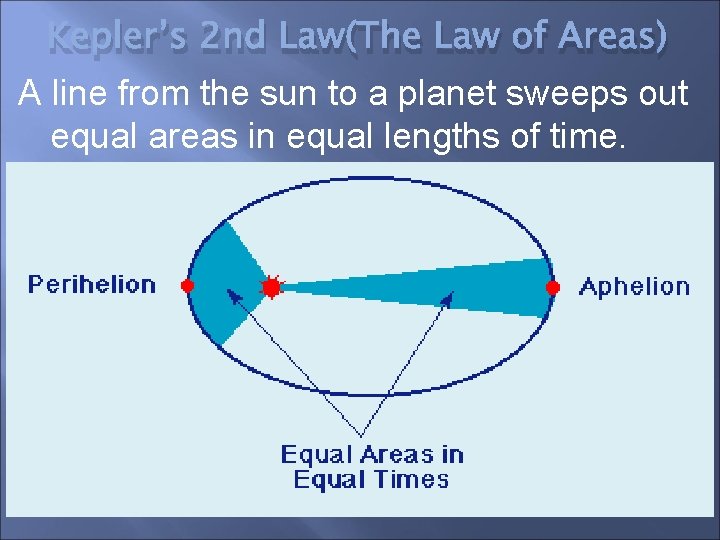
Kepler’s 2 nd Law(The Law of Areas) A line from the sun to a planet sweeps out equal areas in equal lengths of time.
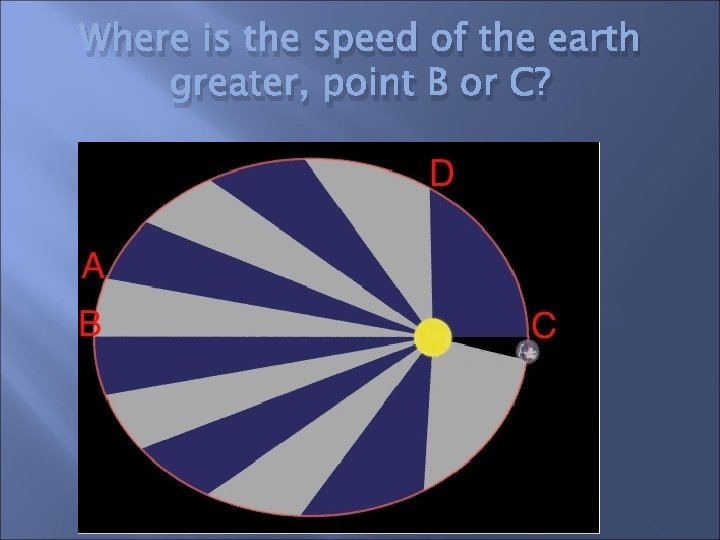
Where is the speed of the earth greater, point B or C?
Kepler’s Laws Animation http: //astro. unl. edu/naap/pos/animations/kepler. swf
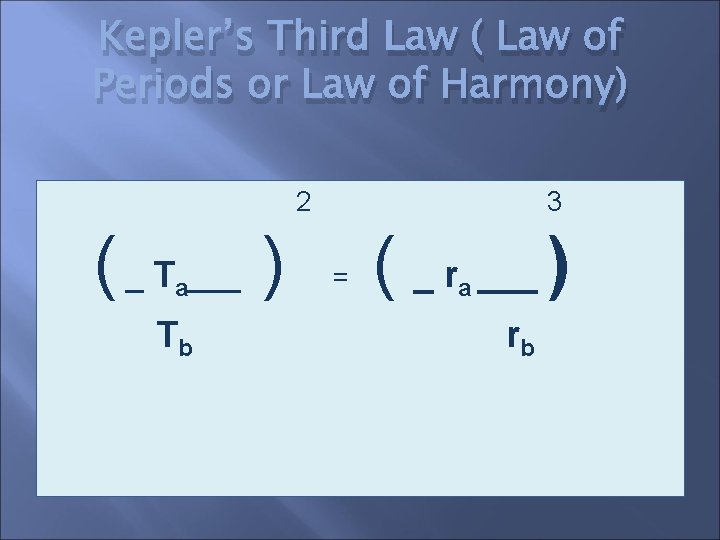
Kepler’s Third Law ( Law of Periods or Law of Harmony) The square of the orbital period of a planet is directly proportional to the cube of the average distance of the planet from the Sun. K for our Solar System
Kepler’s Third Law ( Law of Periods or Law of Harmony) 2 ( _ T ___ ) a Tb 3 = ( _ r ___ ) a rb
EXAMPLE: An asteroid revolves around the sun with a mean orbital radius of three times that of the earth. What is the period of the asteroid in earth years? Answer: 5. 2 y
Video -9 Min http: //www. youtube. com/watch? v=W 073 Kn 40 K Z 0