
Kentucky Opioid Response Effort State Targeted Response STR




- Slides: 14
Kentucky Opioid Response Effort: State Targeted Response (STR) State Opioid Response (SOR) Shelly Steiner Prevention Implementation Specialist April 9, 2019 Kentucky Harm Reduction Summit
Statement of Purpose Guided by the Recovery-Oriented System of Care Framework, the purpose of the Kentucky Opioid Response Effort (KORE) is to implement a comprehensive targeted response to Kentucky’s opioid crisis by expanding access to a full continuum of high quality, evidence-based opioid prevention, treatment, and recovery supports in the highest-risk geographic regions of the state and with highest-risk populations
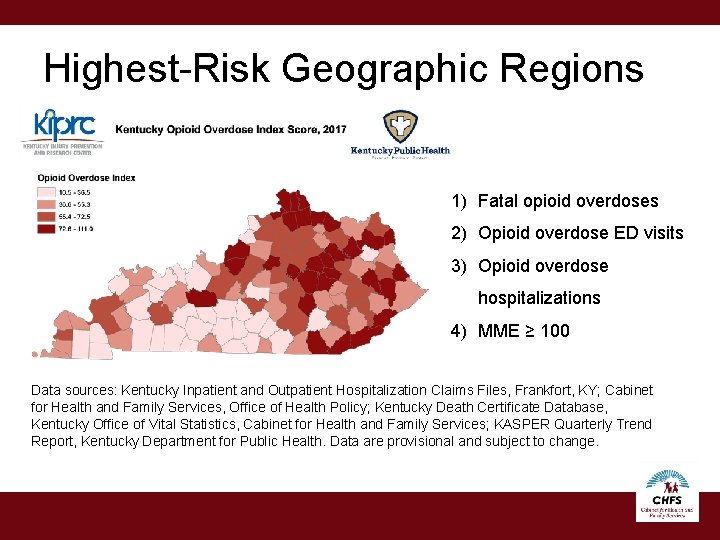
Highest-Risk Geographic Regions 1) Fatal opioid overdoses 2) Opioid overdose ED visits 3) Opioid overdose hospitalizations 4) MME ≥ 100 Data sources: Kentucky Inpatient and Outpatient Hospitalization Claims Files, Frankfort, KY; Cabinet for Health and Family Services, Office of Health Policy; Kentucky Death Certificate Database, Kentucky Office of Vital Statistics, Cabinet for Health and Family Services; KASPER Quarterly Trend Report, Kentucky Department for Public Health. Data are provisional and subject to change.
Priority Populations • Persons who experience an opioid-related overdose • Pregnant and parenting women with OUD • Persons who are justice-involved • Children, transition-age youth, and families impacted by OUD
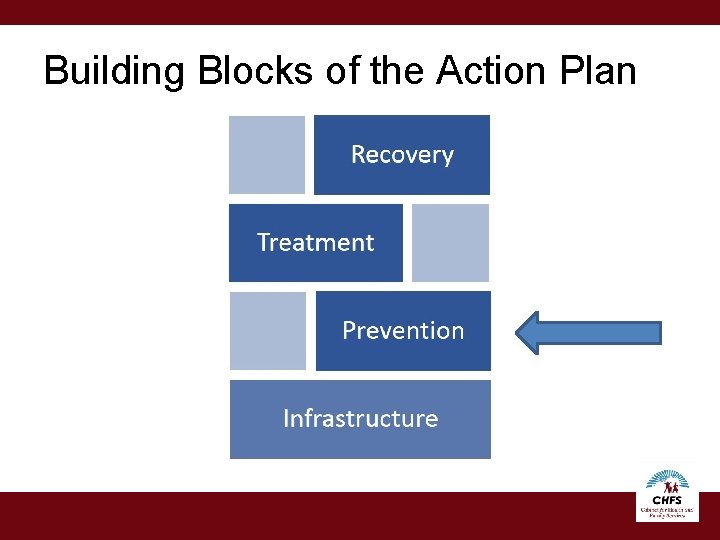
Building Blocks of the Action Plan
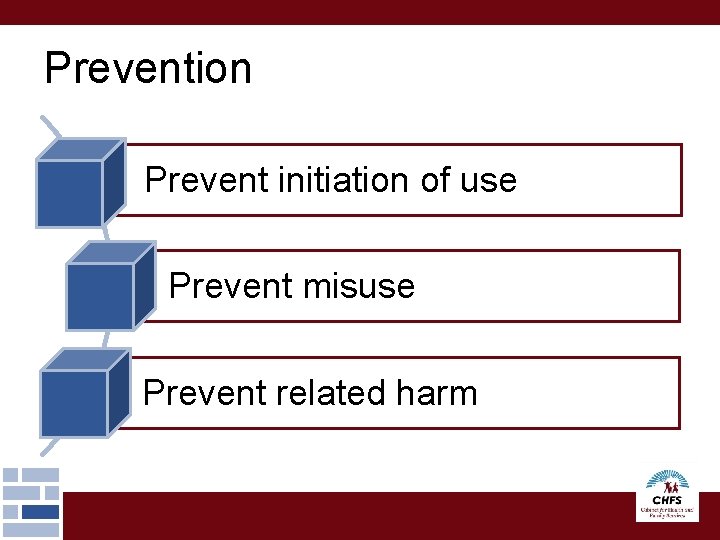
Prevention Prevent initiation of use Prevent misuse Prevent related harm
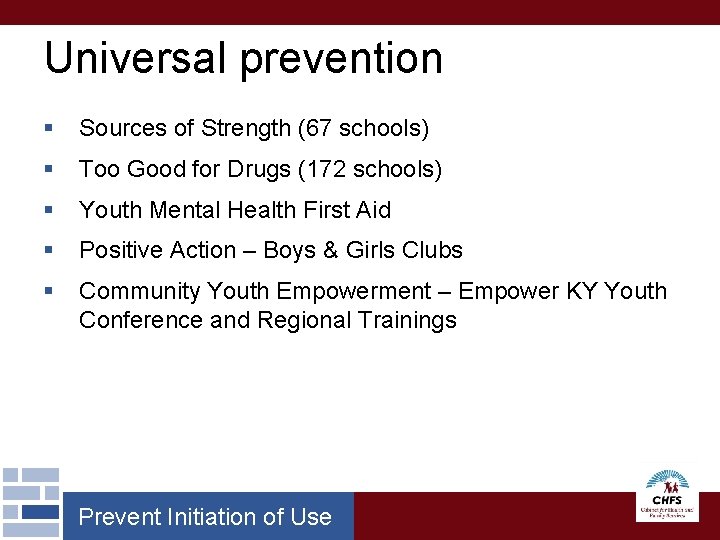
Universal prevention § Sources of Strength (67 schools) § Too Good for Drugs (172 schools) § Youth Mental Health First Aid § Positive Action – Boys & Girls Clubs § Community Youth Empowerment – Empower KY Youth Conference and Regional Trainings Prevent Initiation of Use
Opioid stewardship Statewide Opioid Stewardship Program • A voluntary certification program to recognize hospital performance on opioid stewardship • Kentucky Hospital Association Continuing education for pediatricians • The Mighty M’s: Message, Manage, and Minimize – Preventing Opioid Abuse in Primary Care Settings • Kentucky Chapter of the American Academy of Pediatrics • https: //cmetracker. net/NHCCME/Publisher? page=pub. Open#/enduring Prevent Misuse
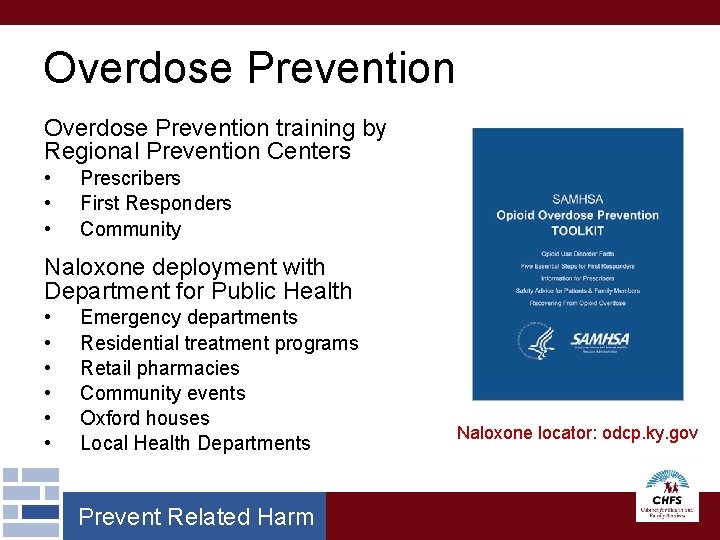
Overdose Prevention training by Regional Prevention Centers • • • Prescribers First Responders Community Naloxone deployment with Department for Public Health • • • Emergency departments Residential treatment programs Retail pharmacies Community events Oxford houses Local Health Departments Prevent Related Harm Naloxone locator: odcp. ky. gov
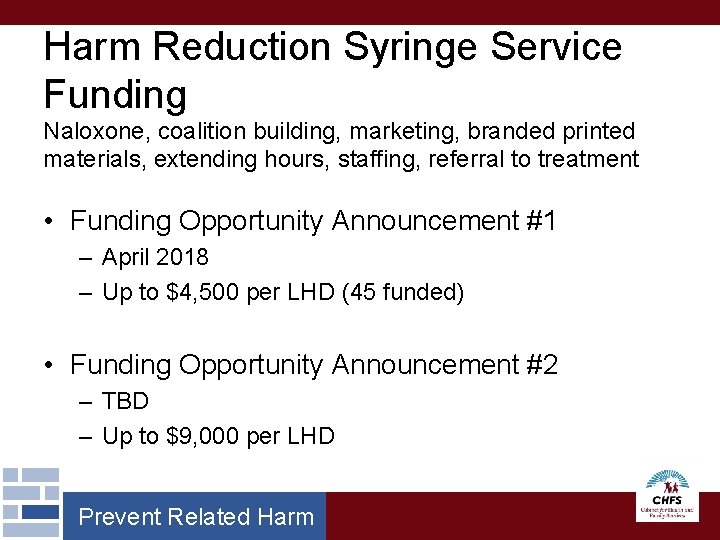
Harm Reduction Syringe Service Funding Naloxone, coalition building, marketing, branded printed materials, extending hours, staffing, referral to treatment • Funding Opportunity Announcement #1 – April 2018 – Up to $4, 500 per LHD (45 funded) • Funding Opportunity Announcement #2 – TBD – Up to $9, 000 per LHD Prevent Related Harm
Prevention in Kentucky • 14 Regional Prevention Centers – – Located within each of the CMHCs – General prevention strategies consisting of community -based processes, environmental strategies, education, problem identification and referral, information dissemination and alternative strategies. These strategies are in line with those endorsed by the federal Center for Substance Abuse Prevention (CSAP). – RPCs work to build the capacity of communities across the state to develop sustained efforts to prevent alcohol, tobacco and other drug-related problems, suicide and behavioral health problems, among citizens of all ages.
Prevention in Kentucky • Prevention Enhancement Sites (PES) – Marijuana –Jordan Hall – Alcohol – Tara Mc. Guire – Faith-Based – Samantha Clark – Substance Exposed Infants – Elizabeth Shultz – Suicide – Cathy Prothro
QUESTIONS?
CONTACT INFORMATION Shelly Steiner Shelly. Steiner@ky. gov (502) 782 -7691