
Kennesaw State University Culinary Sustainability What is Sustainability
Kennesaw State University Culinary Sustainability
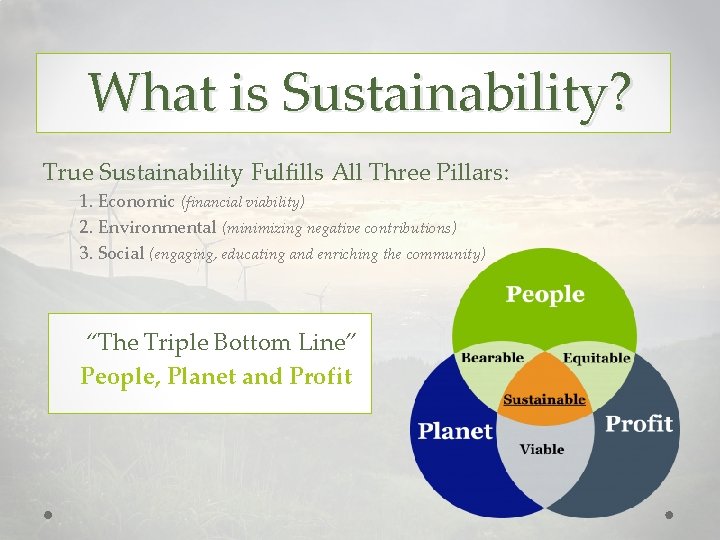
What is Sustainability? True Sustainability Fulfills All Three Pillars: 1. Economic (financial viability) 2. Environmental (minimizing negative contributions) 3. Social (engaging, educating and enriching the community) “The Triple Bottom Line” People, Planet and Profit
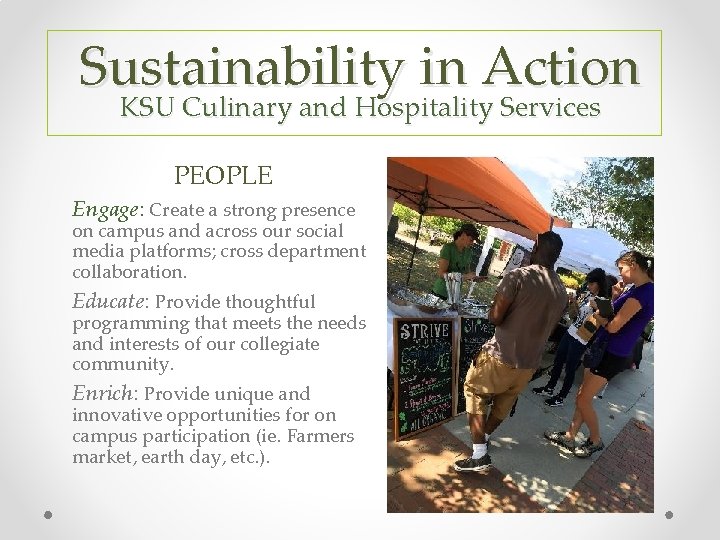
Sustainability in Action KSU Culinary and Hospitality Services PEOPLE Engage: Create a strong presence on campus and across our social media platforms; cross department collaboration. Educate: Provide thoughtful programming that meets the needs and interests of our collegiate community. Enrich: Provide unique and innovative opportunities for on campus participation (ie. Farmers market, earth day, etc. ).
Sustainability in Action KSU Culinary and Hospitality Services PLANET Utilize: industry innovations to monitor and ultimately minimize our carbon footprint with a long term goal of carbon neutrality. Minimize: our environmental impact and give back to the immediate community/environment through donation, collections and volunteer days. Implement: innovative programming to source on site while reducing negative environmental impact.
Sustainability in Action KSU Culinary and Hospitality Services PROFIT Strengthen: our financial bottom line through: thoughtful procurement practices and product utilization. Maximize: our efficiency potential through investing/training our associates in order to minimize labor waste and employee turnover. Utilize: innovative energy systems to cut down on energy and water consumption. Pursue: grant and eco-based funding for new projects
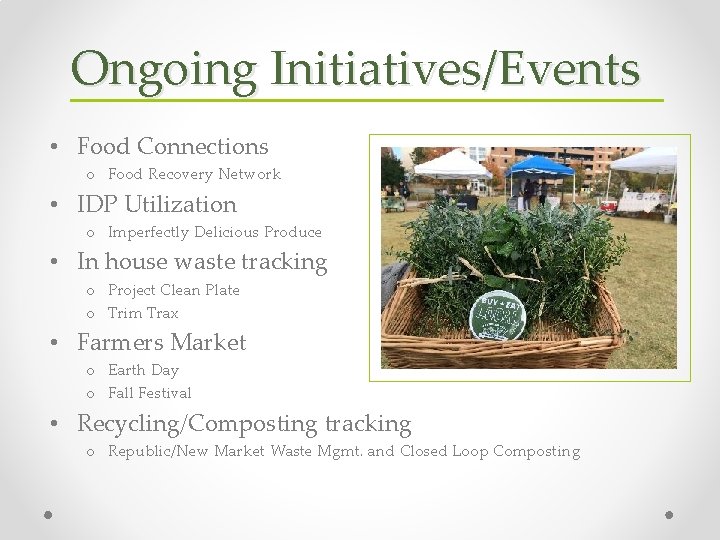
Ongoing Initiatives/Events • Food Connections o Food Recovery Network • IDP Utilization o Imperfectly Delicious Produce • In house waste tracking o Project Clean Plate o Trim Trax • Farmers Market o Earth Day o Fall Festival • Recycling/Composting tracking o Republic/New Market Waste Mgmt. and Closed Loop Composting
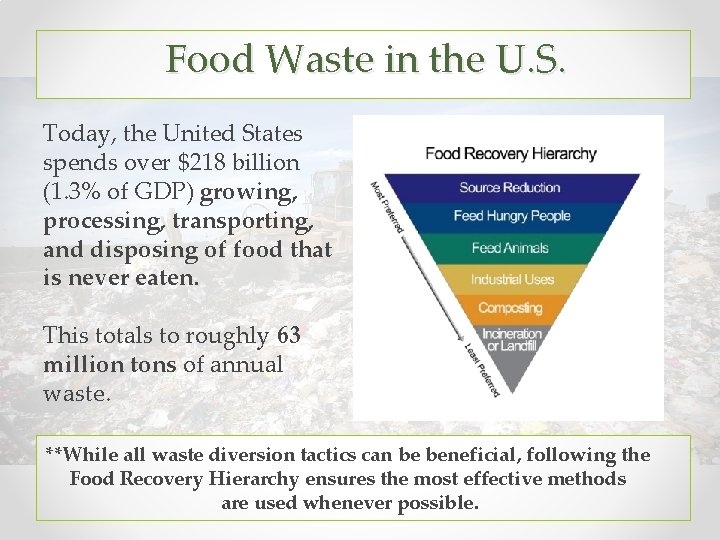
Food Waste in the U. S. Today, the United States spends over $218 billion (1. 3% of GDP) growing, processing, transporting, and disposing of food that is never eaten. This totals to roughly 63 million tons of annual waste. **While all waste diversion tactics can be beneficial, following the Food Recovery Hierarchy ensures the most effective methods are used whenever possible.
Waste Aversion Totals (2016) Recycling: 21, 517. 9 lbs of cardboard 23, 000+ lbs of single stream recycling (paper, plastic, etc. ) *While we are still currently unable to recycle glass in Cobb County, going forward we will be partnering with Keep Kennesaw Beautiful for specialty recycling days to recycle glass and electronics.
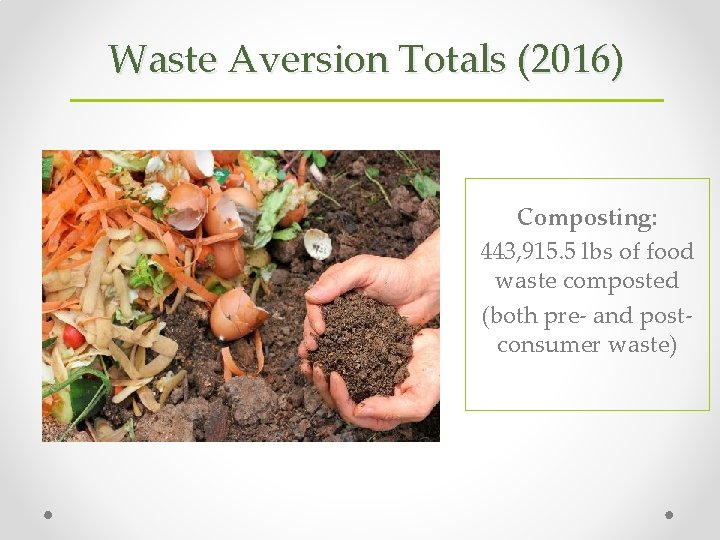
Waste Aversion Totals (2016) Composting: 443, 915. 5 lbs of food waste composted (both pre- and postconsumer waste)
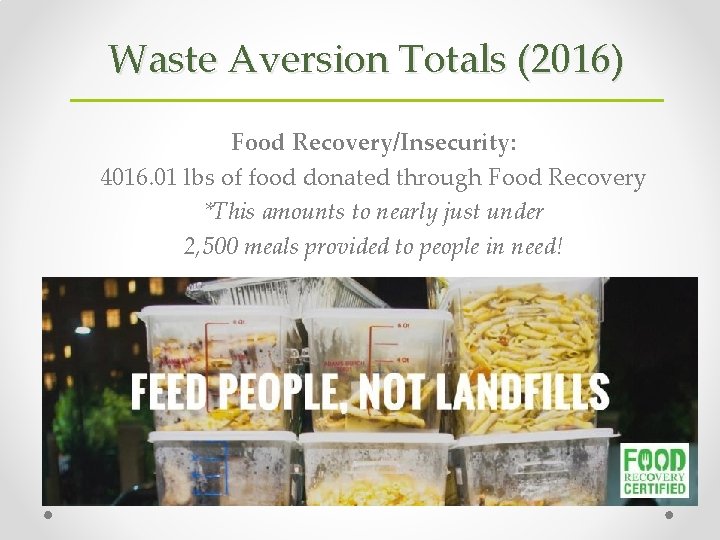
Waste Aversion Totals (2016) Food Recovery/Insecurity: 4016. 01 lbs of food donated through Food Recovery *This amounts to nearly just under 2, 500 meals provided to people in need!
2017 -18 Initiatives/Events In office Recycling Initiative End of Semester Recycling Drives: (collaboration with Keep Kennesaw Beautiful and environmental RSOs) Farmers Market CSA (Community Supported Agriculture) Bee Campus USA Certification “Local Features” in the Commons In-House Energy Analysis Project
Long Term/Special Projects Carbon Neutrality: Assess our current carbon impact at The Commons and Stingers, establish realistic projections for minimizing output. Water Reclamation: Readdress previous water reclamation projects, research innovative systems that pertain to our facility Snap/EBT benefits at Farmer Market (2018): Address food insecurity on campus and in the immediate community On-sight Growing at KSU: Urban Agriculture model
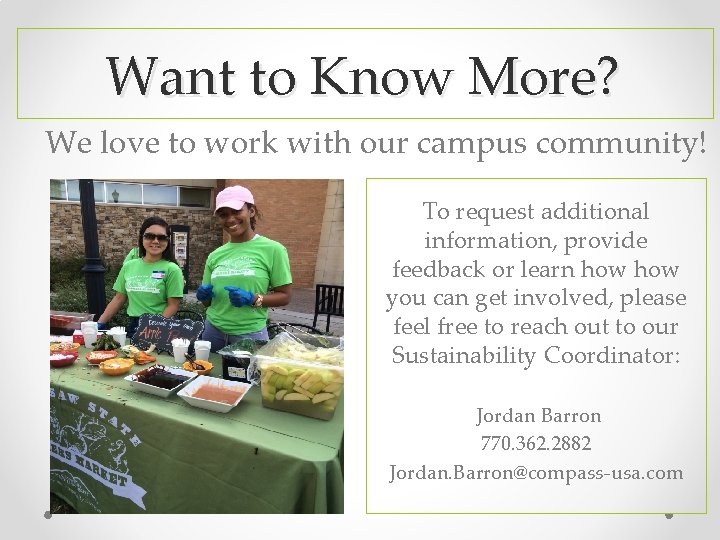
Want to Know More? We love to work with our campus community! To request additional information, provide feedback or learn how you can get involved, please feel free to reach out to our Sustainability Coordinator: Jordan Barron 770. 362. 2882 Jordan. Barron@compass-usa. com
- Slides: 13