
Kendall Alvarez REU at University of Wisconsin RiverFalls


- Slides: 13
Kendall Alvarez REU at University of Wisconsin River-Falls Rio Hondo Community College Whittier, California
Harsha Jain REU at University of Wisconsin River Falls University of Connecticut Riverside, Connecticut
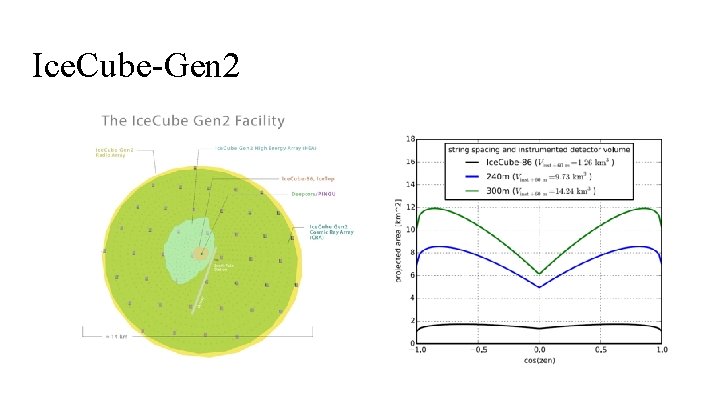
Ice. Cube-Gen 2
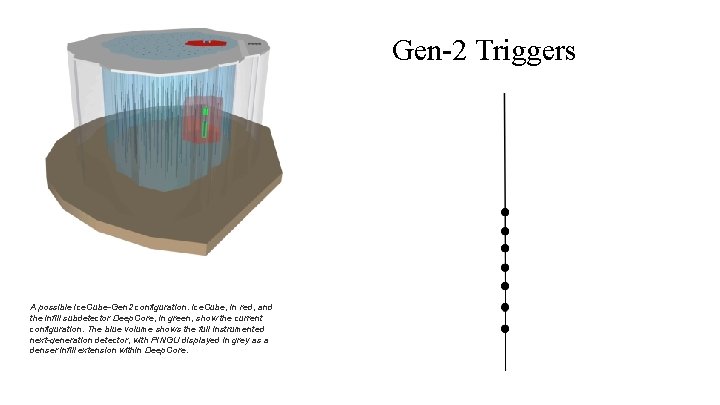
Gen-2 Triggers A possible Ice. Cube-Gen 2 configuration. Ice. Cube, in red, and the infill subdetector Deep. Core, in green, show the current configuration. The blue volume shows the full instrumented next-generation detector, with PINGU displayed in grey as a denser infill extension within Deep. Core.
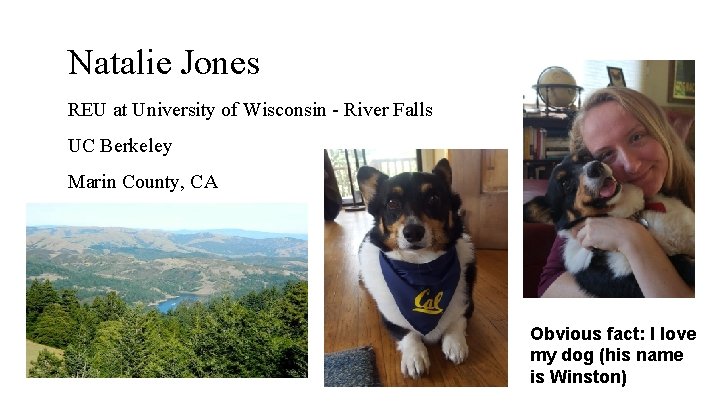
Natalie Jones REU at University of Wisconsin - River Falls UC Berkeley Marin County, CA Obvious fact: I love my dog (his name is Winston)
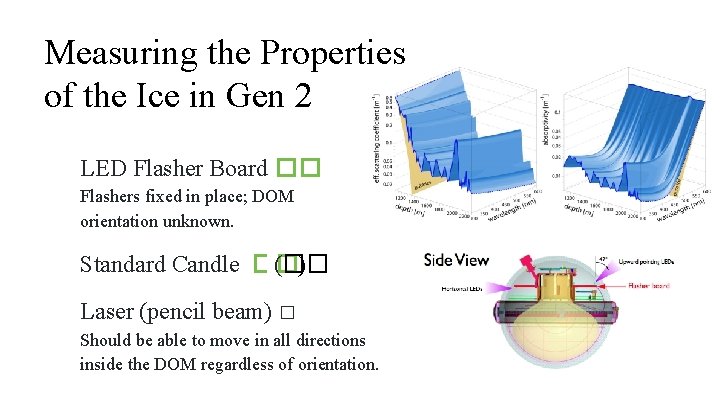
Measuring the Properties of the Ice in Gen 2 LED Flasher Board �� Flashers fixed in place; DOM orientation unknown. Standard Candle �� (�� ) Laser (pencil beam) � Should be able to move in all directions inside the DOM regardless of orientation.
Pencil Beam Simulation with CLsim “An Open. CL-based photon-tracking simulation using a ray tracing algorithm modeling scattering and absorption of light in the deep glacial ice at the South Pole. ” - Claudio Kopper In order to better understand the absorption and scattering properties of the ice, I will use CLsim to simulate - and then test with different ice models - a pencil beam laser with the following parameters: Azimuth and zenith to control the direction of the photon beam Photon count (intensity) for calibration Wavelength (energy) of photons emitted Angular emission profile, changeable width of the photon beam
Faizah Siddique University of Massachusetts, Amherst UWRF REU Participant
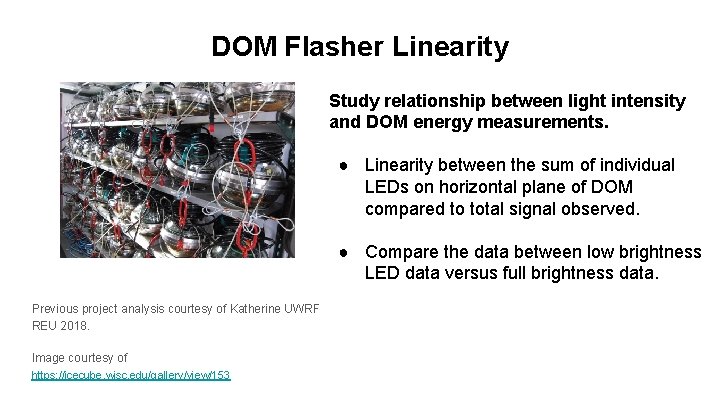
DOM Flasher Linearity Study relationship between light intensity and DOM energy measurements. ● Linearity between the sum of individual LEDs on horizontal plane of DOM compared to total signal observed. ● Compare the data between low brightness LED data versus full brightness data. Previous project analysis courtesy of Katherine UWRF REU 2018. Image courtesy of https: //icecube. wisc. edu/gallery/view/153
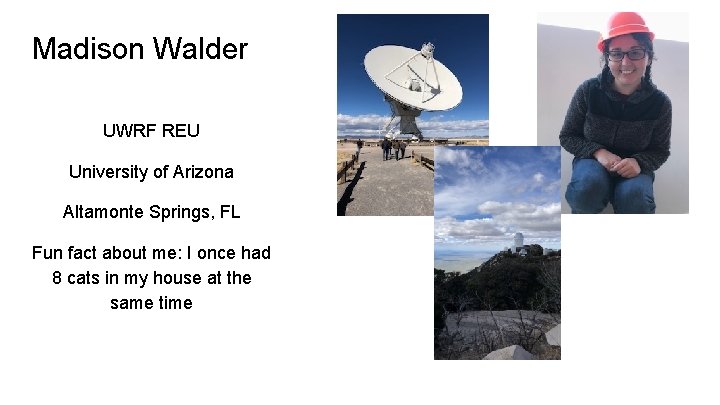
Madison Walder UWRF REU University of Arizona Altamonte Springs, FL Fun fact about me: I once had 8 cats in my house at the same time
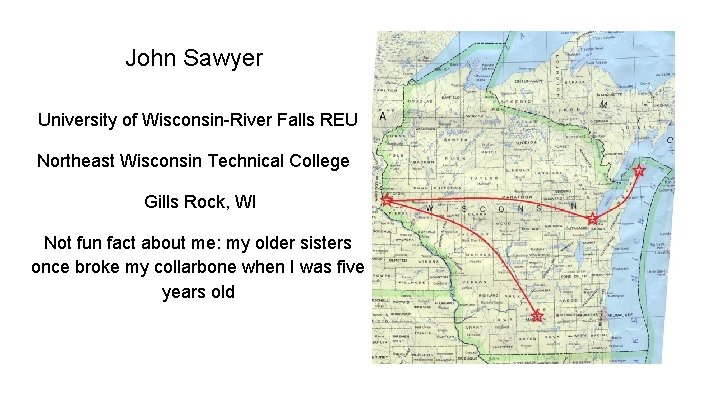
John Sawyer University of Wisconsin-River Falls REU Northeast Wisconsin Technical College Gills Rock, WI Not fun fact about me: my older sisters once broke my collarbone when I was five years old
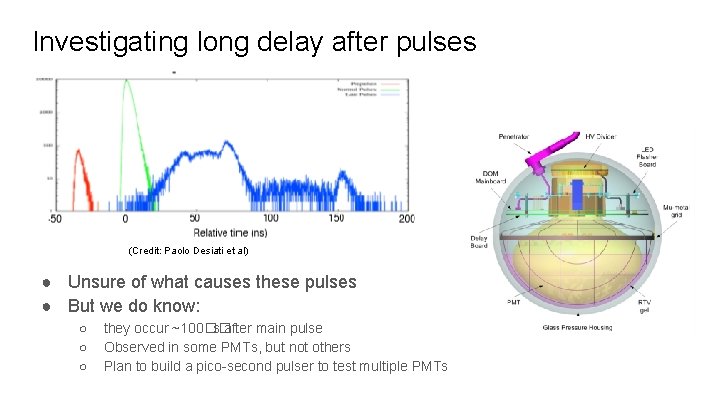
Investigating long delay after pulses (Credit: Paolo Desiati et al) ● Unsure of what causes these pulses ● But we do know: ○ ○ ○ they occur ~100�� s after main pulse Observed in some PMTs, but not others Plan to build a pico-second pulser to test multiple PMTs
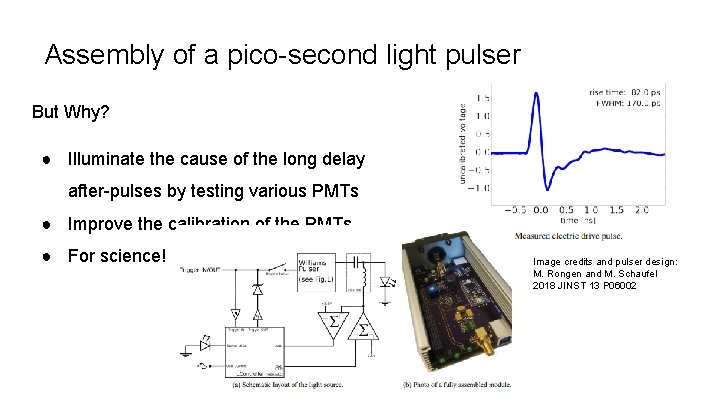
Assembly of a pico-second light pulser But Why? ● Illuminate the cause of the long delay after-pulses by testing various PMTs ● Improve the calibration of the PMTs ● For science! Image credits and pulser design: M. Rongen and M. Schaufel 2018 JINST 13 P 06002