
Ken Rogers Miami Killian Ionic bonding the electrical
Ken Rogers Miami Killian
Ionic bonding - the electrical attraction between large numbers of cations and anions. cation – positive ion anion – a negative ion For example the substance sodium chloride, Na. Cl, is a substance held together by ionic bonding. Here’s how that happens.
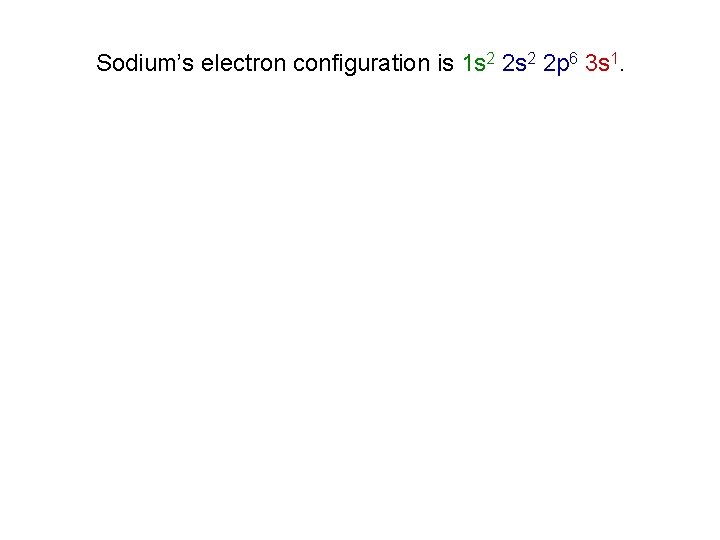
Sodium’s electron configuration is 1 s 2 2 p 6 3 s 1.
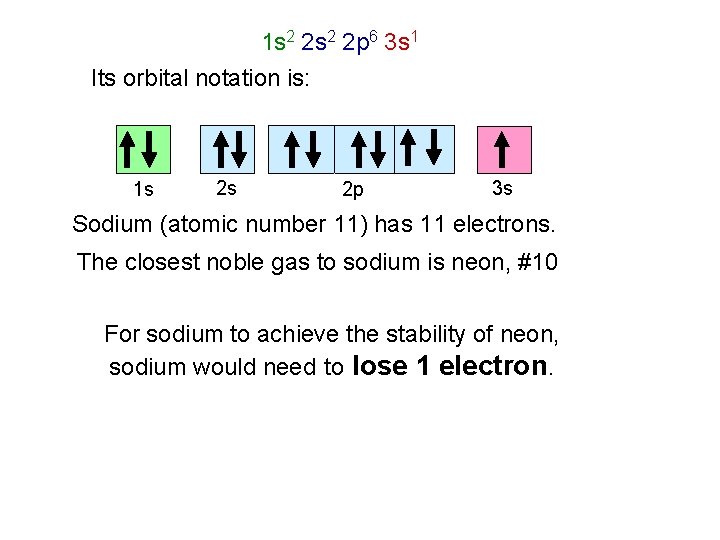
1 s 2 2 p 6 3 s 1 Its orbital notation is: 1 s 2 s 2 p 3 s Sodium (atomic number 11) has 11 electrons. The closest noble gas to sodium is neon, #10 For sodium to achieve the stability of neon, sodium would need to lose 1 electron.
Chlorine’s electron configuration is 1 s 2 2 p 6 3 s 2 3 p 5.
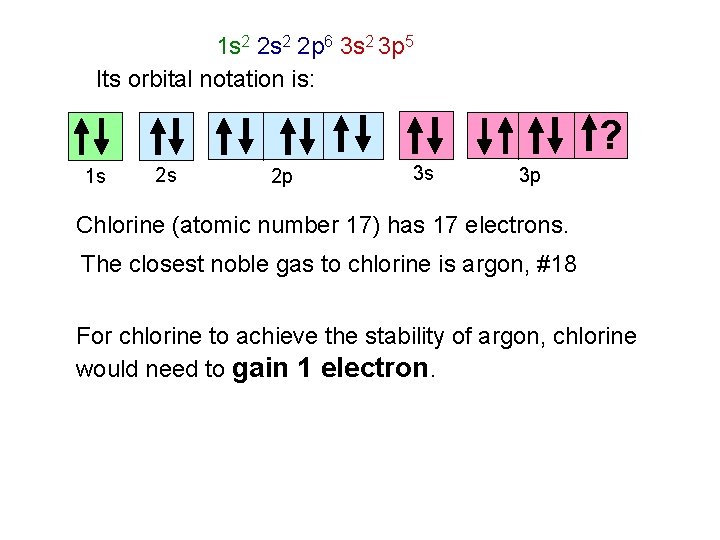
1 s 2 2 p 6 3 s 2 3 p 5 Its orbital notation is: ? 1 s 2 s 2 p 3 s 3 p Chlorine (atomic number 17) has 17 electrons. The closest noble gas to chlorine is argon, #18 For chlorine to achieve the stability of argon, chlorine would need to gain 1 electron.
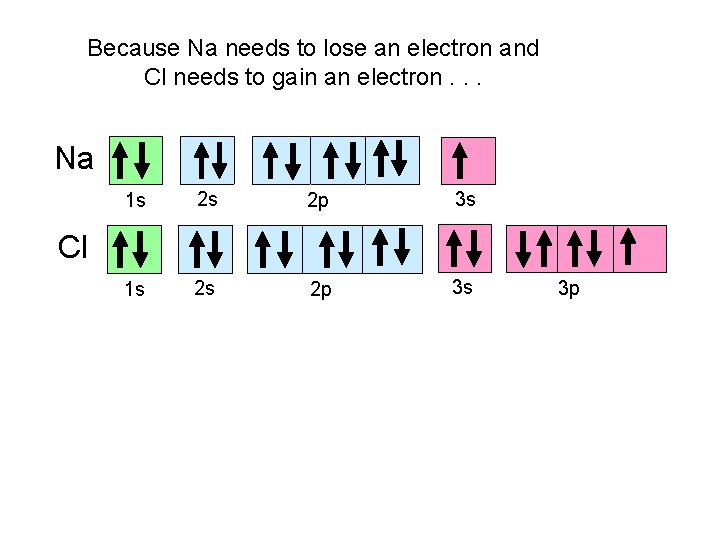
Because Na needs to lose an electron and Cl needs to gain an electron. . . Na 1 s 2 s 2 p 3 s Cl 3 p
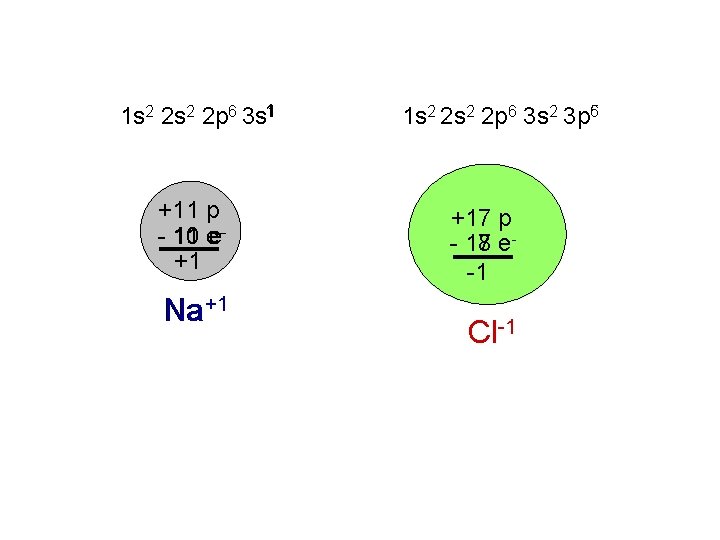
1 s 2 2 p 6 3 s 1 +11 p - 11 10 ee-+1 Na +1 1 s 2 2 p 6 3 s 2 3 p 65 +17 p - 18 17 e-1 Cl-1
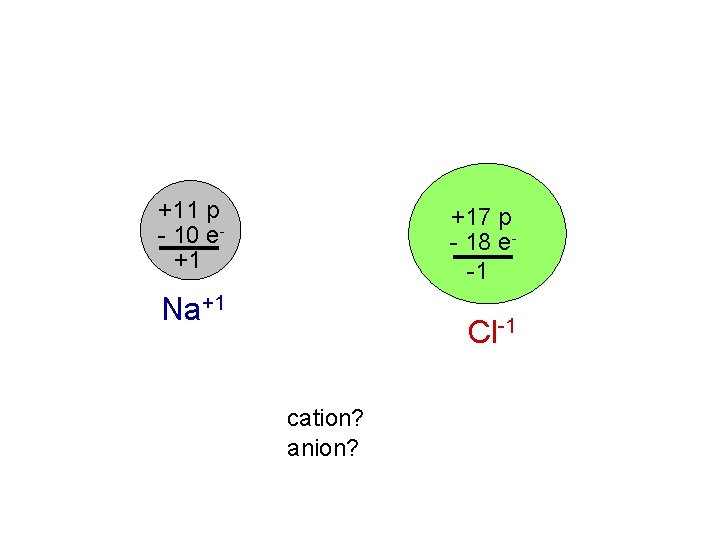
+11 p - 10 e+1 +17 p - 18 e-1 Na+1 Cl-1 cation? anion?
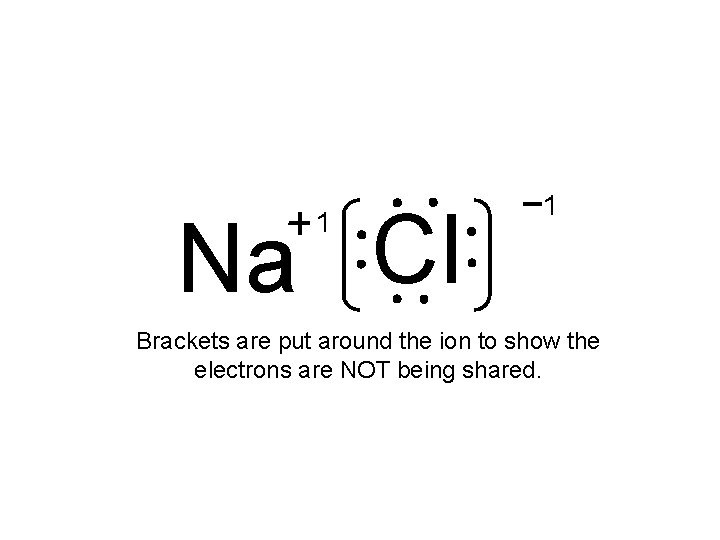
Na Cl 1 1 Brackets are put around the ion to show the electrons are NOT being shared.
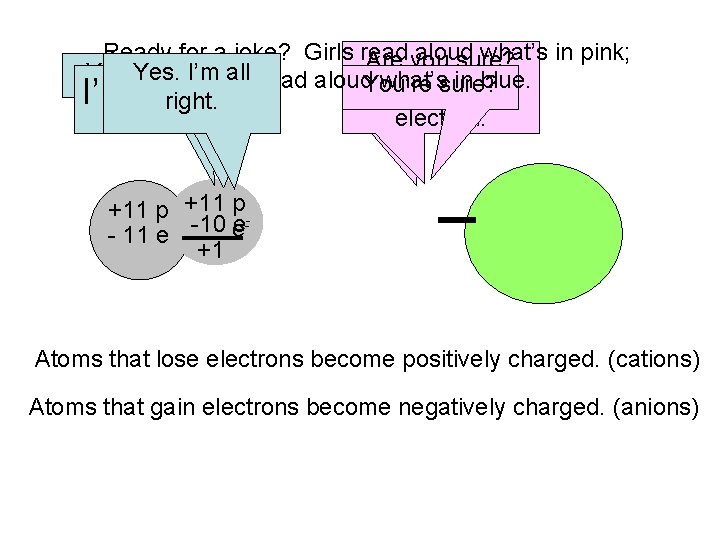
Ready for a joke? Girls Oh, read aloud what’s in pink; Are I’m you sorry. sure? Yeh. Yes. I’m OK I’m all read aloud. You’re guys what’s inall blue. sure? Are You you lost an I’m positive! right. electron. right? +11 p-- 11 e- -10 e +1 Atoms that lose electrons become positively charged. (cations) Atoms that gain electrons become negatively charged. (anions)
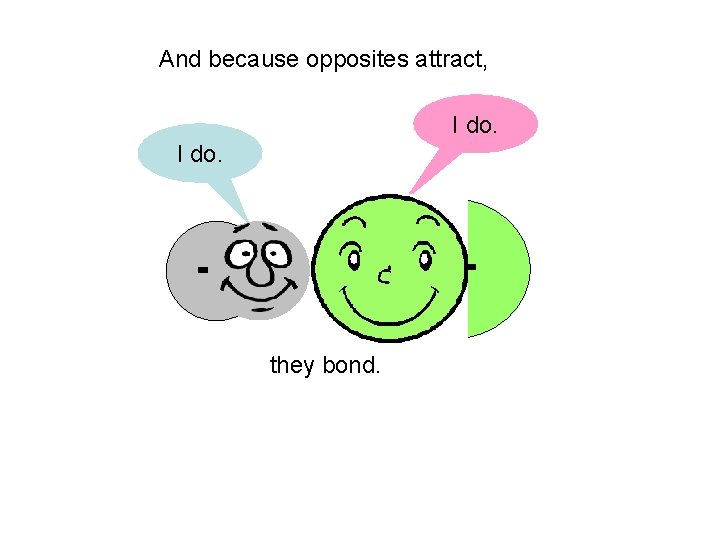
And because opposites attract, I do. they bond.
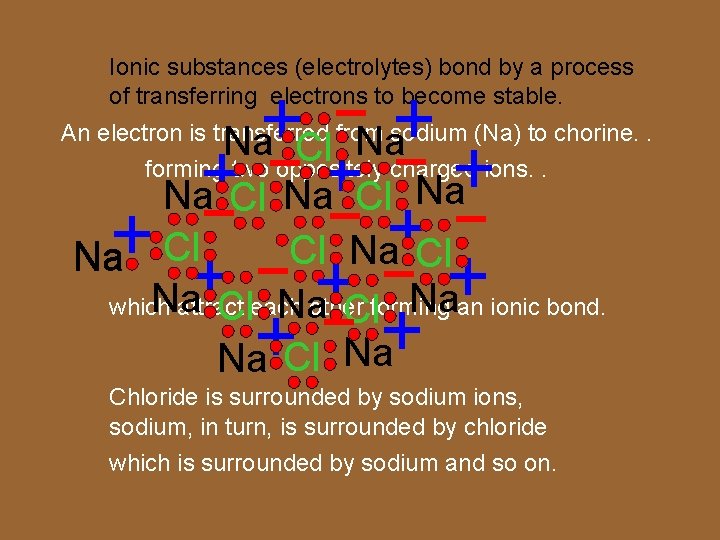
Ionic substances (electrolytes) bond by a process of transferring electrons to become stable. Na Cl Na forming two oppositely charged ions. . Na Cl Na Cl Na Naan ionic bond. which attract Naother Cleach Clforming Na Cl Na An electron is transferred from sodium (Na) to chorine. . Chloride is surrounded by sodium ions, sodium, in turn, is surrounded by chloride which is surrounded by sodium and so on.
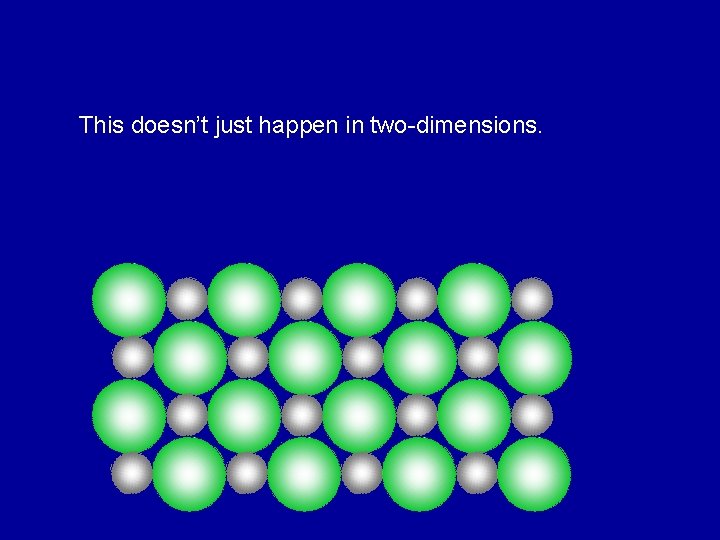
This doesn’t just happen in two-dimensions.
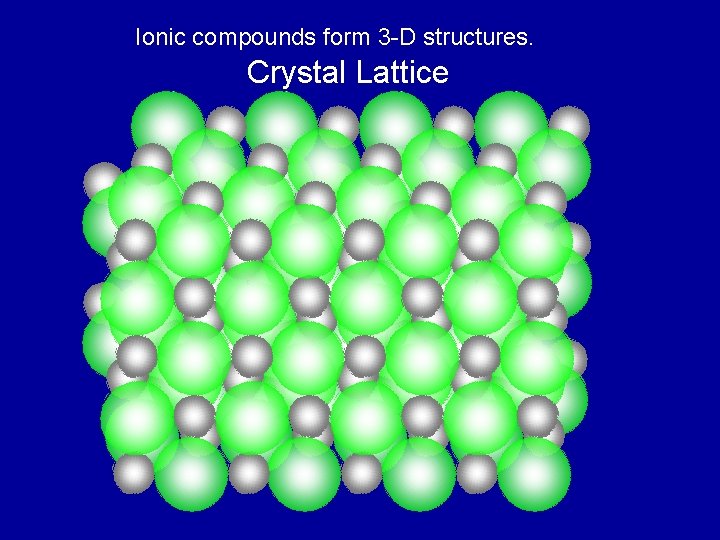
Ionic compounds form 3 -D structures. Crystal Lattice
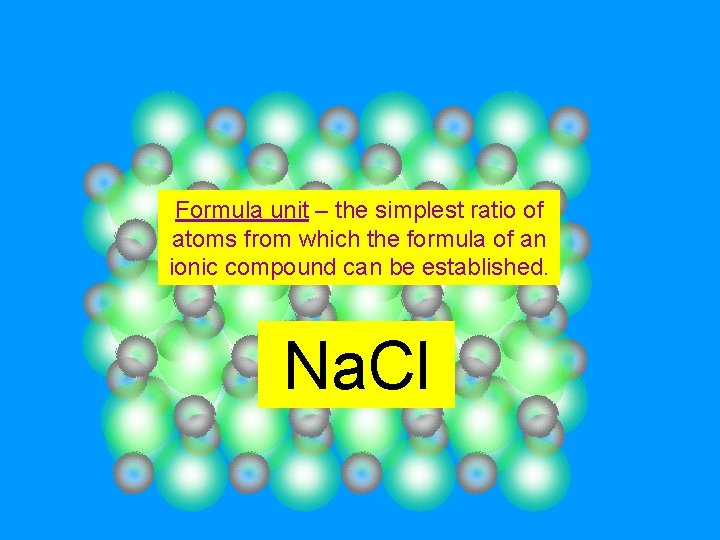
Formula unit – the simplest ratio of atoms from which the formula of an ionic compound can be established. Na. Cl
Ionic bonds take place when a metal combines with a nonmetal. Metals have 1 to 4 valence electrons. Nonmetals have from 4 to 8 valence electrons. The metal loses its electrons to achieve an octet. While the nonmetal gains electrons to achieve an octet. metal + nonmetal a ionic substance
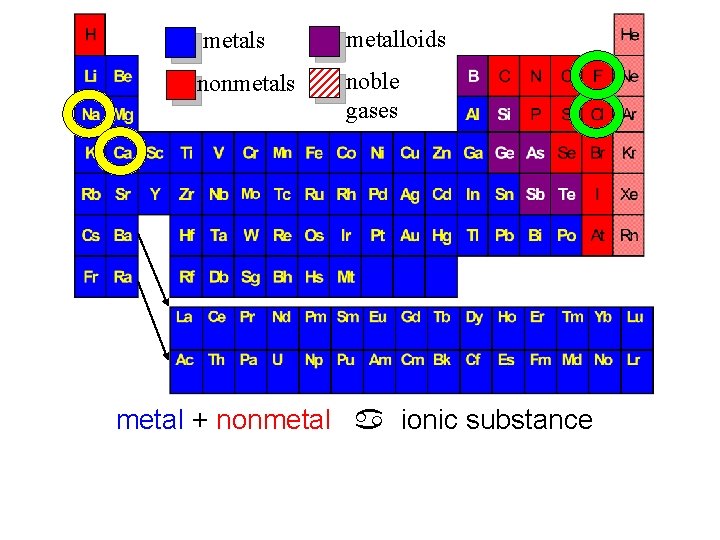
metals metalloids nonmetals noble gases metal + nonmetal a ionic substance
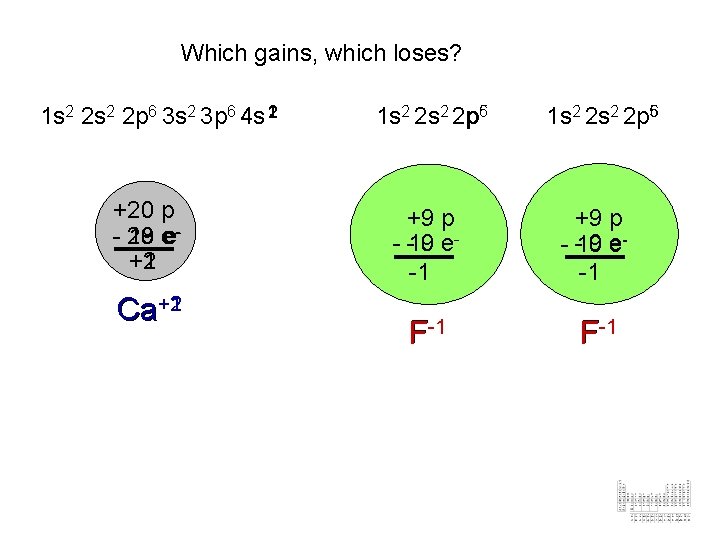
Which gains, which loses? 1 s 2 2 p 6 3 s 2 3 p 6 4 s 12 +20 p - 20 18 19 ee-+1 +2 +1 Ca+2 1 s 2 2 s 2 2 p 56 +9 p - -10 9 e-1 +9 p 9 e- -10 -1 F-1
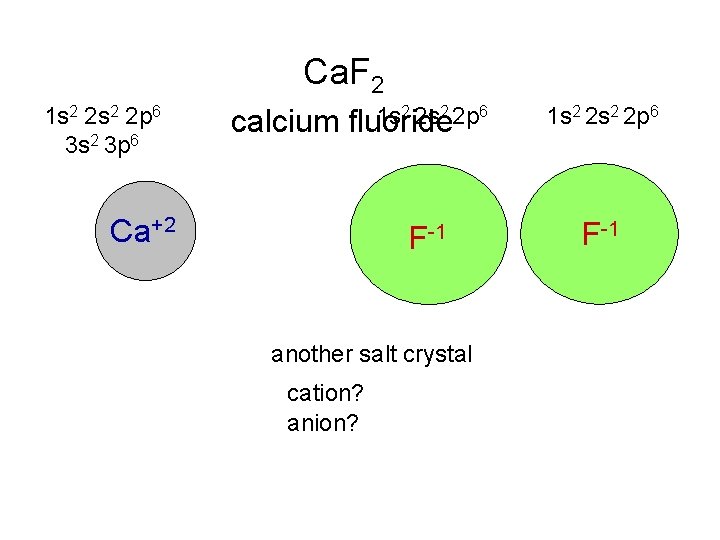
Ca. F 2 1 s 2 2 p 6 3 s 2 3 p 6 1 s 2 2 p 6 calcium fluoride Ca+2 F-1 another salt crystal cation? anion? 1 s 2 2 p 6 F-1
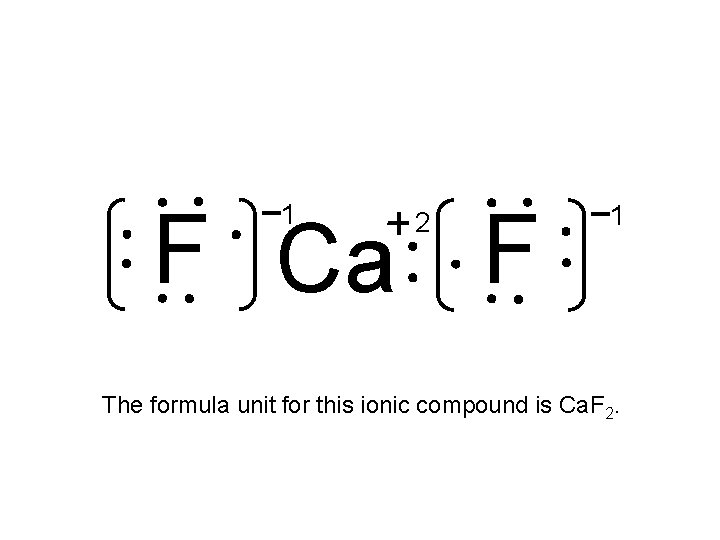
F Ca F 1 2 1 The formula unit for this ionic compound is Ca. F 2.
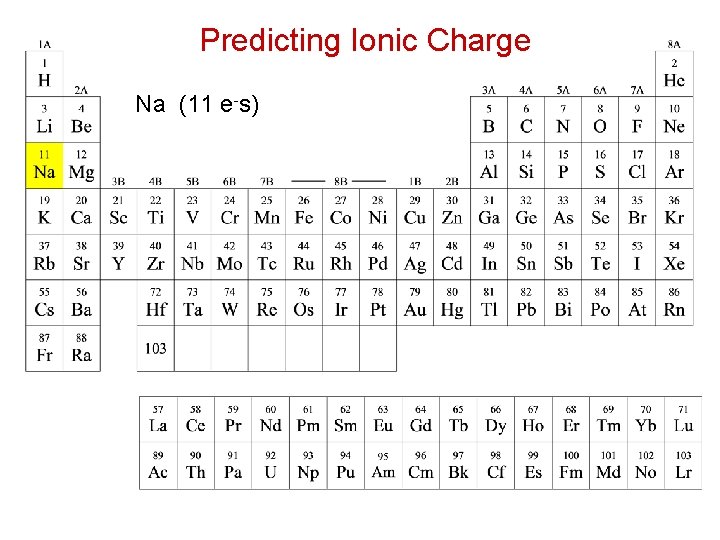
Predicting Ionic Charge Na (11 e-s)
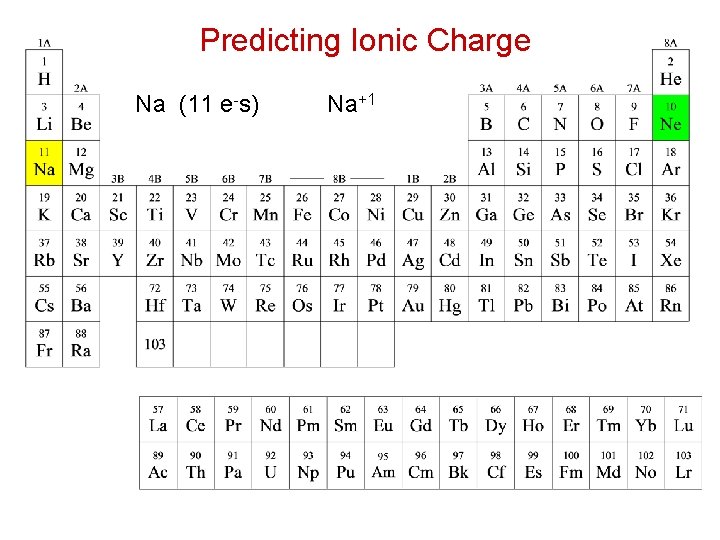
Predicting Ionic Charge Na (11 e-s) Na+1
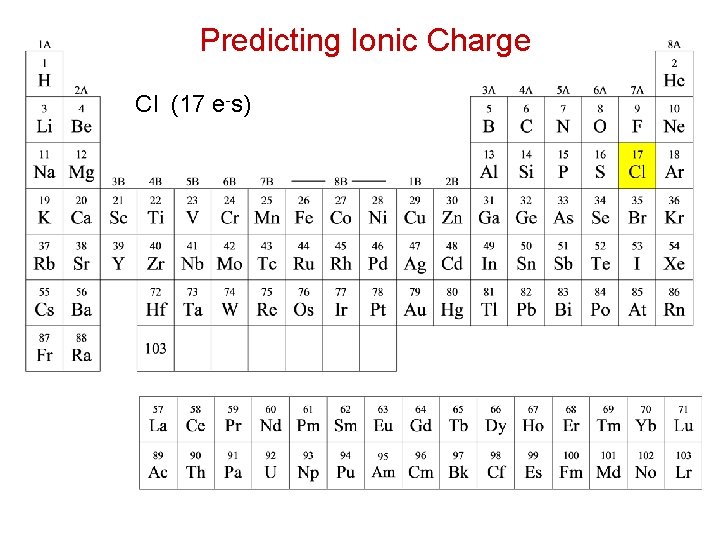
Predicting Ionic Charge Cl (17 e-s)
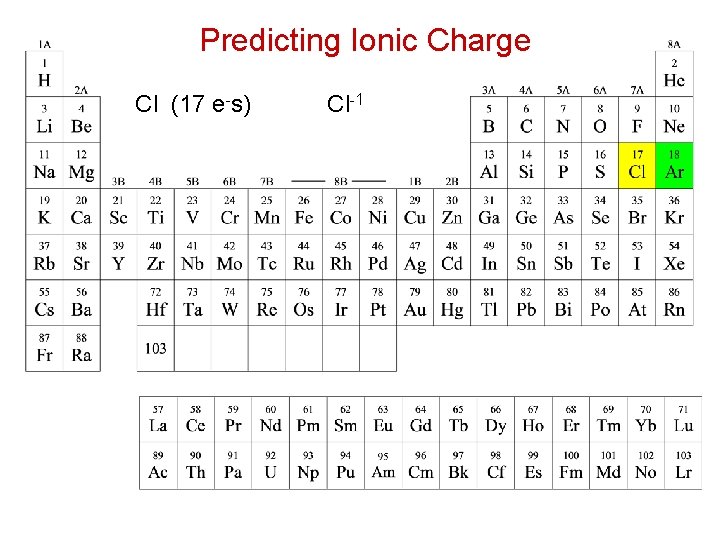
Predicting Ionic Charge Cl (17 e-s) Cl-1
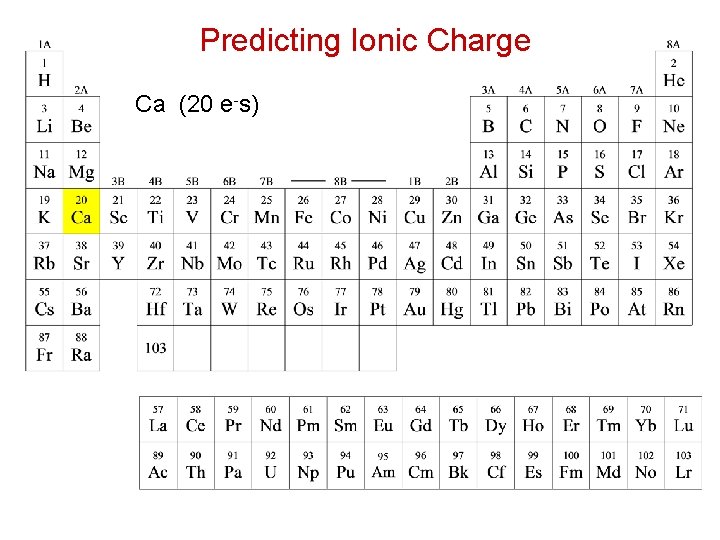
Predicting Ionic Charge Ca (20 e-s)
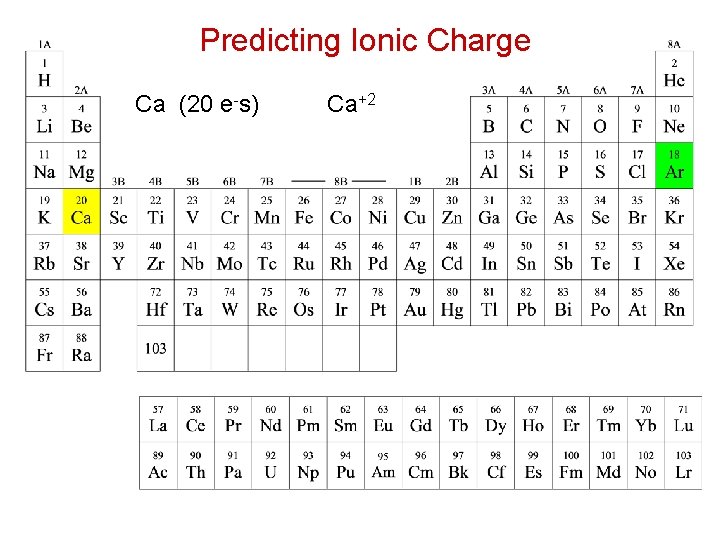
Predicting Ionic Charge Ca (20 e-s) Ca+2
Predicting Ionic Charge F (9 e-s)
Predicting Ionic Charge F (9 e-s) F-1
Predicting Ionic Charge O (8 e-s)
Predicting Ionic Charge O (8 e-s) O-2
Predicting Ionic Charge Mg (12 e-s)
Predicting Ionic Charge Mg (12 e-s) Mg+2
Predicting Ionic Charge S (16 e-s)
Predicting Ionic Charge S (16 e-s) S-2
Predicting Ionic Charge N (7 e-s)
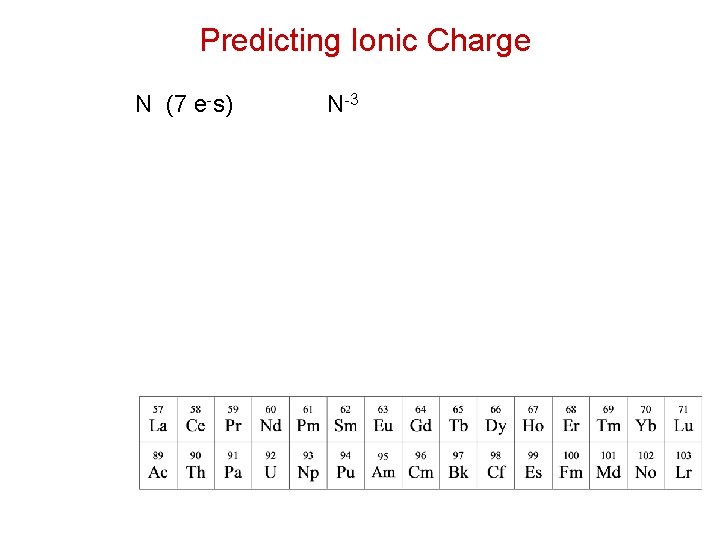
Predicting Ionic Charge N (7 e-s) N-3
Ionic Charges
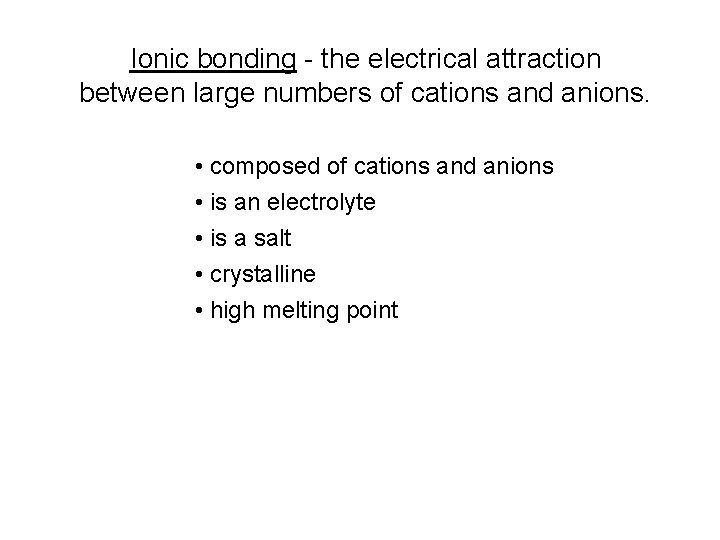
Ionic bonding - the electrical attraction between large numbers of cations and anions. • composed of cations and anions • is an electrolyte • is a salt • crystalline • high melting point
So, what’s this? Na. Cl + Assault and battery
- Slides: 40