
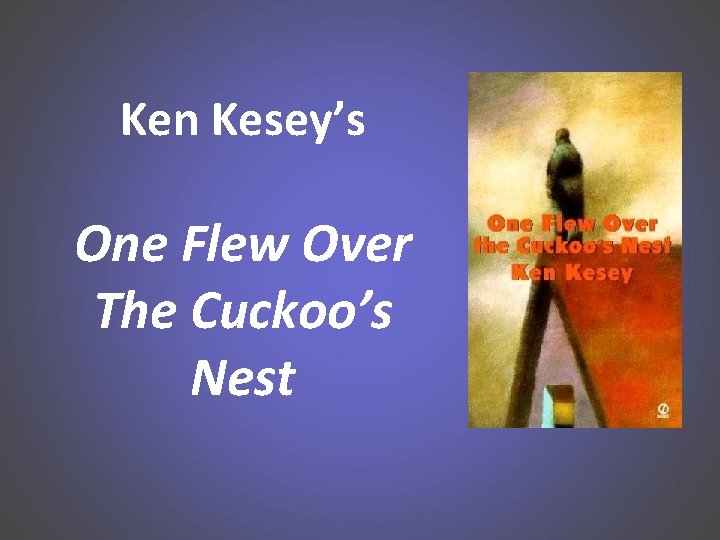
Ken Keseys One Flew Over The Cuckoos Nest
- Slides: 31
Ken Kesey’s One Flew Over The Cuckoo’s Nest
Key Facts: • • Allegorical novel Written in late 1950 s Published 1962 First person – Narrator—Chief Bromden • Told as a flashback after his escape • Setting—mental hospital, Oregon • Protagonist—Randle P. Mc. Murphy
Theme: —the central idea or ideas explored by a literary work.
Themes: • Struggle for power/control • Women as Castrators • The Power of Laughter
Themes (contd. ): • • • Imagination vs. Reality Violence Altruism vs. Selfishness Fear of experience vs. Experience Euthanasia
Motifs: —recurring elements that develop and inform the major themes.
Motifs: • Invisibility • Bromden’s deaf and dumb act • Fog • Hallucinations • Power of Laughter • Reality vs. imaginary
Symbolism: —use of objects to represent things such as ideas and emotions —something that represents itself and something else
Symbols: • The fog machine • The white whales on Mc. Murphy’s boxer shorts • The electroshock therapy table
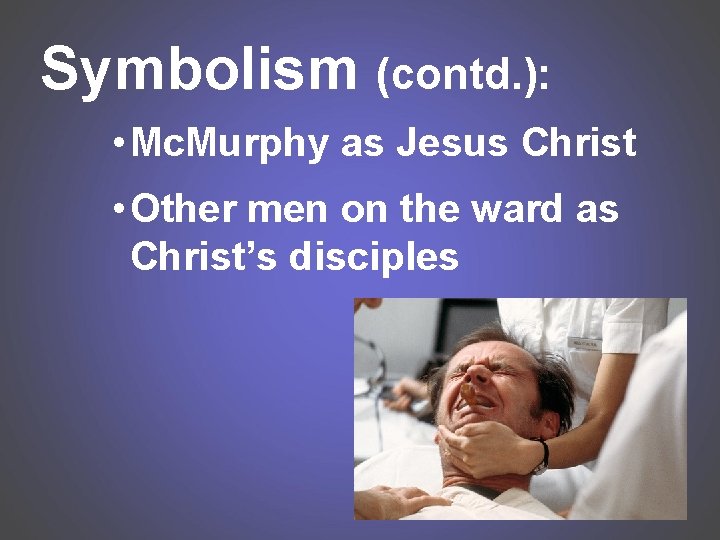
Symbolism (contd. ): • Mc. Murphy as Jesus Christ • Other men on the ward as Christ’s disciples
Foreshadowing: • The story of Maxwell Taber • Electroshock therapy table shaped like a cross • The deaths of Rawler, Cheswick, and Billy • Bromden’s dreams and hallucinations
Types of Characters: • Flat or Static Characters— • Minor characters who do NOT undergo substantial change. • Round Characters— • Major characters who encounter conflict and are changed by it.
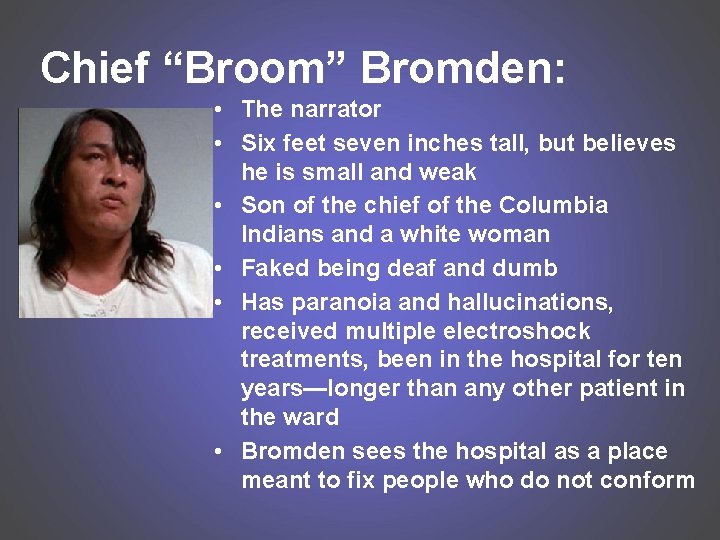
Chief “Broom” Bromden: • The narrator • Six feet seven inches tall, but believes he is small and weak • Son of the chief of the Columbia Indians and a white woman • Faked being deaf and dumb • Has paranoia and hallucinations, received multiple electroshock treatments, been in the hospital for ten years—longer than any other patient in the ward • Bromden sees the hospital as a place meant to fix people who do not conform
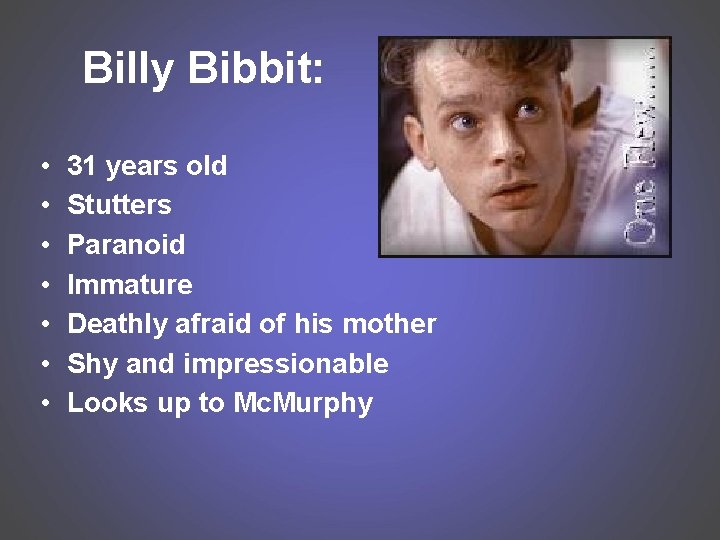
Billy Bibbit: • • 31 years old Stutters Paranoid Immature Deathly afraid of his mother Shy and impressionable Looks up to Mc. Murphy
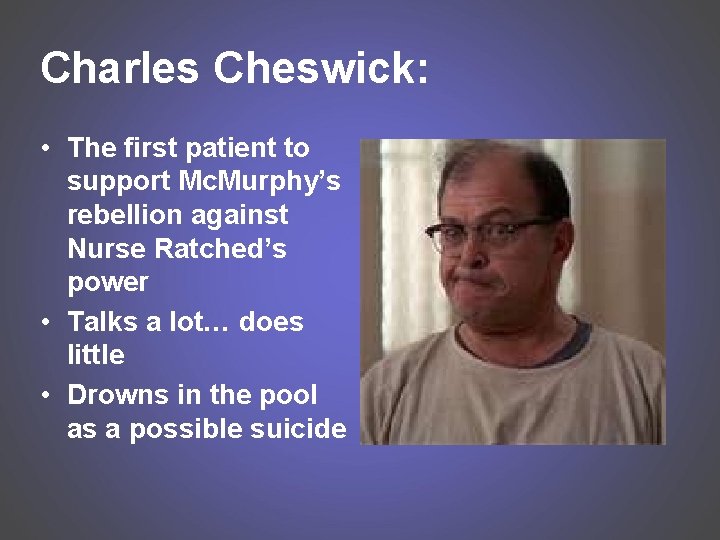
Charles Cheswick: • The first patient to support Mc. Murphy’s rebellion against Nurse Ratched’s power • Talks a lot… does little • Drowns in the pool as a possible suicide
George Sorenson: • Big Swede • Former seaman; recruited to captain the fishing excursion • Nicknamed “Rub-a-Dub” because of his cleanliness fetish
Dale Harding: • A college-educated patient who voluntarily entered the institution • A homosexual • He checks himself out of the ward
Maxwell Taber: • A former patient before Mc. Murphy arrived • Like Mc. Murphy, Taber questioned the nurse’s authority • Made docile by the electroshock therapy • Permitted to leave
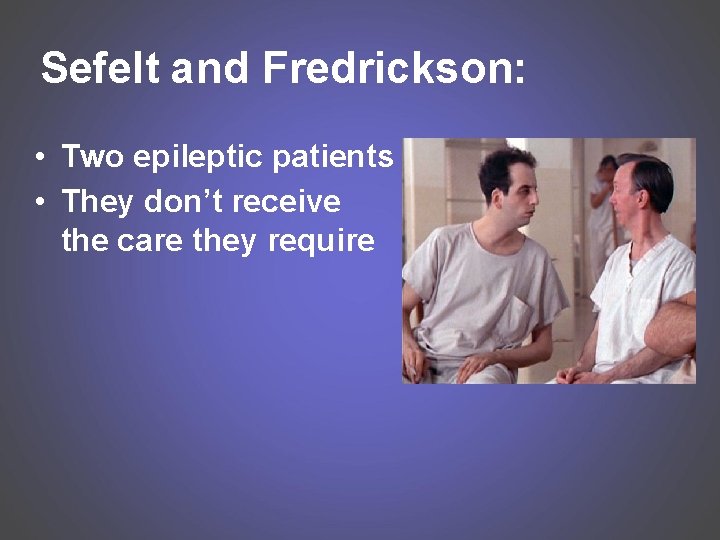
Sefelt and Fredrickson: • Two epileptic patients • They don’t receive the care they require
Rawler: • A patient on the Disturbed ward • Commits suicide by cutting off his testicles
Doctor Spivey: • Mild-mannered doctor • Addicted to opiates • Easily cowed; dominated by patients • Often supports Mc. Murphy’s unusual plans for the ward
Warren, Washington, Williams, and Geever: • Hospital aids • Hired because they are filled with hatred • Completely submissive to Nurse Ratched
• PROTAGONIST— • The main character and one the author wants you to cheer on. • ANTAGONIST— • Villain or character that causes trouble for the character the author wants you to support.
Anti-hero: • ANTI-HERO—Character whose actions or morality may be flawed, yet he/she is not a villain. The Antihero accomplishes a useful deed or even does good deeds, so the audience supports him/her even though there are no traditional heroic qualities.
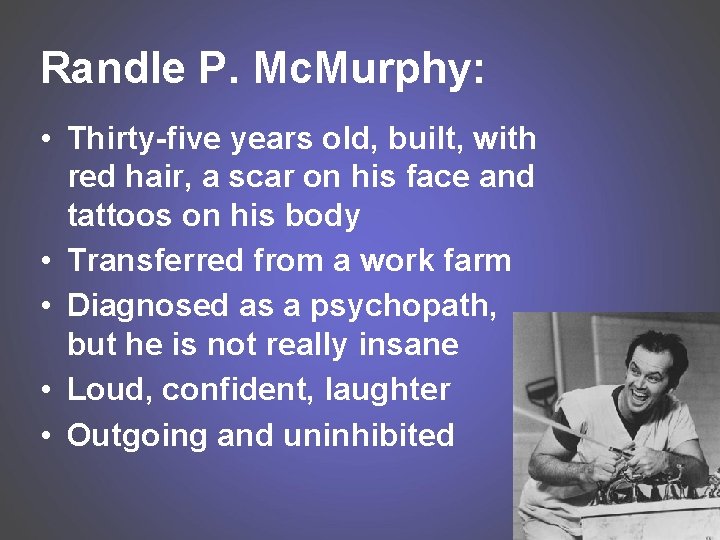
Randle P. Mc. Murphy: • Thirty-five years old, built, with red hair, a scar on his face and tattoos on his body • Transferred from a work farm • Diagnosed as a psychopath, but he is not really insane • Loud, confident, laughter • Outgoing and uninhibited
Anti-hero Qualities: • Accused of Statutory Rape • Five fights • Vulgar/sexual comments • Racist behavior • Insults Dr. Harding • Uses the men • Self-serving
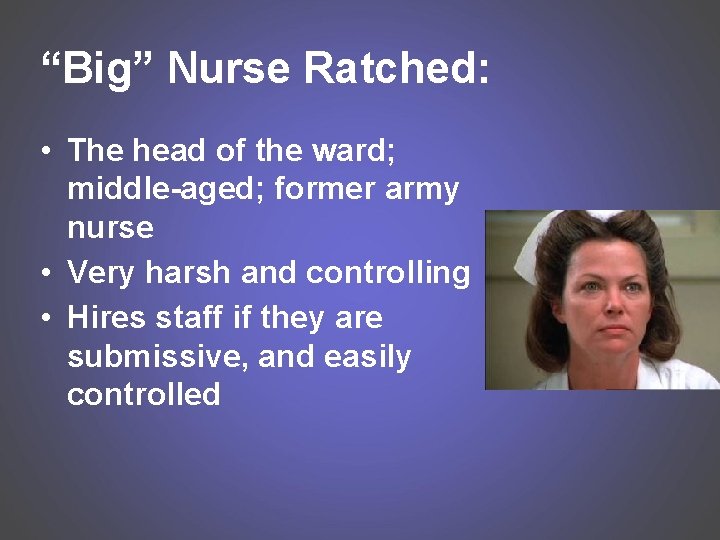
“Big” Nurse Ratched: • The head of the ward; middle-aged; former army nurse • Very harsh and controlling • Hires staff if they are submissive, and easily controlled
Antagonist Qualities: • • No World Series. No changes. Belittles the patients. Makes patients worried. Offers no solutions to the problems. Uses threats. Causes trouble for the main character.
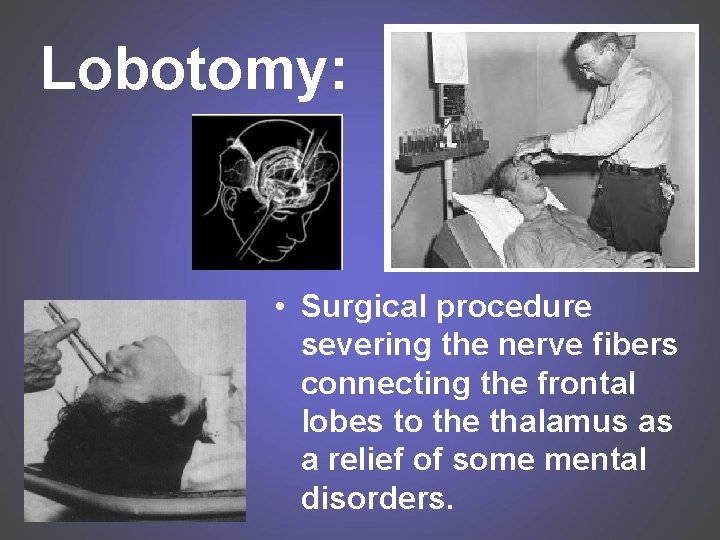
Lobotomy: • Surgical procedure severing the nerve fibers connecting the frontal lobes to the thalamus as a relief of some mental disorders.
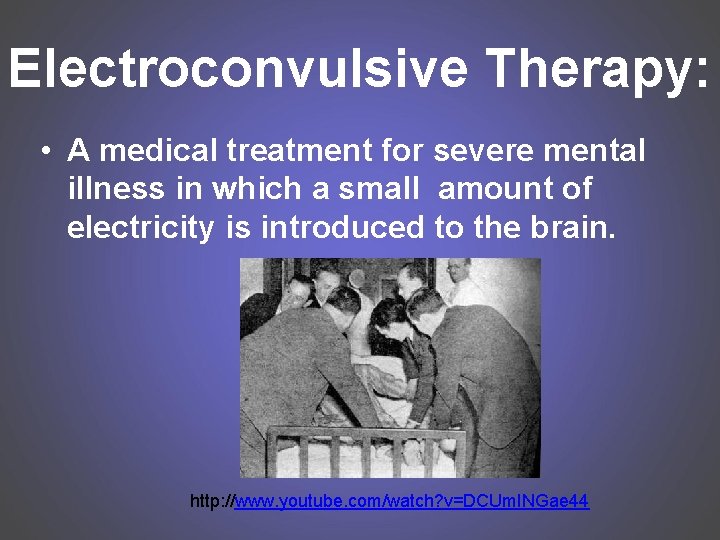
Electroconvulsive Therapy: • A medical treatment for severe mental illness in which a small amount of electricity is introduced to the brain. http: //www. youtube. com/watch? v=DCUm. INGae 44
Works Cited http: //sparknotes. com http: //www. minddisorders. com/images/gemd_02_img 0087. jpg http: //hvp. by. ru/IMAGES/Lobotomy 2. jpg http: //www. generationrxband. com/images/Lobotomy. jpg http: //www. cerebromente. org. br/n 04/historia/psycho-1. jpg