
Keeping safe and sound Basic guide to safeguarding
Keeping safe and sound: Basic guide to safeguarding Safeguarding is everyone’s responsibility
A big ‘Thank you’ Thank you for thinking about how to keep yourself and others safe. The safety and wellbeing of vulnerable adults who are at risk of abuse and children is especially important at this time. We know that abuse can increase when people are isolated and there are less people to intervene or provide support. As we practice social isolation or social distancing there will be less people to spot signs of abuse or to call for help. So please continue wherever possible to make sure you are following your existing safeguarding policies and practices in protecting service users, staff, and volunteers and that all your staff and volunteers, whatever their role, are able to spot possible signs of abuse, know who to tell and when. ‘Safeguarding is the action that is taken to promote the welfare of children and adults at risk and protect them from harm’. Safeguarding is everyone’s responsibility and at this time if we cannot shop for someone or go out we can look out for our friends and neighbours by phone, email, SKYPE, facebook or even just looking out of the window and waving and asking for a ‘thumbs up’. We can all play a part in keeping each other safe and sound at this time. This brief session will give you some key information on what to do if you are concerned about someone’s safety and wellbeing and where to get support and resources. Yours, Jacqui Wilkinson Community Action Suffolk Training, Safeguarding and Quality Standards Development Officer 2 March 2020
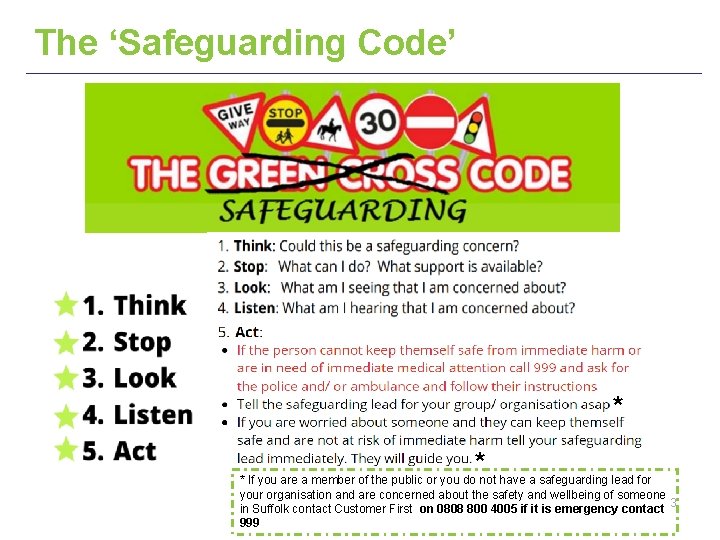
The ‘Safeguarding Code’ * * * If you are a member of the public or you do not have a safeguarding lead for your organisation and are concerned about the safety and wellbeing of someone 3 in Suffolk contact Customer First on 0808 800 4005 if it is emergency contact 999
Useful tips • Prioritise: Continue to prioritise safeguarding throughout your organisation and where it is necessary to make adjustments to your practice due to demands on your organisation please think about ways you can be pragmatic and safe at the same time. • Get a safeguarding policy. If you do not have a safeguarding policy you can download an easy access one page policy from the Community Action Suffolk website that has a simple one page flowchart of what to do and who to tell if you have a safeguarding concern. The flowchart contains the phone numbers for reporting safeguarding concerns in Suffolk. Have a safeguarding Lead contact for your group • • Use our ‘Keeping Safe and sound’ guides. You can download these and they include a guide for what to do if you are self-isolating and need food, essentials and or medicine. This guidance has been created by Community Action Suffolk and Suffolk Trading Standards. More guidance and resources will be available in the near future and can be found on our safeguarding page as they become available. They will also be regularly updated. • Keep up to date with useful and trusted resources including: Disclosure and Barring Sevice, Charity Commission , Community Action Suffolk safeguarding page, Community Action Suffolk COVID Communities resource page, Suffolk Safeguarding Partnership 4
Useful tips • Avoid lone working wherever and when ever possible, always make sure that you work in at least teams of two and everyone knows who in the organisation they need to tell if they have a concern about a client of a team member. If you are waiting for DBS checks can you make sure that people are paired up with at least one person having a DBS check • Have a Code of Conduct for your group and follow that, an example can be found on our website under safeguarding resources • Be aware of scams: Times of distress and disruption are a magnet for • • scammers, and sadly right now is no different. Please stay vigilant, if it feels too good to be true, it probably is. If you think you, or someone you know, have been targeted by a rogue or scam, you can report it to Trading Standards on 0808 223 1133. You can also follow Suffolk Trading Standards on Twitter @Suffolk. TS or online at https: //www. suffolk. gov. uk/community-and-safety/suffolk-trading-standards/ Do not ask people to put signs in their windows that will identify that they are vulnerable or self-isolating. It may not bring them help but could bring people to their door who want to exploit them. 5
Who can be at increased risk of abuse? • Children, anyone under the age of 18 • People dependant on others for assistance, especially with finances and personal care. • People who lack the capacity to consent. • People who need support with communication. • People who need support with mobility. • People who are isolated. • People receiving care in their own homes. • People that may experience discrimination (e. g. hate crime). • Remember that anyone could be abused 6
Recognising abuse • Signs of abuse can often be difficult to detect. This links below aim to help people who come into contact with people with care and support needs to identify abuse and recognise possible indicators. • Signs of abuse in adults: https: //www. scie. org. uk/safeguarding/adults/introduction/typ es-and-indicators-of-abuse • Signs of abuse in children: • https: //www. nspcc. org. uk/what-is-child-abuse/spotting-signs -child-abuse/ 7

How to report if you have a safeguarding concern Is the child/ adult at risk of immediate harm? Yes If the person is at immediate risk of harm or needs medical 999 attention call to contact the police and/ or ambulance service and follow the advice given. As soon as possible (but within 24 hours) follow the reporting steps on the right. No 1. Speak with the Safeguarding Lead for your Group 2. If your safeguarding Lead is unavailable and a delay in contacting them could cause harm or you do not have a safeguarding lead yet: Phone Suffolk Customer First on 0808 800 4005 to tell them your concerns, or, If you are a paid member of staff or volunteer for a project and are not sure if it is a safeguarding issue seek advice from the MASH (Multi Agency Safeguarding Hub) on what action to take next if they need guidance and inform you as appropriate. MASH Professional Consultation Line on 03456 061 499 or via webchat https: //www. suffolk. gov. uk/care-and-support-for-adults/protectingpeople-at-risk-of-abuse/mash/ 31
What to do if someone tells you they are not safe • Stay calm and listen carefully • Tell them that you will need to pass the information on to keep them safe, it’s part of your groups policy • Record using their own words exactly what was said • Ask open non-judgemental questions for clarification only (e. g. what/ when/ who/ where/ how) - not leading ones. DO NOT pry for more information • Seek further advice from your safeguarding lead (or MASH team) if needed. • Consider the persons immediate safety • Make referral Doing nothing is not an option 9

Further Information Suffolk Safeguarding Partnership www. suffolkscb. org. uk Suffolk County Council – adult safeguarding https: //www. suffolk. gov. uk/adult -social-care-and-health/keeping-you-safe/safeguarding/ Suffolk Mental Capacity Act and DOLS website: https: //www. suffolk. gov. uk/mca The Care Act 2014 – Care and Support statutory guidance (safeguarding) https: //www. gov. uk/guidance/care-and-support-statutory-guidance/safeguarding SCIE Adult Safeguarding Questions: http: //www. scie. org. uk/care-act-2014/safeguarding-adults/adult-safeguardingpractice-questions/ Childline – 0800 1111 https: //www. childline. org. uk/ 10
- Slides: 10