
KCSM Knowledge Centered Service Management Beyond the Integration
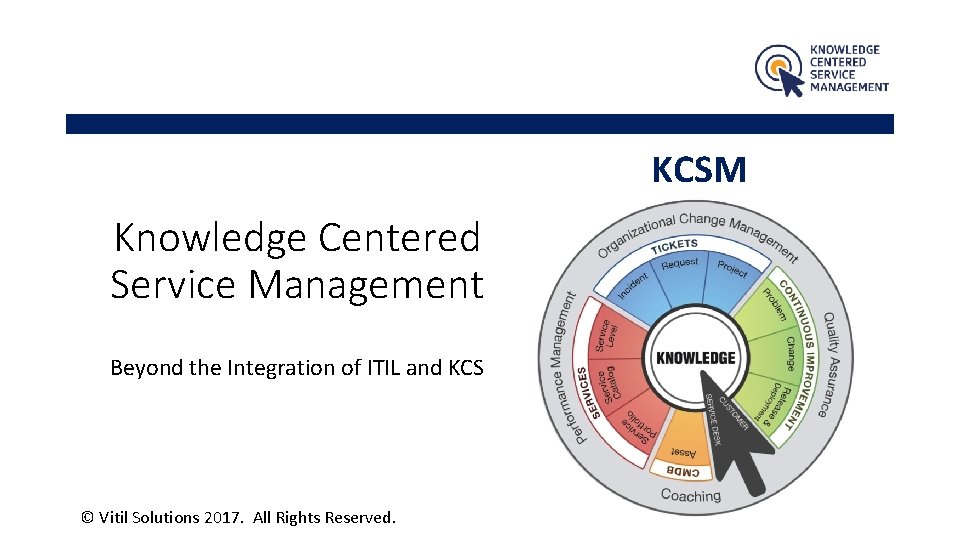
KCSM Knowledge Centered Service Management Beyond the Integration of ITIL and KCS © Vitil Solutions 2017. All Rights Reserved.

Meeting Sponsor Improve customer satisfaction, service quality, and operational efficiency with shared knowledge
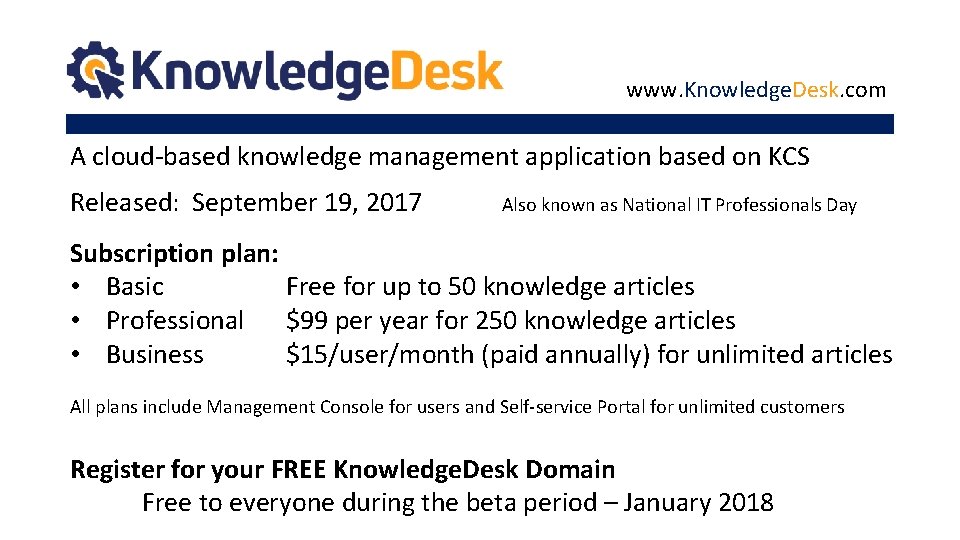
www. Knowledge. Desk. com A cloud-based knowledge management application based on KCS Released: September 19, 2017 Also known as National IT Professionals Day Subscription plan: • Basic Free for up to 50 knowledge articles • Professional $99 per year for 250 knowledge articles • Business $15/user/month (paid annually) for unlimited articles All plans include Management Console for users and Self-service Portal for unlimited customers Register for your FREE Knowledge. Desk Domain Free to everyone during the beta period – January 2018
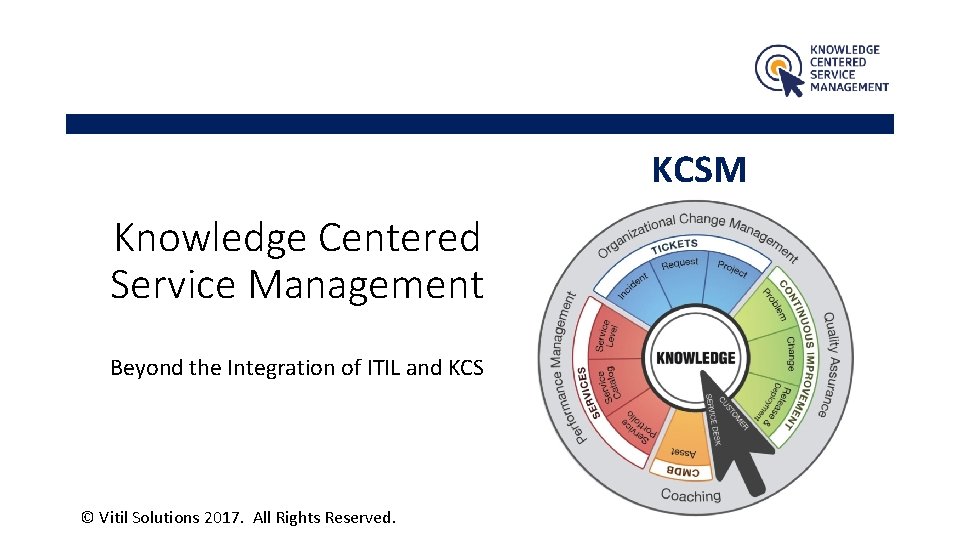
KCSM Knowledge Centered Service Management Beyond the Integration of ITIL and KCS © Vitil Solutions 2017. All Rights Reserved.
Knowledge Product Strategist Rick Joslin Knowledge. Desk • • • KCS Instructor since 2003 KCS v 6 Core Committee KCS Certified by both HDI and The KCS Academy. Contributing author to ITIL v 3 & KCS v 4, v 5. 3, v 6 Co-author of the AXELOS whitepaper on KCS & ITIL Author of various articles, whitepapers, webinars, presentations, focus books, and courses International speaker, delivered on six continents, served as keynote speaker, conference emcee, and conference committees Past Judge of the HDI KCS Award, HDI Team Excellence Award, HDI Analyst of the Year Award, and ASP 10 Best Websites Founder of the HDI Strategic Advisory Board, HDI Member Advisory Board, and HDI Desktop Support Advisory Board Served on various non-profit boards, including 25 years as an HDI Local Chapter Officer VP of Right. Answers, VP of Knowledge Products, VP of Customer Care, HDI Executive Director of Certification & Training, Principal Consultant
Where questions get answered, Human Resources Student Services Customer Service Financial Services Technical Support Government Services And issues get resolved!
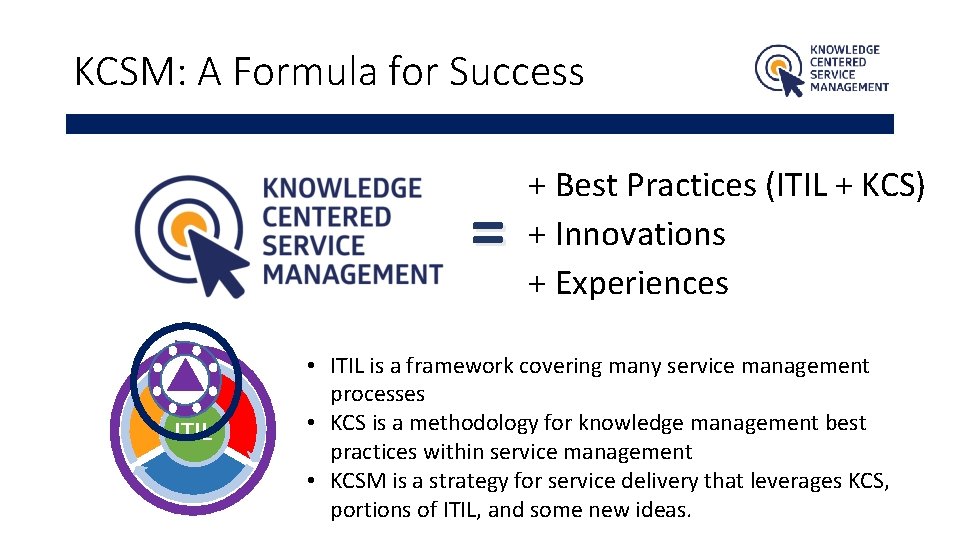
KCSM: A Formula for Success = ITIL + Best Practices (ITIL + KCS) + Innovations + Experiences • ITIL is a framework covering many service management processes • KCS is a methodology for knowledge management best practices within service management • KCSM is a strategy for service delivery that leverages KCS, portions of ITIL, and some new ideas.
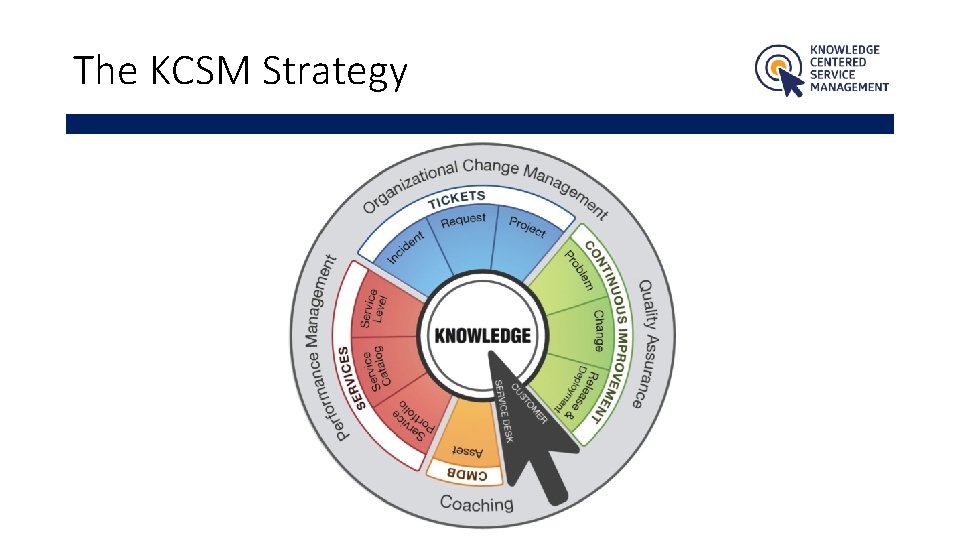
The KCSM Strategy
Why KCSM? • To better service our customers, we need to eliminate issues and not just work faster. • To value our teammate, we need to automate routine tasks. • To contribute to our organization, we need to maximize value. • To lead in the industry, we have to give back.
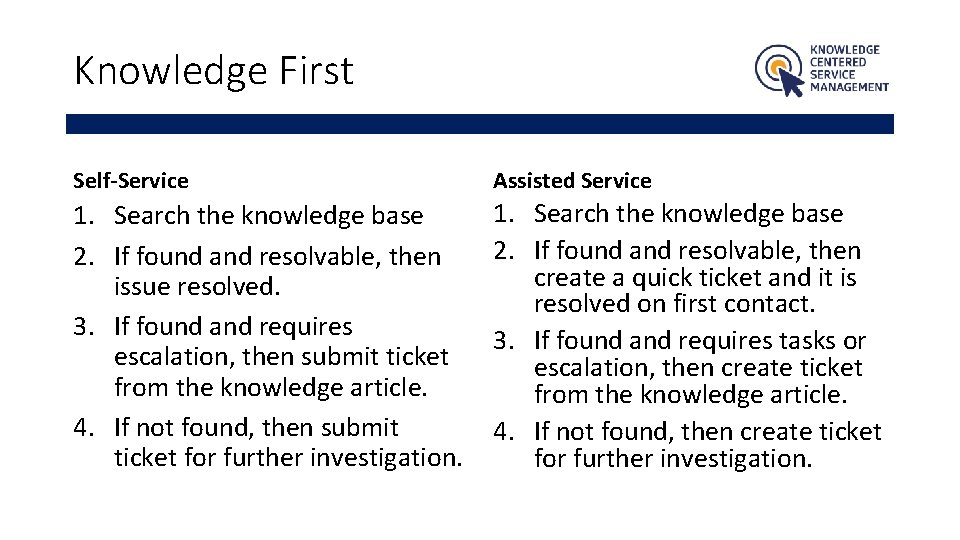
Knowledge First Self-Service Assisted Service 1. Search the knowledge base 2. If found and resolvable, then issue resolved. 3. If found and requires escalation, then submit ticket from the knowledge article. 4. If not found, then submit ticket for further investigation. 1. Search the knowledge base 2. If found and resolvable, then create a quick ticket and it is resolved on first contact. 3. If found and requires tasks or escalation, then create ticket from the knowledge article. 4. If not found, then create ticket for further investigation.
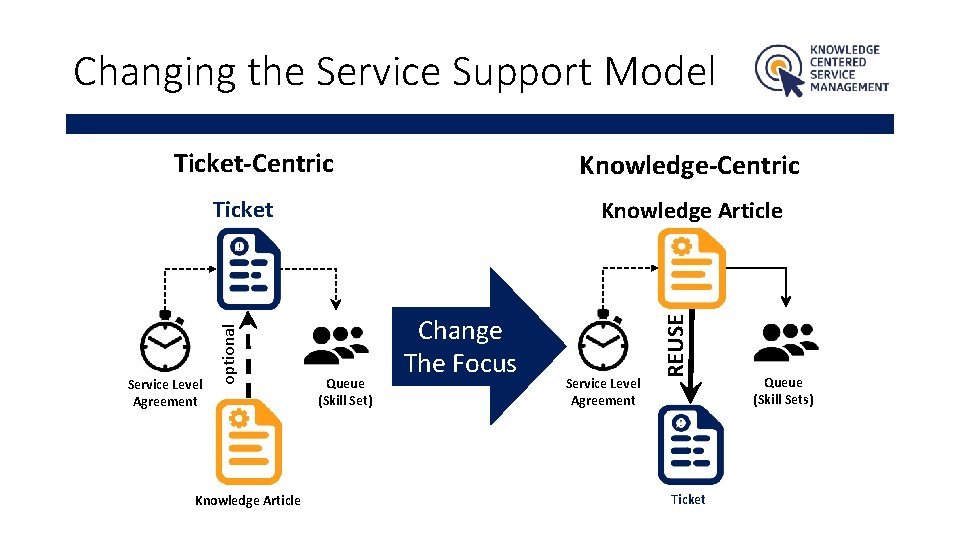
Changing the Service Support Model Ticket-Centric Knowledge Article Queue (Skill Set) Change The Focus Service Level Agreement REUSE Service Level Agreement optional Ticket Queue (Skill Sets)

Knowledge Value What • Answers to Questions • Resolutions to Issues • Standard Operating Procedures (SOPs) • How to information • Request fulfillment procedures • Escalation procedures • Diagnostic procedures • Reference material Why • Consistency of service • Approved procedures • Efficient use of resources • Just-in-time training • Continuous Improvement
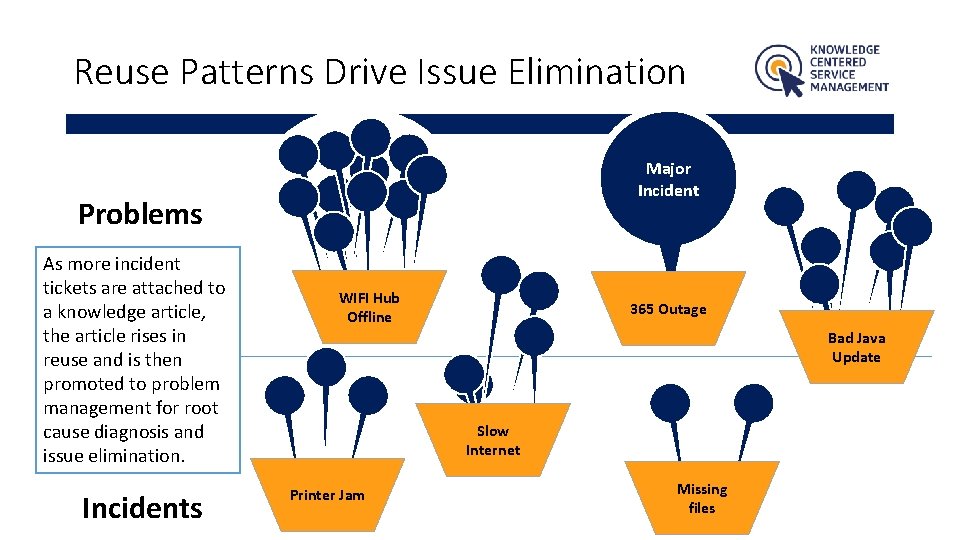
Reuse Patterns Drive Issue Elimination Major Incident Problems As more incident tickets are attached to a knowledge article, the article rises in reuse and is then promoted to problem management for root cause diagnosis and issue elimination. Incidents WIFI Hub Offline 365 Outage Bad Java Update Slow Internet Printer Jam Missing files
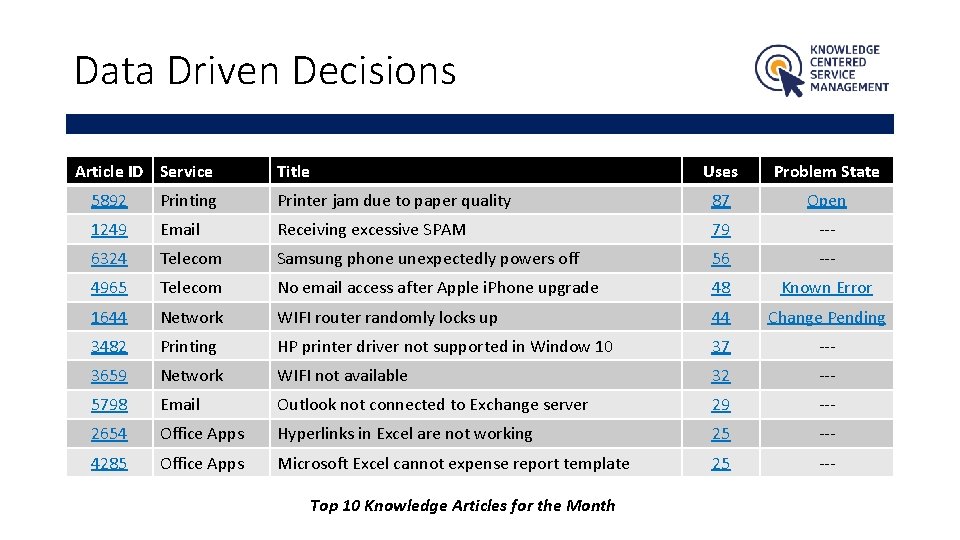
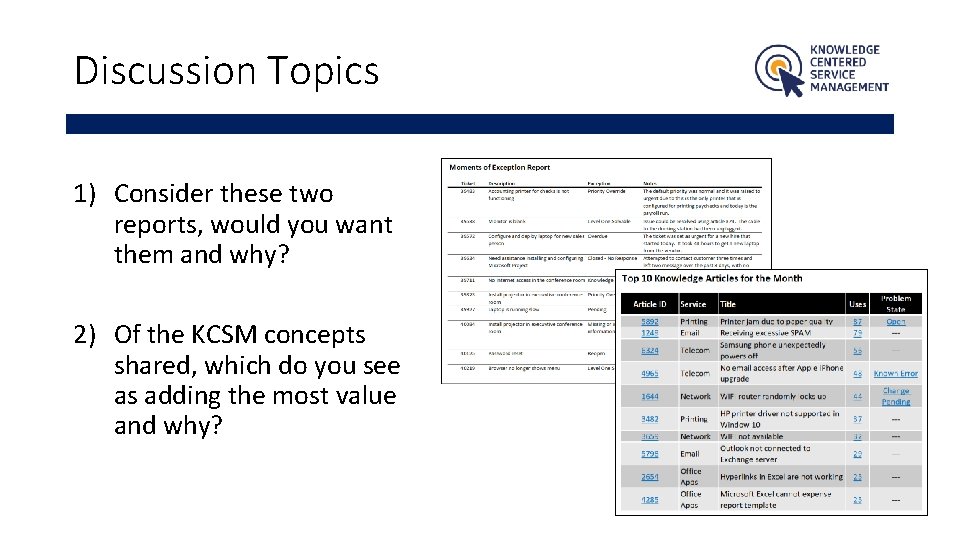
Data Driven Decisions Article ID Service Title Uses Problem State 5892 Printing Printer jam due to paper quality 87 Open 1249 Email Receiving excessive SPAM 79 --- 6324 Telecom Samsung phone unexpectedly powers off 56 --- 4965 Telecom No email access after Apple i. Phone upgrade 48 Known Error 1644 Network WIFI router randomly locks up 44 Change Pending 3482 Printing HP printer driver not supported in Window 10 37 --- 3659 Network WIFI not available 32 --- 5798 Email Outlook not connected to Exchange server 29 --- 2654 Office Apps Hyperlinks in Excel are not working 25 --- 4285 Office Apps Microsoft Excel cannot expense report template 25 --- Top 10 Knowledge Articles for the Month
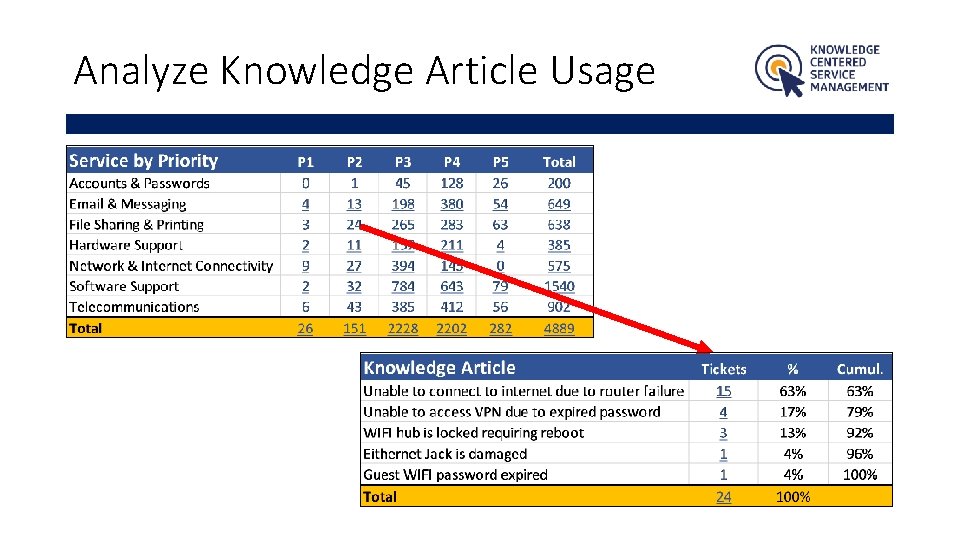
Analyze Knowledge Article Usage
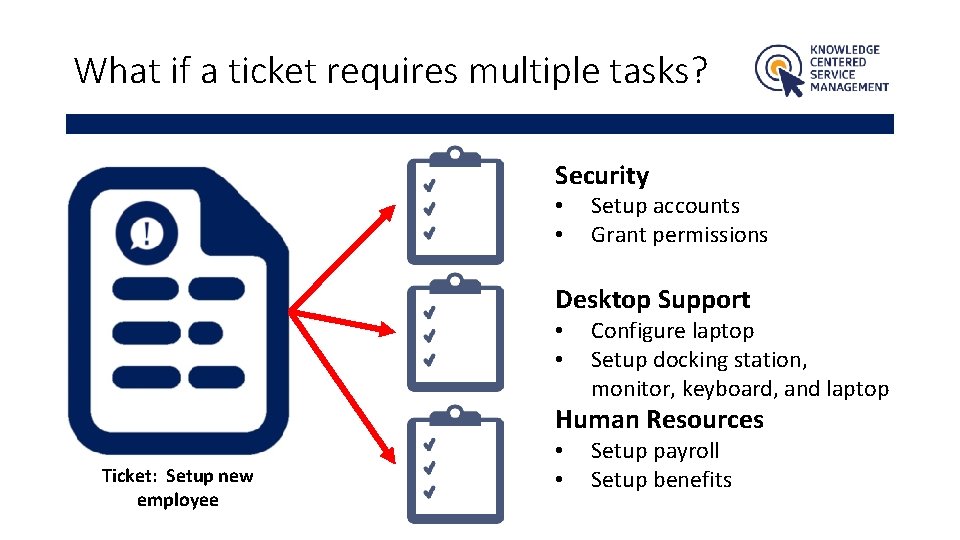
What if a ticket requires multiple tasks? Security • • Setup accounts Grant permissions Desktop Support • • Configure laptop Setup docking station, monitor, keyboard, and laptop Human Resources Ticket: Setup new employee • • Setup payroll Setup benefits
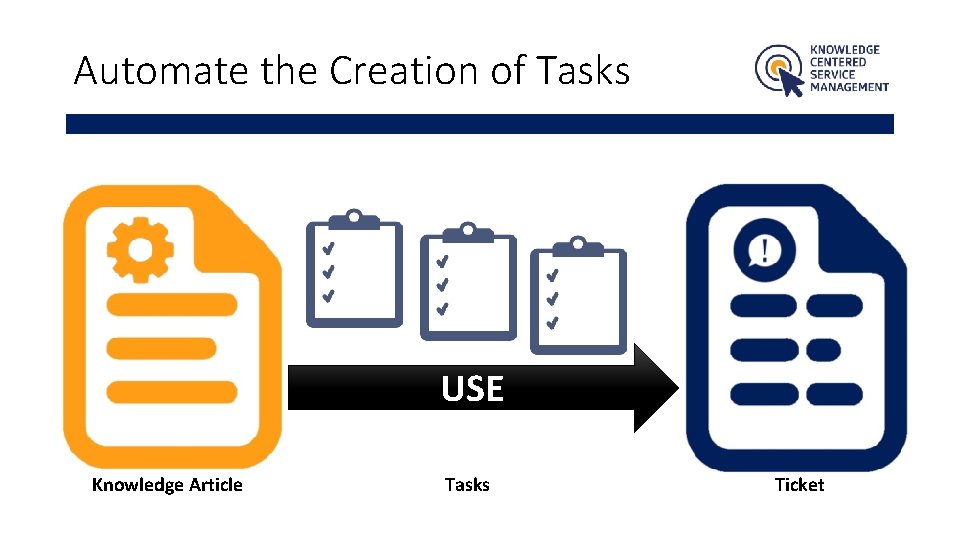
Automate the Creation of Tasks USE Knowledge Article Tasks Ticket
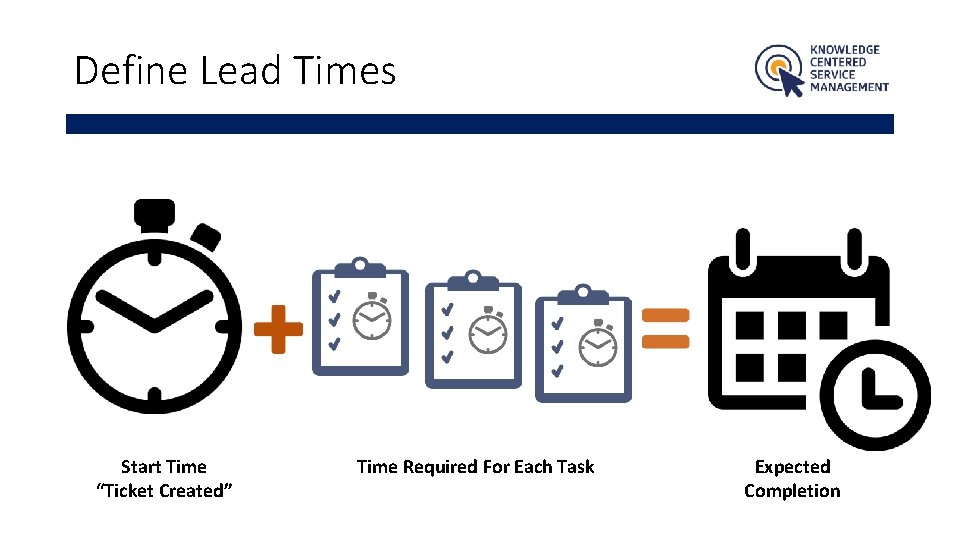
Define Lead Times Start Time “Ticket Created” Time Required For Each Task Expected Completion
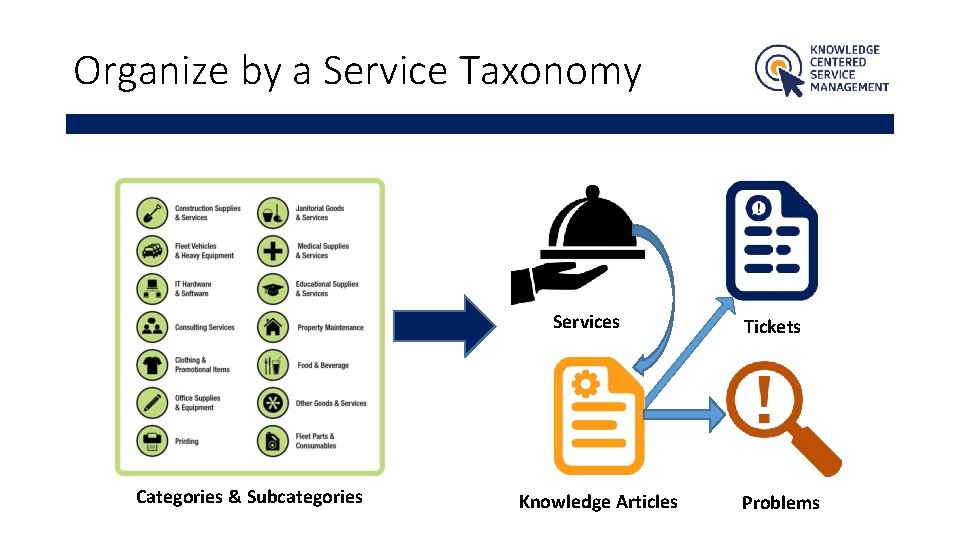
Organize by a Service Taxonomy Services Categories & Subcategories Knowledge Articles Tickets Problems
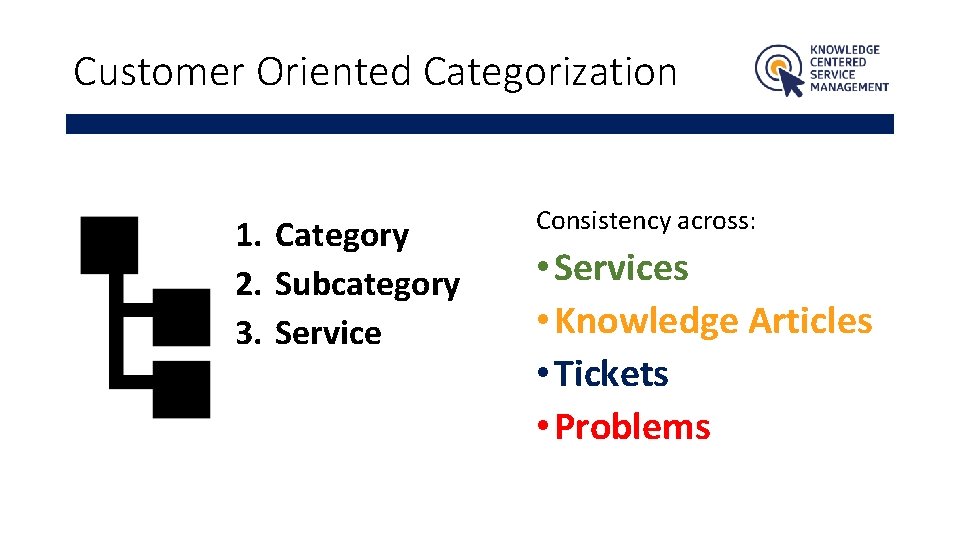
Customer Oriented Categorization 1. Category 2. Subcategory 3. Service Consistency across: • Services • Knowledge Articles • Tickets • Problems
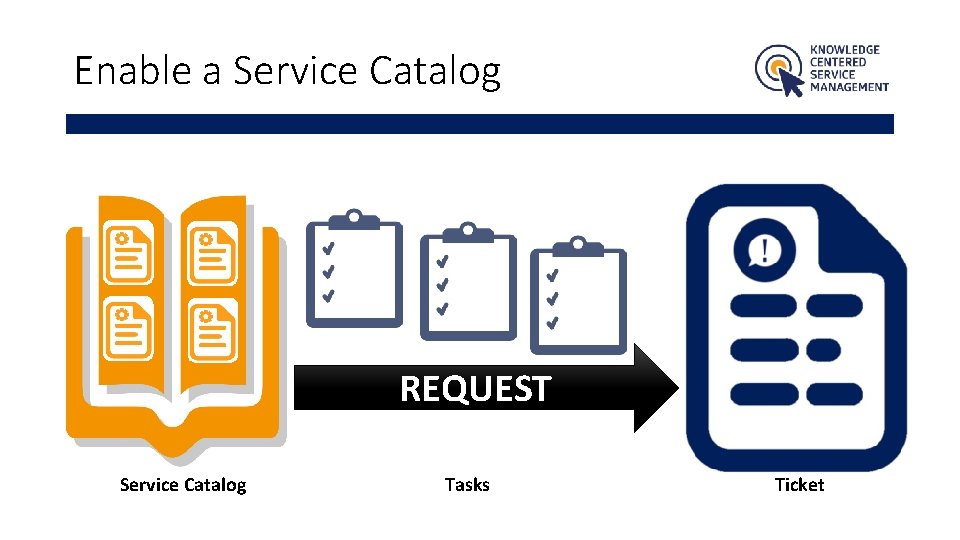
Enable a Service Catalog REQUEST Service Catalog Tasks Ticket
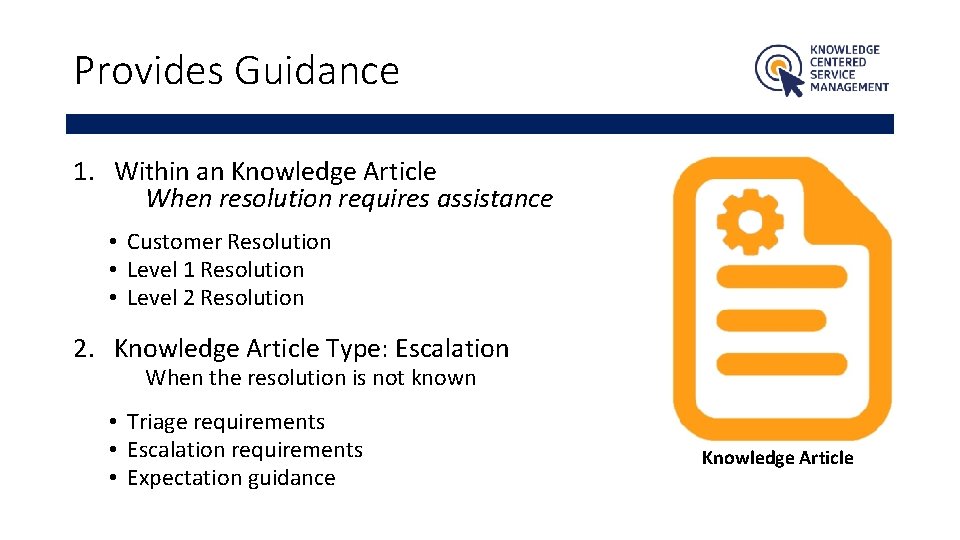
Provides Guidance 1. Within an Knowledge Article When resolution requires assistance • Customer Resolution • Level 1 Resolution • Level 2 Resolution 2. Knowledge Article Type: Escalation When the resolution is not known • Triage requirements • Escalation requirements • Expectation guidance Knowledge Article
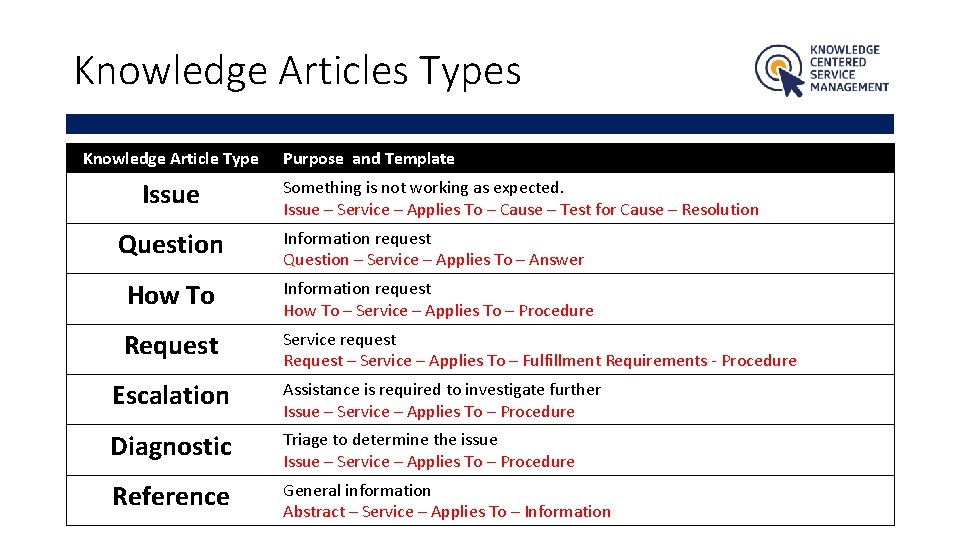
Knowledge Articles Types Knowledge Article Type Issue Purpose and Template Something is not working as expected. Issue – Service – Applies To – Cause – Test for Cause – Resolution Question Information request Question – Service – Applies To – Answer How To Information request How To – Service – Applies To – Procedure Request Service request Request – Service – Applies To – Fulfillment Requirements - Procedure Escalation Assistance is required to investigate further Issue – Service – Applies To – Procedure Diagnostic Triage to determine the issue Issue – Service – Applies To – Procedure Reference General information Abstract – Service – Applies To – Information
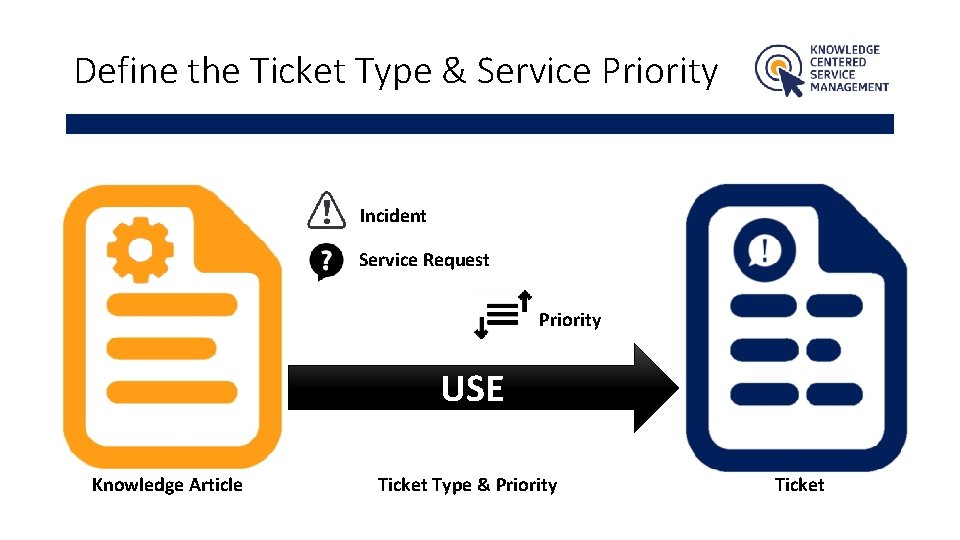
Define the Ticket Type & Service Priority Incident Service Request Priority USE Knowledge Article Ticket Type & Priority Ticket
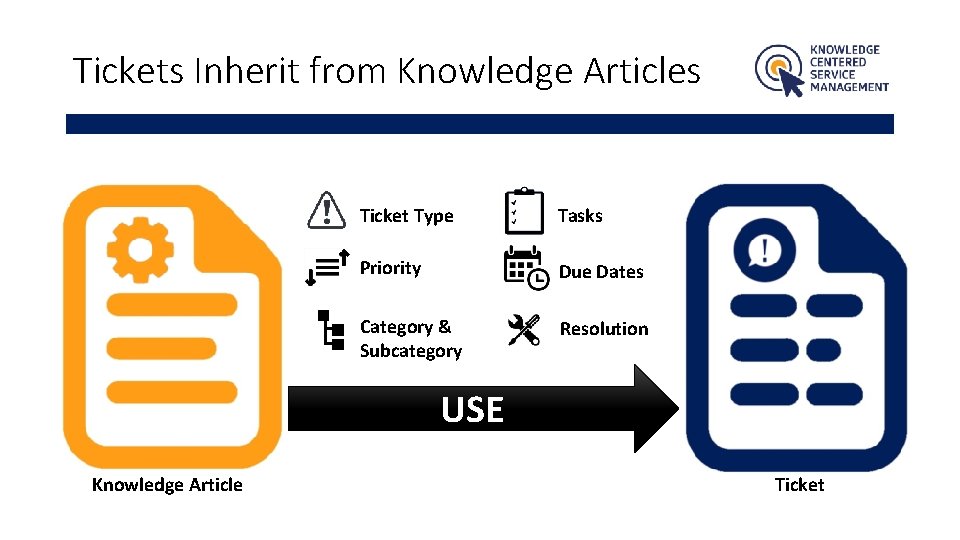
Tickets Inherit from Knowledge Articles Ticket Type Tasks Priority Due Dates Category & Subcategory Resolution USE Knowledge Article Ticket
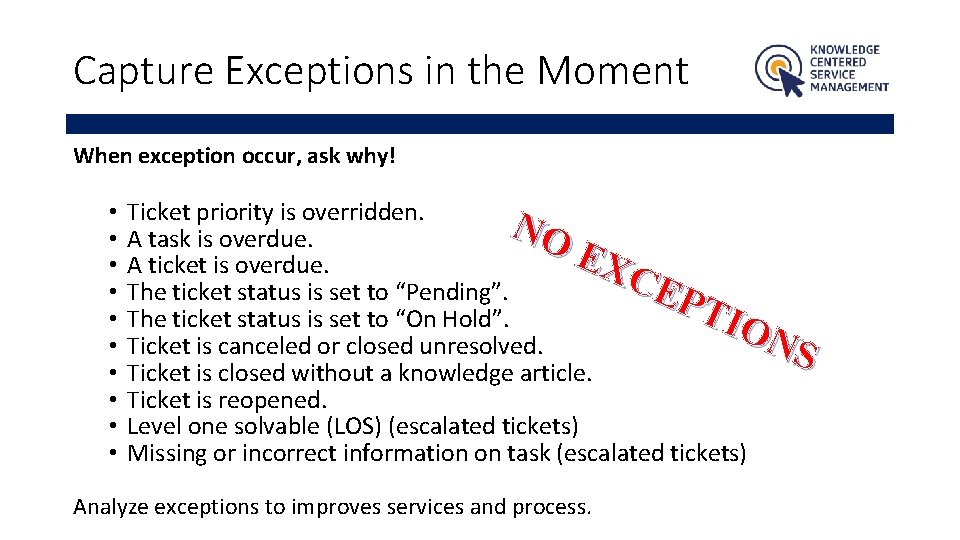
Capture Exceptions in the Moment When exception occur, ask why! • • • Ticket priority is overridden. NO A task is overdue. EX A ticket is overdue. C EP The ticket status is set to “Pending”. TIO The ticket status is set to “On Hold”. NS Ticket is canceled or closed unresolved. Ticket is closed without a knowledge article. Ticket is reopened. Level one solvable (LOS) (escalated tickets) Missing or incorrect information on task (escalated tickets) Analyze exceptions to improves services and process.
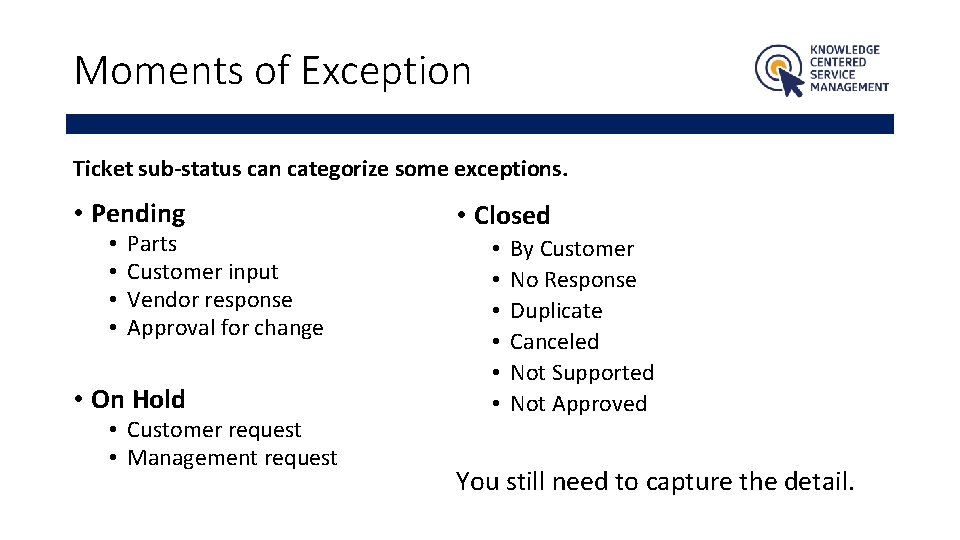
Moments of Exception Ticket sub-status can categorize some exceptions. • Pending • Closed • On Hold • • • Parts Customer input Vendor response Approval for change • Customer request • Management request By Customer No Response Duplicate Canceled Not Supported Not Approved You still need to capture the detail.
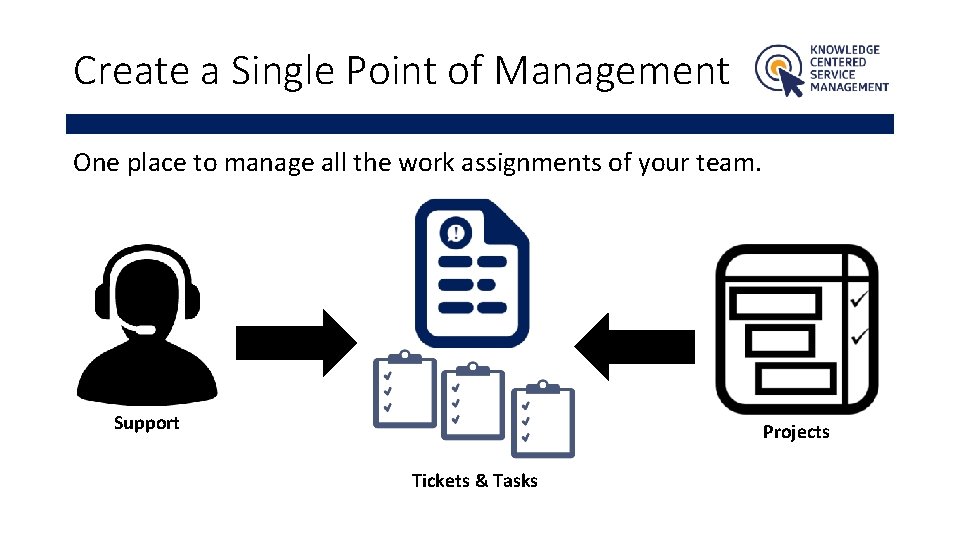
Create a Single Point of Management One place to manage all the work assignments of your team. Support Projects Tickets & Tasks
Knowledge Centered Service Management (KCSM) Extends Knowledge Articles to: 1. 2. 3. 4. 5. 6. 7. Drive issue elimination Automate task creation and define lead times Consistently categorize services, knowledge, tickets, and problems Enable a service catalog Provide guidance when resolutions are not available Define ticket types Establish expected priorities Extends Tickets to: 8. Capture Moments of Exception 9. Create a Single Point of Management
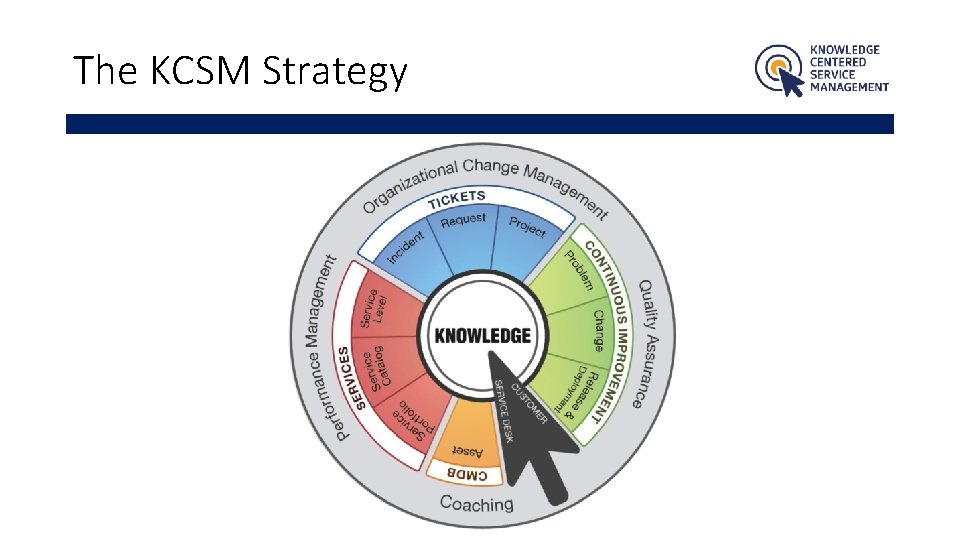
The KCSM Strategy
Rick Joslin Knowledge Product Strategist rick. joslin@vitil. com 412 -841 -9793 Sponsored by:
Discussion Topics 1) Consider these two reports, would you want them and why? 2) Of the KCSM concepts shared, which do you see as adding the most value and why?
Knowledge Centered Service Management (KCSM) The following slides have been shared to augment this presentation and provide you with additional insight to KCSM.
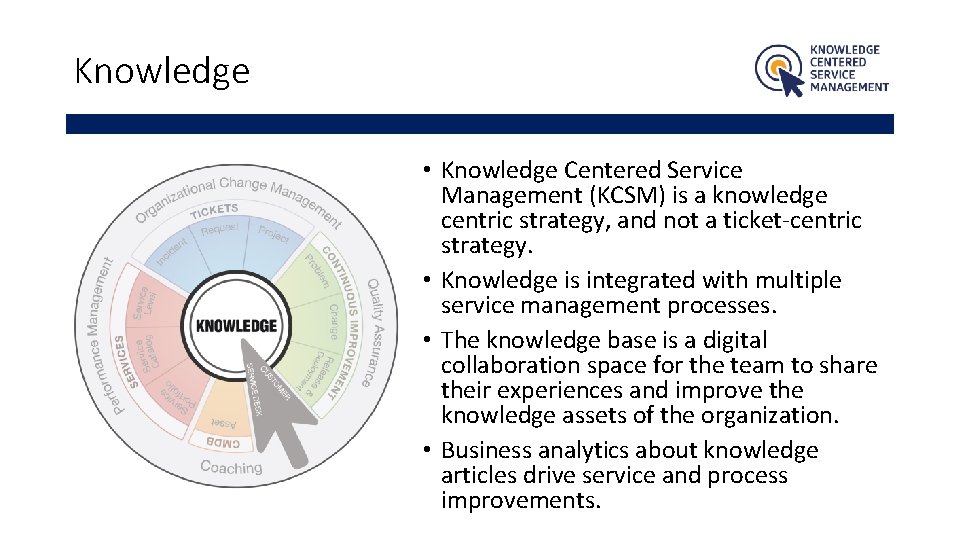
Knowledge • Knowledge Centered Service Management (KCSM) is a knowledge centric strategy, and not a ticket-centric strategy. • Knowledge is integrated with multiple service management processes. • The knowledge base is a digital collaboration space for the team to share their experiences and improve the knowledge assets of the organization. • Business analytics about knowledge articles drive service and process improvements.
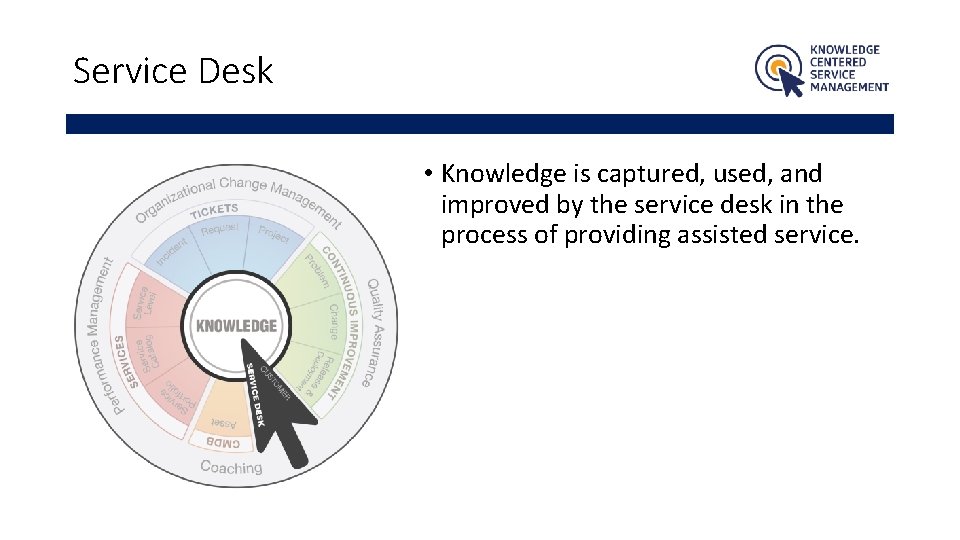
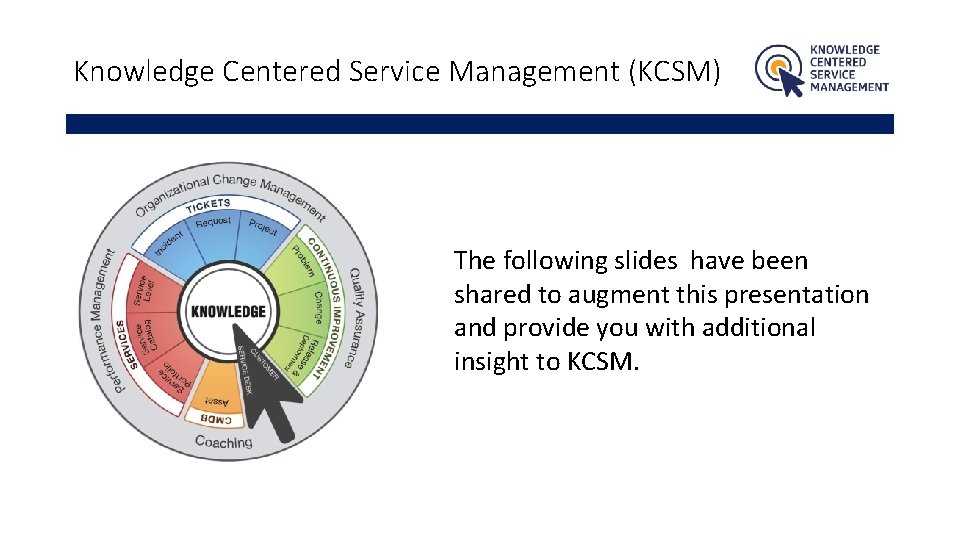
Service Desk • Knowledge is captured, used, and improved by the service desk in the process of providing assisted service.
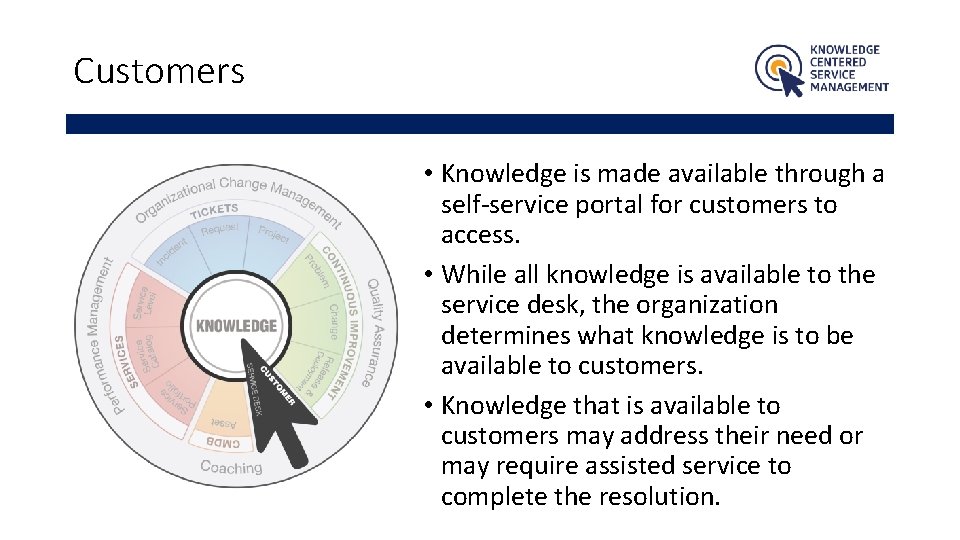
Customers • Knowledge is made available through a self-service portal for customers to access. • While all knowledge is available to the service desk, the organization determines what knowledge is to be available to customers. • Knowledge that is available to customers may address their need or may require assisted service to complete the resolution.
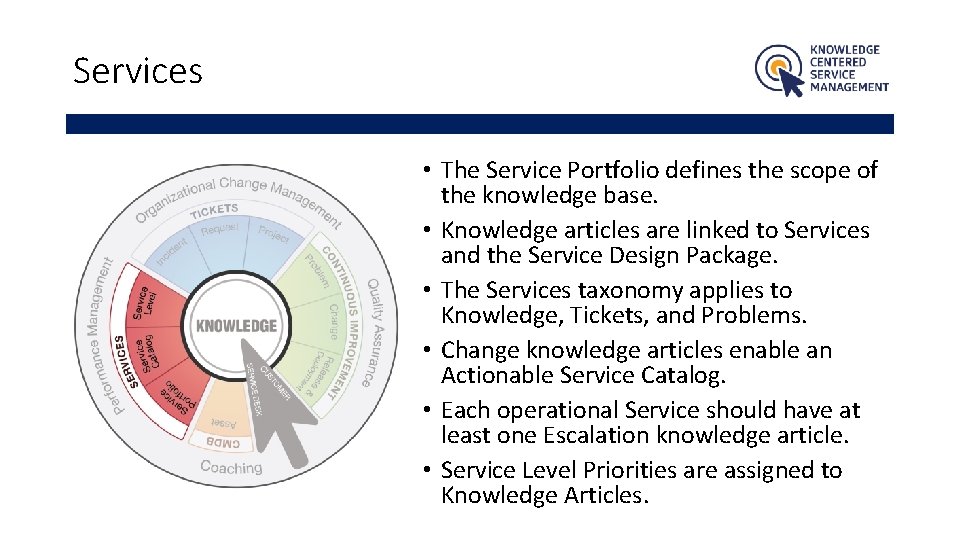
Services • The Service Portfolio defines the scope of the knowledge base. • Knowledge articles are linked to Services and the Service Design Package. • The Services taxonomy applies to Knowledge, Tickets, and Problems. • Change knowledge articles enable an Actionable Service Catalog. • Each operational Service should have at least one Escalation knowledge article. • Service Level Priorities are assigned to Knowledge Articles.
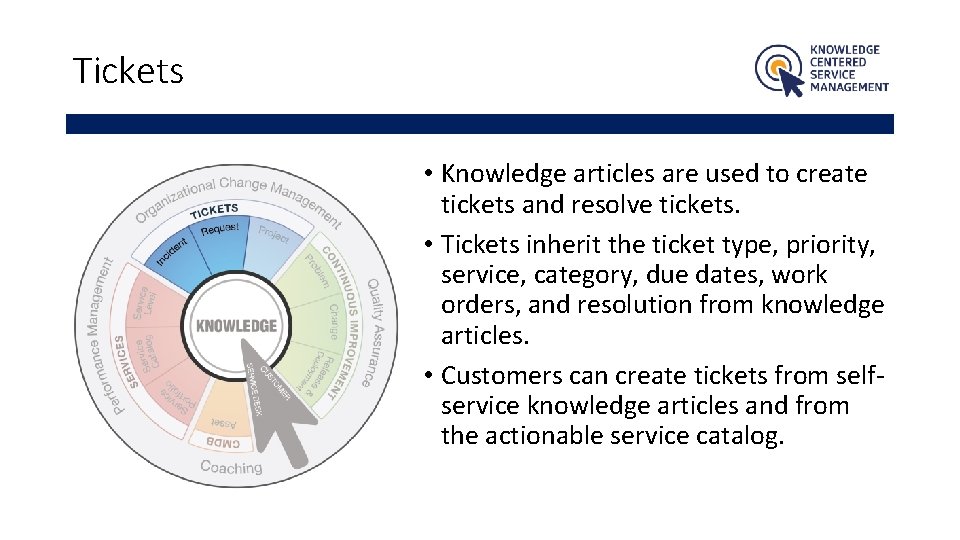
Tickets • Knowledge articles are used to create tickets and resolve tickets. • Tickets inherit the ticket type, priority, service, category, due dates, work orders, and resolution from knowledge articles. • Customers can create tickets from selfservice knowledge articles and from the actionable service catalog.
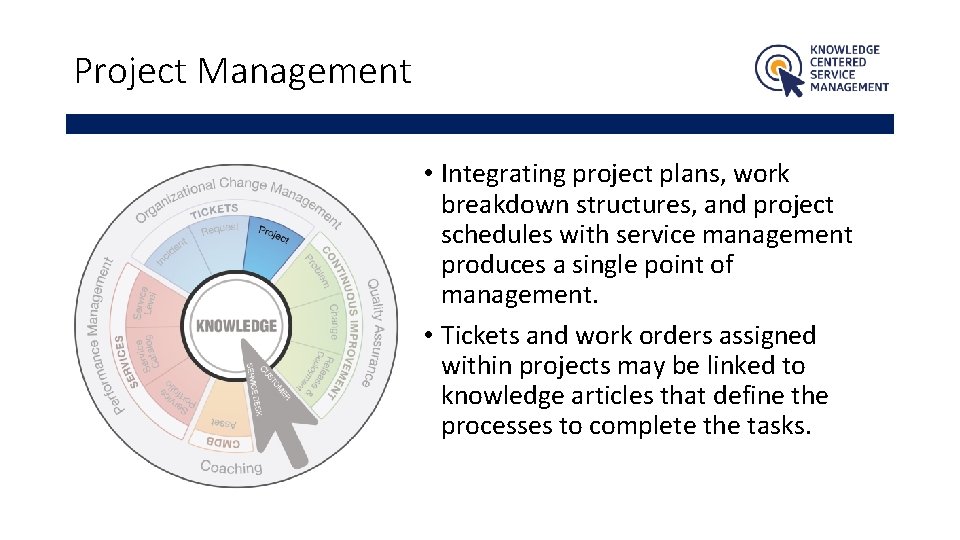
Project Management • Integrating project plans, work breakdown structures, and project schedules with service management produces a single point of management. • Tickets and work orders assigned within projects may be linked to knowledge articles that define the processes to complete the tasks.
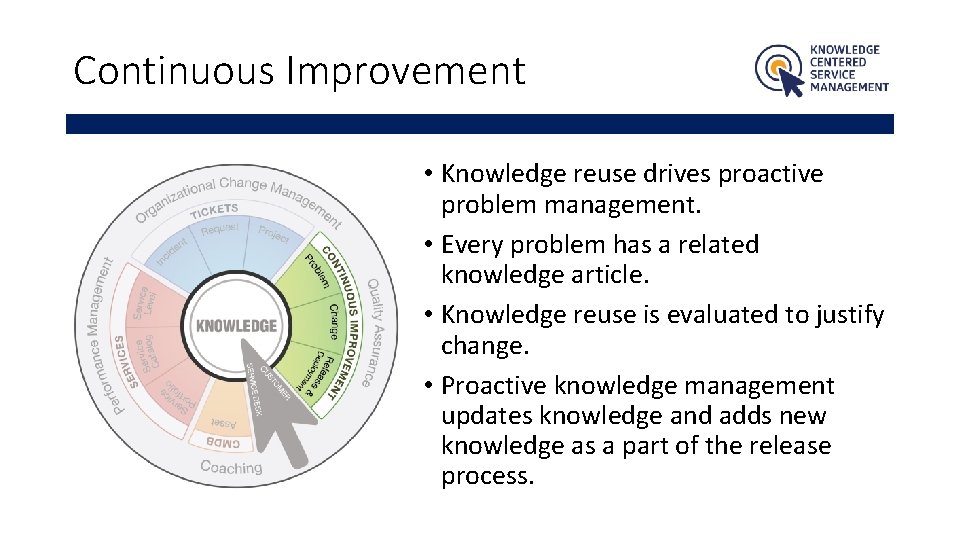
Continuous Improvement • Knowledge reuse drives proactive problem management. • Every problem has a related knowledge article. • Knowledge reuse is evaluated to justify change. • Proactive knowledge management updates knowledge and adds new knowledge as a part of the release process.
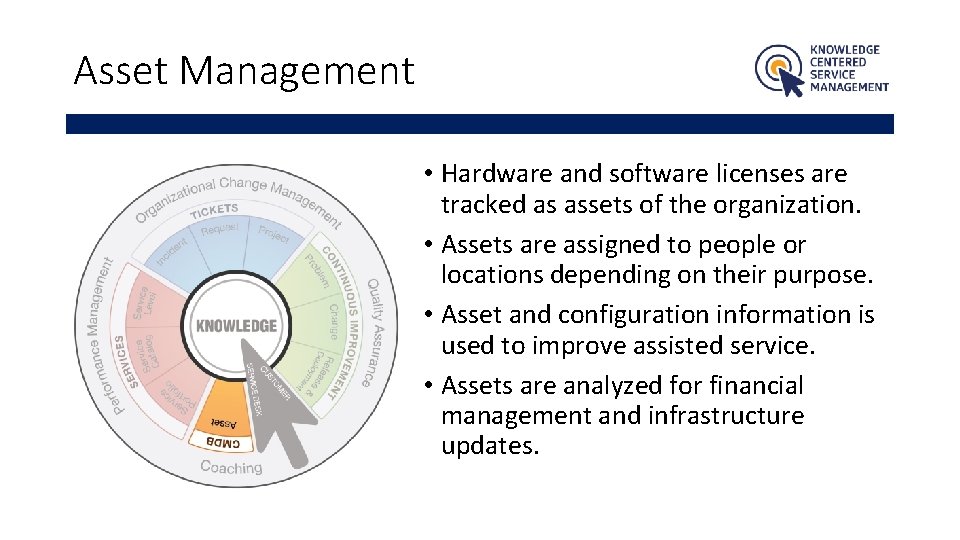
Asset Management • Hardware and software licenses are tracked as assets of the organization. • Assets are assigned to people or locations depending on their purpose. • Asset and configuration information is used to improve assisted service. • Assets are analyzed for financial management and infrastructure updates.
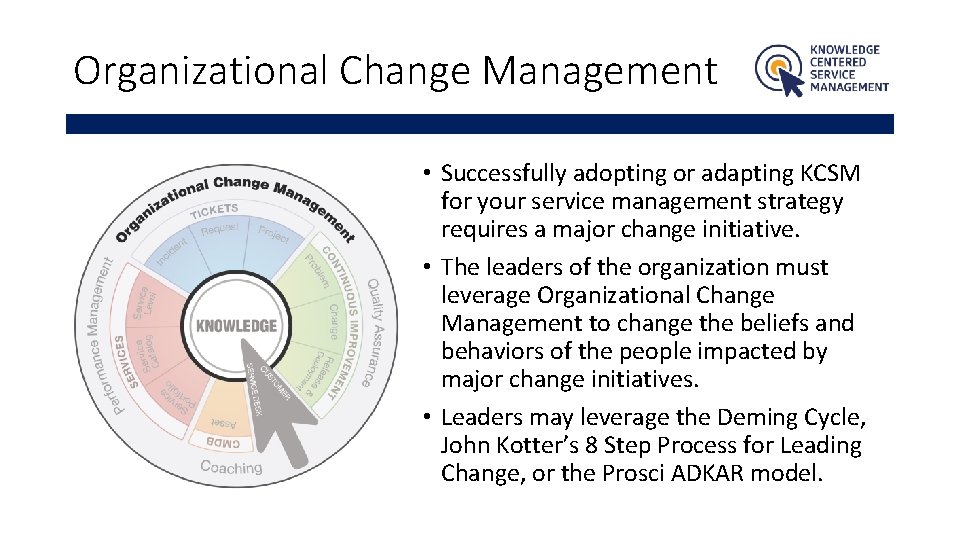
Organizational Change Management • Successfully adopting or adapting KCSM for your service management strategy requires a major change initiative. • The leaders of the organization must leverage Organizational Change Management to change the beliefs and behaviors of the people impacted by major change initiatives. • Leaders may leverage the Deming Cycle, John Kotter’s 8 Step Process for Leading Change, or the Prosci ADKAR model.
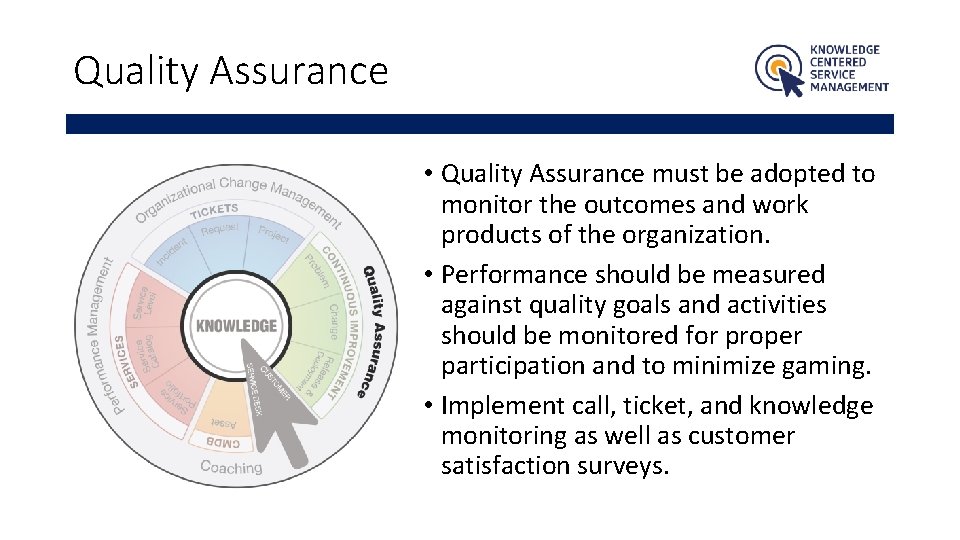
Quality Assurance • Quality Assurance must be adopted to monitor the outcomes and work products of the organization. • Performance should be measured against quality goals and activities should be monitored for proper participation and to minimize gaming. • Implement call, ticket, and knowledge monitoring as well as customer satisfaction surveys.
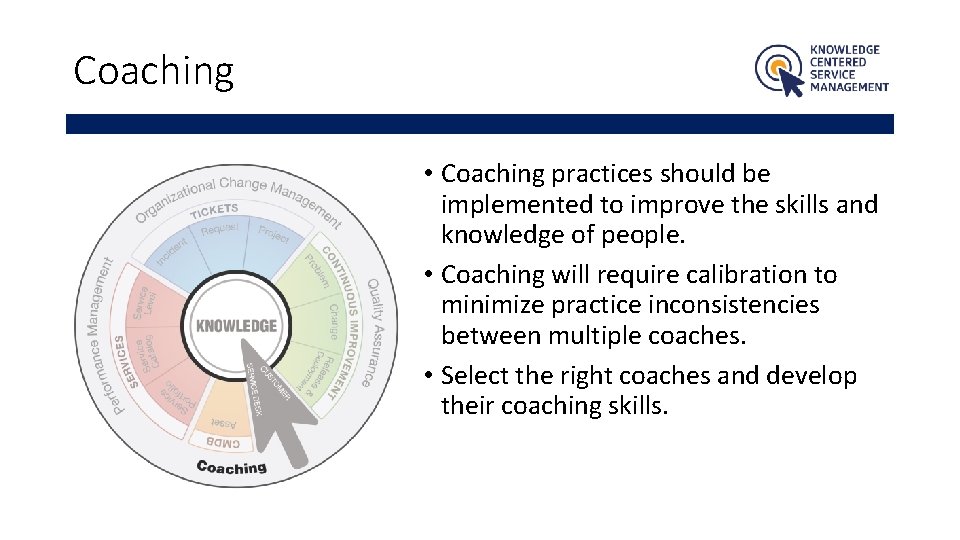
Coaching • Coaching practices should be implemented to improve the skills and knowledge of people. • Coaching will require calibration to minimize practice inconsistencies between multiple coaches. • Select the right coaches and develop their coaching skills.
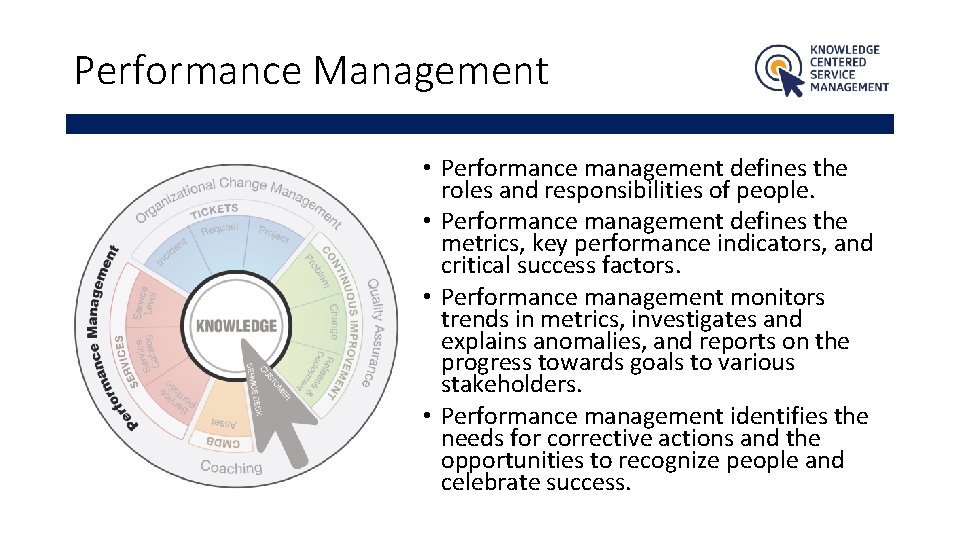
Performance Management • Performance management defines the roles and responsibilities of people. • Performance management defines the metrics, key performance indicators, and critical success factors. • Performance management monitors trends in metrics, investigates and explains anomalies, and reports on the progress towards goals to various stakeholders. • Performance management identifies the needs for corrective actions and the opportunities to recognize people and celebrate success.
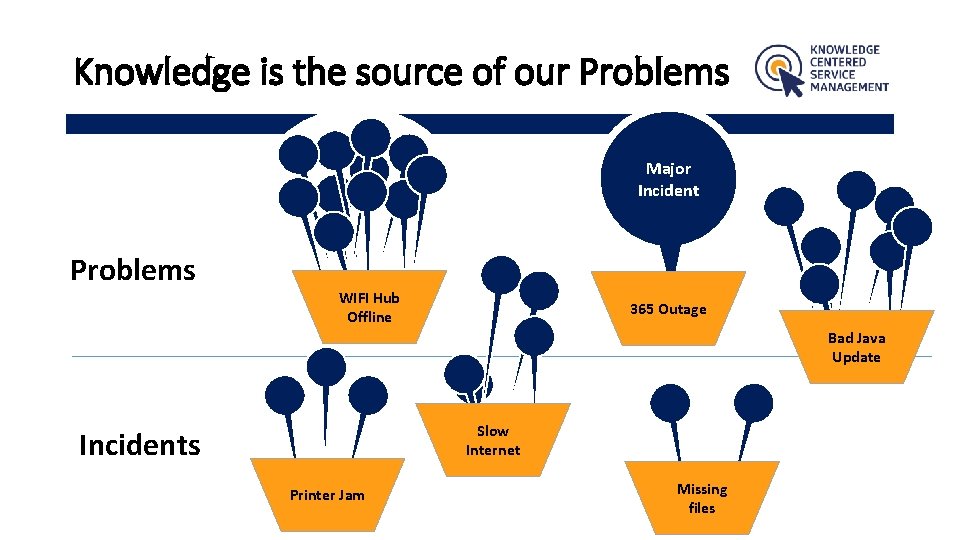
Knowledge is the source of our Problems Major Incident Problems WIFI Hub Offline 365 Outage Bad Java Update Slow Internet Incidents Printer Jam Missing files
- Slides: 46