
Kathryn Barnards Parent Child Interaction Model By Karen
Kathryn Barnard’s Parent. Child Interaction Model By, Karen Collins, Beth Kalkman, Lori Van Zoeren Joel Vedders Nurs 510, Ferris State University
Objectives �Review the Parent-Child Interaction Model �Analyze the metaparadigms related to the model �Evaluate the model’s contribution to nursing research �Apply the model to daily practice �Differentiate nursing knowledge from other disciplines
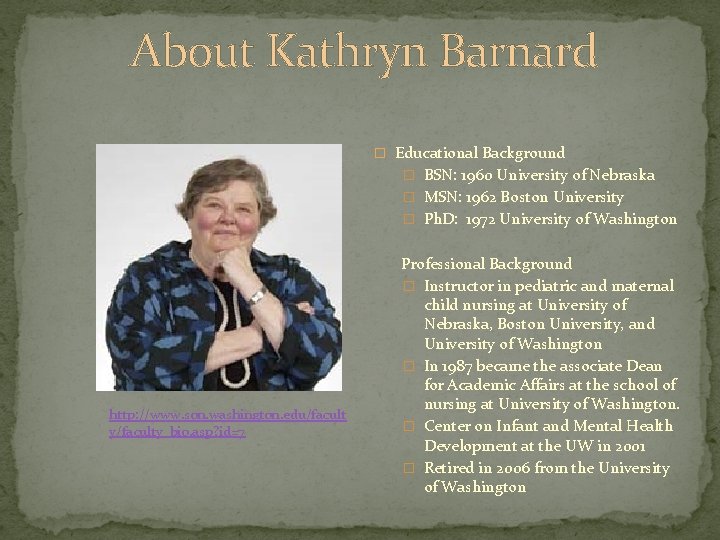
About Kathryn Barnard � Educational Background � BSN: 1960 University of Nebraska � MSN: 1962 Boston University � Ph. D: 1972 University of Washington http: //www. son. washington. edu/facult y/faculty_bio. asp? id=7 Professional Background � Instructor in pediatric and maternal child nursing at University of Nebraska, Boston University, and University of Washington � In 1987 became the associate Dean for Academic Affairs at the school of nursing at University of Washington. � Center on Infant and Mental Health Development at the UW in 2001 � Retired in 2006 from the University of Washington
Metaparadigm Concepts �Nursing (Masters, 2012, p. 315) �Person (Fine, 2002, p. 488 -489) �Health American Nurses Association (2010). �Environment (Masters, 2012, p. 315)
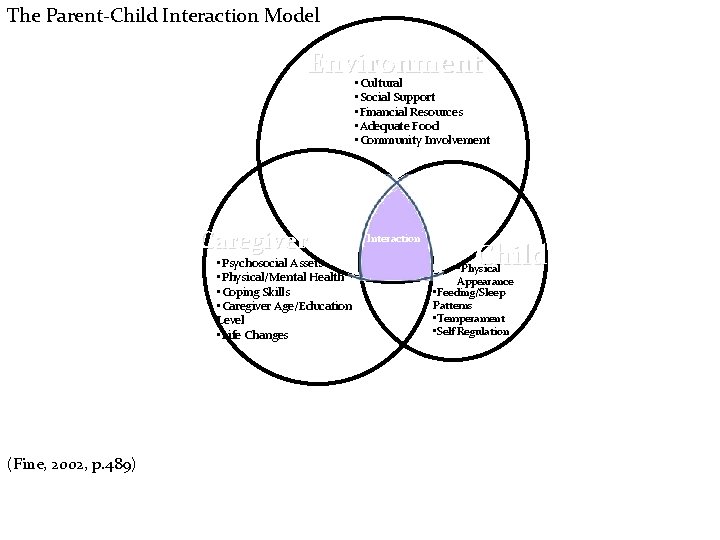
The Parent-Child Interaction Model Environment • Cultural • Social Support • Financial Resources • Adequate Food • Community Involvement Caregiver • Psychosocial Assets • Physical/Mental Health • Coping Skills • Caregiver Age/Education Level • Life Changes (Fine, 2002, p. 489) Interaction Child • Physical Appearance • Feeding/Sleep Patterns • Temperament • Self Regulation
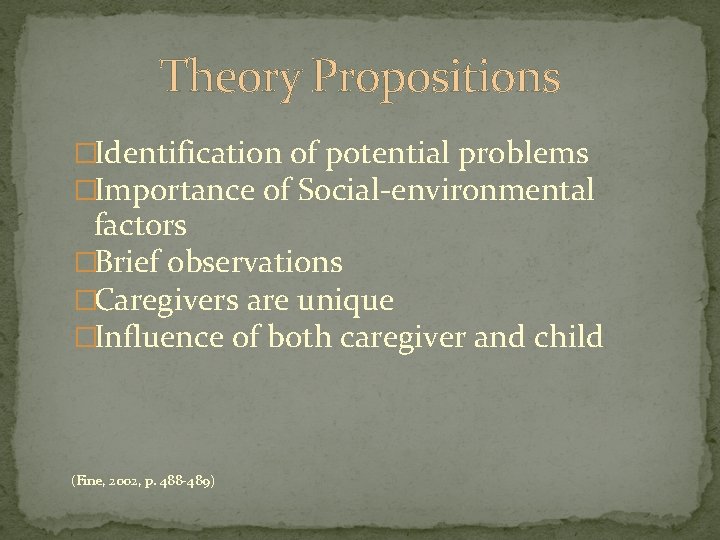
Theory Propositions �Identification of potential problems �Importance of Social-environmental factors �Brief observations �Caregivers are unique �Influence of both caregiver and child (Fine, 2002, p. 488 -489)

Theory Propositions �The process of adaptation is more modifiable than the foundational characteristics �Child-initiated behaviors are important learning opportunities �Nurturance �Social Environment �Physical environment (Fine, 2002, p. 488 -489)
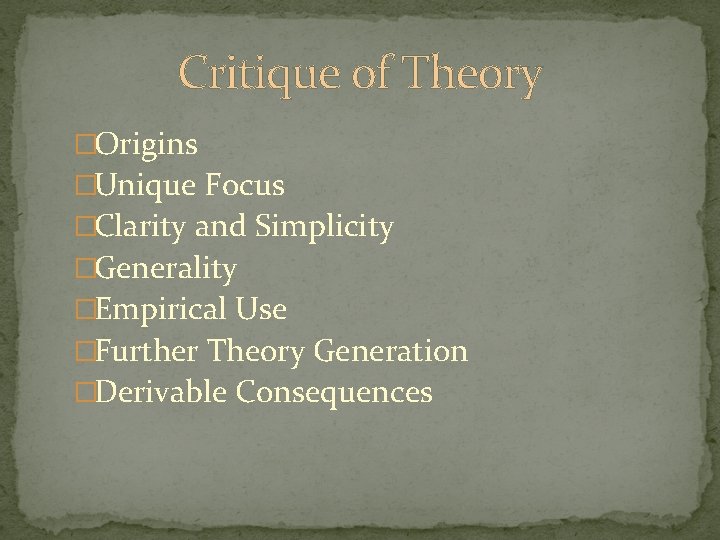
Critique of Theory �Origins �Unique Focus �Clarity and Simplicity �Generality �Empirical Use �Further Theory Generation �Derivable Consequences

listserv. wa. gov
Research Article: Rural Low. Income Mothers’ Interactions with their Young Children Mildred A. Horodynski Cynthia Gibbons 2004
Research Purpose and Questions Addressed �Are there differences in mother-child interaction prior to and following their early intervention program? �How many mother-child dyads are at risk for poor interaction, at entry into the program, and at exit from the program? �Is there a difference in the study sample and the national sample on mother-child interaction? (Horodynski and Gibbons, 2004, p. 300)

Theoretical Framework

Theory and Practice http: //blog. yeeshungga. com/? tag=children

Nursing Knowledge
References Masters, K. (2012). Nursing Theorists: A framework for professional practice (pp. 311 -322). Sudbury, MA: Jones & Bartlett Learning. Fine, J. M. (2002). Parent-child interaction model. In A. M. Tomey, & M. R. Alligood (Eds. ), Nursing Theorists and Their Work (5 th ed. , pp. 484 -495). St. Louis, MO: Mosby. Horodynski, M. A. , & Gibbons, C. (2004). Rural low-income mother's interactions with their young children. Pediatric Nursing, 30(4), 299 -305. American Nurses Association (2010). . In Nursing Professional Development: Scope and Standards of Practice, Silver Spring, MD: Author.
- Slides: 15