
Kathleen Scheltens Ph D Director of Premedical Programs

- Slides: 58
Kathleen Scheltens, Ph. D. Director of Premedical Programs University of Dayton October 2018
§ How much do I wish to deal with people? § Am I comfortable in a health care setting? § Am I a team player? § What lifestyle do I envision?
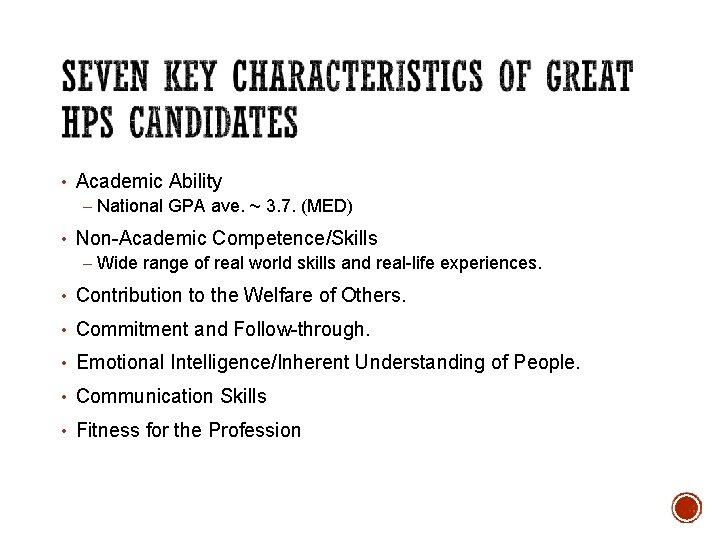
• Academic Ability – National GPA ave. ~ 3. 7. (MED) • Non-Academic Competence/Skills – Wide range of real world skills and real-life experiences. • Contribution to the Welfare of Others. • Commitment and Follow-through. • Emotional Intelligence/Inherent Understanding of People. • Communication Skills • Fitness for the Profession
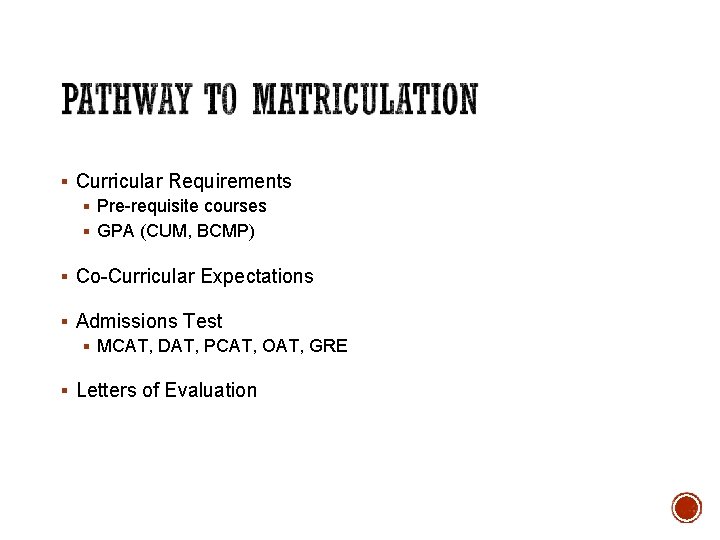
§ Curricular Requirements § Pre-requisite courses § GPA (CUM, BCMP) § Co-Curricular Expectations § Admissions Test § MCAT, DAT, PCAT, OAT, GRE § Letters of Evaluation
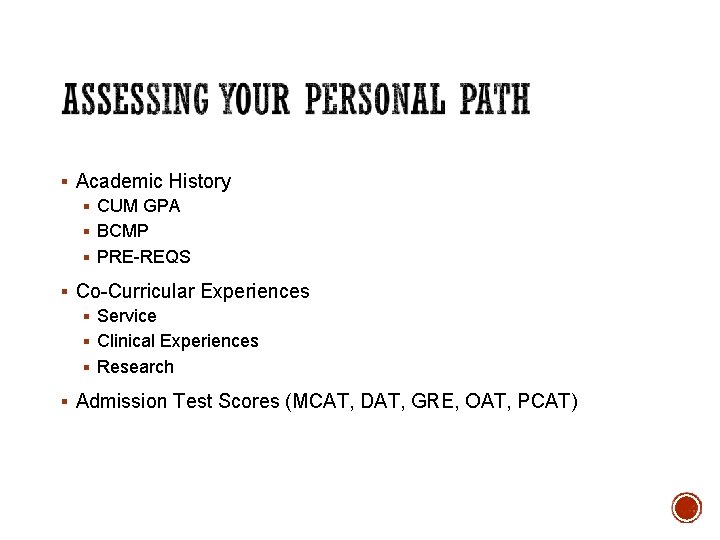
§ Academic History § CUM GPA § BCMP § PRE-REQS § Co-Curricular Experiences § Service § Clinical Experiences § Research § Admission Test Scores (MCAT, DAT, GRE, OAT, PCAT)
§ Apply after Junior Year (matriculate in Fall 2020) § Apply after Senior Year (matriculate in Fall 2021)
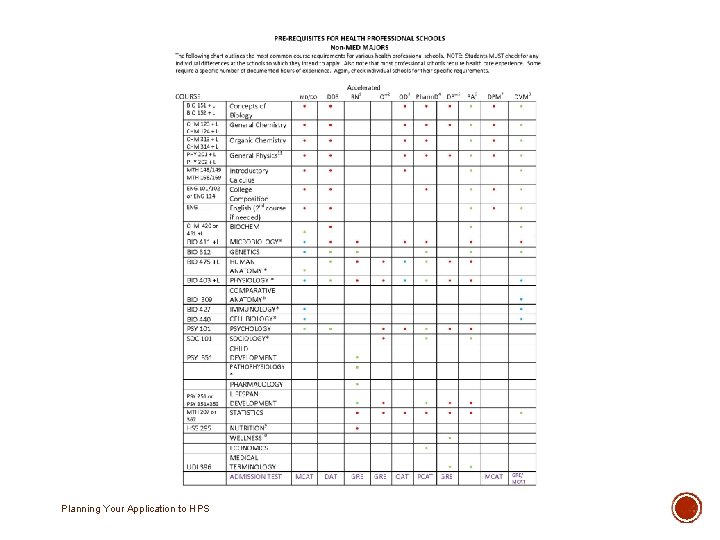
Planning Your Application to HPS
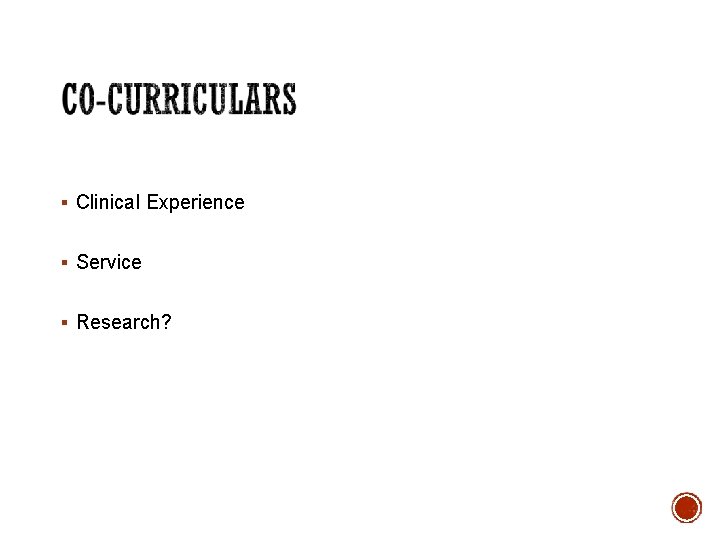
§ Clinical Experience § Service § Research?
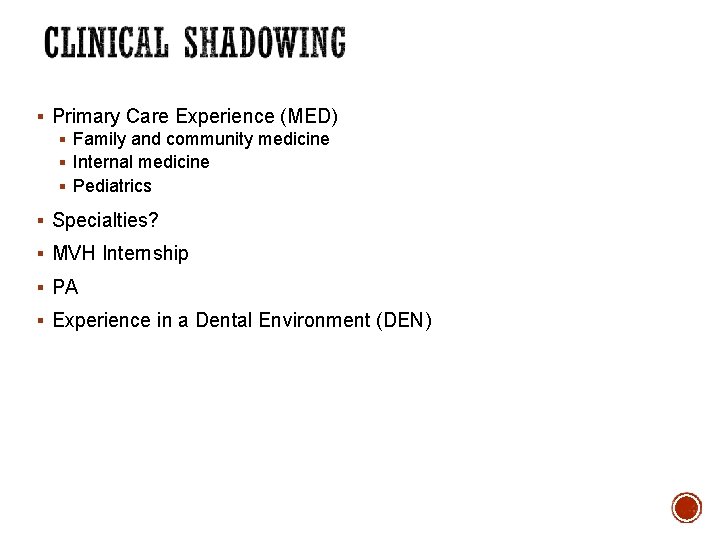
§ Primary Care Experience (MED) § Family and community medicine § Internal medicine § Pediatrics § Specialties? § MVH Internship § PA § Experience in a Dental Environment (DEN)
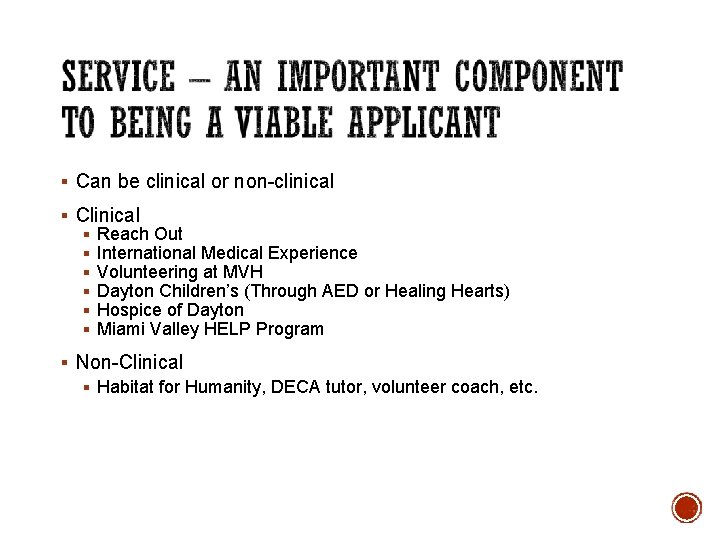
§ Can be clinical or non-clinical § Clinical § Reach Out § International Medical Experience § Volunteering at MVH § Dayton Children’s (Through AED or Healing Hearts) § Hospice of Dayton § Miami Valley HELP Program § Non-Clinical § Habitat for Humanity, DECA tutor, volunteer coach, etc.
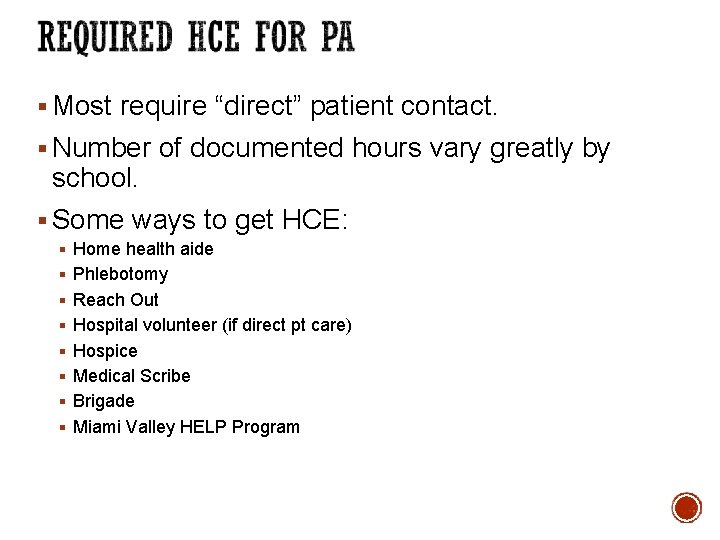
§ Most require “direct” patient contact. § Number of documented hours vary greatly by school. § Some ways to get HCE: § Home health aide § Phlebotomy § Reach Out § Hospital volunteer (if direct pt care) § Hospice § Medical Scribe § Brigade § Miami Valley HELP Program
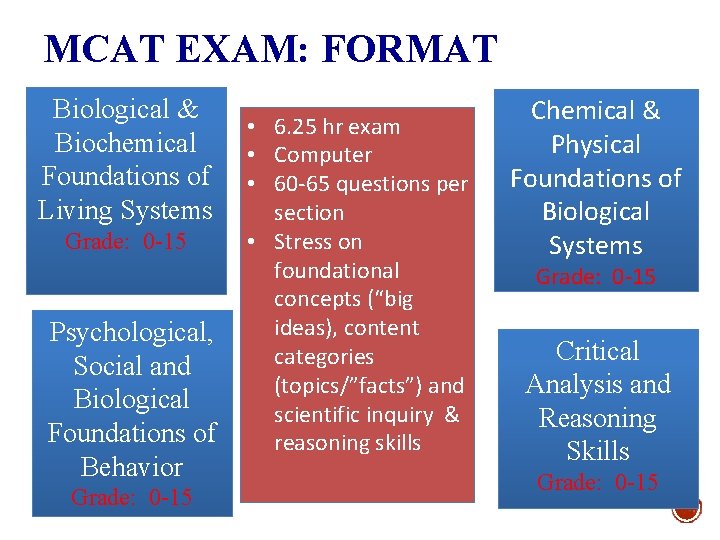
MCAT EXAM: FORMAT Biological & Biochemical Foundations of Living Systems Grade: 0 -15 Psychological, Social and Biological Foundations of Behavior Grade: 0 -15 • 6. 25 hr exam • Computer • 60 -65 questions per section • Stress on foundational concepts (“big ideas), content categories (topics/”facts”) and scientific inquiry & reasoning skills Chemical & Physical Foundations of Biological Systems Grade: 0 -15 Critical Analysis and Reasoning Skills Grade: 0 -15
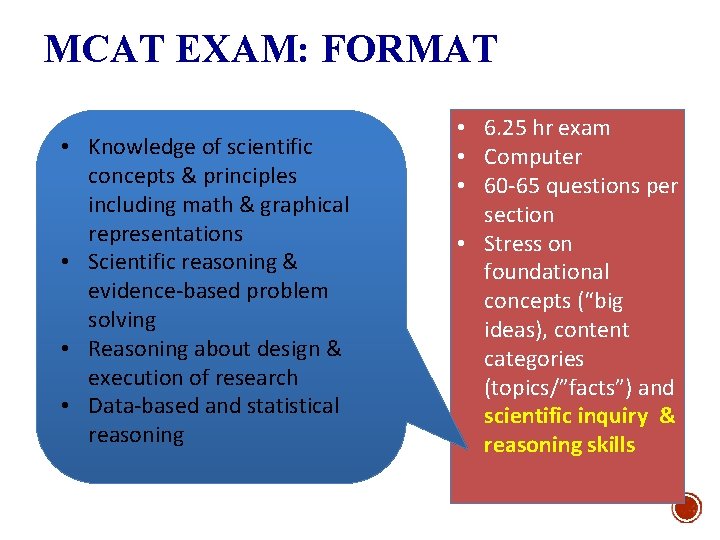
MCAT EXAM: FORMAT • Knowledge of scientific concepts & principles including math & graphical representations • Scientific reasoning & evidence-based problem solving • Reasoning about design & execution of research • Data-based and statistical reasoning • 6. 25 hr exam • Computer • 60 -65 questions per section • Stress on foundational concepts (“big ideas), content categories (topics/”facts”) and scientific inquiry & reasoning skills
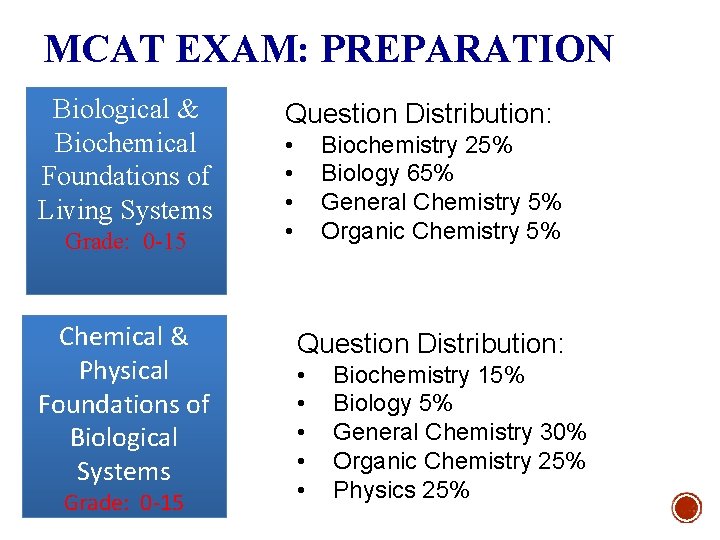
MCAT EXAM: PREPARATION Biological & Biochemical Foundations of Living Systems Grade: 0 -15 Chemical & Physical Foundations of Biological Systems Grade: 0 -15 Question Distribution: • • Biochemistry 25% Biology 65% General Chemistry 5% Organic Chemistry 5% Question Distribution: • • • Biochemistry 15% Biology 5% General Chemistry 30% Organic Chemistry 25% Physics 25%
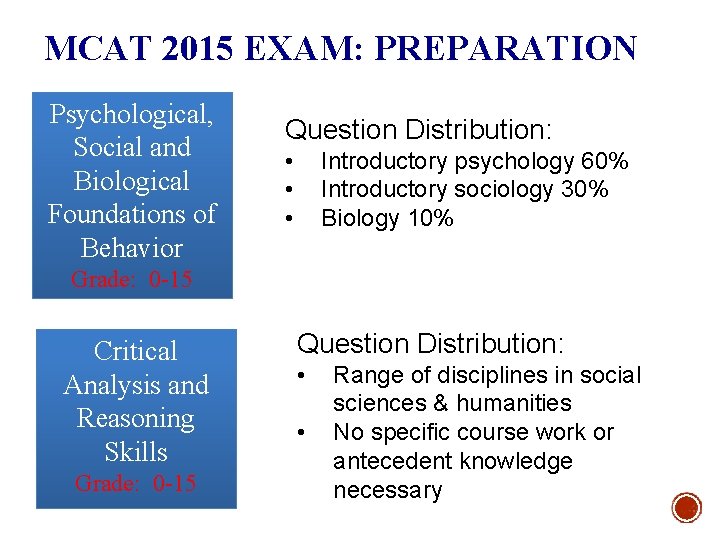
MCAT 2015 EXAM: PREPARATION Psychological, Social and Biological Foundations of Behavior Question Distribution: • • • Introductory psychology 60% Introductory sociology 30% Biology 10% Grade: 0 -15 Critical Analysis and Reasoning Skills Grade: 0 -15 Question Distribution: • • Range of disciplines in social sciences & humanities No specific course work or antecedent knowledge necessary
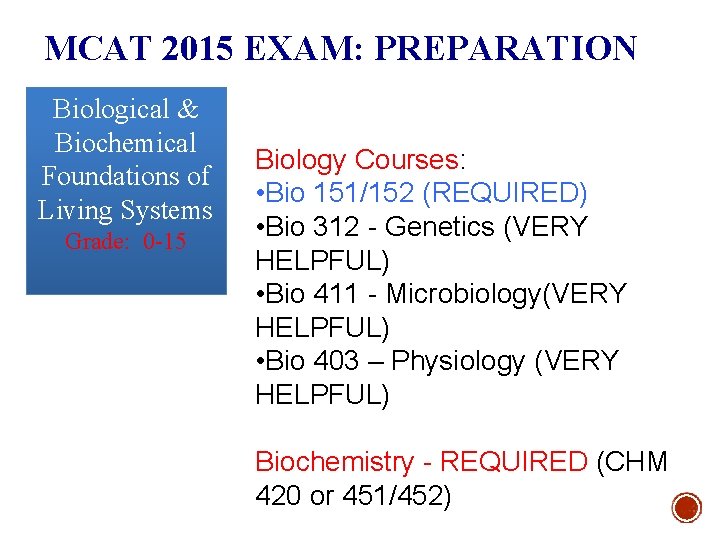
MCAT 2015 EXAM: PREPARATION Biological & Biochemical Foundations of Living Systems Grade: 0 -15 Biology Courses: • Bio 151/152 (REQUIRED) • Bio 312 - Genetics (VERY HELPFUL) • Bio 411 - Microbiology(VERY HELPFUL) • Bio 403 – Physiology (VERY HELPFUL) Biochemistry - REQUIRED (CHM 420 or 451/452)
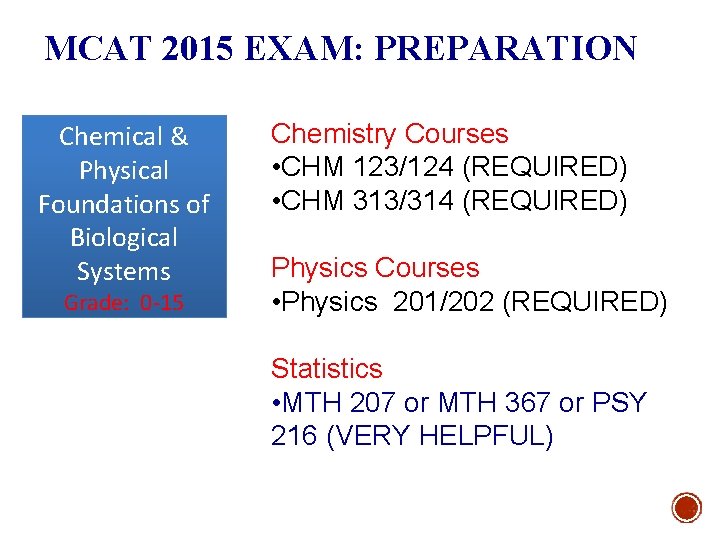
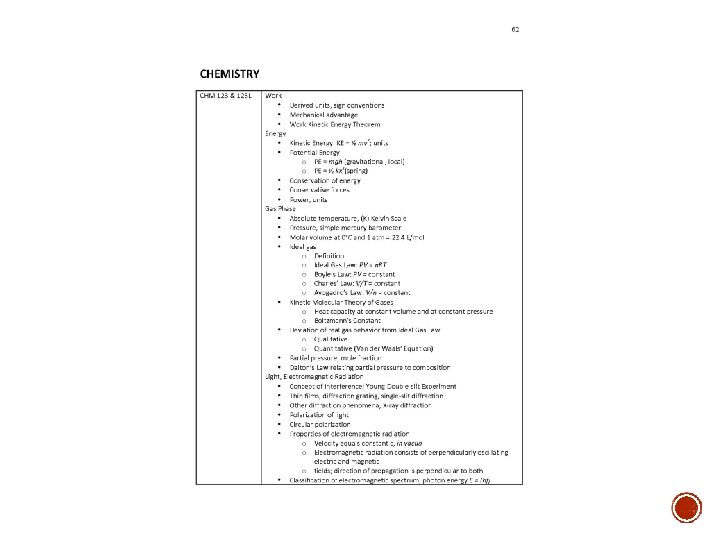
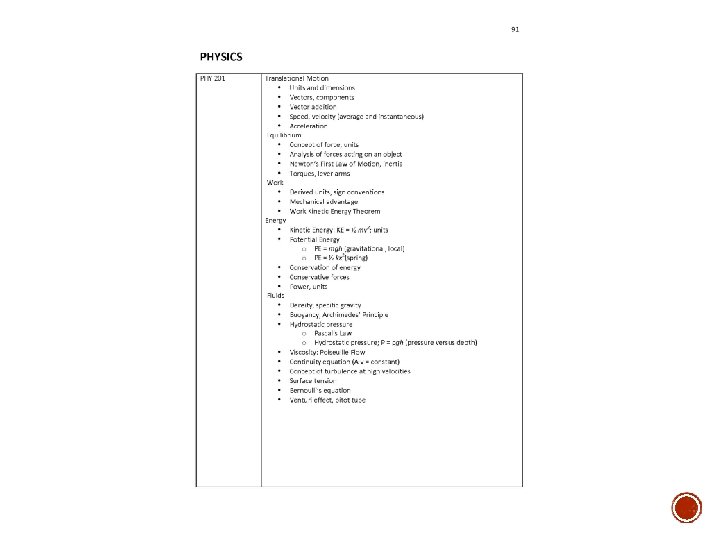
MCAT 2015 EXAM: PREPARATION Chemical & Physical Foundations of Biological Systems Grade: 0 -15 Chemistry Courses • CHM 123/124 (REQUIRED) • CHM 313/314 (REQUIRED) Physics Courses • Physics 201/202 (REQUIRED) Statistics • MTH 207 or MTH 367 or PSY 216 (VERY HELPFUL)
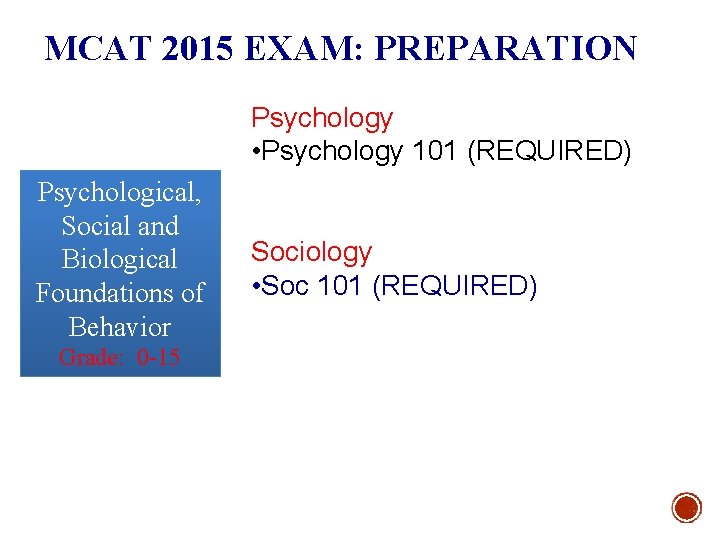
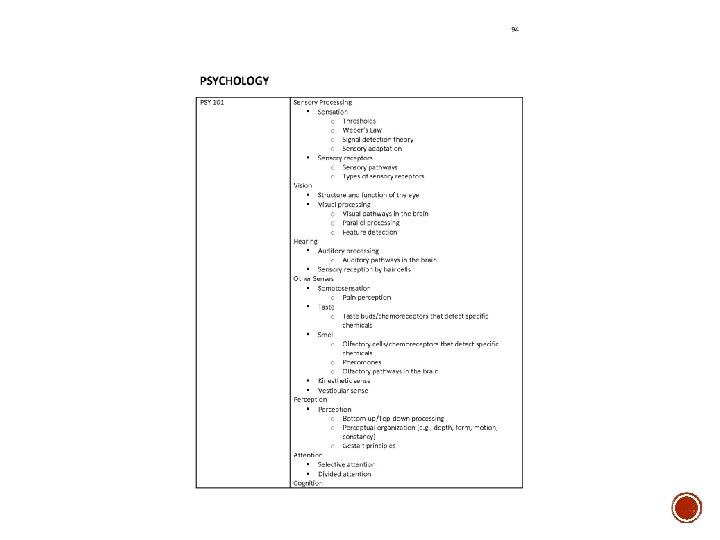
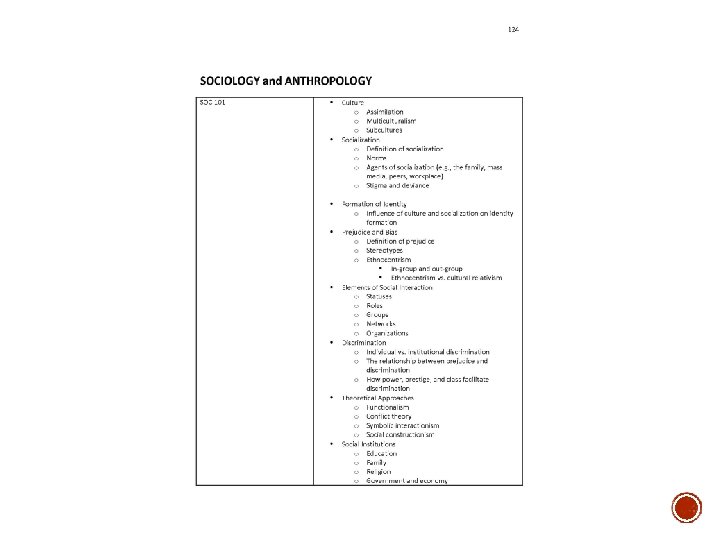
MCAT 2015 EXAM: PREPARATION Psychology • Psychology 101 (REQUIRED) Psychological, Social and Biological Foundations of Behavior Grade: 0 -15 Sociology • Soc 101 (REQUIRED)
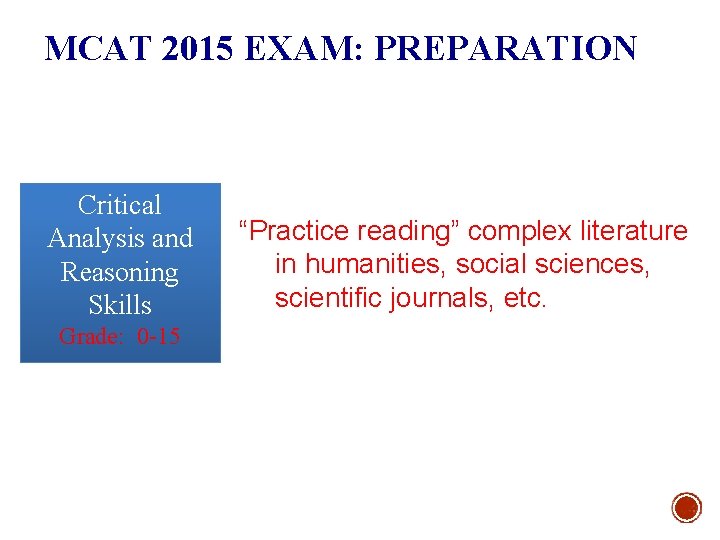
MCAT 2015 EXAM: PREPARATION Critical Analysis and Reasoning Skills Grade: 0 -15 “Practice reading” complex literature in humanities, social sciences, scientific journals, etc.
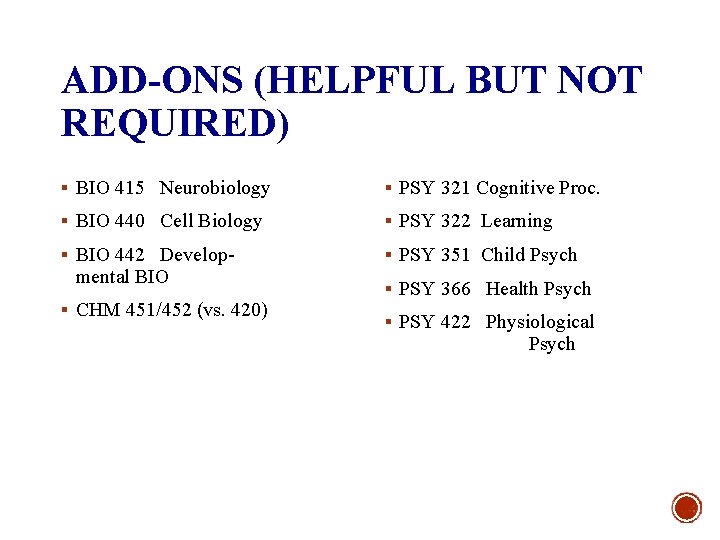
ADD-ONS (HELPFUL BUT NOT REQUIRED) § BIO 415 Neurobiology § PSY 321 Cognitive Proc. § BIO 440 Cell Biology § PSY 322 Learning § BIO 442 Develop- § PSY 351 Child Psych mental BIO § CHM 451/452 (vs. 420) § PSY 366 Health Psych § PSY 422 Physiological Psych
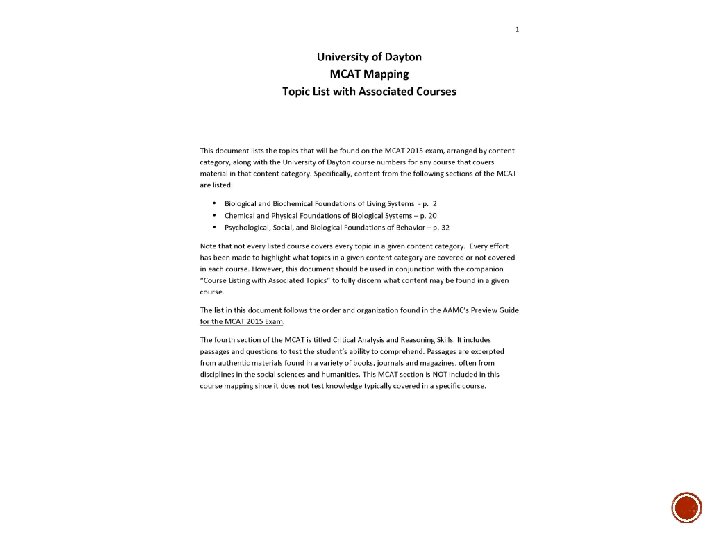
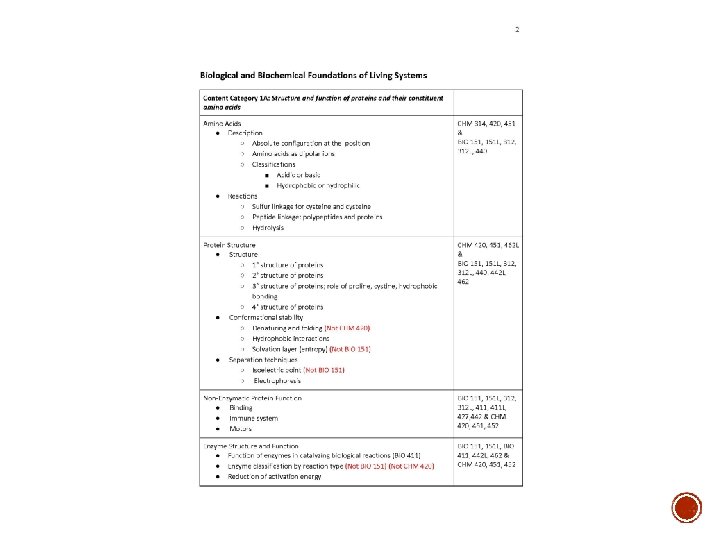
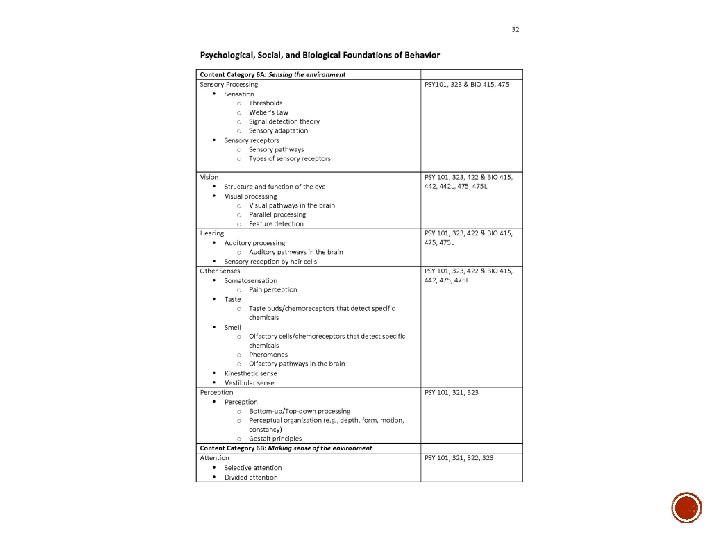
So What’s on the MCAT?
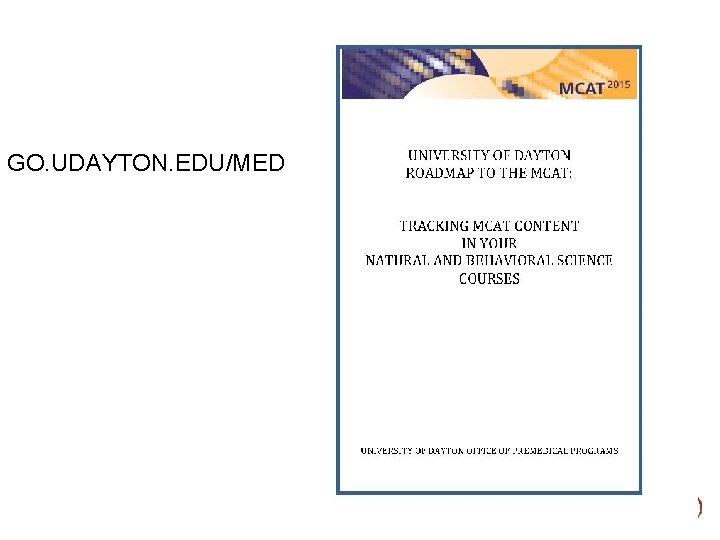
GO. UDAYTON. EDU/MED
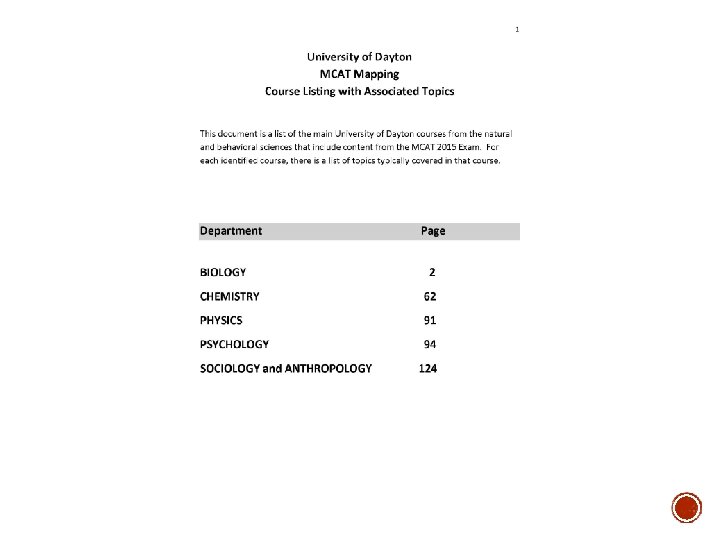
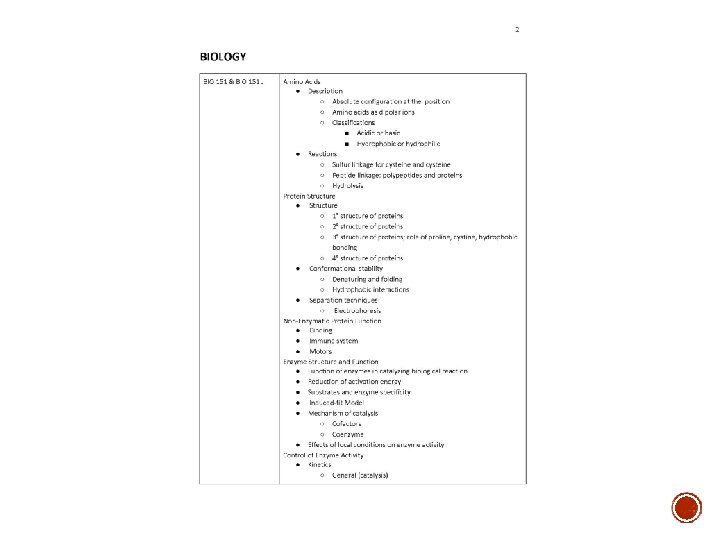
§ DOWNLOAD THE “ROADMAP” § Compare your present course syllabi/content with the MCAT Content Areas. § Highlight/study/archive units of your courses that are identified in ROADMAP. § Organize your course materials for later MCAT Study. § Organize your actual MCAT STUDY SESSIONS to cover ALL MCAT content areas.
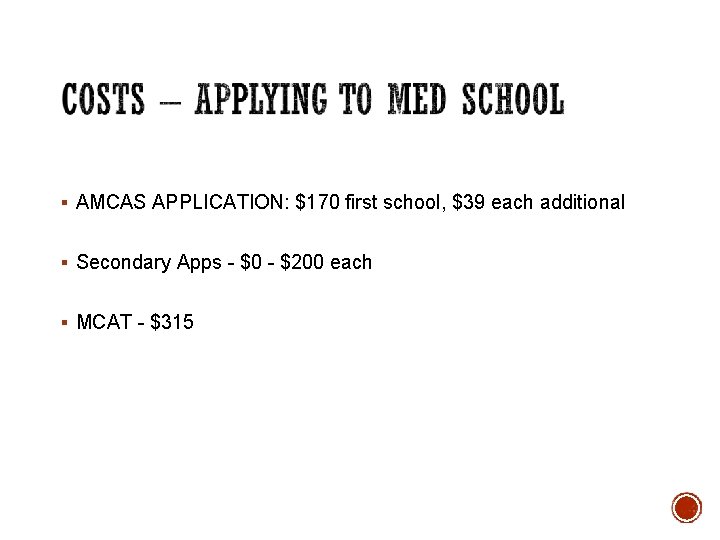
§ AMCAS APPLICATION: $170 first school, $39 each additional § Secondary Apps - $0 - $200 each § MCAT - $315
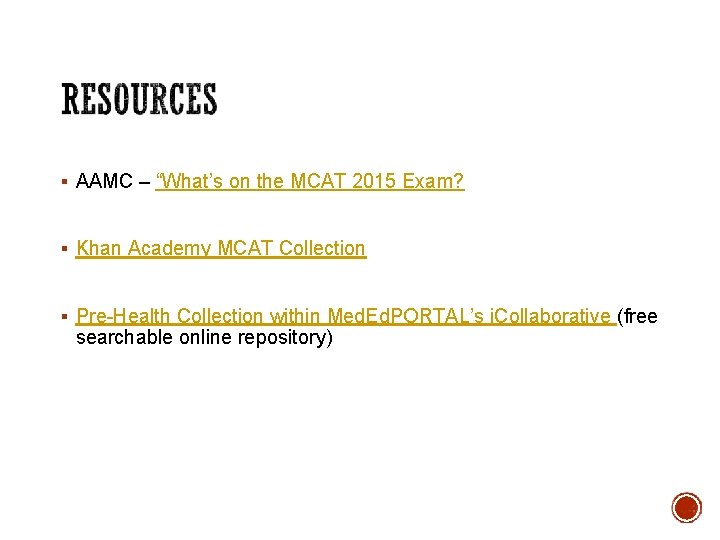
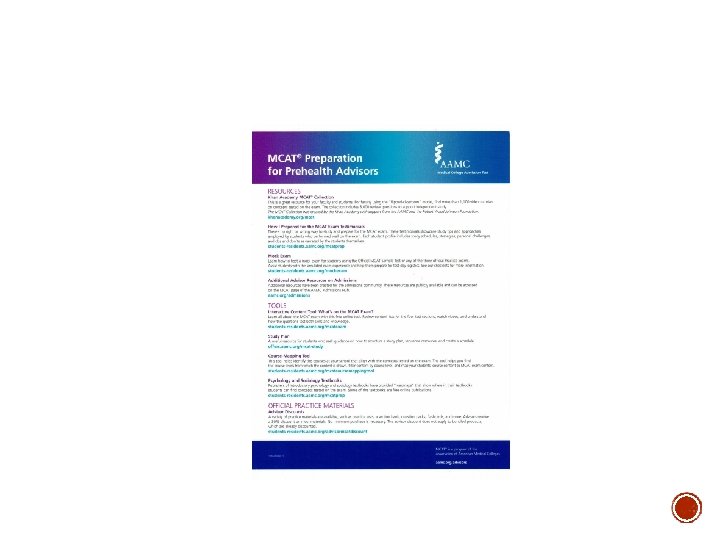
§ AAMC – “What’s on the MCAT 2015 Exam? § Khan Academy MCAT Collection § Pre-Health Collection within Med. Ed. PORTAL’s i. Collaborative (free searchable online repository)
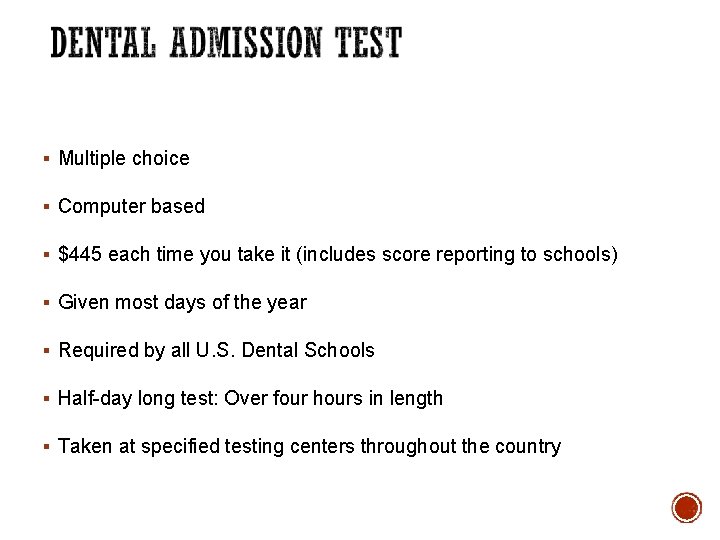
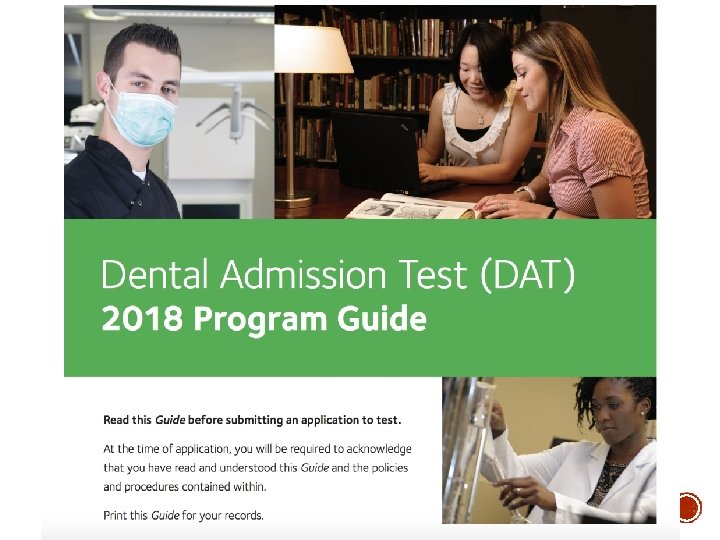
§ Multiple choice § Computer based § $445 each time you take it (includes score reporting to schools) § Given most days of the year § Required by all U. S. Dental Schools § Half-day long test: Over four hours in length § Taken at specified testing centers throughout the country
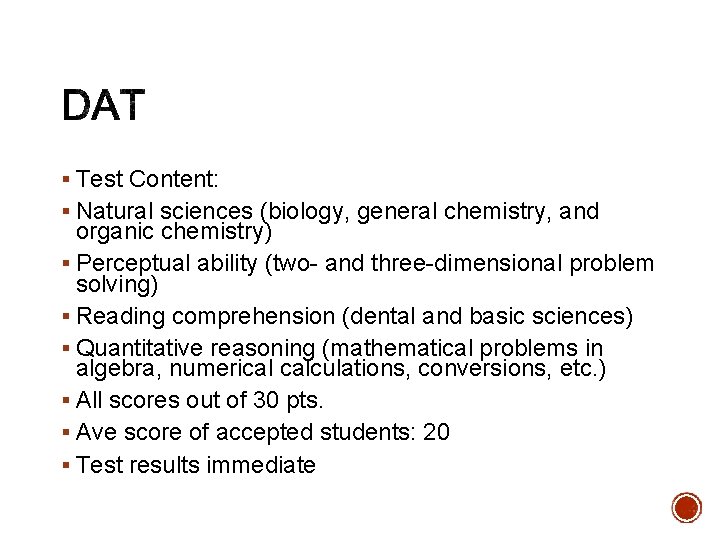
§ Test Content: § Natural sciences (biology, general chemistry, and organic chemistry) § Perceptual ability (two- and three-dimensional problem solving) § Reading comprehension (dental and basic sciences) § Quantitative reasoning (mathematical problems in algebra, numerical calculations, conversions, etc. ) § All scores out of 30 pts. § Ave score of accepted students: 20 § Test results immediate
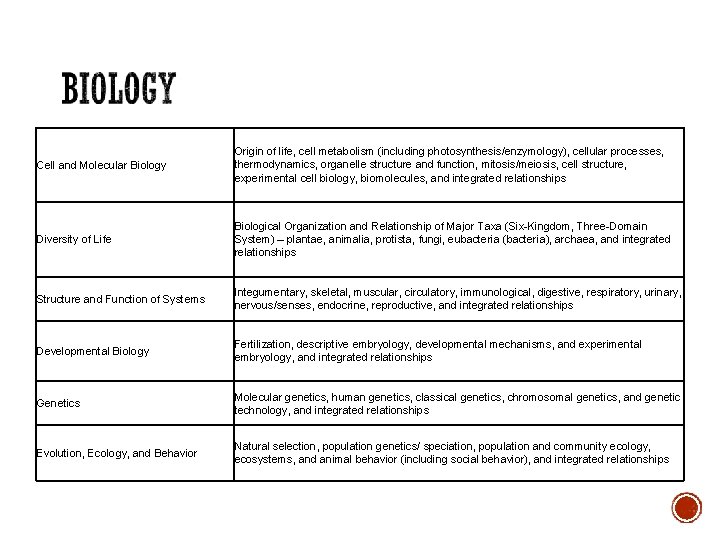
Cell and Molecular Biology Origin of life, cell metabolism (including photosynthesis/enzymology), cellular processes, thermodynamics, organelle structure and function, mitosis/meiosis, cell structure, experimental cell biology, biomolecules, and integrated relationships Diversity of Life Biological Organization and Relationship of Major Taxa (Six-Kingdom, Three-Domain System) – plantae, animalia, protista, fungi, eubacteria (bacteria), archaea, and integrated relationships Origin of life, cell metabolism (including Cell and Molecular Biology Structure and Function of Systems Diversity of Life Developmental Biology photosynthesis/enzymology), cellular processes, thermodynamics, organelle structure and function, mitosis/meiosis, cell structure, Integumentary, skeletal, muscular, circulatory, immunological, digestive, respiratory, urinary, experimental cell biology, biomolecules, and integrated nervous/senses, endocrine, reproductive, and integrated relationships Biological Organization and Relationship of Major Taxa (Six. Kingdom, Three-Domain System) – plantae, animalia, protista, Fertilization, descriptive embryology, developmental mechanisms, and experimental fungi, eubacteria (bacteria), archaea, and integrated relationships embryology, and integrated relationships Genetics Molecular genetics, human genetics, classical genetics, chromosomal genetics, and genetic technology, and integrated relationships Evolution, Ecology, and Behavior Natural selection, population genetics/ speciation, population and community ecology, ecosystems, and animal behavior (including social behavior), and integrated relationships
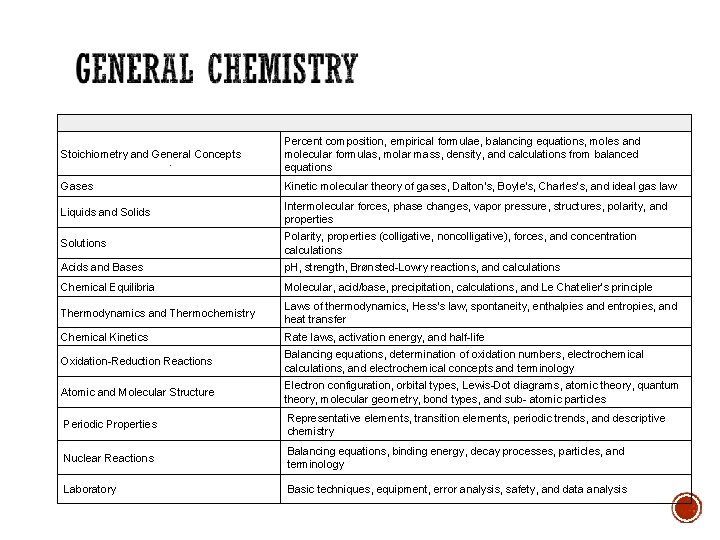
Stoichiometry and General Concepts Percent composition, empirical formulae, balancing equations, moles and molecular formulas, molar mass, density, and calculations from balanced equations Gases Kinetic molecular theory of gases, Dalton's, Boyle's, Charles’s, and ideal gas law Liquids and Solids Intermolecular forces, phase changes, vapor pressure, structures, polarity, and properties Solutions Polarity, properties (colligative, noncolligative), forces, and concentration calculations Acids and Bases p. H, strength, Brønsted-Lowry reactions, and calculations Chemical Equilibria Molecular, acid/base, precipitation, calculations, and Le Chatelier’s principle Thermodynamics and Thermochemistry Laws of thermodynamics, Hess’s law, spontaneity, enthalpies and entropies, and heat transfer Chemical Kinetics Rate laws, activation energy, and half-life Oxidation-Reduction Reactions Balancing equations, determination of oxidation numbers, electrochemical calculations, and electrochemical concepts and terminology Atomic and Molecular Structure Electron configuration, orbital types, Lewis-Dot diagrams, atomic theory, quantum theory, molecular geometry, bond types, and sub- atomic particles Periodic Properties Representative elements, transition elements, periodic trends, and descriptive chemistry Nuclear Reactions Balancing equations, binding energy, decay processes, particles, and terminology Laboratory Basic techniques, equipment, error analysis, safety, and data analysis
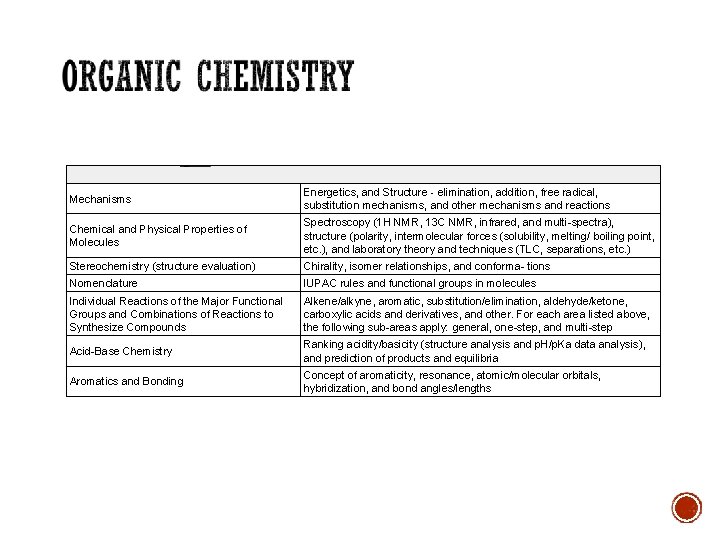
Mechanisms Energetics, and Structure - elimination, addition, free radical, substitution mechanisms, and other mechanisms and reactions Chemical and Physical Properties of Molecules Spectroscopy (1 H NMR, 13 C NMR, infrared, and multi-spectra), structure (polarity, intermolecular forces (solubility, melting/ boiling point, etc. ), and laboratory theory and techniques (TLC, separations, etc. ) Stereochemistry (structure evaluation) Chirality, isomer relationships, and conforma- tions Nomenclature IUPAC rules and functional groups in molecules Individual Reactions of the Major Functional Groups and Combinations of Reactions to Synthesize Compounds Alkene/alkyne, aromatic, substitution/elimination, aldehyde/ketone, carboxylic acids and derivatives, and other. For each area listed above, the following sub-areas apply: general, one-step, and multi-step Acid-Base Chemistry Ranking acidity/basicity (structure analysis and p. H/p. Ka data analysis), and prediction of products and equilibria Aromatics and Bonding Concept of aromaticity, resonance, atomic/molecular orbitals, hybridization, and bond angles/lengths
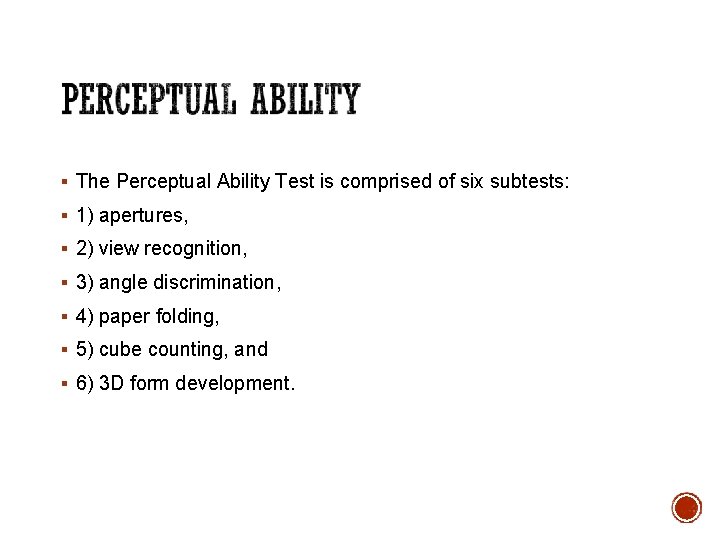
§ The Perceptual Ability Test is comprised of six subtests: § 1) apertures, § 2) view recognition, § 3) angle discrimination, § 4) paper folding, § 5) cube counting, and § 6) 3 D form development.
§ The Reading Comprehension Test contains three reading passages on various scientific topics. § Prior understanding of the science topics is not a prerequisite to answering the test items. § The reading passages require the ability to read, comprehend, and thoroughly analyze basic scientific information.
§ Mathematical Problems: § Algebra (equations and expressions, inequalities, exponential notation, absolute value, ratios and proportions, and graphical analysis); § Data Analysis, Interpretation, and Sufficiency; § Quantitative Comparison; § Probability and Statistics § Applied Math (Word) Problems: A basic four-function calculator is available on the computer screen in the Quantitative Reasoning Test section.
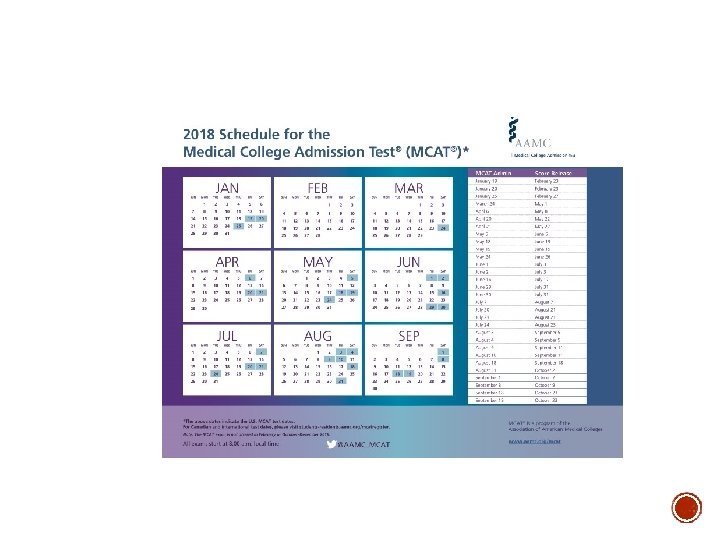
§ During Spring Semester? § After Spring Semester? § Later in Summer? – What’s the risk? § MCAT/DAT Review Course? § Note: Test Seats fill up quickly, register early. § Re-Take?
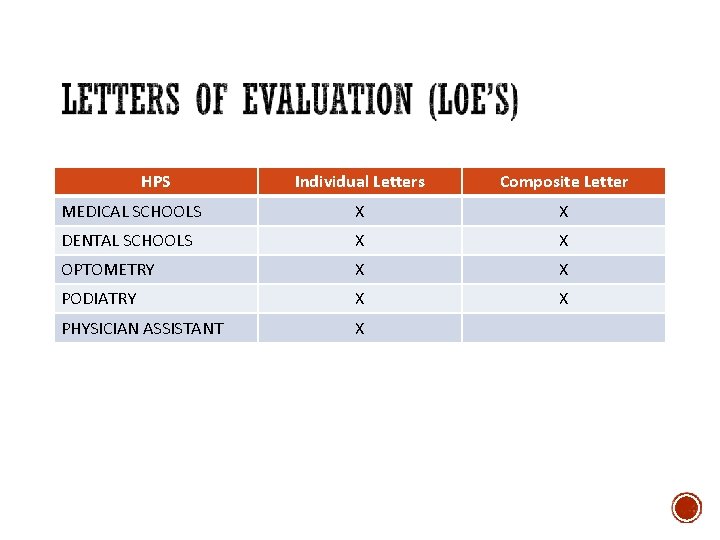
HPS Individual Letters Composite Letter MEDICAL SCHOOLS X X DENTAL SCHOOLS X X OPTOMETRY X X PODIATRY X X PHYSICIAN ASSISTANT X
§ Individual letters vs. Composite § Ask faculty, “Can you write a strong letter on my behalf? ” § Letters should go beyond grades – help prof know about you as a person. § Stress promptness! § Consider science faculty § Diversify your letters § Some schools require letters from profession
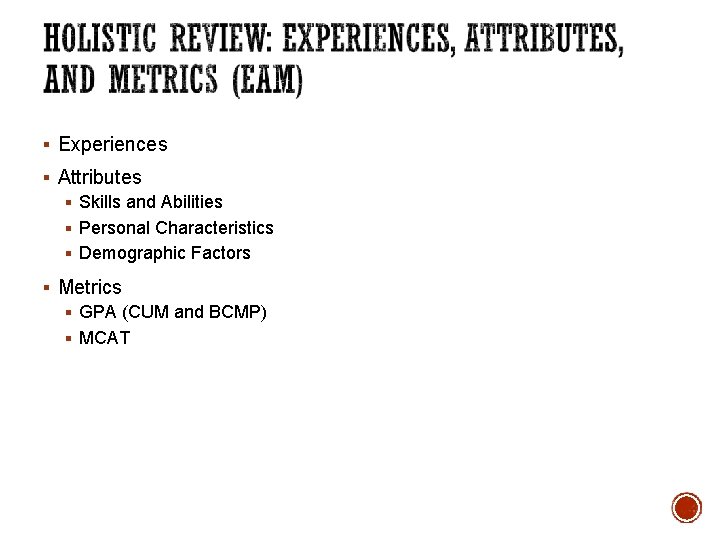
§ Experiences § Attributes § Skills and Abilities § Personal Characteristics § Demographic Factors § Metrics § GPA (CUM and BCMP) § MCAT
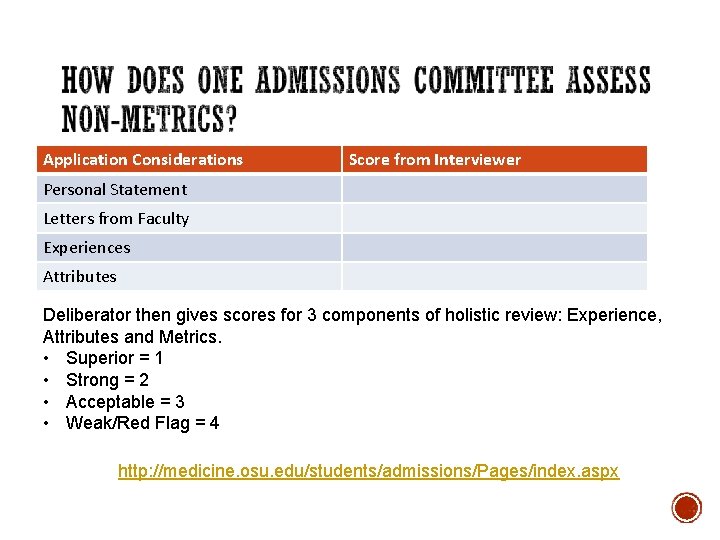
Application Considerations Score from Interviewer Personal Statement Letters from Faculty Experiences Attributes Deliberator then gives scores for 3 components of holistic review: Experience, Attributes and Metrics. • Superior = 1 • Strong = 2 • Acceptable = 3 • Weak/Red Flag = 4 http: //medicine. osu. edu/students/admissions/Pages/index. aspx
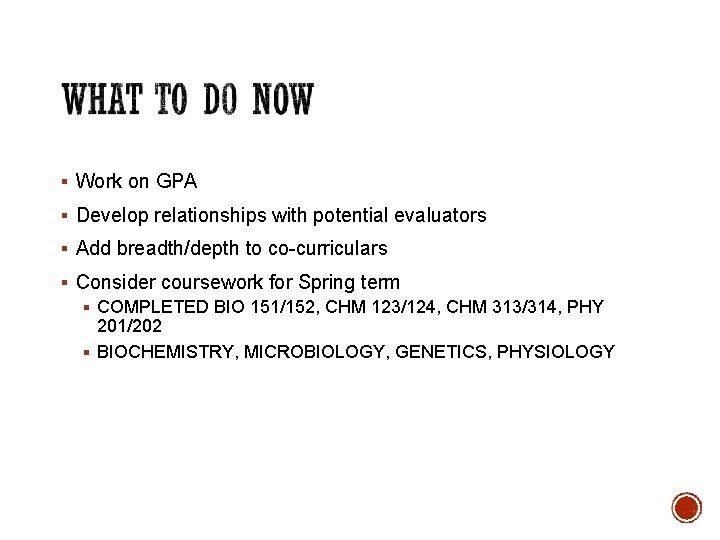
§ Work on GPA § Develop relationships with potential evaluators § Add breadth/depth to co-curriculars § Consider coursework for Spring term § COMPLETED BIO 151/152, CHM 123/124, CHM 313/314, PHY 201/202 § BIOCHEMISTRY, MICROBIOLOGY, GENETICS, PHYSIOLOGY
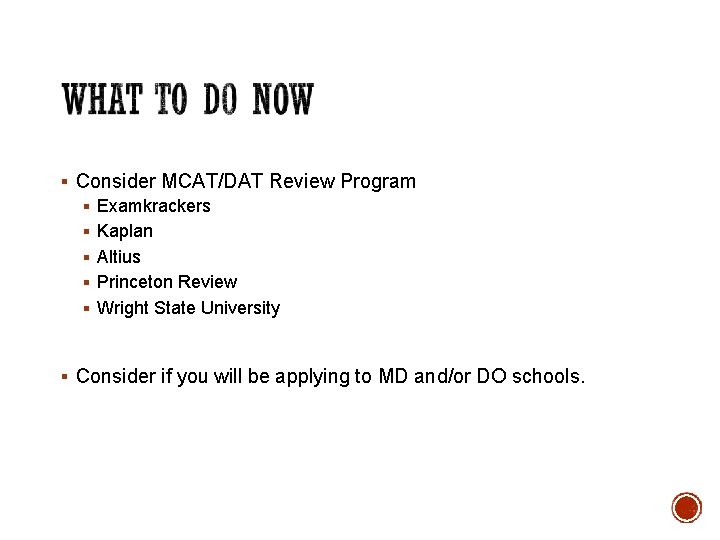
§ Consider MCAT/DAT Review Program § Examkrackers § Kaplan § Altius § Princeton Review § Wright State University § Consider if you will be applying to MD and/or DO schools.
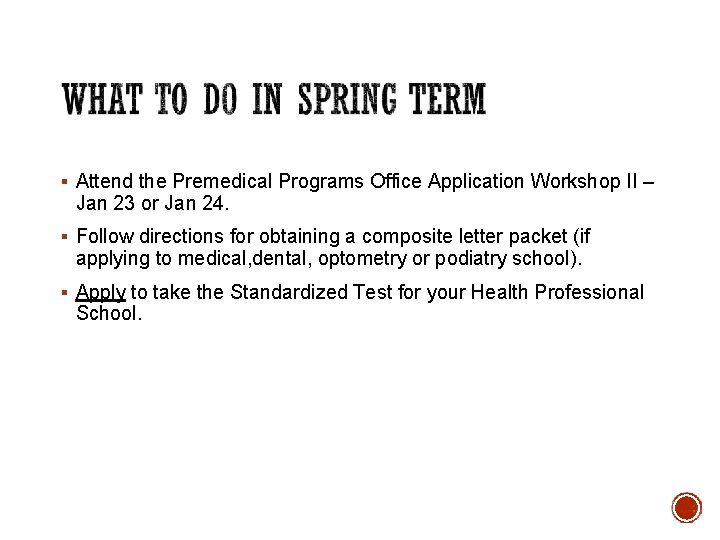
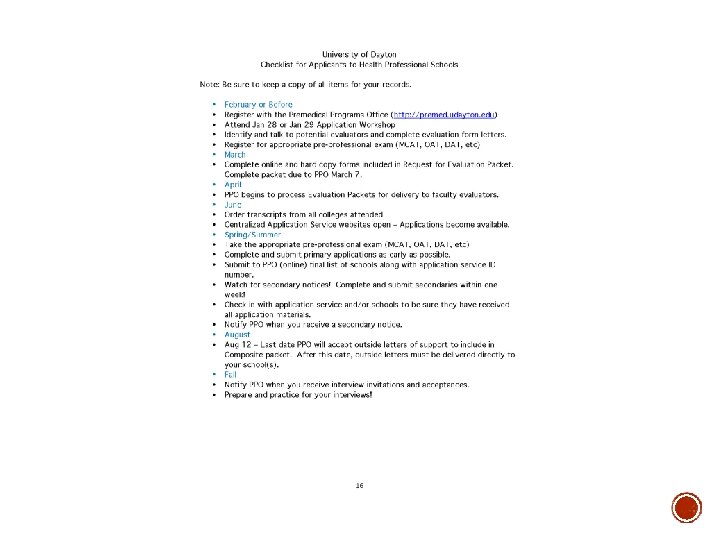
§ Attend the Premedical Programs Office Application Workshop II – Jan 23 or Jan 24. § Follow directions for obtaining a composite letter packet (if applying to medical, dental, optometry or podiatry school). § Apply to take the Standardized Test for your Health Professional School.
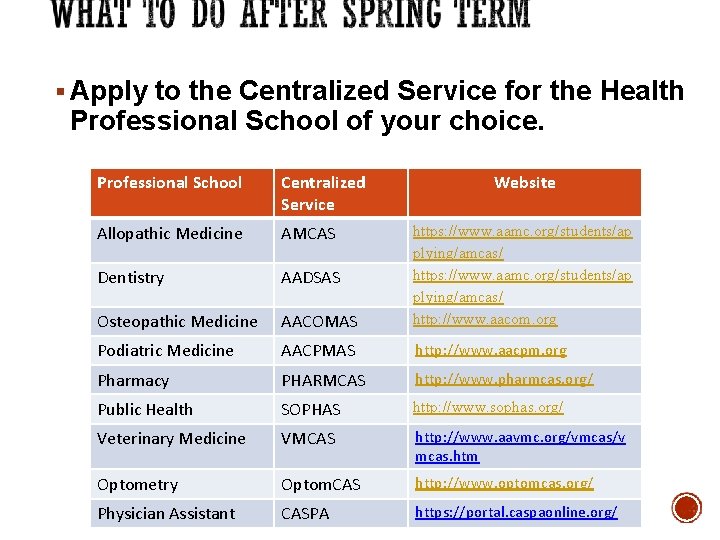
§ Apply to the Centralized Service for the Health Professional School of your choice. Professional School Centralized Service Website Allopathic Medicine AMCAS Dentistry AADSAS Osteopathic Medicine AACOMAS https: //www. aamc. org/students/ap plying/amcas/ http: //www. aacom. org Podiatric Medicine AACPMAS http: //www. aacpm. org Pharmacy PHARMCAS http: //www. pharmcas. org/ Public Health SOPHAS http: //www. sophas. org/ Veterinary Medicine VMCAS http: //www. aavmc. org/vmcas/v mcas. htm Optometry Optom. CAS http: //www. optomcas. org/ Physician Assistant CASPA https: //portal. caspaonline. org/
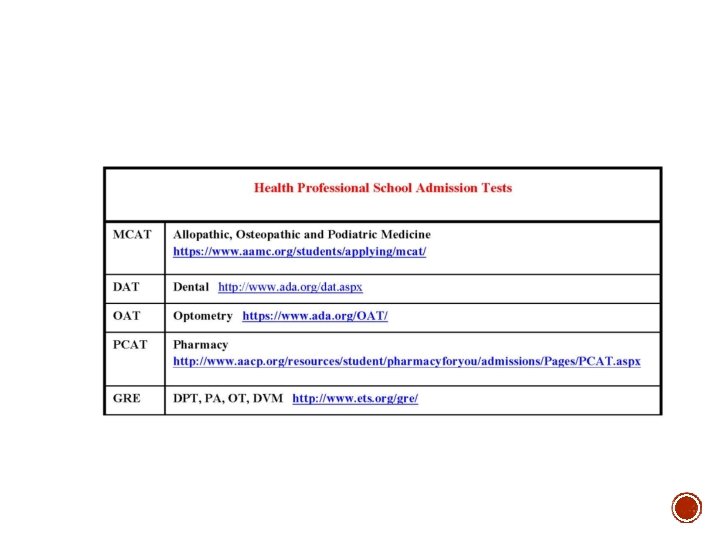
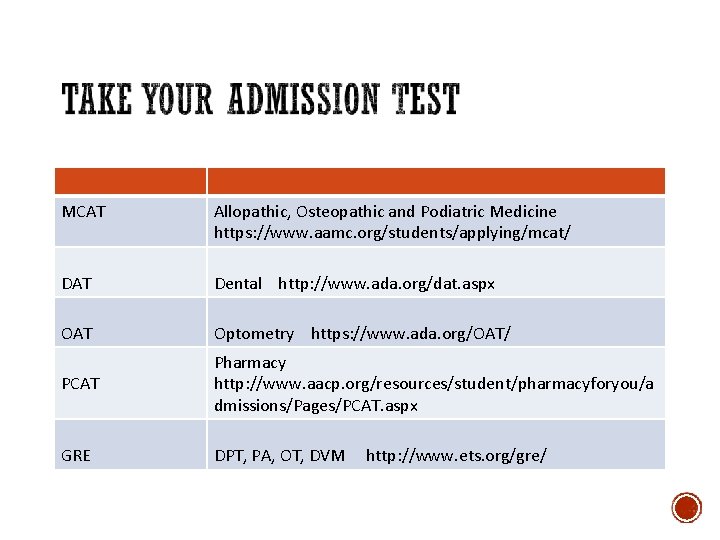
MCAT Allopathic, Osteopathic and Podiatric Medicine https: //www. aamc. org/students/applying/mcat/ DAT Dental http: //www. ada. org/dat. aspx OAT Optometry https: //www. ada. org/OAT/ PCAT Pharmacy http: //www. aacp. org/resources/student/pharmacyforyou/a dmissions/Pages/PCAT. aspx GRE DPT, PA, OT, DVM http: //www. ets. org/gre/
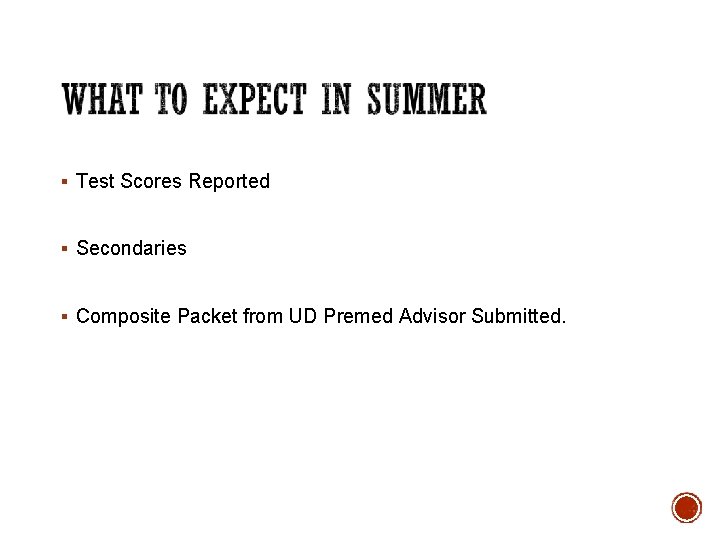
§ Test Scores Reported § Secondaries § Composite Packet from UD Premed Advisor Submitted.