
Kate Li Chemical Engineering Biochemistry Characterization of Diffusion
Kate Li Chemical Engineering & Biochemistry Characterization of Diffusion from Mesoporous Silica Nanoparticles for Potential Drug-Delivery Applications
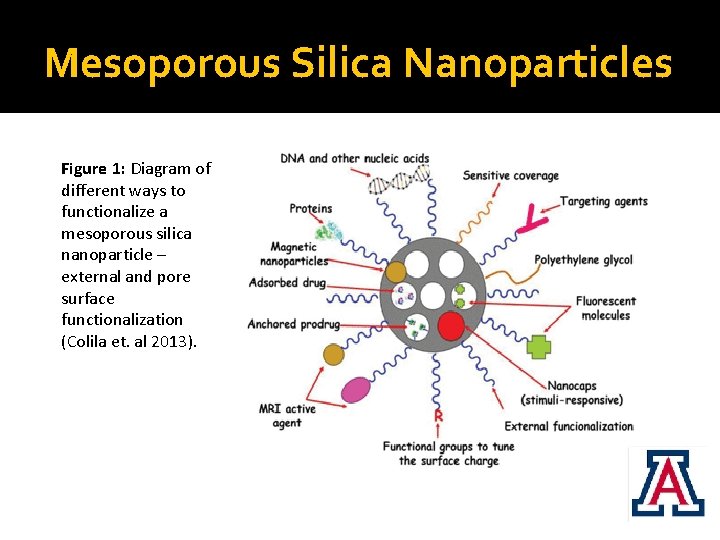
Mesoporous Silica Nanoparticles Figure 1: Diagram of different ways to functionalize a mesoporous silica nanoparticle – external and pore surface functionalization (Colila et. al 2013).
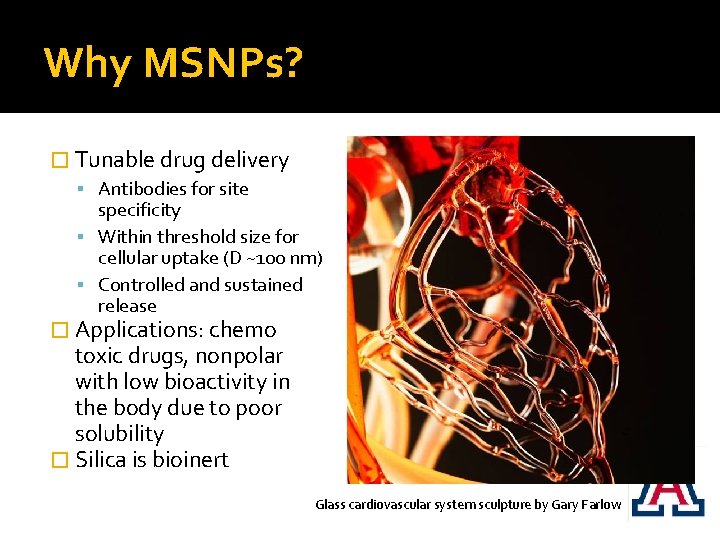
Why MSNPs? � Tunable drug delivery Antibodies for site specificity Within threshold size for cellular uptake (D ~100 nm) Controlled and sustained release � Applications: chemo toxic drugs, nonpolar with low bioactivity in the body due to poor solubility � Silica is bioinert Glass cardiovascular system sculpture by Gary Farlow
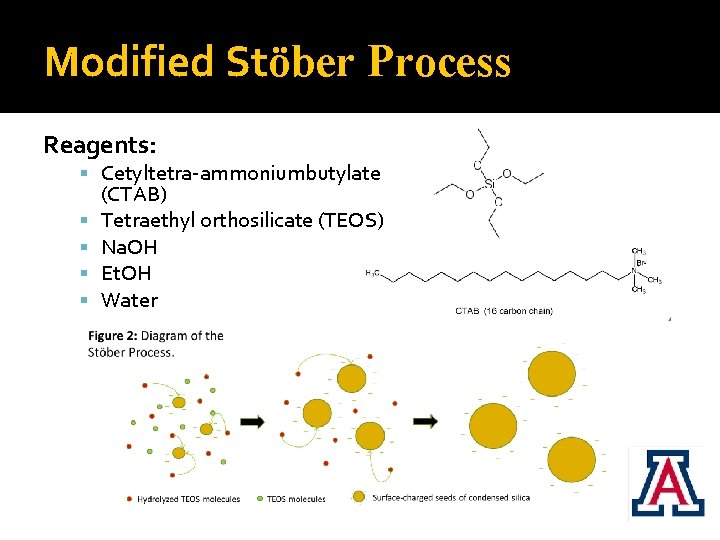
Modified Stӧber Process Reagents: Cetyltetra-ammoniumbutylate (CTAB) Tetraethyl orthosilicate (TEOS) Na. OH Et. OH Water
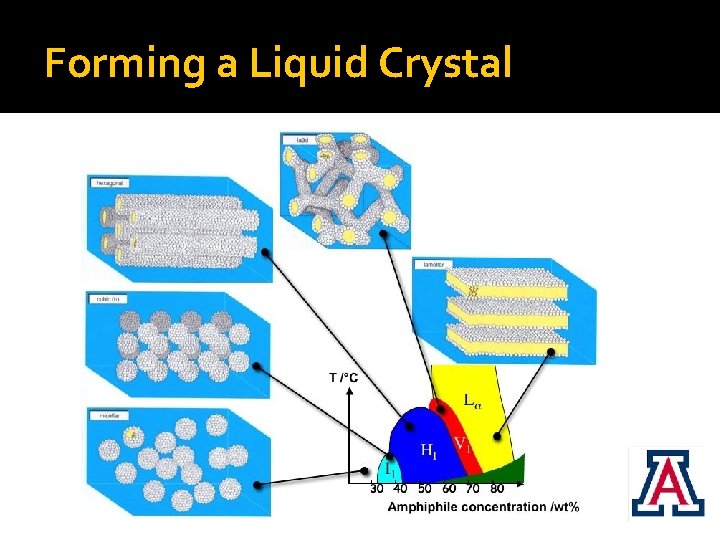
Forming a Liquid Crystal
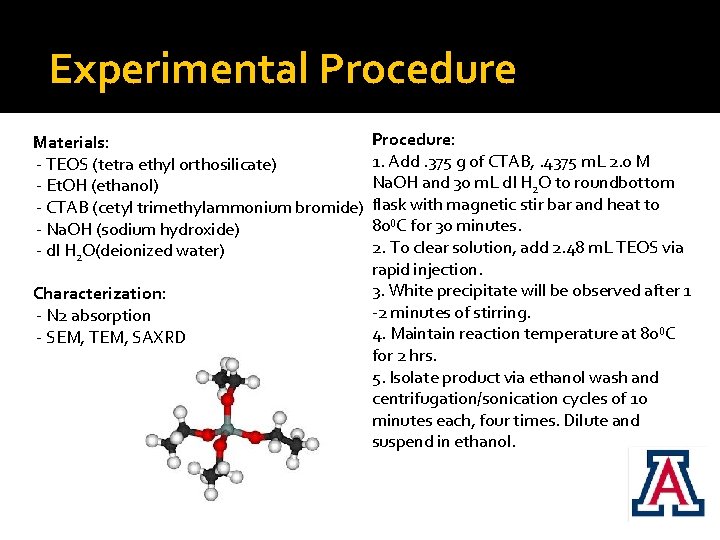
Experimental Procedure Materials: - TEOS (tetra ethyl orthosilicate) - Et. OH (ethanol) - CTAB (cetyl trimethylammonium bromide) - Na. OH (sodium hydroxide) - d. I H 2 O(deionized water) Characterization: - N 2 absorption - SEM, TEM, SAXRD Procedure: 1. Add. 375 g of CTAB, . 4375 m. L 2. 0 M Na. OH and 30 m. L d. I H 2 O to roundbottom flask with magnetic stir bar and heat to 80⁰C for 30 minutes. 2. To clear solution, add 2. 48 m. L TEOS via rapid injection. 3. White precipitate will be observed after 1 -2 minutes of stirring. 4. Maintain reaction temperature at 80⁰C for 2 hrs. 5. Isolate product via ethanol wash and centrifugation/sonication cycles of 10 minutes each, four times. Dilute and suspend in ethanol.
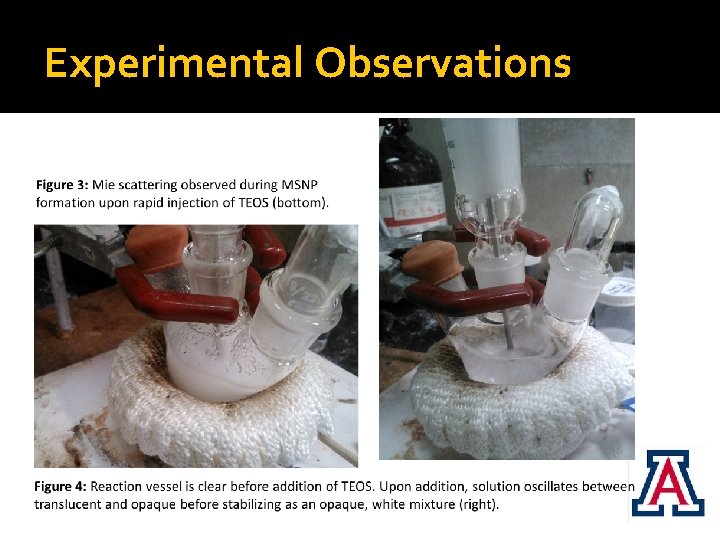
Experimental Observations
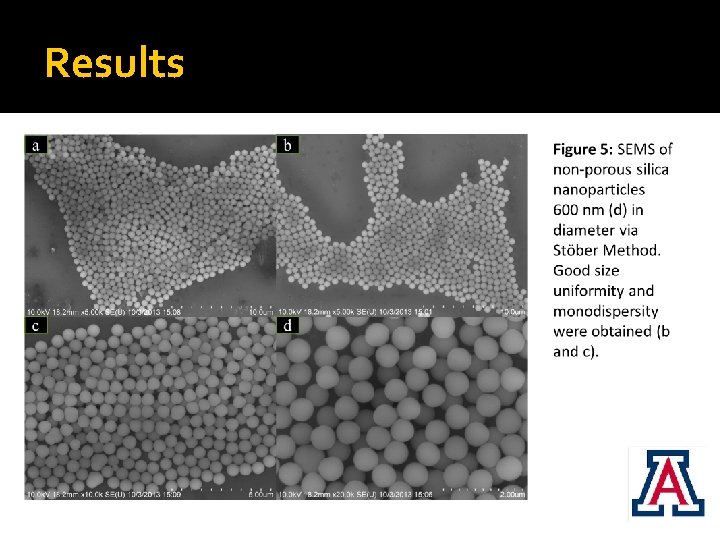
Results
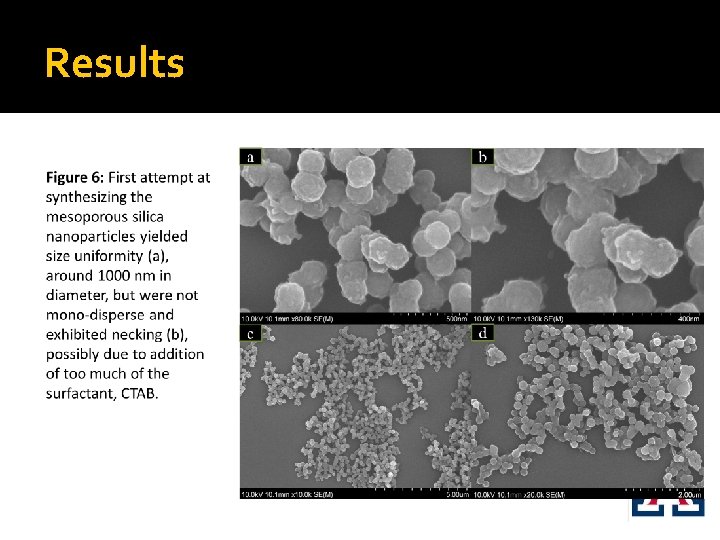
Results
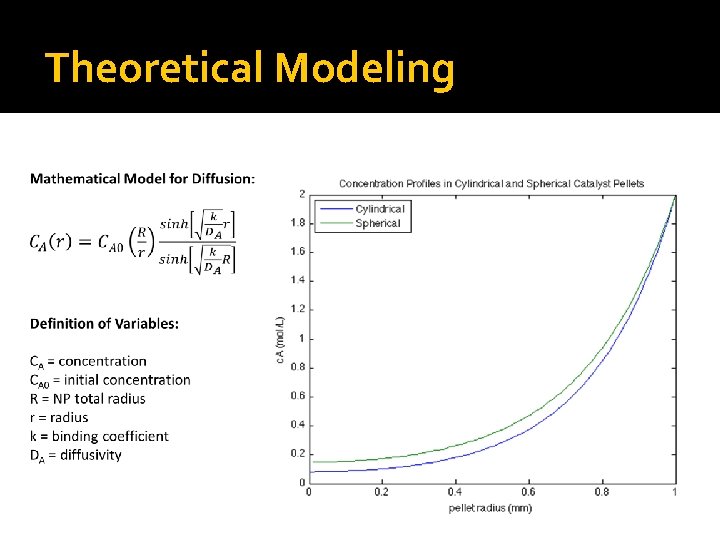
Theoretical Modeling
Further research �Further research on the parameters of the Modified Stӧber Process �Attempting functionalization of surface and pores �Generate diffusion data
Thank you NASA Space Grant UA Honors College – Alumni Travel Grants Dr. Anthony Muscat Questions? NASA Space Grant Consortium
- Slides: 12