
Karyotypes and Chromosomal Disorders Chromosome Disorder Disorders that

- Slides: 20
Karyotypes and Chromosomal Disorders
Chromosome Disorder: Disorders that are random mutations/not inherited and do not run in families (not genetic) p Caused by nondisjunction p n failure of chromatids to separate during meiosis (in other words, sister chromatids stick together and both are passed to one cell and none are passed to another)
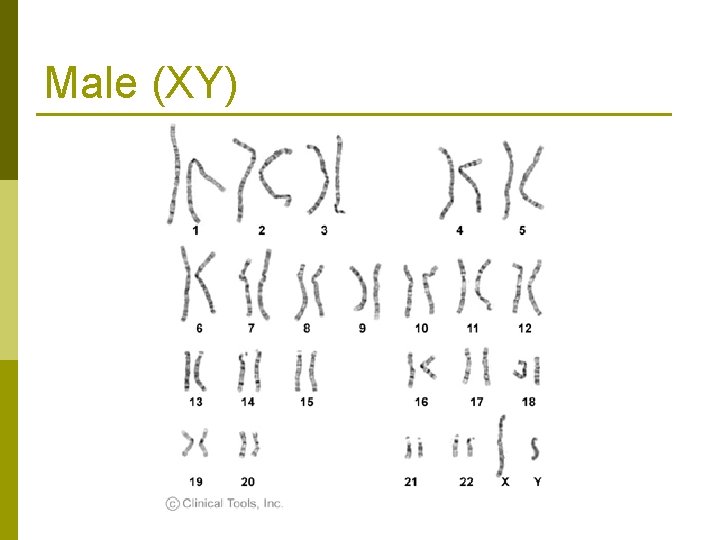
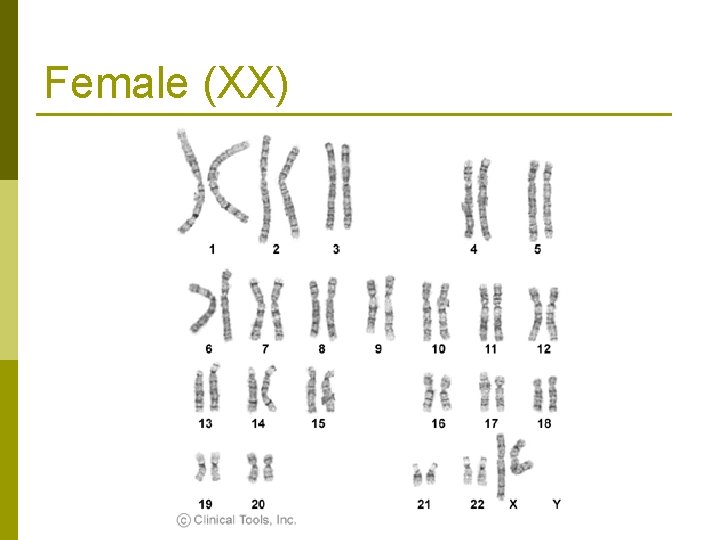
What is a Karyotype? Chart of human chromosome pairs p Arranged by length and location of centromere p Determines sex of individual and any disorders from abnormal chromosomes p
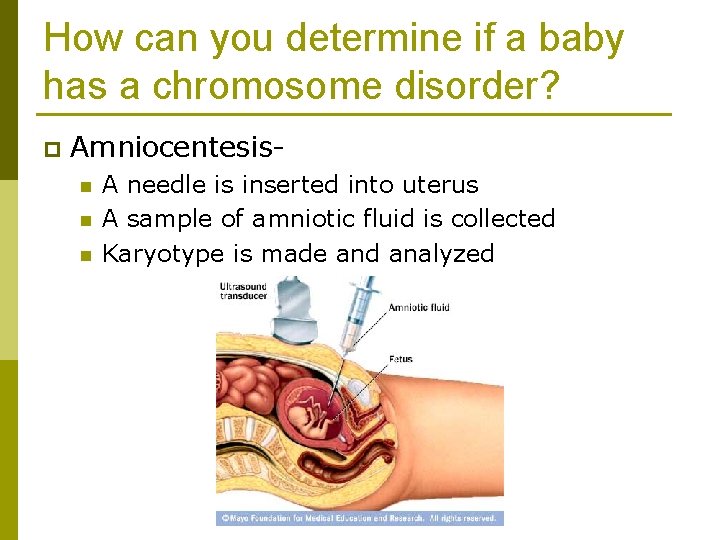
How can you determine if a baby has a chromosome disorder? p Amniocentesisn n n A needle is inserted into uterus A sample of amniotic fluid is collected Karyotype is made and analyzed
Amniocentesis: done with high risk pregnancies Obtain a sample of cells from amniotic fluid or blood p Photograph chromosomes in metaphase p Enlarge the pictures p Cut them apart p Arrange them in pairs on a chart by length and location of centromere p
Male (XY)
Female (XX)
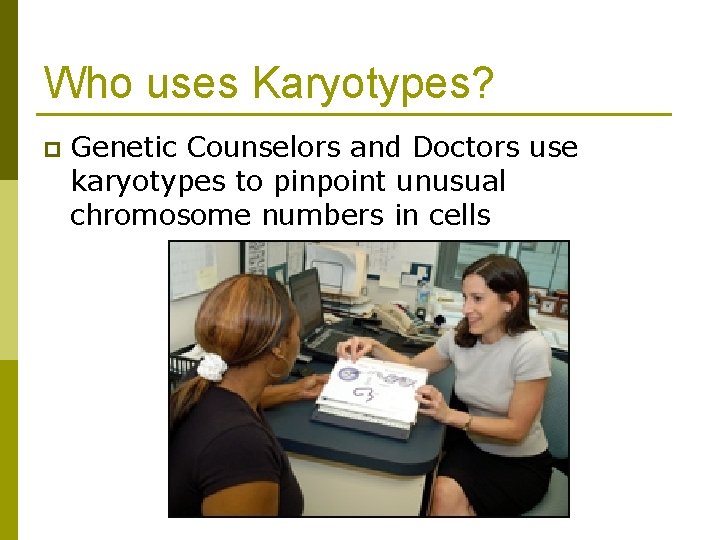
Who uses Karyotypes? p Genetic Counselors and Doctors use karyotypes to pinpoint unusual chromosome numbers in cells
Chromosomal Disorders
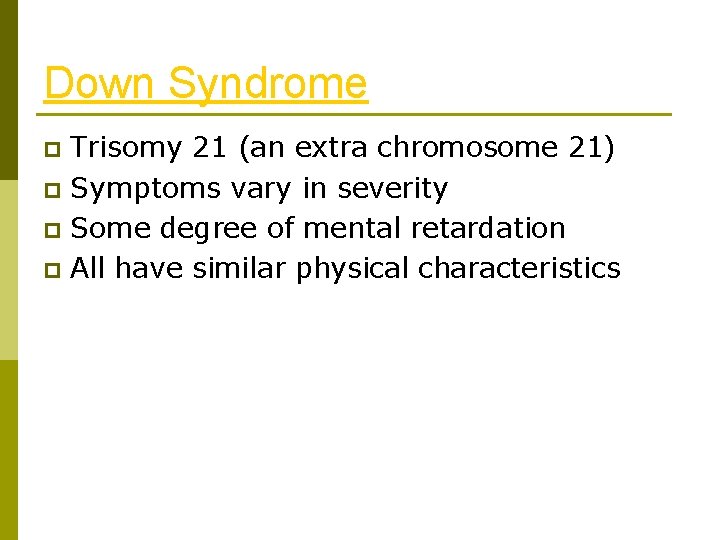
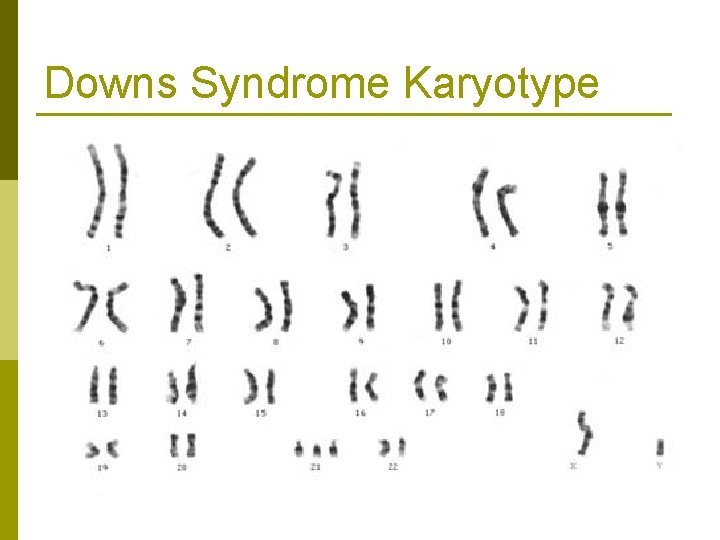
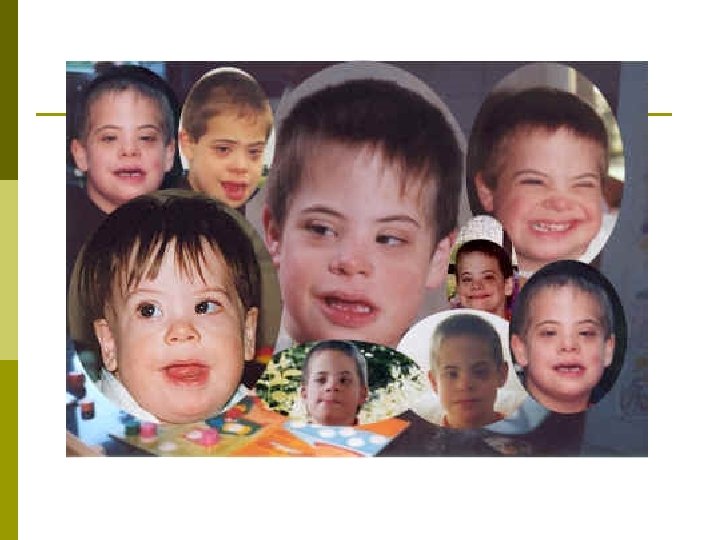
Down Syndrome Trisomy 21 (an extra chromosome 21) p Symptoms vary in severity p Some degree of mental retardation p All have similar physical characteristics p
Downs Syndrome Karyotype
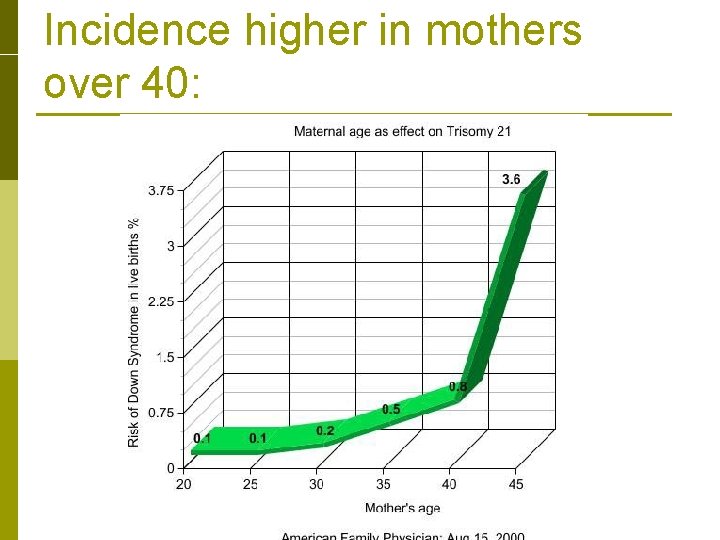
Incidence higher in mothers over 40:
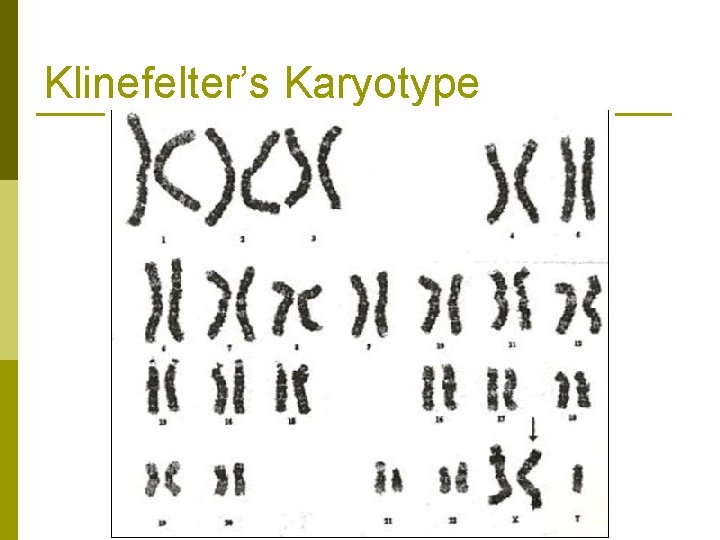
Klinefelter's Syndrome XXY syndrome: Genetically male with an extra X chromosome p Extra x creates female characteristics such as breast enlargements and hips p Small testes; sterile (doesn’t have both male and female parts) p
Klinefelter’s Karyotype
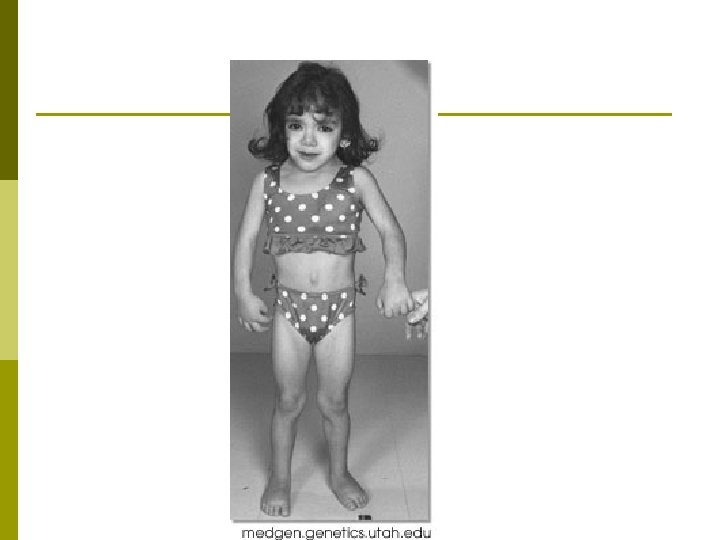
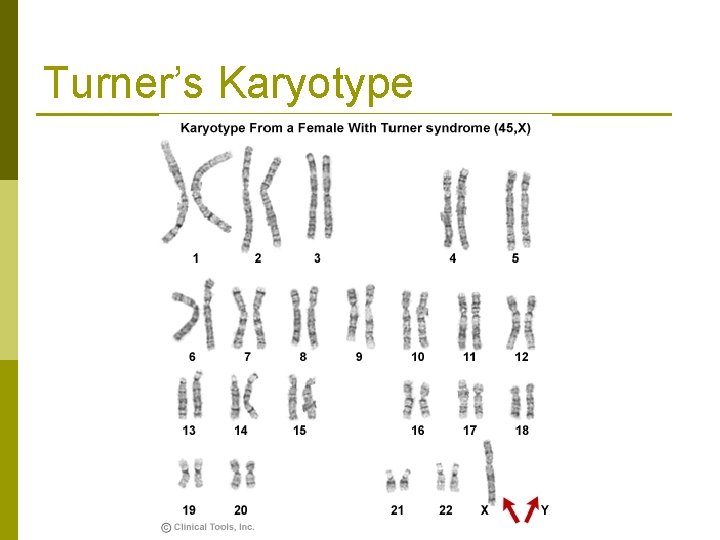
Turner's Syndrome XO syndrome: genetically female but missing an x chromosome p Has 45 chromosomes p 98% die before birth (miscarriage) p Don’t mature during puberty; sterile p
Turner’s Karyotype
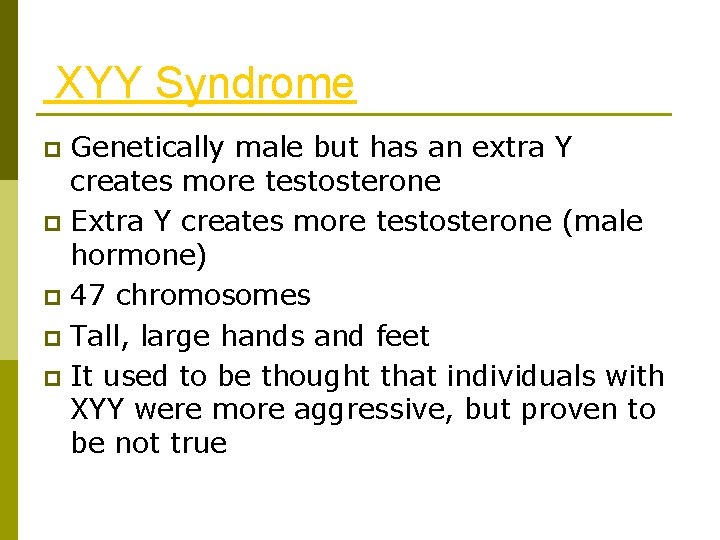
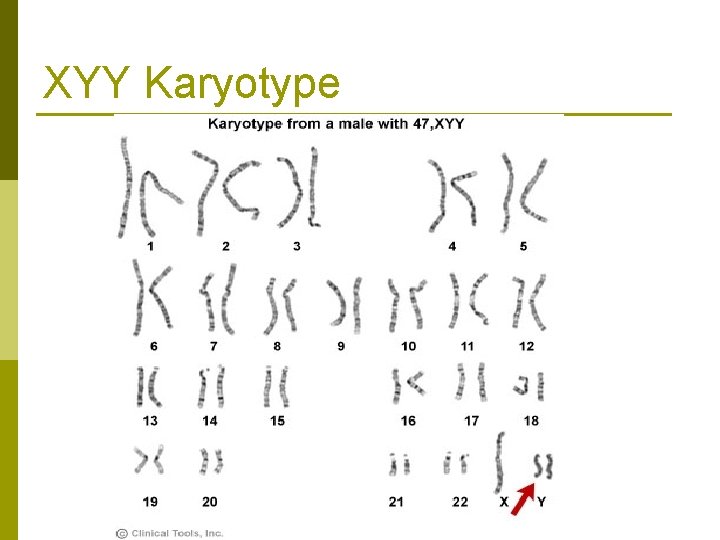
XYY Syndrome Genetically male but has an extra Y creates more testosterone p Extra Y creates more testosterone (male hormone) p 47 chromosomes p Tall, large hands and feet p It used to be thought that individuals with XYY were more aggressive, but proven to be not true p
XYY Karyotype