
Karyotype A photograph of all of an organisms
- Slides: 37
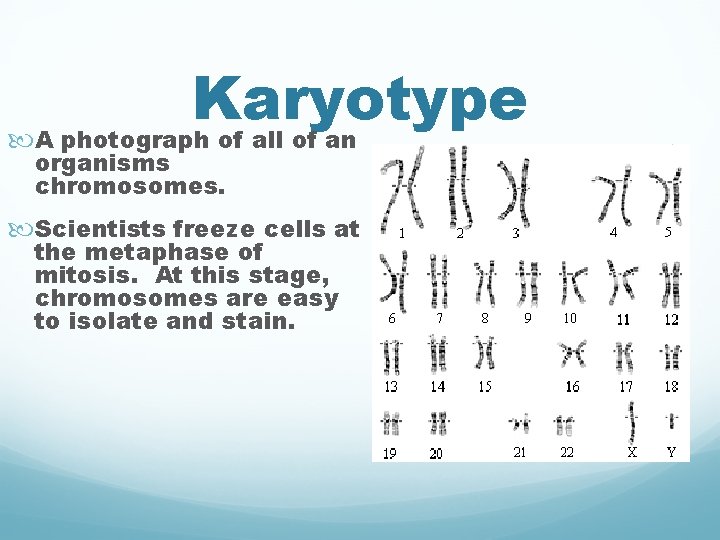
Karyotype A photograph of all of an organisms chromosomes. Scientists freeze cells at the metaphase of mitosis. At this stage, chromosomes are easy to isolate and stain.
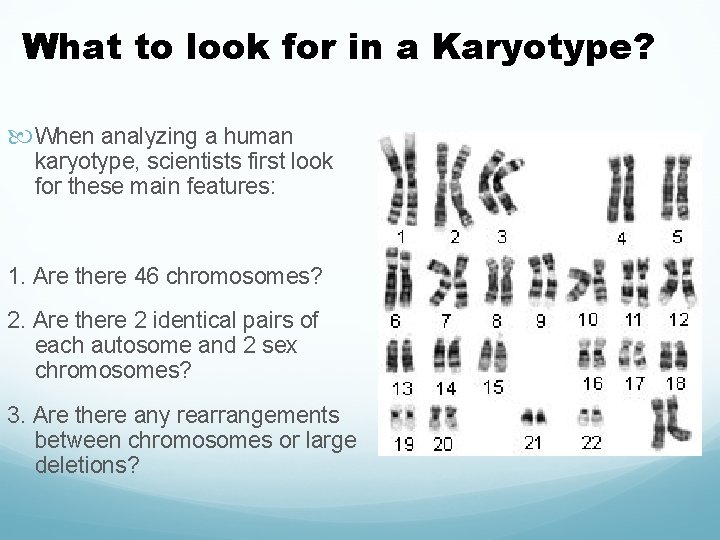
What to look for in a Karyotype? When analyzing a human karyotype, scientists first look for these main features: 1. Are there 46 chromosomes? 2. Are there 2 identical pairs of each autosome and 2 sex chromosomes? 3. Are there any rearrangements between chromosomes or large deletions?
Why perform a karyotype? Verify chromosome number (some genetic diseases are caused by MORE copies of a chrom. ) Confirm chromosome shape, structure and size.
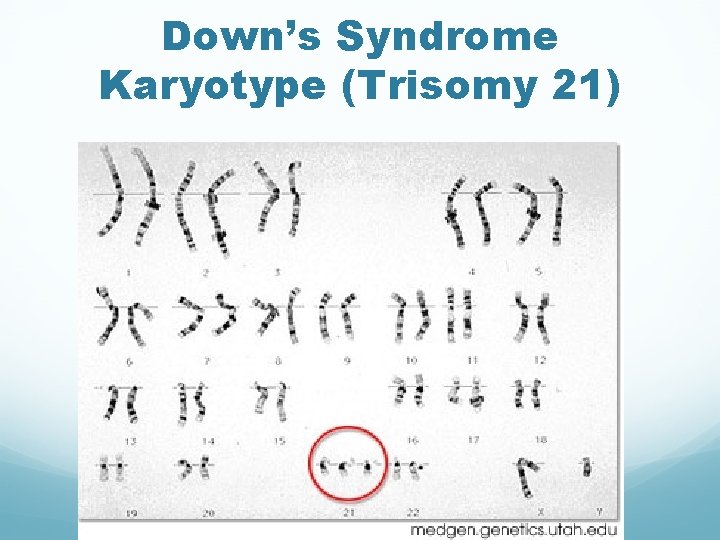
Down’s Syndrome Karyotype (Trisomy 21)
ALL HUMANS HAVE THE SAME GENES ON THE SAME CHROMOSOMES! If mom’s chromosome #1 carries the genes for eye color, hair color, and height, then dad’s chromosome #1 also carries the genes for eye color, hair color, and height THESE CHROMOSOME PAIRS (the 2 copies of the SAME chromosome) are ALLELES
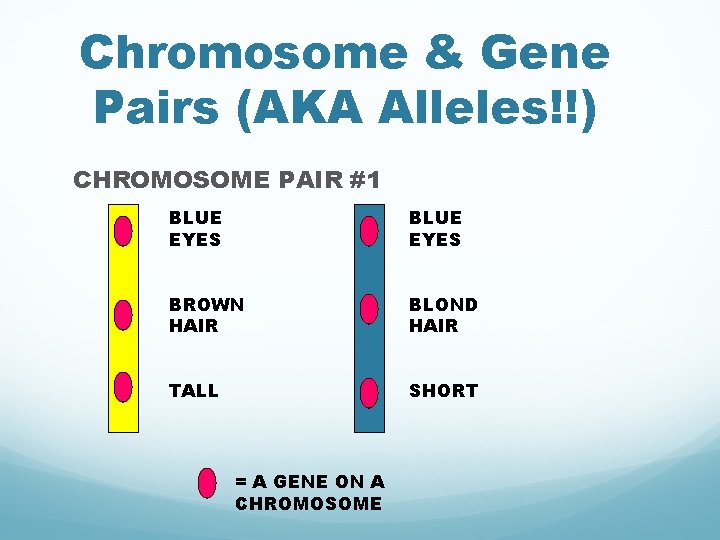
Chromosome & Gene Pairs (AKA Alleles!!) CHROMOSOME PAIR #1 BLUE EYES BROWN HAIR BLOND HAIR TALL SHORT = A GENE ON A CHROMOSOME
What is Phenotype? Outward expression of an allele (how it looks- PHYSICAL) Ex. : Blue or Brown eyes, Tall or short, Artistic, Athletic What is Genotype? Genetic makeup (the GENES) of an organism Ex. Ff, FF, ff
DOMINANCE Some genes are “stronger” than others; they are called dominant The weaker gene is recessive EXAMPLES: BROWN EYES ARE DOMINANT OVER BLUE EYES- A person may have BOTH genes, but we ONLY see the Brown eyes GRAY FUR IS DOMINANT OVER BLUE FUR
In many cases, one gene is NOT stronger than the other. This is called Incomplete Dominance This can cause a MIXED phenotype For Ex. : Incomplete dominance of the gene for red and white flower color will result in PINK flowers.
Combinations of alleles FF and ff are Homozygous for the genes and traits FF= homozygous dominant; phenotype is DOMINANT trait ff = homozygous recessive; phenotype is RECESSIVE trait
Combinations of Alleles Ff is Heterozygous for the genes (genotype). If F is dominant, a person who is Ff will look the SAME as someone who is FF (different genotype, same phenotype!)
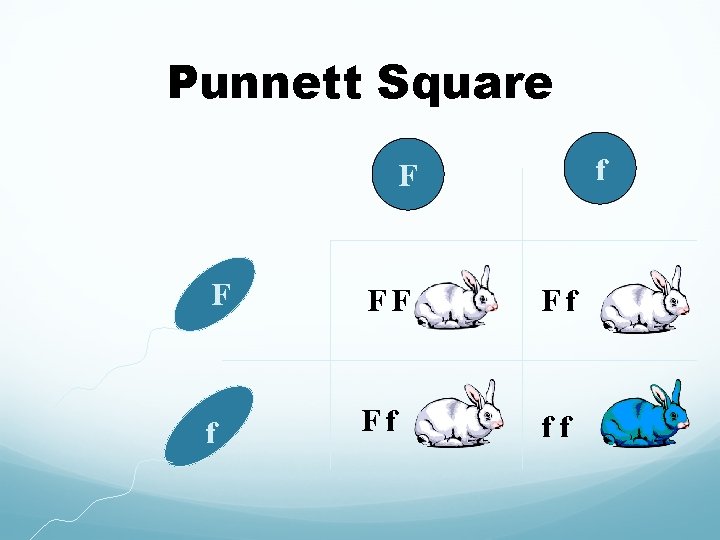
Example: F= dominant= fuzzy seed & f= recessive= smooth seed What are the genotype and phenotype for homozygous dominant? What are the genotype and phenotype for homozygous recessive? What are the genotype and phenotype for heterozygous? Cross Ff x Ff (Punnett Sqare)
Answers: Homozygous dominant= FF= fuzzy Homozygous recessive= ff= smooth HETEROZYGOUS= Ff= fuzzy
Have you ever noticed that certain traits run in families? Like musical ability, athletic, mechanical ability, more intellectual, etc. Our genes determine a LOT of who we are (but NOT everything) What we are good at- sports, music, schoolwork Our height, eye color, hair color personality traits
Do Chromosomes ever change? YES! Changes can occur in the chromosome (a BIG change- deletion, repeat, extra copy) or in the sequence of the DNA (LITTLE changeswitch the nucleotide base (letter); delete 1 or more bases; insert extra 1 or more bases). Both these types of changes are called MUTATIONS.
What MAY happen when there is a mutation in the DNA or chromosome? The offspring may develop a GENETIC DISEASE. How is a GENETIC DISEASE (like cystic fibrosis) different from an INFECTIOUS DISEASE (strep throat)?
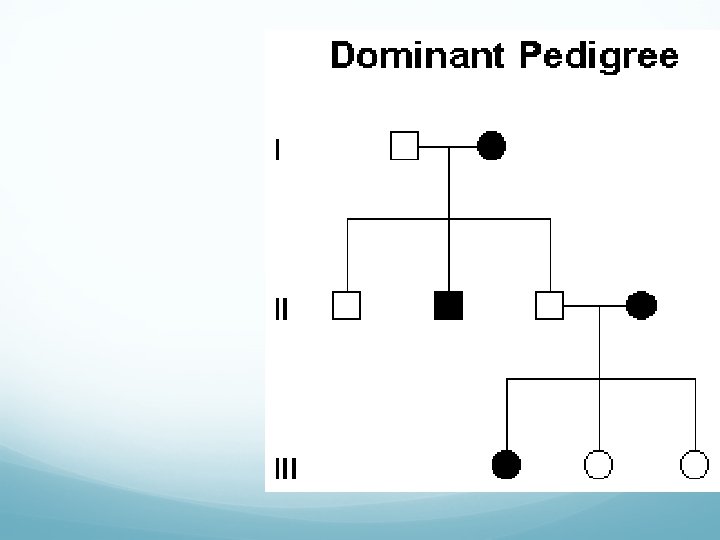
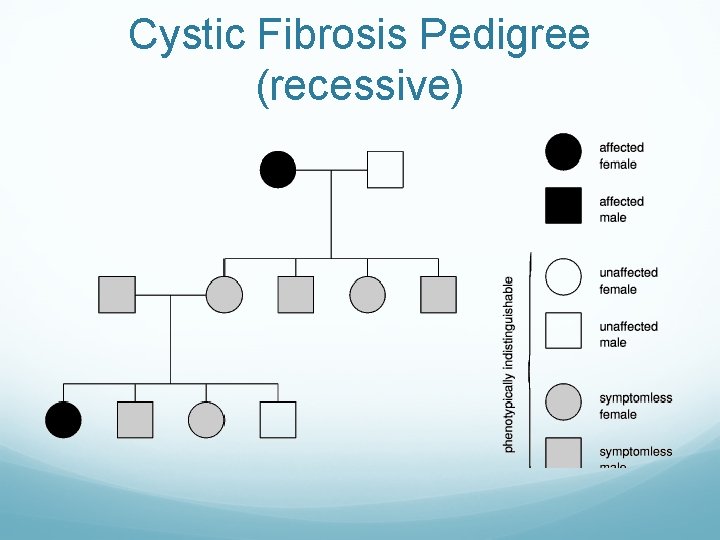
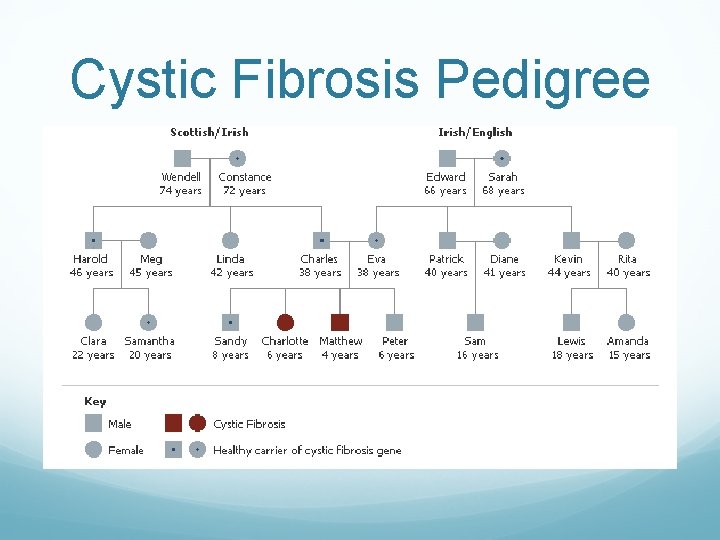
How do we track who has a trait in a familya Pedigree! A chart that shows how a trait and the genes that control it are inherited within a family. A ‘family tree’ for a genetic trait or disease.
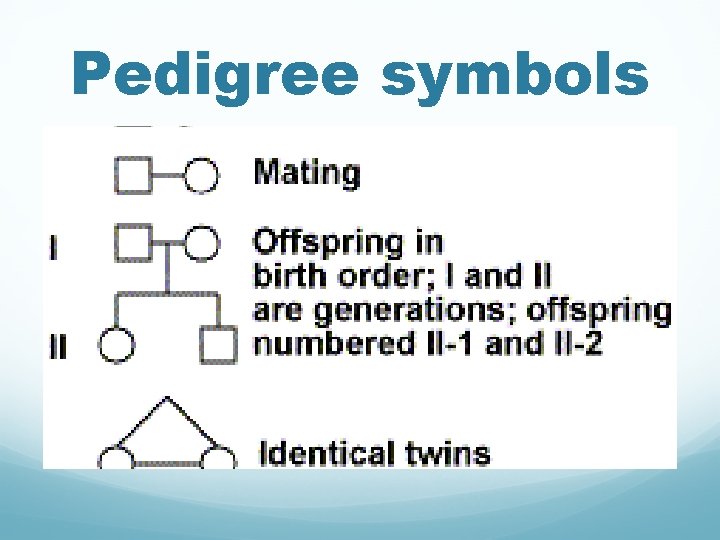
Pedigree symbols
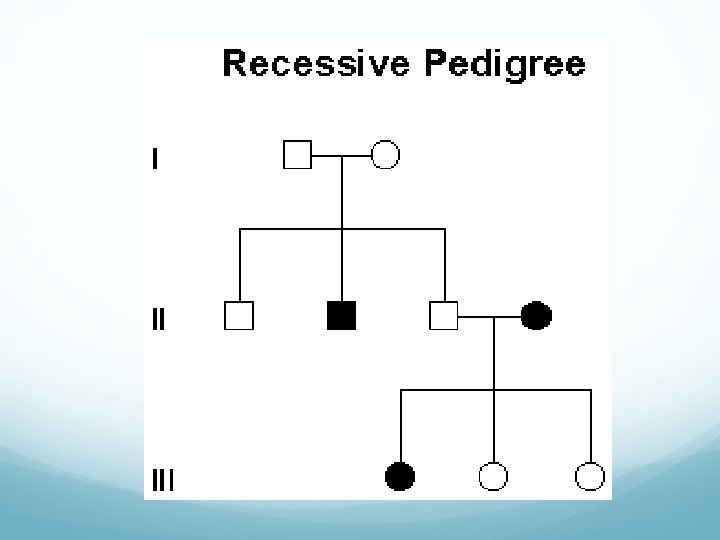
Cystic Fibrosis Pedigree (recessive)
Cystic Fibrosis Pedigree
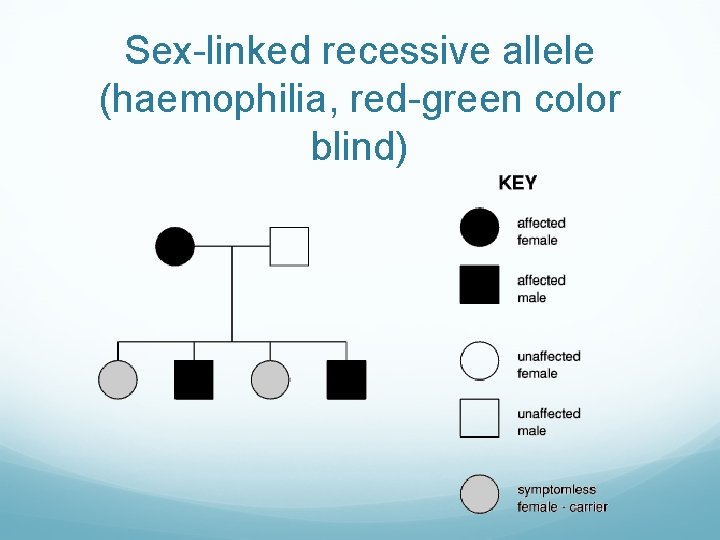
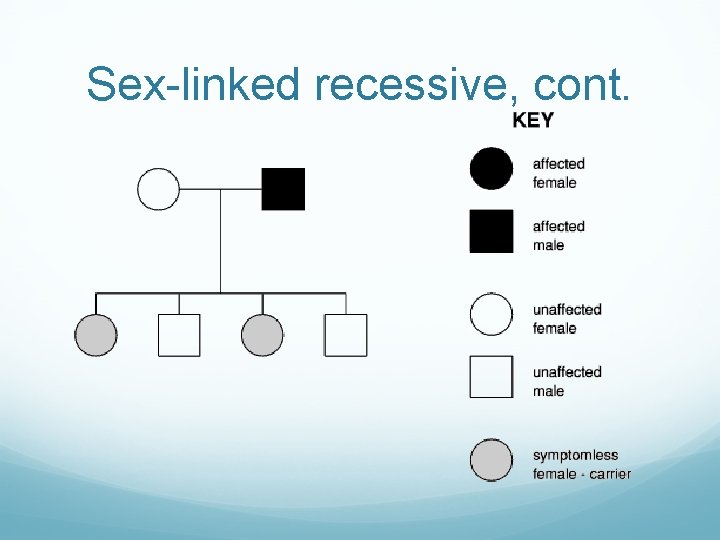
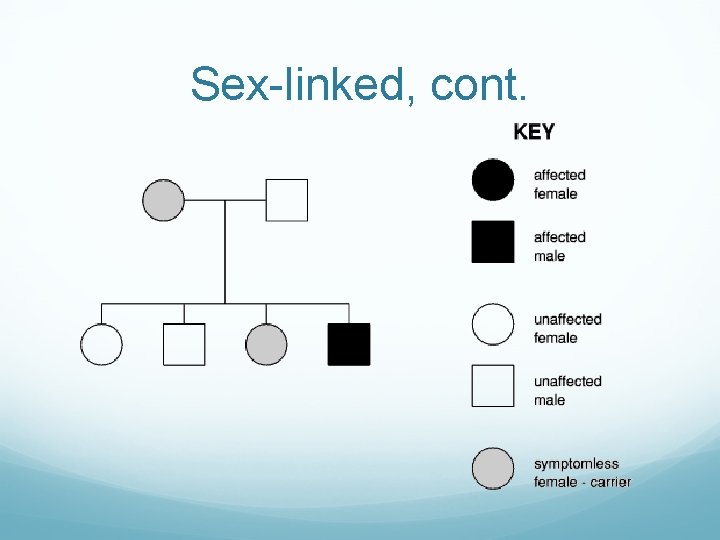
What if a trait is carried on the X chromosome? It is called a sex-linked trait. Will it be inherited the SAME as trait on an autosomal (numbered) chromosome? NO- because the Male only has 1 copy, and he gets it ONLY from MOM!!!!
Sex-linked recessive allele (haemophilia, red-green color blind)
Sex-linked recessive, cont.
Sex-linked, cont.
Pedigree Summary: Pedigrees help determine the inheritance of some alleles and predict them in offspring.
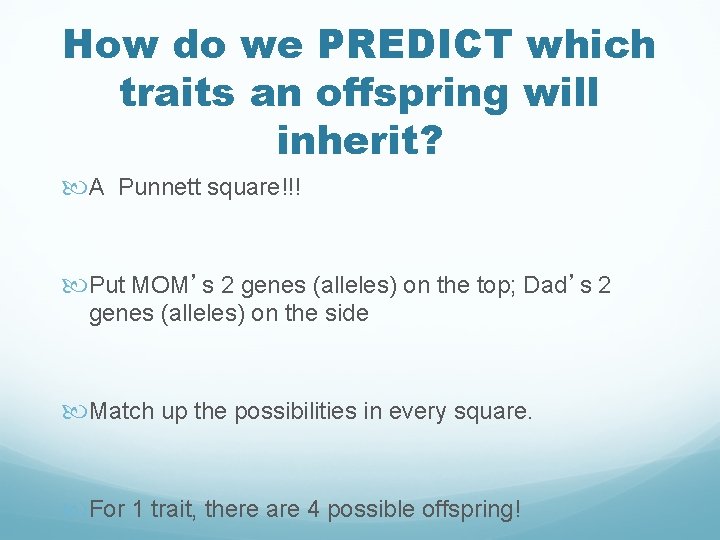
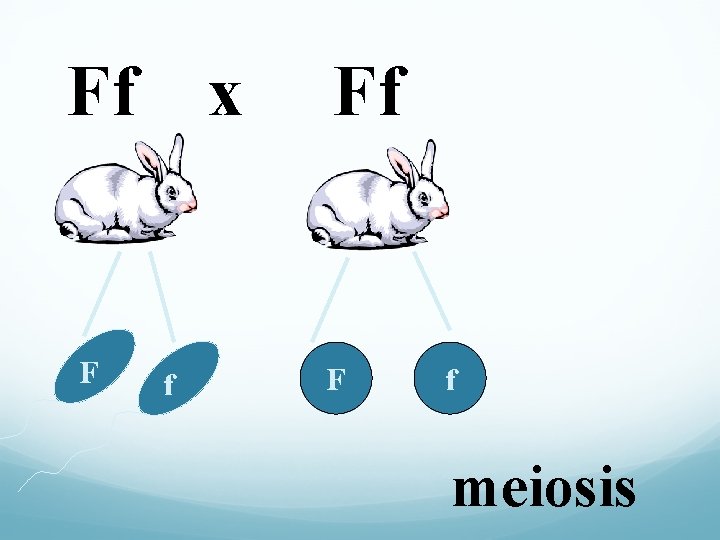
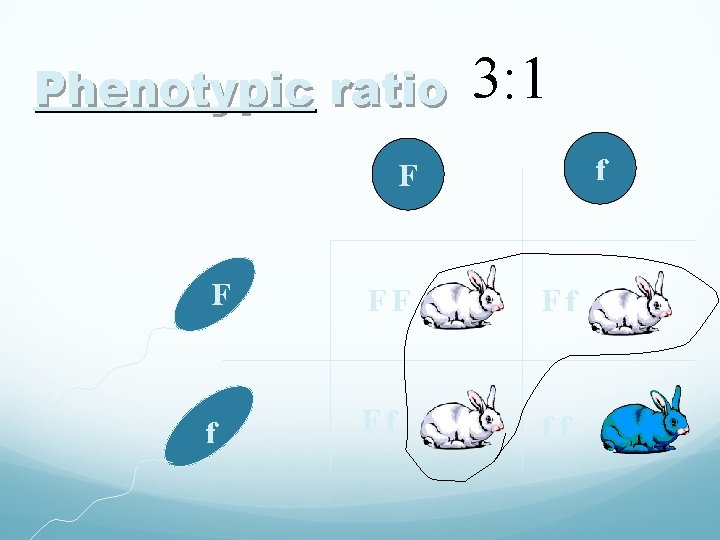
How do we PREDICT which traits an offspring will inherit? A Punnett square!!! Put MOM’s 2 genes (alleles) on the top; Dad’s 2 genes (alleles) on the side Match up the possibilities in every square. For 1 trait, there are 4 possible offspring!
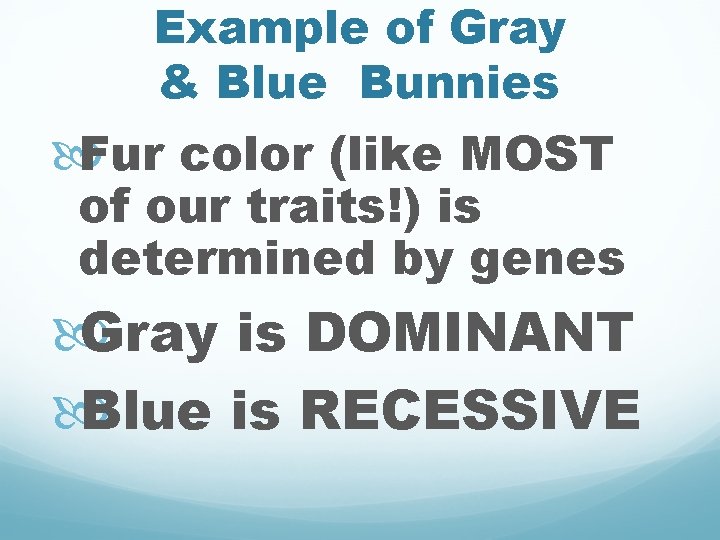
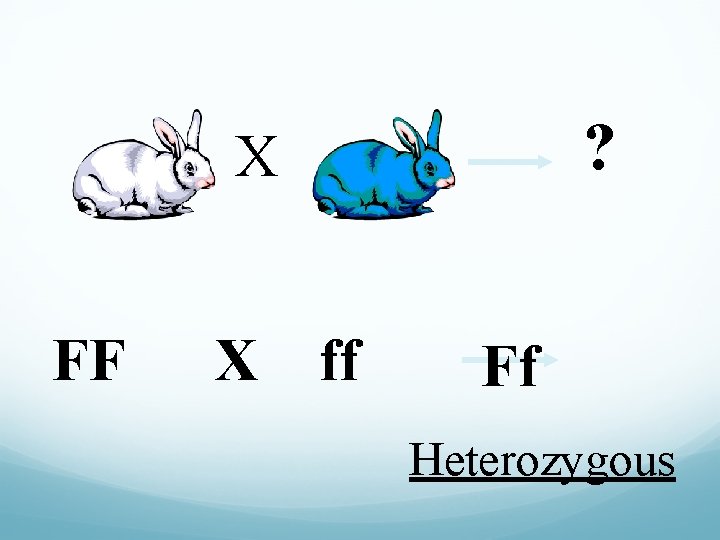
Example of Gray & Blue Bunnies Fur color (like MOST of our traits!) is determined by genes Gray is DOMINANT Blue is RECESSIVE
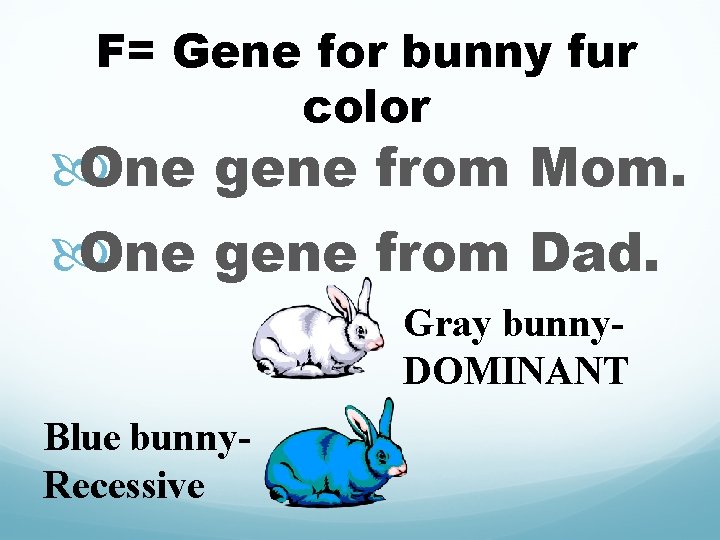
F= Gene for bunny fur color One gene from Mom. One gene from Dad. Gray bunny. DOMINANT Blue bunny. Recessive
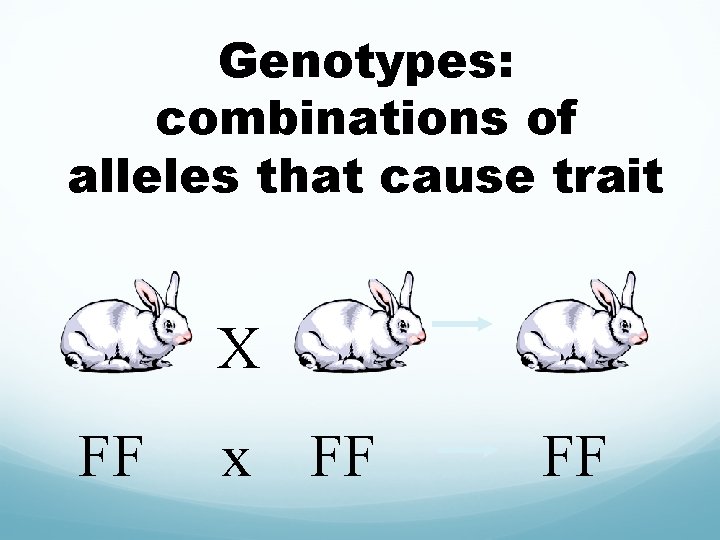
Genotypes: combinations of alleles that cause trait X FF x FF FF
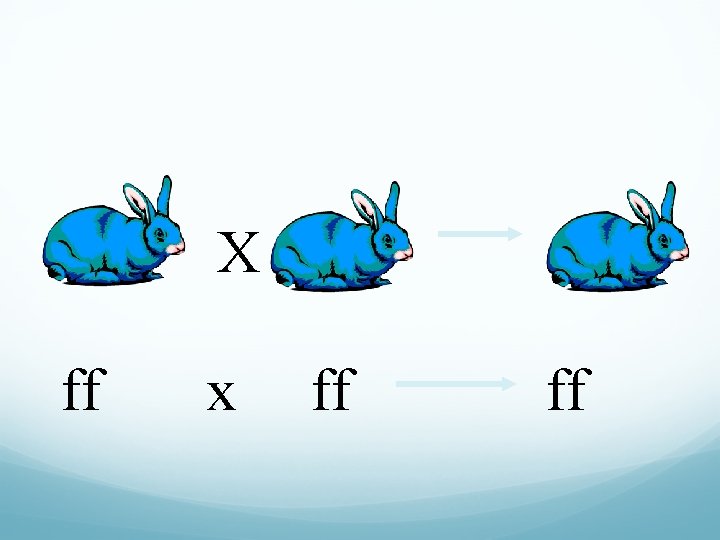
X ff x ff ff
? X FF X ff Ff Heterozygous
Ff F x f Ff F f meiosis
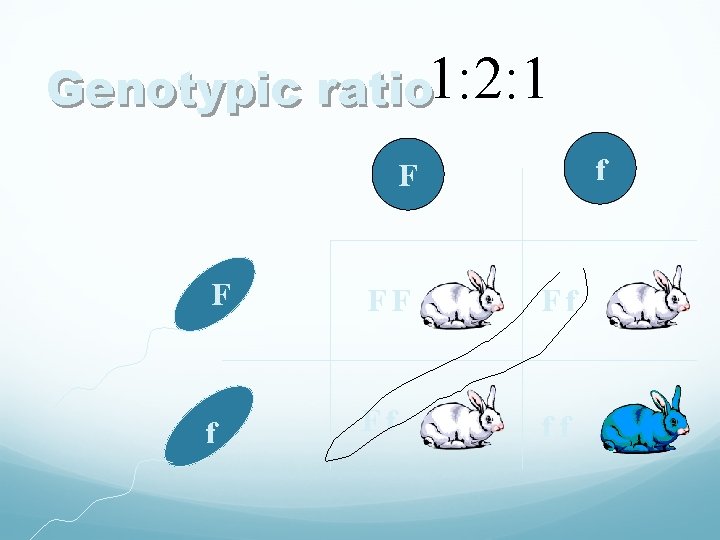
Punnett Square f F F FF Ff ff
Phenotypic ratio 3: 1 f F F FF Ff ff
Genotypic ratio 1: 2: 1 f F F FF Ff ff