
Kartchner Caverns CIS 120 Ada Brownson Discovery of
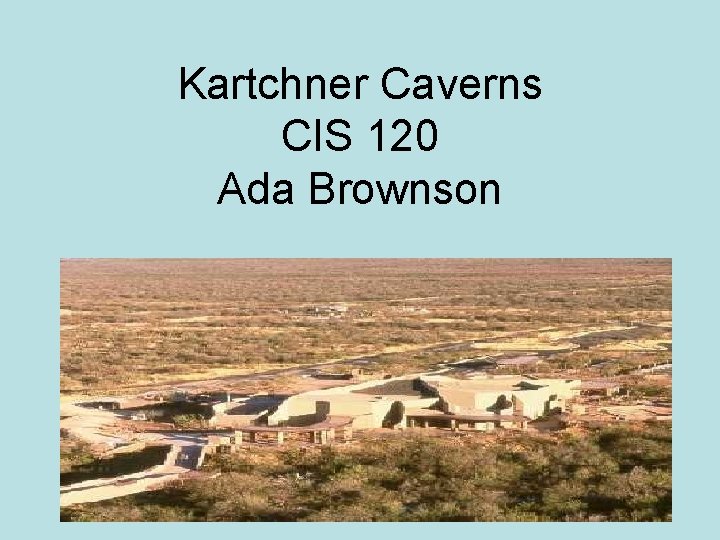
Kartchner Caverns CIS 120 Ada Brownson
Discovery of Kartchner Caverns EDiscovered in 1974 EBy: Randy Tufts and Gary Tenen EOwners of property are James and Lois Kartchner ELocated in the Whetstone Mountains EKept a secret for 4 years EApproved as an Arizona State Park in April, 1988 EOpened to the public November 12, 1999
Preservation of Cave Temperature of cave kept at 68 degrees F Humidity level maintained at 99% Special air conditioning system and airlocks used to close cave Trails built by hand, no heavy equipment used in cave. Development costs were $28 million.
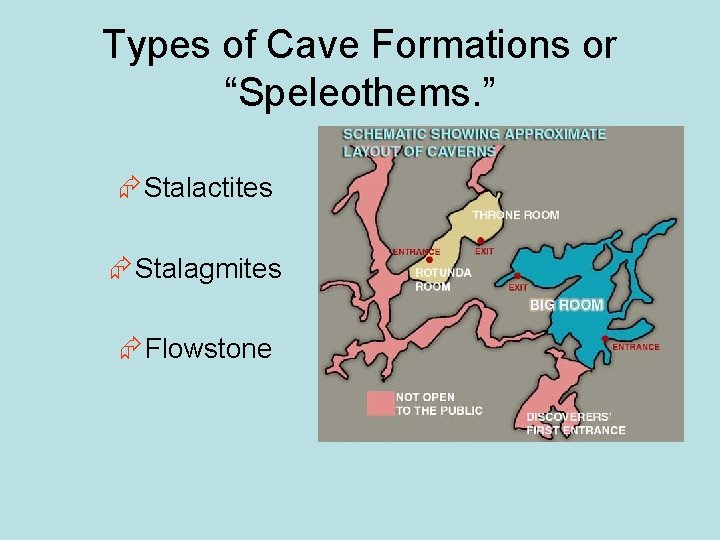
Types of Cave Formations or “Speleothems. ” Æ Stalactites Æ Stalagmites Æ Flowstone
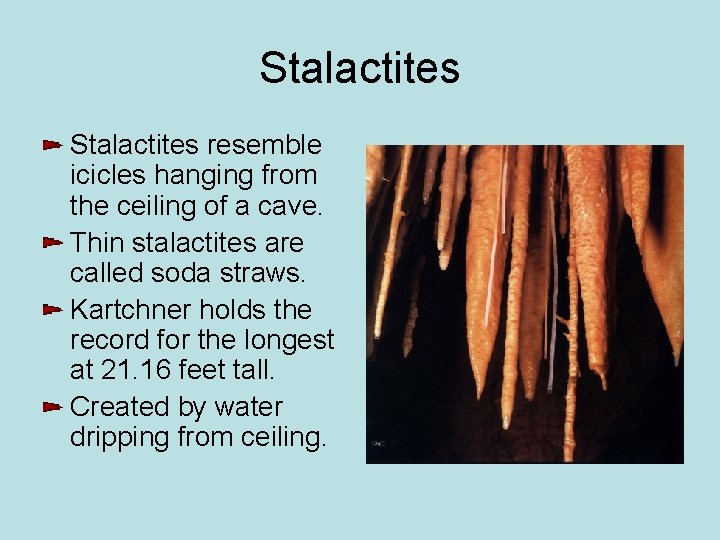
Stalactites resemble icicles hanging from the ceiling of a cave. Thin stalactites are called soda straws. Kartchner holds the record for the longest at 21. 16 feet tall. Created by water dripping from ceiling.
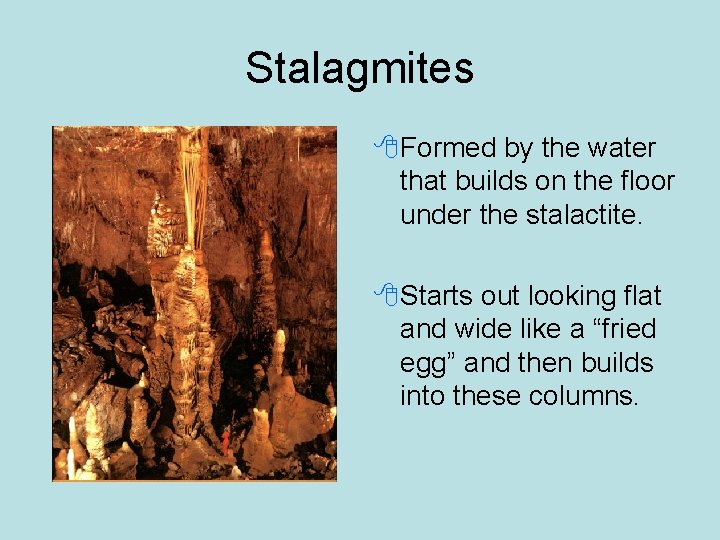
Stalagmites 8 Formed by the water that builds on the floor under the stalactite. 8 Starts out looking flat and wide like a “fried egg” and then builds into these columns.
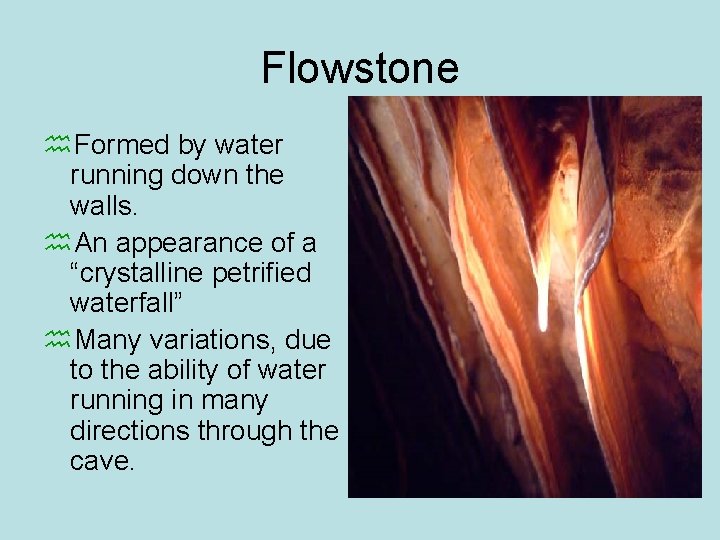
Flowstone h. Formed by water running down the walls. h. An appearance of a “crystalline petrified waterfall” h. Many variations, due to the ability of water running in many directions through the cave.
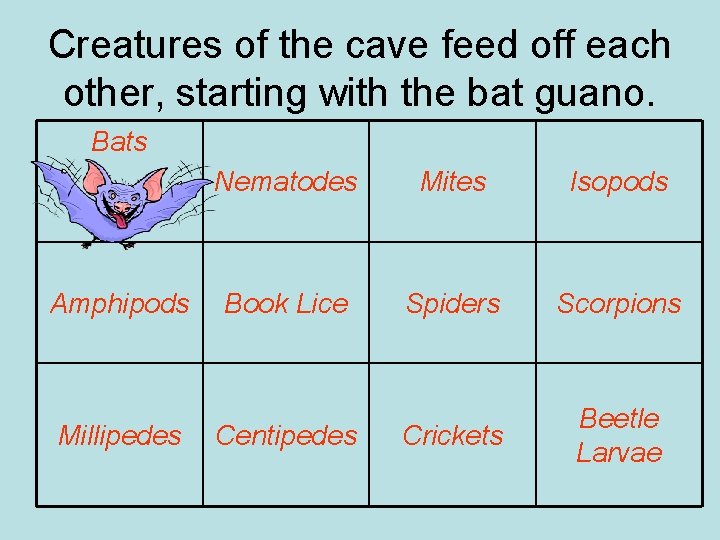
Creatures of the cave feed off each other, starting with the bat guano. Bats Amphipods Millipedes Nematodes Mites Isopods Book Lice Spiders Scorpions Crickets Beetle Larvae Centipedes
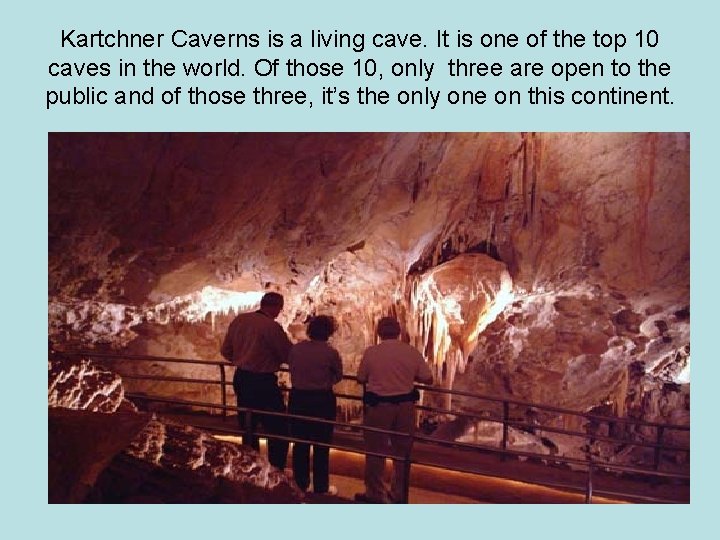
Kartchner Caverns is a living cave. It is one of the top 10 caves in the world. Of those 10, only three are open to the public and of those three, it’s the only one on this continent.

Tour Information Tour lasts around 75 minutes. 45 minutes is underground All tours are guided. Reservations are recommended. Open daily 7: 30 am to 6: 00 pm. Costs include: $10 car entrance fee Adults tour $14 Children $6 (7 -13 Yrs) Children free under 6

- Slides: 11