
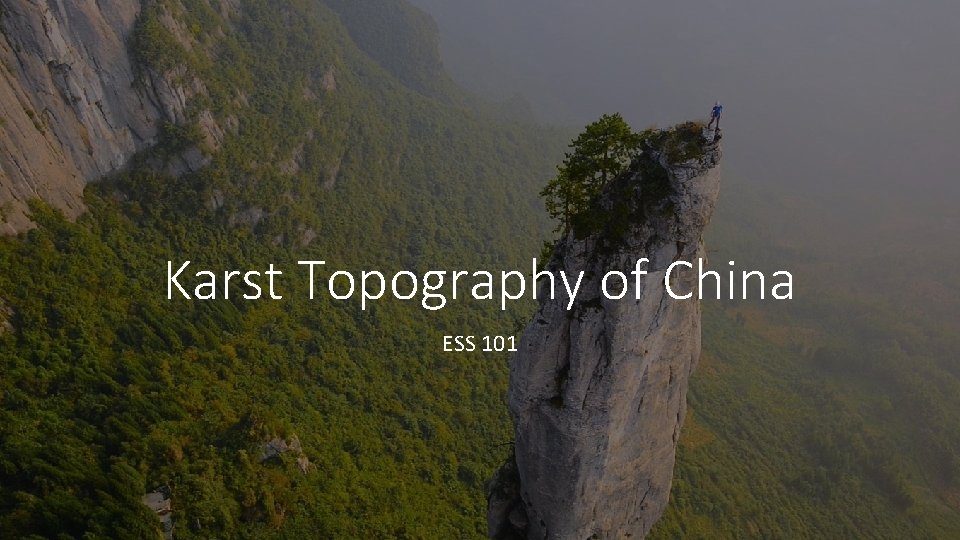
Karst Topography of China ESS 101 Karst Explained
- Slides: 7
Karst Topography of China ESS 101
Karst (Explained by National Geographic) • An area of land made up of limestone. • Limestone, also known as chalk or calcium carbonate, is a soft rock that dissolves in water. • As raindrops seep into the rock, it slowly erodes. • Karst landscapes can be worn away from the top or dissolved from a weak point inside the rocks.
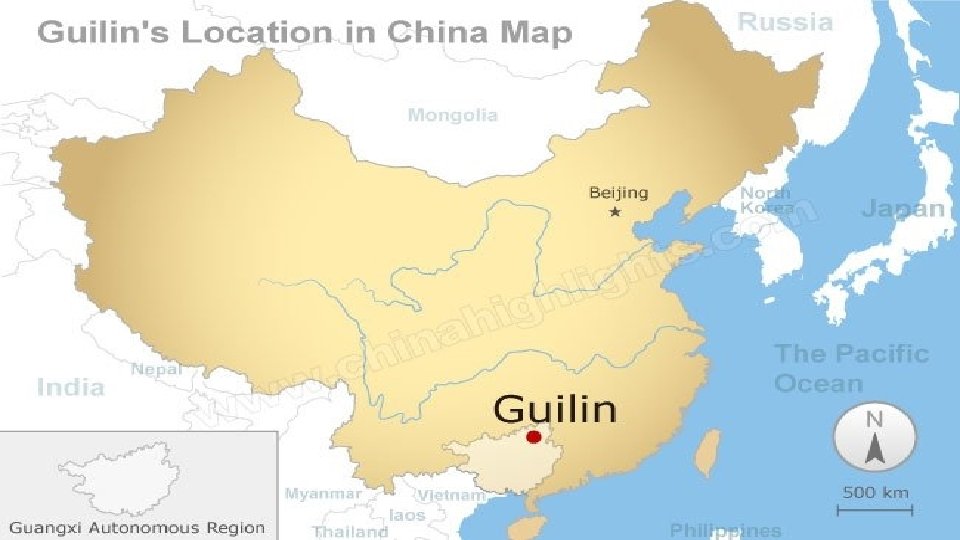
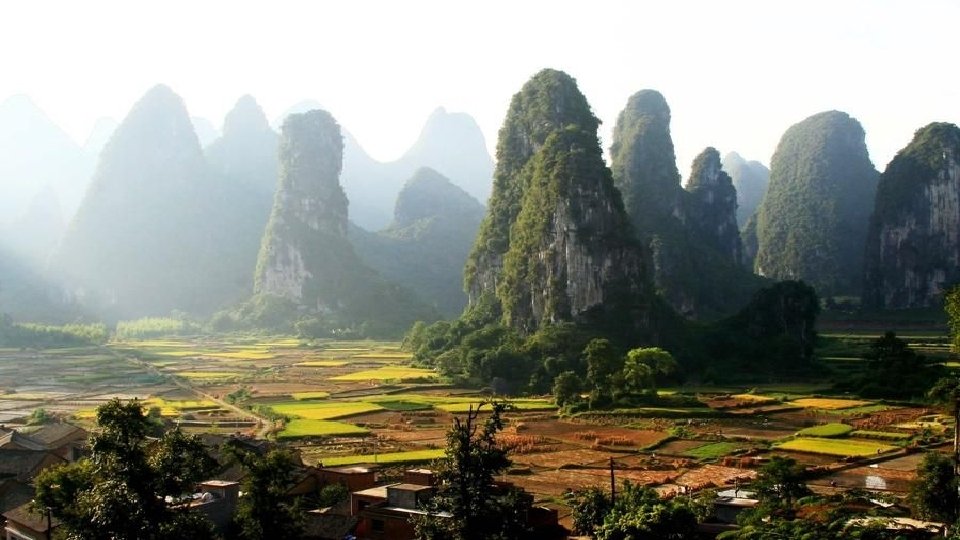
Guilin Karst Topography • Guilin, located in Southern China, is known for its over 5, 180 square kilometers of karst landscape. • One article by Jordan Clary compared Guilin to J. R. R. Tolkien’s Middle -earth with sharp cliffs and green plains. • The conditions that formed the magnificent topography of Guilin are “fourfold” according to Ray Beiersdorfer, a geologist at Youngstown State University of Ohio.
Four Conditions • First, to form these karst landscapes, the hard, compact carbonate rock is crucial. • In Guilin, they are the Devonian limestone • Secondly, strong uplift is required and they are generated by the collisions of India with Asia to form the Himalaya. • The third condition is the Monsoon climate of high moisture during the warmest season. • And lastly, the area must not be scoured by the glaciers, which in Guilin it wasn’t.
Citation (Also very good articles to read) • Exploring Karst in Guilin, China http: //www. geotimes. org/apr 07/article. html? id=Travels 0407. html • Karst (National Geographic) https: //www. nationalgeographic. org/encyclopedia/karst/