
Kaon and Pion Fragmentation functions and SIDIS off
- Slides: 25
Kaon and Pion Fragmentation functions and SIDIS off deuteron Kao, Chung-Wen Chung Yuan Christian University In collaboration of D. -J. Yang, F. -J. Jiang (NTNU, Taiwan) W. -C. Chang (AS), S-. i. Nam (Pukyong National University, Korea)
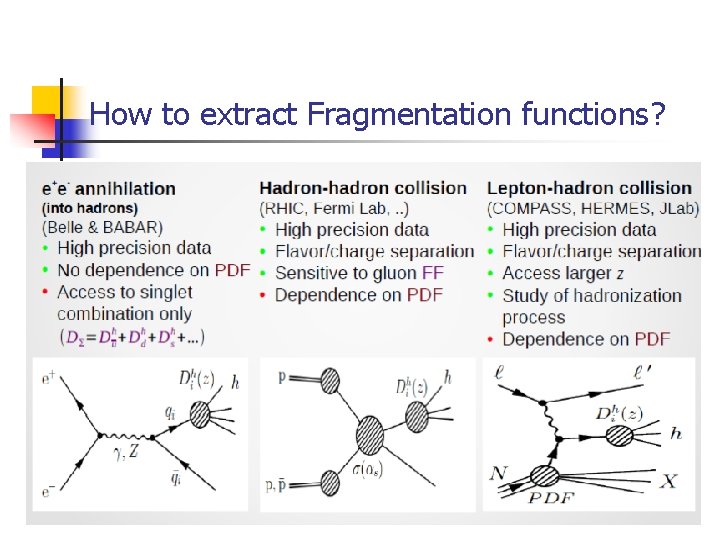
How to extract Fragmentation functions?
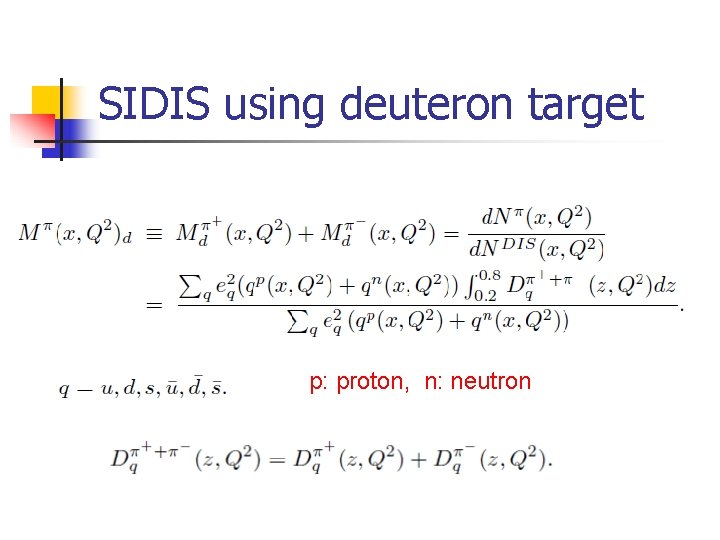
SIDIS using deuteron target p: proton, n: neutron
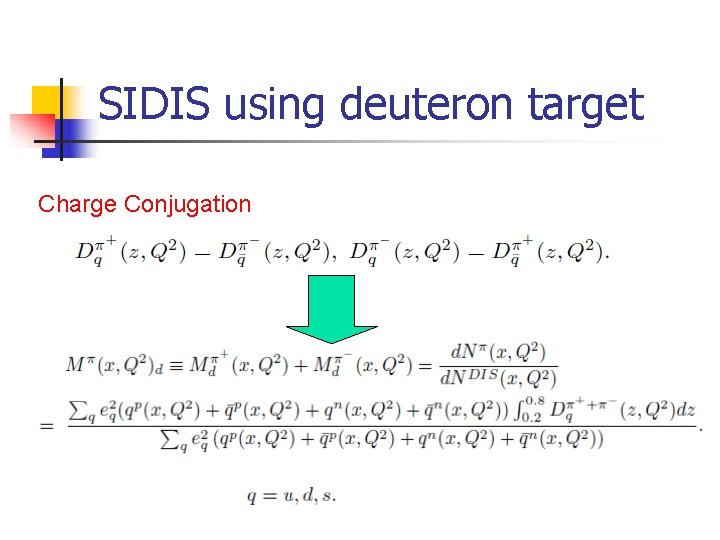
SIDIS using deuteron target Charge Conjugation
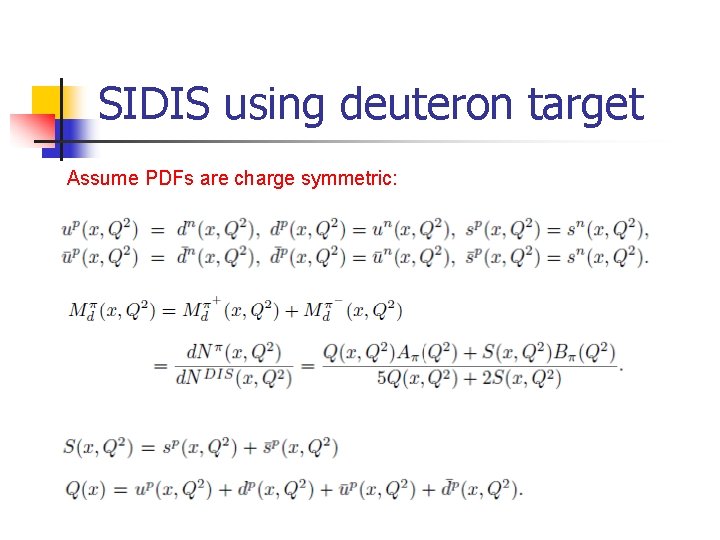
SIDIS using deuteron target Assume PDFs are charge symmetric:
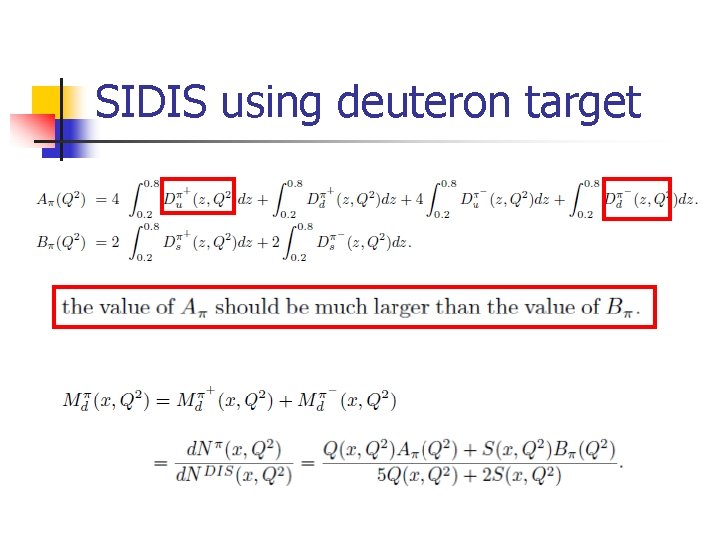
SIDIS using deuteron target
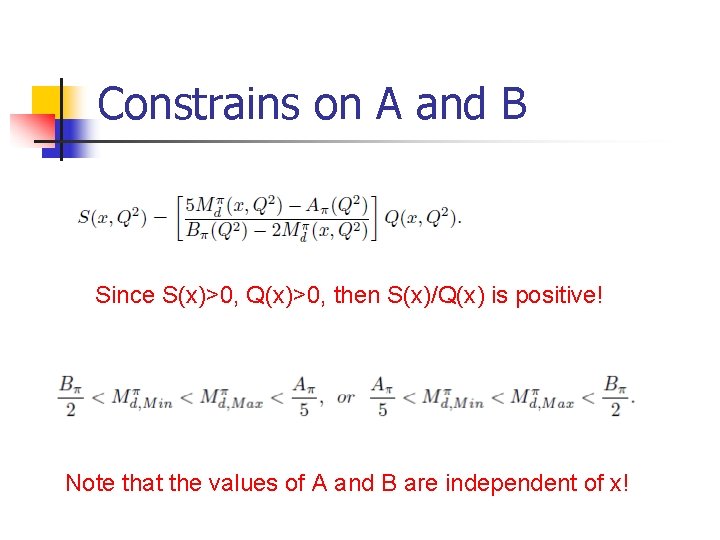
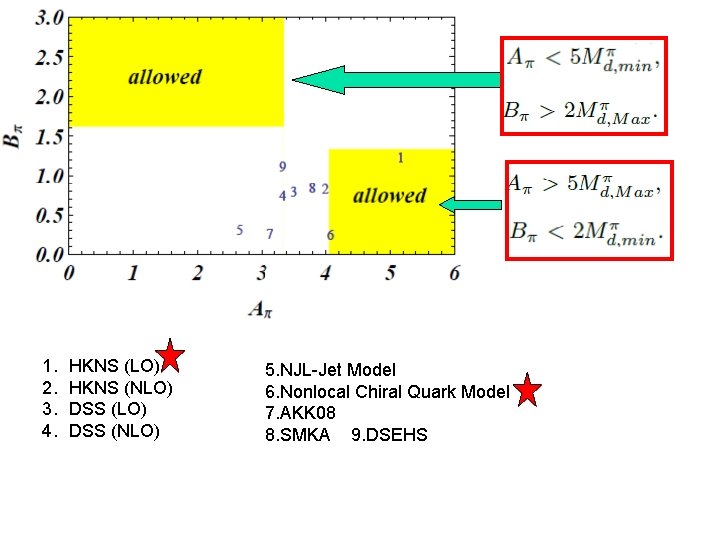
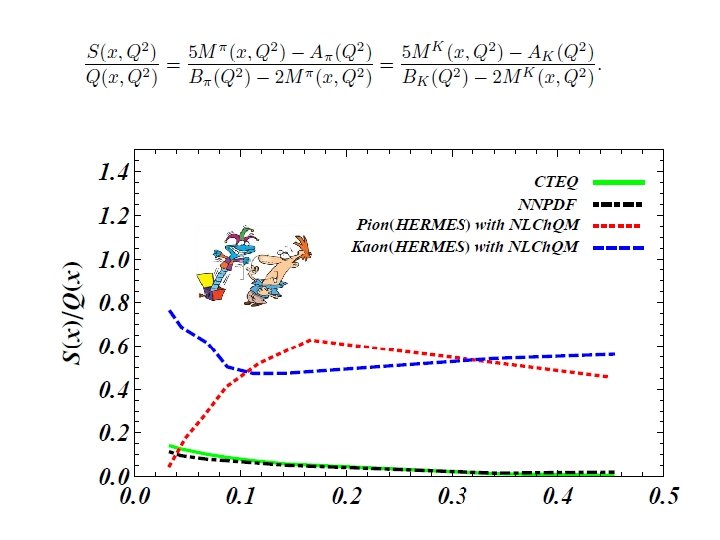
Constrains on A and B Since S(x)>0, Q(x)>0, then S(x)/Q(x) is positive! Note that the values of A and B are independent of x!
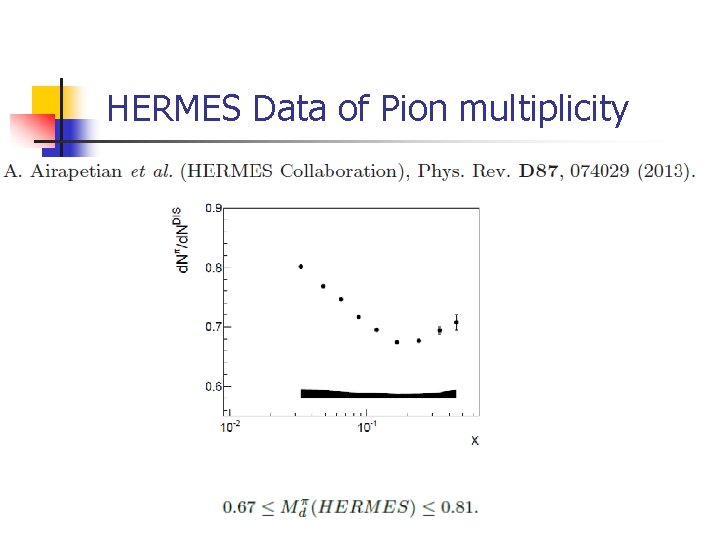
HERMES Data of Pion multiplicity
1. 2. 3. 4. HKNS (LO) HKNS (NLO) DSS (NLO) 5. NJL-Jet Model 6. Nonlocal Chiral Quark Model 7. AKK 08 8. SMKA 9. DSEHS
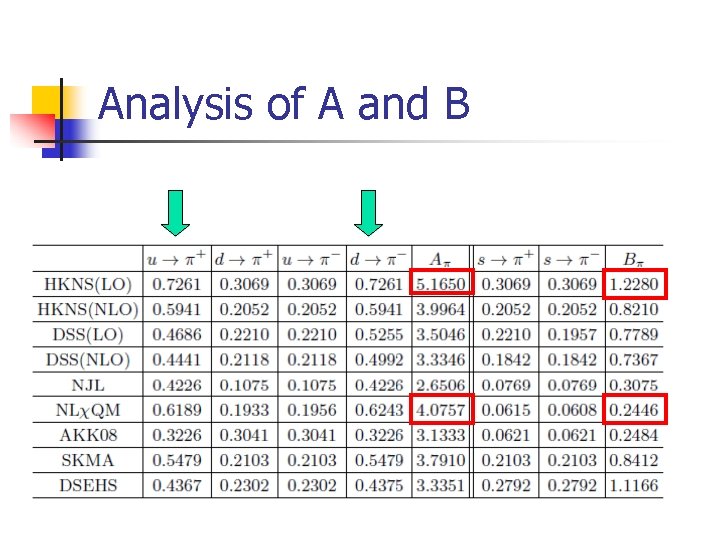
Analysis of A and B
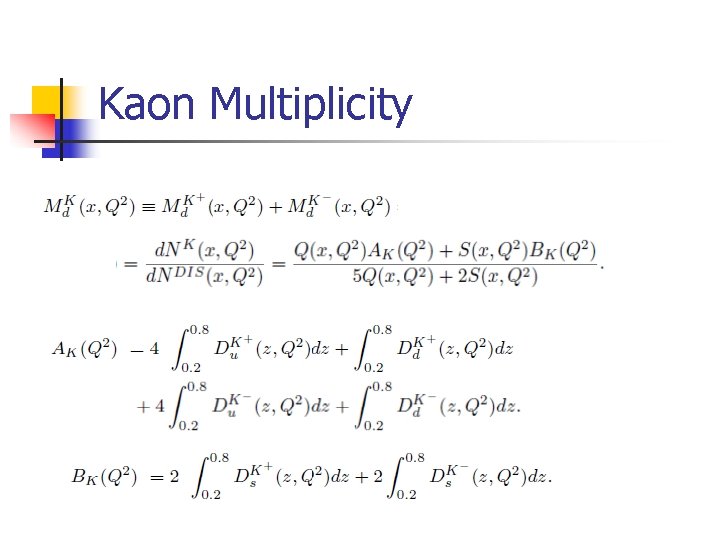
Kaon Multiplicity
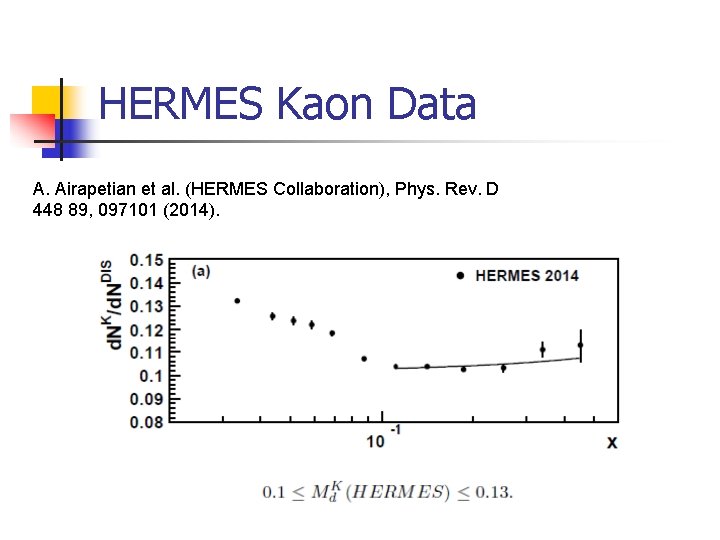
HERMES Kaon Data A. Airapetian et al. (HERMES Collaboration), Phys. Rev. D 448 89, 097101 (2014).
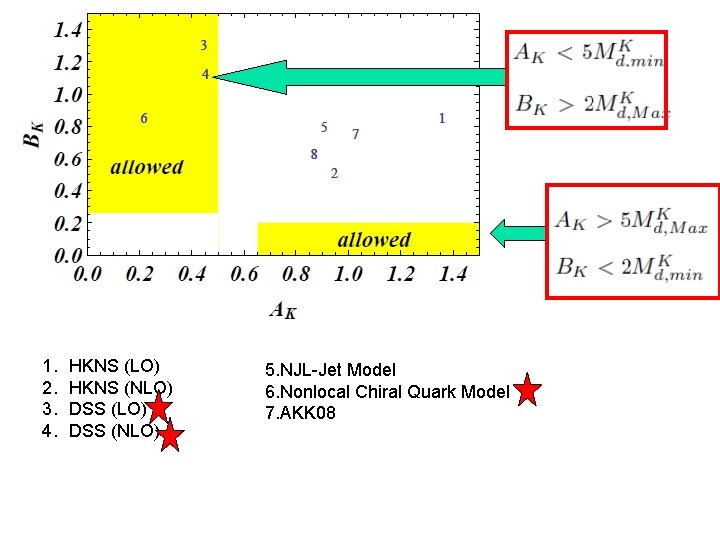
1. 2. 3. 4. HKNS (LO) HKNS (NLO) DSS (NLO) 5. NJL-Jet Model 6. Nonlocal Chiral Quark Model 7. AKK 08
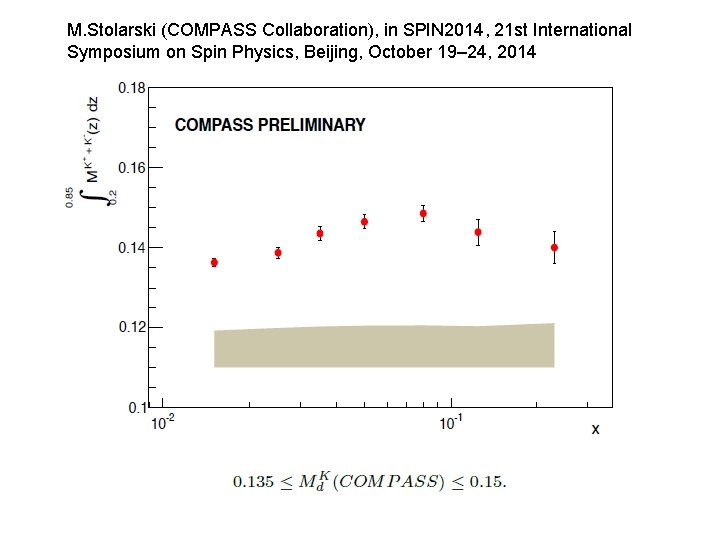
M. Stolarski (COMPASS Collaboration), in SPIN 2014, 21 st International Symposium on Spin Physics, Beijing, October 19– 24, 2014
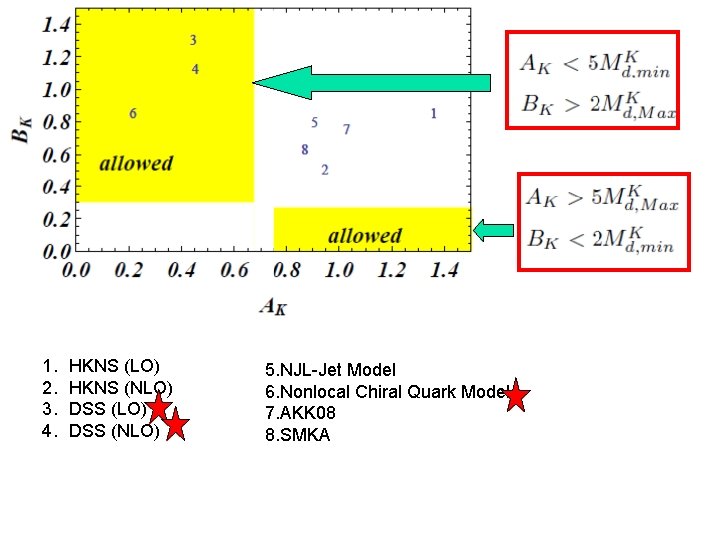
1. 2. 3. 4. HKNS (LO) HKNS (NLO) DSS (NLO) 5. NJL-Jet Model 6. Nonlocal Chiral Quark Model 7. AKK 08 8. SMKA
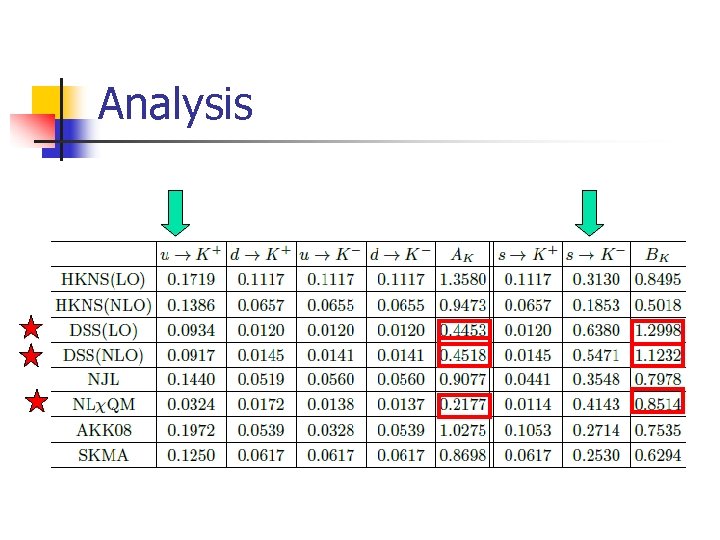
Analysis
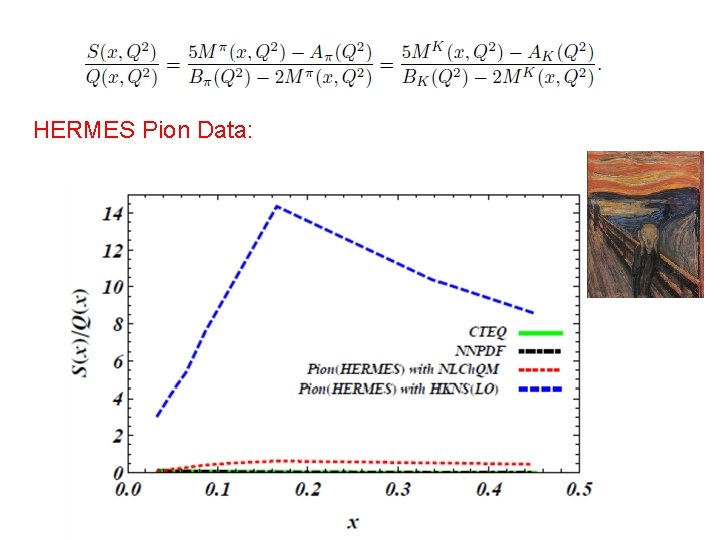
HERMES Pion Data:
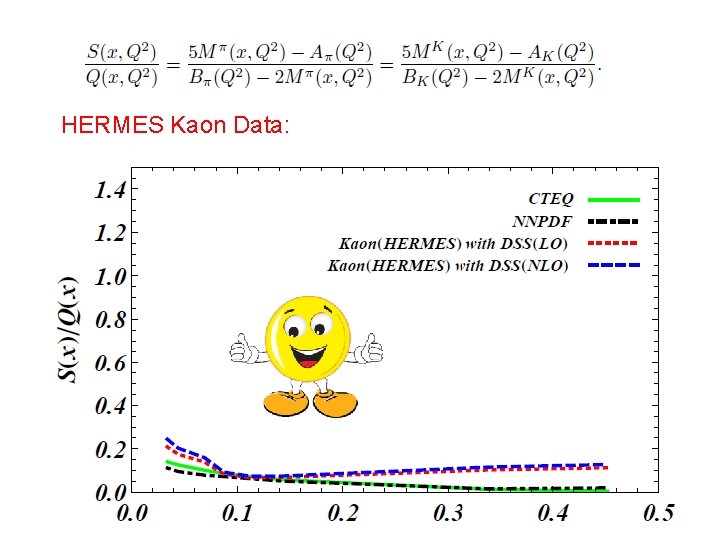
HERMES Kaon Data:
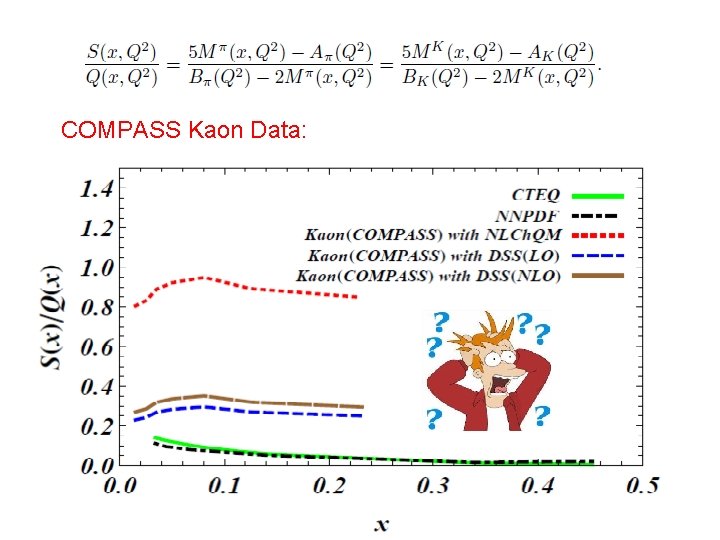
COMPASS Kaon Data:
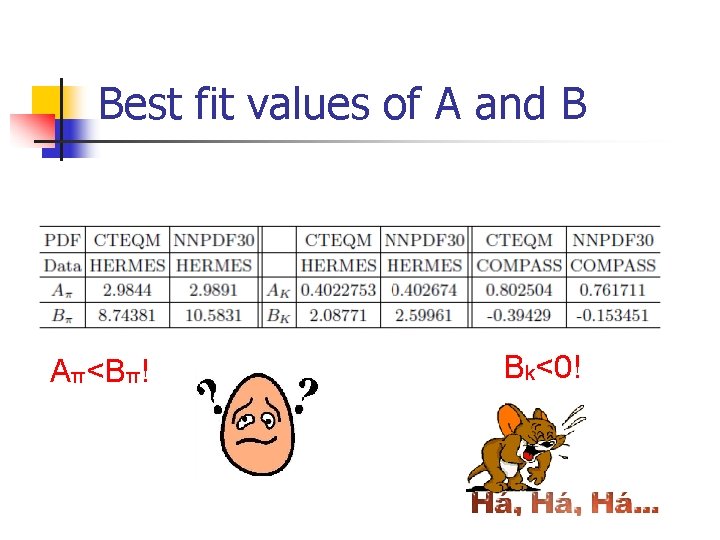
Best fit values of A and B Aπ<Bπ! Bk<0!
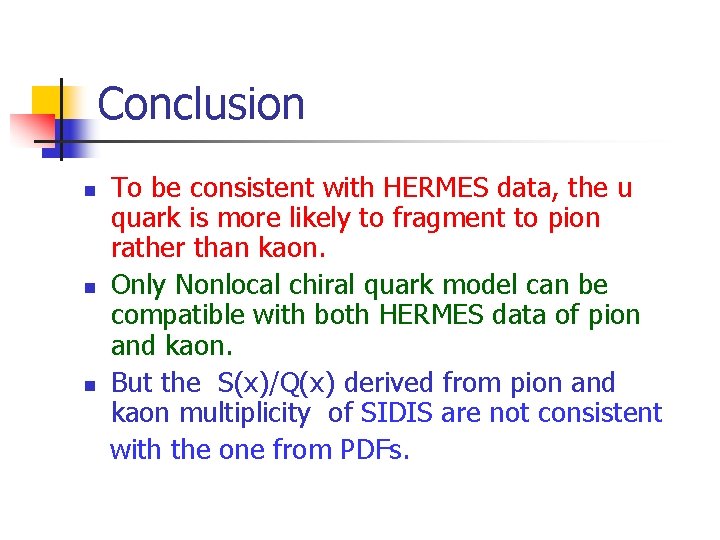
Conclusion n To be consistent with HERMES data, the u quark is more likely to fragment to pion rather than kaon. Only Nonlocal chiral quark model can be compatible with both HERMES data of pion and kaon. But the S(x)/Q(x) derived from pion and kaon multiplicity of SIDIS are not consistent with the one from PDFs.
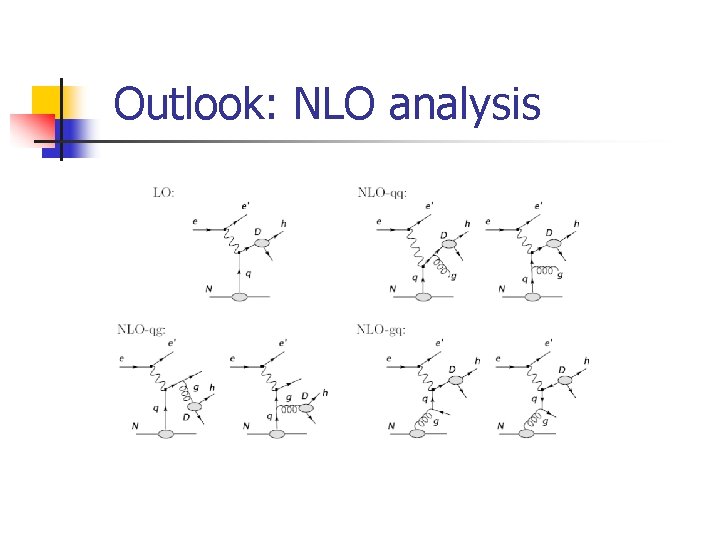
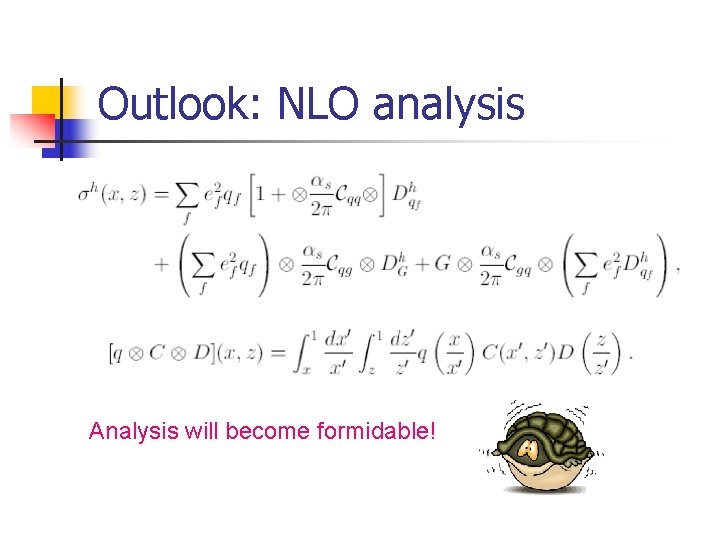
Outlook: NLO analysis
Outlook: NLO analysis Analysis will become formidable!