
Kansas State UNIVERSITY Department of Agricultural Economics Pasture



- Slides: 35
Kansas State UNIVERSITY Department of Agricultural Economics Pasture lease rates Kevin C. Dhuyvetter kcd@ksu. edu – 785 -532 -3527 Department of Ag Economics Kansas State University www. agmanager. info
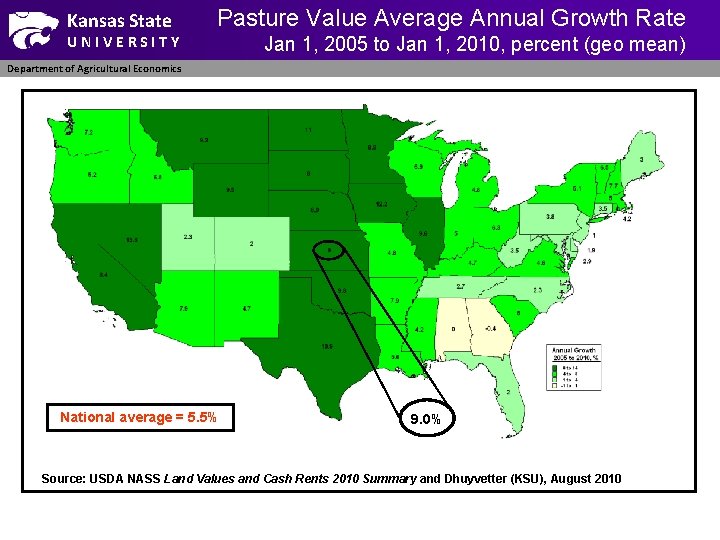
Kansas State UNIVERSITY Department of Agricultural Economics Factors impacting pasture lease rates… • Supply (availability) – Competing uses of grass (hunting, urban, crops) -- acres – Growing conditions (rainfall, competition) – lbs/acre • Demand – Cattle numbers – Feed prices – “Quality” of pasture (size, fence, water, productivity) • S&D factors can vary considerably regionally (and even within a county) • Other factors (L/T relationship, information, etc. )
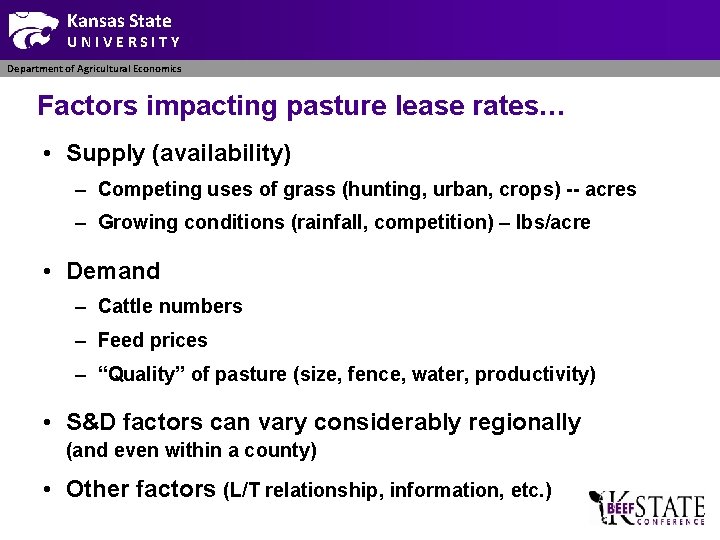
Kansas State UNIVERSITY Pasture Land Average Rent per Acre, 2010 Department of Agricultural Economics 15. 50 Change from 2009 National average = 0. 0% KS = 0. 0%; NE = 0. 0% OK = +4. 8%; MO = -4. 0% Source: USDA NASS Land Values and Cash Rents 2010 Summary and Dhuyvetter (KSU), August 2010 * Corresponding changes in crop land rents were US=+3. 0%; KS=0. 0%; NE=+6. 2%; OK=0. 0%; and MO=+4. 4%.
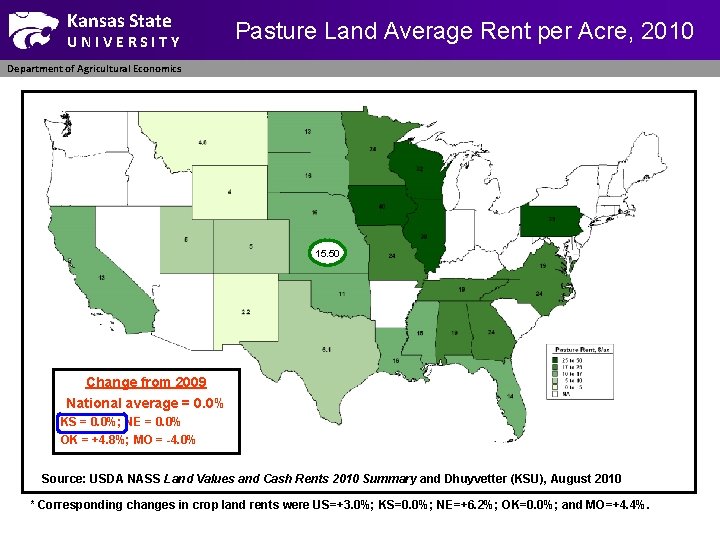
Kansas State UNIVERSITY Pasture Rent Average Annual Growth Rate 2005 to 2010, percent (geo mean) Department of Agricultural Economics National average = 1. 3% 3. 0% Source: USDA NASS Land Values and Cash Rents 2010 Summary and Dhuyvetter (KSU), August 2010
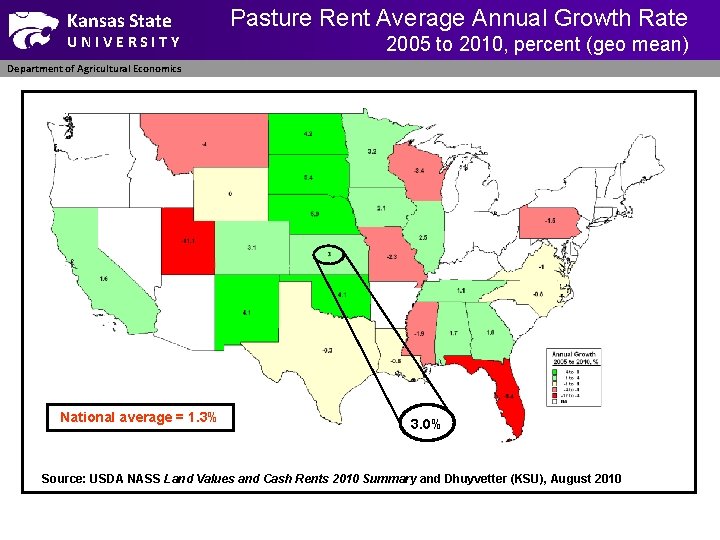
Kansas State Pasture Value Average Annual Growth Rate UNIVERSITY Jan 1, 2005 to Jan 1, 2010, percent (geo mean) Department of Agricultural Economics National average = 5. 5% 9. 0% Source: USDA NASS Land Values and Cash Rents 2010 Summary and Dhuyvetter (KSU), August 2010
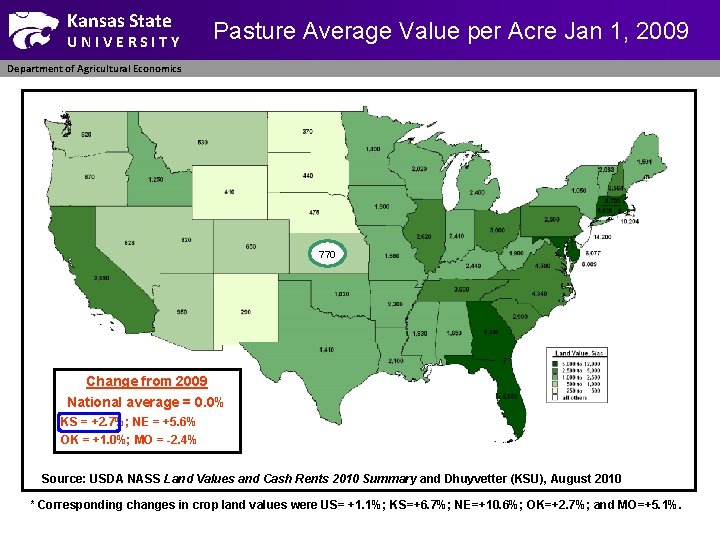
Kansas State UNIVERSITY Pasture Average Value per Acre Jan 1, 2009 Department of Agricultural Economics 770 Change from 2009 National average = 0. 0% KS = +2. 7%; NE = +5. 6% OK = +1. 0%; MO = -2. 4% Source: USDA NASS Land Values and Cash Rents 2010 Summary and Dhuyvetter (KSU), August 2010 * Corresponding changes in crop land values were US= +1. 1%; KS=+6. 7%; NE=+10. 6%; OK=+2. 7%; and MO=+5. 1%.
Kansas State UNIVERSITY Department of Agricultural Economics Pasture values versus rents… • In recent years, pasture land values have been increasing at faster rates than pasture rents • Buying pasture ties up a lot of equity that is not generating a cash return unless some other income stream exists (e. g. , lease hunting) • Is this starting to change --- i. e. , are rents going to start increasing at faster rates?
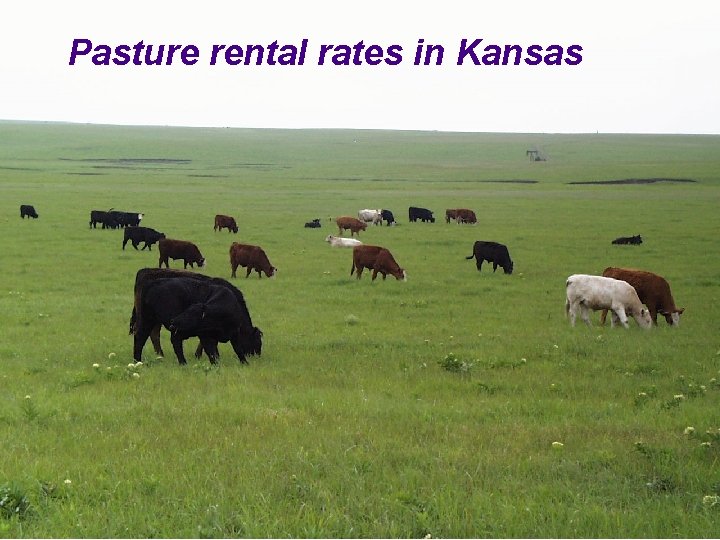
Kansas State Pasture rental rates in Kansas UNIVERSITY Department of Agricultural Economics
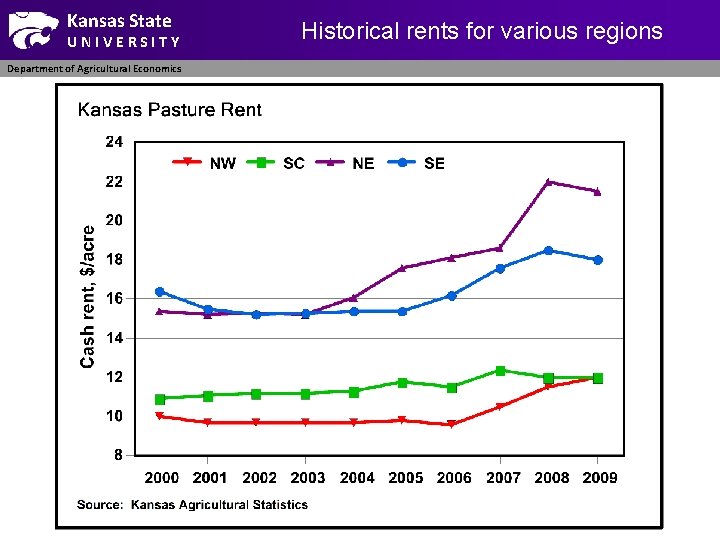
Kansas State UNIVERSITY Market established rates Department of Agricultural Economics • Kansas Agricultural Statistics (KAS) collects data annually from landowners and producers regarding land values and cash rents – Agricultural Land Values – reported at the county level in 2009 (CRD level in years prior) – Bluestem Pasture – 14 -county area, discontinued in 2010 • Local and regional surveys of leasing practices • With surveys there is often a trade-off between statistical validity and level of aggregation (tremendous variability always exists, i. e. , think S&D factors)
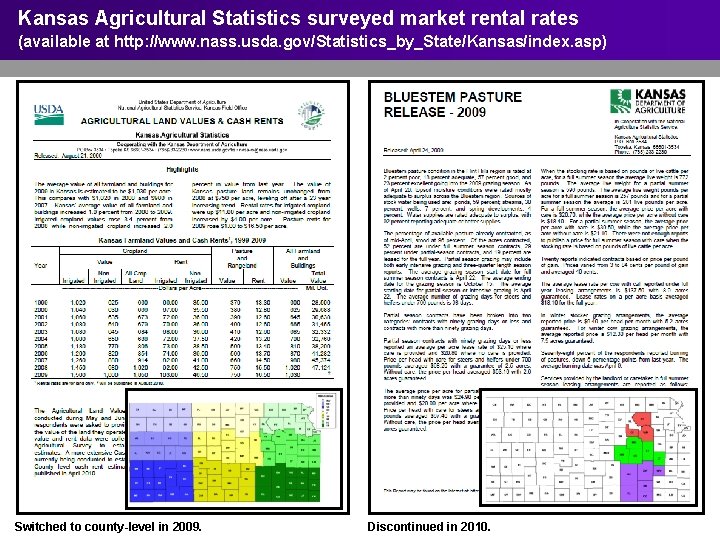
Kansas Agricultural Statistics surveyed market rental rates (available at http: //www. nass. usda. gov/Statistics_by_State/Kansas/index. asp) Switched to county-level in 2009. Discontinued in 2010.
Kansas State UNIVERSITY Department of Agricultural Economics Historical rents for various regions
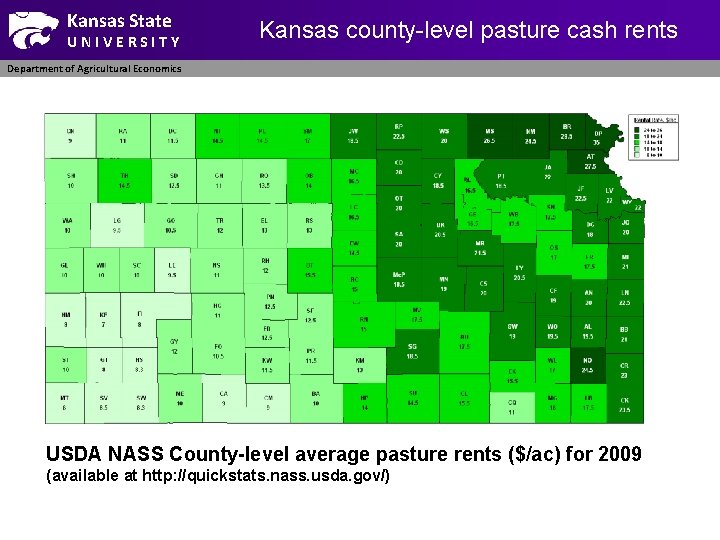
Kansas State UNIVERSITY Kansas county-level pasture cash rents Department of Agricultural Economics USDA NASS County-level average pasture rents ($/ac) for 2009 (available at http: //quickstats. nass. usda. gov/)
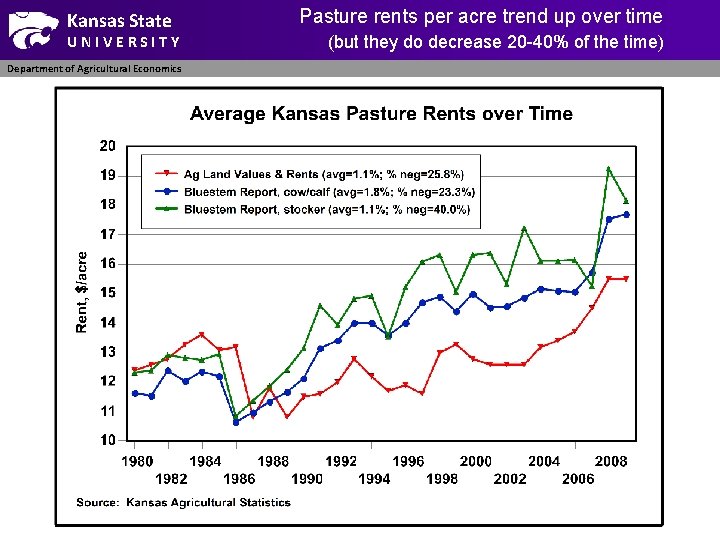
Kansas State UNIVERSITY Department of Agricultural Economics Pasture rents per acre trend up over time (but they do decrease 20 -40% of the time)
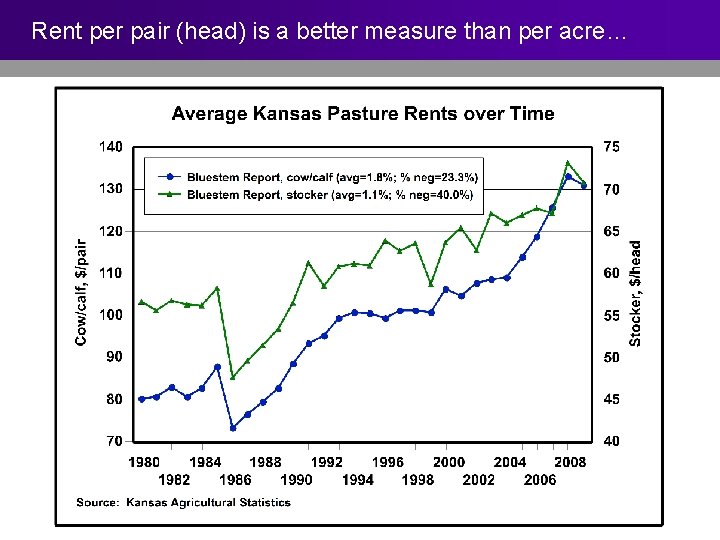
Kansas State Rent per pair (head) is a better measure than per acre… UNIVERSITY Department of Agricultural Economics
Kansas State UNIVERSITY Department of Agricultural Economics USDA NASS survey values… • Values represent average paid (received) from survey respondents • Typically there is no information reported regarding variability within a county or region • Question that arises is, How well do these average values reflect the “going market” rates?
Kansas State UNIVERSITY Department of Agricultural Economics Determining futures rental rates in the absence of publicly available reports
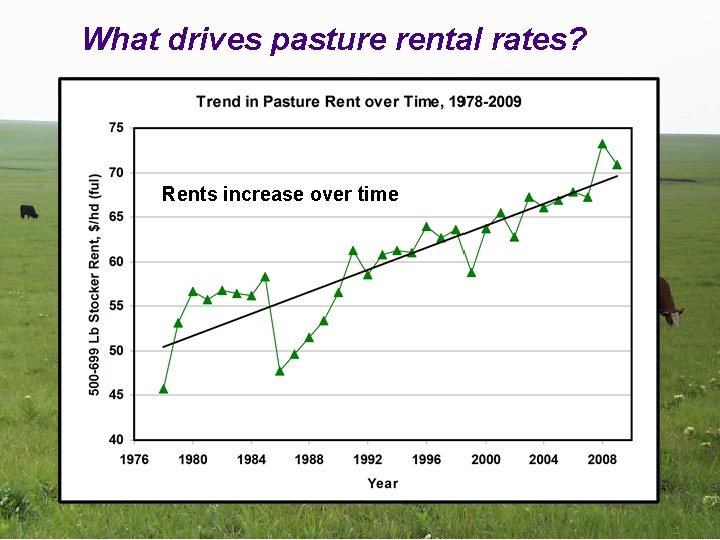
Kansas State What drives pasture rental rates? UNIVERSITY Department of Agricultural Economics Rents increase over time
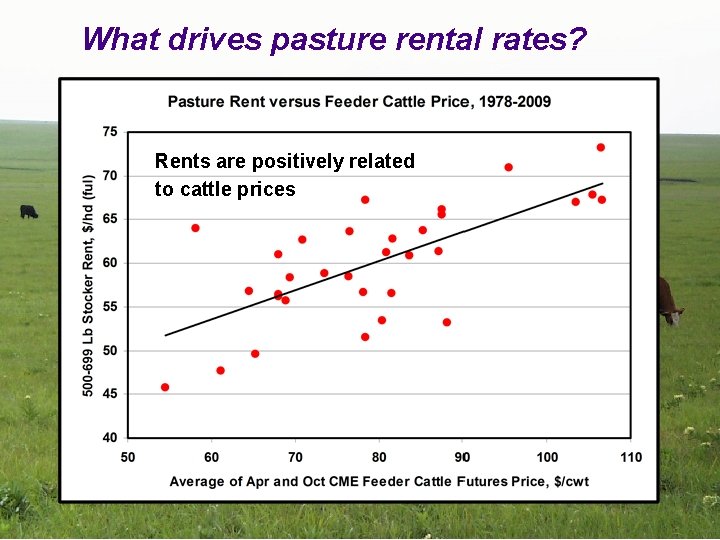
Kansas State What drives pasture rental rates? UNIVERSITY Department of Agricultural Economics Rents are positively related to cattle prices
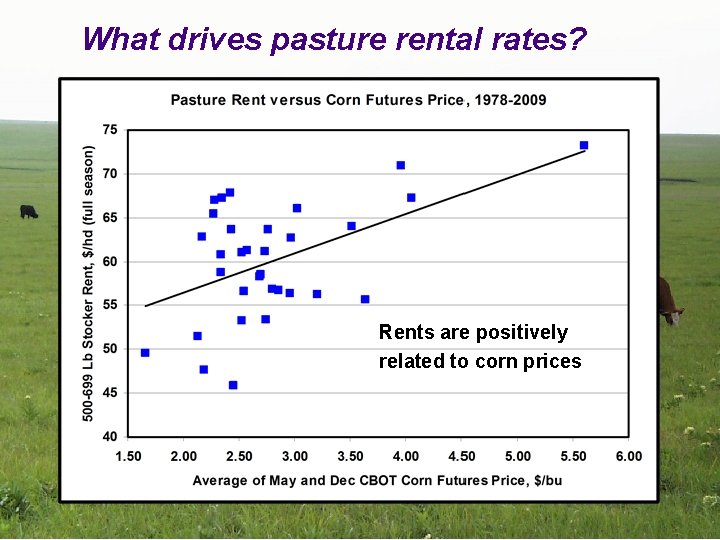
Kansas State What drives pasture rental rates? UNIVERSITY Department of Agricultural Economics Rents are positively related to corn prices
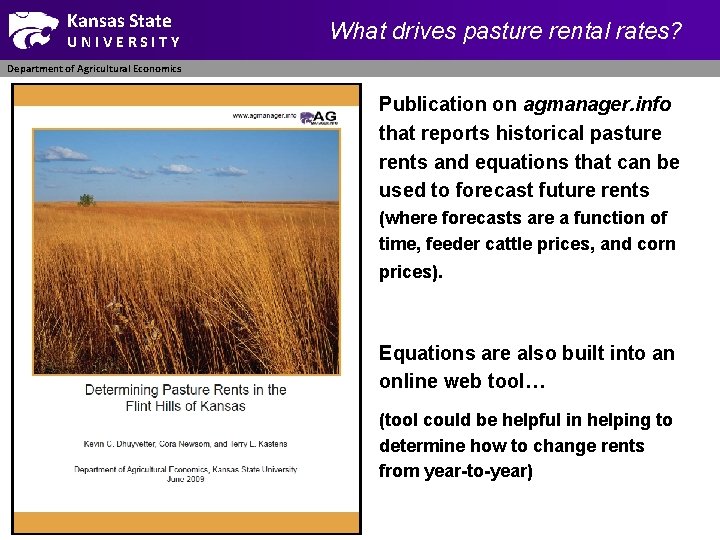
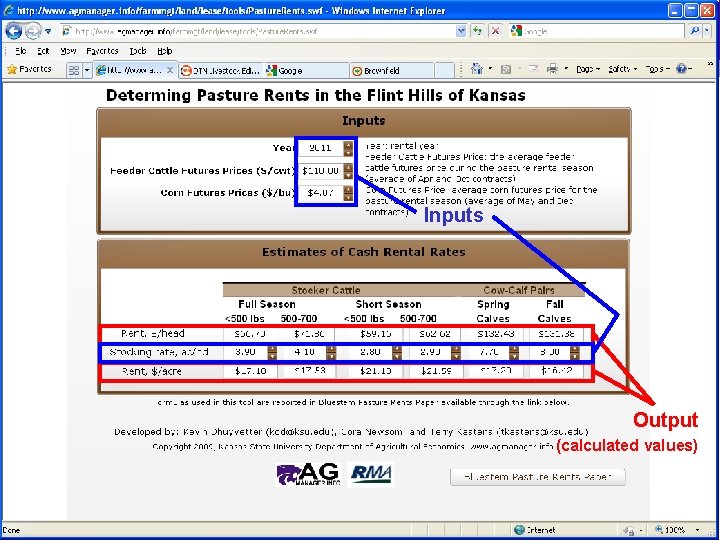
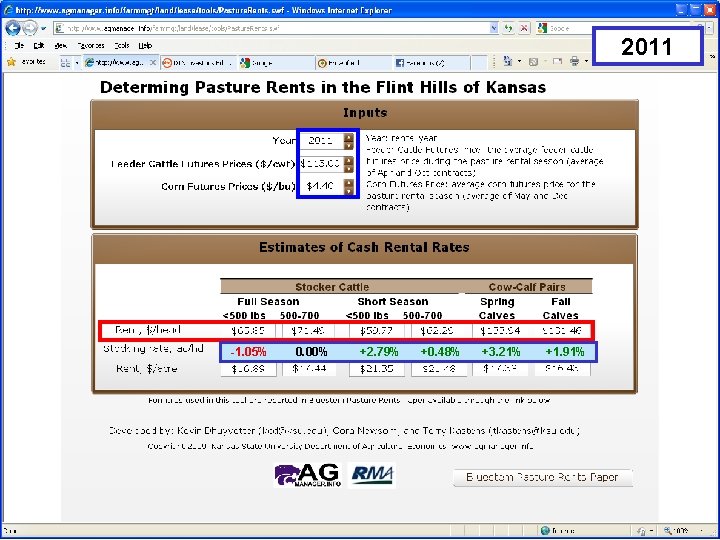
Kansas State UNIVERSITY What drives pasture rental rates? Department of Agricultural Economics Publication on agmanager. info that reports historical pasture rents and equations that can be used to forecast future rents (where forecasts are a function of time, feeder cattle prices, and corn prices). Equations are also built into an online web tool… (tool could be helpful in helping to determine how to change rents from year-to-year)
Kansas State UNIVERSITY Department of Agricultural Economics Inputs Output (calculated values)
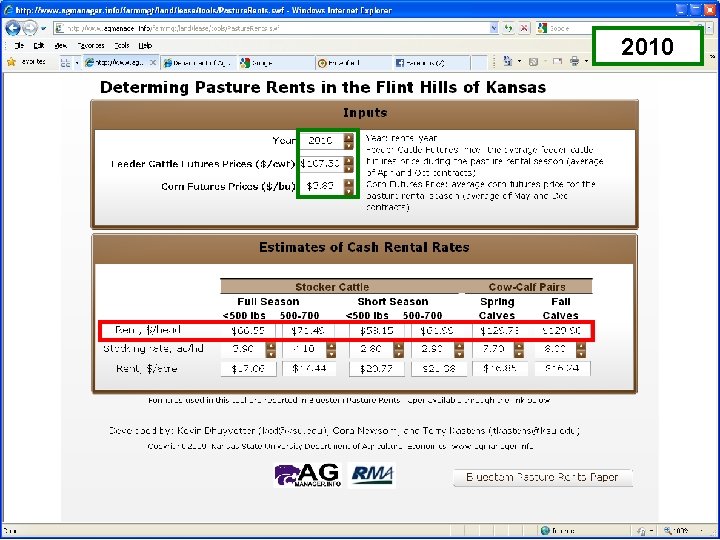
Kansas State UNIVERSITY Department of Agricultural Economics 2010
Kansas State UNIVERSITY 2011 Department of Agricultural Economics -1. 05% 0. 00% +2. 79% +0. 48% +3. 21% +1. 91%
Kansas State UNIVERSITY Department of Agricultural Economics KFMA Beef Cow-Calf Enterprise Data
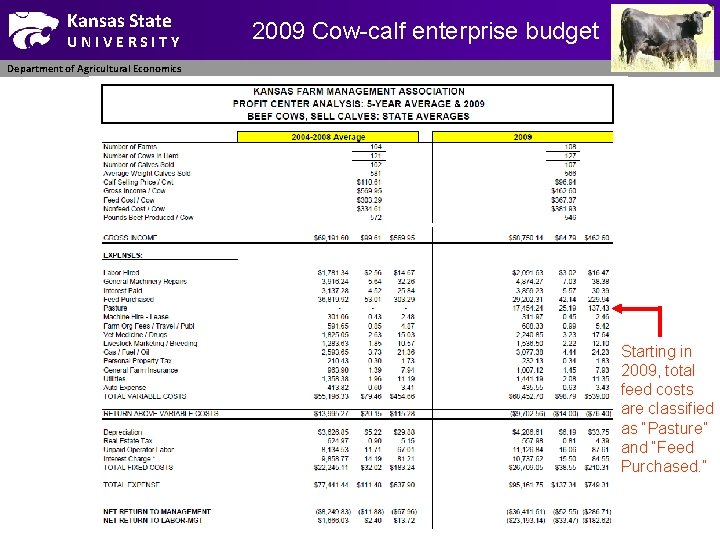
Kansas State UNIVERSITY 2009 Cow-calf enterprise budget Department of Agricultural Economics Starting in 2009, total feed costs are classified as “Pasture” and “Feed Purchased. ”
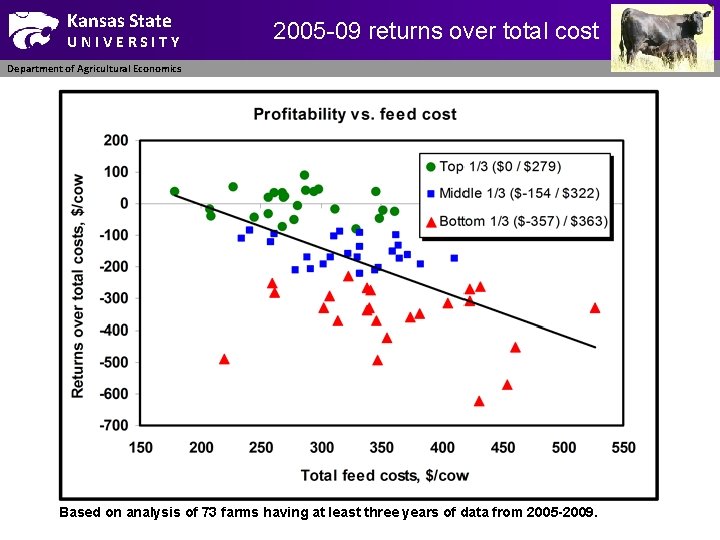
Kansas State UNIVERSITY 2005 -09 returns over total cost Department of Agricultural Economics Based on analysis of 73 farms having at least three years of data from 2005 -2009.
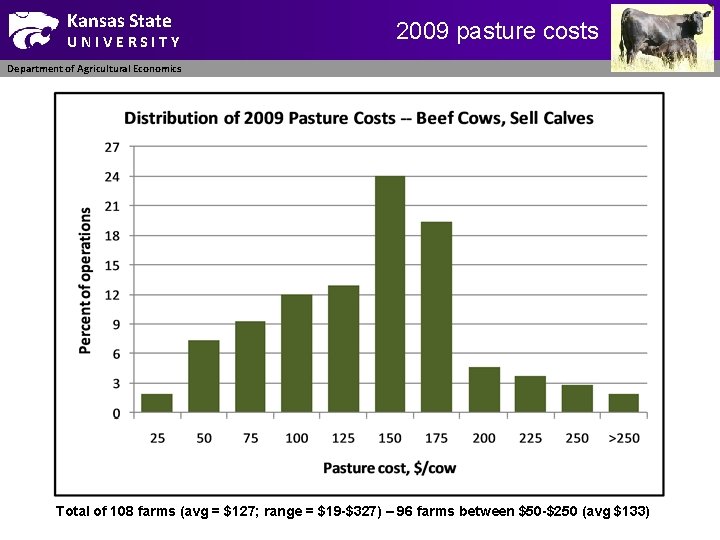
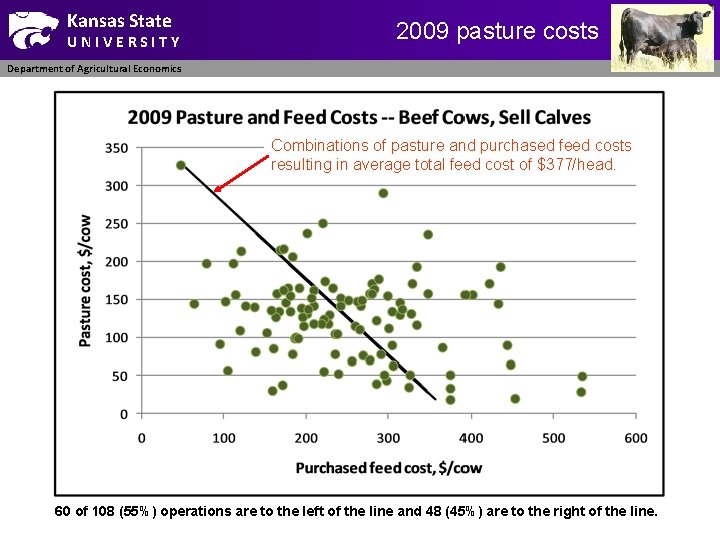
Kansas State UNIVERSITY 2009 pasture costs Department of Agricultural Economics Total of 108 farms (avg = $127; range = $19 -$327) – 96 farms between $50 -$250 (avg $133)
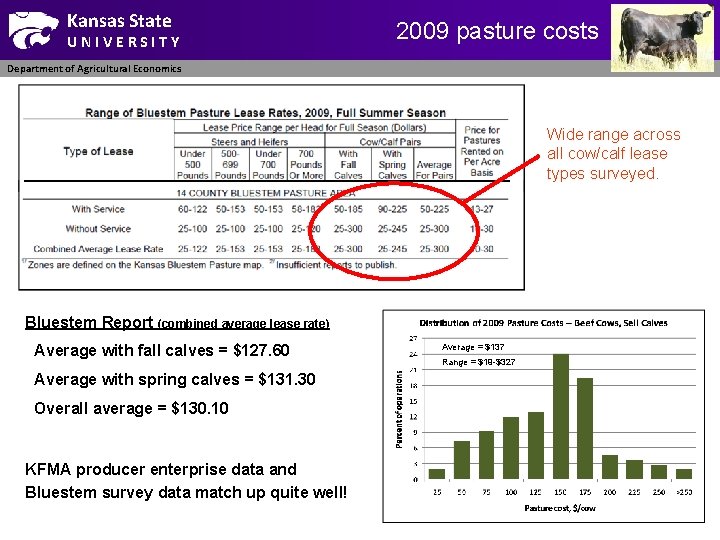
Kansas State UNIVERSITY 2009 pasture costs Department of Agricultural Economics Wide range across all cow/calf lease types surveyed. Bluestem Report (combined average lease rate) Average with fall calves = $127. 60 Average with spring calves = $131. 30 Overall average = $130. 10 KFMA producer enterprise data and Bluestem survey data match up quite well! Average = $137 Range = $19 -$327
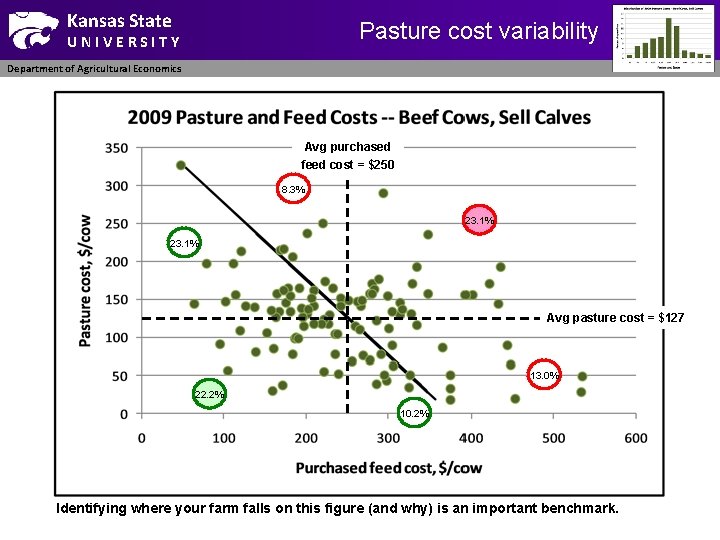
Kansas State UNIVERSITY Pasture cost variability Department of Agricultural Economics What is driving variability across producers? • Length of grazing season – Trade-off between pasture cost and purchased feed cost – Ability to graze stalks in late fall/winter • Pasture management / intensity – Rotational grazing – Pasture size / efficiency of use • Lease rate paid • Other?
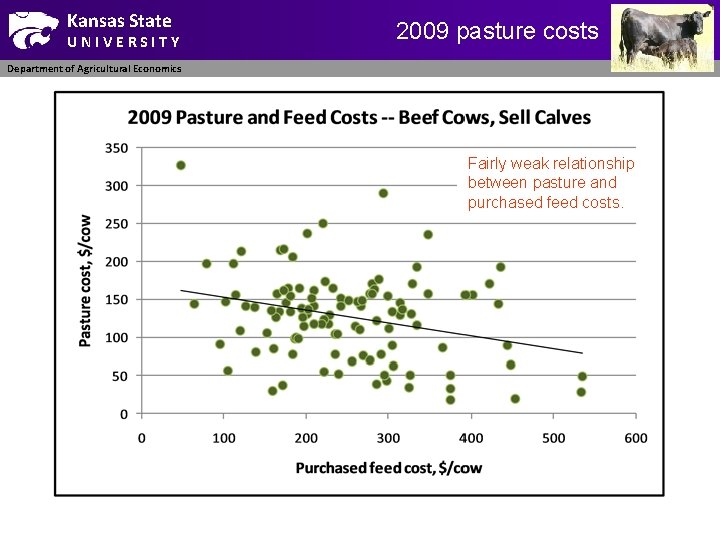
Kansas State UNIVERSITY 2009 pasture costs Department of Agricultural Economics Fairly weak relationship between pasture and purchased feed costs.
Kansas State UNIVERSITY 2009 pasture costs Department of Agricultural Economics Combinations of pasture and purchased feed costs resulting in average total feed cost of $377/head. 60 of 108 (55%) operations are to the left of the line and 48 (45%) are to the right of the line.
Kansas State Pasture cost variability UNIVERSITY Department of Agricultural Economics Avg purchased feed cost = $250 8. 3% 23. 1% Avg pasture cost = $127 13. 0% 22. 2% 10. 2% Identifying where your farm falls on this figure (and why) is an important benchmark.
Kansas State UNIVERSITY Summary Department of Agricultural Economics • Publicly available data for analyzing and setting pasture rental rates is changing… – Bluestem Pasture Report -- discontinued – CRD-level rates being replaced by NASS county-level rates • Problems with using reported pasture rates – survey averages do not always reflect the “market” – $/acre is not particularly useful w/o knowing productivity – $/hd (pair) will become less meaningful as practices change • Tremendous variability in rates exists and it is important to understand drivers of this • Make sure you know if the rates you are paying on rented land are competitive and thus sustainable
Kansas State UNIVERSITY Department of Agricultural Economics Questions ? ? ? www. agmanager. info If interested in receiving weekly Ag. Manager. info Update or any of our other Ag Econ newsletters via email, please let me know.
Kansas State UNIVERSITY Department of Agricultural Economics P S PE D QE Q