
Kansas Corn Growing Degree Days Goals Growing Degree
- Slides: 19
Kansas Corn: Growing Degree Days
Goals – Growing Degree Days • Learn about factors that influence the growth and development of corn • Learn how to calculate Growing Degree Days (GDDs) • Apply GDD calculations to three different fields in the Midwest
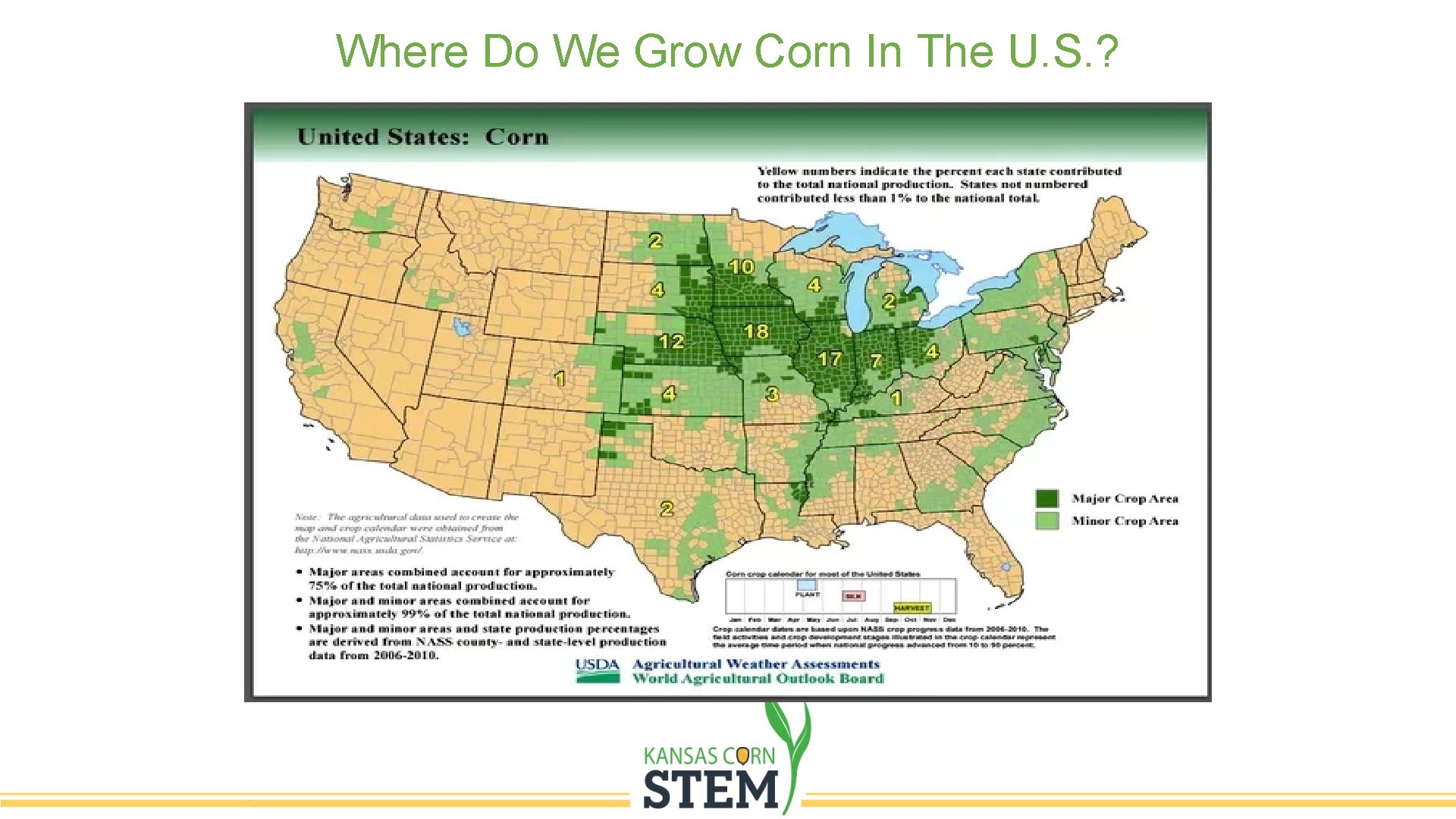
Where Do We Grow Corn In The U. S. ?
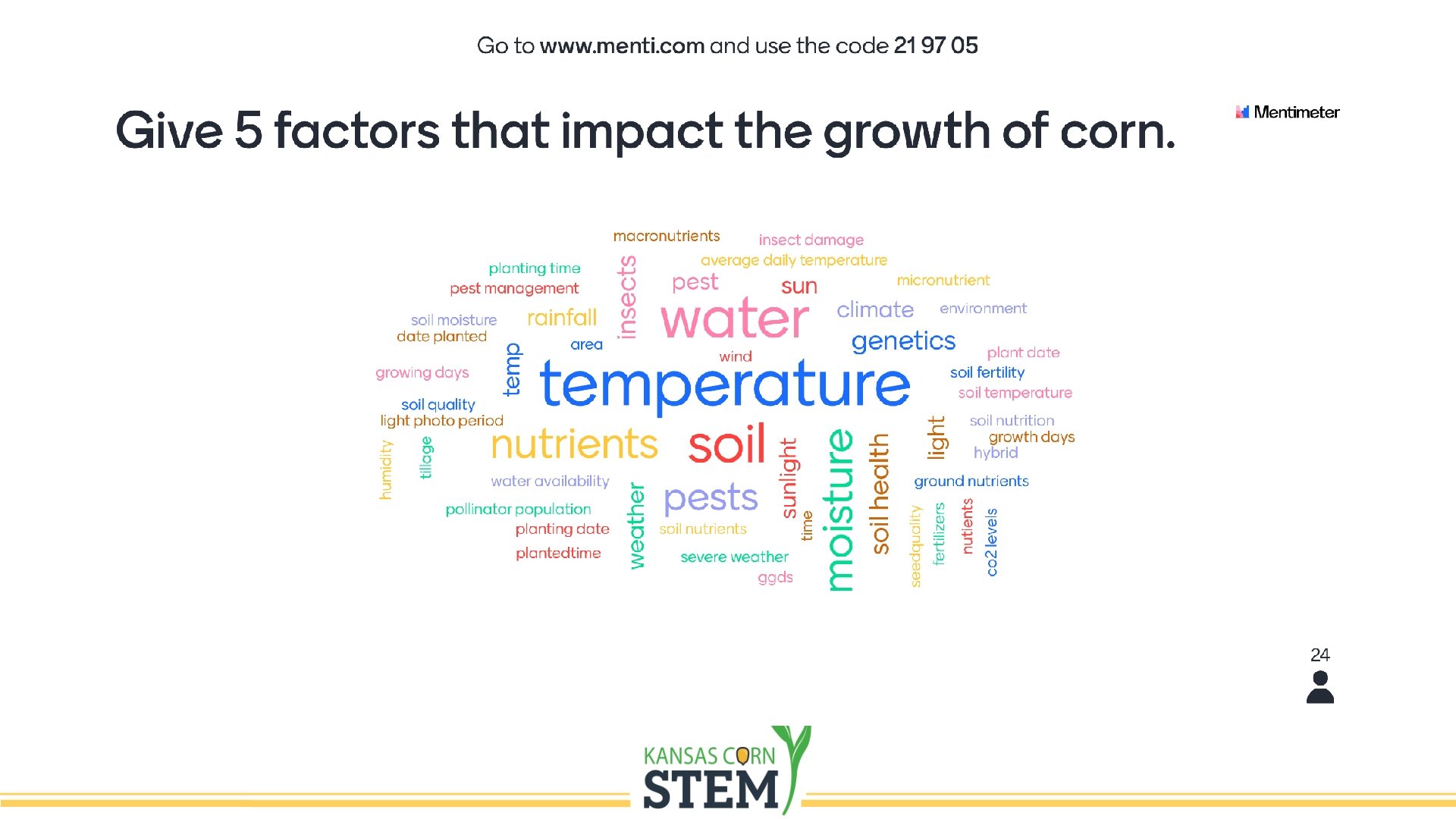
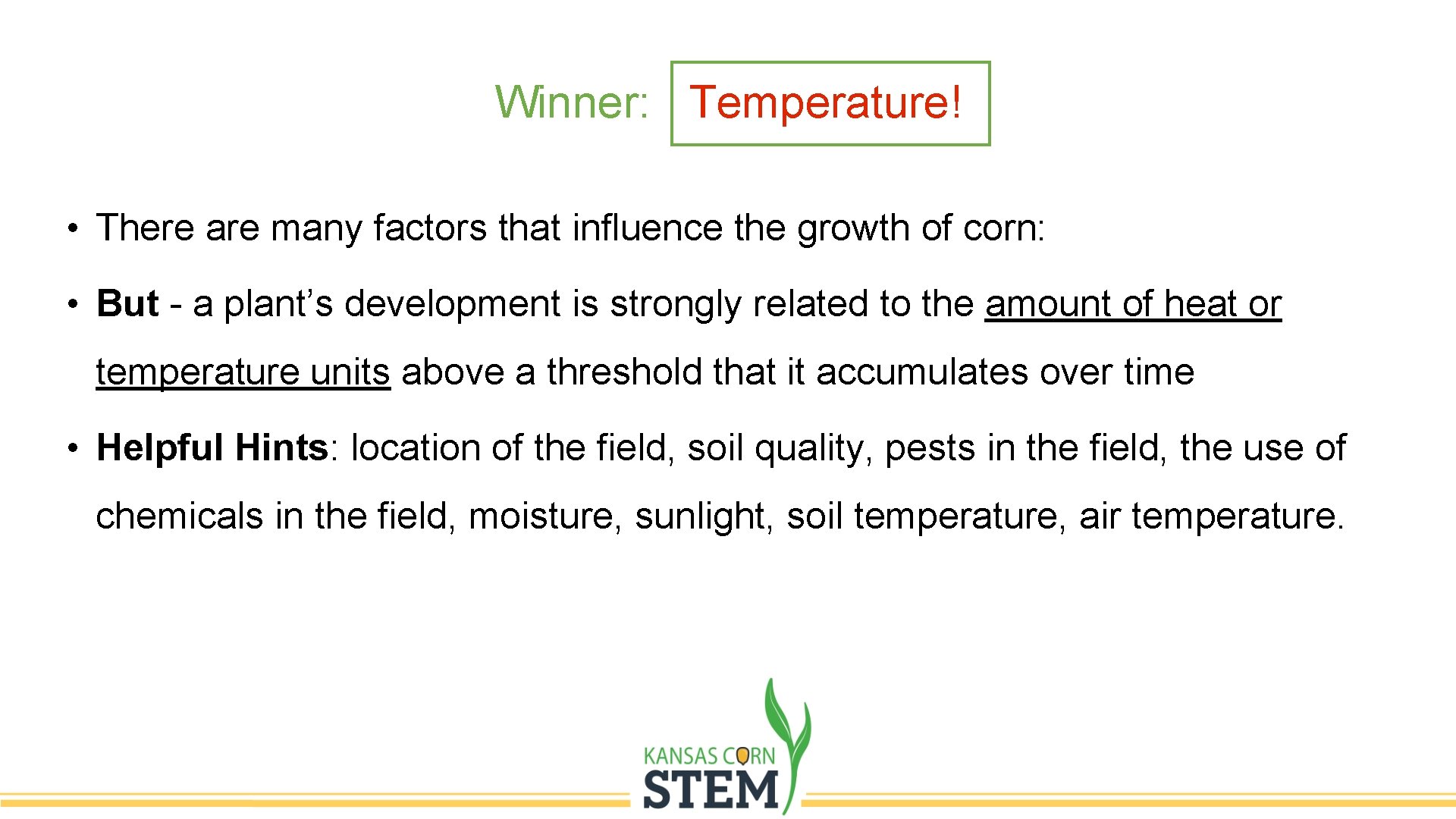
Winner: Temperature! • There are many factors that influence the growth of corn: • But - a plant’s development is strongly related to the amount of heat or temperature units above a threshold that it accumulates over time • Helpful Hints: location of the field, soil quality, pests in the field, the use of chemicals in the field, moisture, sunlight, soil temperature, air temperature.
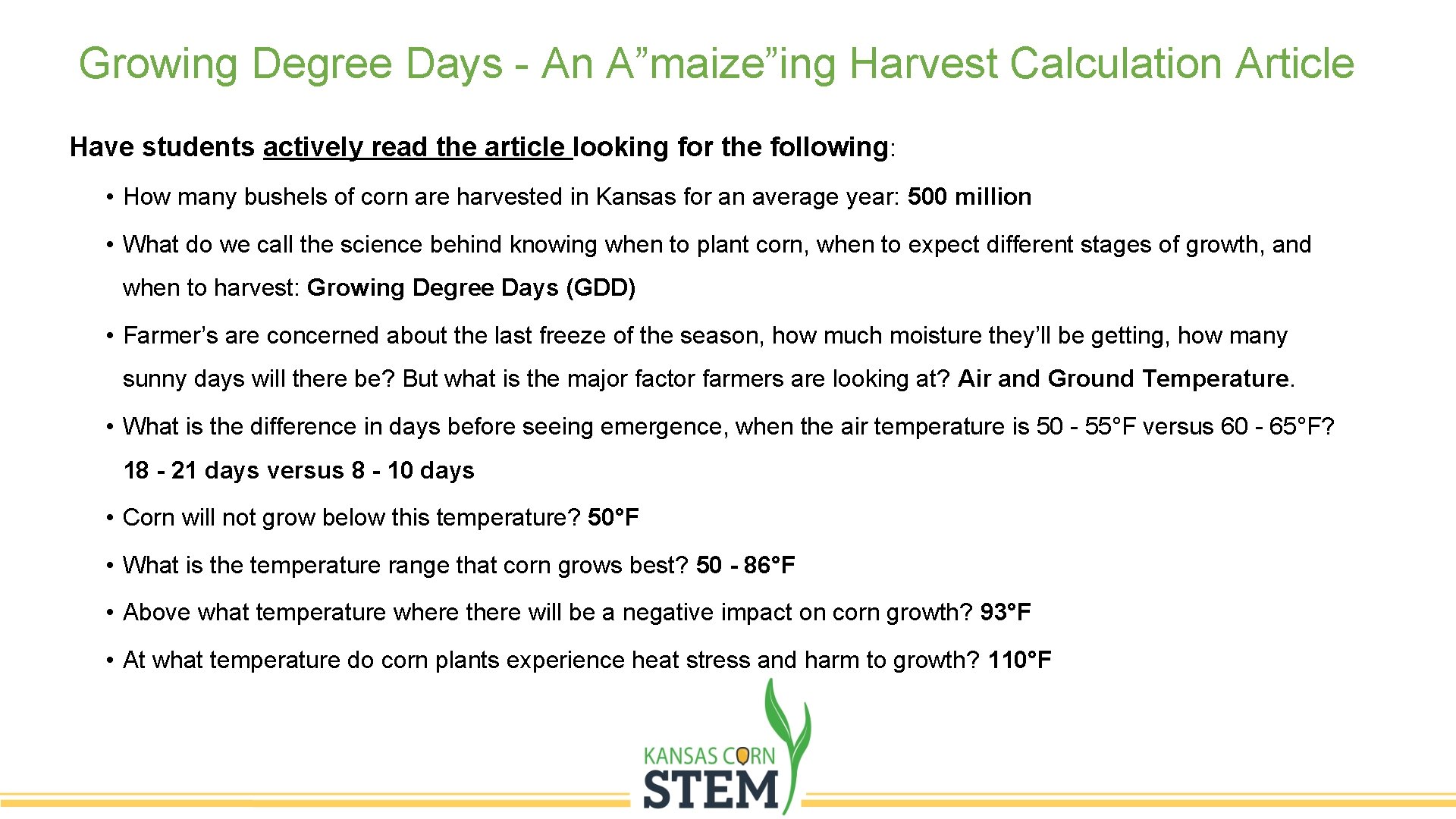
Growing Degree Days - An A”maize”ing Harvest Calculation Article Have students actively read the article looking for the following: • How many bushels of corn are harvested in Kansas for an average year: 500 million • What do we call the science behind knowing when to plant corn, when to expect different stages of growth, and when to harvest: Growing Degree Days (GDD) • Farmer’s are concerned about the last freeze of the season, how much moisture they’ll be getting, how many sunny days will there be? But what is the major factor farmers are looking at? Air and Ground Temperature. • What is the difference in days before seeing emergence, when the air temperature is 50 - 55°F versus 60 - 65°F? 18 - 21 days versus 8 - 10 days • Corn will not grow below this temperature? 50°F • What is the temperature range that corn grows best? 50 - 86°F • Above what temperature where there will be a negative impact on corn growth? 93°F • At what temperature do corn plants experience heat stress and harm to growth? 110°F
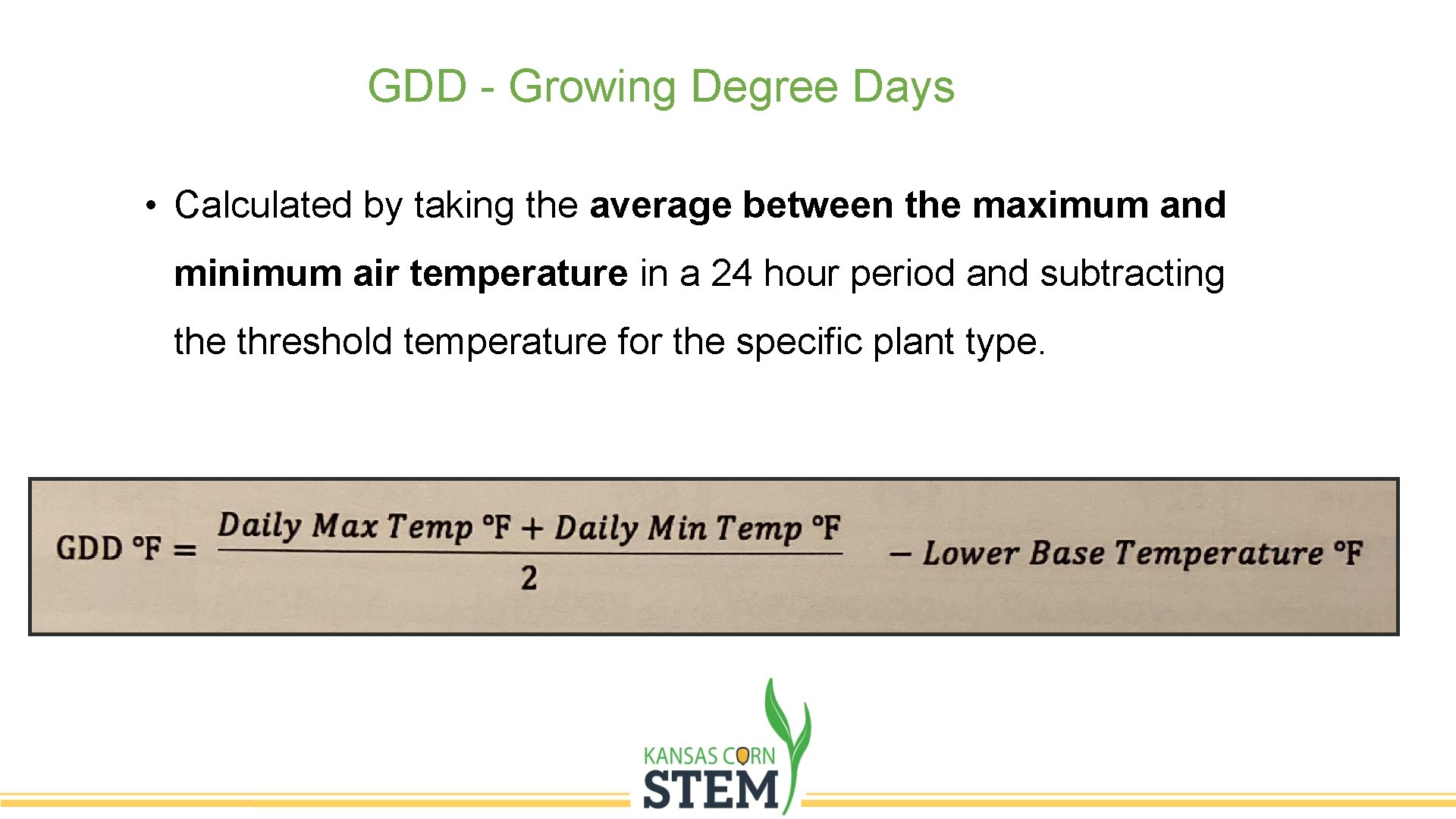
GDD - Growing Degree Days • Calculated by taking the average between the maximum and minimum air temperature in a 24 hour period and subtracting the threshold temperature for the specific plant type.
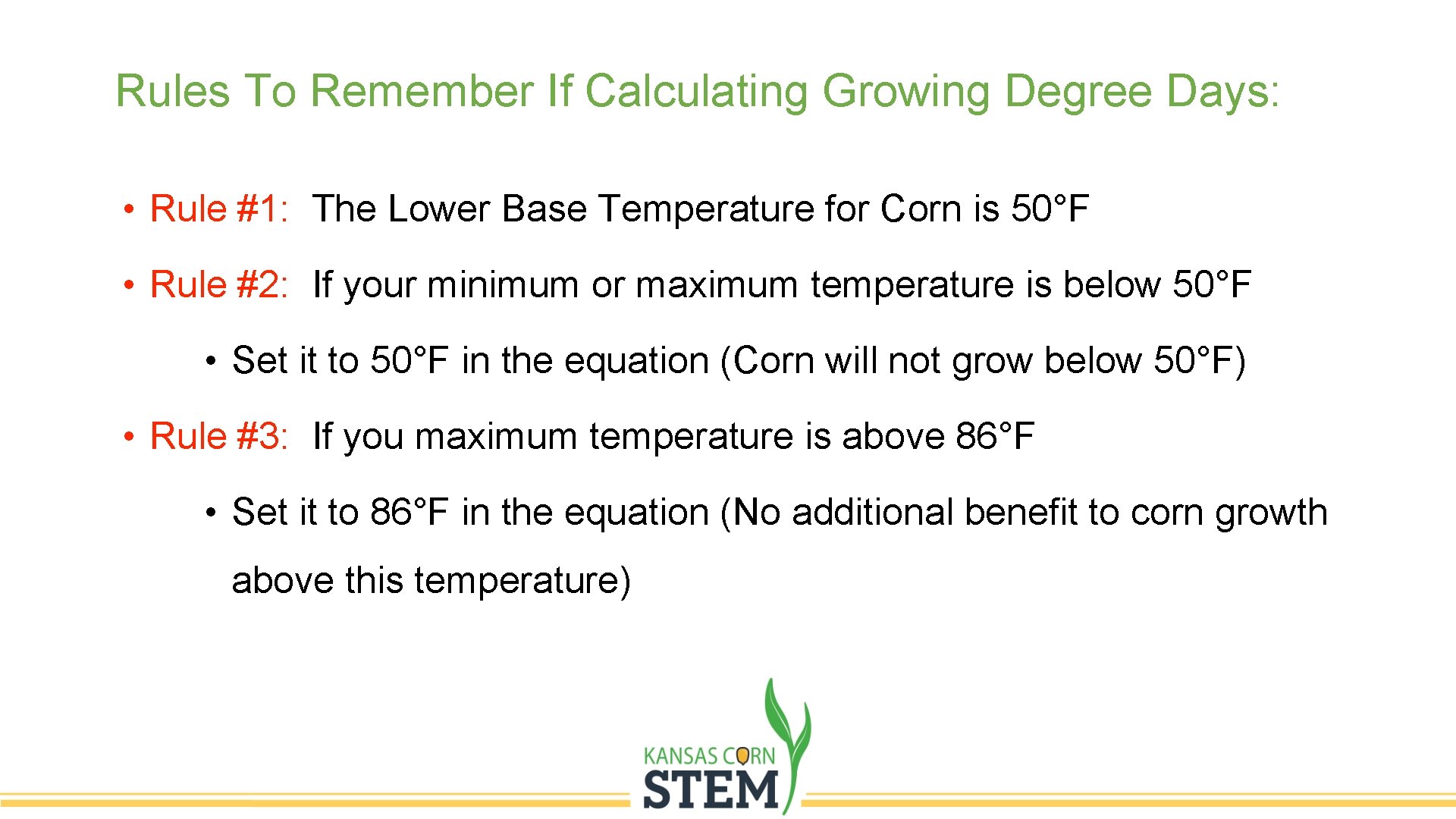
Rules To Remember If Calculating Growing Degree Days: • Rule #1: The Lower Base Temperature for Corn is 50°F • Rule #2: If your minimum or maximum temperature is below 50°F • Set it to 50°F in the equation (Corn will not grow below 50°F) • Rule #3: If you maximum temperature is above 86°F • Set it to 86°F in the equation (No additional benefit to corn growth above this temperature)
Ag. Ph. D - Growing Degree Units Click for Video on Growing Degree Days (GDDs)
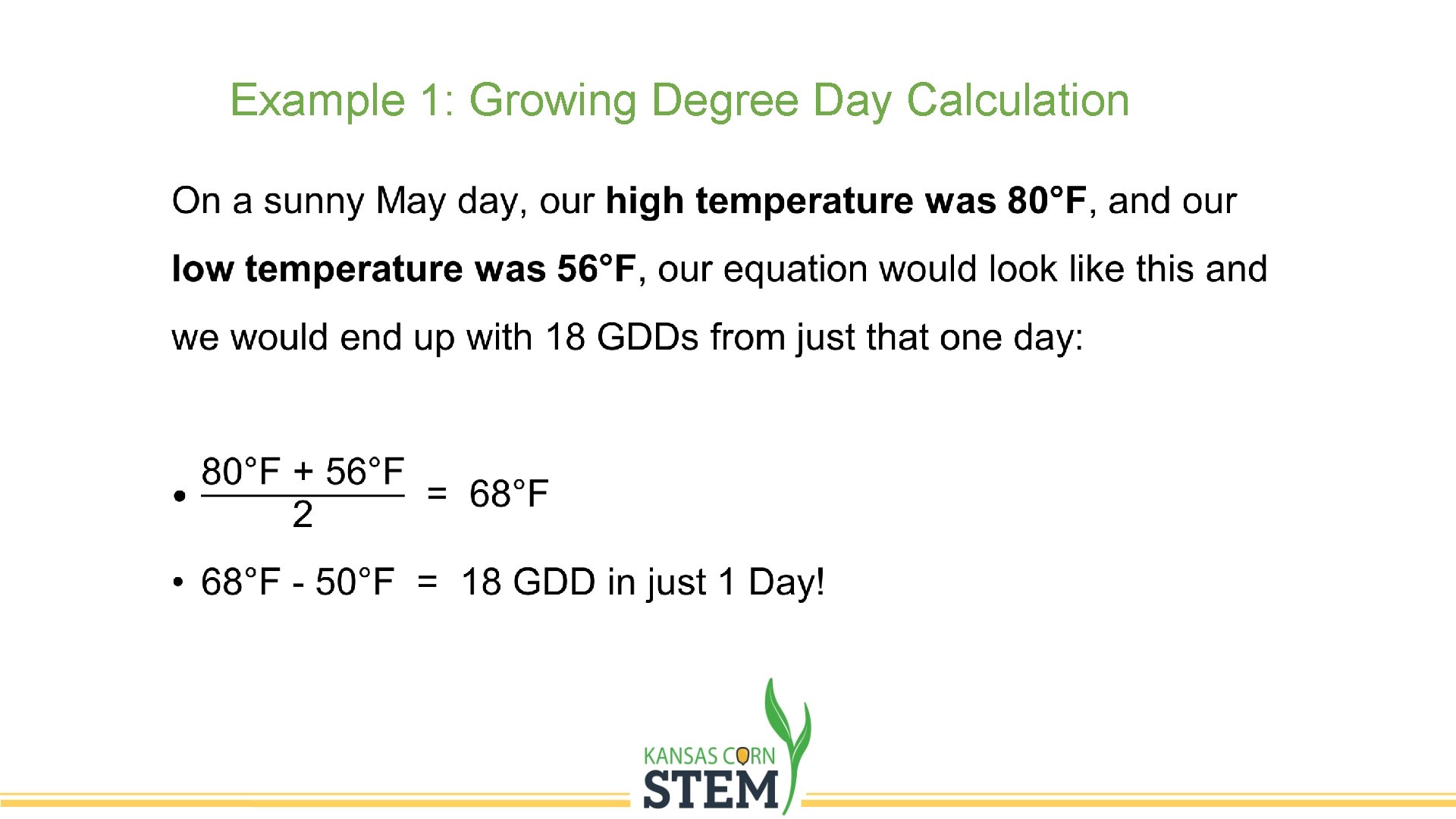
Example 1: Growing Degree Day Calculation •
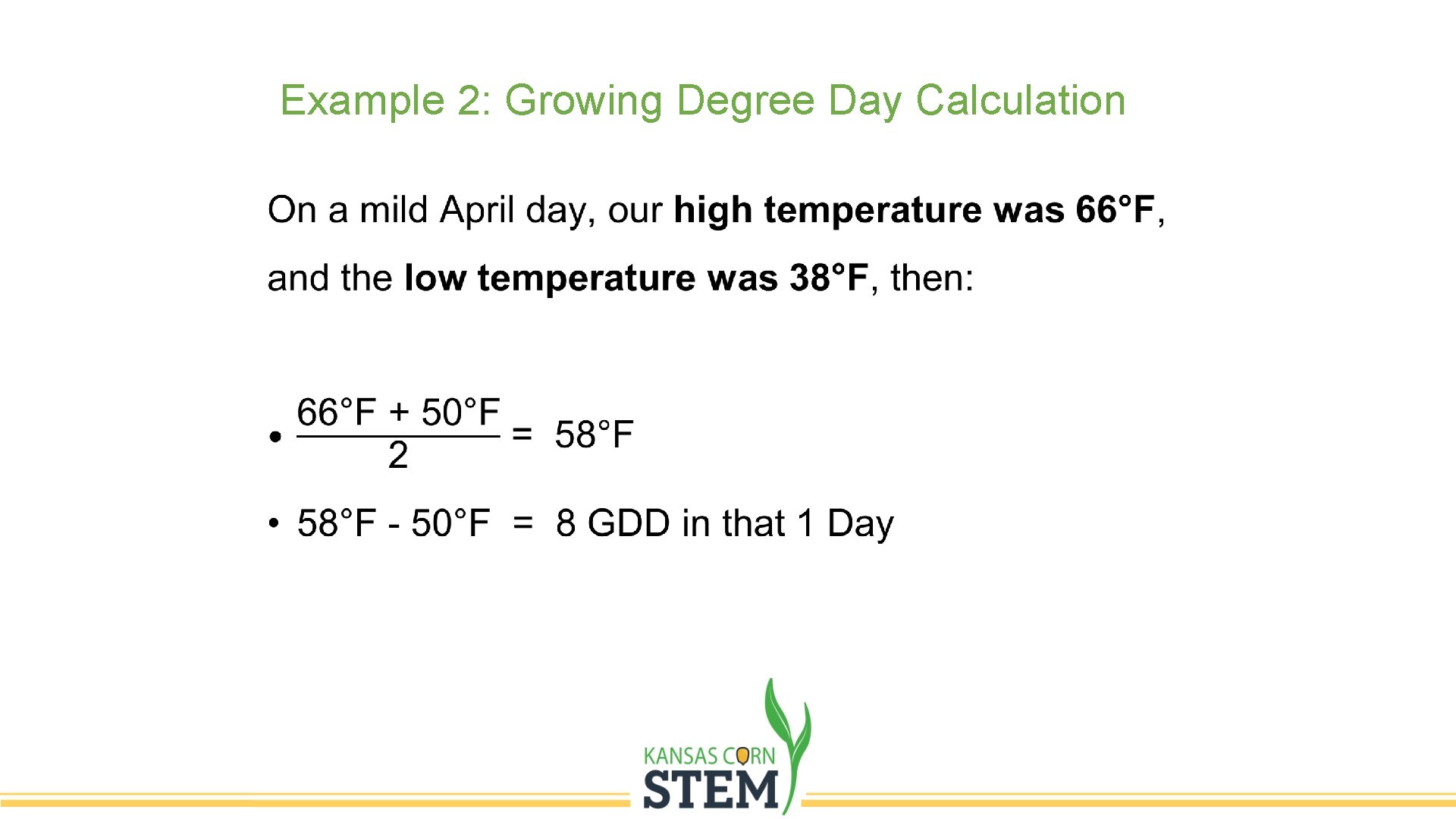
Example 2: Growing Degree Day Calculation •
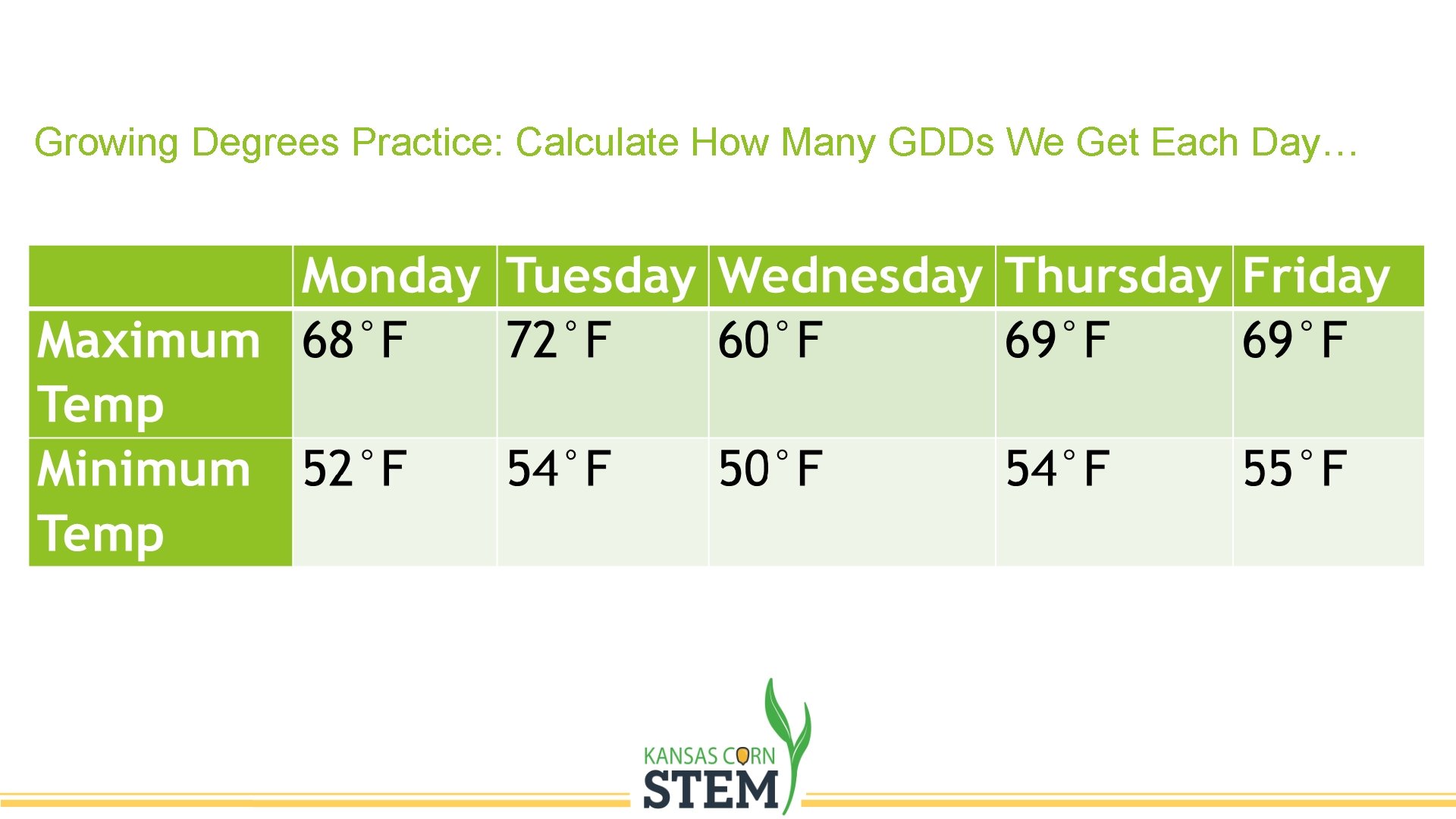
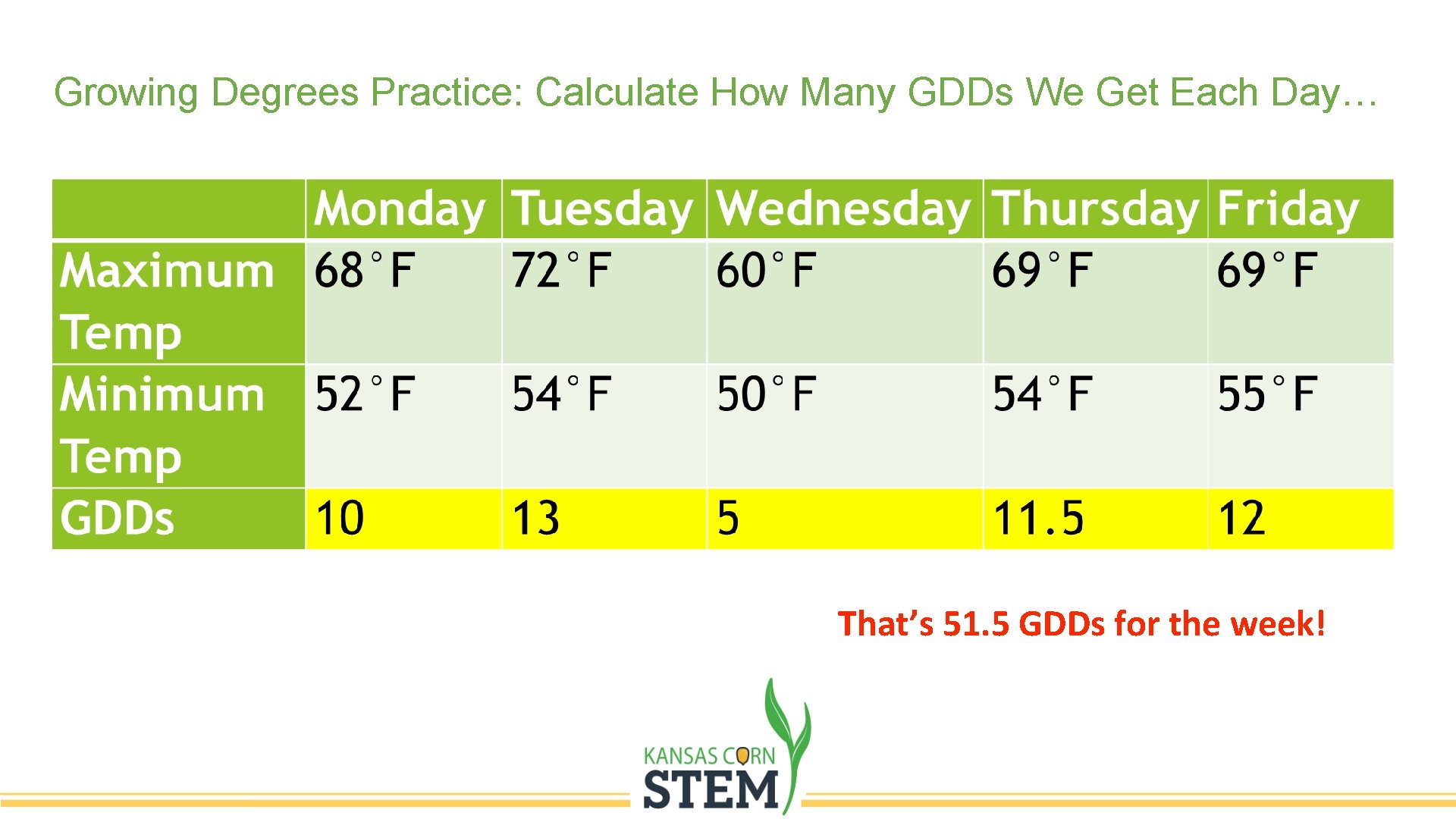
Growing Degrees Practice: Calculate How Many GDDs We Get Each Day…
Growing Degrees Practice: Calculate How Many GDDs We Get Each Day… That’s 51. 5 GDDs for the week!
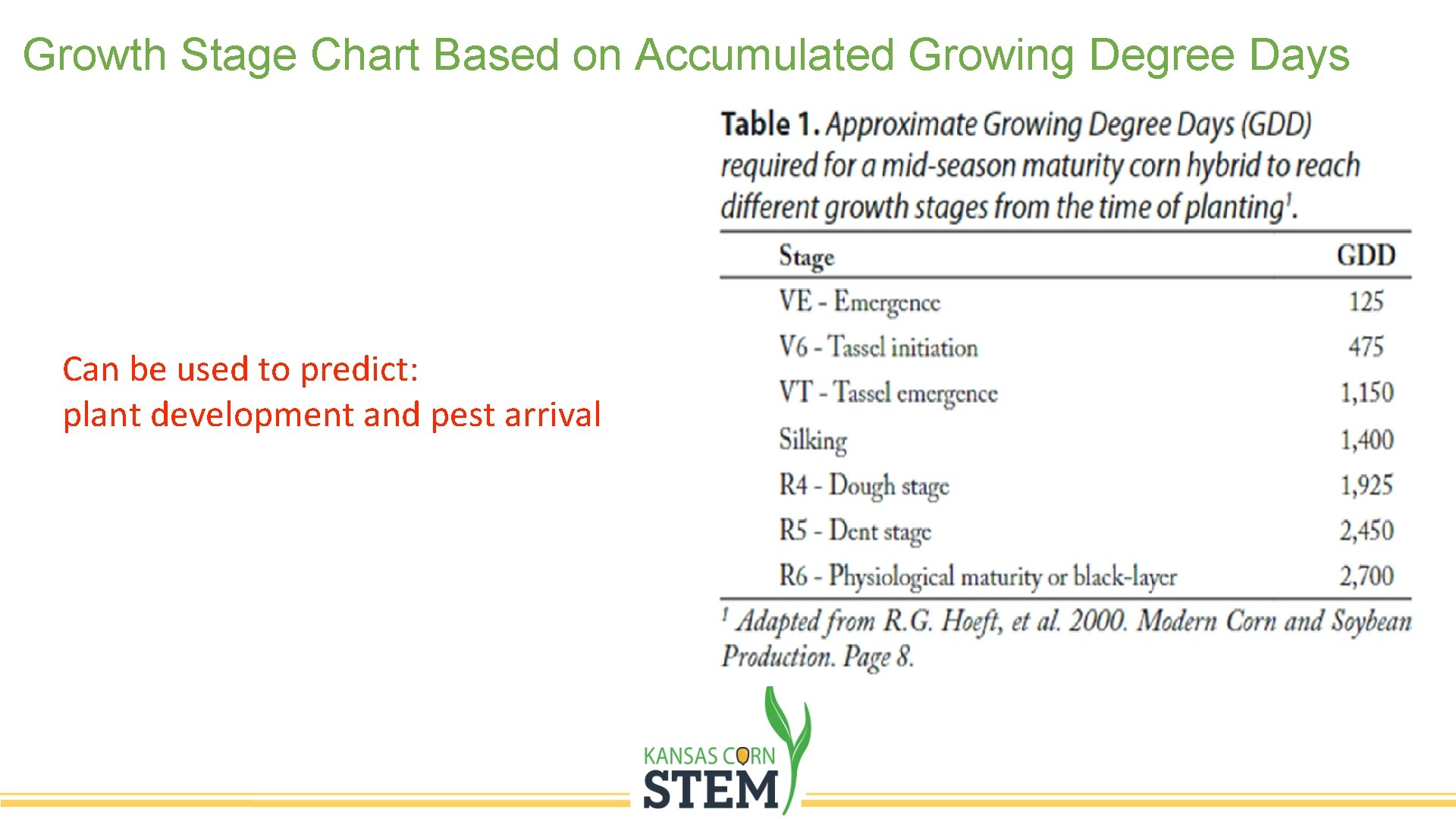
Growth Stage Chart Based on Accumulated Growing Degree Days Can be used to predict: plant development and pest arrival
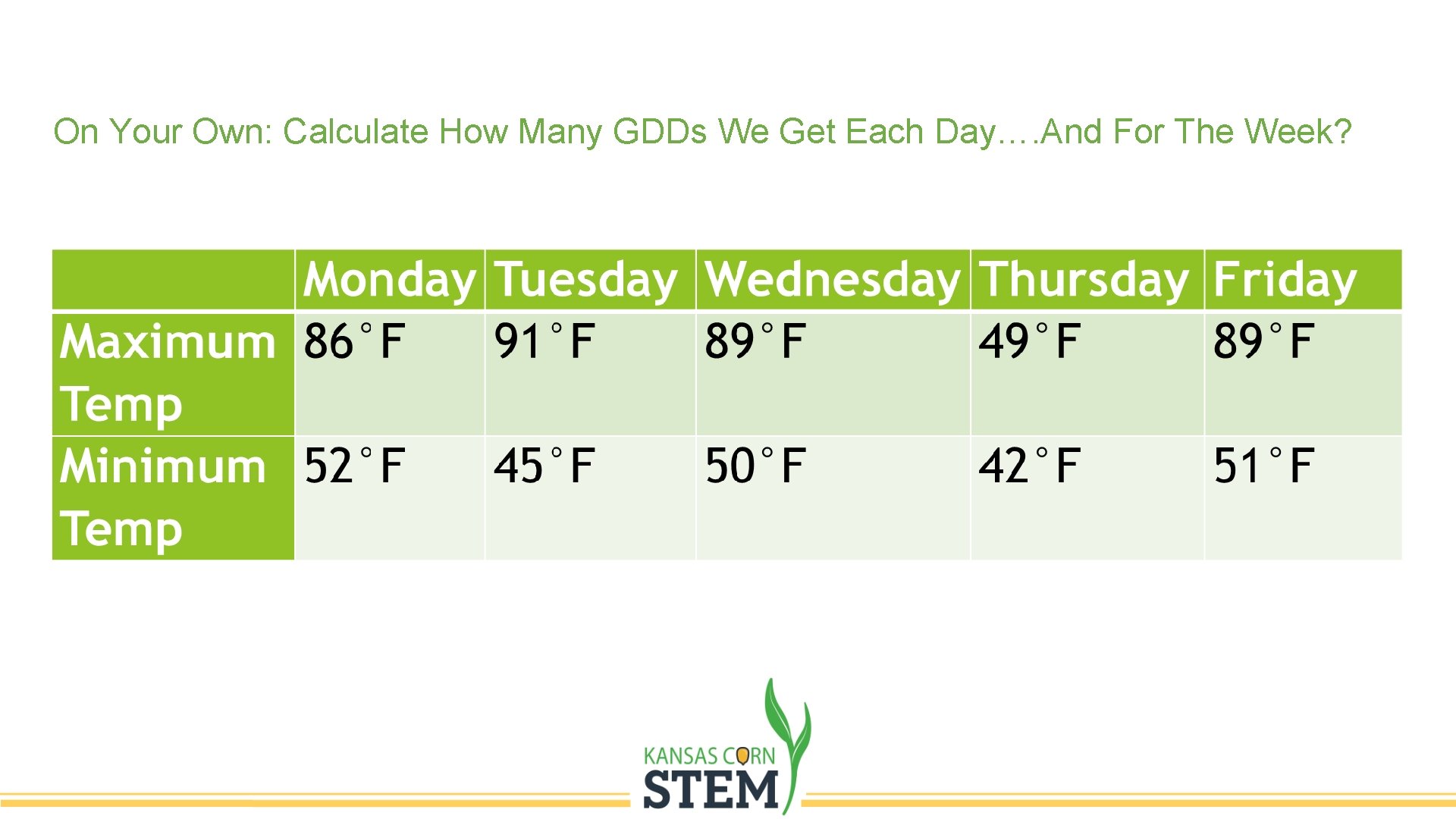
On Your Own: Calculate How Many GDDs We Get Each Day…. And For The Week?
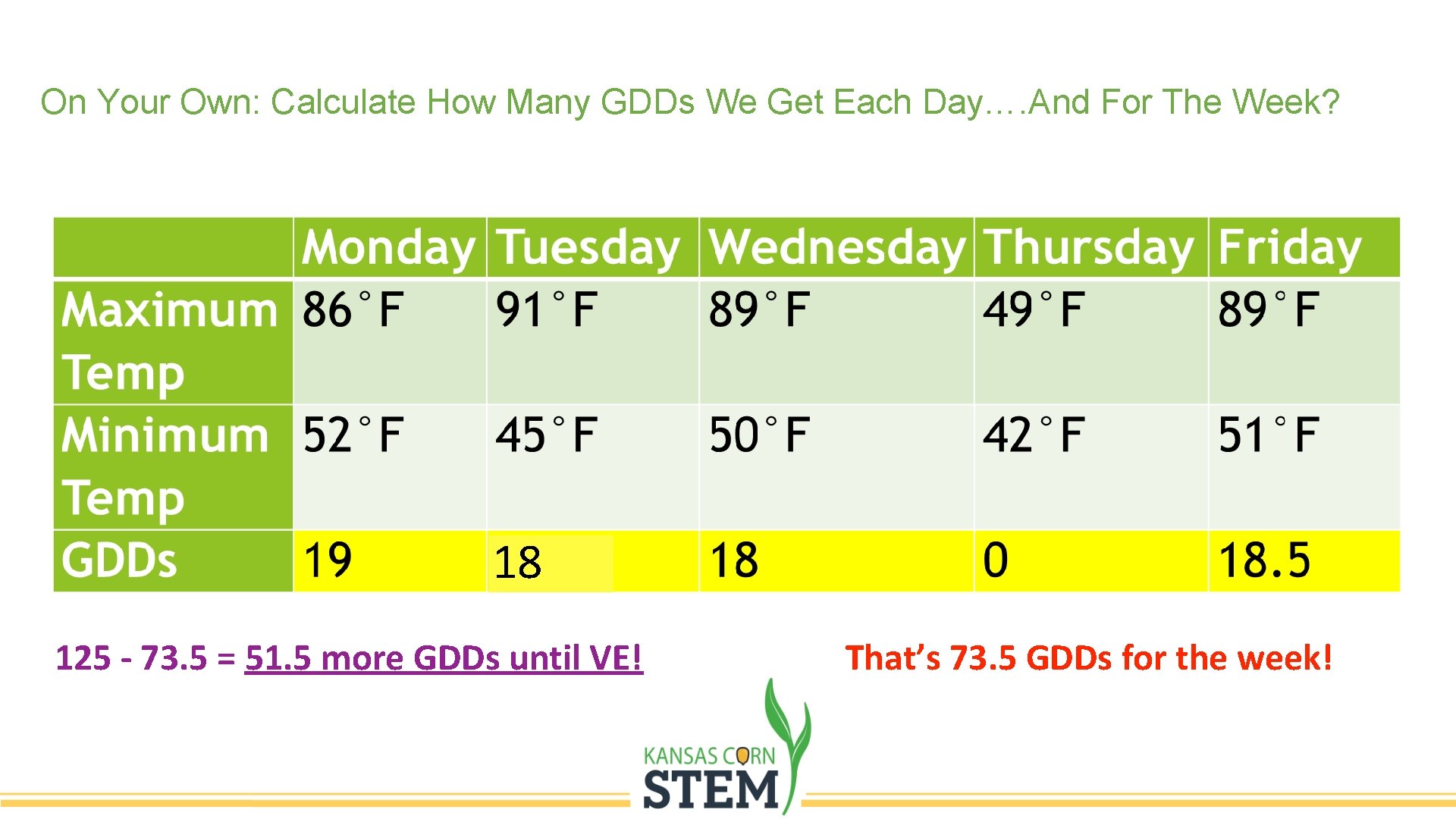
On Your Own: Calculate How Many GDDs We Get Each Day…. And For The Week? 18 125 - 73. 5 = 51. 5 more GDDs until VE! That’s 73. 5 GDDs for the week!
Now, let’s look at real world data: • Go to: https: //hprcc. unl. edu/agroclimate/gdd. php • Your Job: • Back out the map • Click on 3 fields (from different areas) • Use the chart for each field to determine when corn would mature… write it on sheet • Complete reflection questions on back after you are done