
Kansas Corn Explore Corn Explore Corn Goals Introduce

- Slides: 48
Kansas Corn: Explore Corn
Explore Corn - Goals • Introduce students to corn - its history, characteristics, uses and how/when it is planted • Discuss the growth stages of corn - emergence, vegetative and reproductive • Explore the characteristics of an ear of corn and its kernels • Identify each growth stage using the leaf collar method by dissection of a corn plant
Let’s Play A Game! Introduce yourselves to your team… Then, 5 questions This can also be played as a Kahoot! https: //tinyurl. com/Explore. Corn. Kahoot
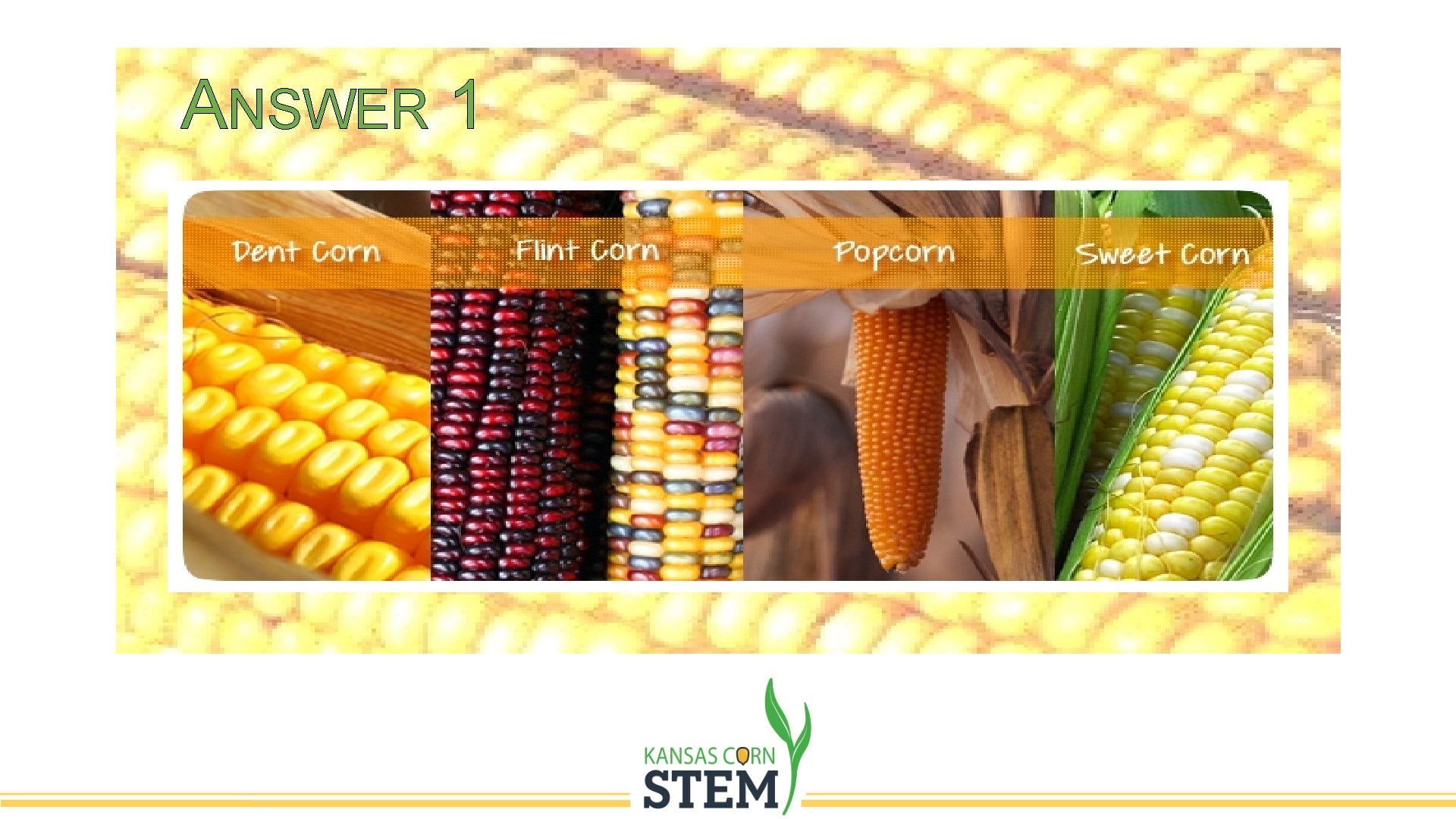
QUESTION 1 Name 2 of the 4 basic types of corn…
ANSWER 1
QUESTION 2 How long has corn been around?
ANSWER 2 Answer: 7, 000 - 9, 000 years ago from Central Mexico… or sweet corn developed in 1700 s
QUESTION 3 How many kernels are on an average ear of corn?
ANSWER 3 Answer: 600 to 800 kernels
QUESTION 4 About how many corn plants can grow on an acre of land?
ANSWER 4 Answer: 22, 000 to 35, 000 plants
QUESTION 5 The majority of grown corn is used for what purpose?
ANSWER 5 Livestock feed
QUESTION 6 How much does a pirate pay for an ear of corn?
ANSWER 6 A buccaneer
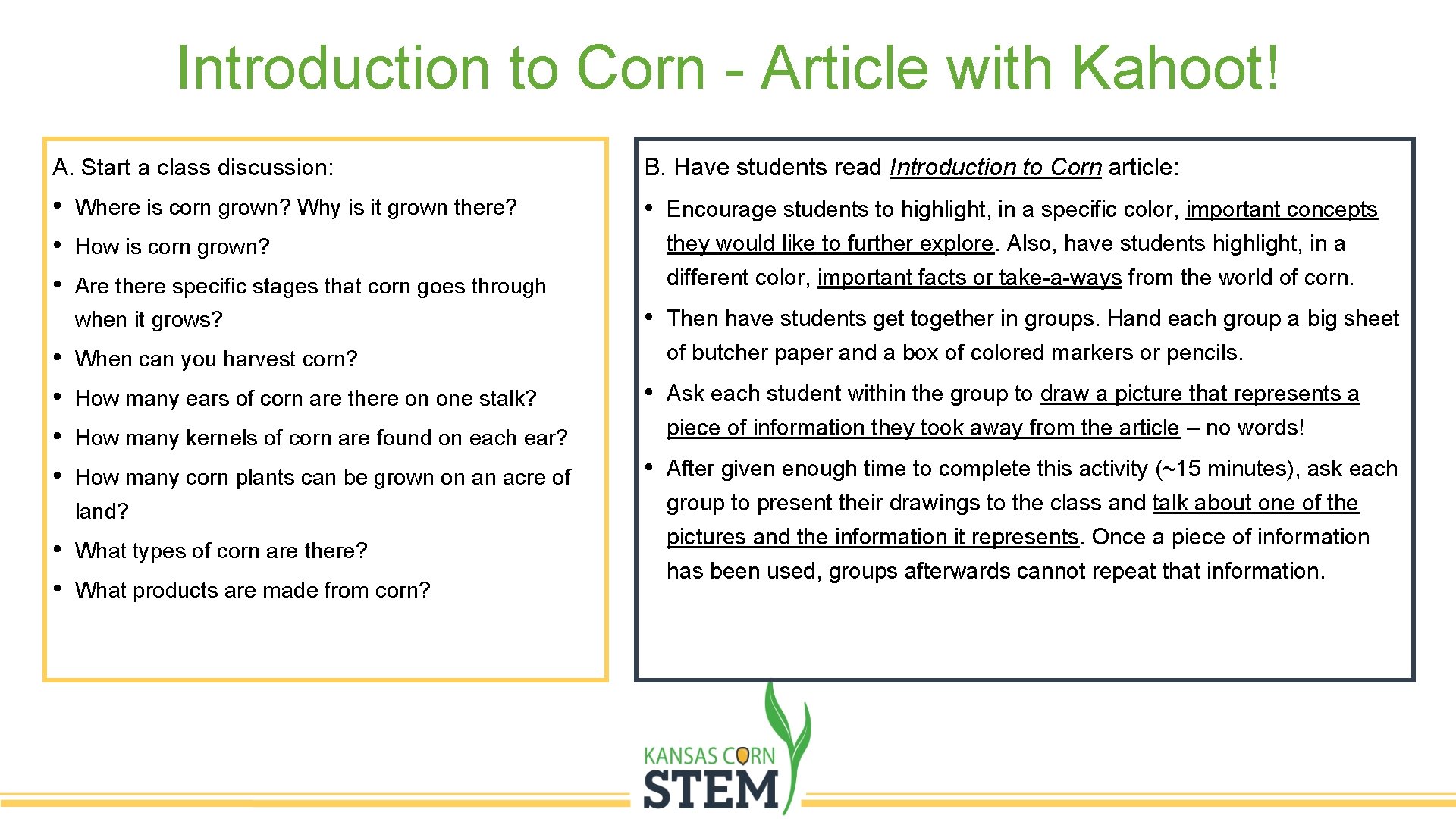
Introduction to Corn - Article with Kahoot! A. Start a class discussion: B. Have students read Introduction to Corn article: • Where is corn grown? Why is it grown there? • How is corn grown? • Are there specific stages that corn goes through • Encourage students to highlight, in a specific color, important concepts when it grows? • • When can you harvest corn? How many ears of corn are there on one stalk? How many kernels of corn are found on each ear? How many corn plants can be grown on an acre of land? • What types of corn are there? • What products are made from corn? they would like to further explore. Also, have students highlight, in a different color, important facts or take-a-ways from the world of corn. • Then have students get together in groups. Hand each group a big sheet of butcher paper and a box of colored markers or pencils. • Ask each student within the group to draw a picture that represents a piece of information they took away from the article – no words! • After given enough time to complete this activity (~15 minutes), ask each group to present their drawings to the class and talk about one of the pictures and the information it represents. Once a piece of information has been used, groups afterwards cannot repeat that information.
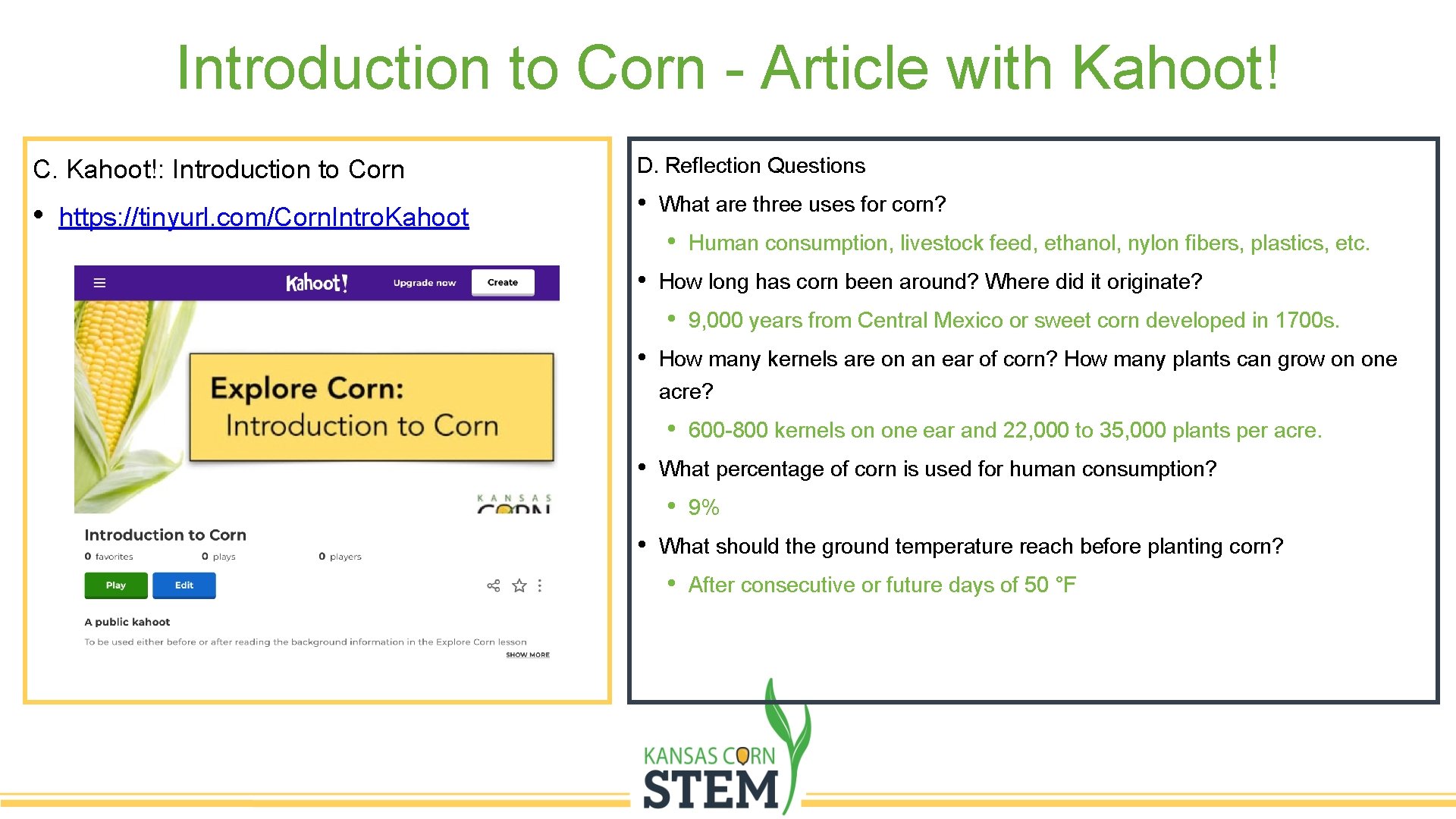
Introduction to Corn - Article with Kahoot! C. Kahoot!: Introduction to Corn D. Reflection Questions • https: //tinyurl. com/Corn. Intro. Kahoot • What are three uses for corn? • Human consumption, livestock feed, ethanol, nylon fibers, plastics, etc. • How long has corn been around? Where did it originate? • 9, 000 years from Central Mexico or sweet corn developed in 1700 s. • How many kernels are on an ear of corn? How many plants can grow on one acre? • 600 -800 kernels on one ear and 22, 000 to 35, 000 plants per acre. • What percentage of corn is used for human consumption? • 9% • What should the ground temperature reach before planting corn? • After consecutive or future days of 50 °F
Lesson 1 - Corn Staging A. Corn Staging Student Worksheet: B. Corn Staging Resources: • Pass out a copy of the Corn Staging Student Worksheet. • Students will need internet access to visit the Du. Pont • Dupont Pioneer Overview of Stages of Corn Growth • Tinyurl. com/cornstages • Dupont Pioneer Vegetative Stages of Corn Growth • https: //tinyurl. com/Pioneer. Corn. Vegetative. Stages • Dupont Pioneer Reproductive Stages of Corn Growth • https: //tinyurl. com/Pioneer. Corn. Reproductive. Stages Pioneer websites. The websites will be used as a resource to complete the Corn Staging Student Worksheet. • Students will read about and explore the different stages of corn growth while completing the worksheet. • Think of this as a pre-lab so students understand different stages of life of corn.
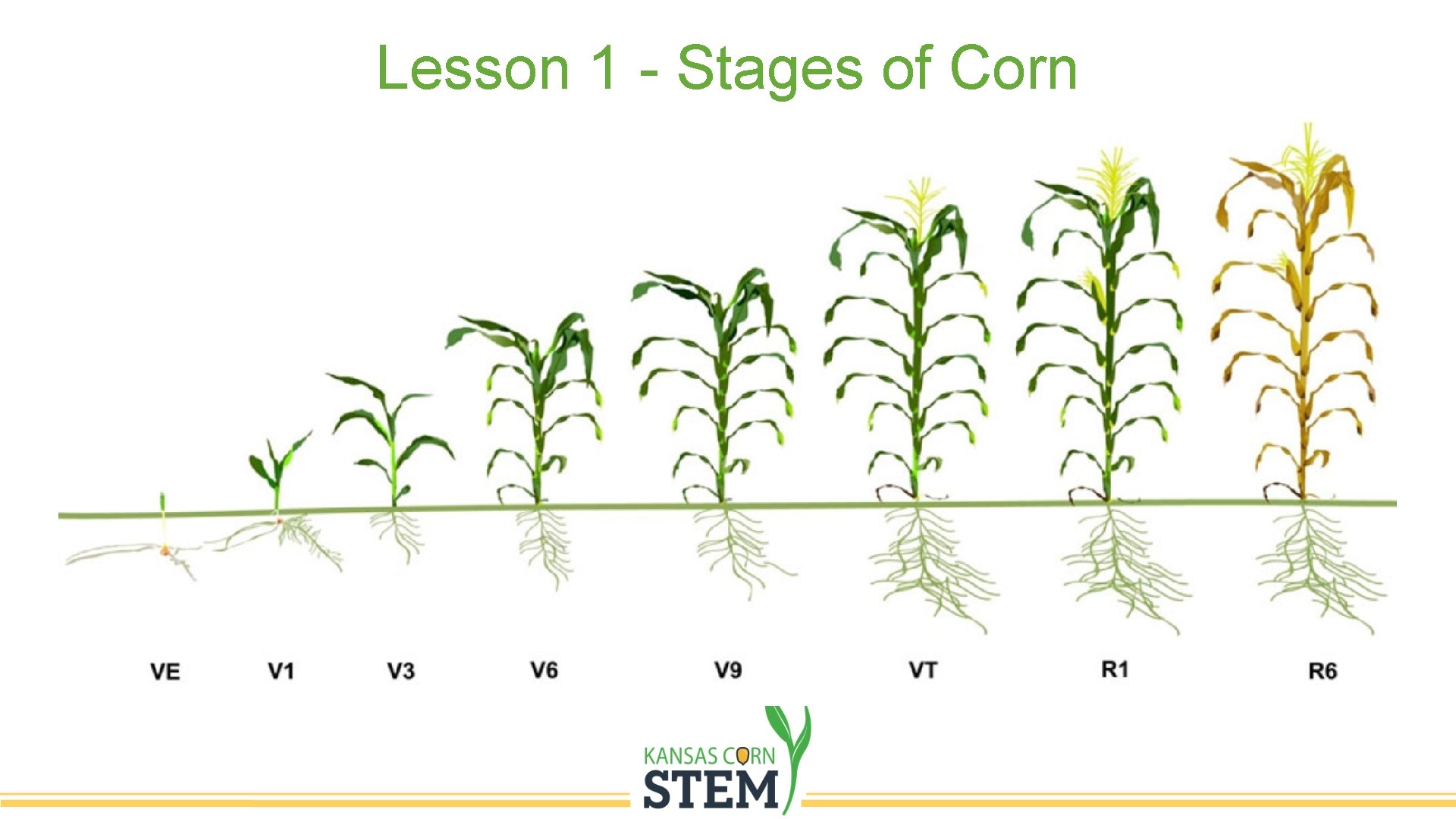
Lesson 1 - Stages of Corn
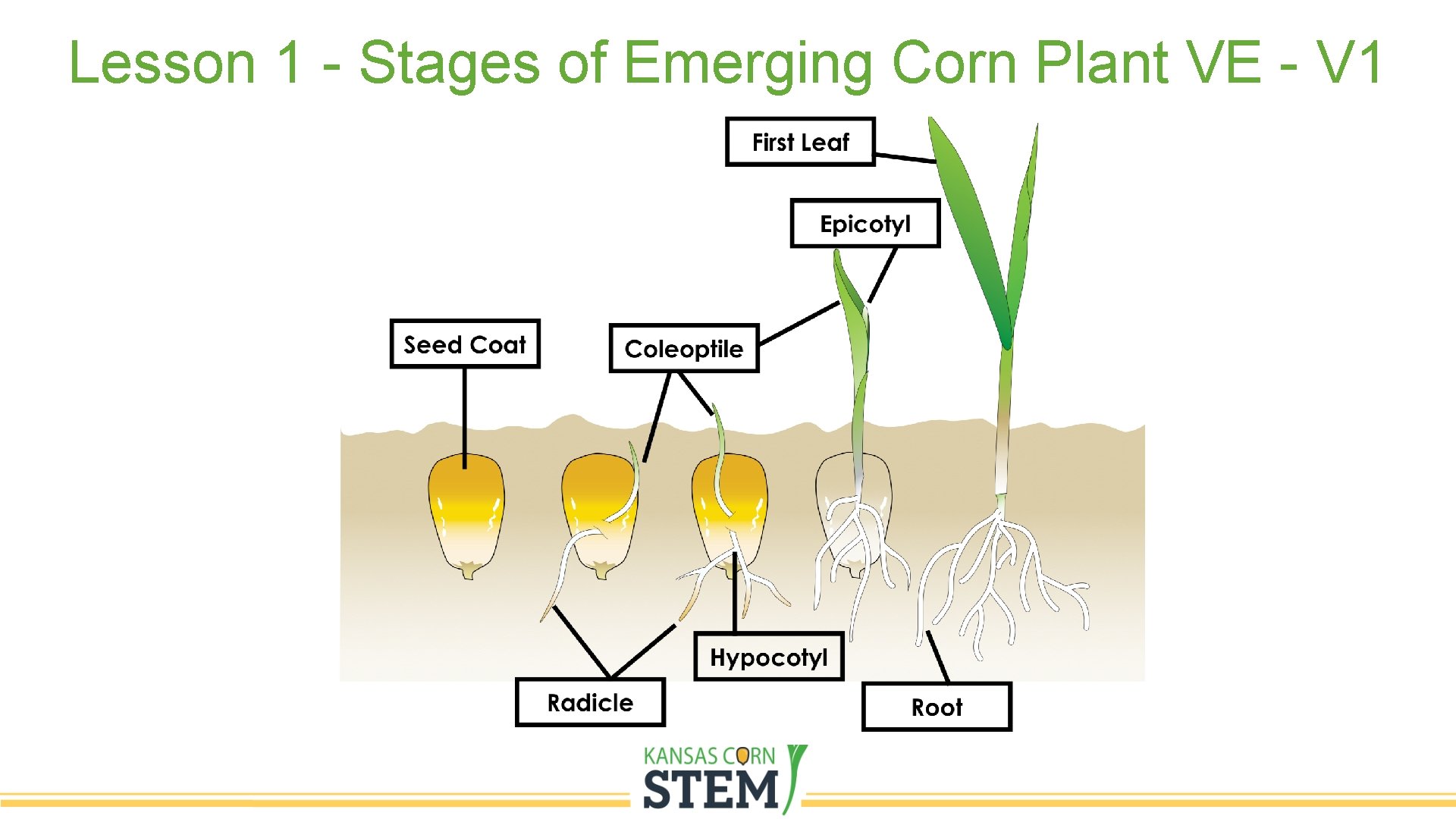
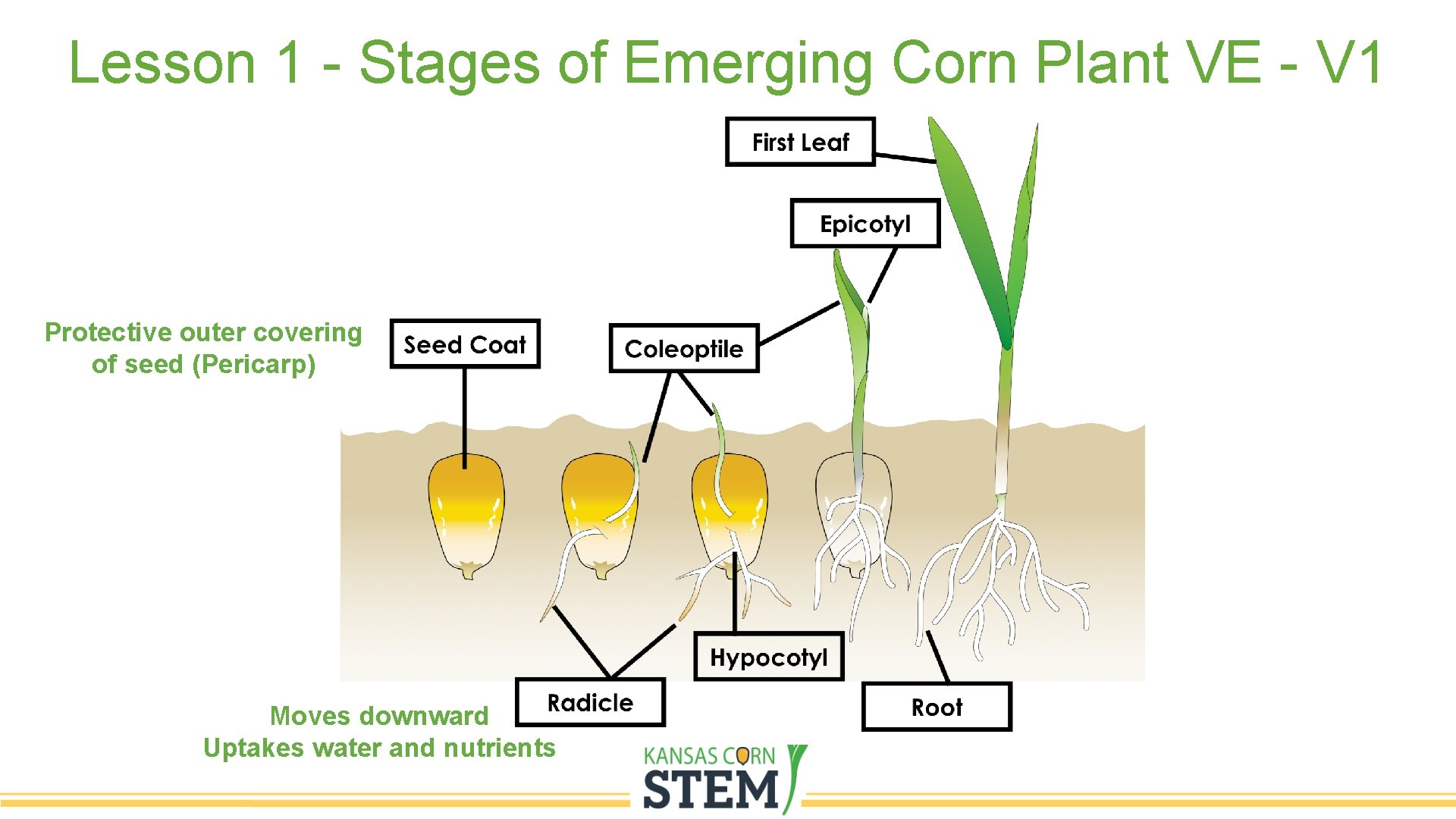
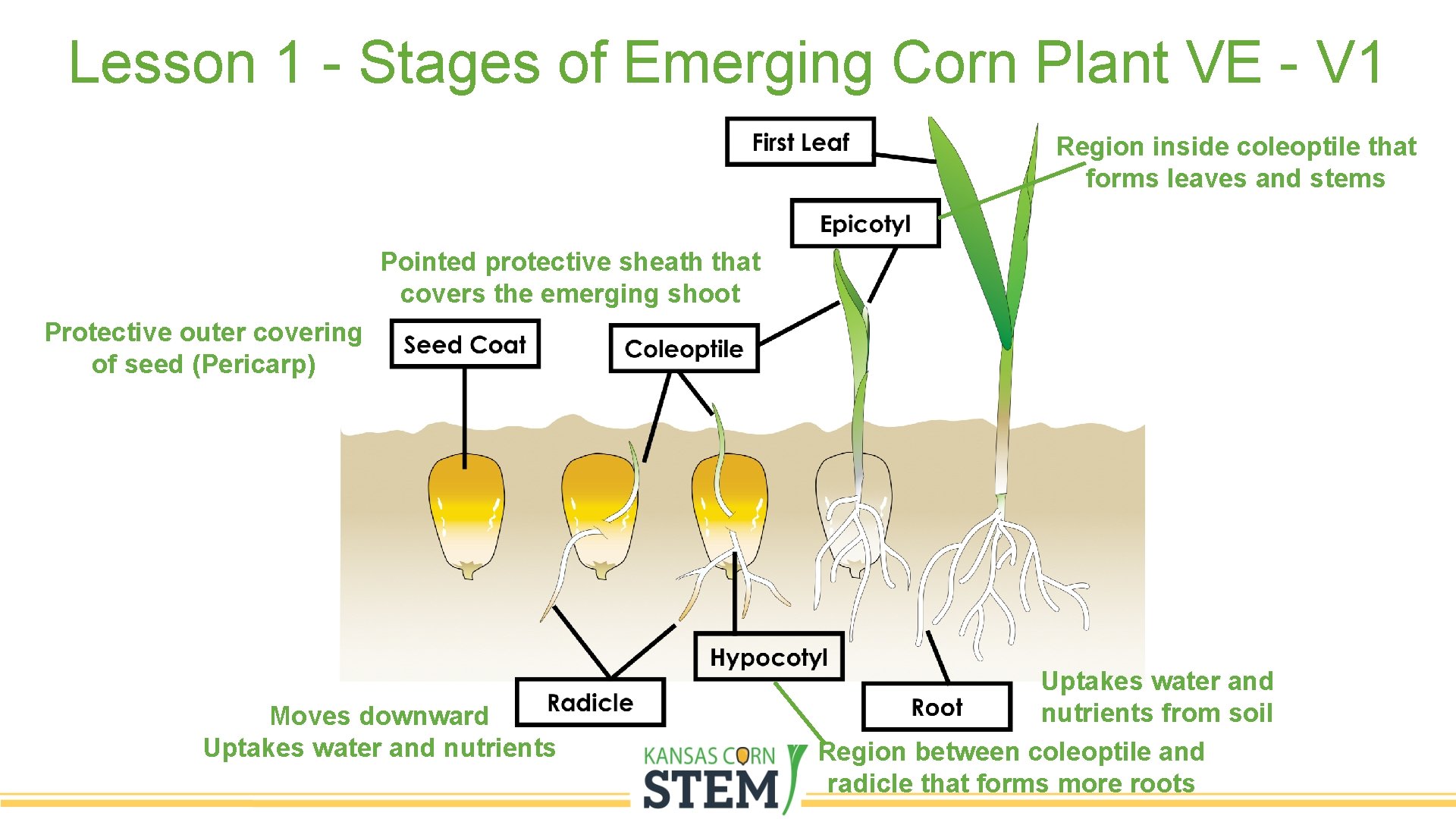
Lesson 1 - Stages of Emerging Corn Plant VE - V 1
Lesson 1 - Stages of Emerging Corn Plant VE - V 1 Protective outer covering of seed (Pericarp)
Lesson 1 - Stages of Emerging Corn Plant VE - V 1 Protective outer covering of seed (Pericarp) Moves downward Uptakes water and nutrients
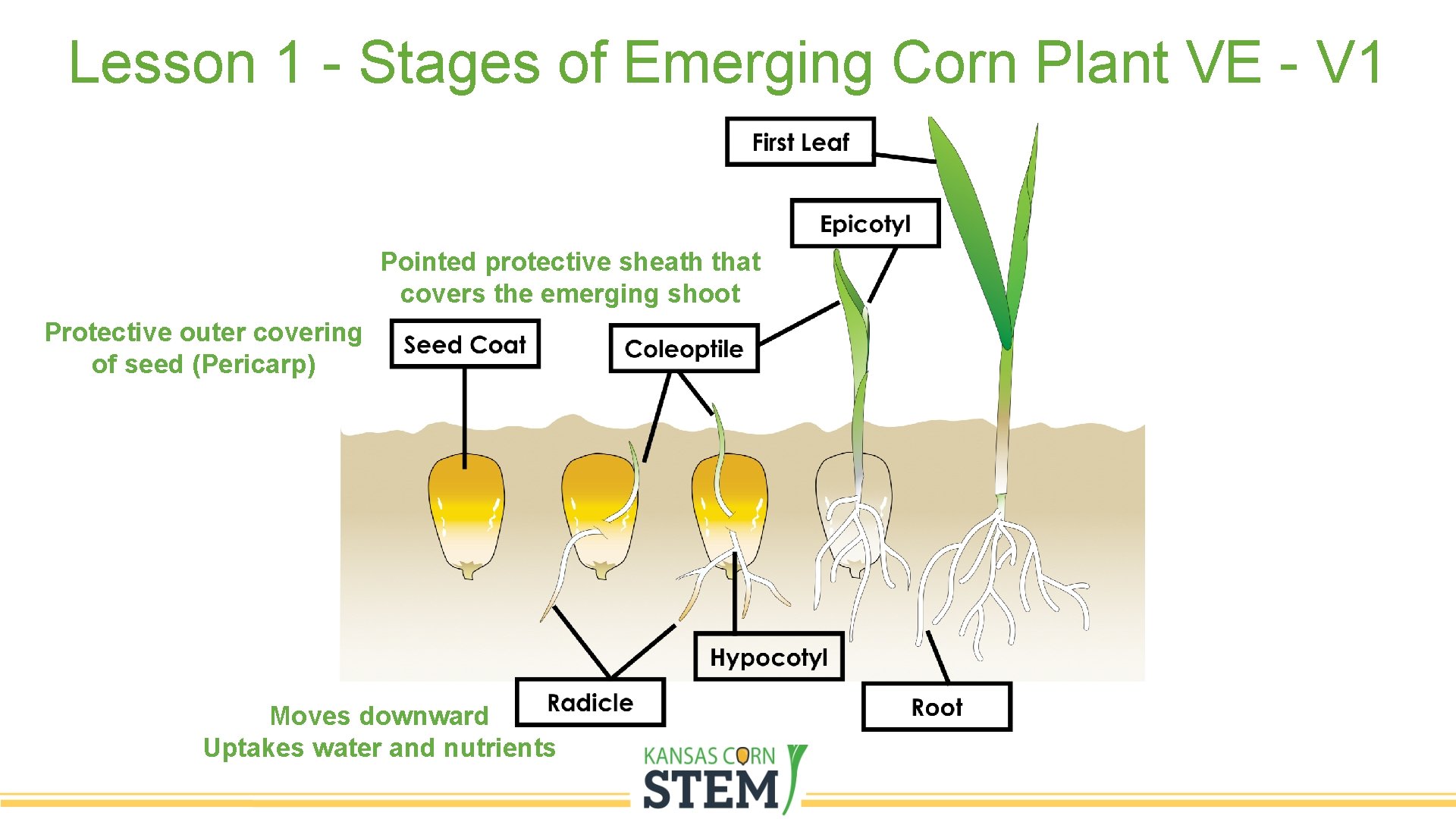
Lesson 1 - Stages of Emerging Corn Plant VE - V 1 Pointed protective sheath that covers the emerging shoot Protective outer covering of seed (Pericarp) Moves downward Uptakes water and nutrients
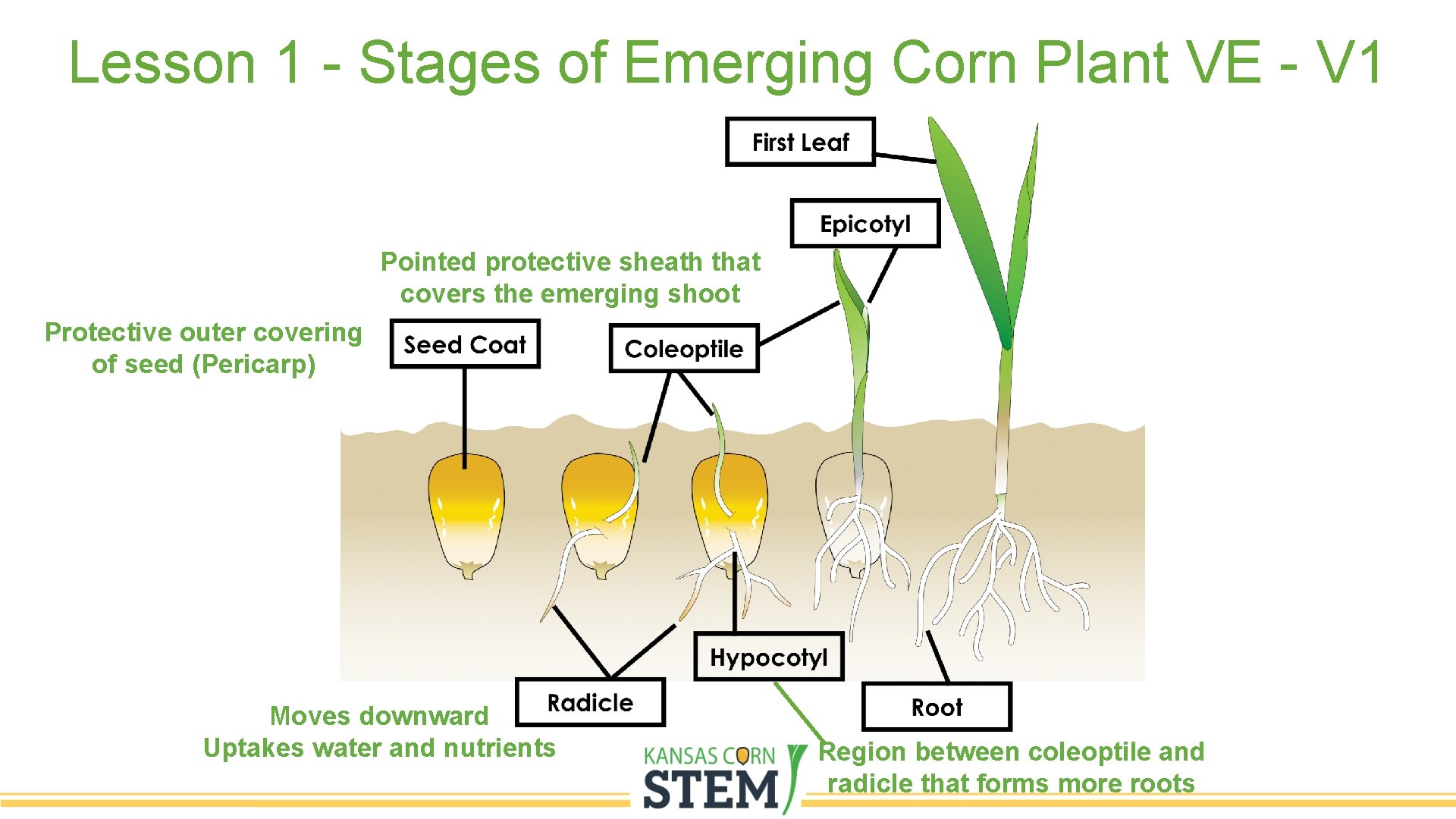
Lesson 1 - Stages of Emerging Corn Plant VE - V 1 Pointed protective sheath that covers the emerging shoot Protective outer covering of seed (Pericarp) Moves downward Uptakes water and nutrients Region between coleoptile and radicle that forms more roots
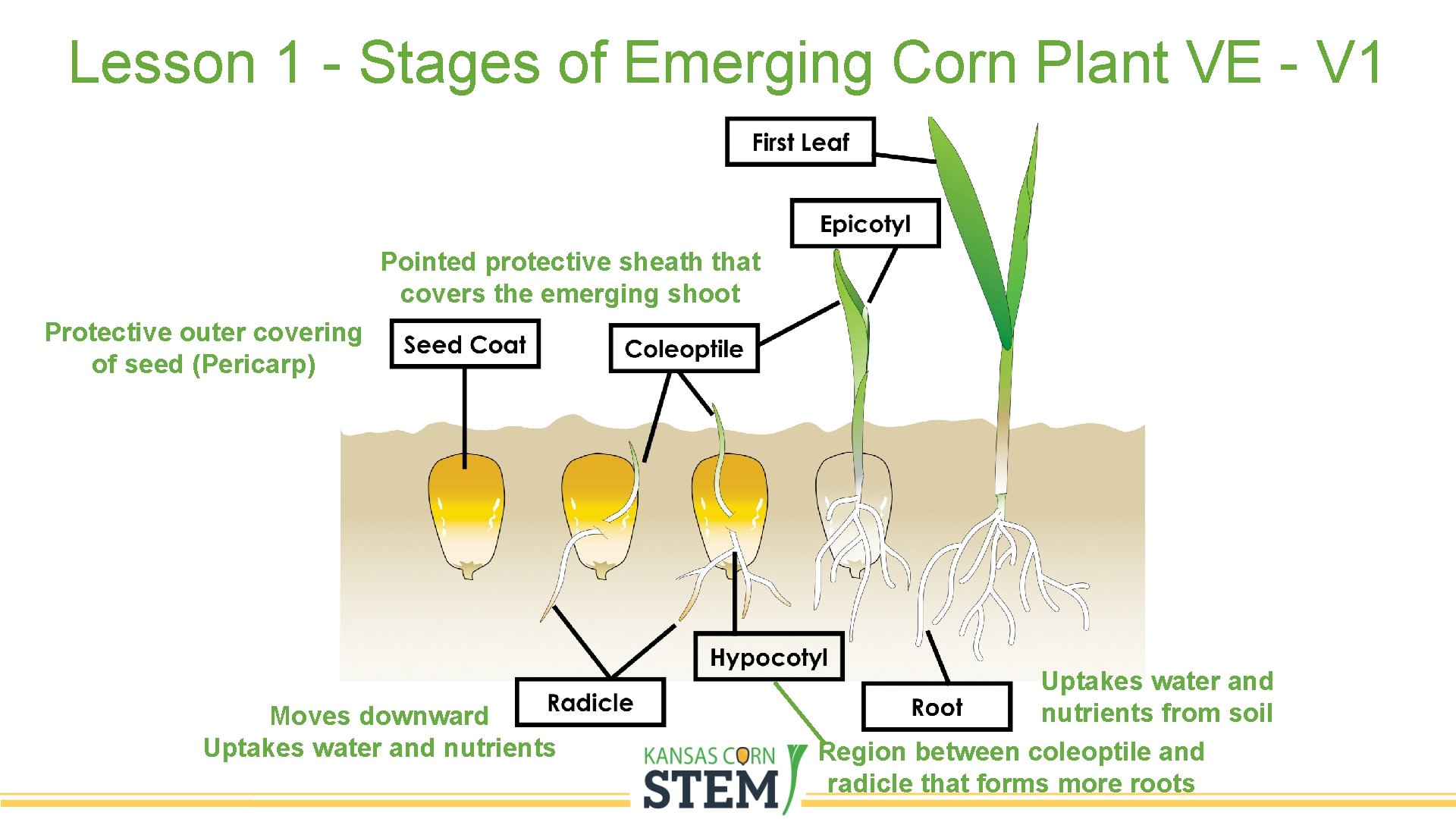
Lesson 1 - Stages of Emerging Corn Plant VE - V 1 Pointed protective sheath that covers the emerging shoot Protective outer covering of seed (Pericarp) Moves downward Uptakes water and nutrients from soil Region between coleoptile and radicle that forms more roots
Lesson 1 - Stages of Emerging Corn Plant VE - V 1 Region inside coleoptile that forms leaves and stems Pointed protective sheath that covers the emerging shoot Protective outer covering of seed (Pericarp) Moves downward Uptakes water and nutrients from soil Region between coleoptile and radicle that forms more roots
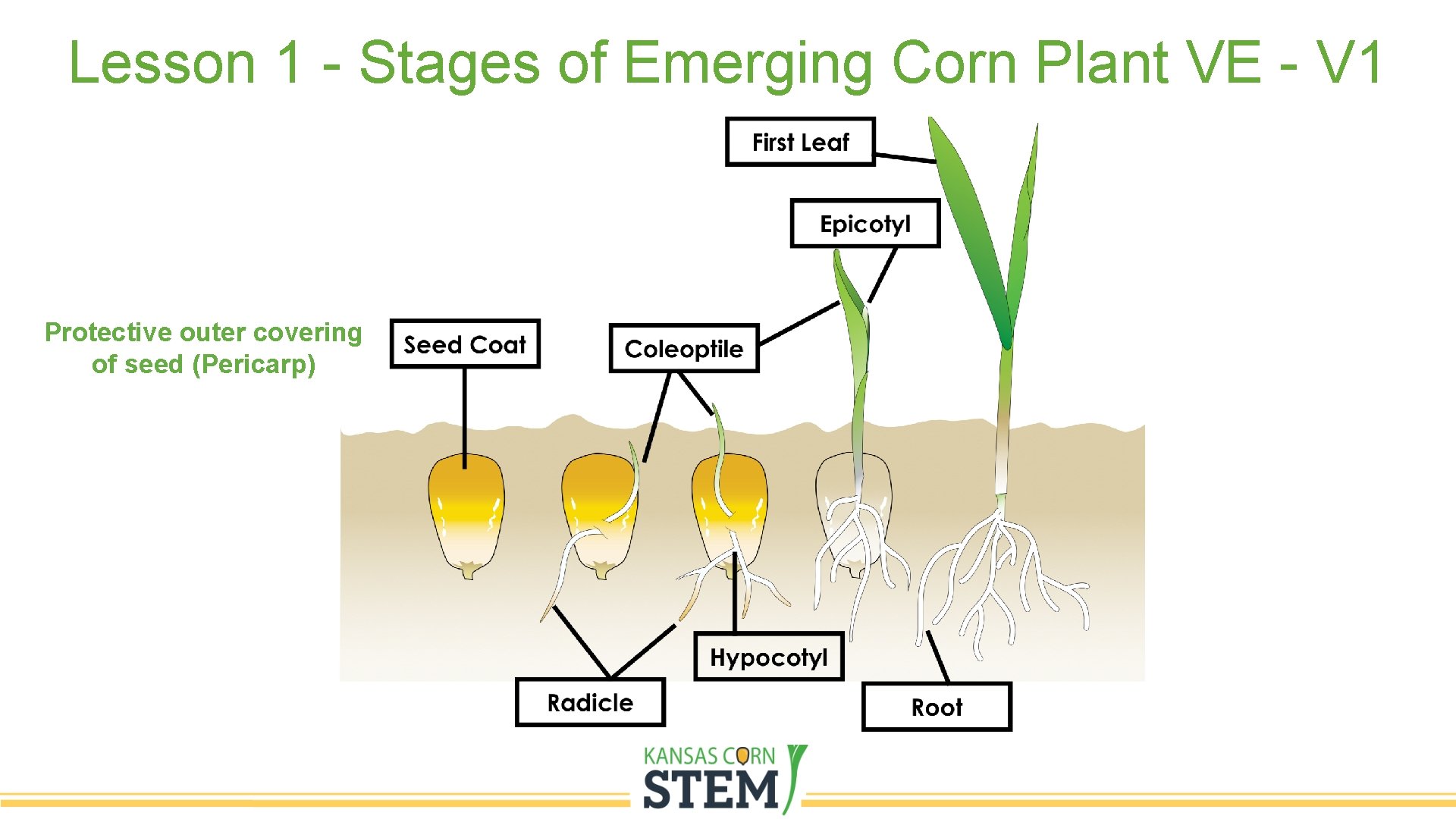
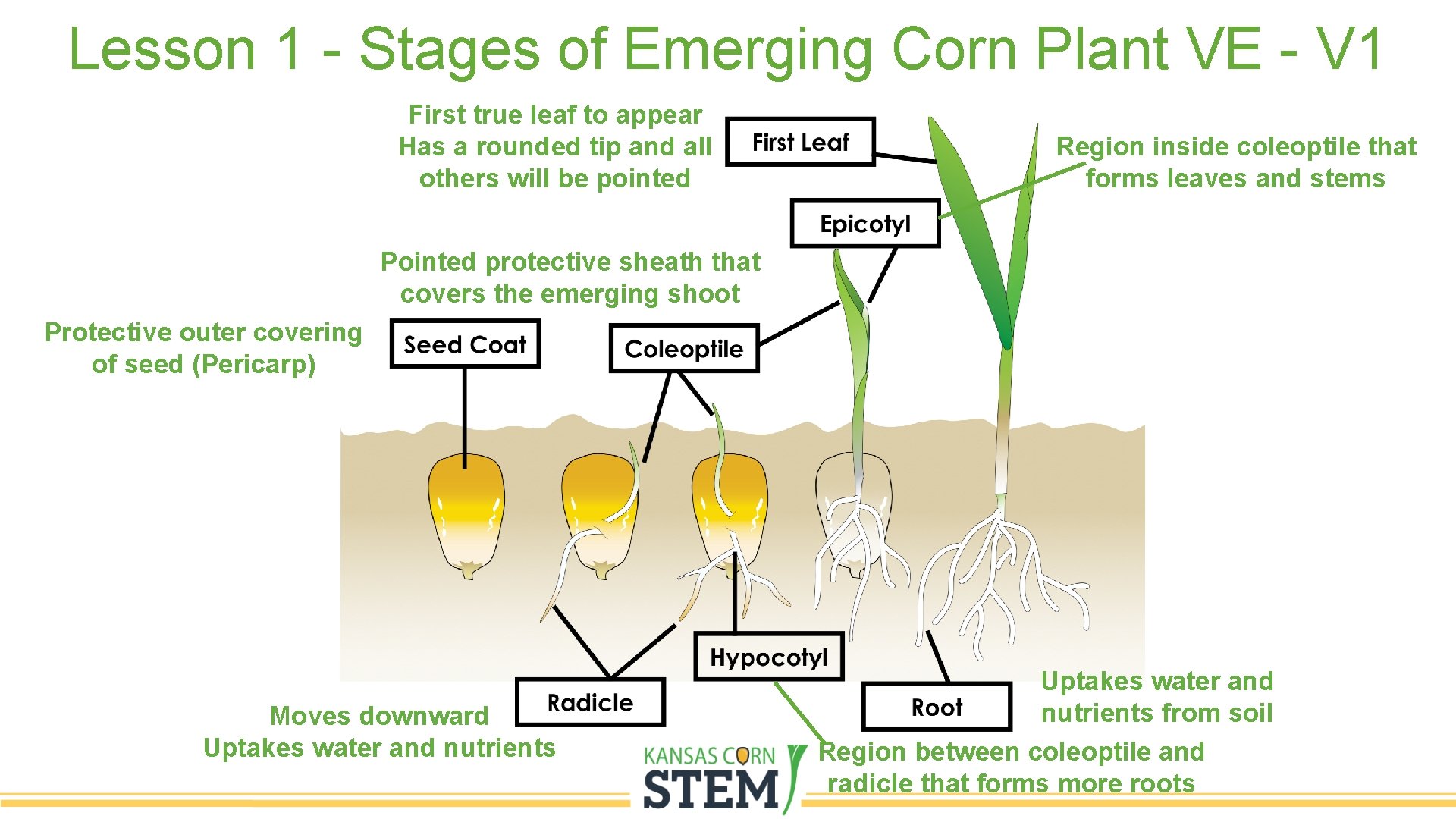
Lesson 1 - Stages of Emerging Corn Plant VE - V 1 First true leaf to appear Has a rounded tip and all others will be pointed Region inside coleoptile that forms leaves and stems Pointed protective sheath that covers the emerging shoot Protective outer covering of seed (Pericarp) Moves downward Uptakes water and nutrients from soil Region between coleoptile and radicle that forms more roots
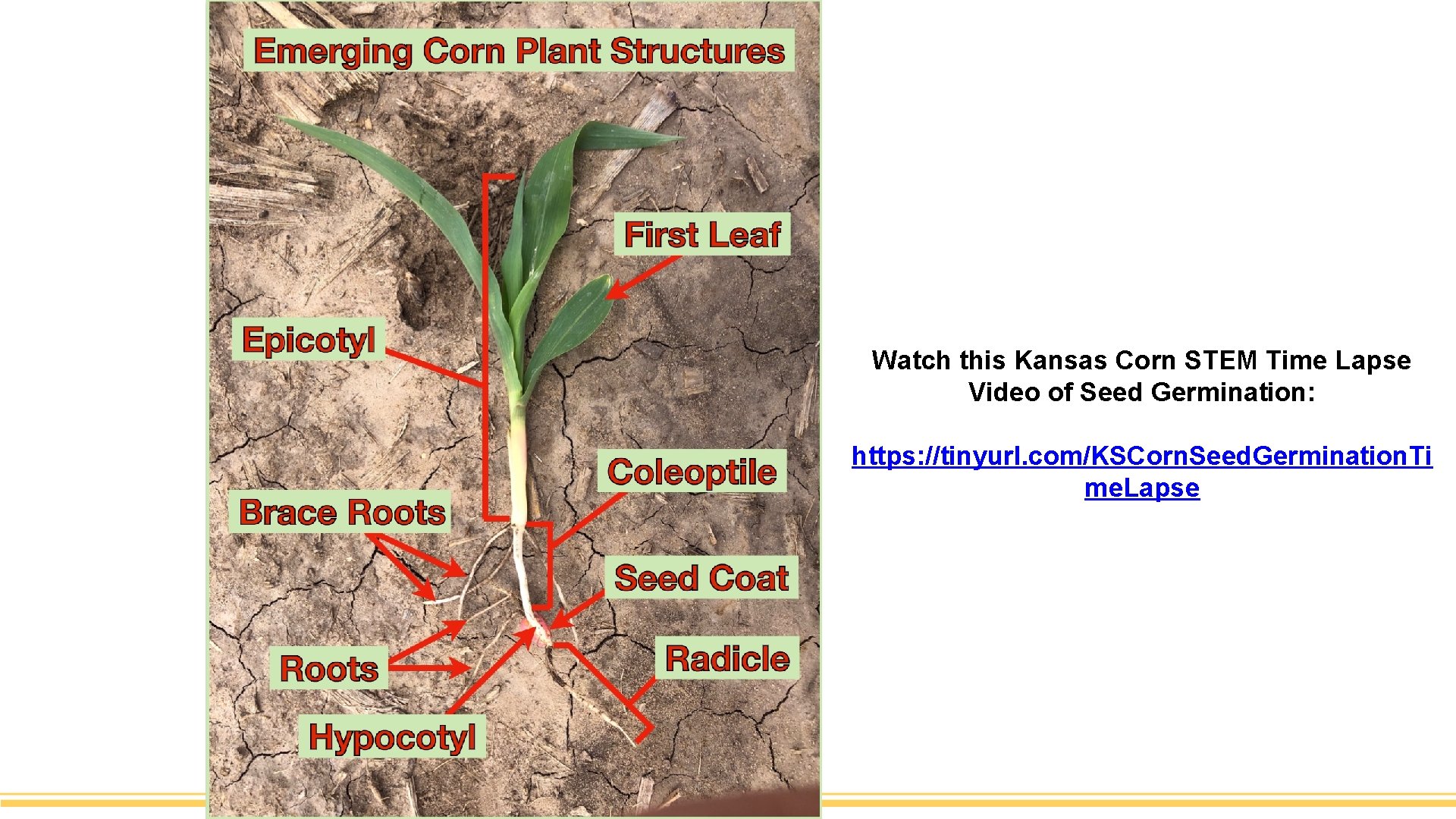
Watch this Kansas Corn STEM Time Lapse Video of Seed Germination: https: //tinyurl. com/KSCorn. Seed. Germination. Ti me. Lapse
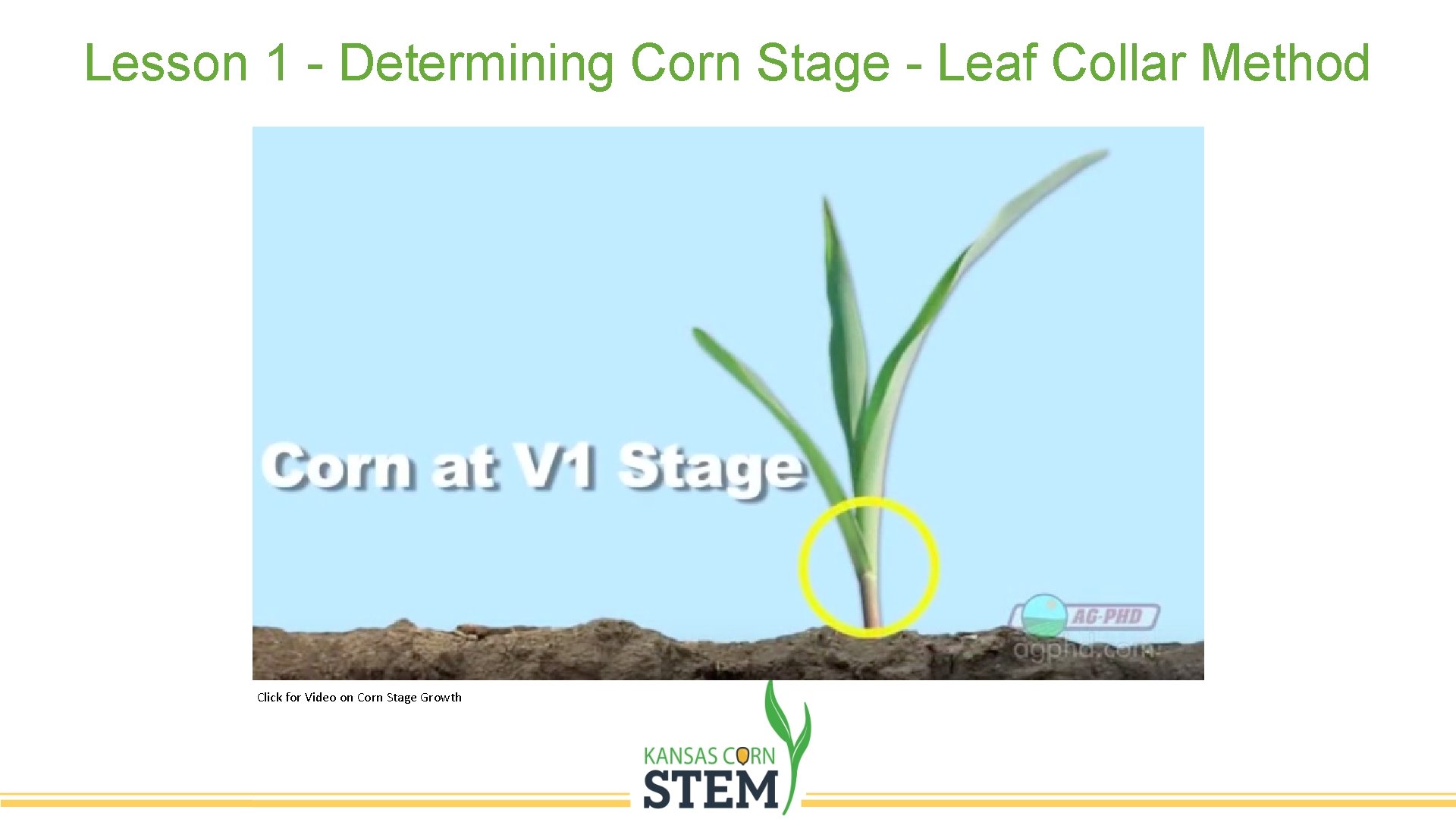
Lesson 1 - Determining Corn Stage - Leaf Collar Method Click for Video on Corn Stage Growth
Lesson 1 - Stages of Corn
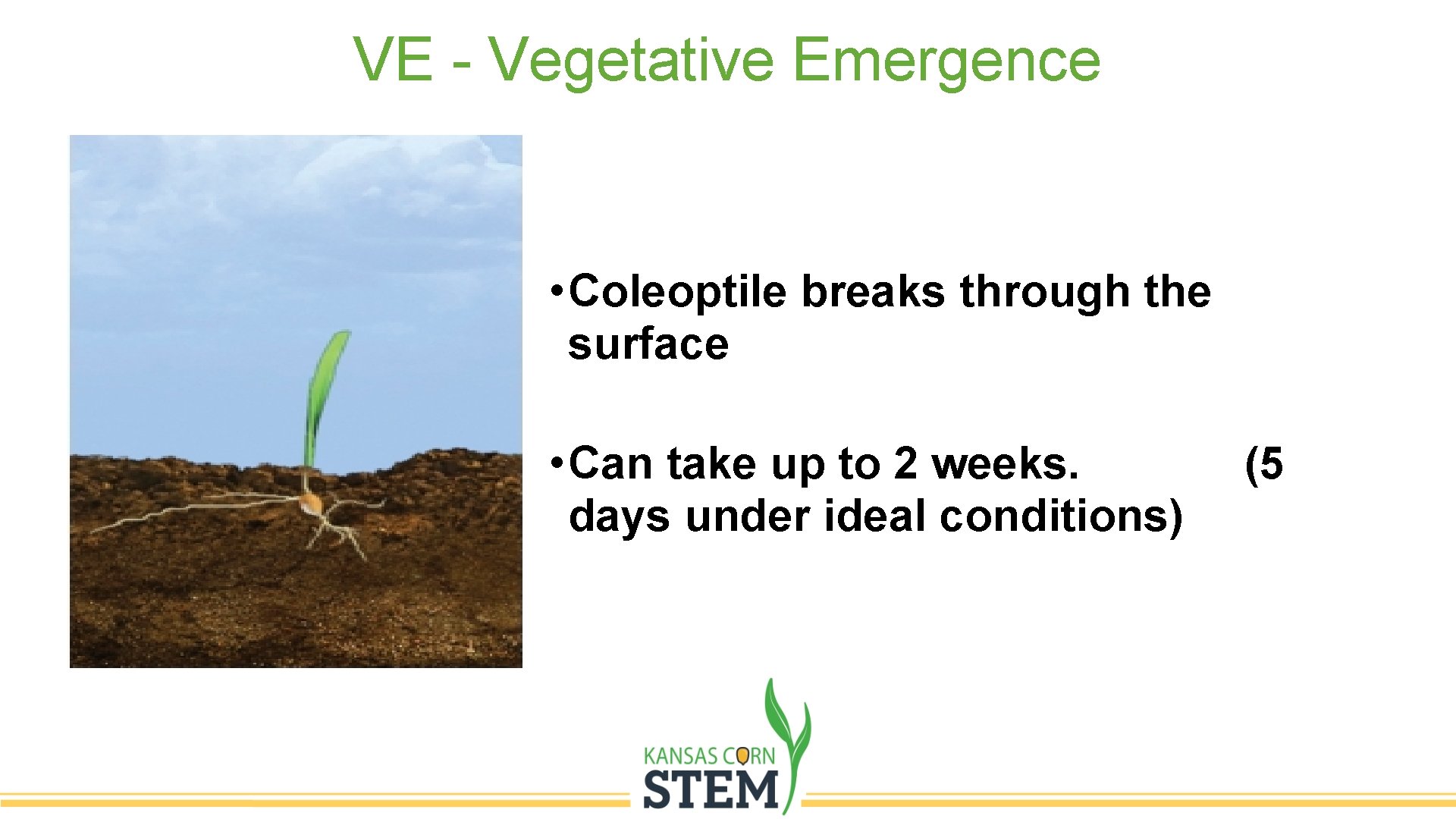
VE - Vegetative Emergence • Coleoptile breaks through the surface • Can take up to 2 weeks. days under ideal conditions) (5
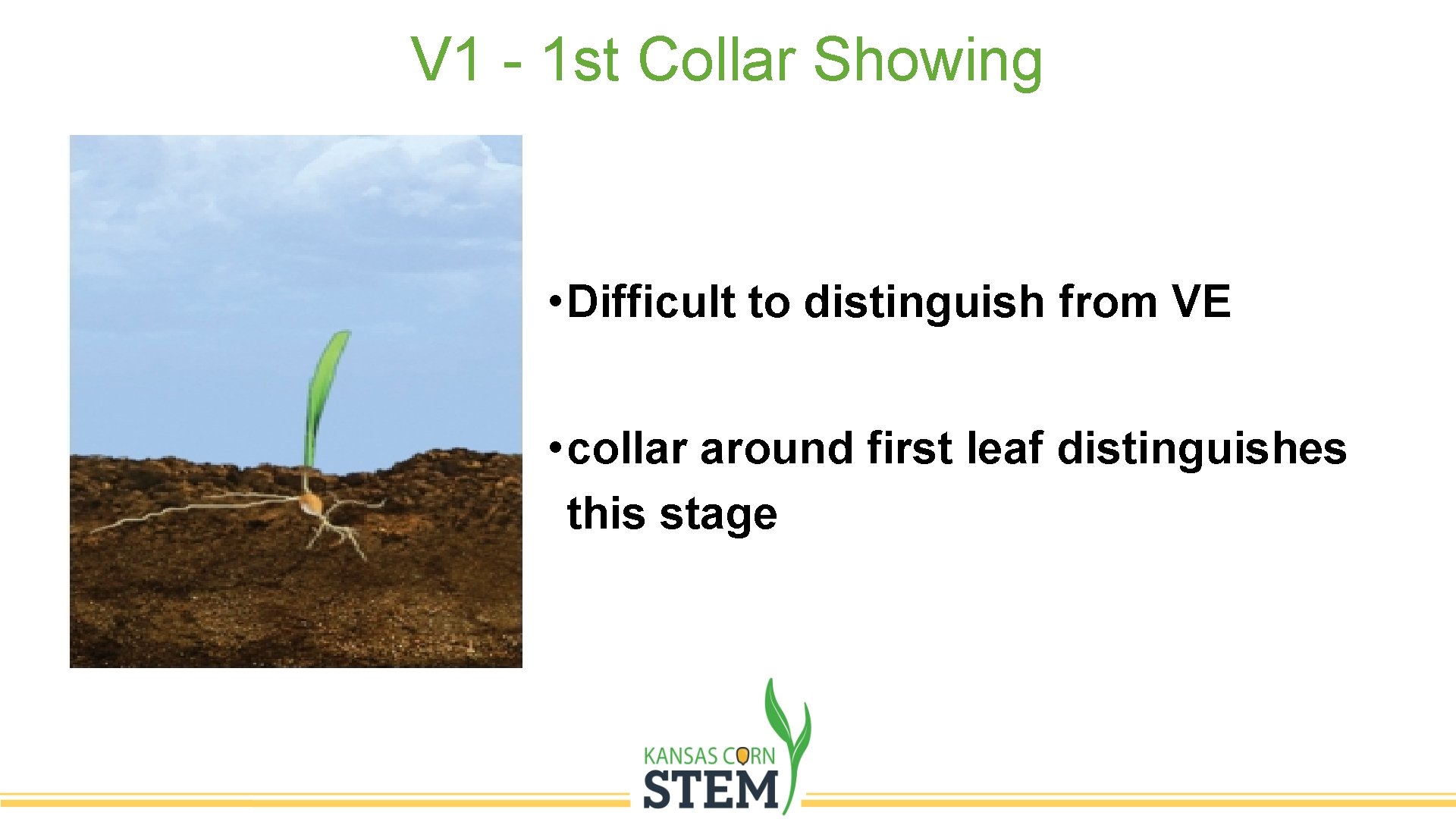
V 1 - 1 st Collar Showing • Difficult to distinguish from VE • collar around first leaf distinguishes this stage
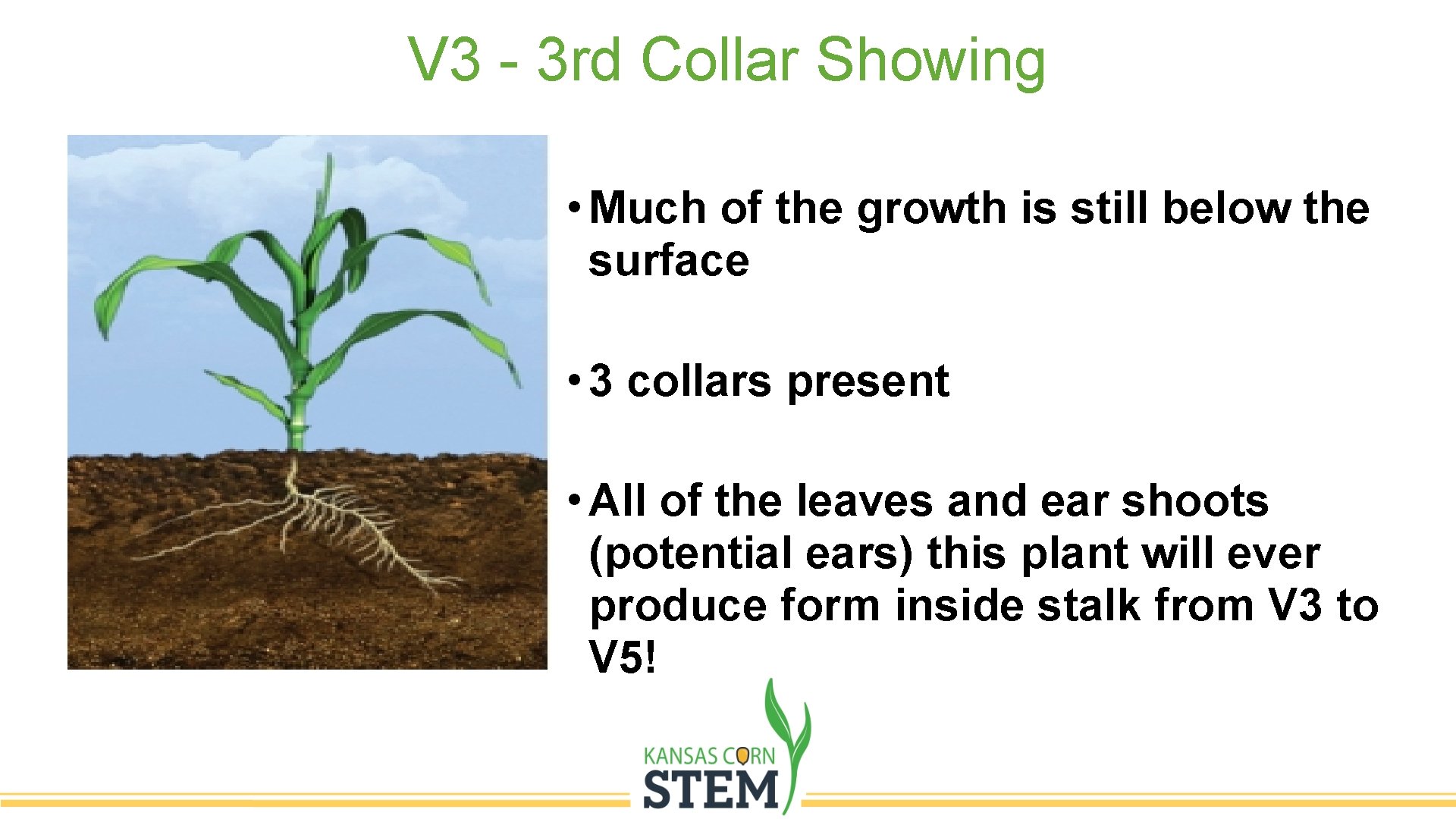
V 3 - 3 rd Collar Showing • Much of the growth is still below the surface • 3 collars present • All of the leaves and ear shoots (potential ears) this plant will ever produce form inside stalk from V 3 to V 5!
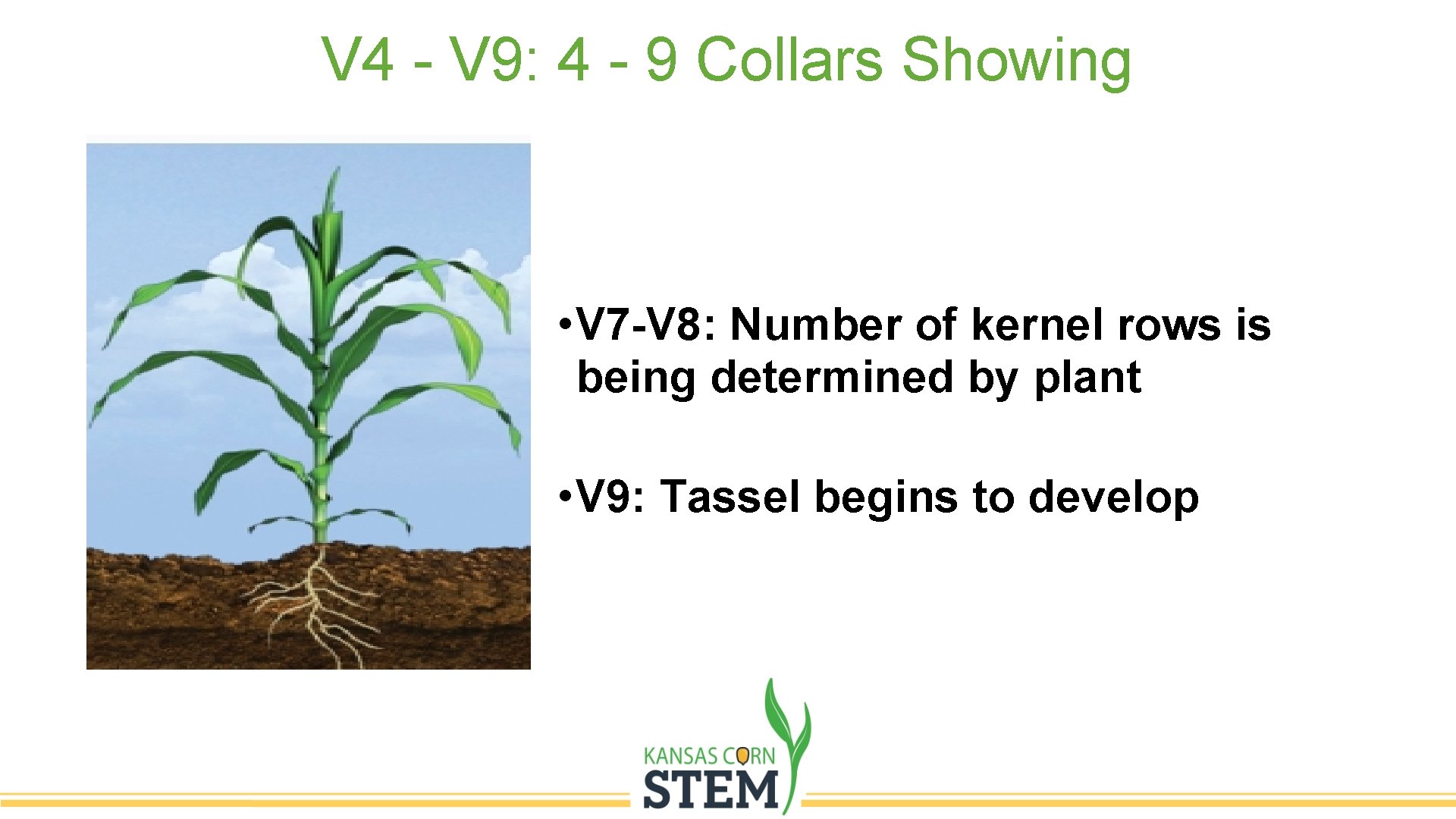
V 4 - V 9: 4 - 9 Collars Showing • V 7 -V 8: Number of kernel rows is being determined by plant • V 9: Tassel begins to develop
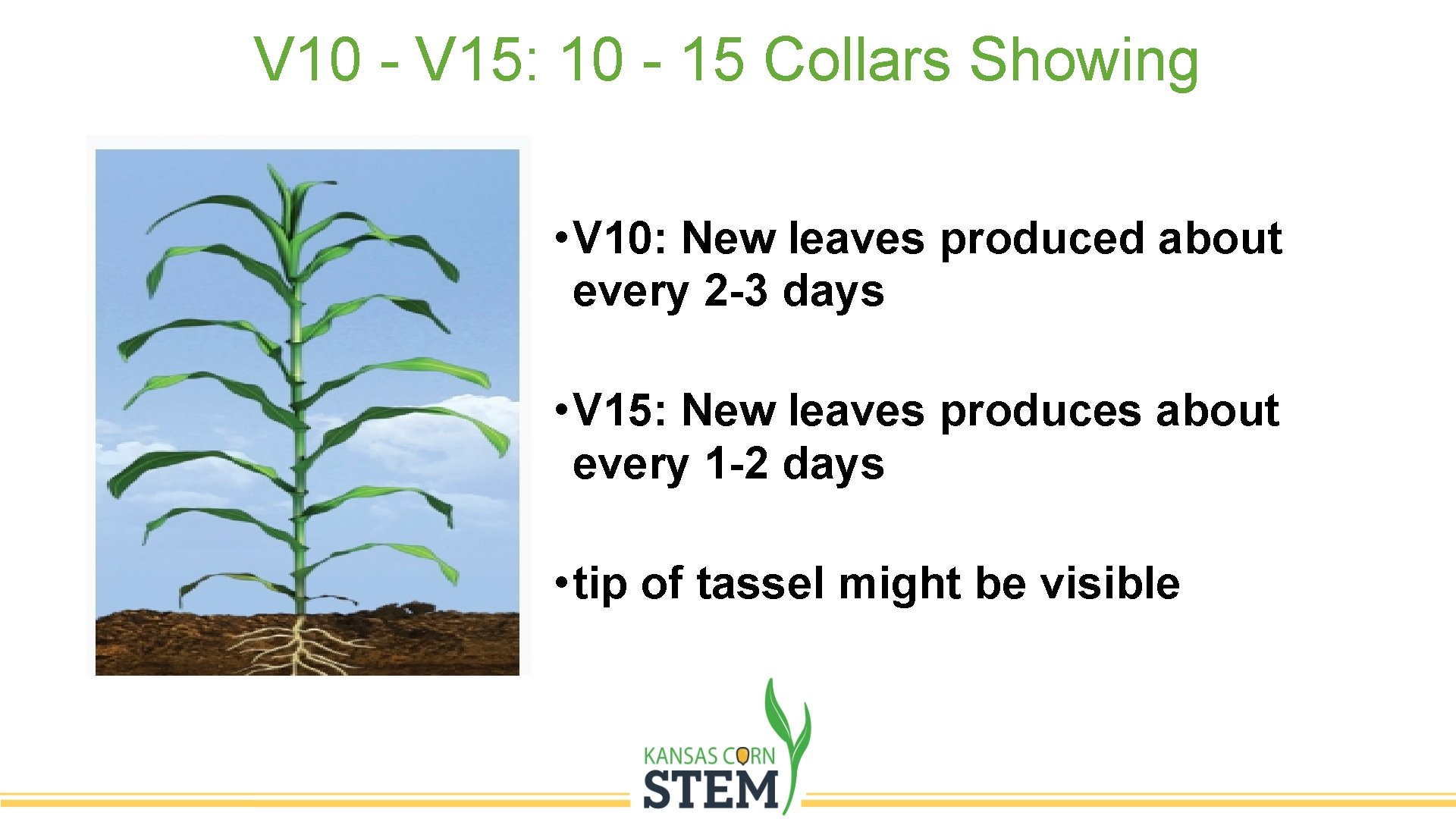
V 10 - V 15: 10 - 15 Collars Showing • V 10: New leaves produced about every 2 -3 days • V 15: New leaves produces about every 1 -2 days • tip of tassel might be visible
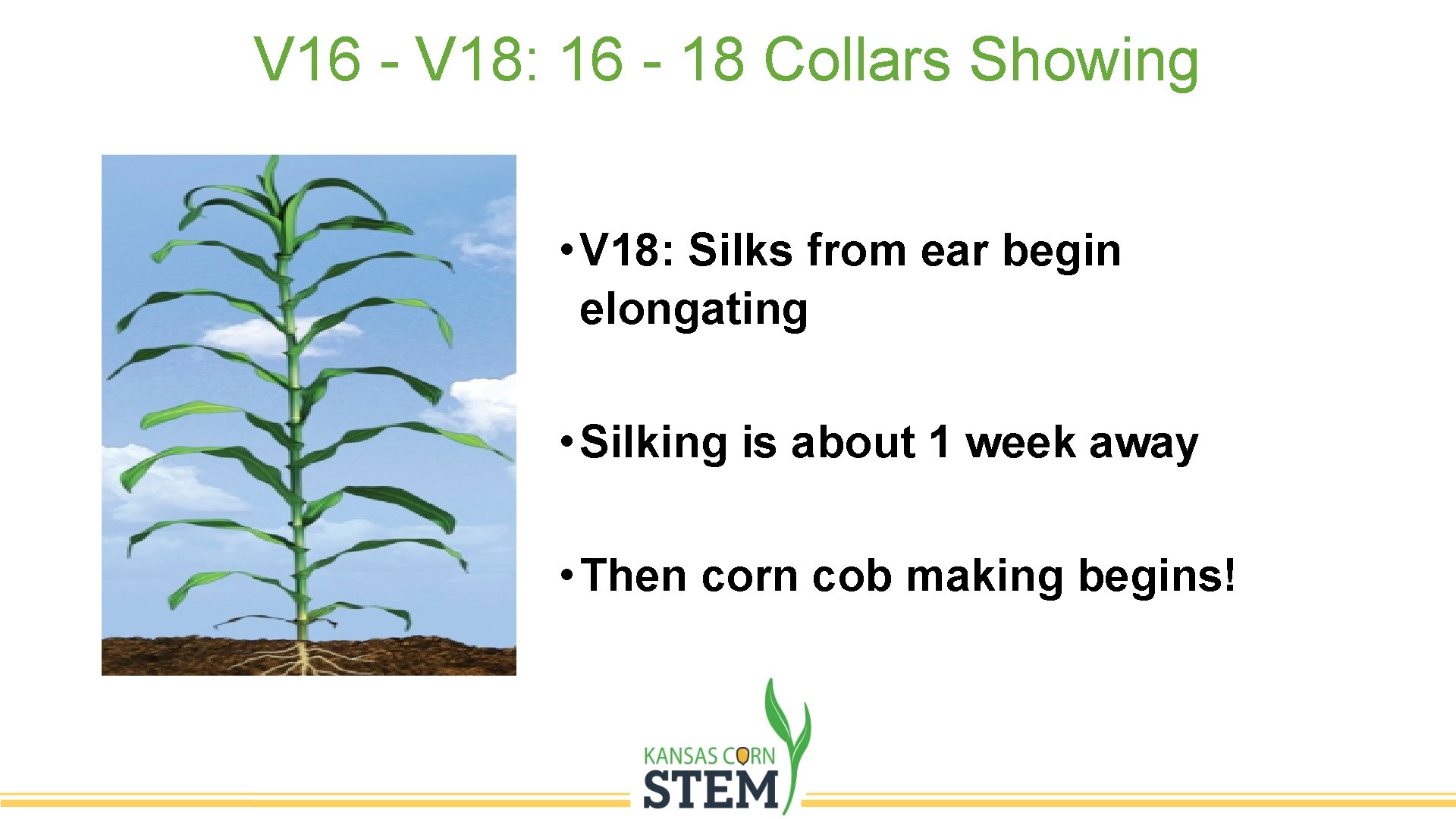
V 16 - V 18: 16 - 18 Collars Showing • V 18: Silks from ear begin elongating • Silking is about 1 week away • Then corn cob making begins!
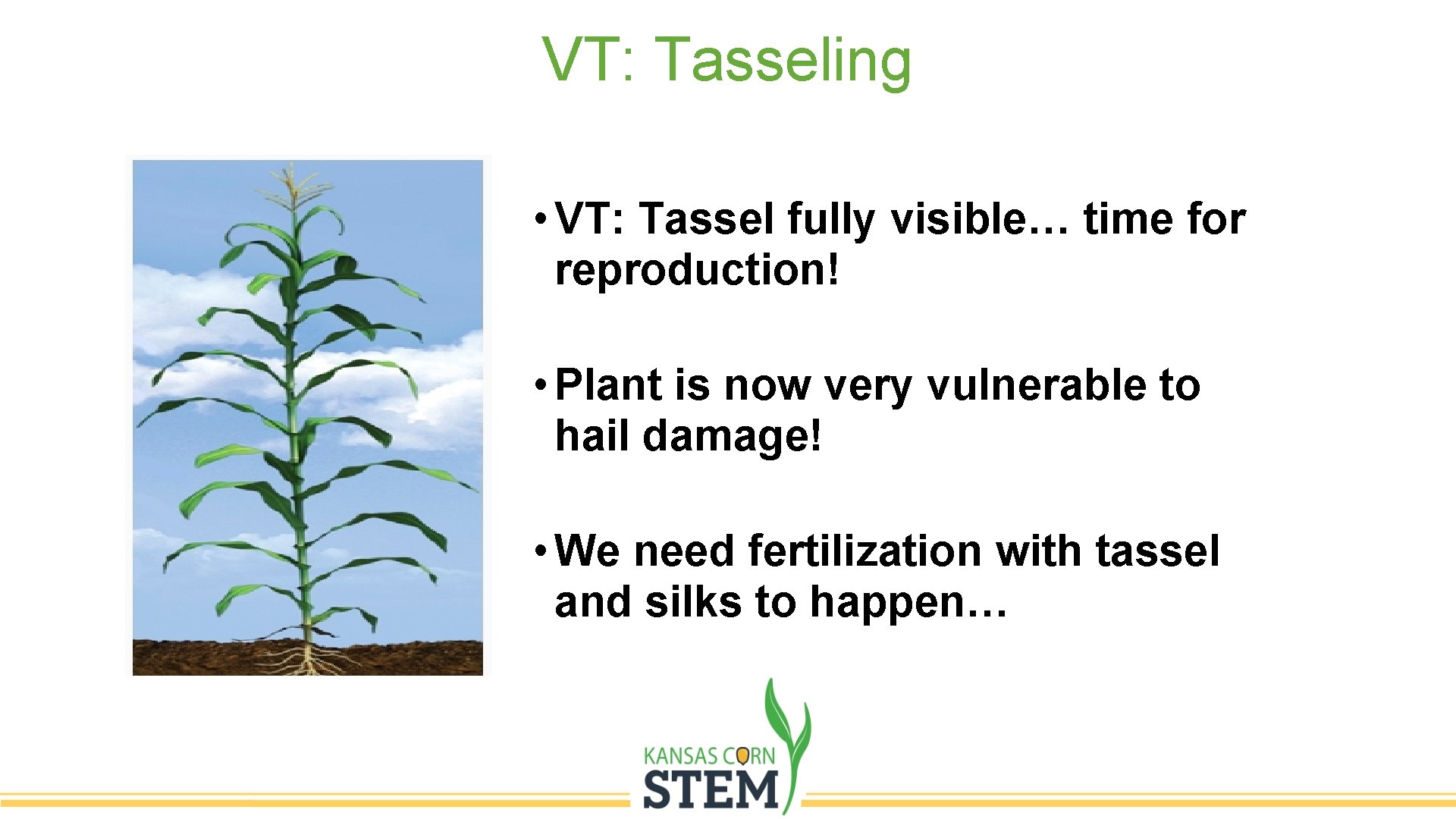
VT: Tasseling • VT: Tassel fully visible… time for reproduction! • Plant is now very vulnerable to hail damage! • We need fertilization with tassel and silks to happen…
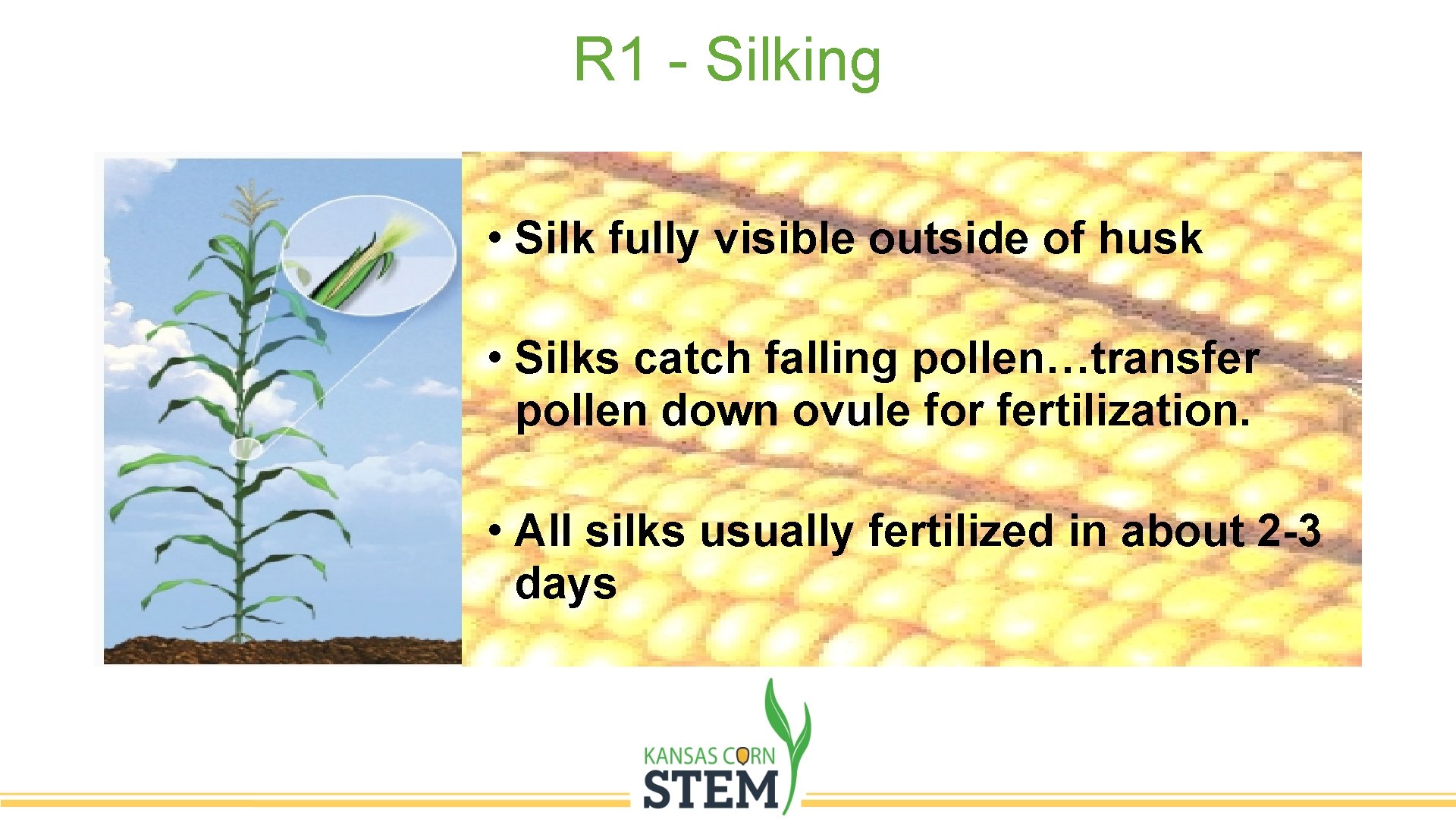
R 1 - Silking • Silk fully visible outside of husk • Silks catch falling pollen…transfer pollen down ovule for fertilization. • All silks usually fertilized in about 2 -3 days
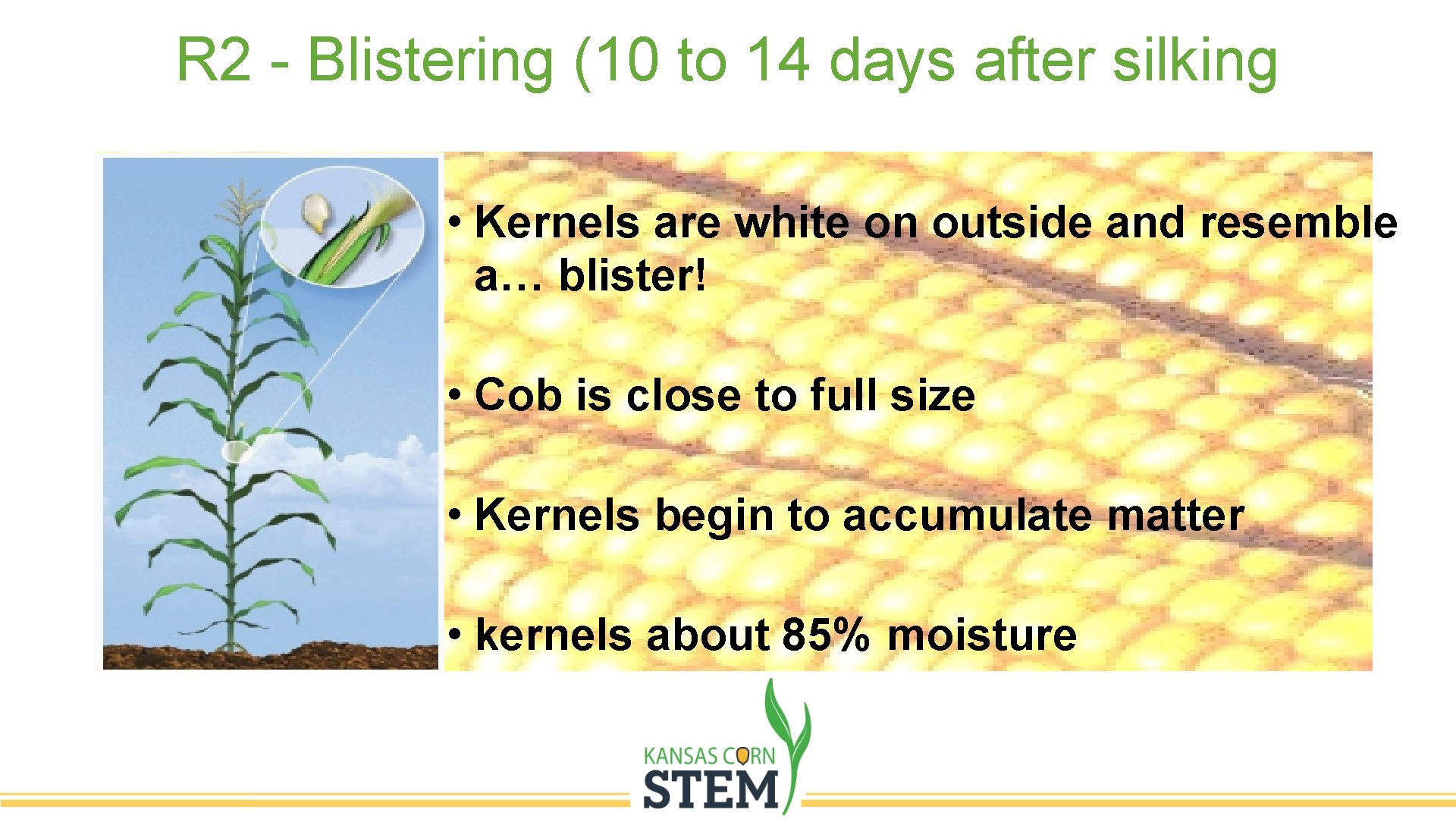
R 2 - Blistering (10 to 14 days after silking • Kernels are white on outside and resemble • Silk fully visible outside of husk a… blister! • Silks catch falling pollen…transfer • Cob is close to full size pollen down ovule for fertilization. • Kernels begin to accumulate matter • All silks usually fertilized in about 2 -3 days • kernels about 85% moisture
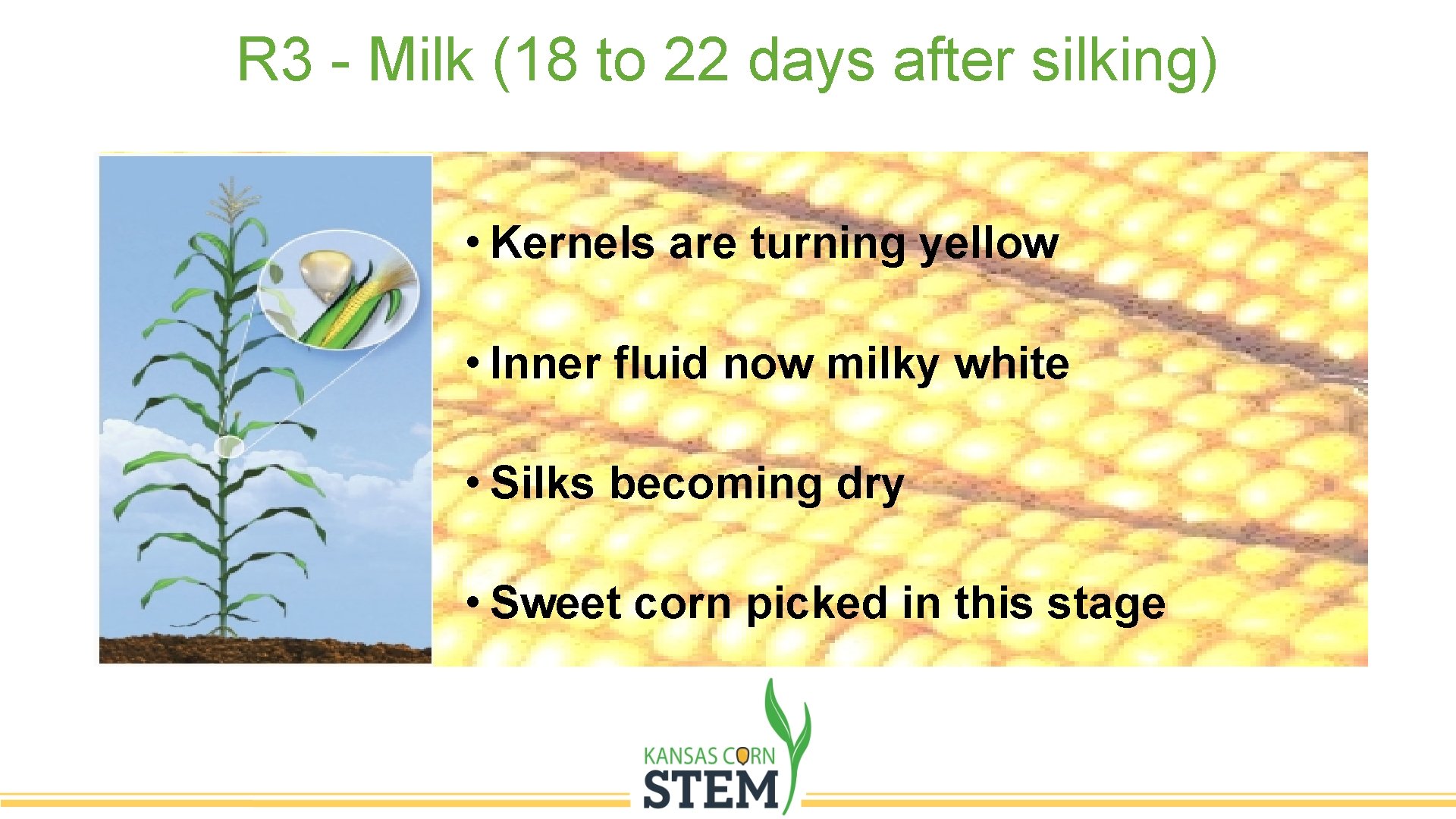
R 3 - Milk (18 to 22 days after silking) Silk fully visible outside • • Kernels are turning yellowof husk Silksfluid catch falling pollen…transfer • • Inner now milky white pollen down ovule for fertilization. • Silks becoming dry • All silks usually fertilized in about 2 -3 days • Sweet corn picked in this stage
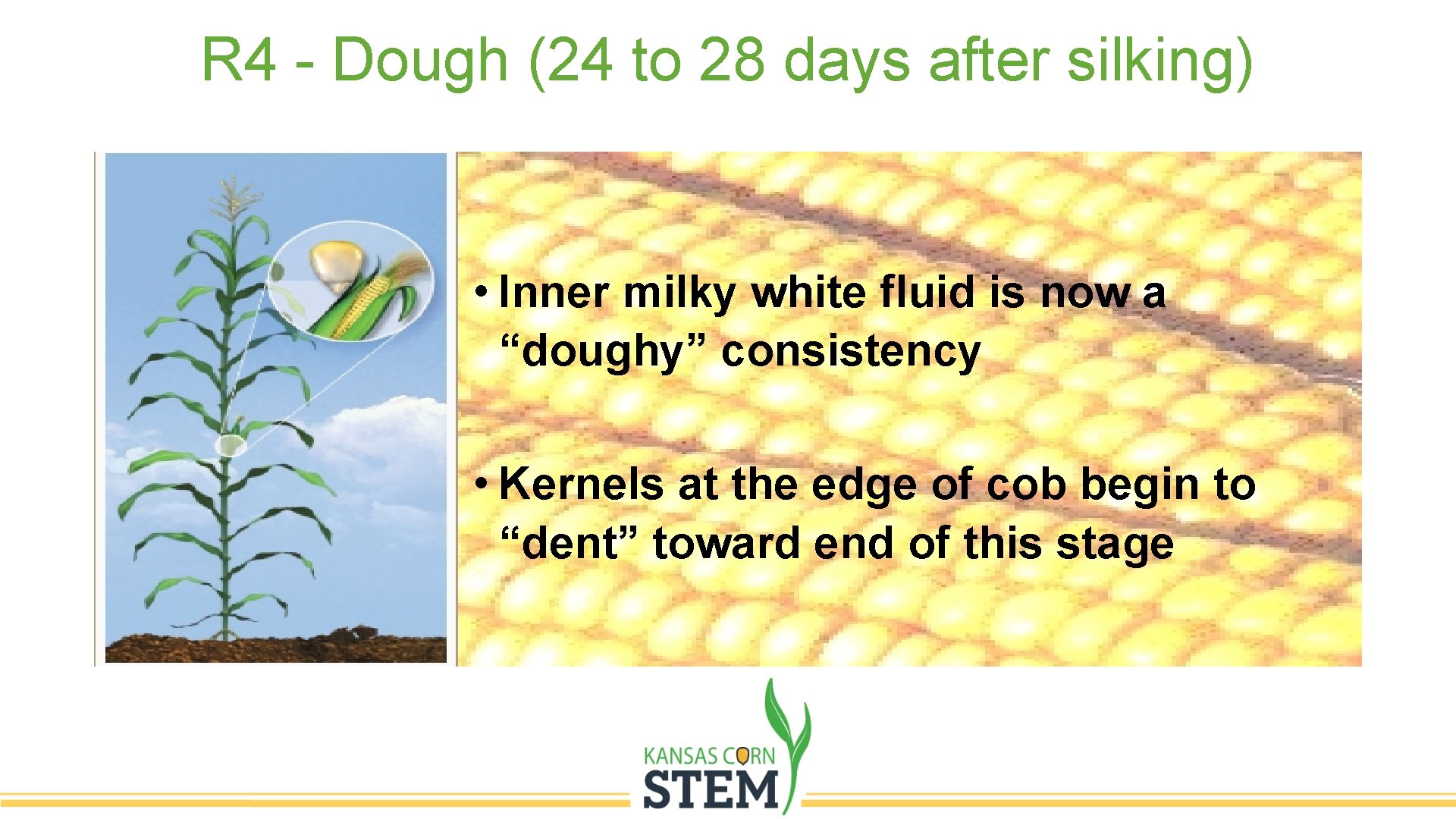
R 4 - Dough (24 to 28 days after silking) • Inner milky white fluid is now a “doughy” consistency • Kernels at the edge of cob begin to “dent” toward end of this stage
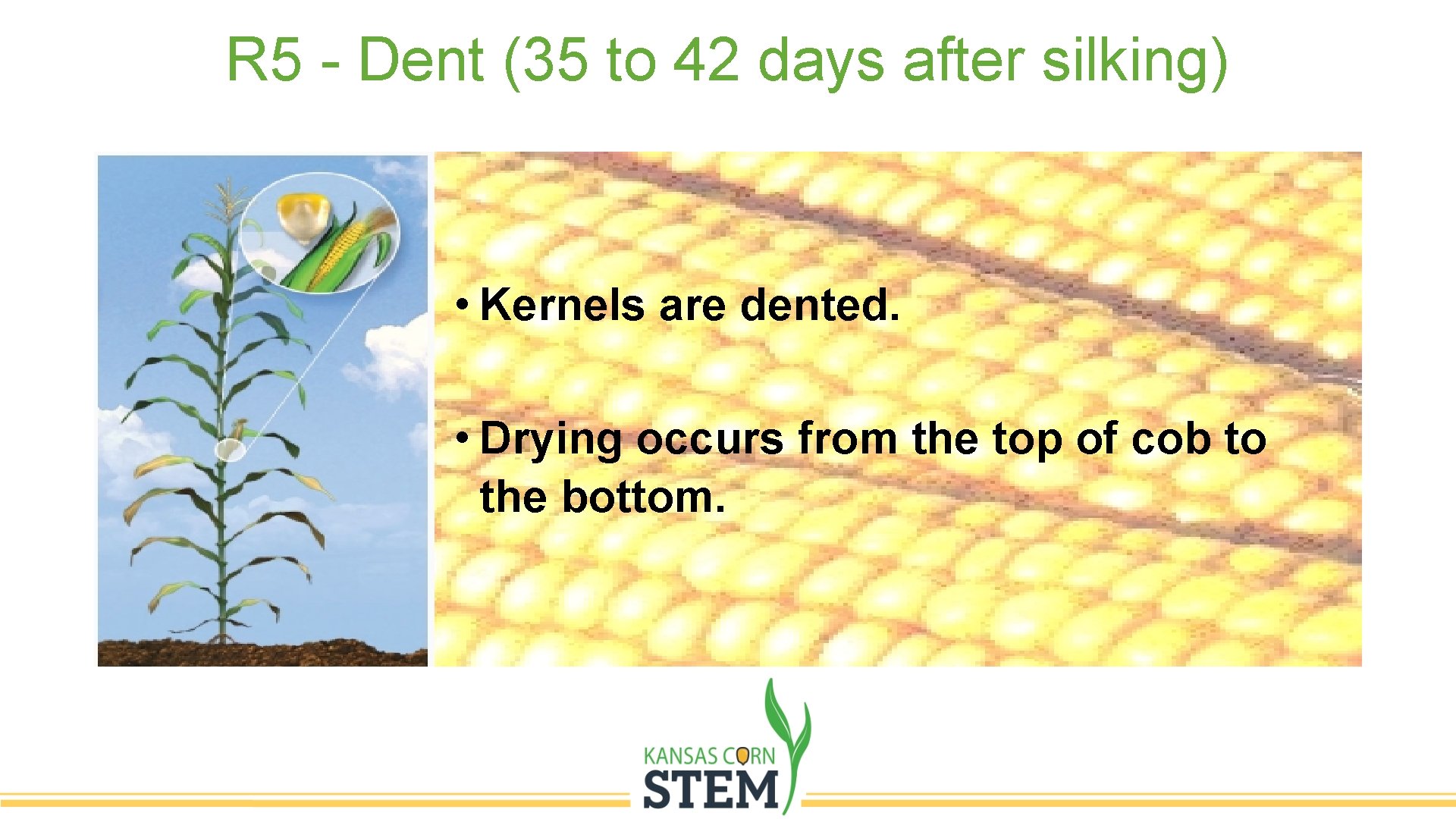
R 5 - Dent (35 to 42 days after silking) • Kernels are dented. • Drying occurs from the top of cob to the bottom.
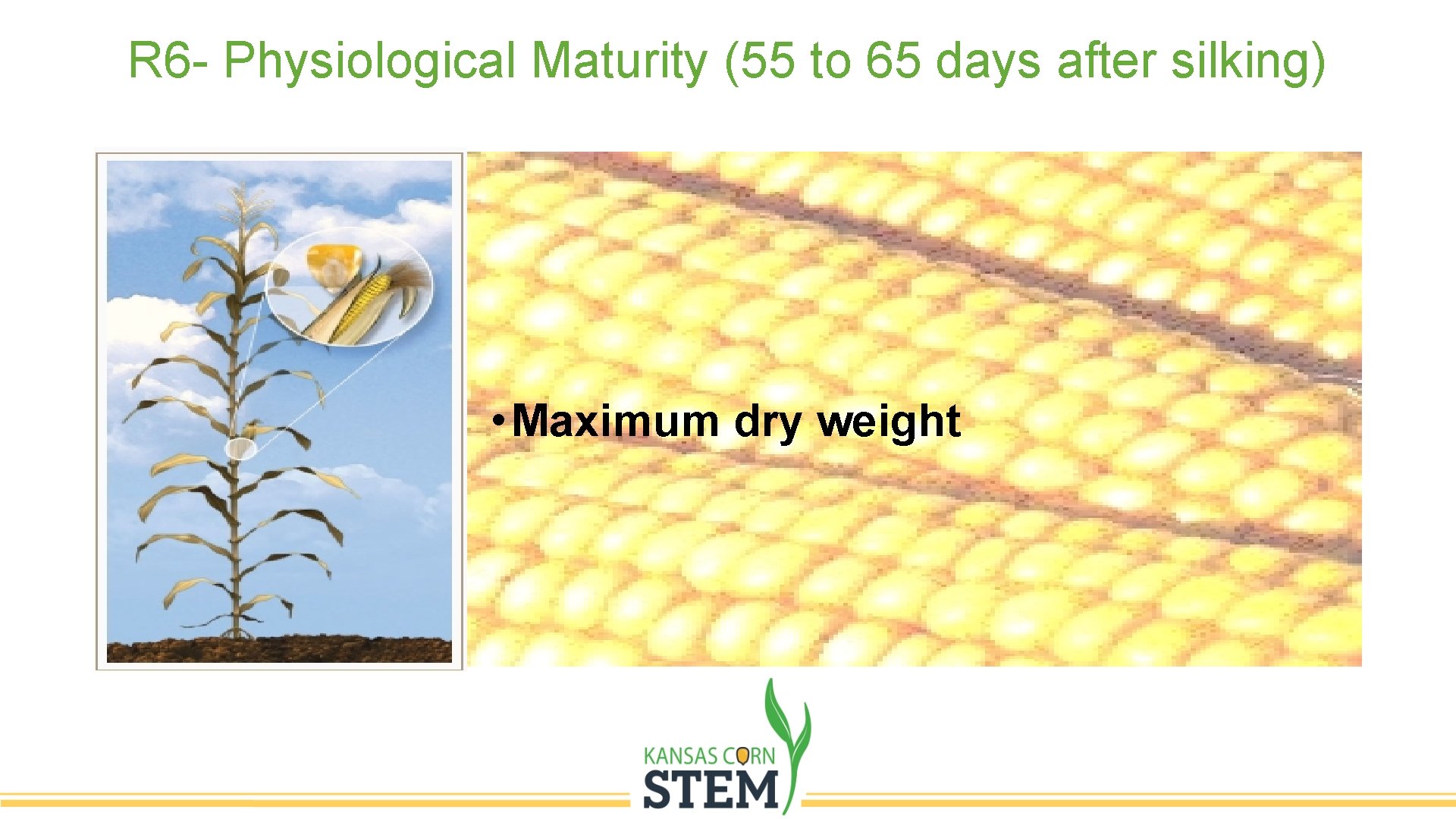
R 6 - Physiological Maturity (55 to 65 days after silking) • Maximum dry weight
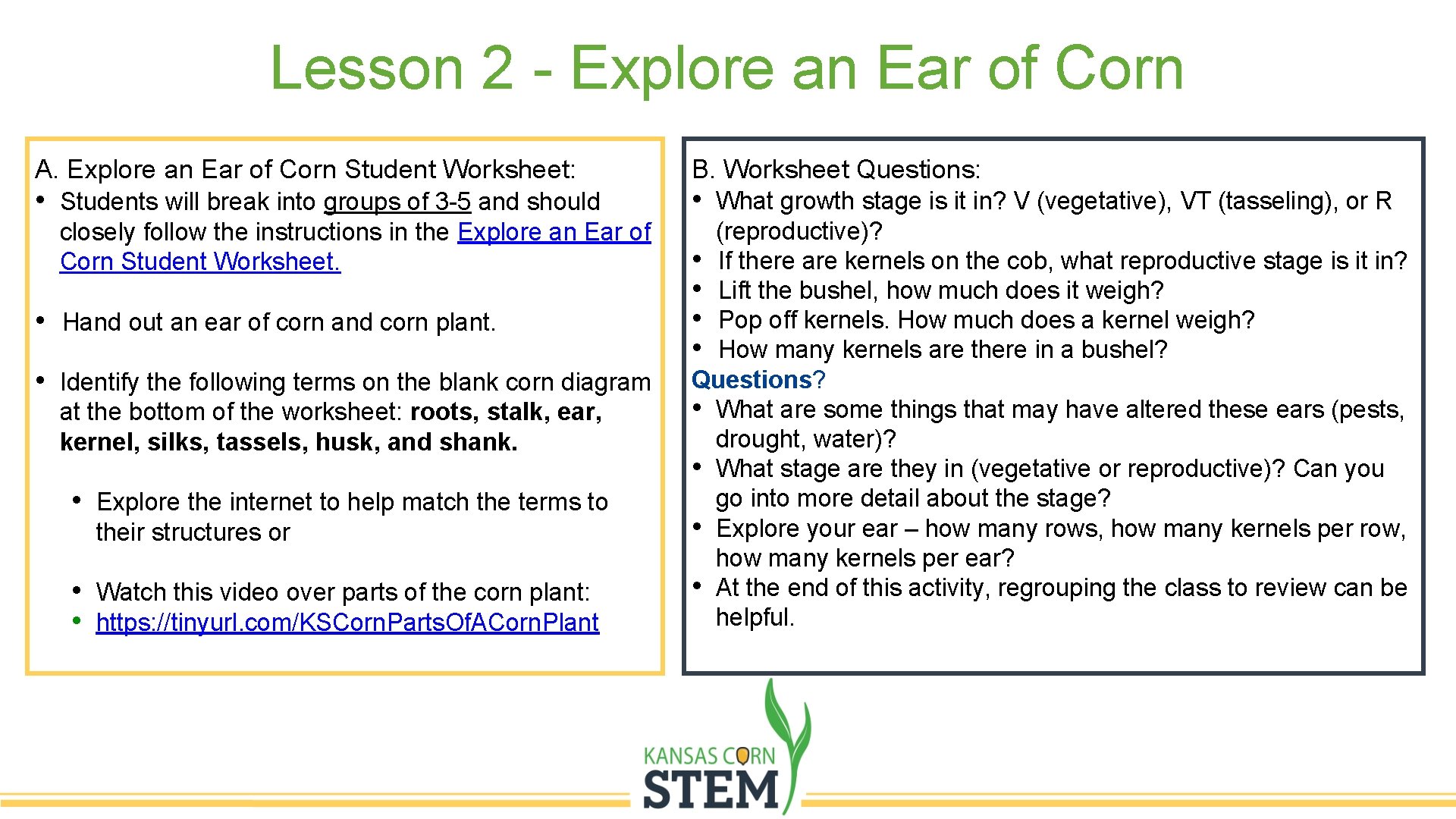
Lesson 2 - Explore an Ear of Corn A. Explore an Ear of Corn Student Worksheet: • Students will break into groups of 3 -5 and should closely follow the instructions in the Explore an Ear of Corn Student Worksheet. • Hand out an ear of corn and corn plant. • Identify the following terms on the blank corn diagram at the bottom of the worksheet: roots, stalk, ear, kernel, silks, tassels, husk, and shank. • Explore the internet to help match the terms to their structures or • Watch this video over parts of the corn plant: • https: //tinyurl. com/KSCorn. Parts. Of. ACorn. Plant B. Worksheet Questions: • What growth stage is it in? V (vegetative), VT (tasseling), or R (reproductive)? • If there are kernels on the cob, what reproductive stage is it in? • Lift the bushel, how much does it weigh? • Pop off kernels. How much does a kernel weigh? • How many kernels are there in a bushel? Questions? • What are some things that may have altered these ears (pests, drought, water)? • What stage are they in (vegetative or reproductive)? Can you go into more detail about the stage? • Explore your ear – how many rows, how many kernels per row, how many kernels per ear? • At the end of this activity, regrouping the class to review can be helpful.
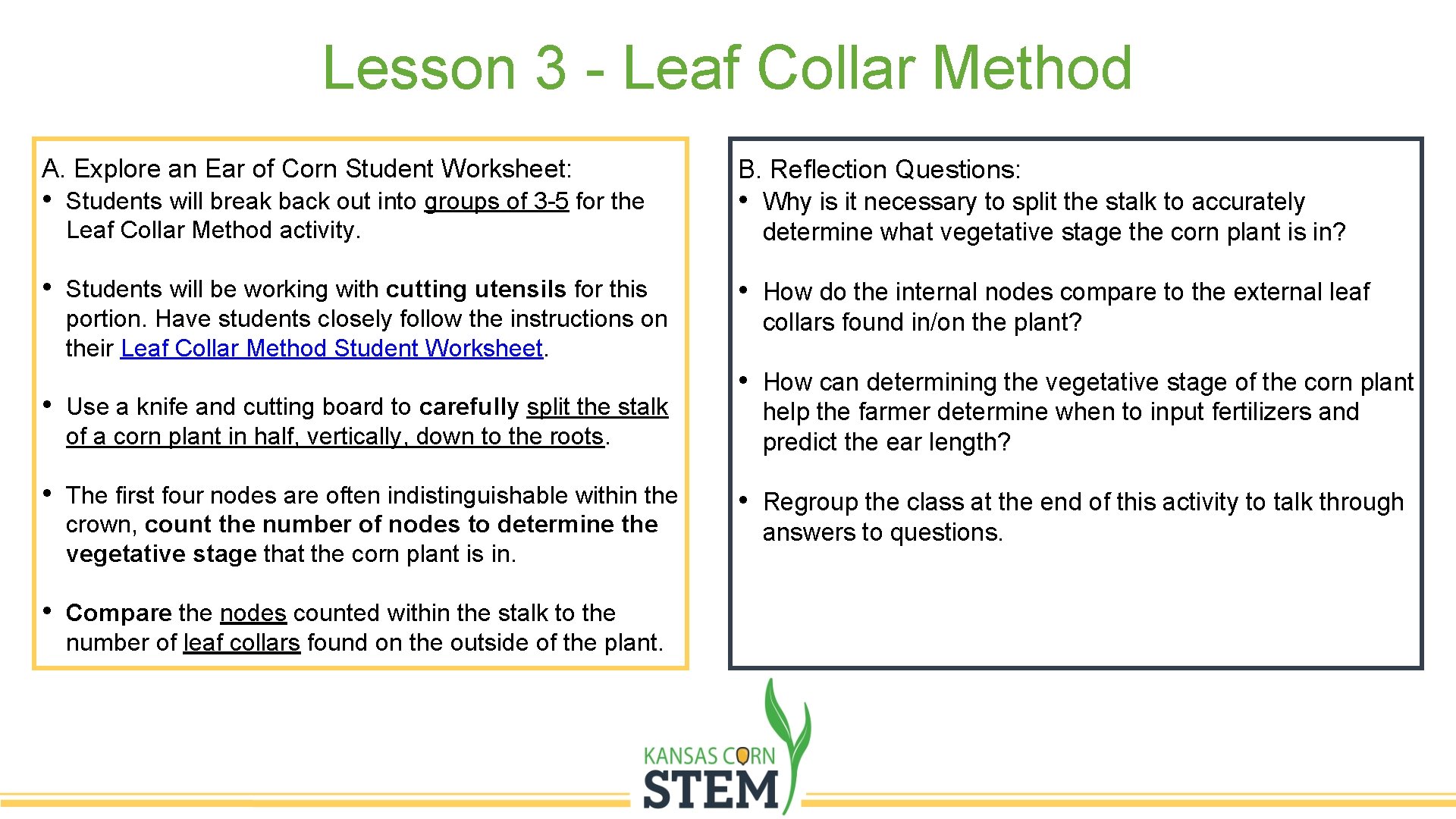
Lesson 3 - Leaf Collar Method A. Explore an Ear of Corn Student Worksheet: • Students will break back out into groups of 3 -5 for the Leaf Collar Method activity. • Students will be working with cutting utensils for this portion. Have students closely follow the instructions on their Leaf Collar Method Student Worksheet. • Use a knife and cutting board to carefully split the stalk of a corn plant in half, vertically, down to the roots. • The first four nodes are often indistinguishable within the crown, count the number of nodes to determine the vegetative stage that the corn plant is in. • Compare the nodes counted within the stalk to the number of leaf collars found on the outside of the plant. B. Reflection Questions: • Why is it necessary to split the stalk to accurately determine what vegetative stage the corn plant is in? • How do the internal nodes compare to the external leaf collars found in/on the plant? • How can determining the vegetative stage of the corn plant help the farmer determine when to input fertilizers and predict the ear length? • Regroup the class at the end of this activity to talk through answers to questions.
Assessment - Exit Ticket Before leaving class, one way to evaluate content knowledge is to create an “Exit Ticket”. Students respond to these que • What are four major stages of growth for a corn plant? • VE, VT, R 1, R 3, R 6 • What are the top two uses for corn? • Livestock feed and Ethanol • How long is it thought corn has been around? • 7, 000 - 9, 000 years • How many kernels are on a corn ear? How many plants can grow on one acre? • 600 - 800 kernels per ear, 22, 000 to 35, 000 plants per acre • What can the Leaf Collar Method tell us about a corn plant? What stage of life it is currently in? • answers vary depending on stage of corn plant • What are some things that can impact corn growth? • Pests, drought, water