
Kaiser Permanente Bedside Report by Nurses Razia Dean
• • • Kaiser Permanente Bedside Report by Nurses Razia Dean University of Phoenix LDR 535 Dr. Brock 06/11/2020
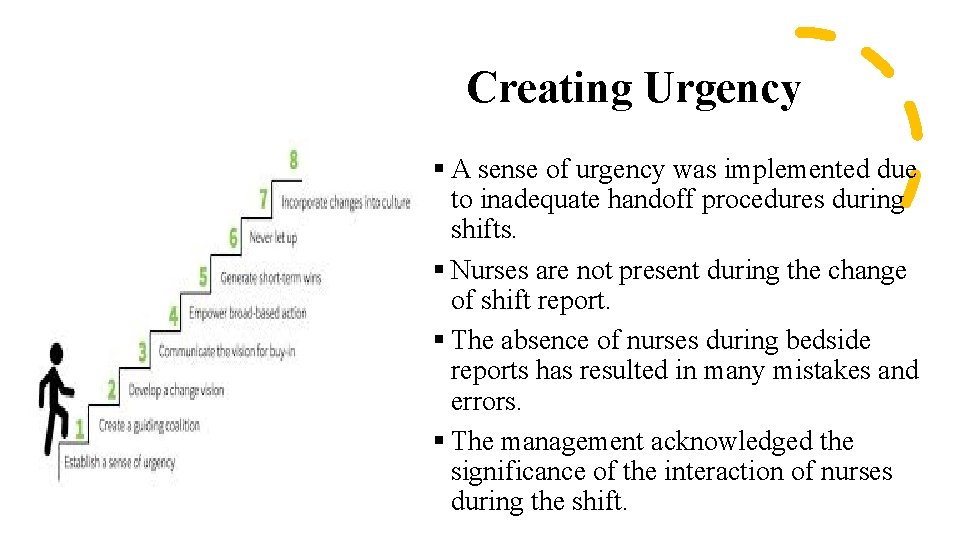
Creating Urgency § A sense of urgency was implemented due to inadequate handoff procedures during shifts. § Nurses are not present during the change of shift report. § The absence of nurses during bedside reports has resulted in many mistakes and errors. § The management acknowledged the significance of the interaction of nurses during the shift.
Guiding Coalition § The guiding collation group will comprise of nurse manager, senior bedside nurses, resource nurses, a nurse educator, administrative, clinical supervisor, and unit clinical advisor. § The team will be committed to procedures of bedside handoff. § The cohesive team will be responsible for creating a vision for the change and implementing change within its culture.
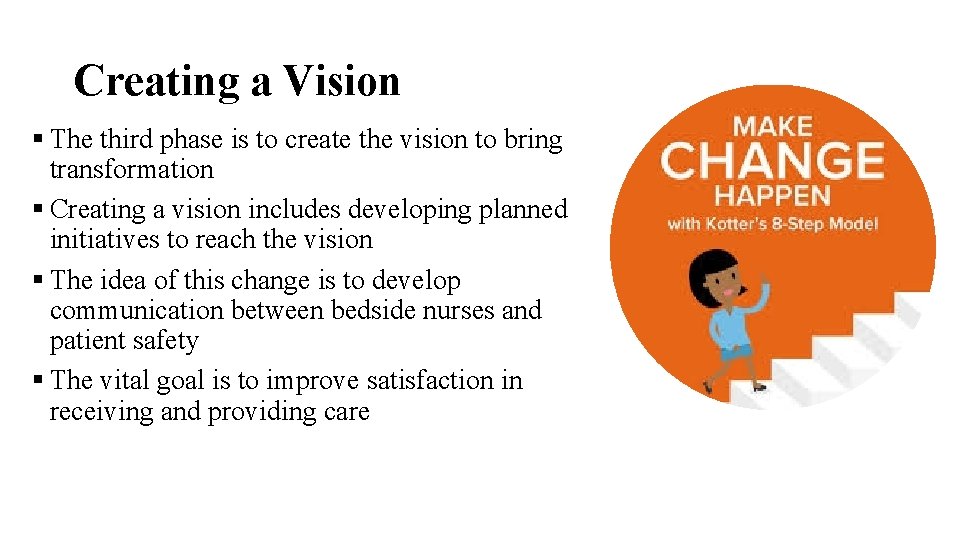
Creating a Vision § The third phase is to create the vision to bring transformation § Creating a vision includes developing planned initiatives to reach the vision § The idea of this change is to develop communication between bedside nurses and patient safety § The vital goal is to improve satisfaction in receiving and providing care
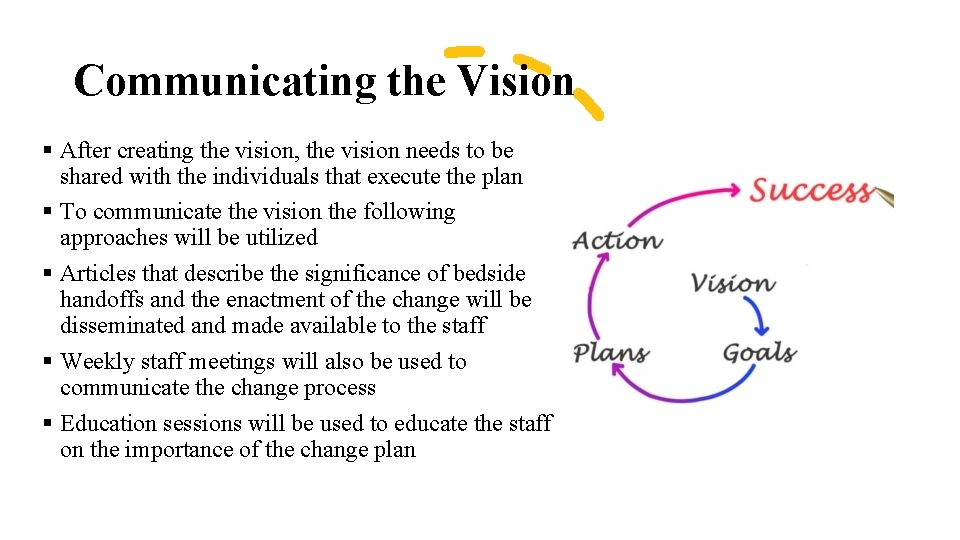
Communicating the Vision § After creating the vision, the vision needs to be shared with the individuals that execute the plan § To communicate the vision the following approaches will be utilized § Articles that describe the significance of bedside handoffs and the enactment of the change will be disseminated and made available to the staff § Weekly staff meetings will also be used to communicate the change process § Education sessions will be used to educate the staff on the importance of the change plan
Removing Obstacles The significant obstacles in the implementation of this change include communication of change and adoption of the change. A standardized communication system is an effective way to facilitate adaptation. There is a need for the team members to understand the change and offer autonomy to act. The SABR (Situation, Background, Assessment, and Recommendation) system failed to meet the demands for a resourceful communication. The Nursing Kardex will be electronically updated after the shift. SIP (Situation, intervention, and plan) system will be adopted to address the challenges in communication.
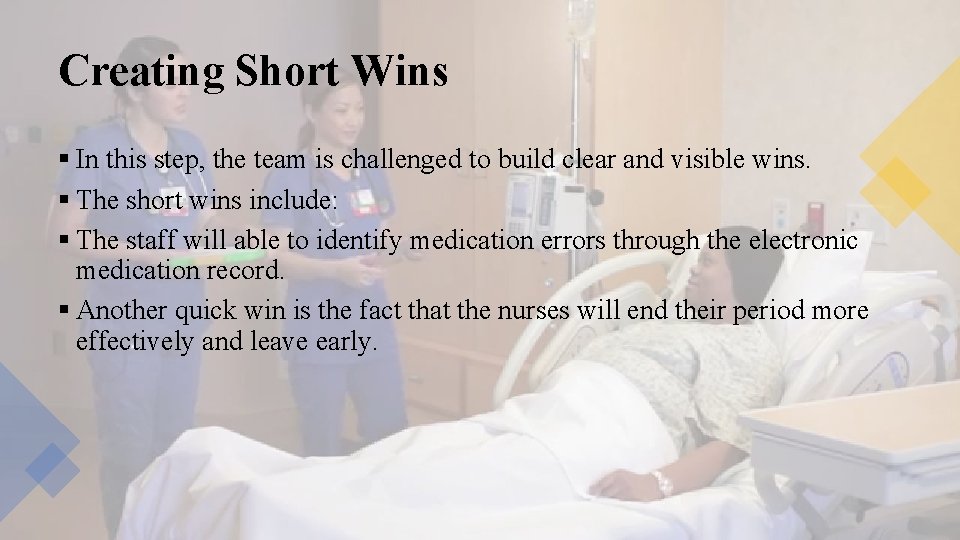
Creating Short Wins § In this step, the team is challenged to build clear and visible wins. § The short wins include: § The staff will able to identify medication errors through the electronic medication record. § Another quick win is the fact that the nurses will end their period more effectively and leave early.
Building on the change entailed supporting the changes and continued innovation. Support and coaching the staff to facilitate change. Building on the Changes are reinforced and maintained to ensure the attainment of the overall goal. Reinforcing the practical activities of maintaining the SIP Development of new procedures. Using SIP and DMS to offer better patient care.
Anchoring the Changes in the Corporate Culture § Anchoring the change needs a cultural drive where the vision turns out to be the norm. § The bedside report handoff process will become a custom among the bedside nurses. § Education on the importance of the bedside handoff process will become a norm in the bedside nurse during orientation. § Waking up the patient during the bedside handoff procedure will become a norm during shift changing. § Celebrating the employees that enhance the changes to empower employees. § The new culture will improve communication and patient satisfaction.
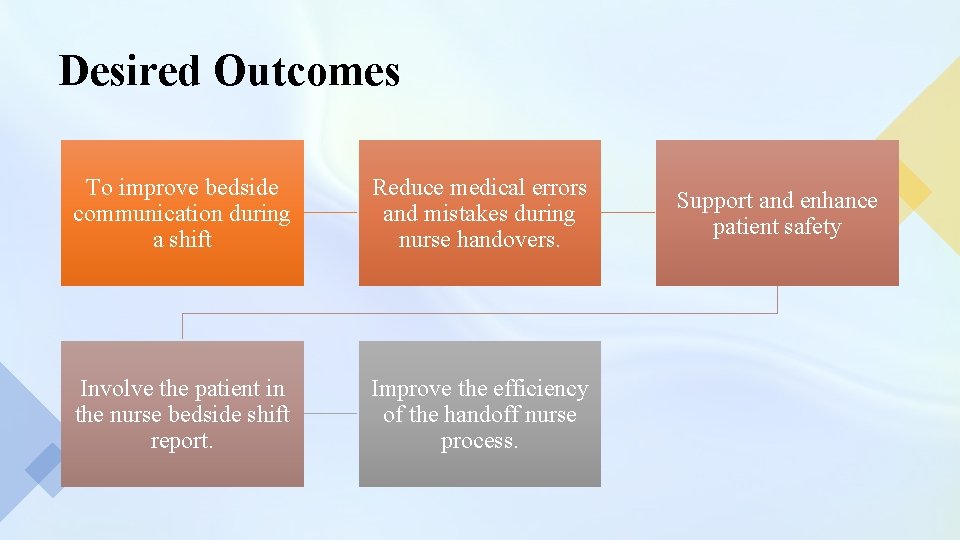
Desired Outcomes To improve bedside communication during a shift Reduce medical errors and mistakes during nurse handovers. Involve the patient in the nurse bedside shift report. Improve the efficiency of the handoff nurse process. Support and enhance patient safety
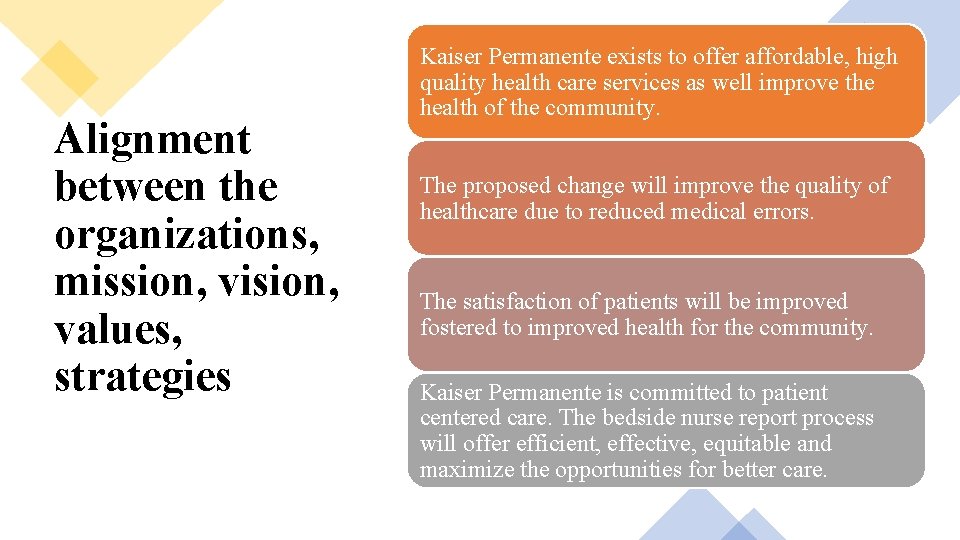
Alignment between the organizations, mission, vision, values, strategies Kaiser Permanente exists to offer affordable, high quality health care services as well improve the health of the community. The proposed change will improve the quality of healthcare due to reduced medical errors. The satisfaction of patients will be improved fostered to improved health for the community. Kaiser Permanente is committed to patient centered care. The bedside nurse report process will offer efficient, effective, equitable and maximize the opportunities for better care.
Small, A. , Gist, D. , Souza, D. , Dalton, J. , Magny. Normilus, C. , & David, D. (2016). Using Kotter's change model for implementing bedside handoff: a quality improvement project. Journal of nursing care quality, 31(4), 304 -309. References Kotter, J. (2010). Kotter’s 8 -step change model. Mind Tools. Retrieved from http: //www. mindtools. com/pages/article/new. PPM_82. htm. Tang, K. N. (2019). Change management. In Leadership and Change Management (pp. 47 -55). Springer, Singapore. Mourfield, R. (2014). Organizational change: A guide to bringing everyone on board. Management.
- Slides: 12