
Kabuki Theatre and Geisha Imagery in High and
Kabuki Theatre and Geisha Imagery in High and Popular Western Culture Eisenstein’s grotesques; Memoirs of the Geisha
Kabuki Theatre
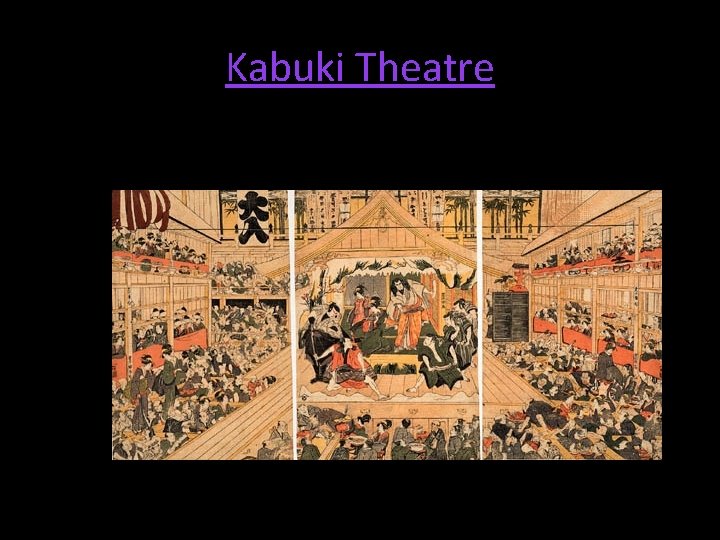
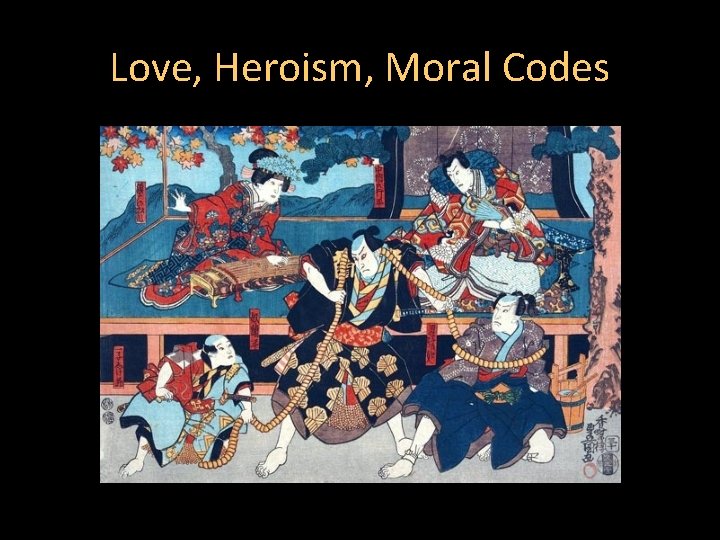
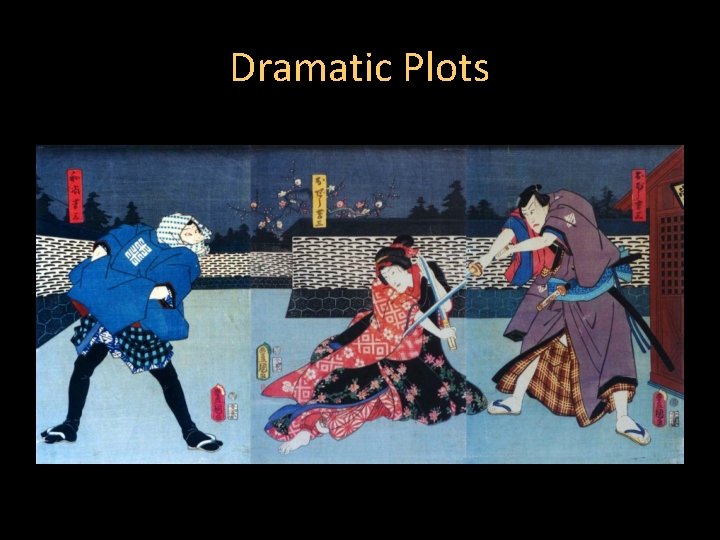
Kabuki Theatre • Classical Japanese theatre, dance drama. • Dates back to early 17 th century. • First was all female, then became all-male theatre (onnagata, cross-dressed actors). • Late 17 th-mid 19 th century – the “Golden age” of Kabuki: elaborate costumes and makeup, artful performance, accent on drama; specially written plays in place of improvisation.
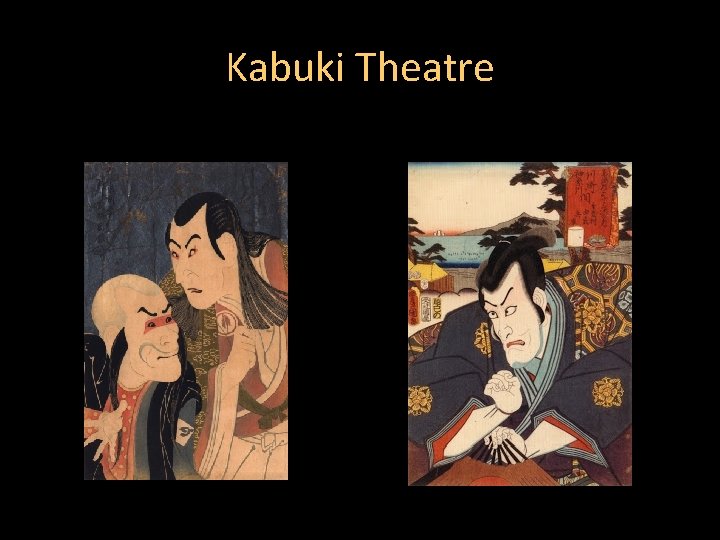
Kabuki Theatre Mask-like make-up, wigs Exaggerated body language Codified make-up and performance Plays based on history and legends Traditionalism in dance and music Special effects: revolving stage: trap doors, footbridge to the audience • Popular subject for ukiyo-e prints. • • •
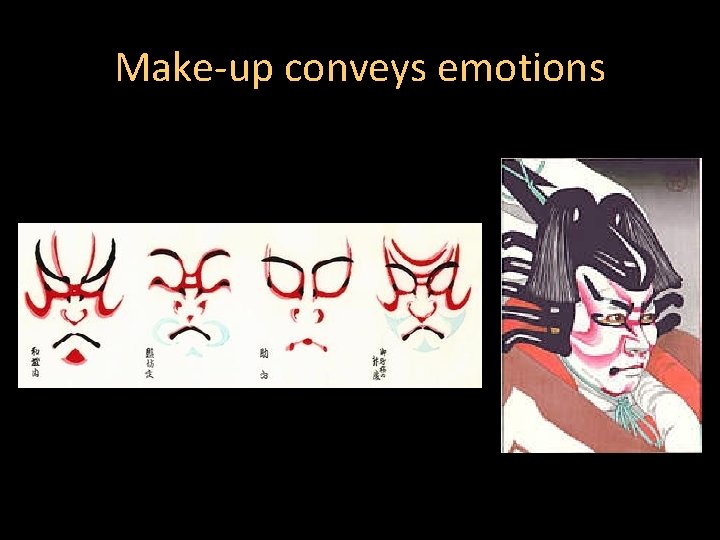
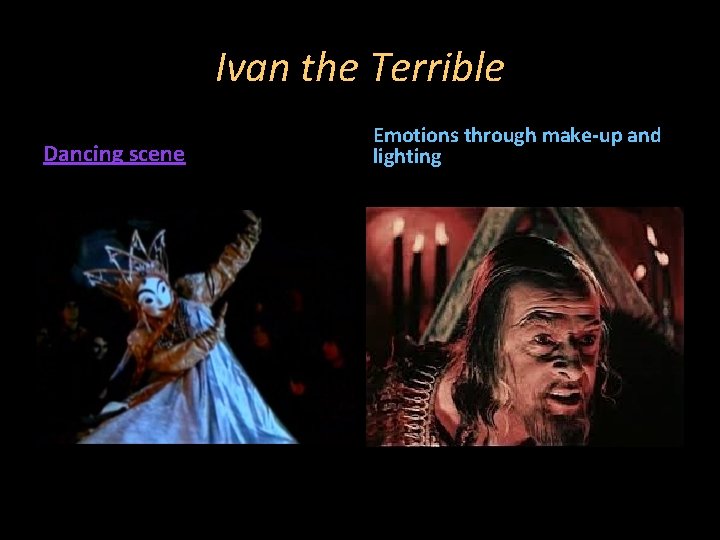
Make-up conveys emotions
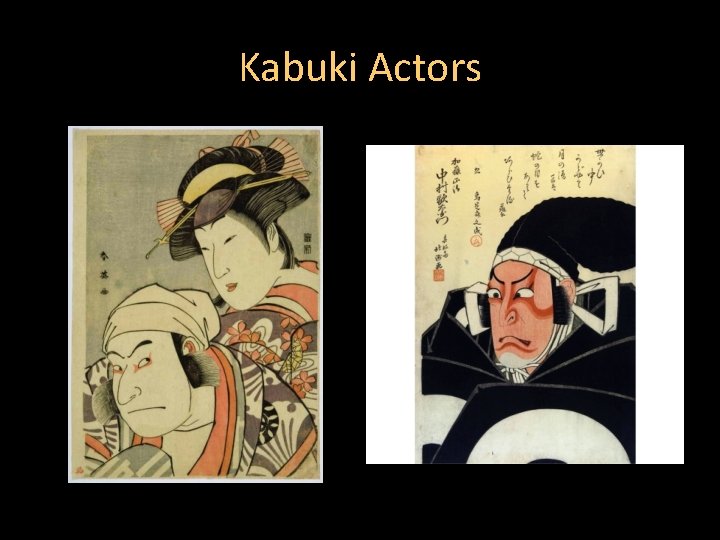
Kabuki Actors
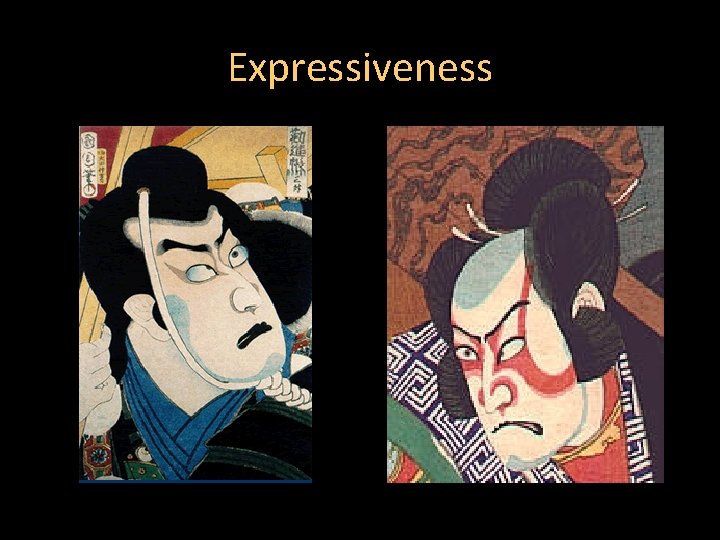
Expressiveness
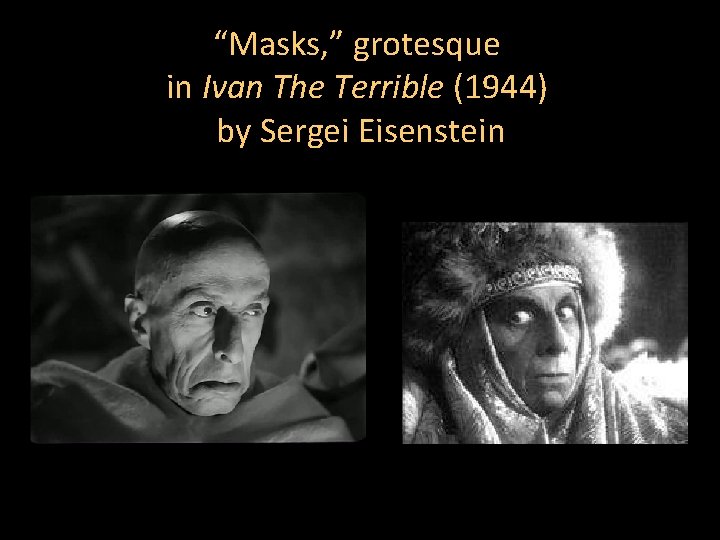
“Masks, ” grotesque in Ivan The Terrible (1944) by Sergei Eisenstein
Love, Heroism, Moral Codes
Dramatic Plots
Kabuki Theatre
Ivan the Terrible Dancing scene Emotions through make-up and lighting
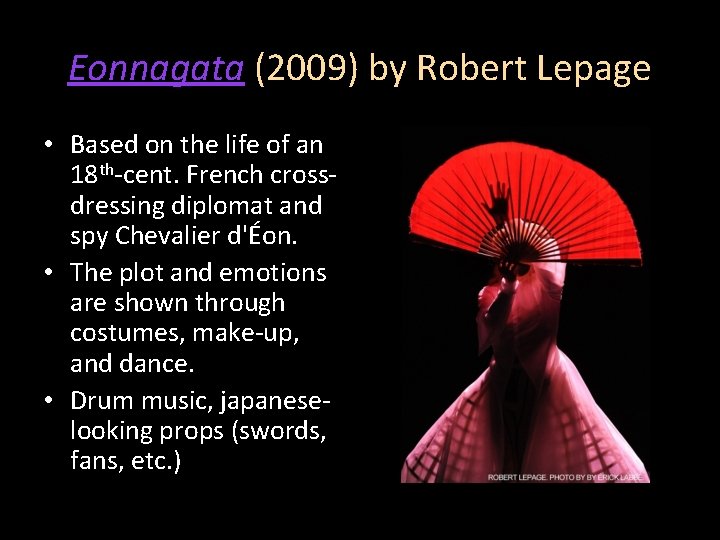
Eonnagata (2009) by Robert Lepage • Based on the life of an 18 th-cent. French crossdressing diplomat and spy Chevalier d'Éon. • The plot and emotions are shown through costumes, make-up, and dance. • Drum music, japaneselooking props (swords, fans, etc. )
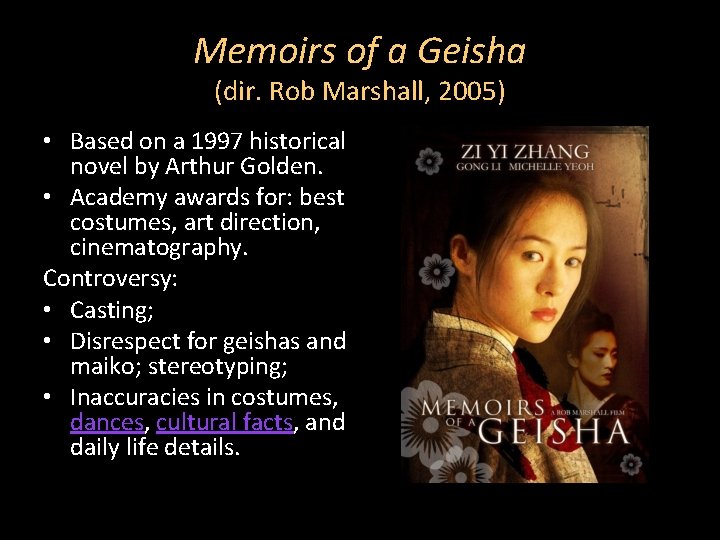
Memoirs of a Geisha (dir. Rob Marshall, 2005) • Based on a 1997 historical novel by Arthur Golden. • Academy awards for: best costumes, art direction, cinematography. Controversy: • Casting; • Disrespect for geishas and maiko; stereotyping; • Inaccuracies in costumes, dances, cultural facts, and daily life details.
- Slides: 14