
Justinian Code Lesson 10 2 1 TN SPI


- Slides: 16
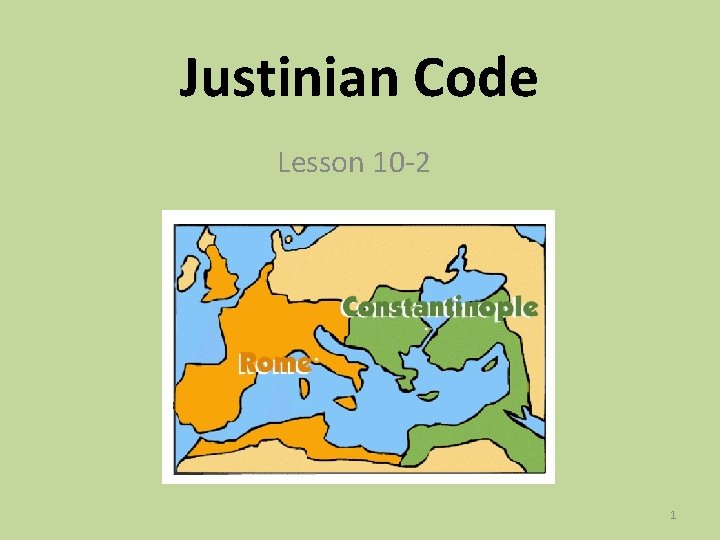
Justinian Code Lesson 10 -2 1
• TN SPI – 6. 4. 3 Identify the development of written laws (Justinian Code) – 6. 5. 12 Recognize the possible causes of changes in civilizations – 6. 6. 2 Recognize the impact of individuals on world history 2
Justinian Looks to the Past • In 527 A. D. Justinian I began to plan ways to make the Byzantine Empire as great as the Roman Empire had been in the past. – With a strong army, he conquered: • • Many lands that Rome had lost Alexandria in Egypt Carthage in northern Africa Athens in Europe 3
Justinian Code • Emperor Justinian chose ten men to review 1, 600 books full of Roman Law (Twelve Tables) and create a simpler legal code. • These men were able to create the Justinian Code with just over 4, 000 laws. The laws were recorded in four books. • Many of the laws in Justinian’s Code reflect the point of view of his wife, Theodora. 4
Empress Theodora • Theodora encouraged her husband to make new laws that were fairer to women. – Laws allowing parents to leave property to daughters – Laws improving women’s rights – Innocent until proven guilty • Theodora assisted her husband in choosing government leaders. • She believed jobs should be given based on ability and not social class. 5
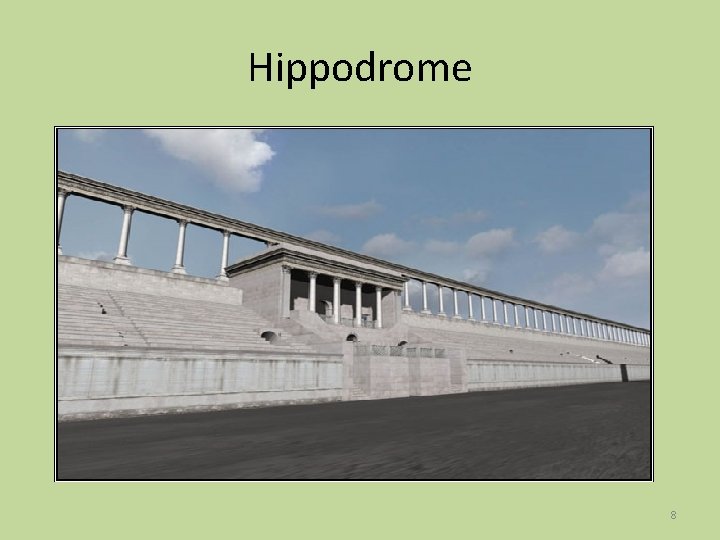
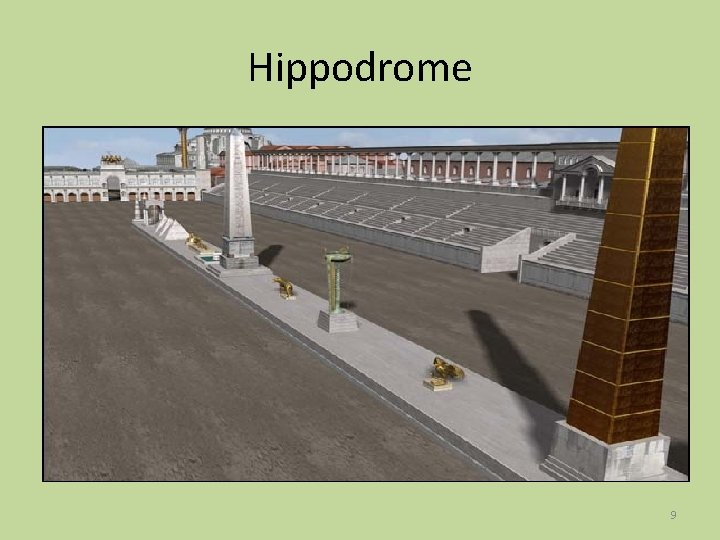
Empress Theodora • Theodora’s early life was spent at the Hippodrome, or circus. • Her father was a bear keeper and she was a circus performer, but left the circus in her 20 s. • Most empresses came from noble families. • Theodora’s early life gave her a prospective of what life was like for ordinary citizens. Her husband also came from a poor family. • Like Rome, a small number of citizens were wealthy, while most were working class or poor. 6
Hippodrome 7
Hippodrome 8
Hippodrome 9
Byzantine Economy • Justinian worked to build a strong economy. • Constantinople was a meeting place for merchants from Europe and Asia. • New industries – Silk • He ordered silkworm eggs smuggled from China, along with mulberry trees. • This ended the monopoly China held on the world’s silk trade. 10
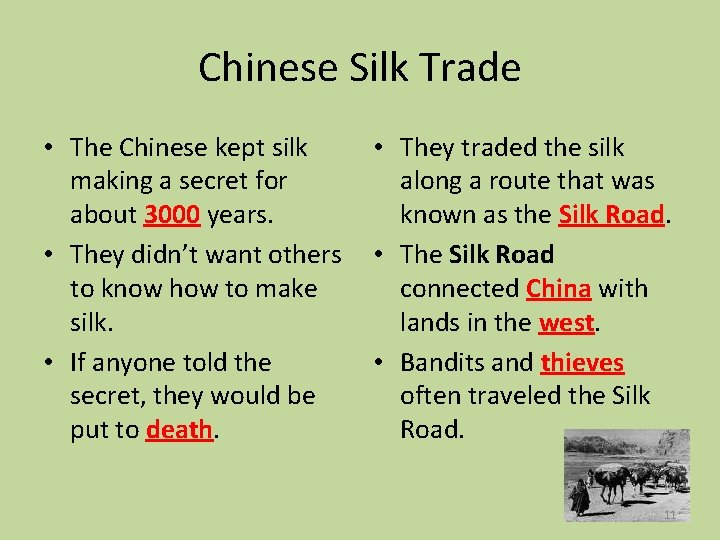
Chinese Silk Trade • The Chinese kept silk making a secret for about 3000 years. • They didn’t want others to know how to make silk. • If anyone told the secret, they would be put to death. • They traded the silk along a route that was known as the Silk Road. • The Silk Road connected China with lands in the west. • Bandits and thieves often traveled the Silk Road. 11
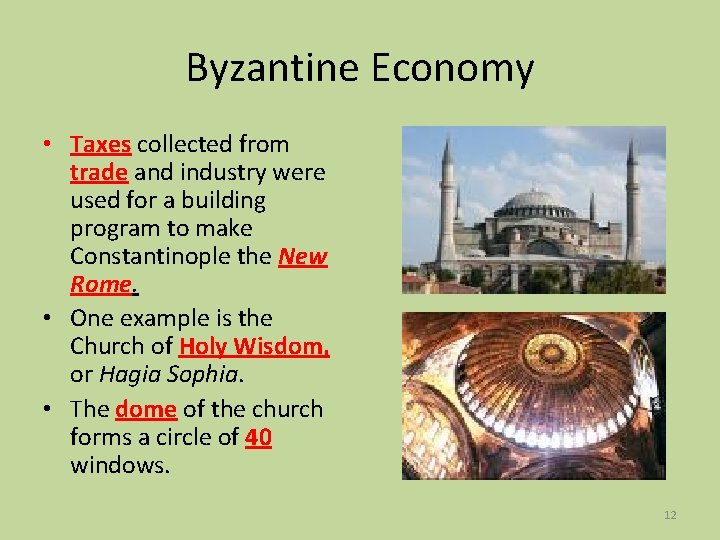
Byzantine Economy • Taxes collected from trade and industry were used for a building program to make Constantinople the New Rome. • One example is the Church of Holy Wisdom, or Hagia Sophia. • The dome of the church forms a circle of 40 windows. 12
Religious Dispute • Justinian and Theodora were both Christians, but they disagreed about religious ways. • Disputes concerning religious beliefs and traditions often caused conflicts in between the east and the west. • One argument concerned the use of icons in religious worship and prayers. 13
Religious Dispute • Orthodox Christians, (east) or those who held strict religious beliefs, thought the use of icons (pictures of Christ) was forbidden in the Ten Commandments. • Orthodox Christians thought this was a form of worshipping idols. • In the west where few people could read or write, church leaders believed the use of icons was a good way to teach about Christianity. 14
The Great Schism of 1054 • In 1054 the Christian Church split because of disagreements over religious issues. • Two branches of Christianity form: – Eastern Greek Orthodox Church – Roman Catholic Church 15
The Great Schism of 1054 – Eastern Greek Orthodox Church • Based in Constantinople • Official language – Greek • Church led by a Patriarch referred to as a Bishop • Bishops couldn’t marry. • Priests could marry. • Scriptures were the final authority on all matters. • Emperor or political ruler was above the Bishop. • Rejected the use of icons. – Roman Catholic Church • Based in Rome • Official language – Latin • Church led by a Pope referred to as Father. • Church leaders could not marry. • Only Pope and Bishops could interpret the scriptures. • The Pope was the Supreme head of Church above any political ruler. • Religious icons accepted. 16