
Justifications for Preserving the Environment Introduction to Environmental

- Slides: 16
Justifications for Preserving the Environment Introduction to Environmental Science Botkin & Keller- Chapter #1
Assignment v Before moving forward on this presentation- Please complete the guided reading assignment on Chapter #1 in the Botkin & Keller textbook. v Pay special attention to Pg. 2 - Case Study About Mangroves, and Pickup Trucks: Local and Global Connections Reveal Major Environmental Concerns
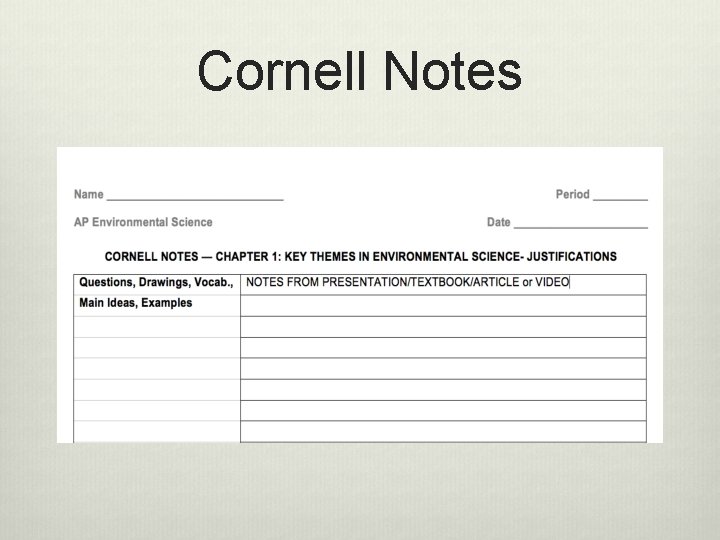
Cornell Notes
Placing a Value on the Environment v How do we place a value on any aspect of our environment? v The value of the environment is based on eight justifications: aesthetic, creative, recreational, inspirational, moral, cultural, ecological, and utilitarian
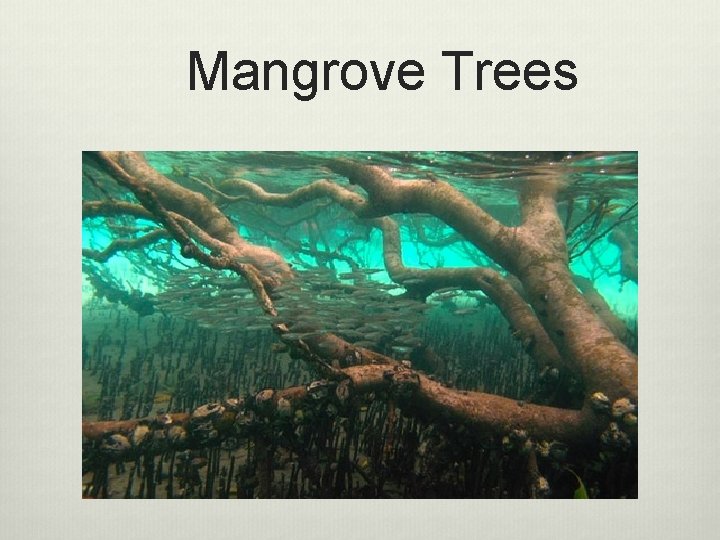
Mangrove Trees
Utilitarian Justification v Sees some aspect of the environment as valuable because it benefits individuals economically or is directly necessary to human survival v Example: Mangrove Swamps provide a nursery for shrimp that are the basis of the livelihood for the shrimp fisherman
Ecological Justification v An ecosystem is necessary for the survival of some species of interest to us, or that the system itself provides some benefit. v Example: Mangrove Swamps provide habitat for marine fish, and although we do not eat Mangrove Trees, we may eat the fish that depend on them.
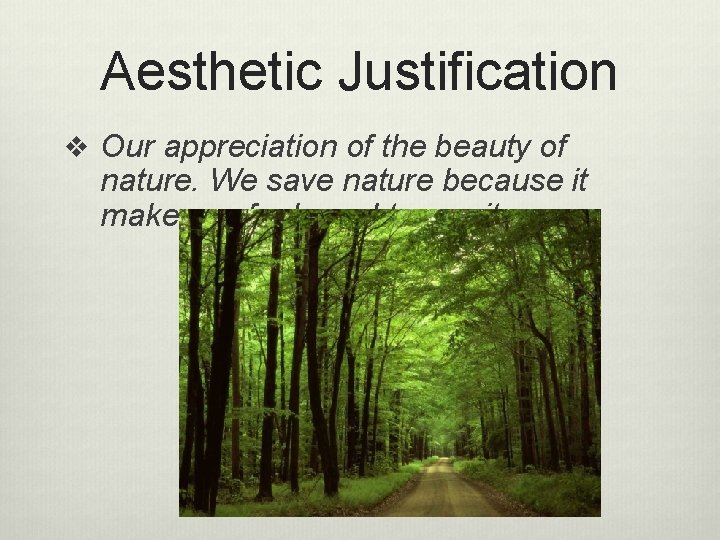
Aesthetic Justification v Our appreciation of the beauty of nature. We save nature because it makes us feel good to see it
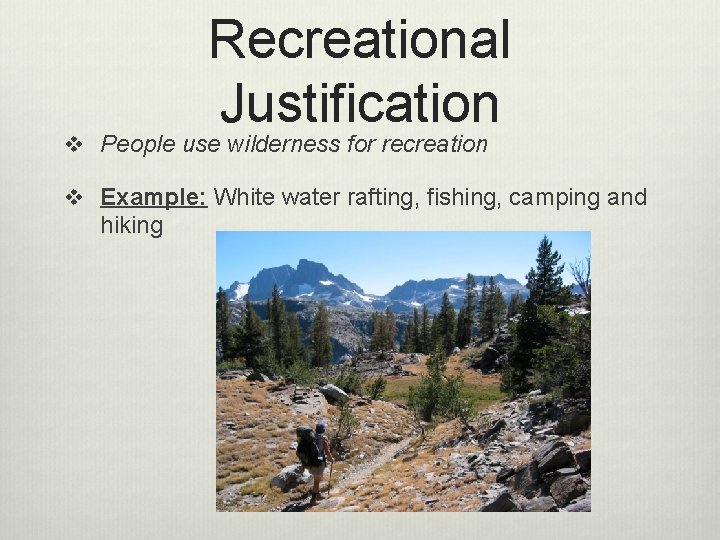
Recreational Justification v People use wilderness for recreation v Example: White water rafting, fishing, camping and hiking
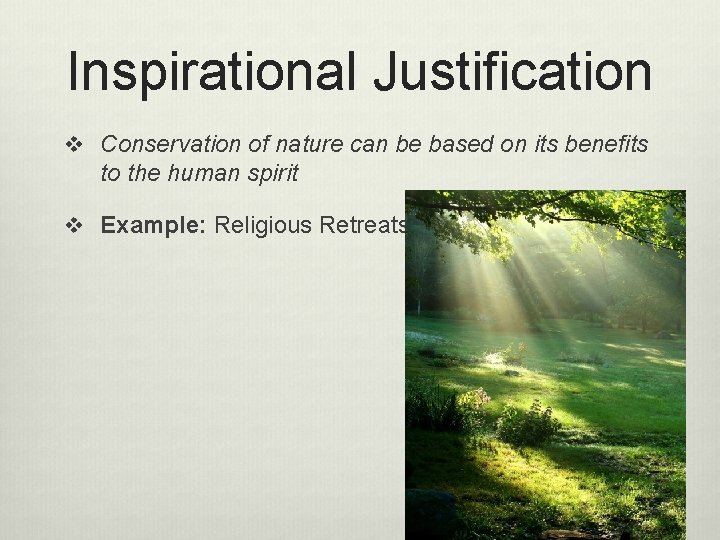
Inspirational Justification v Conservation of nature can be based on its benefits to the human spirit v Example: Religious Retreats
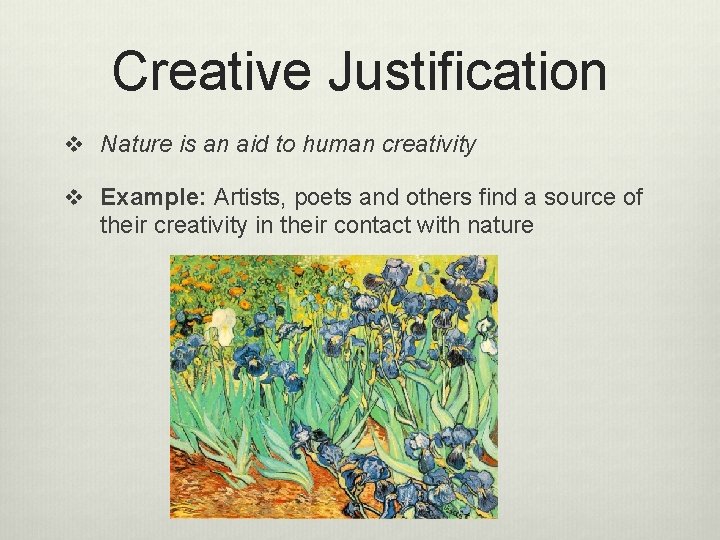
Creative Justification v Nature is an aid to human creativity v Example: Artists, poets and others find a source of their creativity in their contact with nature
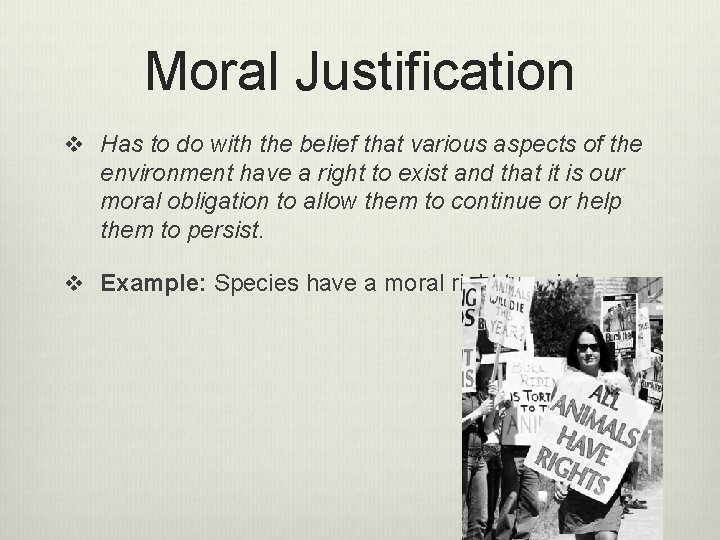
Moral Justification v Has to do with the belief that various aspects of the environment have a right to exist and that it is our moral obligation to allow them to continue or help them to persist. v Example: Species have a moral right to exist
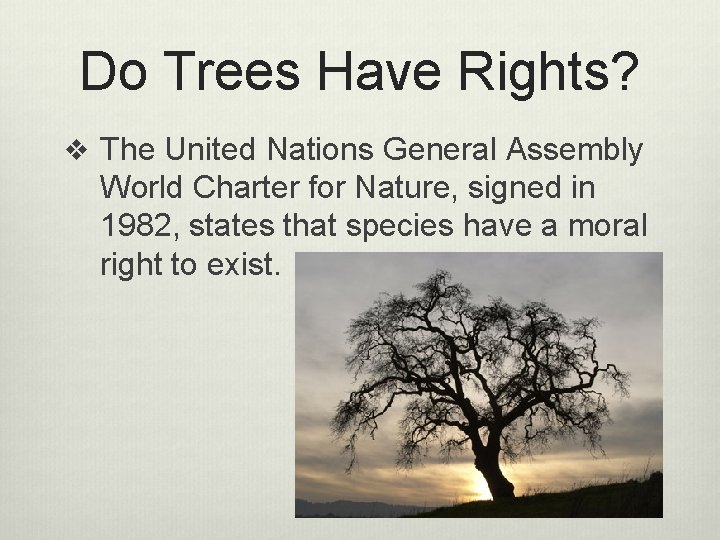
Do Trees Have Rights? v The United Nations General Assembly World Charter for Nature, signed in 1982, states that species have a moral right to exist.
The Big Question v DO we have a moral obligation to future generations? to leave the environment in good condition for our descendants, OR Are we at liberty to use environmental resources to the point of depletion within our own lifetime?
Summary
Final Assignment v Read Pg. 12 in Botkin & Keller textbook. v Answer questions #1 -4 in your notebook. (Make sure to write your answers to include the questions. ) v Example: (Question #1)- The current state of the world’s coral reefs illustrate the six themes of the book by…. .