
Justice Konda Madhava Reddy Memorial Lecture 2004 The

![Jamsetiji Tata National Virtual Academy for Rural Prosperity [NVA] ICT-enabled knowledge flow Lab to](https://slidetodoc.com/presentation_image/145775676d5feb05574c201a8033ab3d/image-43.jpg "Jamsetiji Tata National Virtual Academy for Rural Prosperity [NVA] ICT-enabled knowledge flow Lab to")
- Slides: 55
Justice Konda Madhava Reddy Memorial Lecture 2004 The Indian Institute of Public Administration, Mumbai 25 November 2004 "Building Sustainable Food and Water Security Systems" M. S. Swaminathan Chairman, National Commission on Farmers, GOI
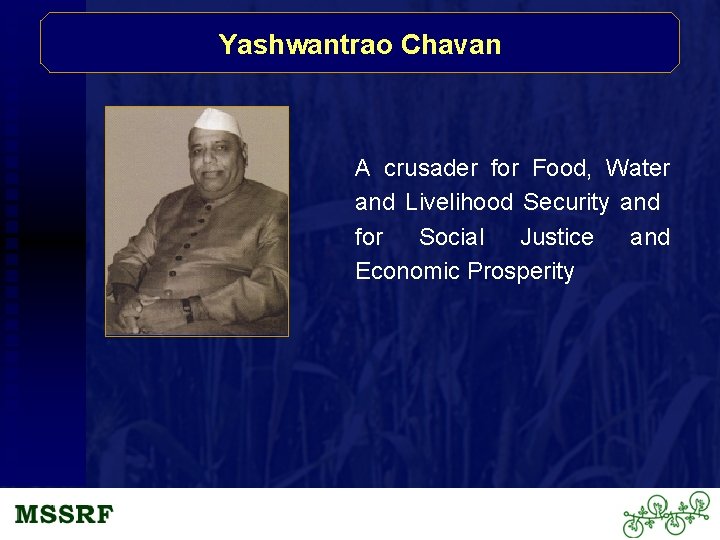
Yashwantrao Chavan A crusader for Food, Water and Livelihood Security and for Social Justice and Economic Prosperity
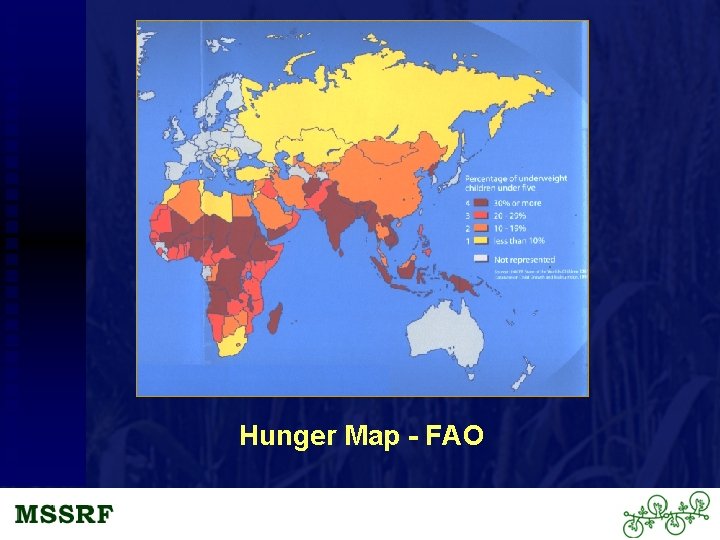
Hunger Map - FAO
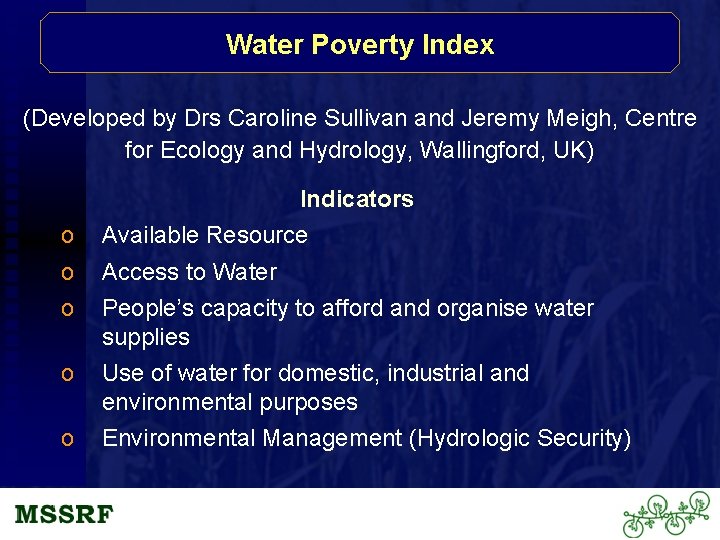
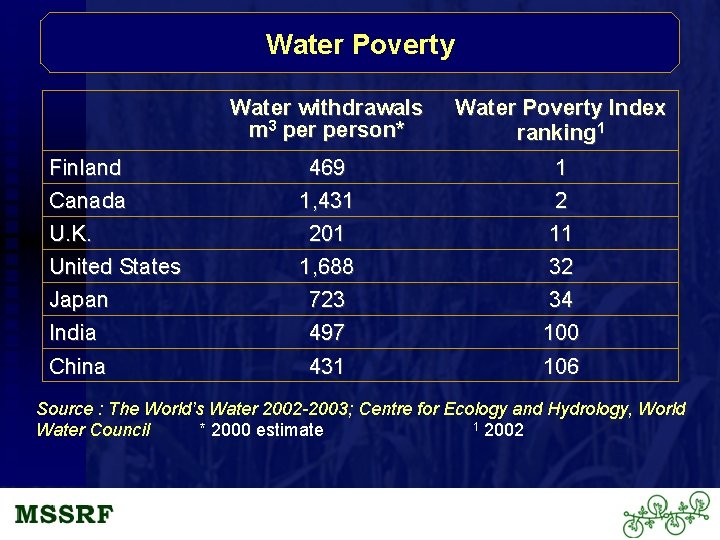
Water Poverty Index (Developed by Drs Caroline Sullivan and Jeremy Meigh, Centre for Ecology and Hydrology, Wallingford, UK) Indicators o o o Available Resource o Use of water for domestic, industrial and environmental purposes o Environmental Management (Hydrologic Security) Access to Water People’s capacity to afford and organise water supplies
Water Poverty Water withdrawals m 3 person* Water Poverty Index ranking 1 Finland Canada 469 1, 431 1 2 U. K. United States 201 1, 688 11 32 Japan India 723 497 34 100 China 431 106 Source : The World’s Water 2002 -2003; Centre for Ecology and Hydrology, World Water Council * 2000 estimate 1 2002
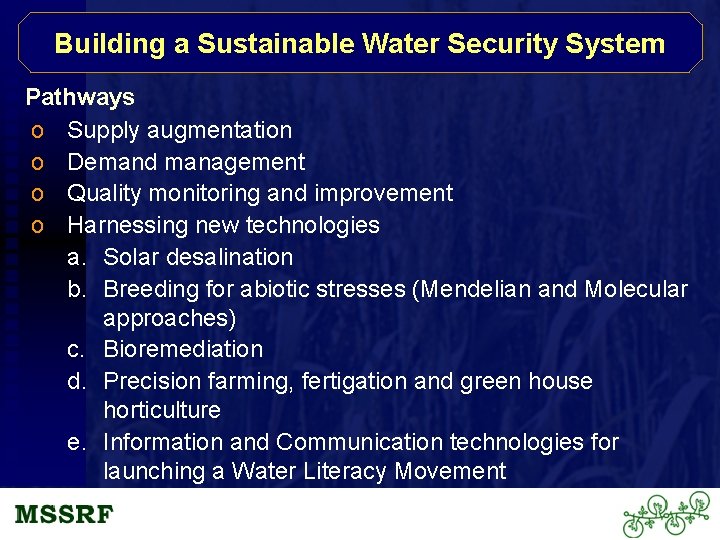
Building a Sustainable Water Security System Pathways o Supply augmentation o Demand management o Quality monitoring and improvement o Harnessing new technologies a. Solar desalination b. Breeding for abiotic stresses (Mendelian and Molecular approaches) c. Bioremediation d. Precision farming, fertigation and green house horticulture e. Information and Communication technologies for launching a Water Literacy Movement
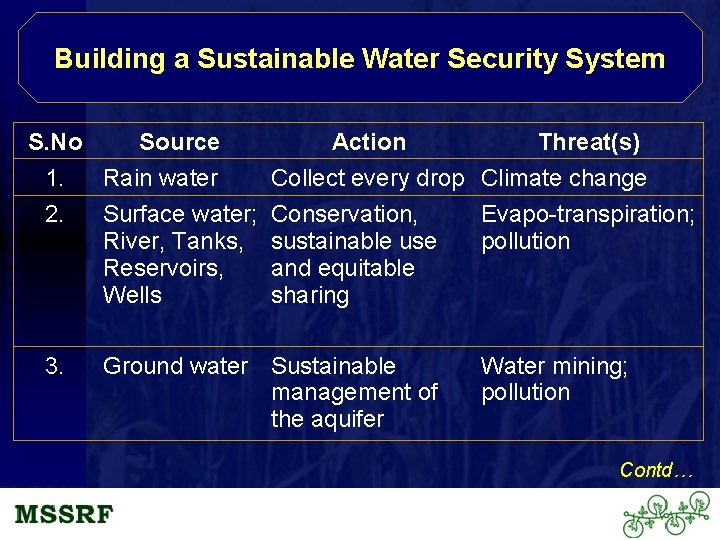
Building a Sustainable Water Security System S. No Source Action Threat(s) 1. Rain water Collect every drop Climate change 2. Surface water; Conservation, River, Tanks, sustainable use Reservoirs, and equitable Wells sharing Evapo-transpiration; pollution 3. Ground water Sustainable management of the aquifer Water mining; pollution Contd…
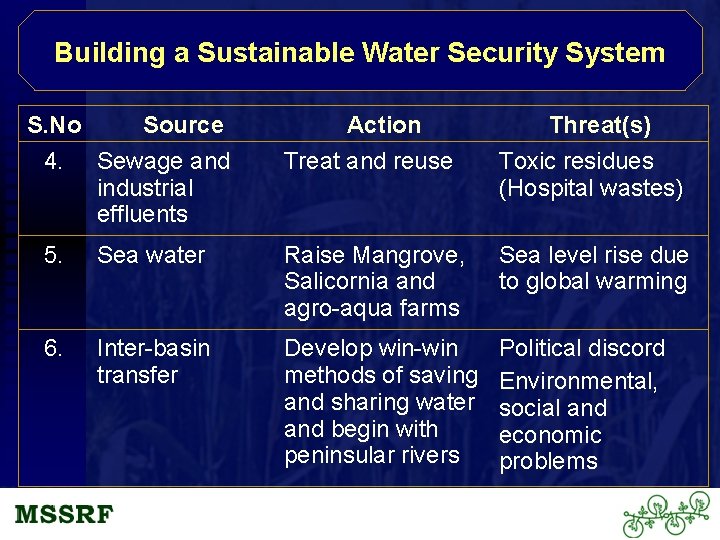
Building a Sustainable Water Security System S. No Source Action Threat(s) 4. Sewage and industrial effluents Treat and reuse Toxic residues (Hospital wastes) 5. Sea water Raise Mangrove, Salicornia and agro-aqua farms Sea level rise due to global warming 6. Inter-basin transfer Develop win-win methods of saving and sharing water and begin with peninsular rivers Political discord Environmental, social and economic problems
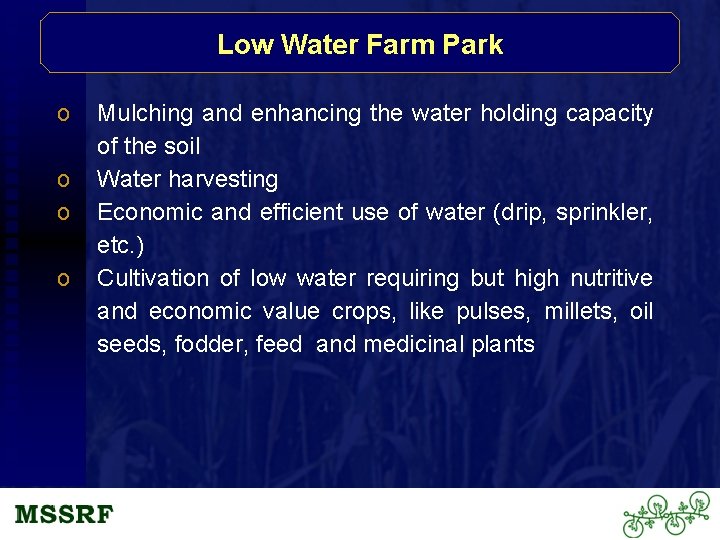
Low Water Farm Park o o Mulching and enhancing the water holding capacity of the soil Water harvesting Economic and efficient use of water (drip, sprinkler, etc. ) Cultivation of low water requiring but high nutritive and economic value crops, like pulses, millets, oil seeds, fodder, feed and medicinal plants
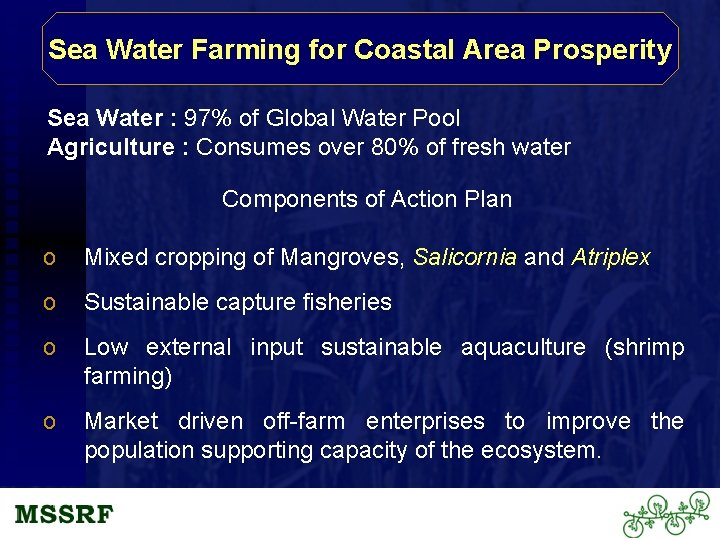
Sea Water Farming for Coastal Area Prosperity Sea Water : 97% of Global Water Pool Agriculture : Consumes over 80% of fresh water Components of Action Plan o Mixed cropping of Mangroves, Salicornia and Atriplex o Sustainable capture fisheries o Low external input sustainable aquaculture (shrimp farming) o Market driven off-farm enterprises to improve the population supporting capacity of the ecosystem.
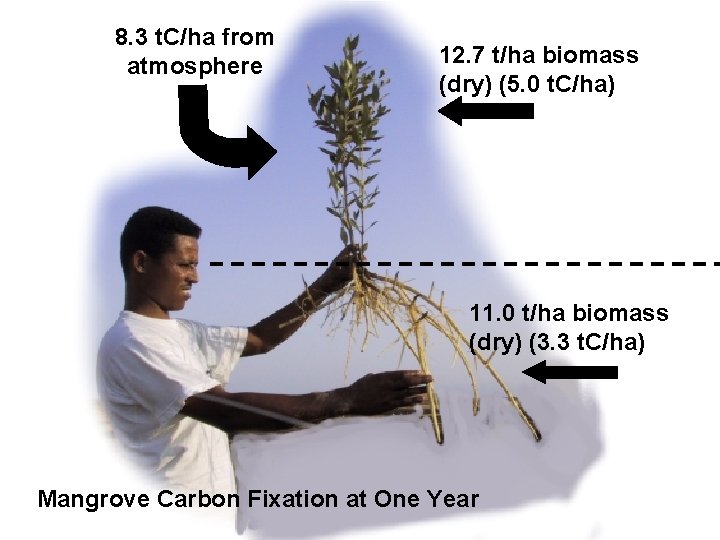
8. 3 t. C/ha from atmosphere 12. 7 t/ha biomass (dry) (5. 0 t. C/ha) 11. 0 t/ha biomass (dry) (3. 3 t. C/ha) Mangrove Carbon Fixation at One Year
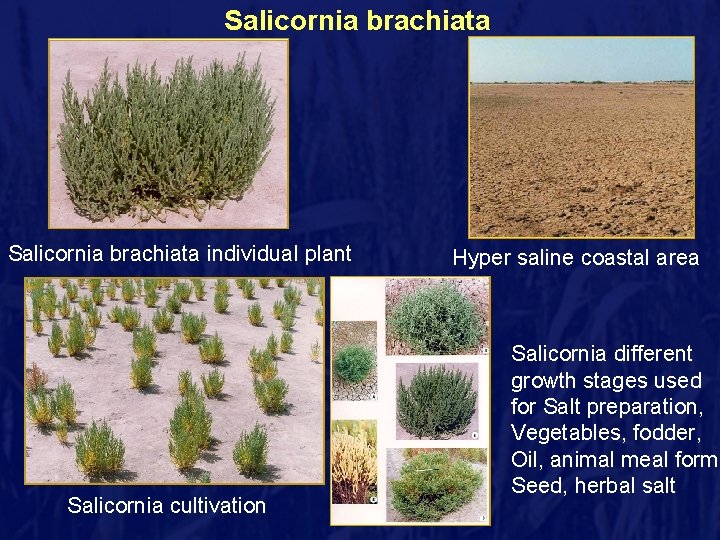
Salicornia brachiata individual plant Salicornia cultivation Hyper saline coastal area Salicornia different growth stages used for Salt preparation, Vegetables, fodder, Oil, animal meal form Seed, herbal salt
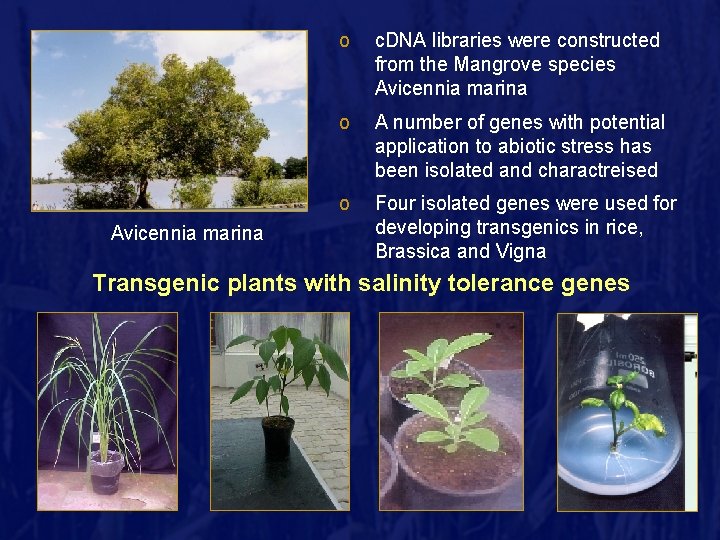
Avicennia marina o c. DNA libraries were constructed from the Mangrove species Avicennia marina o A number of genes with potential application to abiotic stress has been isolated and charactreised o Four isolated genes were used for developing transgenics in rice, Brassica and Vigna Transgenic plants with salinity tolerance genes
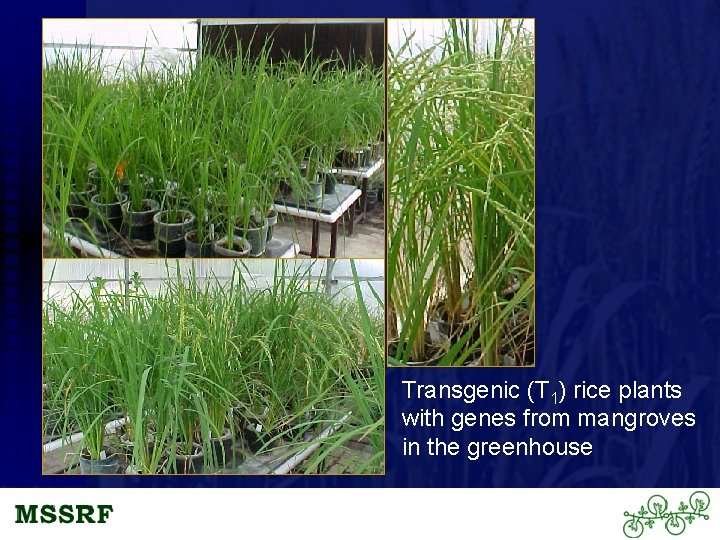
Transgenic (T 1) rice plants with genes from mangroves in the greenhouse
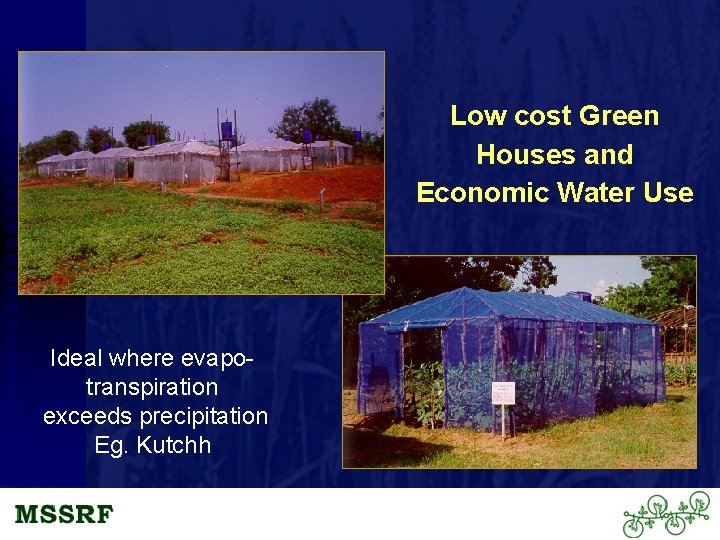
Low cost Green Houses and Economic Water Use Ideal where evapotranspiration exceeds precipitation Eg. Kutchh
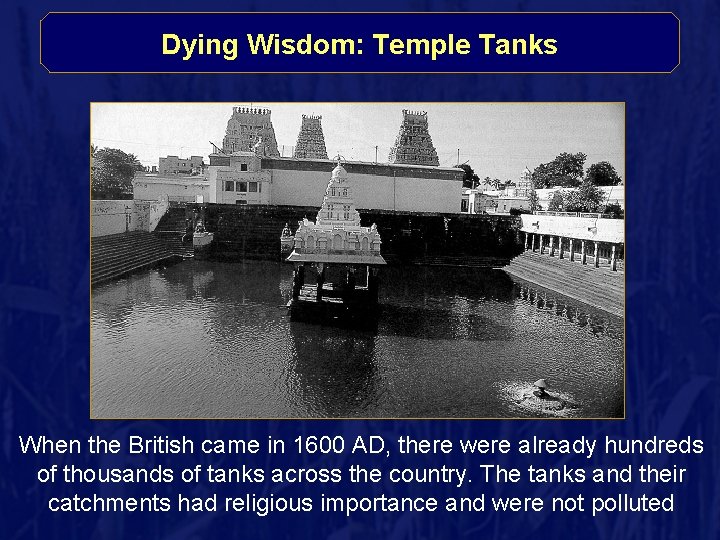
Dying Wisdom: Temple Tanks When the British came in 1600 AD, there were already hundreds of thousands of tanks across the country. The tanks and their catchments had religious importance and were not polluted
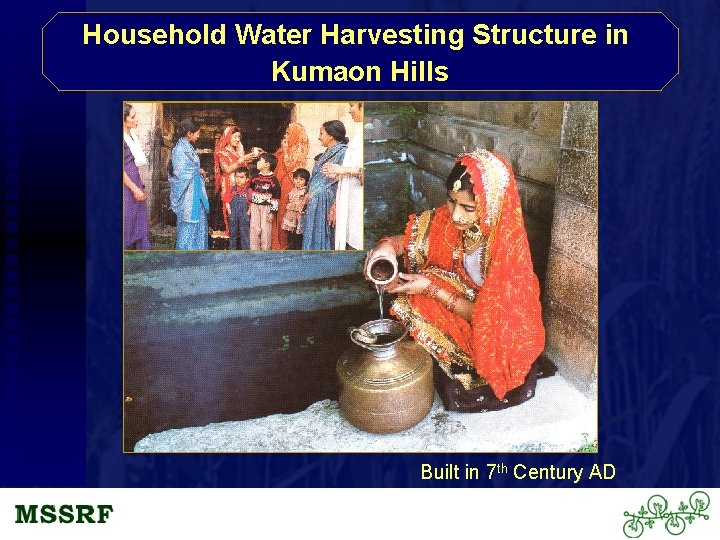
Household Water Harvesting Structure in Kumaon Hills Built in 7 th Century AD
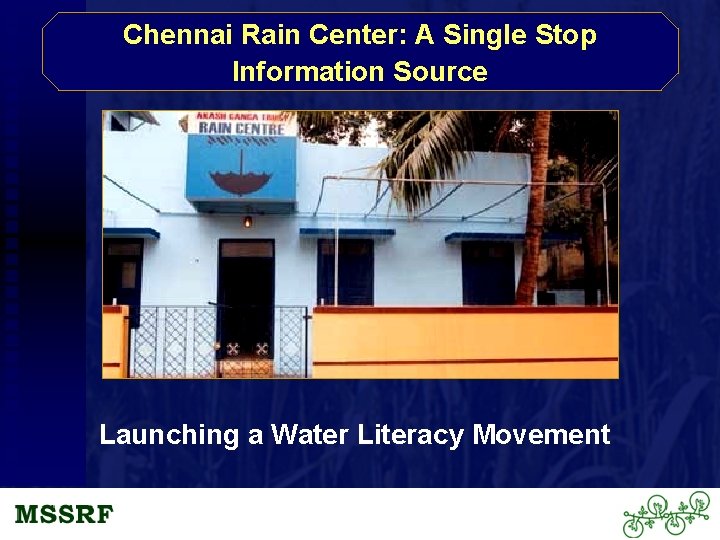
Chennai Rain Center: A Single Stop Information Source Launching a Water Literacy Movement
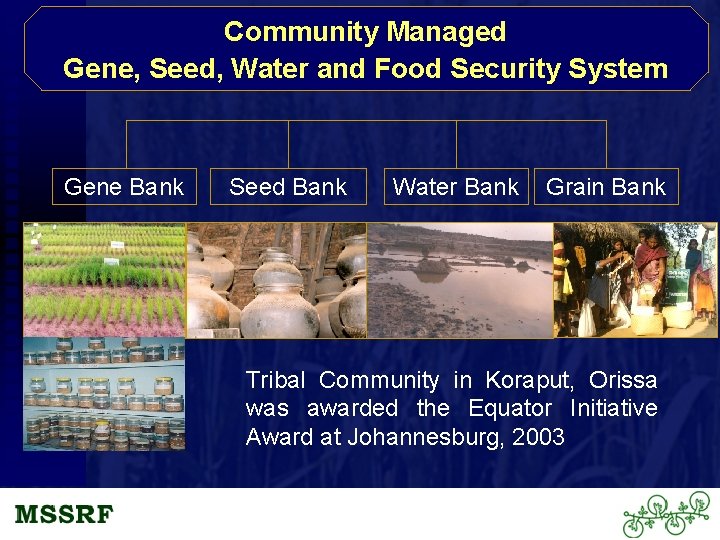
Community Managed Gene, Seed, Water and Food Security System Gene Bank Seed Bank Water Bank Grain Bank Tribal Community in Koraput, Orissa was awarded the Equator Initiative Award at Johannesburg, 2003
Strengthening Water Security o Undertake eco-restoration of hydrologic hot spots o Develop ground water sanctuaries in chronically drought prone areas o Give priority to Water Saving and Sharing in the Employment Guarantee programme initiated in 150 district
Sarvodaya Community Co-operation Community is humanity’s most holistic win / win expression of doing more with less. This successgenerating context is as true for cities and towns as it is for nations and states. The ultimate understanding of community is that we each have two homes – one we can lock and call our own – the other, having neither doors nor walls, can only be shared. Vernon D Swaback, FAIA, FAICP
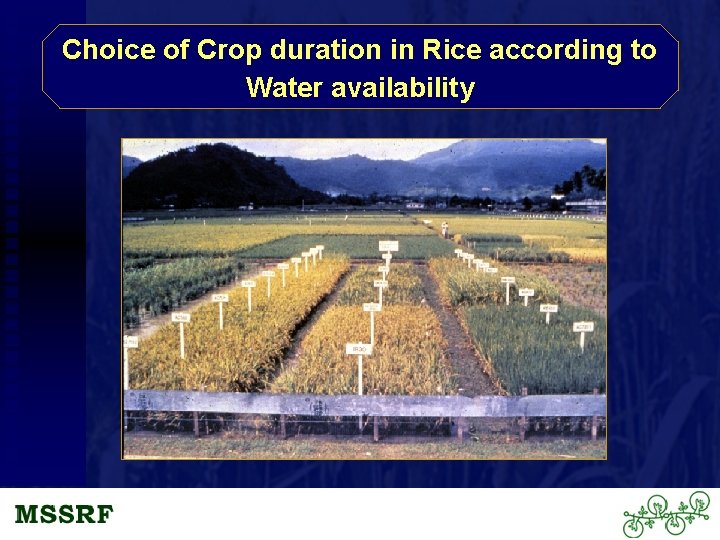
Choice of Crop duration in Rice according to Water availability
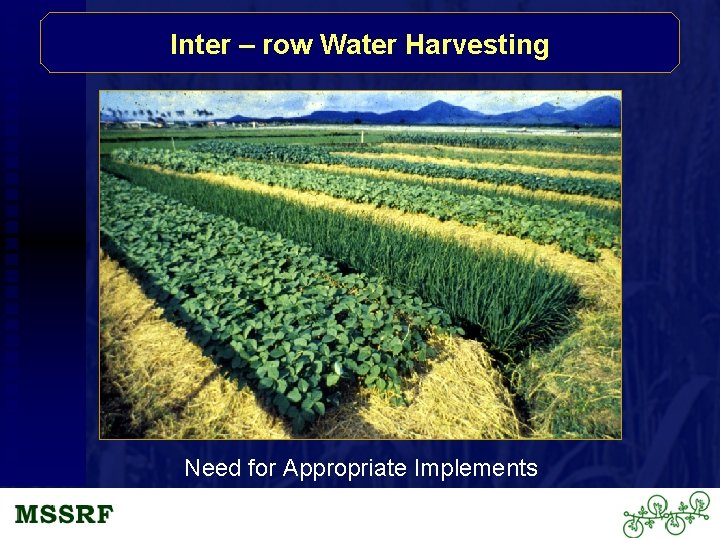
Inter – row Water Harvesting Need for Appropriate Implements
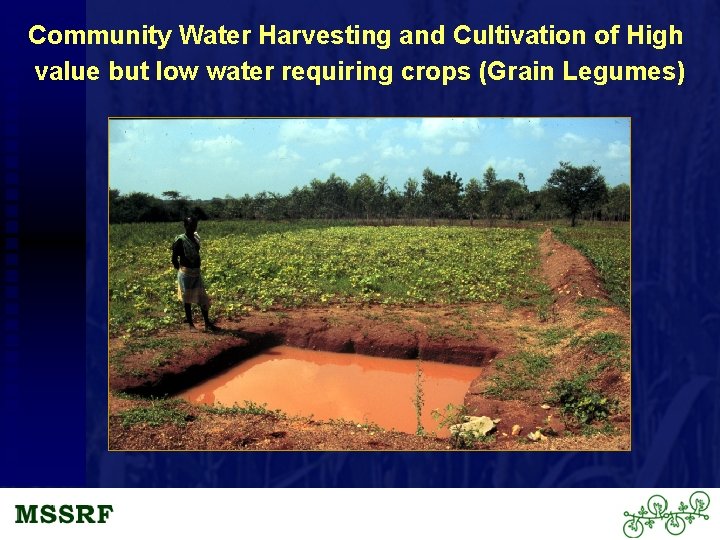
Community Water Harvesting and Cultivation of High value but low water requiring crops (Grain Legumes)
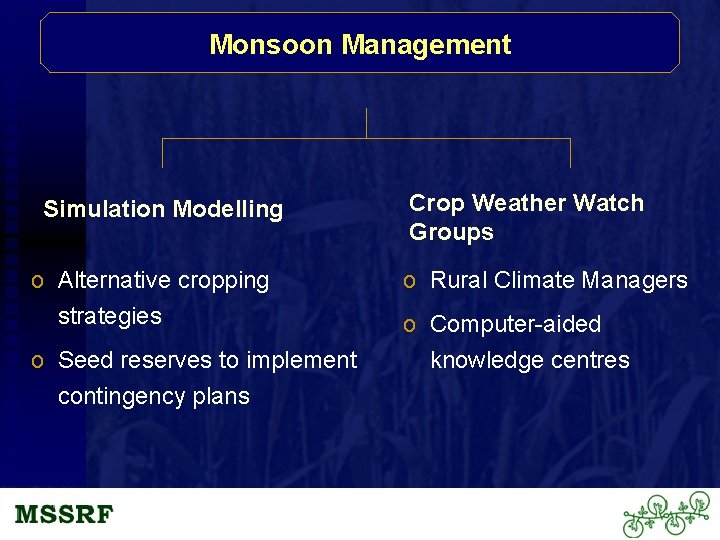
Monsoon Management Simulation Modelling o Alternative cropping strategies o Seed reserves to implement contingency plans Crop Weather Watch Groups o Rural Climate Managers o Computer-aided knowledge centres
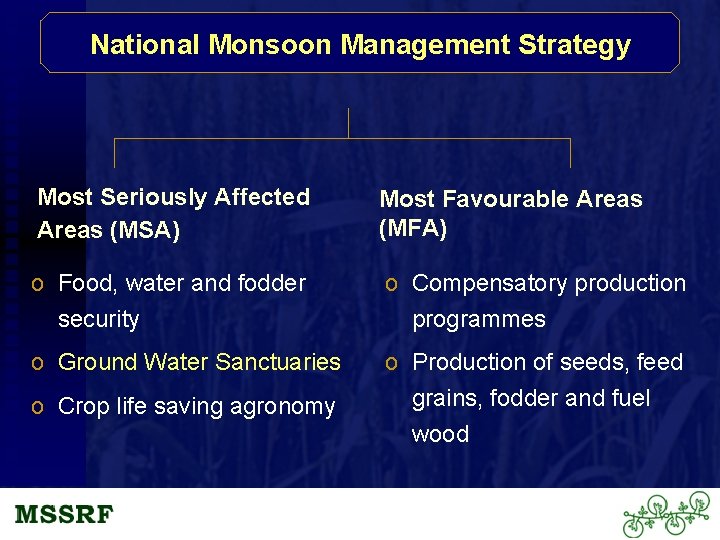
National Monsoon Management Strategy Most Seriously Affected Areas (MSA) Most Favourable Areas (MFA) o Food, water and fodder security o Compensatory production programmes o Ground Water Sanctuaries o Production of seeds, feed grains, fodder and fuel wood o Crop life saving agronomy
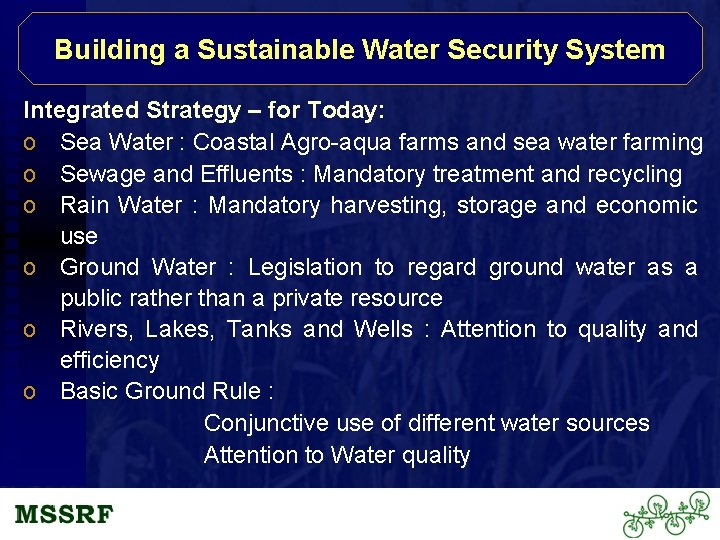
Building a Sustainable Water Security System Integrated Strategy – for Today: o Sea Water : Coastal Agro-aqua farms and sea water farming o Sewage and Effluents : Mandatory treatment and recycling o Rain Water : Mandatory harvesting, storage and economic use o Ground Water : Legislation to regard ground water as a public rather than a private resource o Rivers, Lakes, Tanks and Wells : Attention to quality and efficiency o Basic Ground Rule : Conjunctive use of different water sources Attention to Water quality
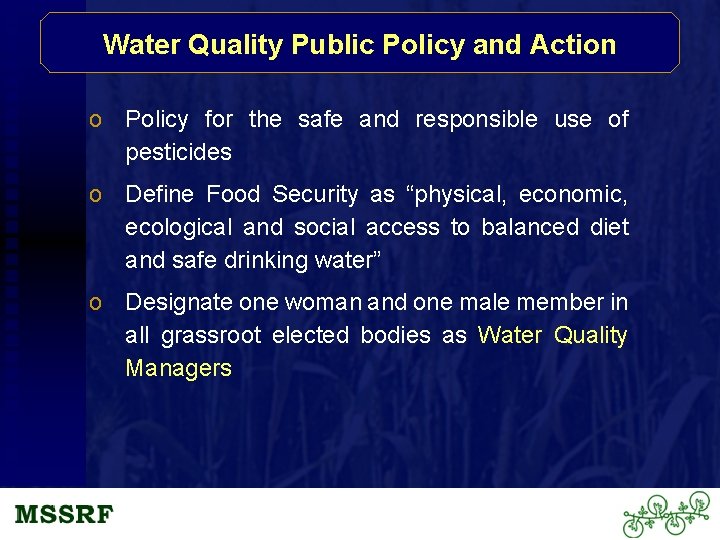
Water Quality Public Policy and Action o Policy for the safe and responsible use of pesticides o Define Food Security as “physical, economic, ecological and social access to balanced diet and safe drinking water” o Designate one woman and one male member in all grassroot elected bodies as Water Quality Managers
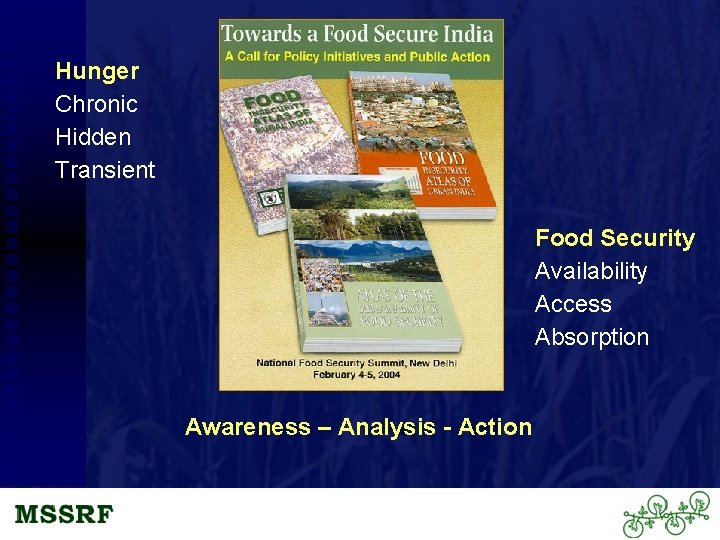
Hunger Chronic Hidden Transient Food Security Availability Access Absorption Awareness – Analysis - Action
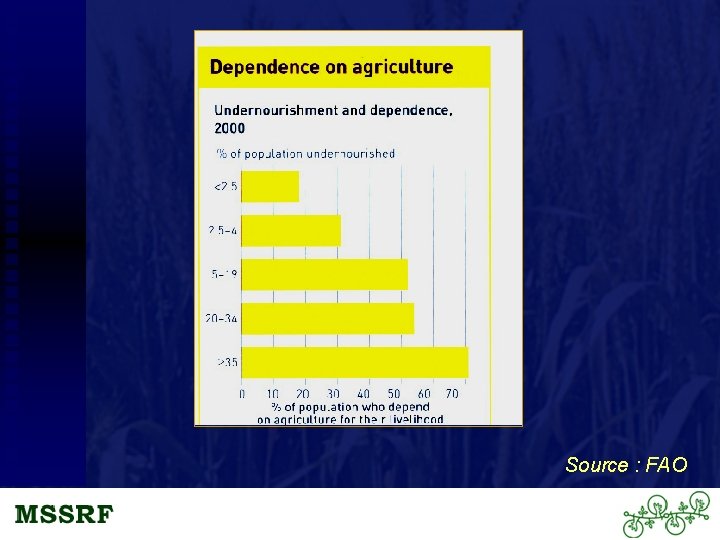
Source : FAO
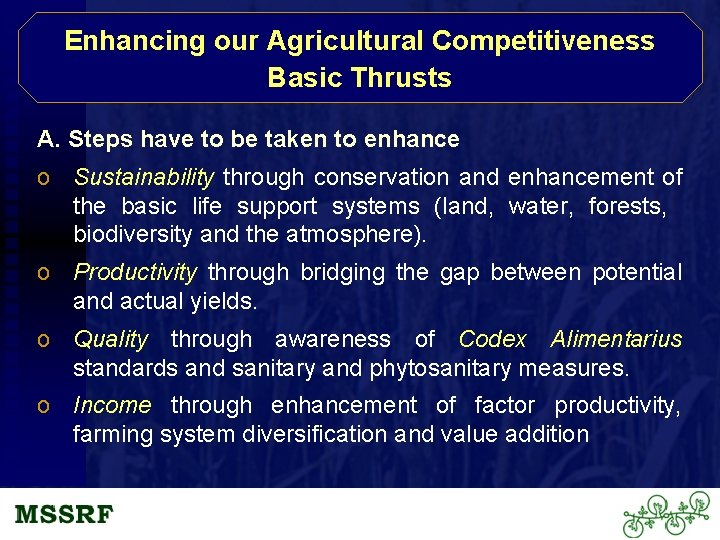
Enhancing our Agricultural Competitiveness Basic Thrusts A. Steps have to be taken to enhance o Sustainability through conservation and enhancement of the basic life support systems (land, water, forests, biodiversity and the atmosphere). o Productivity through bridging the gap between potential and actual yields. o Quality through awareness of Codex Alimentarius standards and sanitary and phytosanitary measures. o Income through enhancement of factor productivity, farming system diversification and value addition
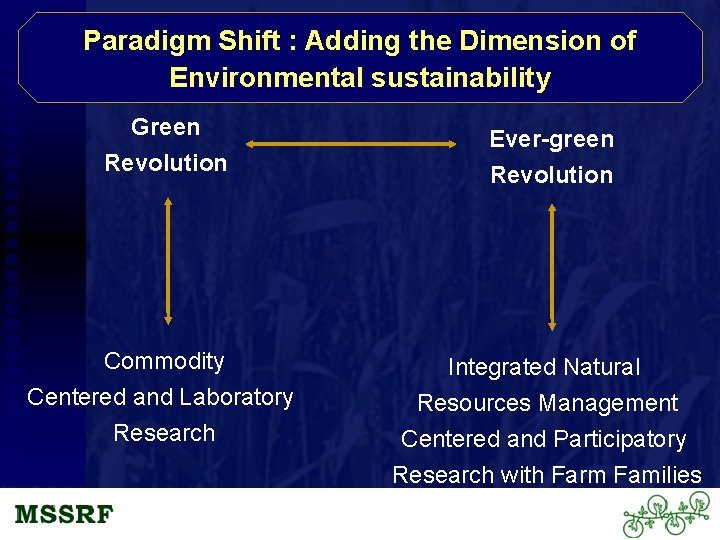
Paradigm Shift : Adding the Dimension of Environmental sustainability Green Revolution Ever-green Revolution Commodity Centered and Laboratory Research Integrated Natural Resources Management Centered and Participatory Research with Farm Families
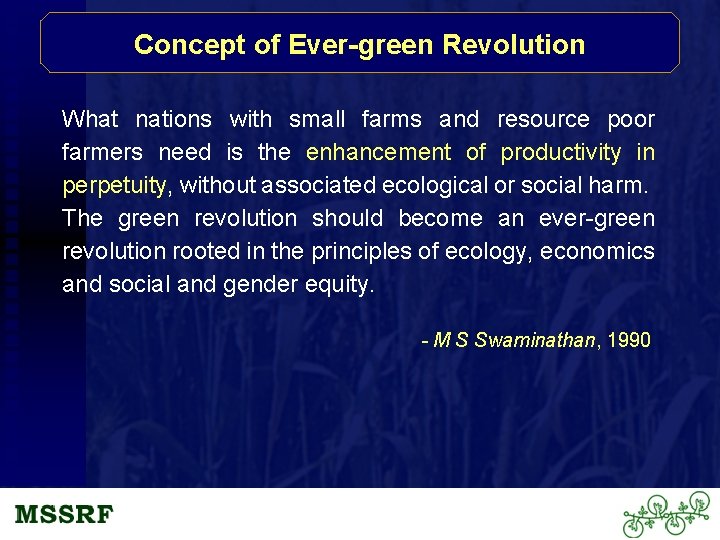
Concept of Ever-green Revolution What nations with small farms and resource poor farmers need is the enhancement of productivity in perpetuity, without associated ecological or social harm. The green revolution should become an ever-green revolution rooted in the principles of ecology, economics and social and gender equity. - M S Swaminathan, 1990
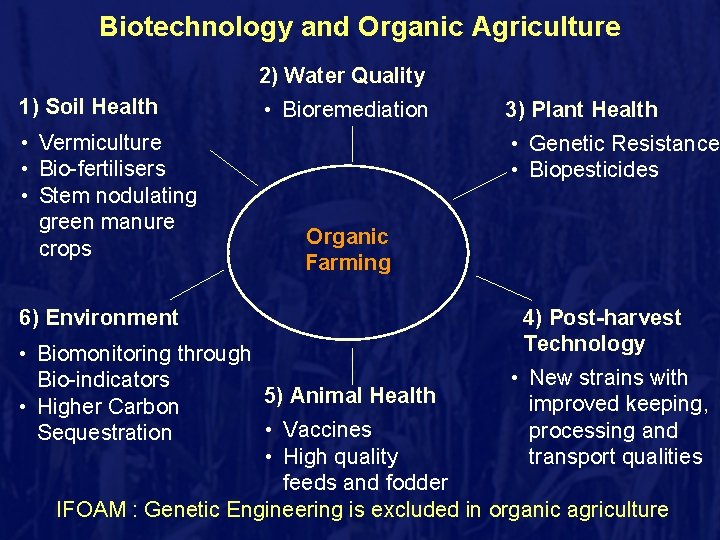
Biotechnology and Organic Agriculture 2) Water Quality 1) Soil Health • Vermiculture • Bio-fertilisers • Stem nodulating green manure crops 6) Environment • Bioremediation 3) Plant Health • Genetic Resistance • Biopesticides Organic Farming 4) Post-harvest Technology • Biomonitoring through • New strains with Bio-indicators 5) Animal Health improved keeping, • Higher Carbon • Vaccines processing and Sequestration • High quality transport qualities feeds and fodder IFOAM : Genetic Engineering is excluded in organic agriculture
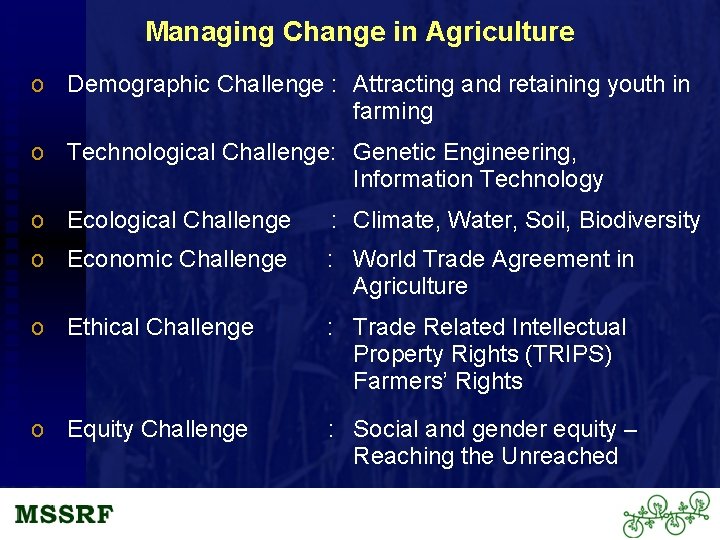
Managing Change in Agriculture o Demographic Challenge : Attracting and retaining youth in farming o Technological Challenge: Genetic Engineering, Information Technology o Ecological Challenge : Climate, Water, Soil, Biodiversity o Economic Challenge : World Trade Agreement in Agriculture o Ethical Challenge : Trade Related Intellectual Property Rights (TRIPS) Farmers’ Rights o Equity Challenge : Social and gender equity – Reaching the Unreached
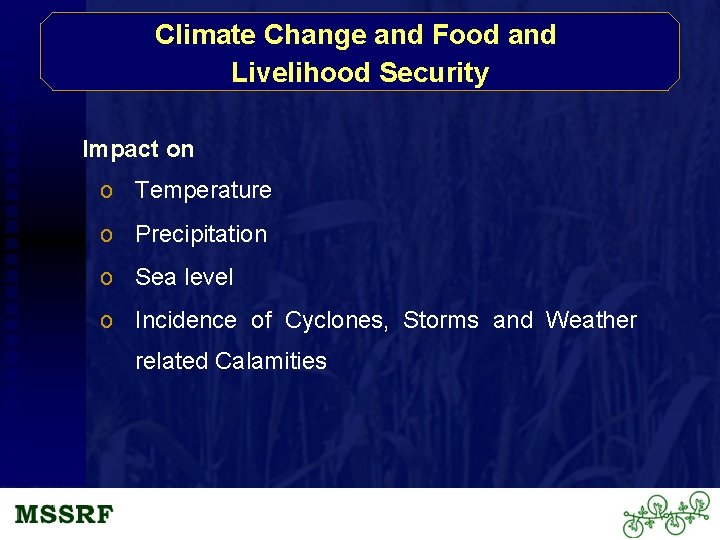
Climate Change and Food and Livelihood Security Impact on o Temperature o Precipitation o Sea level o Incidence of Cyclones, Storms and Weather related Calamities
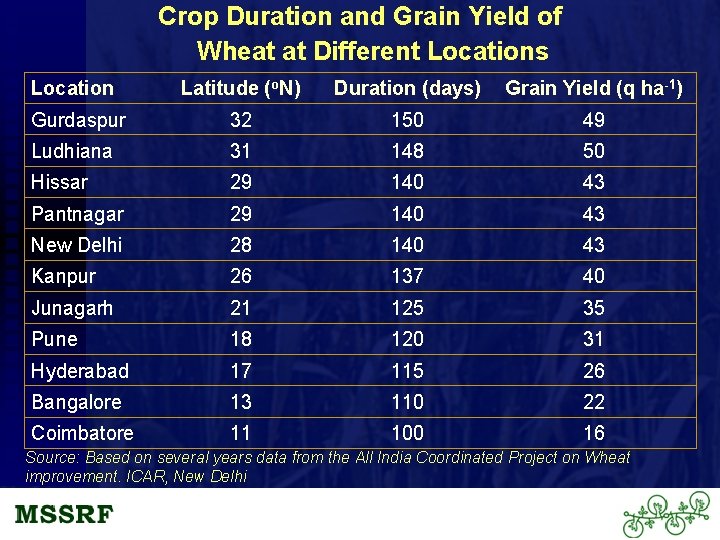
Crop Duration and Grain Yield of Wheat at Different Locations Location Latitude (o. N) Duration (days) Grain Yield (q ha-1) Gurdaspur 32 150 49 Ludhiana 31 148 50 Hissar 29 140 43 Pantnagar 29 140 43 New Delhi 28 140 43 Kanpur 26 137 40 Junagarh 21 125 35 Pune 18 120 31 Hyderabad 17 115 26 Bangalore 13 110 22 Coimbatore 11 100 16 Source: Based on several years data from the All India Coordinated Project on Wheat improvement. ICAR, New Delhi
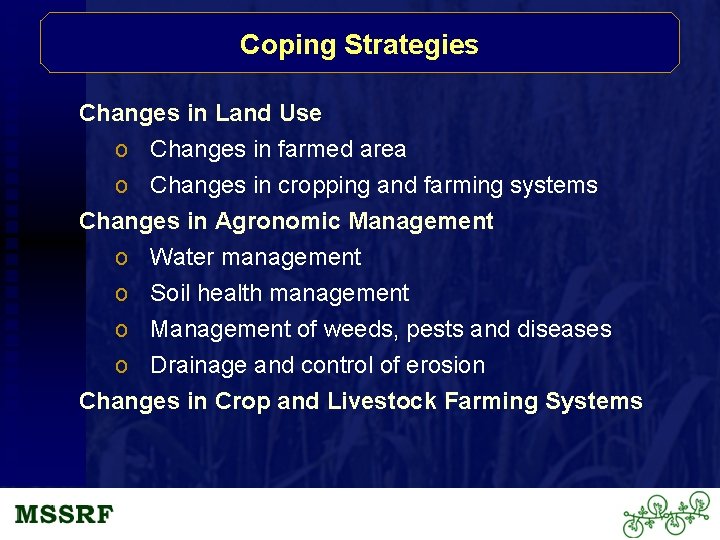
Coping Strategies Changes in Land Use o Changes in farmed area o Changes in cropping and farming systems Changes in Agronomic Management o Water management o Soil health management o Management of weeds, pests and diseases o Drainage and control of erosion Changes in Crop and Livestock Farming Systems
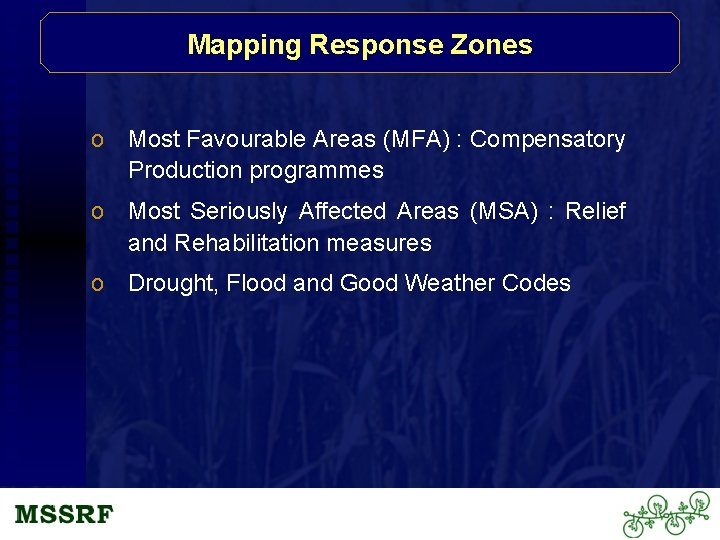
Mapping Response Zones o Most Favourable Areas (MFA) : Compensatory Production programmes o Most Seriously Affected Areas (MSA) : Relief and Rehabilitation measures o Drought, Flood and Good Weather Codes
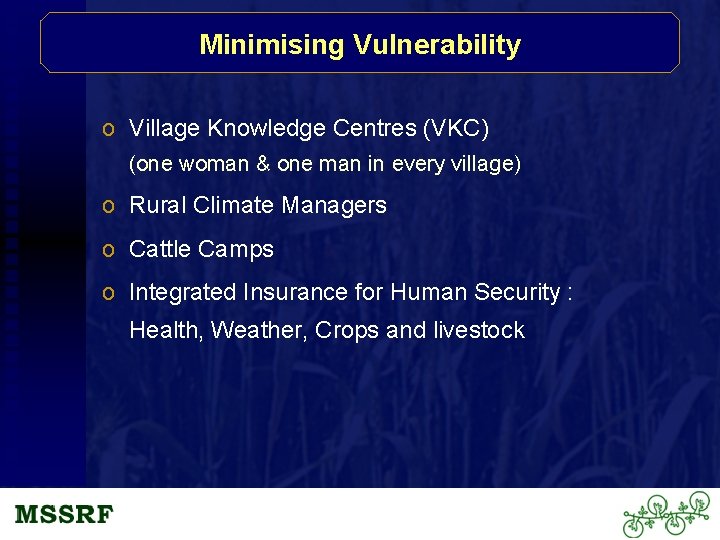
Minimising Vulnerability o Village Knowledge Centres (VKC) (one woman & one man in every village) o Rural Climate Managers o Cattle Camps o Integrated Insurance for Human Security : Health, Weather, Crops and livestock
Jamsetiji Tata National Virtual Academy for Rural Prosperity [NVA] ICT-enabled knowledge flow Lab to Lab, Lab to Land, Land to Lab, Land to Land Satellite Web based interactive portal State Level Hub (MSSRF) Data Managers (both connectivity and content) Block level hub Data Generators & Providers Data Users (Rural families)
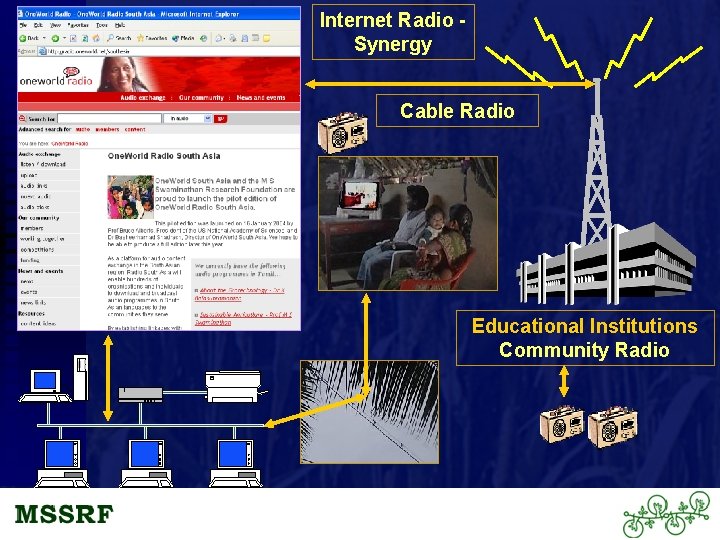
M S S R F Internet Radio - Synergy Cable Radio Educational Institutions Community Radio
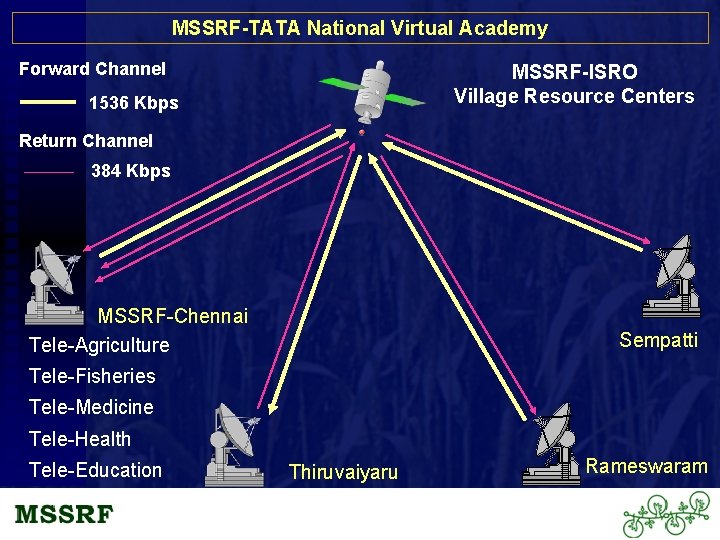
MSSRF-TATA National Virtual Academy Forward Channel MSSRF-ISRO Village Resource Centers 1536 Kbps Return Channel 384 Kbps MSSRF-Chennai Tele-Agriculture Sempatti Tele-Fisheries Tele-Medicine Tele-Health Tele-Education Thiruvaiyaru Rameswaram
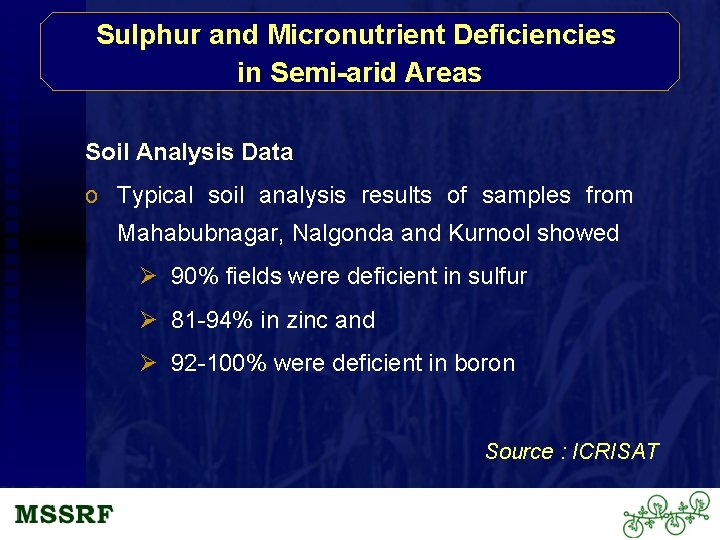
Sulphur and Micronutrient Deficiencies in Semi-arid Areas Soil Analysis Data o Typical soil analysis results of samples from Mahabubnagar, Nalgonda and Kurnool showed 90% fields were deficient in sulfur 81 -94% in zinc and 92 -100% were deficient in boron Source : ICRISAT
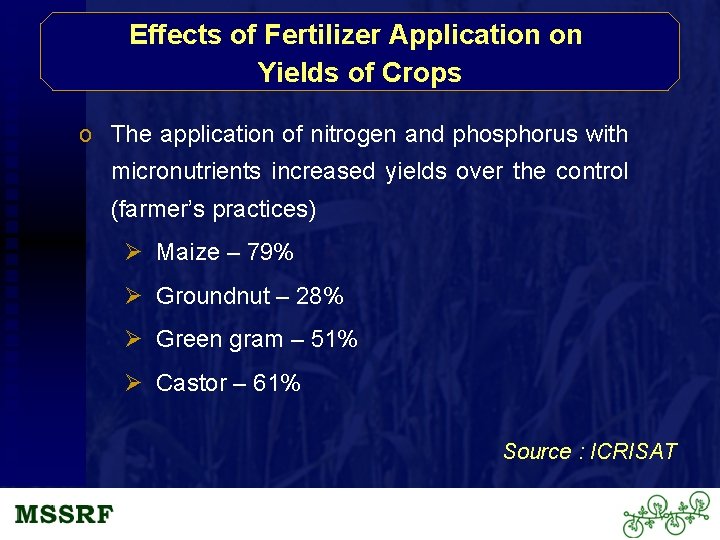
Effects of Fertilizer Application on Yields of Crops o The application of nitrogen and phosphorus with micronutrients increased yields over the control (farmer’s practices) Maize – 79% Groundnut – 28% Green gram – 51% Castor – 61% Source : ICRISAT
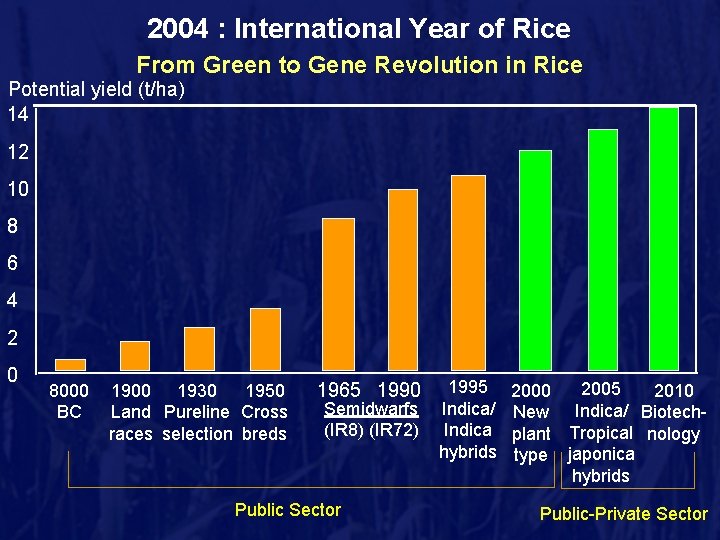
2004 : International Year of Rice From Green to Gene Revolution in Rice Potential yield (t/ha) 14 12 10 8 6 4 2 0 8000 BC 1950 1900 1930 Land Pureline Cross races selection breds 1965 1990 Semidwarfs (IR 8) (IR 72) Public Sector 1995 Indica/ Indica hybrids 2005 2010 2000 New Indica/ Biotechplant Tropical nology type japonica hybrids Public-Private Sector
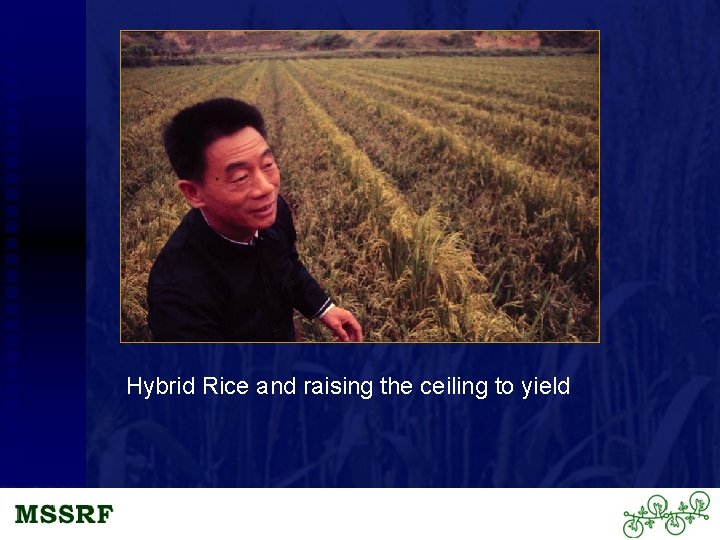
Hybrid Rice and raising the ceiling to yield
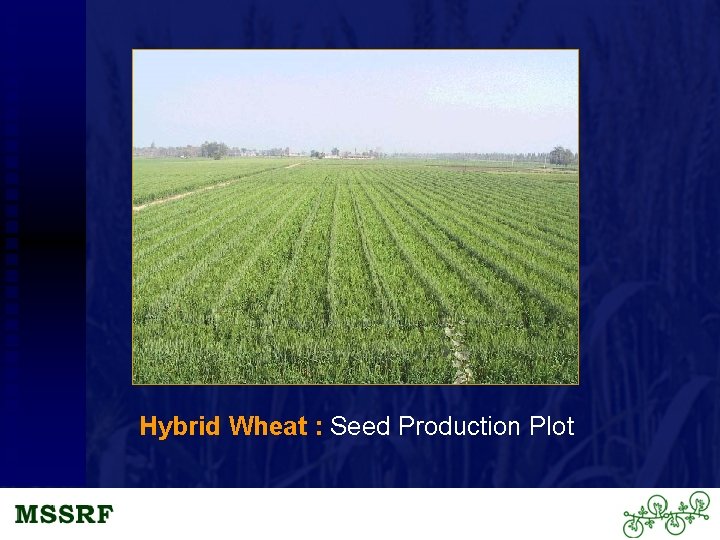
Hybrid Wheat : Seed Production Plot
Implementing Farmers’ Rights
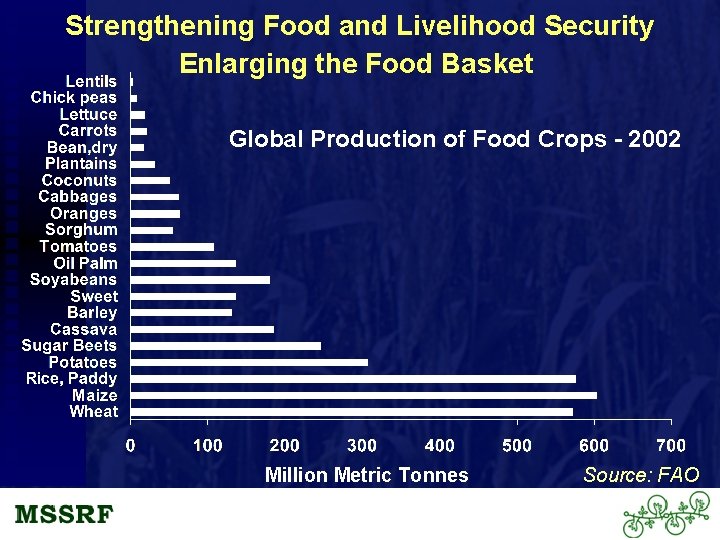
Strengthening Food and Livelihood Security Enlarging the Food Basket Global Production of Food Crops - 2002 Million Metric Tonnes Source: FAO
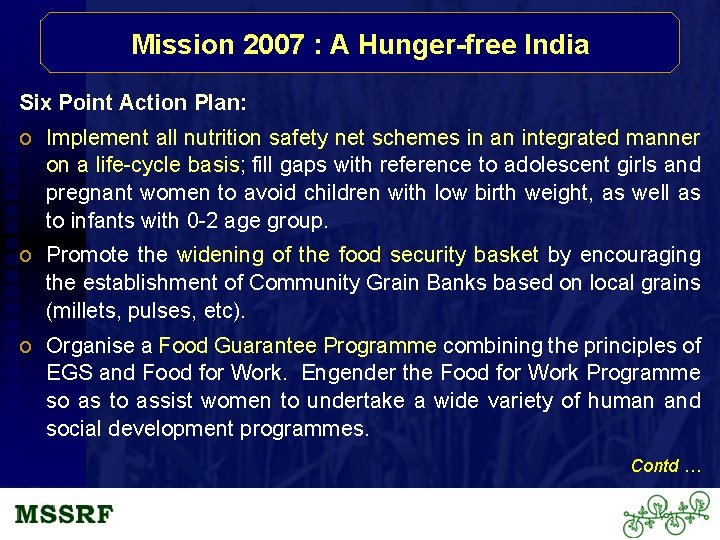
Mission 2007 : A Hunger-free India Six Point Action Plan: o Implement all nutrition safety net schemes in an integrated manner on a life-cycle basis; fill gaps with reference to adolescent girls and pregnant women to avoid children with low birth weight, as well as to infants with 0 -2 age group. o Promote the widening of the food security basket by encouraging the establishment of Community Grain Banks based on local grains (millets, pulses, etc). o Organise a Food Guarantee Programme combining the principles of EGS and Food for Work. Engender the Food for Work Programme so as to assist women to undertake a wide variety of human and social development programmes. Contd …
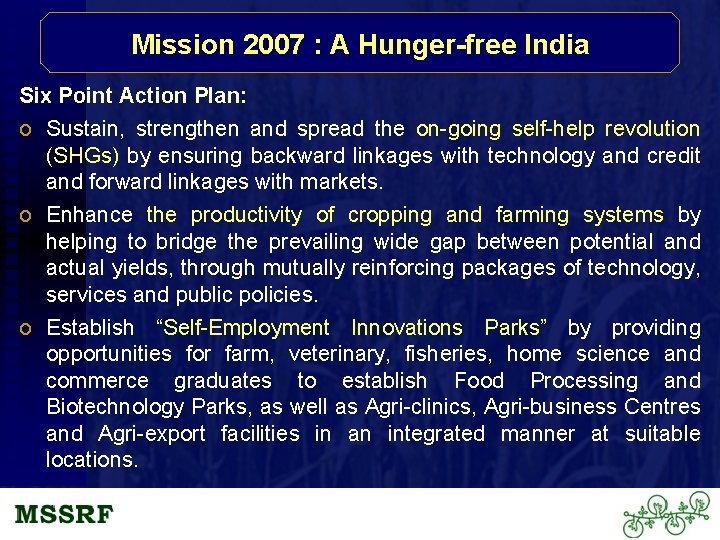
Mission 2007 : A Hunger-free India Six Point Action Plan: o Sustain, strengthen and spread the on-going self-help revolution (SHGs) by ensuring backward linkages with technology and credit and forward linkages with markets. o Enhance the productivity of cropping and farming systems by helping to bridge the prevailing wide gap between potential and actual yields, through mutually reinforcing packages of technology, services and public policies. o Establish “Self-Employment Innovations Parks” by providing opportunities for farm, veterinary, fisheries, home science and commerce graduates to establish Food Processing and Biotechnology Parks, as well as Agri-clinics, Agri-business Centres and Agri-export facilities in an integrated manner at suitable locations.
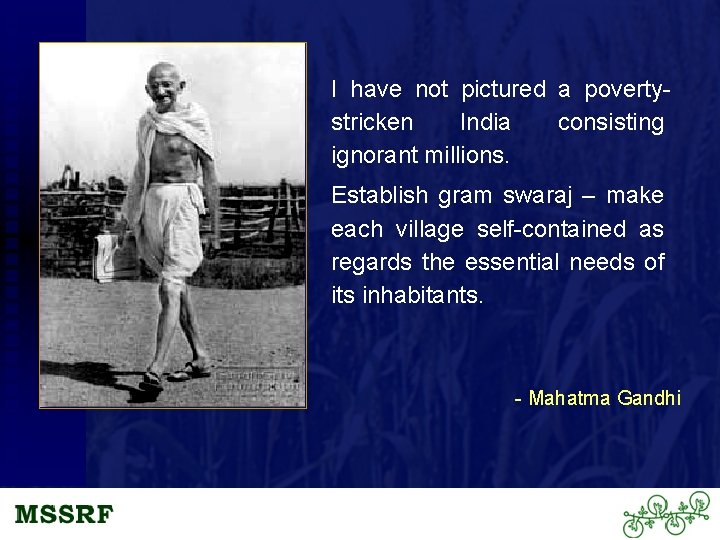
I have not pictured a povertystricken India consisting ignorant millions. Establish gram swaraj – make each village self-contained as regards the essential needs of its inhabitants. - Mahatma Gandhi