
Just what are microbes made of Lecture Lab
Just what are microbes made of? Lecture Lab Chapter 4 Prokaryotic and eukaryotic cells Prokaryotic cell features Aseptic technique Microbes in the environment Oil immersion microscopy Chapter 3 (next class) Endosymbiotic theory Light microscopy Electron microscopy Pre-labs Pure culture Motility Microscopy techniques and staining
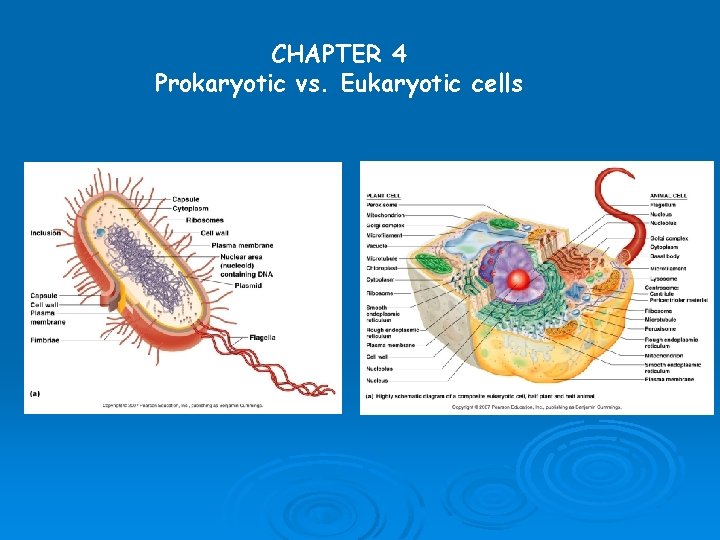
CHAPTER 4 Prokaryotic vs. Eukaryotic cells

Bacterial cell shapes

Odd bacterial cell shapes Figure 4. 5 - Overview
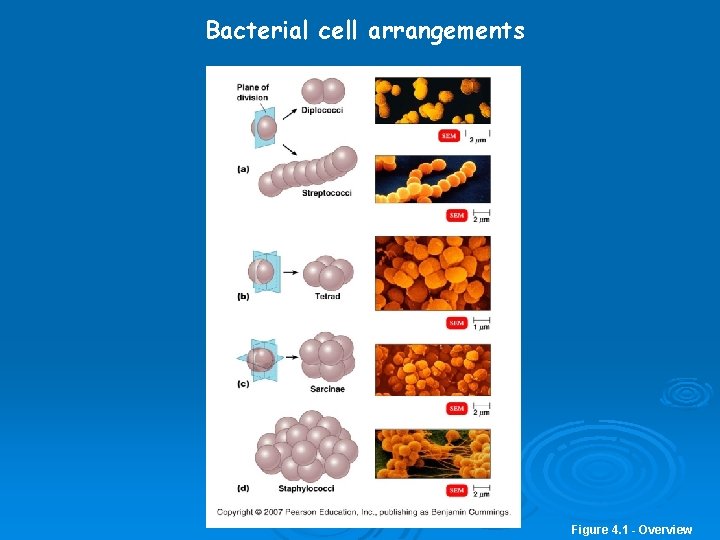
Bacterial cell arrangements Figure 4. 1 - Overview
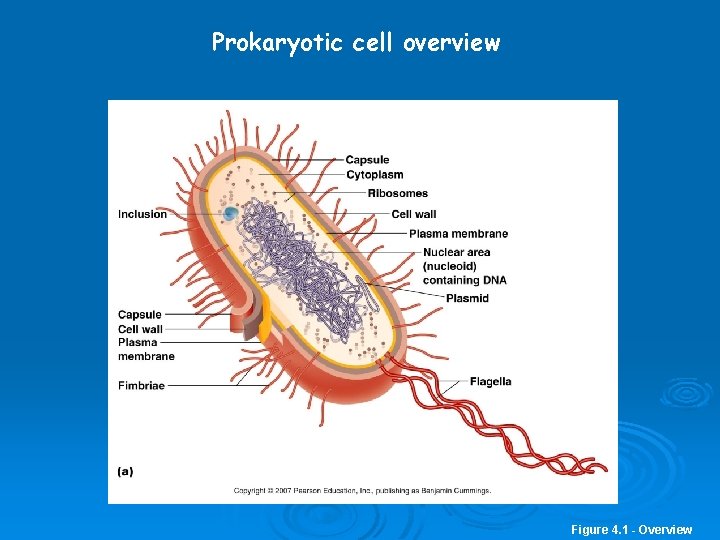
Prokaryotic cell overview Figure 4. 1 - Overview
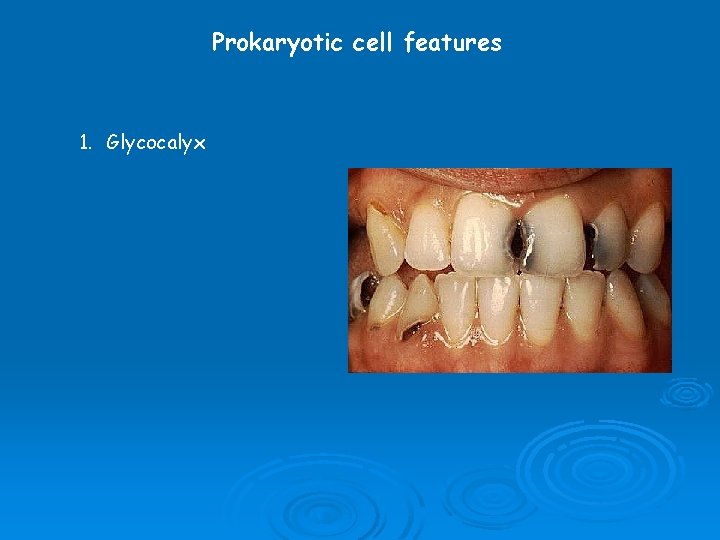
Prokaryotic cell features 1. Glycocalyx
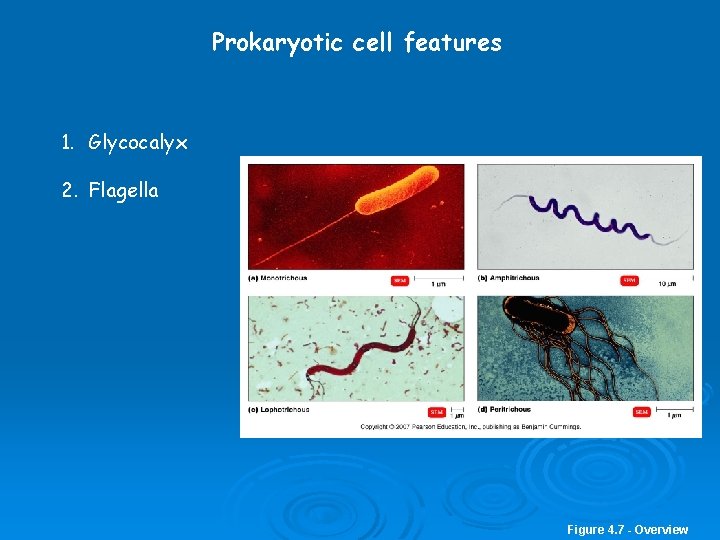
Prokaryotic cell features 1. Glycocalyx 2. Flagella Figure 4. 7 - Overview
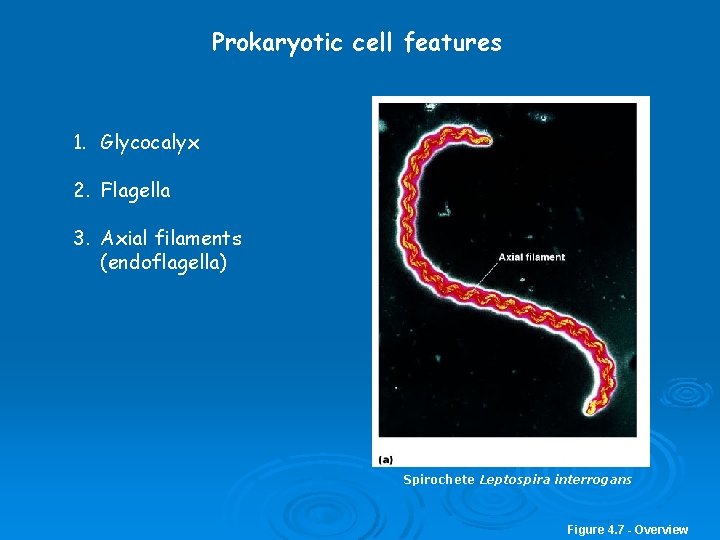
Prokaryotic cell features 1. Glycocalyx 2. Flagella 3. Axial filaments (endoflagella) Spirochete Leptospira interrogans Figure 4. 7 - Overview
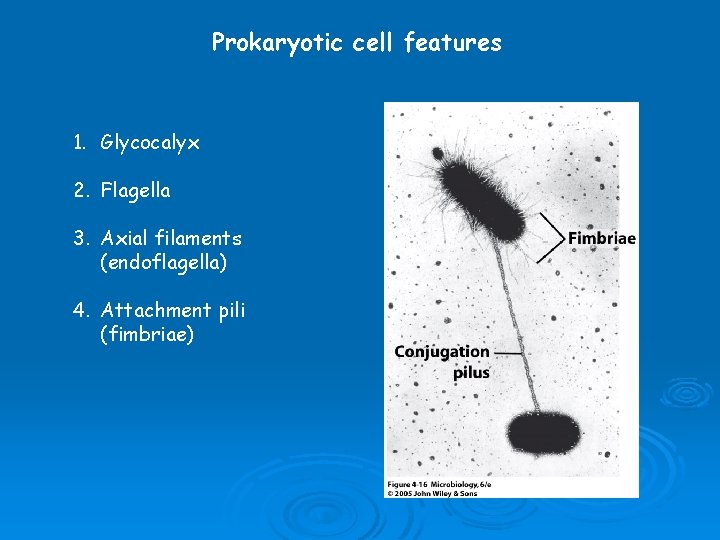
Prokaryotic cell features 1. Glycocalyx 2. Flagella 3. Axial filaments (endoflagella) 4. Attachment pili (fimbriae)

Prokaryotic cell features 1. Glycocalyx 2. Flagella 3. Axial filaments (endoflagella) 4. Attachment pili (fimbriae) 5. Conjugation pili (sex pili)

Prokaryotic cell features 1. Glycocalyx 2. Flagella 3. Axial filaments (endoflagella) 4. Attachment pili (fimbriae) 5. Conjugation pili (sex pili) 6. Cell wall Figure 4. 13 - Overview

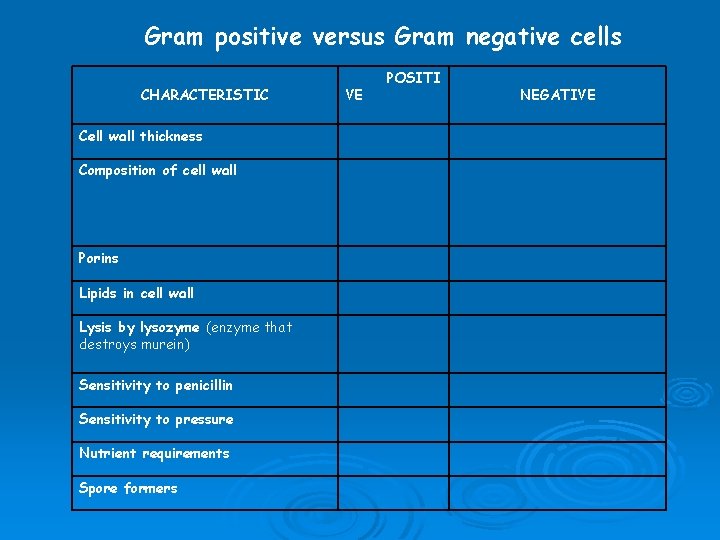
Gram positive versus Gram negative cells CHARACTERISTIC Cell wall thickness Composition of cell wall Porins Lipids in cell wall Lysis by lysozyme (enzyme that destroys murein) Sensitivity to penicillin Sensitivity to pressure Nutrient requirements Spore formers VE POSITI NEGATIVE
Independent Learning 1. Review cell wall structure in bacteria. You should know the structure inside and out. Literally.
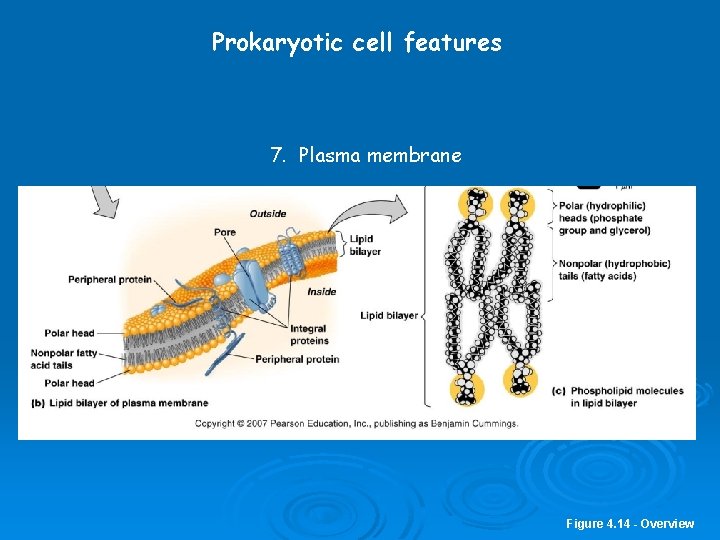
Prokaryotic cell features 7. Plasma membrane Figure 4. 14 - Overview
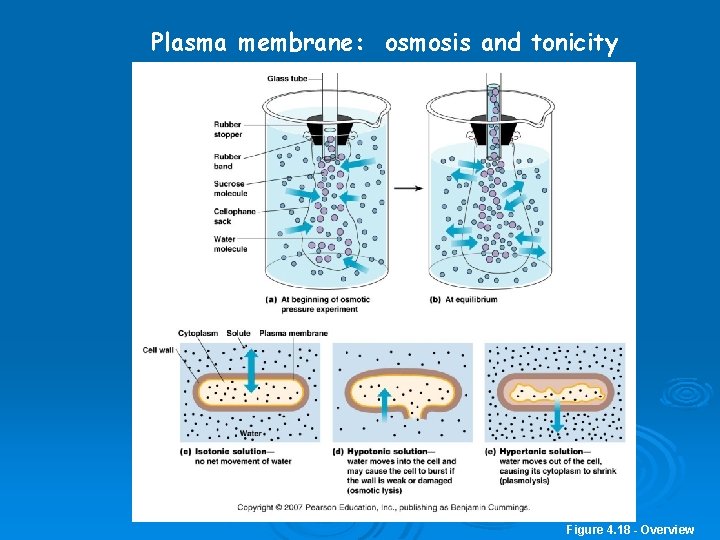
Plasma membrane: osmosis and tonicity Figure 4. 18 - Overview
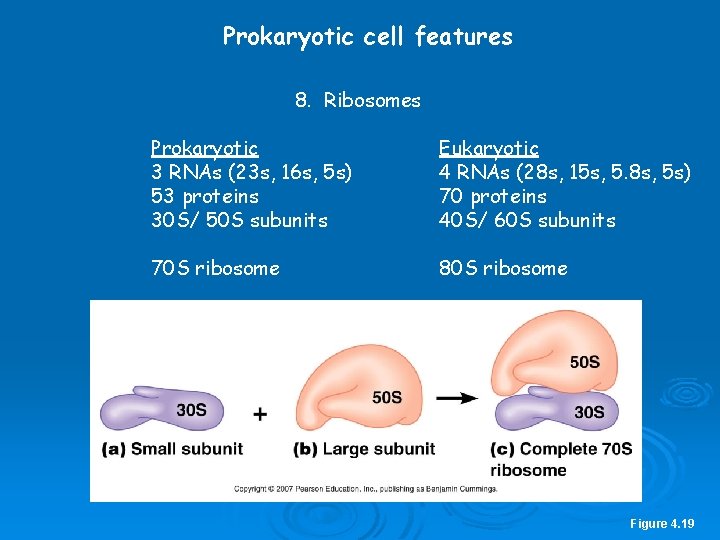
Prokaryotic cell features 8. Ribosomes Prokaryotic 3 RNAs (23 s, 16 s, 5 s) 53 proteins 30 S/ 50 S subunits Eukaryotic 4 RNAs (28 s, 15 s, 5. 8 s, 5 s) 70 proteins 40 S/ 60 S subunits 70 S ribosome 80 S ribosome Figure 4. 19
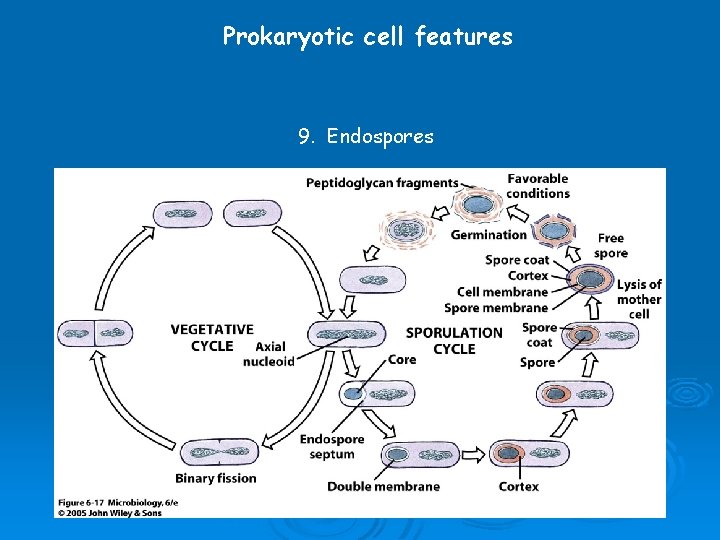
Prokaryotic cell features 9. Endospores

Endosymbiotic theory

Endosymbiotic evidence
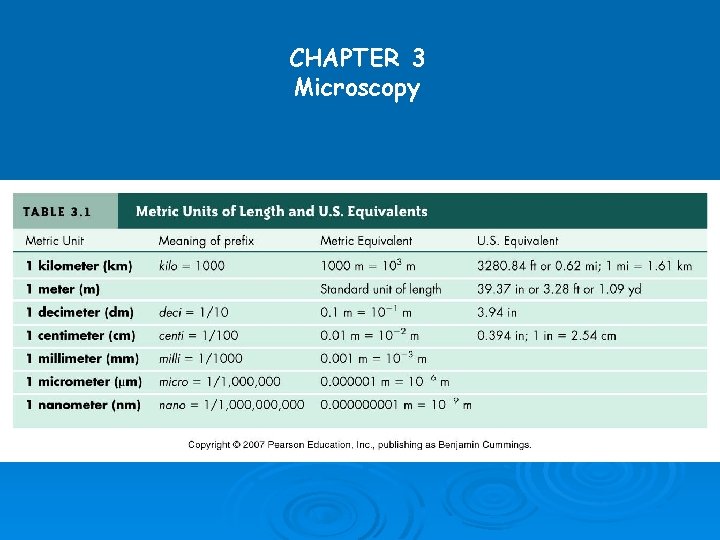
CHAPTER 3 Microscopy
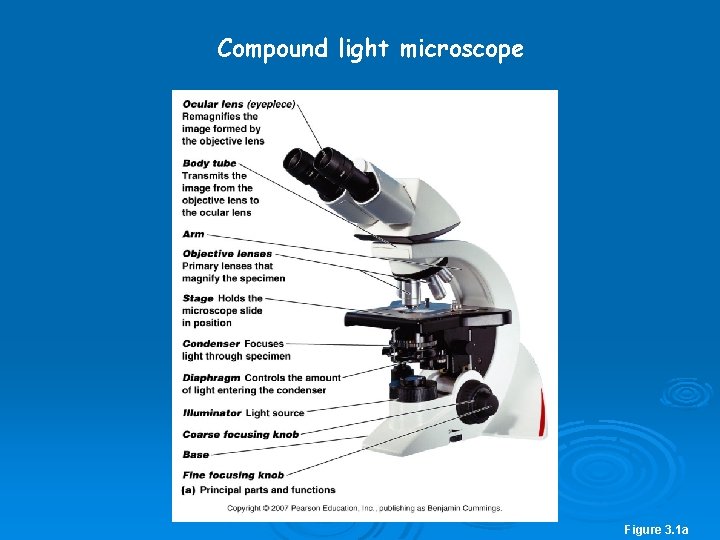
Compound light microscope Figure 3. 1 a
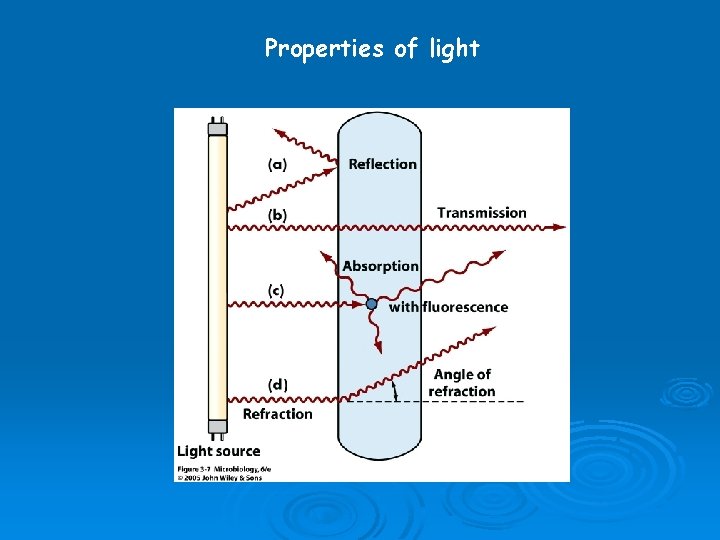
Properties of light
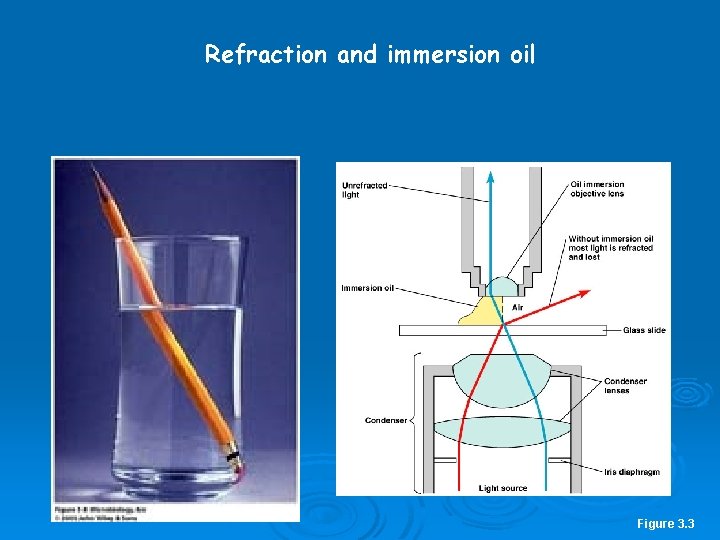
Refraction and immersion oil Figure 3. 3

Brightfield and darkfield microscopy Figure 3. 4 - Overview
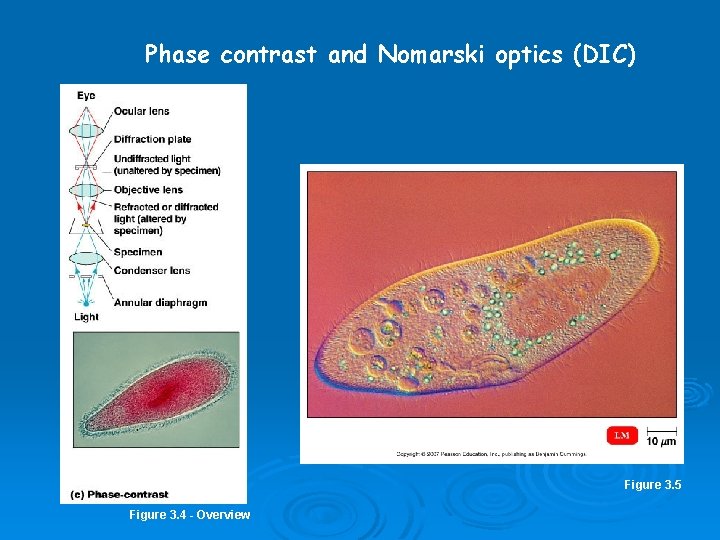
Phase contrast and Nomarski optics (DIC) Figure 3. 5 Figure 3. 4 - Overview
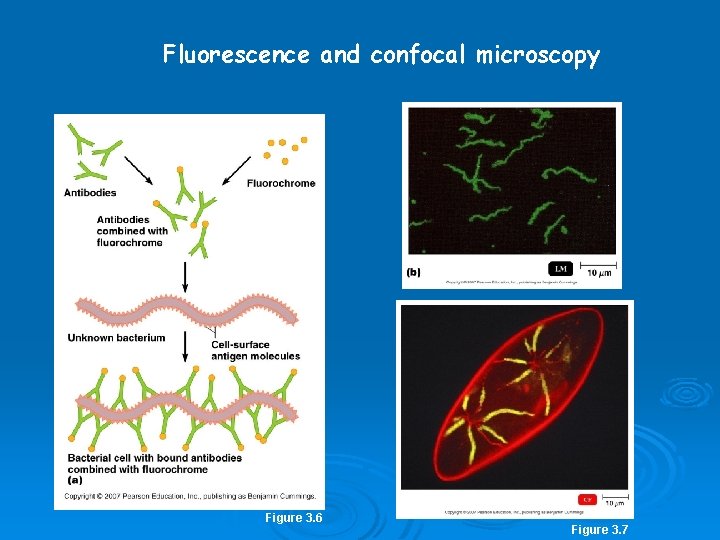
Fluorescence and confocal microscopy Figure 3. 6 Figure 3. 7
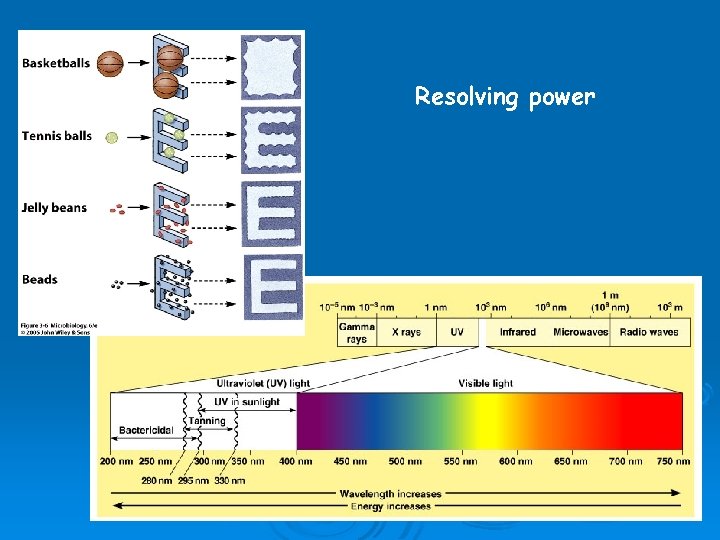
Resolving power
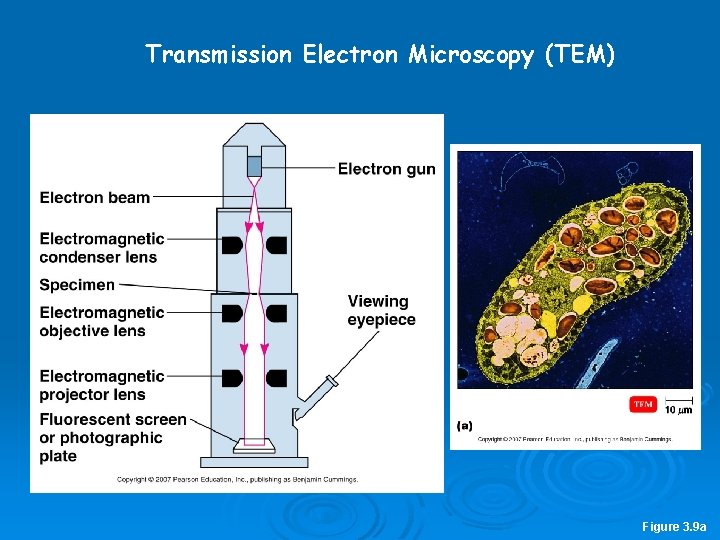
Transmission Electron Microscopy (TEM) Figure 3. 9 a
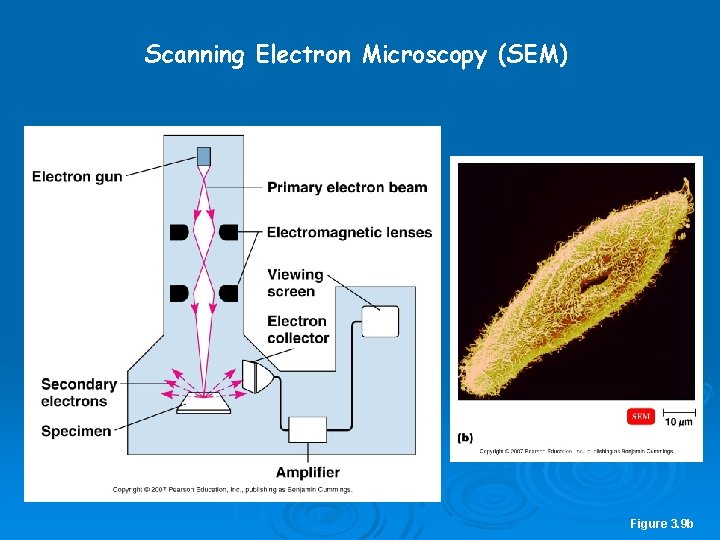
Scanning Electron Microscopy (SEM) Figure 3. 9 b
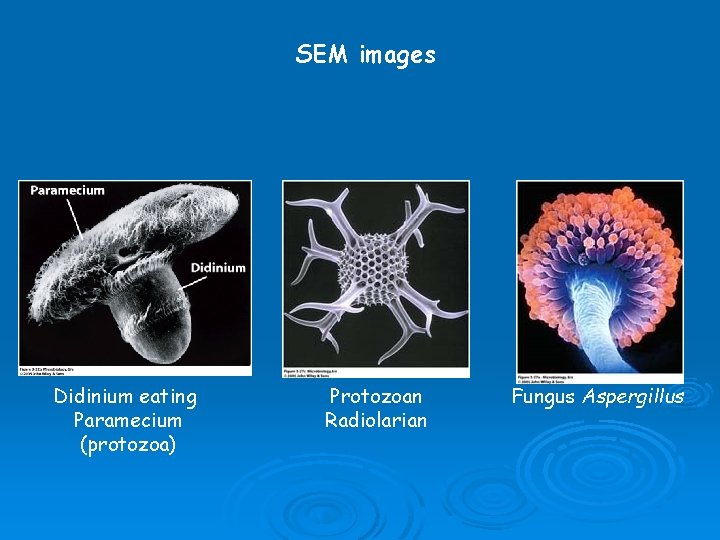
SEM images Didinium eating Paramecium (protozoa) Protozoan Radiolarian Fungus Aspergillus
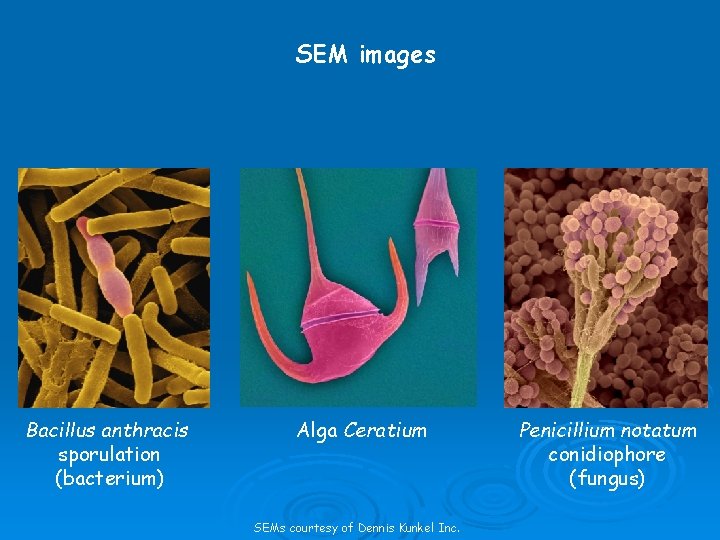
SEM images Bacillus anthracis sporulation (bacterium) Alga Ceratium SEMs courtesy of Dennis Kunkel Inc. Penicillium notatum conidiophore (fungus)
Independent study 1. Look at the evidence for the endosymbiotic theory. Be prepared to present the evidence that mitochondria and chloroplasts arose from a symbiotic interaction between an early eukaryote and a prokaryote. 2. Review aerobic respiration (see figure 5. 17). 3. Review the light dependent and light independent reactions of photosynthesis (see Figure 5. 24 and 5. 25).
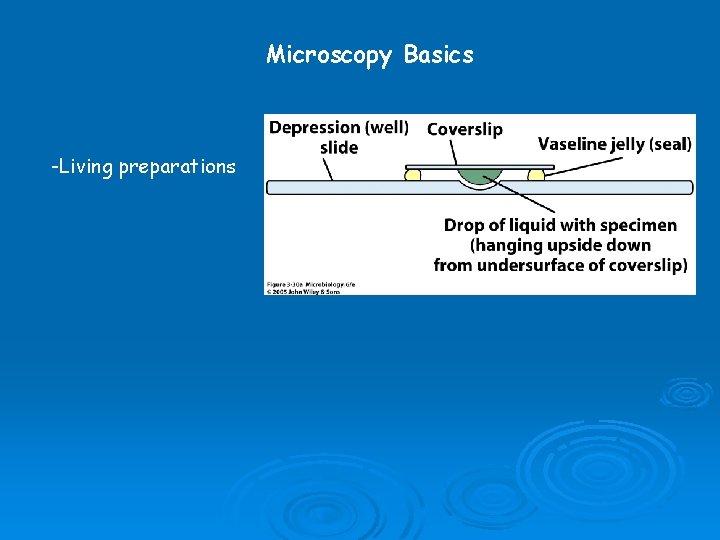
Microscopy Basics -Living preparations
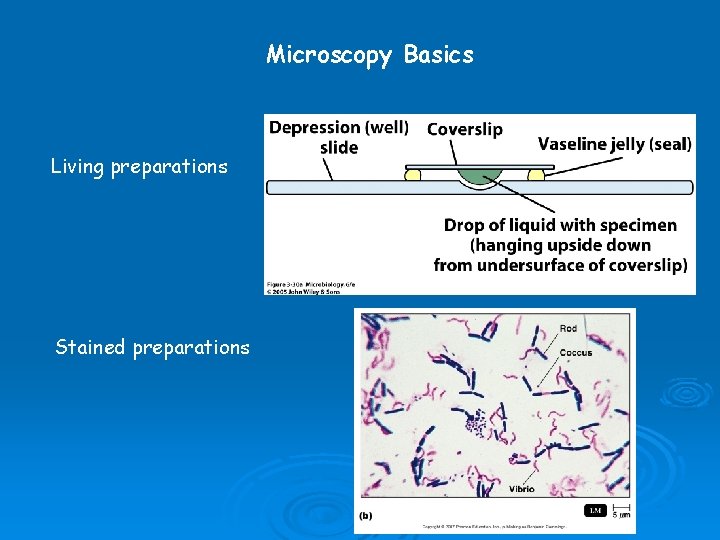
Microscopy Basics Living preparations Stained preparations
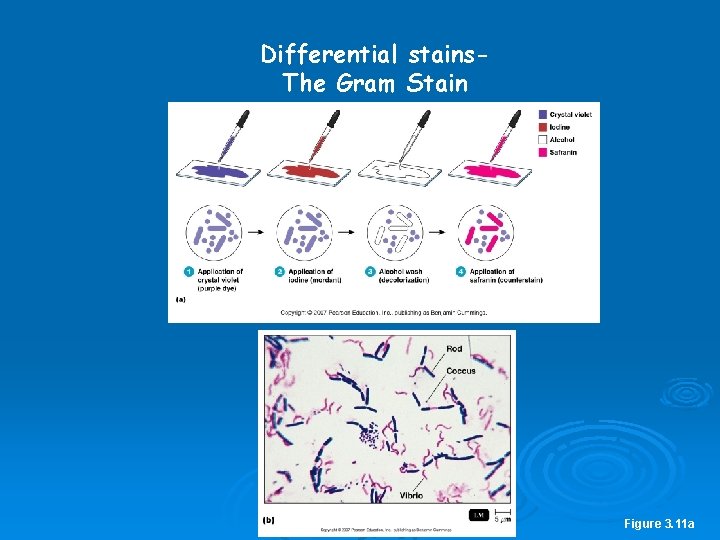
Differential stains. The Gram Stain Figure 3. 11 a
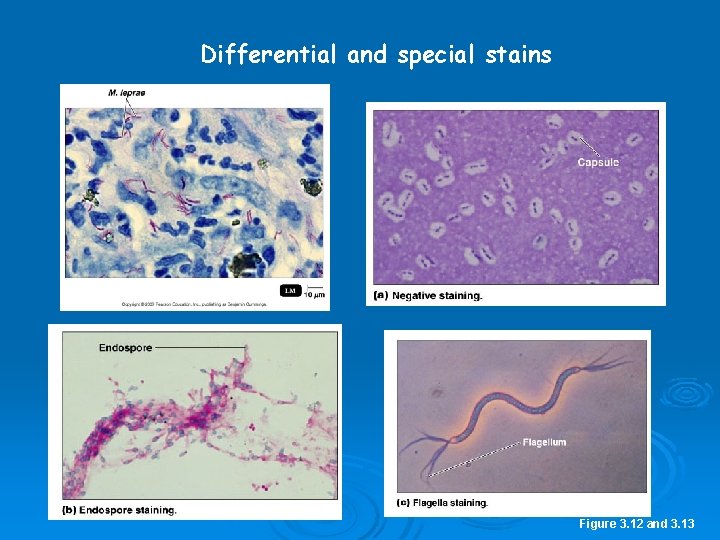
Differential and special stains Figure 3. 12 and 3. 13
- Slides: 38