
Just Dance Warm Up and Cool Down You


- Slides: 16
Just Dance!!
Warm Up and Cool Down • You want to warm up and cool down to prevent injury.
Body Alignment • Head up • Back Straight • Shoulders Back
Elements of Dance • Space- area where you dance – Personal space- distance between people – Spatial relationshipsdistance between partners
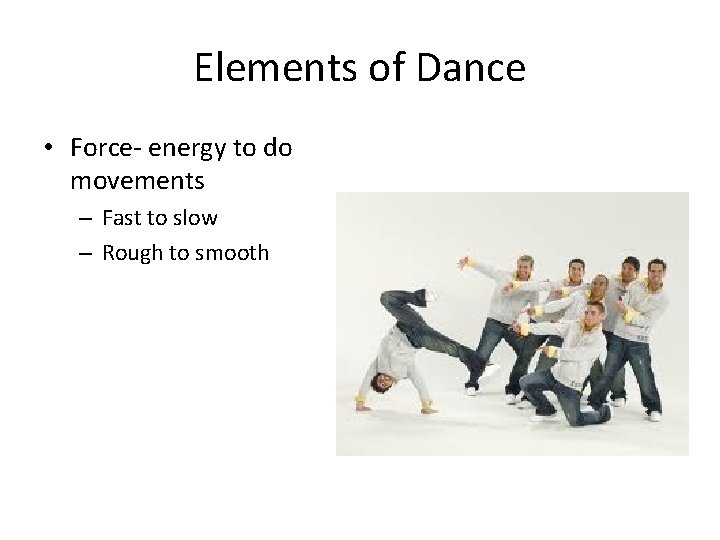
Elements of Dance • Force- energy to do movements – Fast to slow – Rough to smooth
Elements of Dance • Time- counting of steps and duration of the song
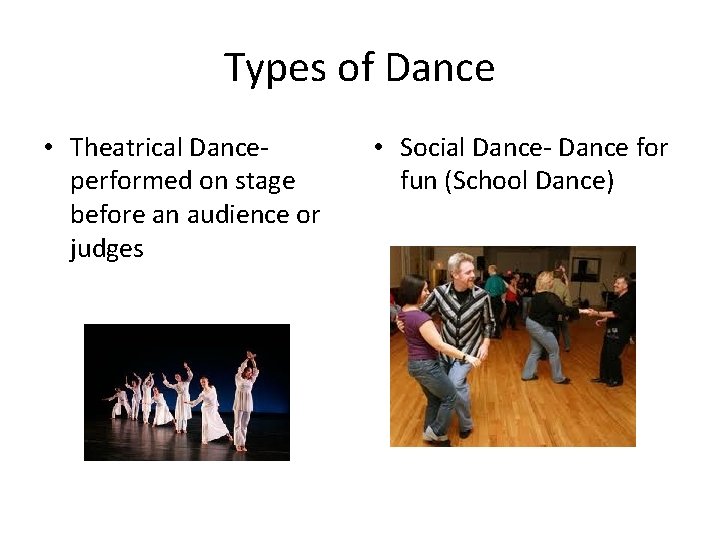
Types of Dance • Theatrical Danceperformed on stage before an audience or judges • Social Dance- Dance for fun (School Dance)
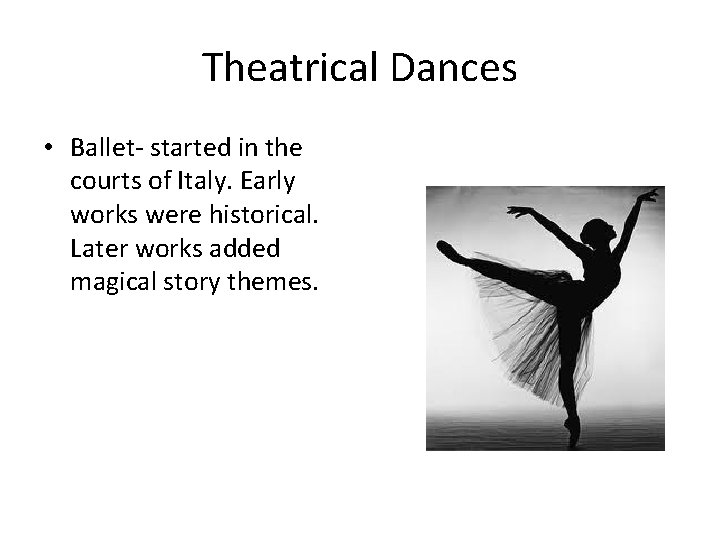
Theatrical Dances • Ballet- started in the courts of Italy. Early works were historical. Later works added magical story themes.
Social Dancing • Square Dancing – Done in groups of 4 • Formations: – running set (a circle) – Longways (2 lines) – Format: Call and response
Social Dancing • Folk Dancing- taught to each generation normally in a circle format • See here
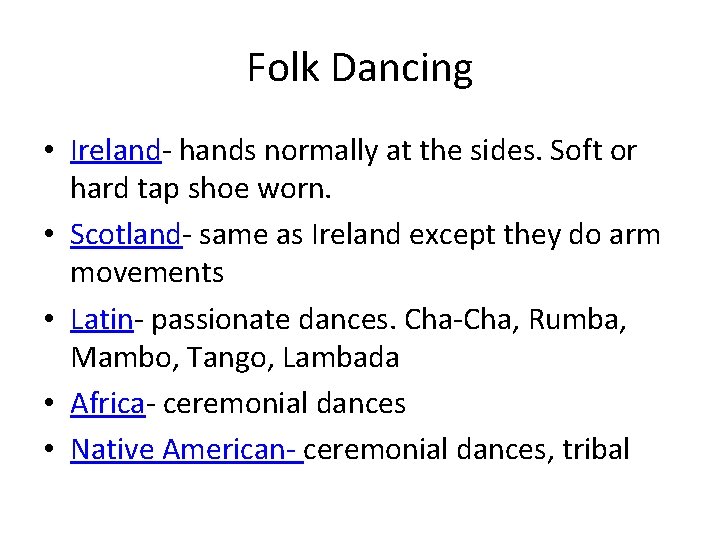
Folk Dancing • Ireland- hands normally at the sides. Soft or hard tap shoe worn. • Scotland- same as Ireland except they do arm movements • Latin- passionate dances. Cha-Cha, Rumba, Mambo, Tango, Lambada • Africa- ceremonial dances • Native American- ceremonial dances, tribal
Folk Dancing • Hawaii- Hula is done to chants and music • China- dance and drama are combined • Japan- also combined with drama are “No” and “Kabuki”
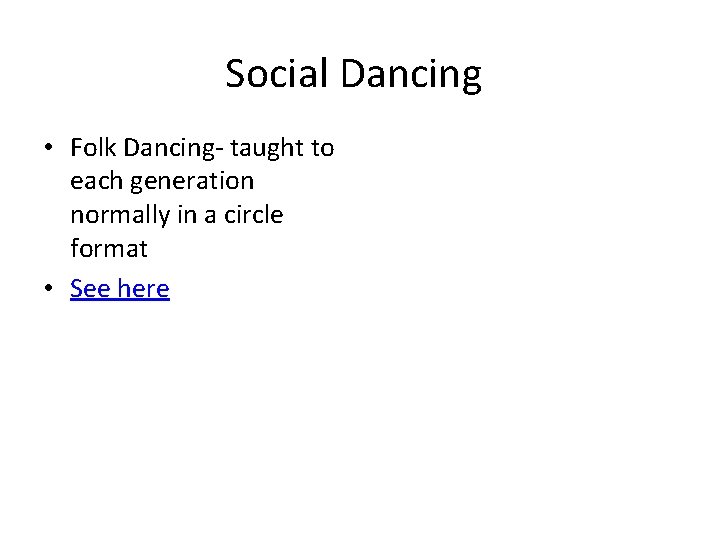
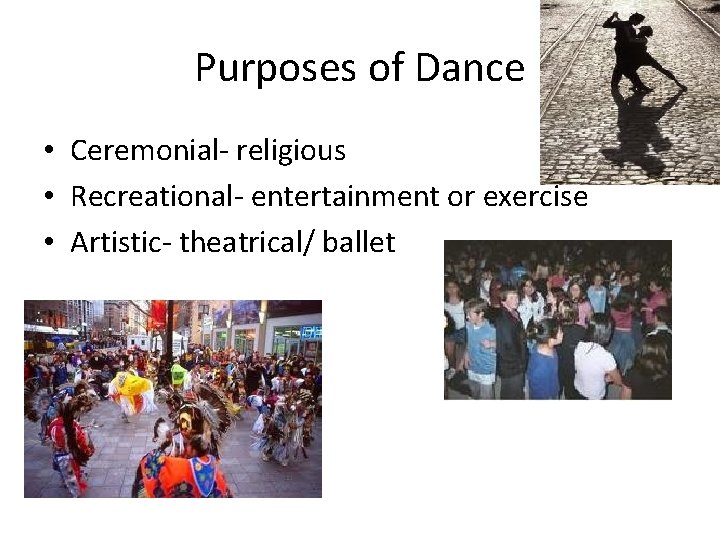
Purposes of Dance • Ceremonial- religious • Recreational- entertainment or exercise • Artistic- theatrical/ ballet
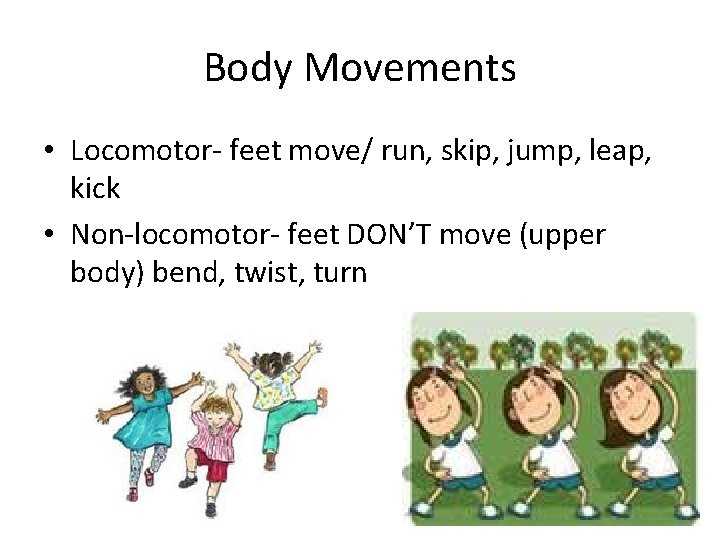
Body Movements • Locomotor- feet move/ run, skip, jump, leap, kick • Non-locomotor- feet DON’T move (upper body) bend, twist, turn
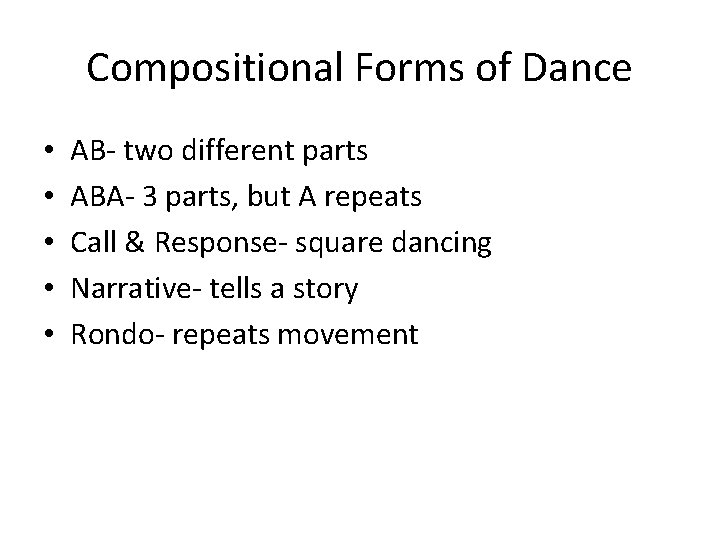
Compositional Forms of Dance • • • AB- two different parts ABA- 3 parts, but A repeats Call & Response- square dancing Narrative- tells a story Rondo- repeats movement
Tinikling • National dance of the Philippines • http: //www. youtube. com/watch? v=asg. Q 4 l. W ug 3 s