
Just Culture Major barriers to reducing medical error
Just Culture
Major barriers to reducing medical error include: • • Lack of data on how the patient care process breaks down • An institutionalized culture of silence which allows fear of punishment to outweigh the need for sharing and openness. An aggressive legal environment which discourages sharing of errors o This last factor is the focus of this presentation
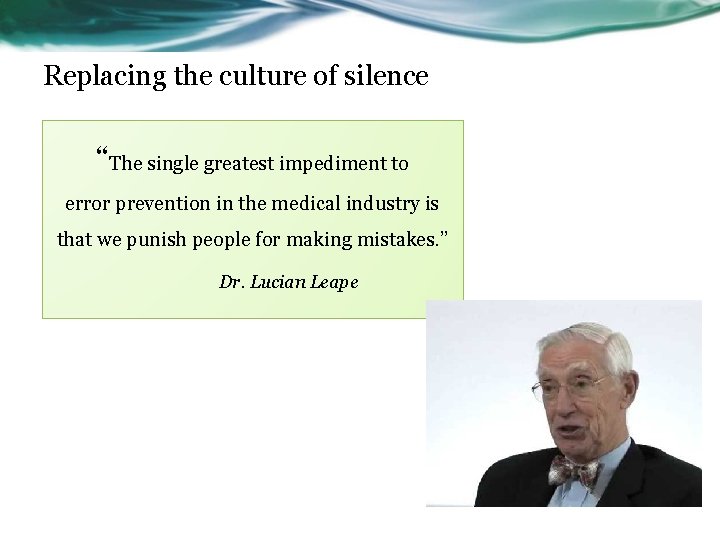
Replacing the culture of silence “The single greatest impediment to error prevention in the medical industry is that we punish people for making mistakes. ” Dr. Lucian Leape
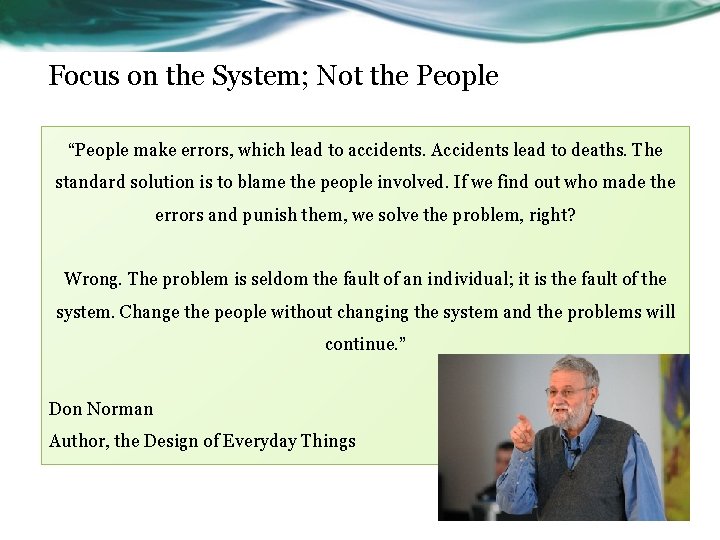
Focus on the System; Not the People “People make errors, which lead to accidents. Accidents lead to deaths. The standard solution is to blame the people involved. If we find out who made the errors and punish them, we solve the problem, right? Wrong. The problem is seldom the fault of an individual; it is the fault of the system. Change the people without changing the system and the problems will continue. ” Don Norman Author, the Design of Everyday Things
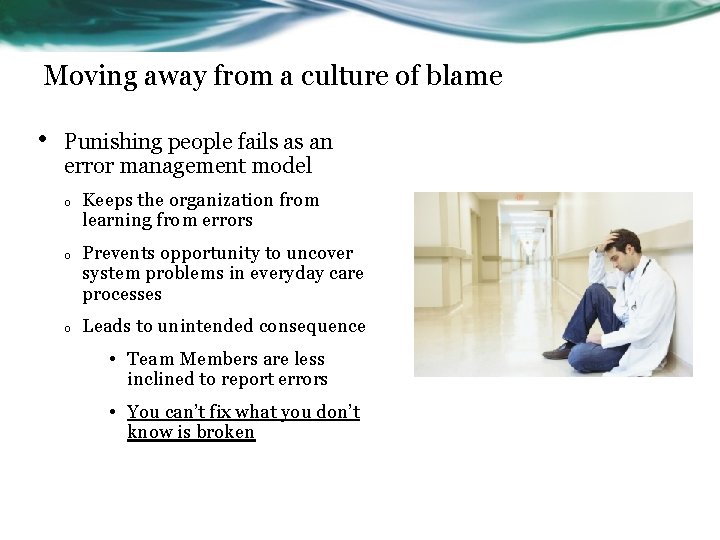
Moving away from a culture of blame • Punishing people fails as an error management model o o o Keeps the organization from learning from errors Prevents opportunity to uncover system problems in everyday care processes Leads to unintended consequence • Team Members are less inclined to report errors • You can’t fix what you don’t know is broken
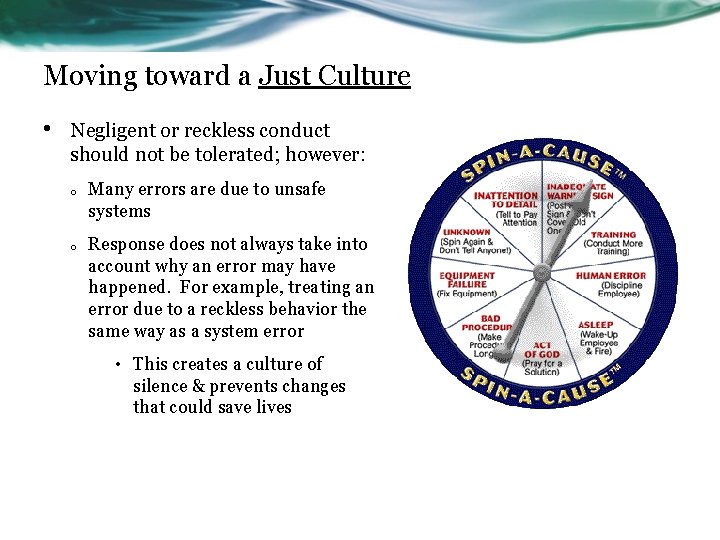
Moving toward a Just Culture • Negligent or reckless conduct should not be tolerated; however: o o Many errors are due to unsafe systems Response does not always take into account why an error may have happened. For example, treating an error due to a reckless behavior the same way as a system error • This creates a culture of silence & prevents changes that could save lives
Just Culture • David Marx (a pioneer in the just culture movement) stresses the need to find middle ground between a o blame-free culture (no accountability) and o overly punitive culture (blamed for all mistakes)
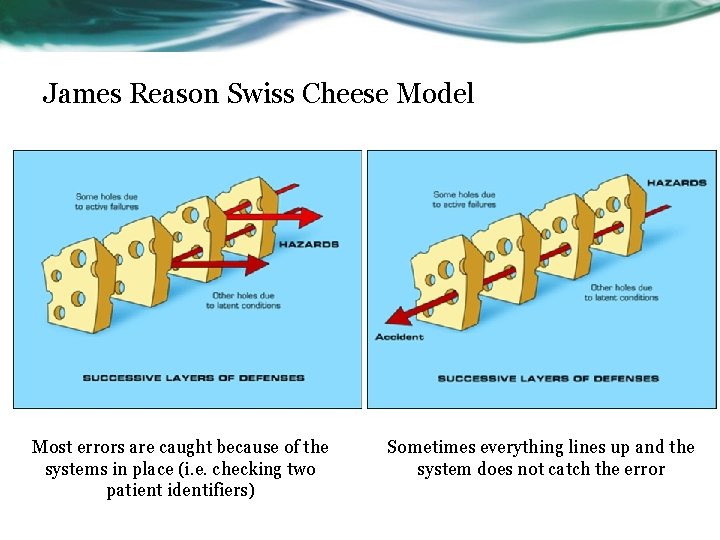
James Reason Swiss Cheese Model Most errors are caught because of the systems in place (i. e. checking two patient identifiers) Sometimes everything lines up and the system does not catch the error
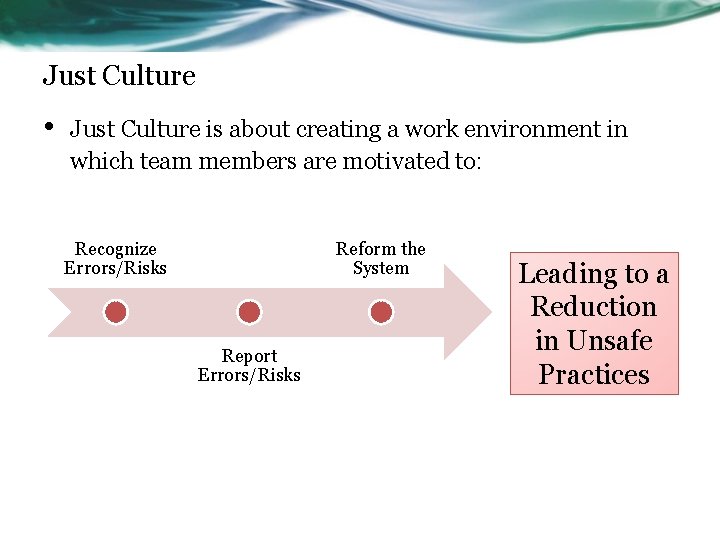
Just Culture • Just Culture is about creating a work environment in which team members are motivated to: Recognize Errors/Risks Reform the System Report Errors/Risks Leading to a Reduction in Unsafe Practices
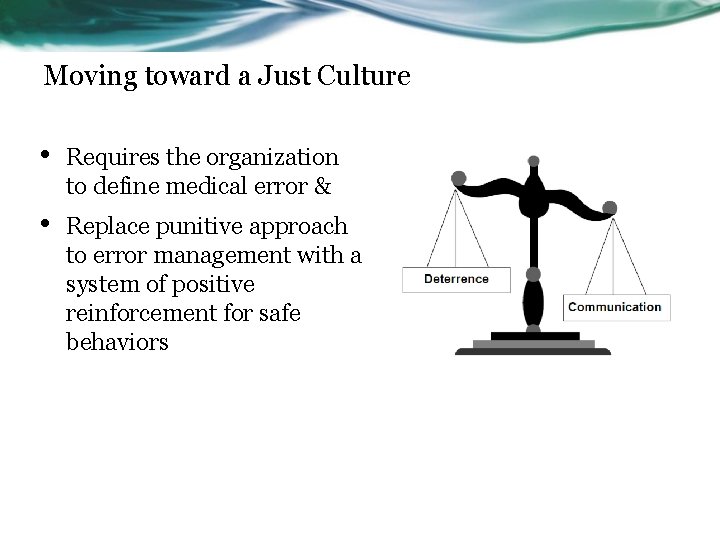
Moving toward a Just Culture • Requires the organization to define medical error & • Replace punitive approach to error management with a system of positive reinforcement for safe behaviors
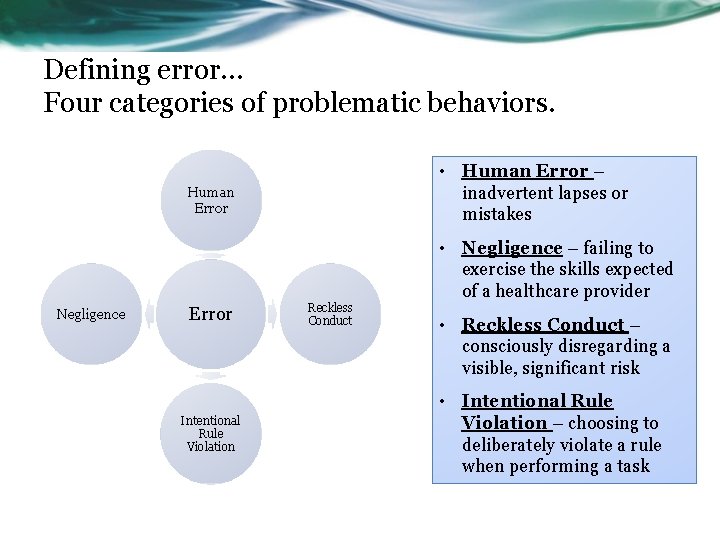
Defining error… Four categories of problematic behaviors. • Human Error – inadvertent lapses or mistakes Human Error Negligence Error Intentional Rule Violation Reckless Conduct • Negligence – failing to exercise the skills expected of a healthcare provider • Reckless Conduct – consciously disregarding a visible, significant risk • Intentional Rule Violation – choosing to deliberately violate a rule when performing a task
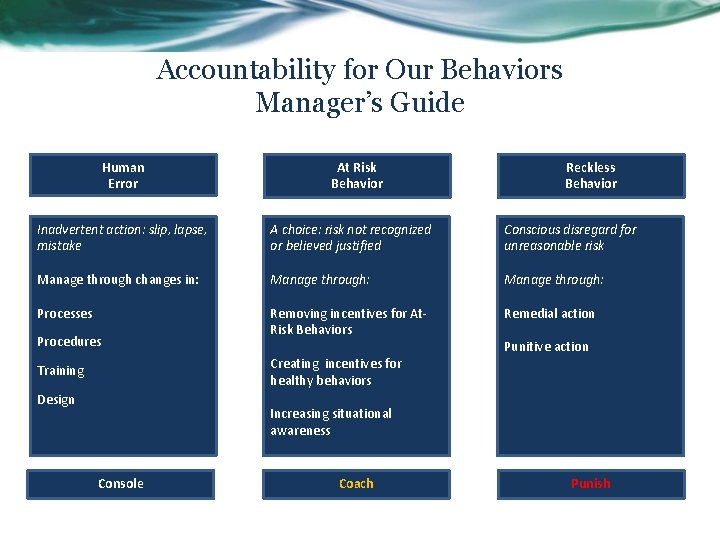
Accountability for Our Behaviors Manager’s Guide Human Error At Risk Behavior Reckless Behavior Inadvertent action: slip, lapse, mistake A choice: risk not recognized or believed justified Conscious disregard for unreasonable risk Manage through changes in: Manage through: Processes Removing incentives for At. Risk Behaviors Remedial action Procedures Creating incentives for healthy behaviors Training Design Punitive action Increasing situational awareness Console Coach Punish
Transforming a Culture • Transforming to a Just Culture requires we change the way we: • Assess errors & • Respond to errors
East Jefferson General Hospital “Great Catch” Patient Safety Program Recognizes and rewards team members and physicians who speak up and identify patient safety concerns. The recognition focuses on the “Great Catch”, recognition of an event or circumstance which had the potential to cause a minor or critical incident but which did not occur, due to corrective action and/or other timely intervention following recognition. Speak Up! Patient Safety is in Your Hands.
- Slides: 14