
Jurubatuba research results and insights for the contaminated
Jurubatuba: research results and insights for the contaminated groundwater management Reginaldo Bertolo Marcos Barbosa Daphne Pino Paulo Lajkasek-Lima Amelia Fernandes Ricardo Hirata. CEPAS|USP
Conducted by: Financial supported by: CEPAS|USP
Objectives o Since 2011, CEPAS|USP + CETESB project: to establish the technical basis for the management of contaminated areas in fractured aquifers, through the definition of protocols for the characterization of these sites o Jurubatuba (SP) area is a pilot area. CEPAS|USP
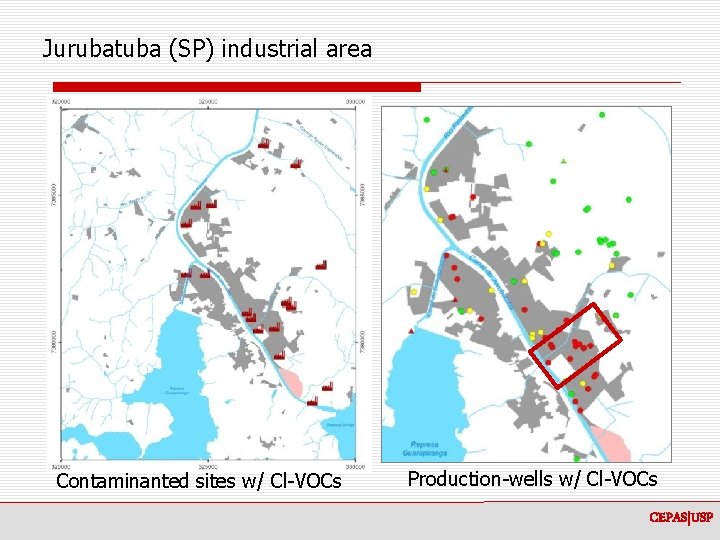
Jurubatuba (SP) industrial area Contaminanted sites w/ Cl-VOCs Production-wells w/ Cl-VOCs CEPAS|USP
Objective of this estudy To present some lessons that we learned (so far): o Hydrogeological + contamination conceptual models of fractured aquifers o Evaluation of techniques and technologies employed for fracturated aquifer studies o Evaluation of technical approaches for study large (multi-source) contaminated areas in São Paulo’ CEPAS|USP
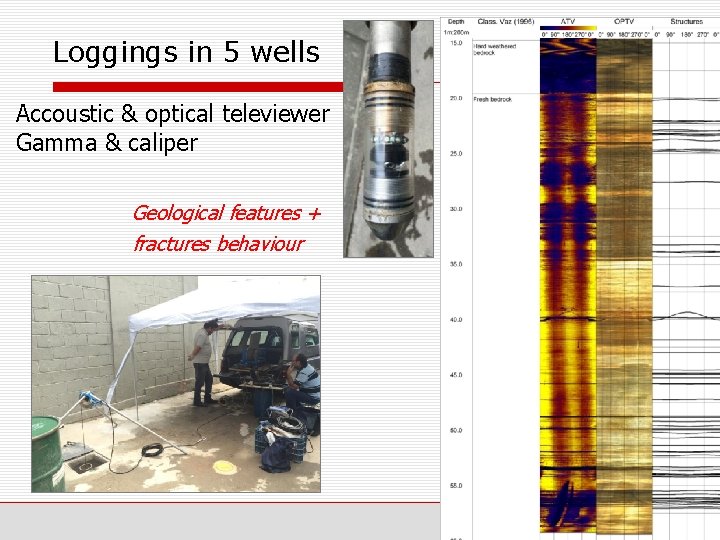
Loggings in 5 wells Accoustic & optical televiewer Gamma & caliper Geological features + fractures behaviour CEPAS|USP
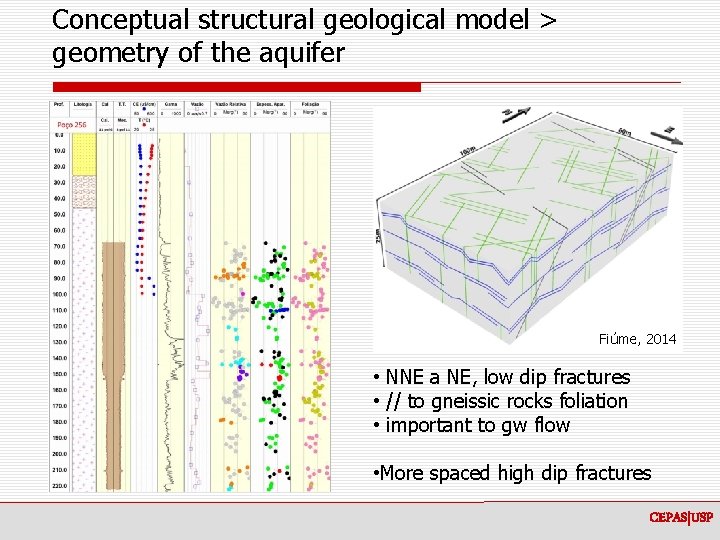
Conceptual structural geological model > geometry of the aquifer Fiúme, 2014 • NNE a NE, low dip fractures • // to gneissic rocks foliation • important to gw flow • More spaced high dip fractures CEPAS|USP
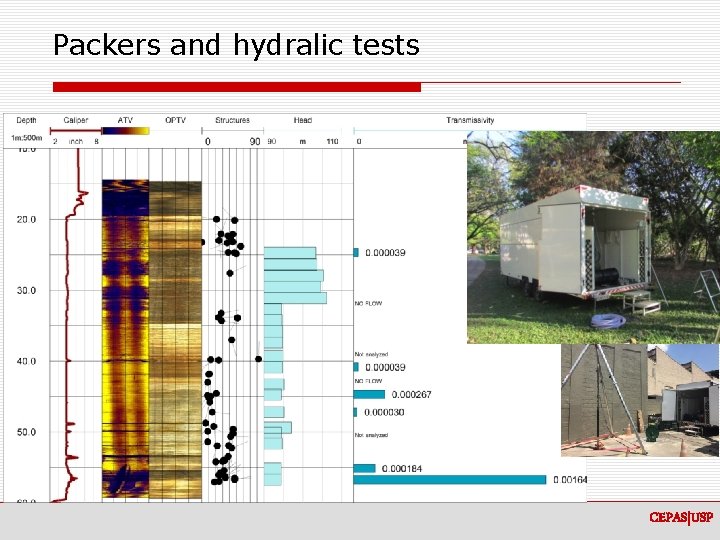
Packers and hydralic tests CEPAS|USP
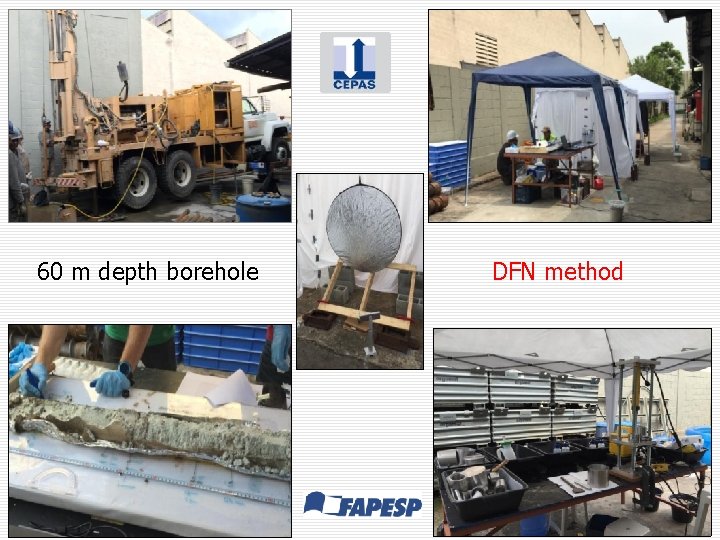
60 m depth borehole DFN method
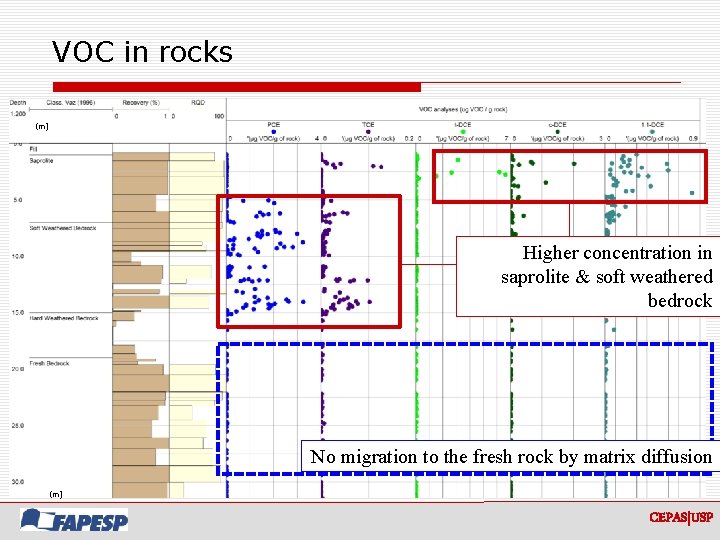
VOC in rocks (m) Higher concentration in saprolite & soft weathered bedrock No migration to the fresh rock by matrix diffusion (m) CEPAS|USP
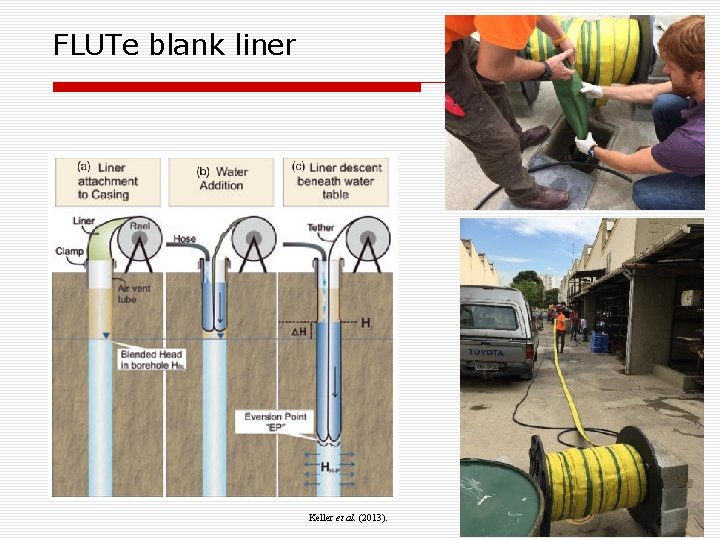
FLUTe blank liner Keller et al. (2013).
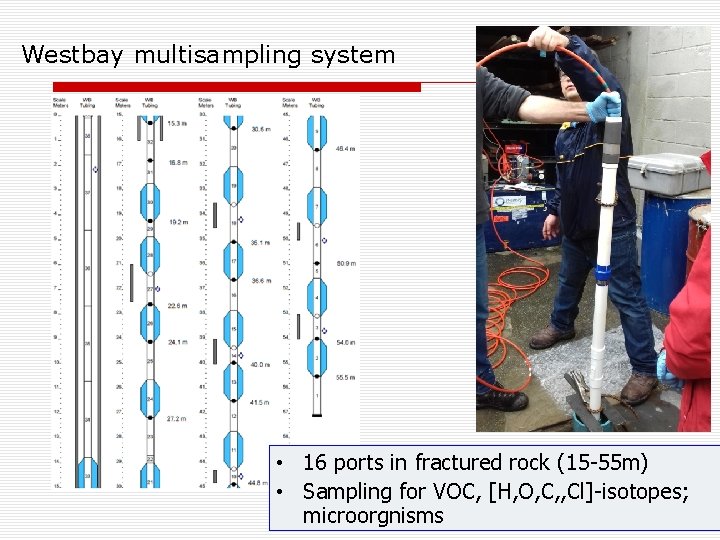
Westbay multisampling system • 16 ports in fractured rock (15 -55 m) • Sampling for VOC, [H, O, C, , Cl]-isotopes; microorgnisms
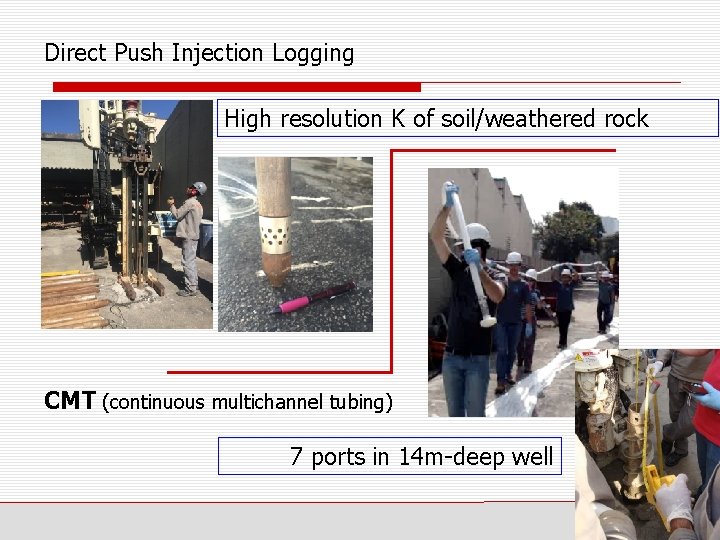
Direct Push Injection Logging High resolution K of soil/weathered rock Dietrich et al. (2008) CMT (continuous multichannel tubing) 7 ports in 14 m-deep well CEPAS|USP
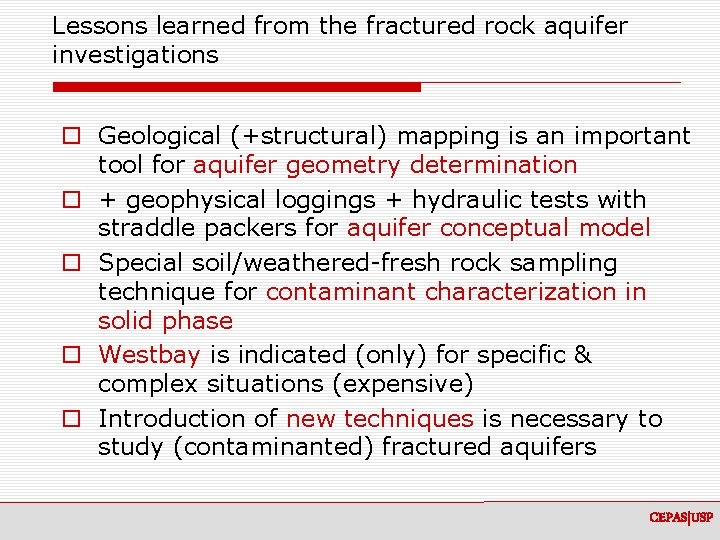
Lessons learned from the fractured rock aquifer investigations o Geological (+structural) mapping is an important tool for aquifer geometry determination o + geophysical loggings + hydraulic tests with straddle packers for aquifer conceptual model o Special soil/weathered-fresh rock sampling technique for contaminant characterization in solid phase o Westbay is indicated (only) for specific & complex situations (expensive) o Introduction of new techniques is necessary to study (contaminanted) fractured aquifers CEPAS|USP
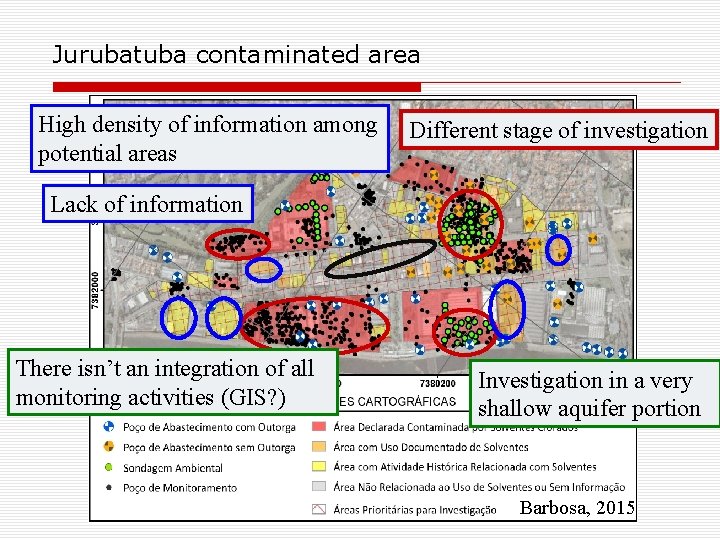
Jurubatuba contaminated area High density of information among potential areas Different stage of investigation Lack of information There isn’t an integration of all monitoring activities (GIS? ) Investigation in a very shallow aquifer portion Barbosa, 2015
Jurubatuba complex area o Foundation of a consortium of legal responsibles for contaminated areas & civil construction industry to rise funds to enable integrated investigation and implement the deep fractured aquifer monitoring
Dr. Ricardo Hirata CEPAS|USP – Centro de Pesquisas de Águas Subterrâneas – USP rhirata@usp. br http: //cepas. igc. usp. br CEPAS|USP
- Slides: 17