
Junior Cycle History Learning outcomes 1 3 Students
- Slides: 7
Junior Cycle History: Learning outcomes 1. 3 Students will be able to demonstrate awareness of their cultural inheritance through an appreciation of historically significant places and buildings 1. 8 Report on a repository of historical evidence such as a museum, library, heritage centre, digital or other archive or exhibition
Building Ireland Galway university: Learning intentions ● To describe the architecture of your own school ● To analyse how the design of your school building links in with its purpose and meaning ● To explain how the architecture of a historic building can reveal meaning about the purpose of the building ● To identify how the work of the archivist contributes to our knowledge and understanding of the past
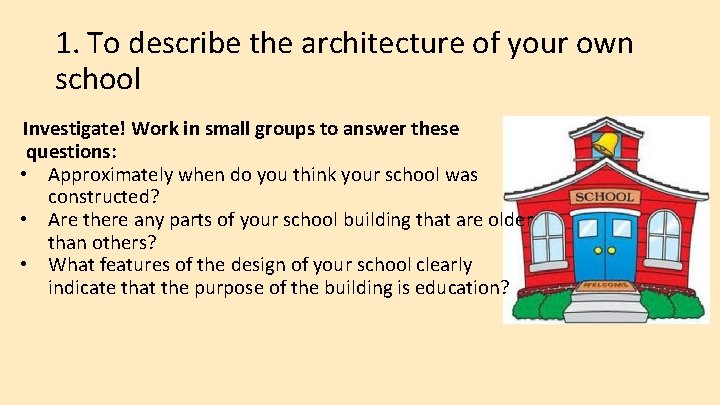
1. To describe the architecture of your own school Investigate! Work in small groups to answer these questions: • Approximately when do you think your school was constructed? • Are there any parts of your school building that are older than others? • What features of the design of your school clearly indicate that the purpose of the building is education?
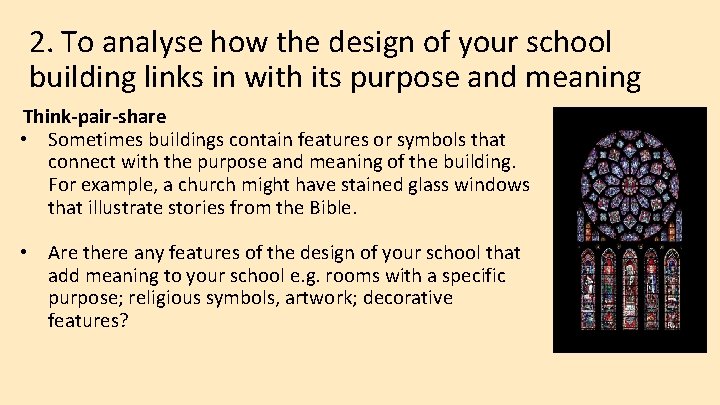
2. To analyse how the design of your school building links in with its purpose and meaning Think-pair-share • Sometimes buildings contain features or symbols that connect with the purpose and meaning of the building. For example, a church might have stained glass windows that illustrate stories from the Bible. • Are there any features of the design of your school that add meaning to your school e. g. rooms with a specific purpose; religious symbols, artwork; decorative features?
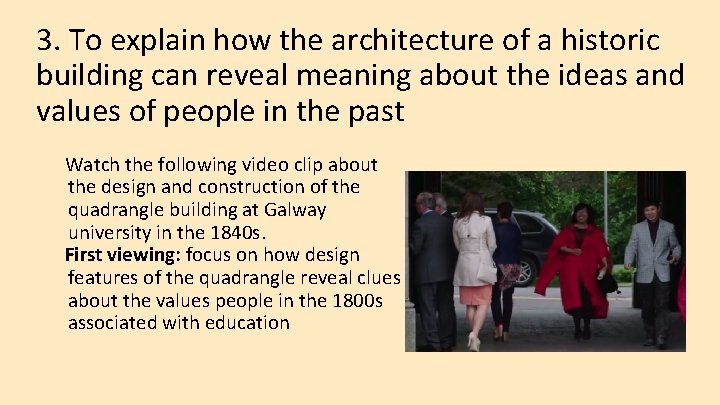
3. To explain how the architecture of a historic building can reveal meaning about the ideas and values of people in the past Watch the following video clip about the design and construction of the quadrangle building at Galway university in the 1840 s. First viewing: focus on how design features of the quadrangle reveal clues about the values people in the 1800 s associated with education
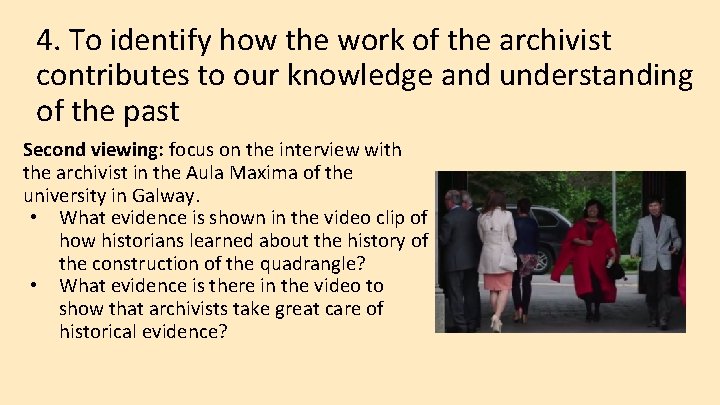
4. To identify how the work of the archivist contributes to our knowledge and understanding of the past Second viewing: focus on the interview with the archivist in the Aula Maxima of the university in Galway. • What evidence is shown in the video clip of how historians learned about the history of the construction of the quadrangle? • What evidence is there in the video to show that archivists take great care of historical evidence?