
Jung COUN 5050 Life socalled is a short




- Slides: 62
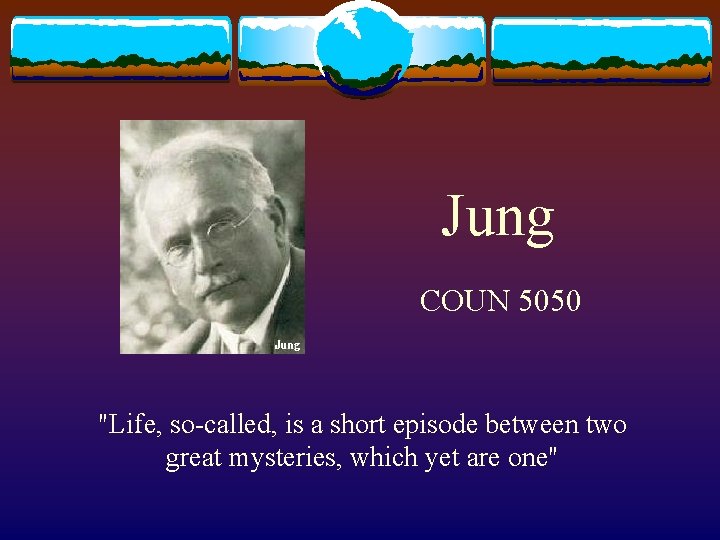
Jung COUN 5050 "Life, so-called, is a short episode between two great mysteries, which yet are one"
Historical Context Child of a minister Isolated as a child. Developed imaginary personality--a wise old man. Possibly some dissociation Studied as a physician- psychiatrist In 1907 he went to Vienna and met Freud. Became the first President of the International Psychoanalytic Society
Historical Context Jung disagreed on several important points. And broke with him in 1913. Went through a period of “self-analysis” that some critics think was a psychotic episode His theory articulates ideas picked up later by other theorists forming a base for transpersonal psychology. .
Impact of Context on Theory Jung’s childhood experience and education concerning religion provided an alternative to reductionistic-scientific approach; he was comfortable with mysticism.
Impact of Context on Theory Jung’s experience with his childhood imaginary personality led him to view the unconscious as more organized by the individual’s connection with the evolution of the species.
Impact of Context on Theory Jung’s self-analysis of his relationship with Freud set the stage for the dialectic between personality as bi-polar opposites versus the move to resolve those opposites. His theory is much more holistic and integrative. .
Three major themes: Person unconscious is supplemented by a "collective unconscious" consisting of universal images
Three major themes: Spiritual needs are at least equally, if not more important, than basic biological needs ("search for meaning").
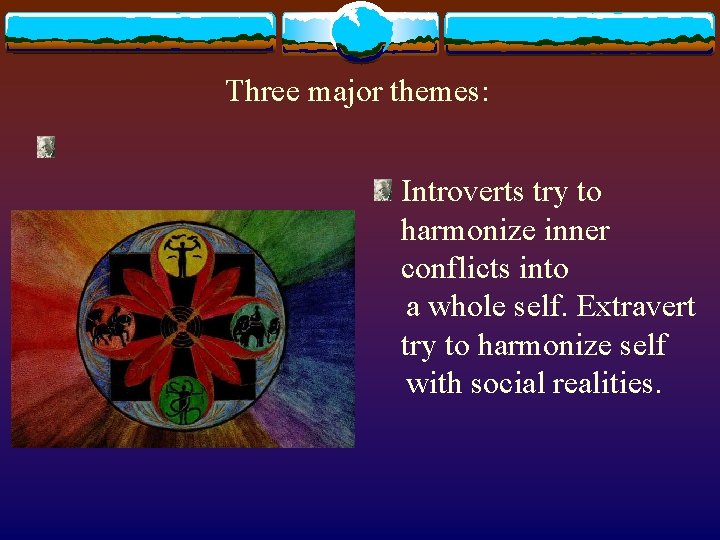
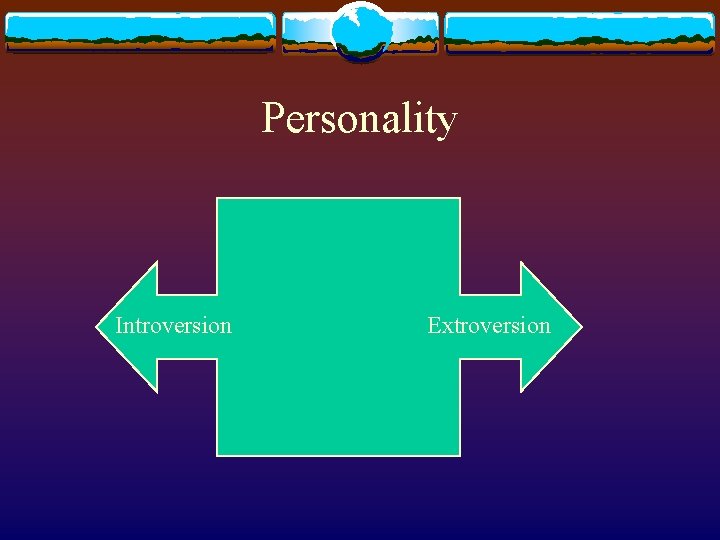
Three major themes: Introverts try to harmonize inner conflicts into a whole self. Extravert try to harmonize self with social realities.
Jung’s Structure of Personality Conscious Ego (Perceptions, Memories, Thoughts, Feelings) Personal Unconscious and Complexes Collective Unconscious and Archetypes (Persona--Shadow, Anima--Animus) Attitudes (Introversion--Extraverson) Functions (Intuition--Sensation, Thinking--Feeling) Self. .
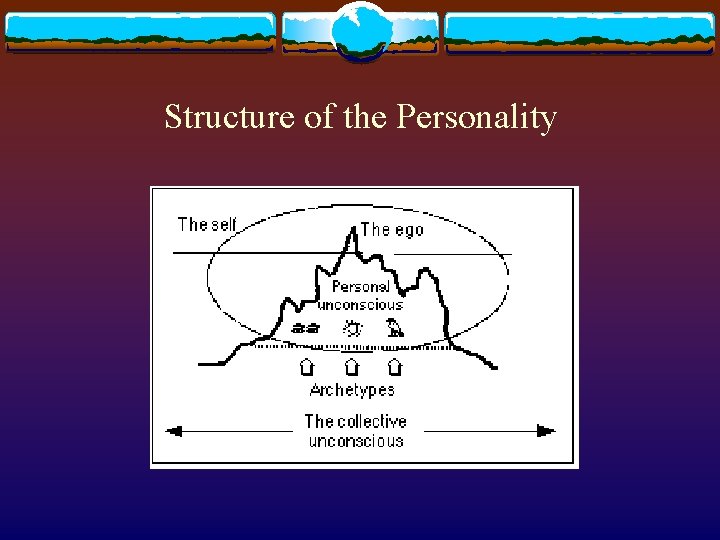
Structure of the Personality
Ego: The conscious, individualistic mind; the center of consciousness. The ego is typically characterized by one dominant attitude (introversion/extraversion) and by one or two dominant functions (think/feel; sense/intuit).
Personal Unconscious and Complexes Personal unconscious--unique to each individual-repressed, suppressed. All once in consciousness and thus retrievable Complexes--sub-organizations of psychic material concerning a specific motif. To the degree that these complexes are repressed or broken off from conscious control, they can accumulate more psychic energy and lead to pathology Jung’s concept of psychic energy was not constrained to sex and aggression, but is more general. .
Personal Unconscious: This is formed of socially unacceptable mental content that was once conscious but has been forced out of mental awareness by the defenses. 1. Is in conflict with the ego. 2. Contains the complexes, which are unconscious clusters of emotionally laden thoughts that result in a disproportionate influence on behavior (ex: money complex, mother complex, Oedipus complex).
Collective Unconscious: A communal, species memory representing the accumulated experiences of mankind. It is a storehouse of latent predispositions to apprehend the world in particular ways. It is the deepest and most inaccessible layer of the psyche.
Collective Unconscious Collective unconscious at the deepest level of unconscious (not directly retrievable) and is transpersonal It is a result of human evolution and represents the universal and eternal. Not solely animal instincts, but the accumulated psychic culture of an evolved humanity. It influences every level of psychic functioning by interpreting events through its symbols and predispositions. (cf. Man and his Symbols). Individual symbols are unique representations of archetypes as filtered through the personal unconscious and ego. .
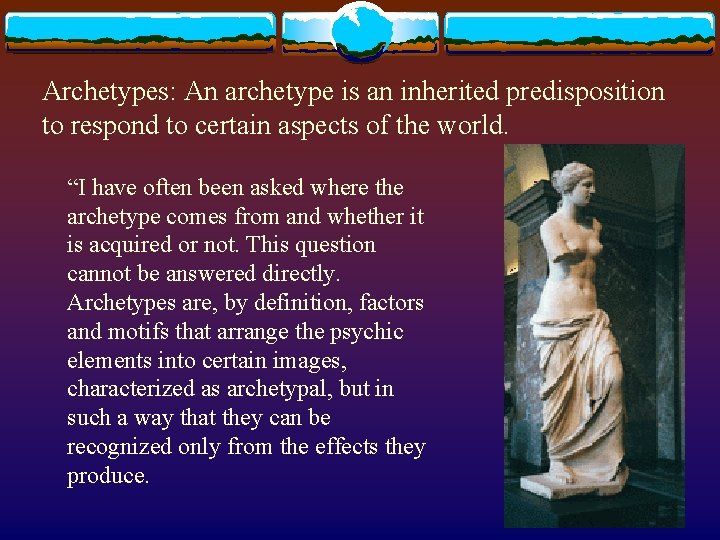
Archetypes: An archetype is an inherited predisposition to respond to certain aspects of the world. “I have often been asked where the archetype comes from and whether it is acquired or not. This question cannot be answered directly. Archetypes are, by definition, factors and motifs that arrange the psychic elements into certain images, characterized as archetypal, but in such a way that they can be recognized only from the effects they produce.
They exist preconsciously, and presumably they form the structural dominants of the psyche in general. They may be compared to the invisible presence of the crystal lattice in a saturated solution. As a priori conditioning factors they represent a special, psychological instance of the biological "pattern of behaviour, " which gives all living organisms their specific qualities. Just as the manifestations of this biological ground plan may change in the course of development, so also can those of the archetype. Empirically considered, however, the archetype did not ever come into existence as a phenomenon of organic life, but entered into the picture with life itself. "A Psychological Approach to the Dogma of the Trinity" (1942). In CW 11: Psychology and Religion: West and East. P. 222
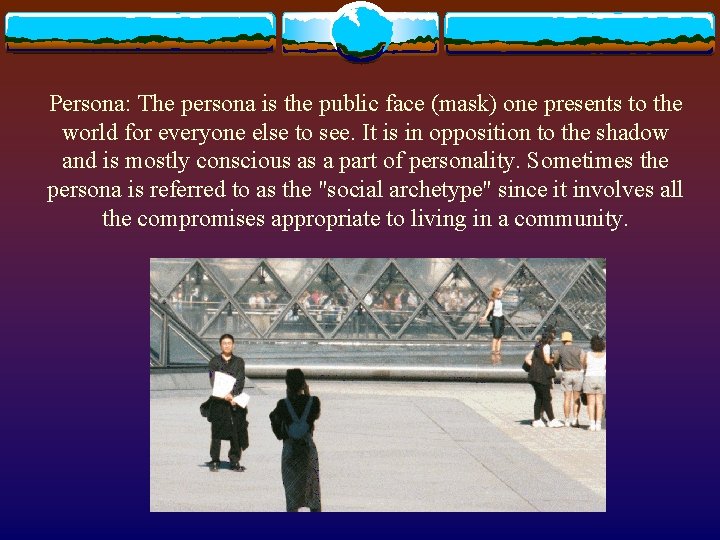
Persona: The persona is the public face (mask) one presents to the world for everyone else to see. It is in opposition to the shadow and is mostly conscious as a part of personality. Sometimes the persona is referred to as the "social archetype" since it involves all the compromises appropriate to living in a community.
Shadow: The shadow is both a part of the personality and a archetype. Part of personality: The shadow is the dark side of your personality that contains the animal (and sexual) instincts. It is the opposite of the Persona (mask) and is the part of personality that is repressed from the ego ideal. As archetype: The importance of the shadow is seen in its symbolic representation by devils, demons, and evil spirits.
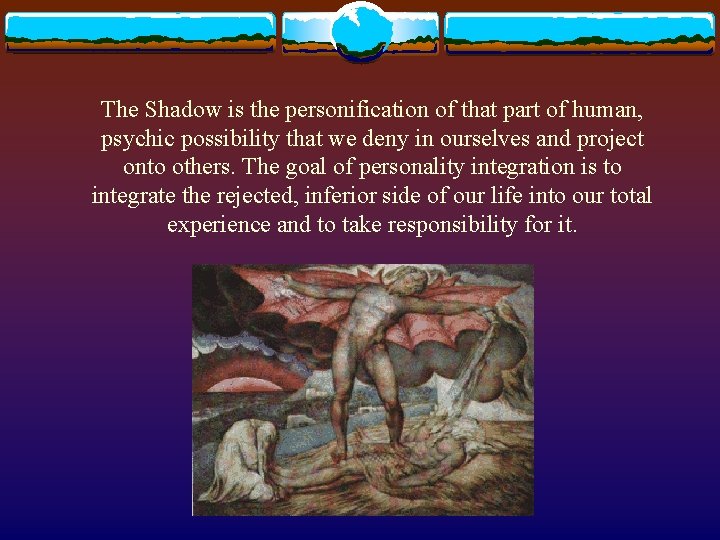
The Shadow is the personification of that part of human, psychic possibility that we deny in ourselves and project onto others. The goal of personality integration is to integrate the rejected, inferior side of our life into our total experience and to take responsibility for it.
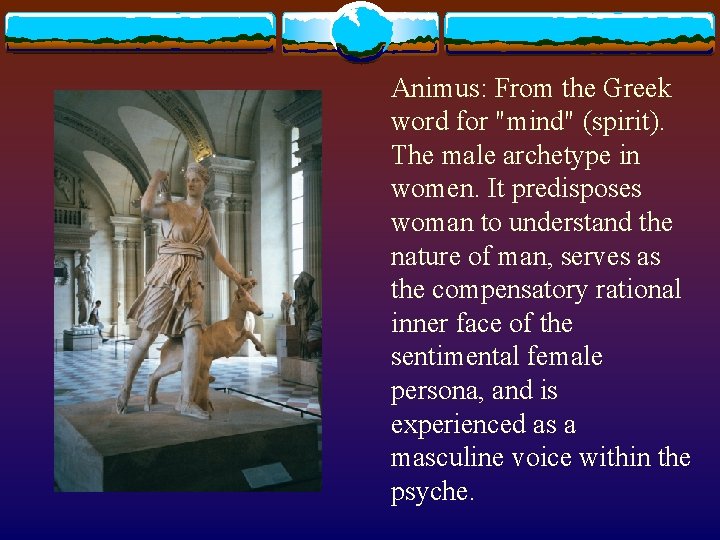
Animus: From the Greek word for "mind" (spirit). The male archetype in women. It predisposes woman to understand the nature of man, serves as the compensatory rational inner face of the sentimental female persona, and is experienced as a masculine voice within the psyche.
Anima: From the Greek word for "soul". The female archetype in men. It predisposes man to understand the nature of woman, serves as the compensatory sentimental inner face of the rational male persona, and is experienced as a feminine voice within the psyche.
Self b. A goal of differentiated self-integration--selfrealization b. An archetype of archetypes b. Contains both personal and collective unconscious images b. It unites opposing elements of the psyche. .
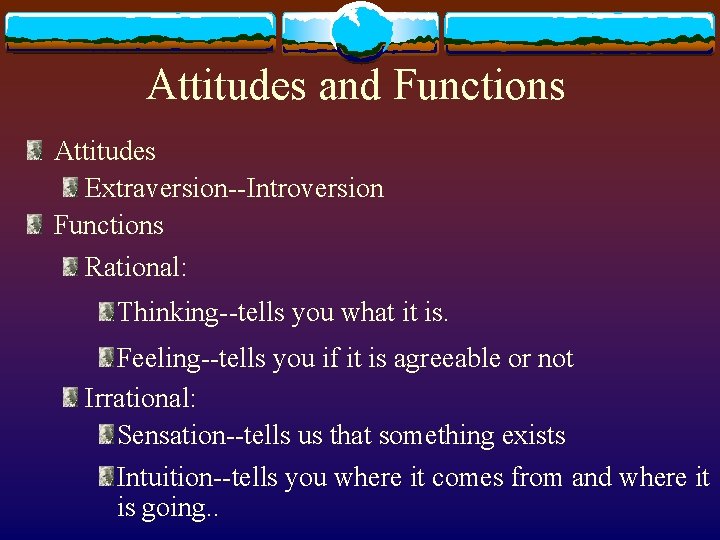
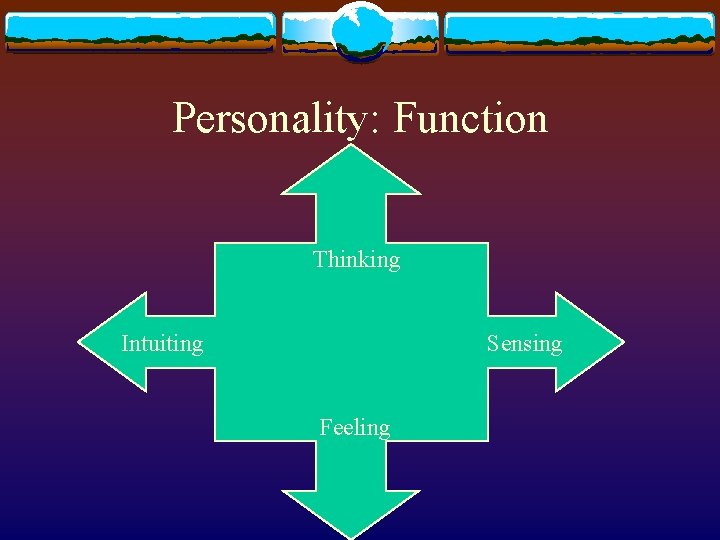
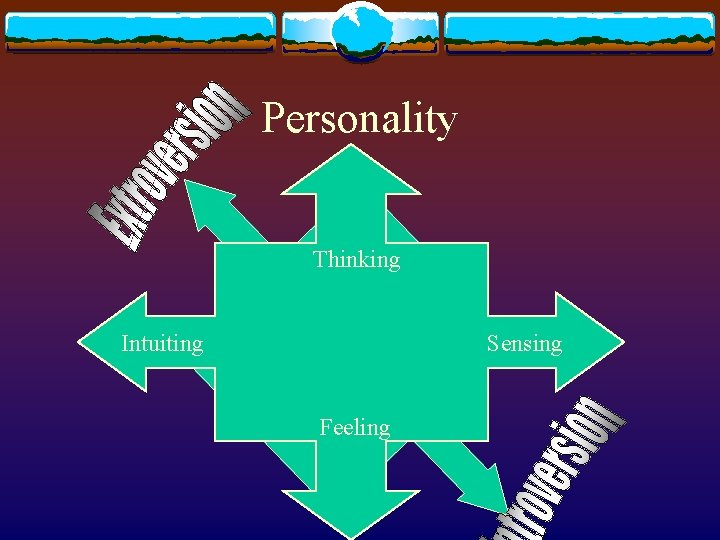
Attitudes and Functions Attitudes Extraversion--Introversion Functions Rational: Thinking--tells you what it is. Feeling--tells you if it is agreeable or not Irrational: Sensation--tells us that something exists Intuition--tells you where it comes from and where it is going. .
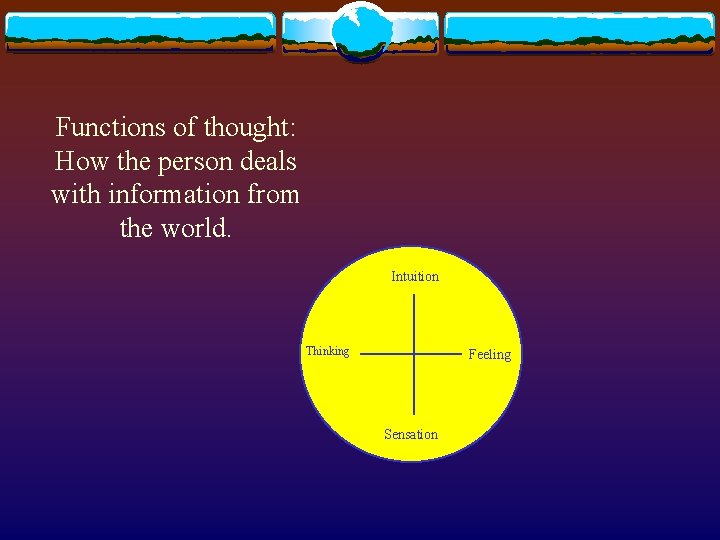
Functions of thought: How the person deals with information from the world. Intuition Thinking Feeling Sensation
Thinking: Tells what a thing is, gives names, categories to things (true, false), defines alternatives, and reasons objectively. Feeling: Is basically evaluative; tells whether something is good/bad; acceptable/unacceptable; like/dislike. Do not confuse with emotion. Essential notion: Is the object of value? Sensing: Tells you what exists; detects the presence of things. Does not evaluate. Is interested in facts and objects in the objective world; focus is on the trees. Intuition: Uses hunches, sees possibilities, sees around corners and goes beyond the facts; focus in on the forest.
Introversion - Extroversion The Self Individuation
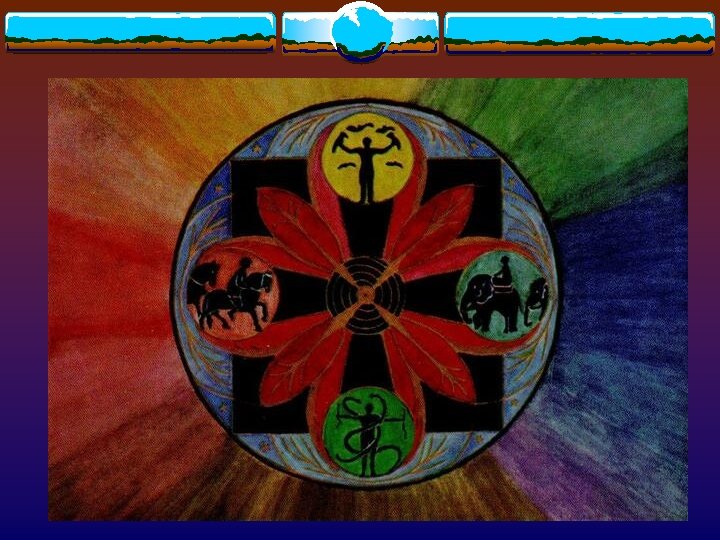
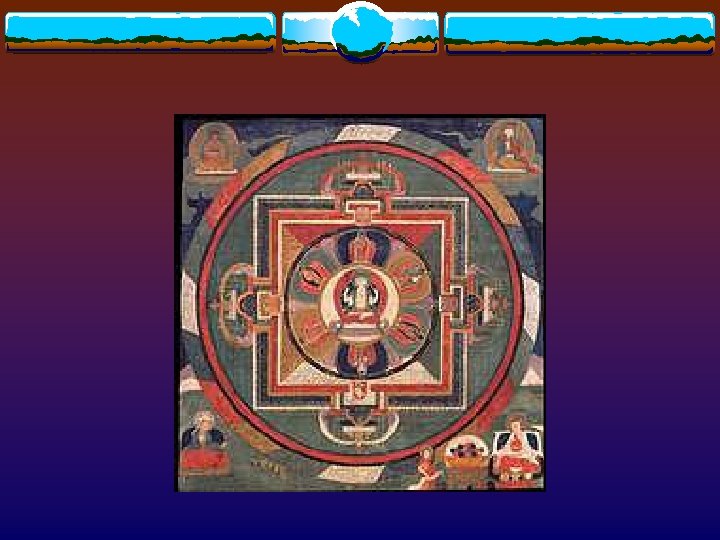
I had to abandon the idea of the superordinate position of the ego. . I saw that everything, all paths I had been following, all steps I had taken, were leading back to a single point -- namely, to the midpoint. It became increasingly plain to me that the mandala is the centre. It is the exponent of all paths. It is the path to the centre, to individuation. . I knew that in finding the mandala as an expression of the self I had attained what was for me the ultimate. - C. G. Jung. Memories, Dreams, Reflections.
Stages of Development Infancy and childhood (birth to adolescence) Up until age 5 children are primarily expressing the collective unconscious Youth and young adulthood (adolescence to 35 or 40) Marked by struggles in establishing work, marriage, identity. Middle age (35 -40 to 65 -70) the time of individuation, Challenging earlier values and ways of doing things. A time to address the unexpressed polarities. Old age (65 -70 to death).
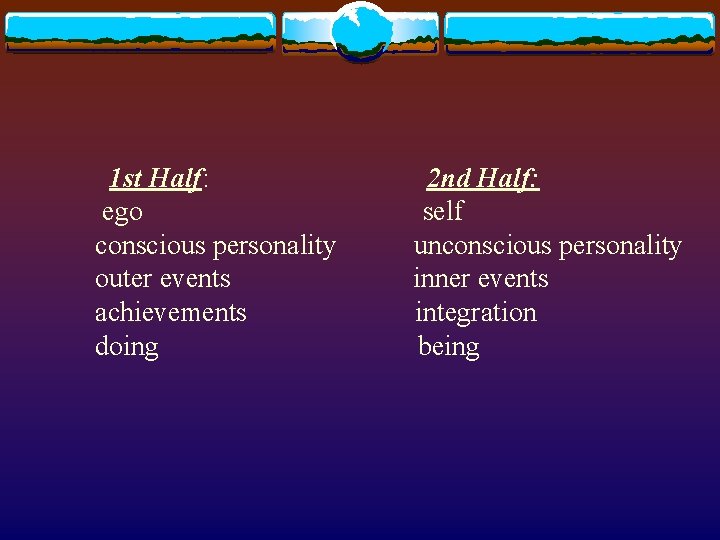
1 st Half: ego conscious personality outer events achievements doing 2 nd Half: self unconscious personality inner events integration being
Middle Life (40 --> 60 -65): Here the process of the integration of the shadow dominates. This is the Fall of life. Introverts have a slight edge here because of the heavy introspection.
Midlife Crisis: This comes when you are bored with material success and begin the process of making sense of your life. There at least three possible solutions: 1. Denial - don't face the crisis. You might die at 40 although you won't be buried until 90. 2. Start all over - suddenly you discover the unconscious and proclaim that all your life up to now has been a lie. You sell your business and become an artist or a missionary. Sometimes OK, sometimes not. 3. Start the process of integrating the old life and the new life into an unified concept of self. This is when men start of soften up (retire, become involved with family) and women start to toughen up (start a business, go into politics).
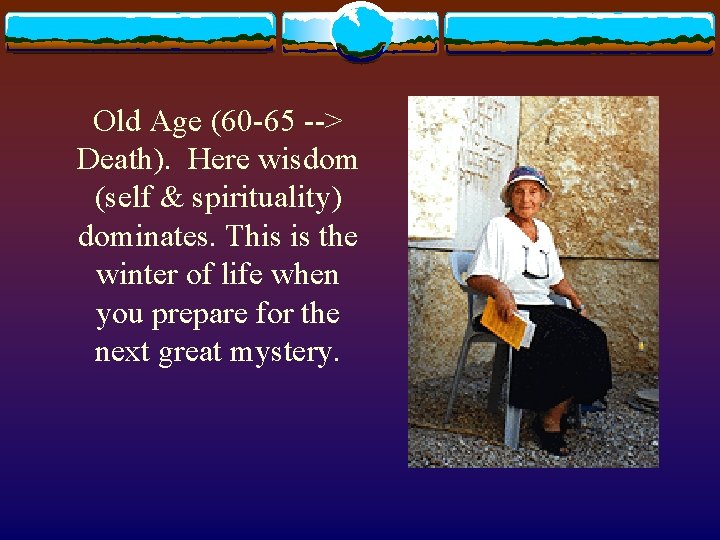
Old Age (60 -65 --> Death). Here wisdom (self & spirituality) dominates. This is the winter of life when you prepare for the next great mystery.
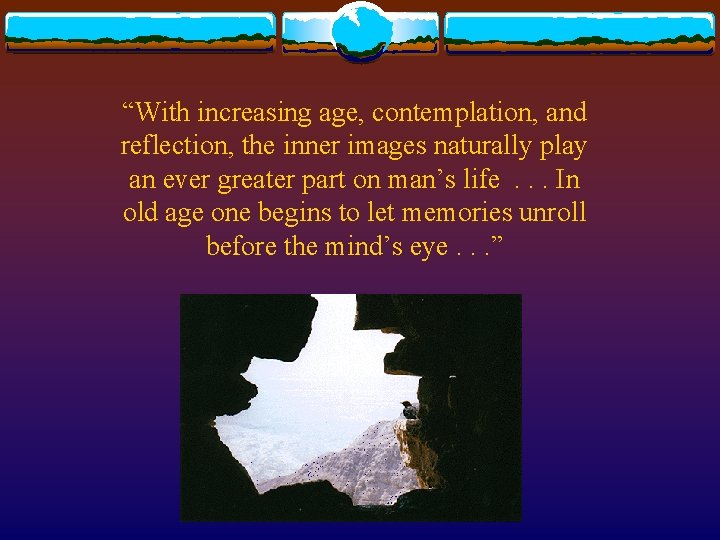
“With increasing age, contemplation, and reflection, the inner images naturally play an ever greater part on man’s life. . . In old age one begins to let memories unroll before the mind’s eye. . . ”
The Shadow
Anima
Grand Mae
Ritual
Myth
Fantastic Animal
b a hero is a man or woman (then often called a heroine), traditionally the protagonist of a story, legend or saga, commonly possessed of powers far beyond that of a standard human, which enable him or her to perform some truly extraordinary, beneficial deed (an "heroic deed") for which he or she is famous. These powers are sometimes not only of the body but also of the mind. Heroes are typically opposed by villains. The hero
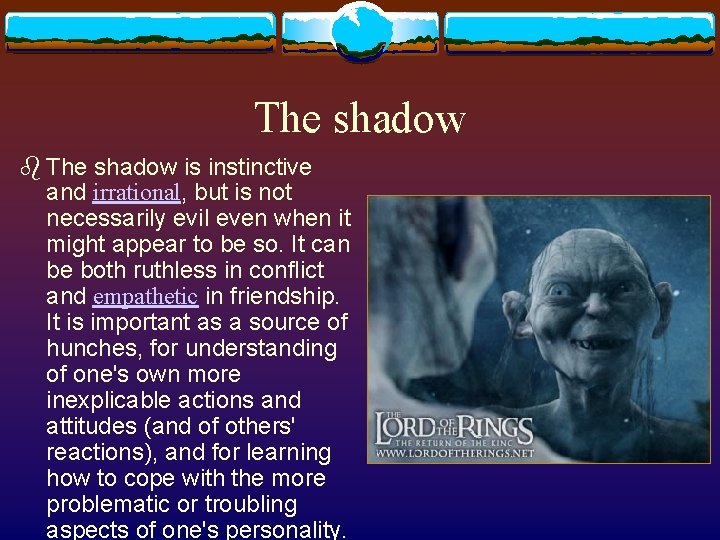
The shadow b The shadow is instinctive and irrational, but is not necessarily evil even when it might appear to be so. It can be both ruthless in conflict and empathetic in friendship. It is important as a source of hunches, for understanding of one's own more inexplicable actions and attitudes (and of others' reactions), and for learning how to cope with the more problematic or troubling aspects of one's personality.
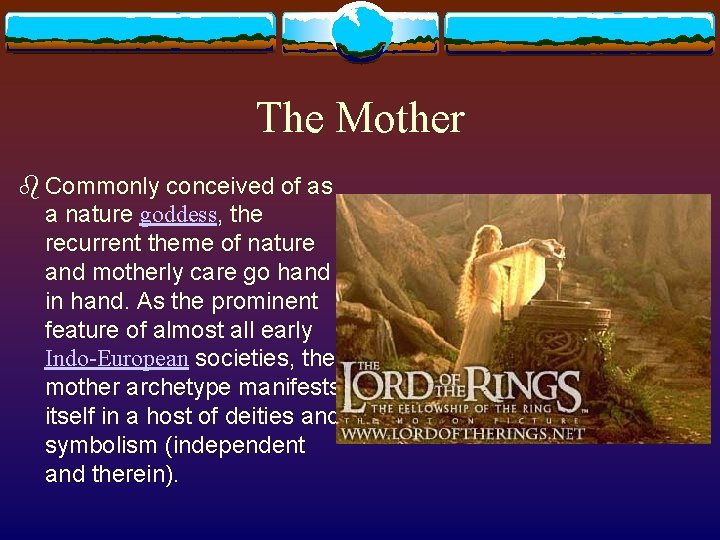
The Mother b Commonly conceived of as a nature goddess, the recurrent theme of nature and motherly care go hand in hand. As the prominent feature of almost all early Indo-European societies, the mother archetype manifests itself in a host of deities and symbolism (independent and therein).
The trickster bwho breaks the rules of the gods or nature, sometimes maliciously (for example, Loki) but usually with ultimately positive effects
anima bthe anima is the feminine side of a man's personal unconscious. It can be identified as all the unconscious feminine psychological qualities that a man possesses.
Syzygy bsyzygy to denote an archetypal pairing of contrasexual opposites, which symbolized the communication of the conscious and unconscious minds.
Light and darkness
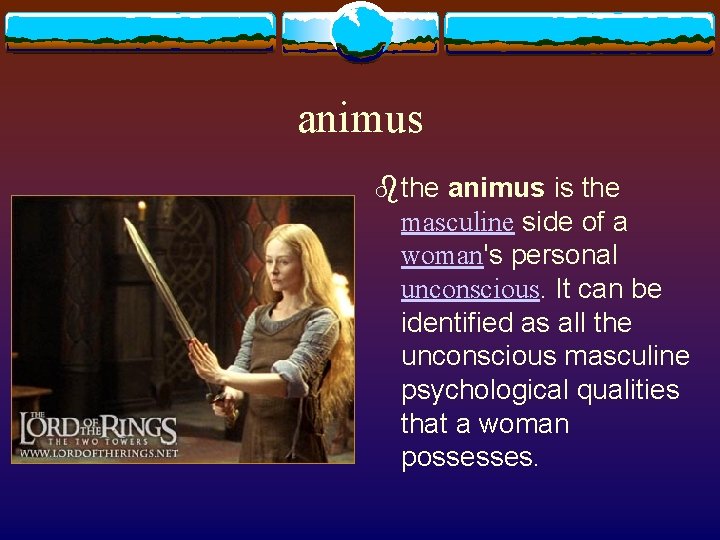
animus bthe animus is the masculine side of a woman's personal unconscious. It can be identified as all the unconscious masculine psychological qualities that a woman possesses.
child
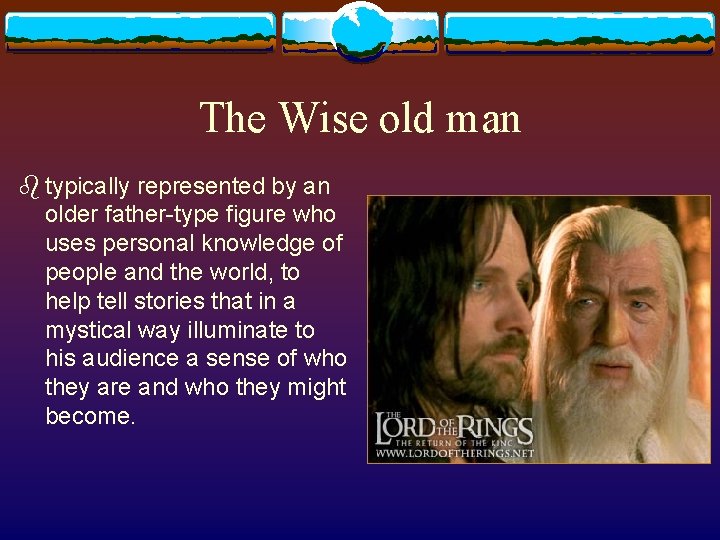
The Wise old man b typically represented by an older father-type figure who uses personal knowledge of people and the world, to help tell stories that in a mystical way illuminate to his audience a sense of who they are and who they might become.
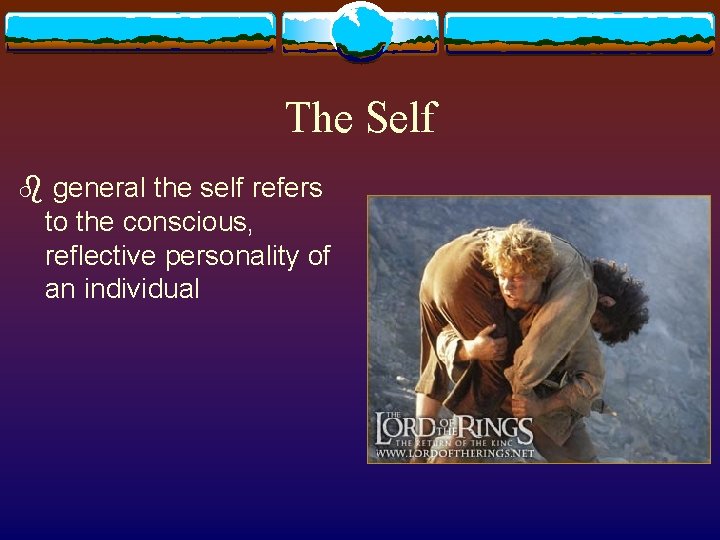
The Self b general the self refers to the conscious, reflective personality of an individual
Cosmic Images
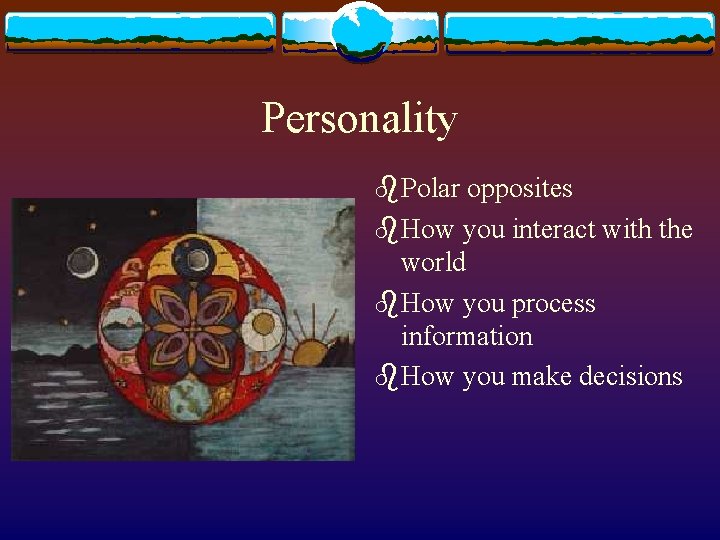
Personality b. Polar opposites b. How you interact with the world b. How you process information b. How you make decisions
Personality Introversion Extroversion
Personality: Function Thinking Intuiting Sensing Feeling
Personality Thinking Intuiting Sensing Feeling
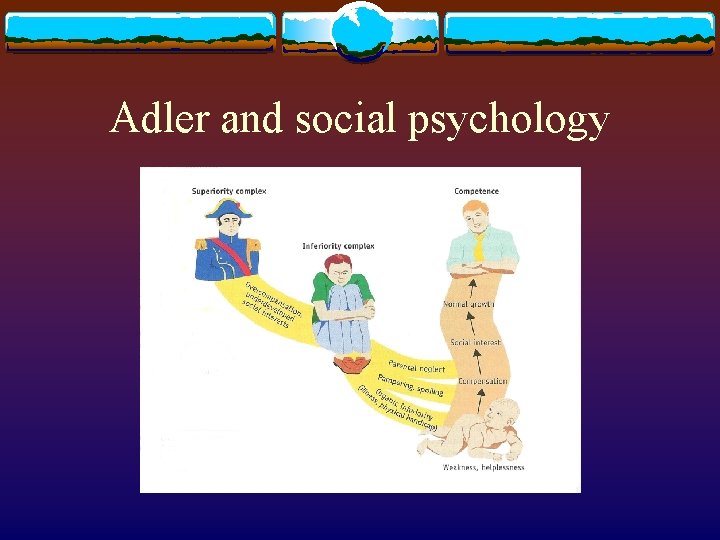
Adler and social psychology