
Jumping s Ge n e Mobile Transposable Elements
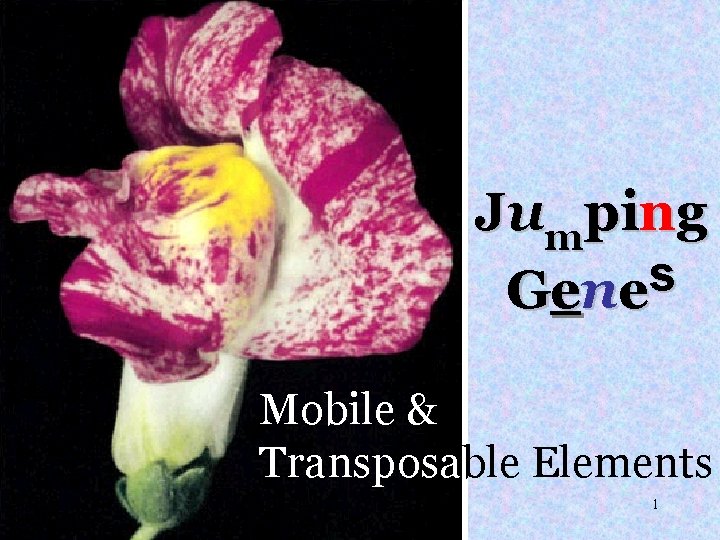
Jumping s Ge n e Mobile & Transposable Elements 1
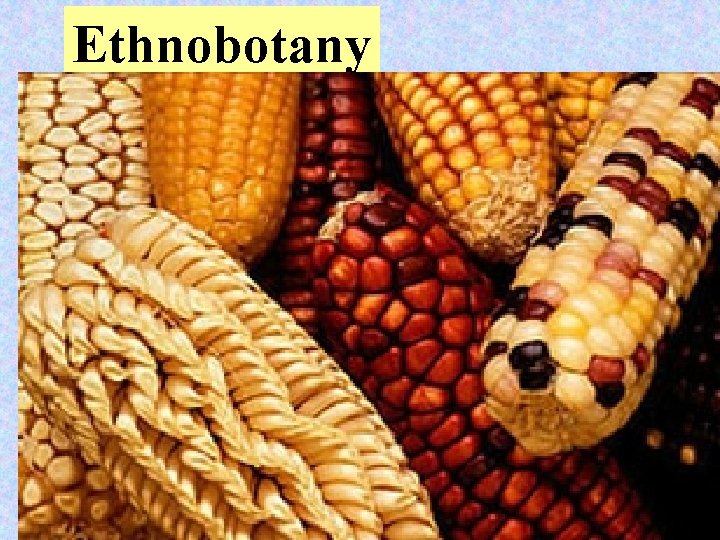
Ethnobotany 2
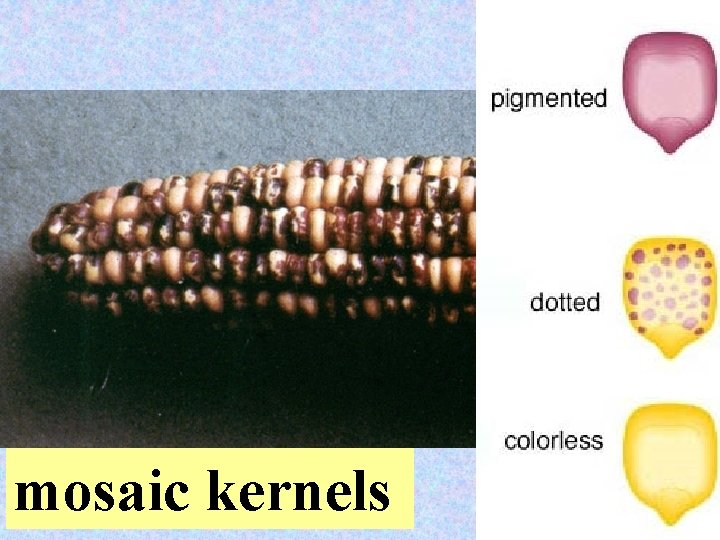
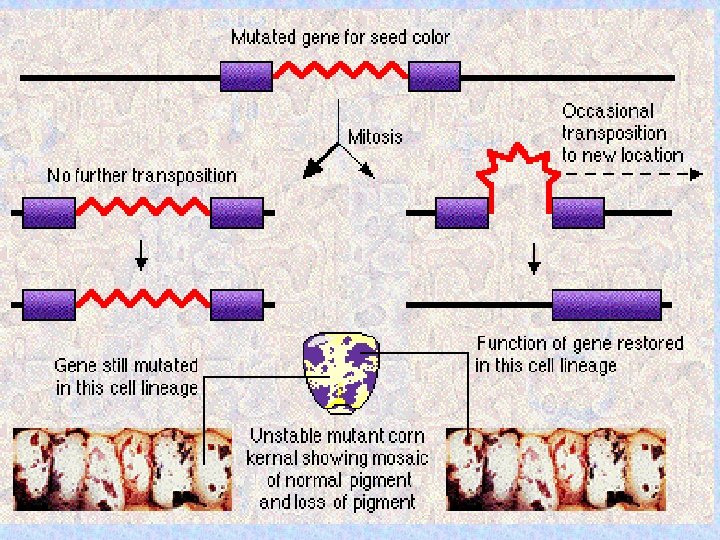
mosaic kernels 3
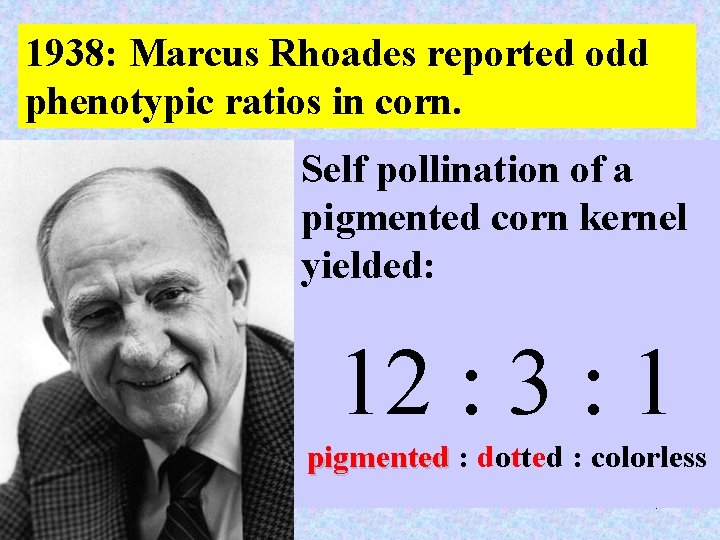
1938: Marcus Rhoades reported odd phenotypic ratios in corn. Self pollination of a pigmented corn kernel yielded: 12 : 3 : 1 pigmented : dotted : colorless 4
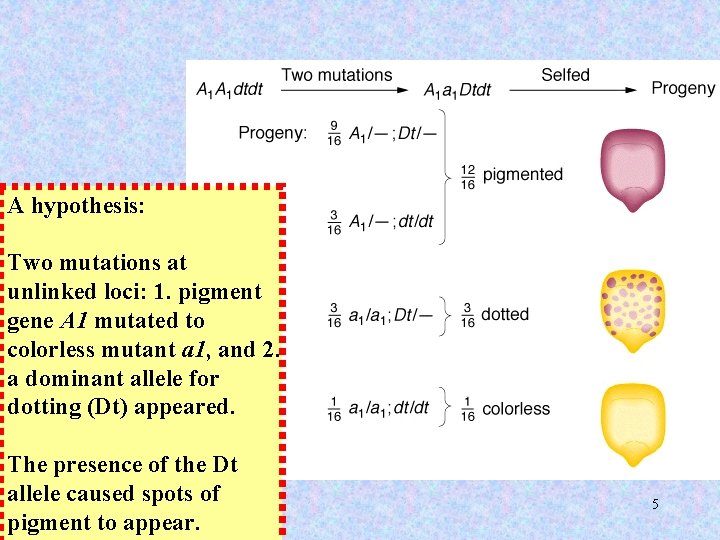
A hypothesis: Two mutations at unlinked loci: 1. pigment gene A 1 mutated to colorless mutant a 1, and 2. a dominant allele for dotting (Dt) appeared. The presence of the Dt allele caused spots of pigment to appear. 5
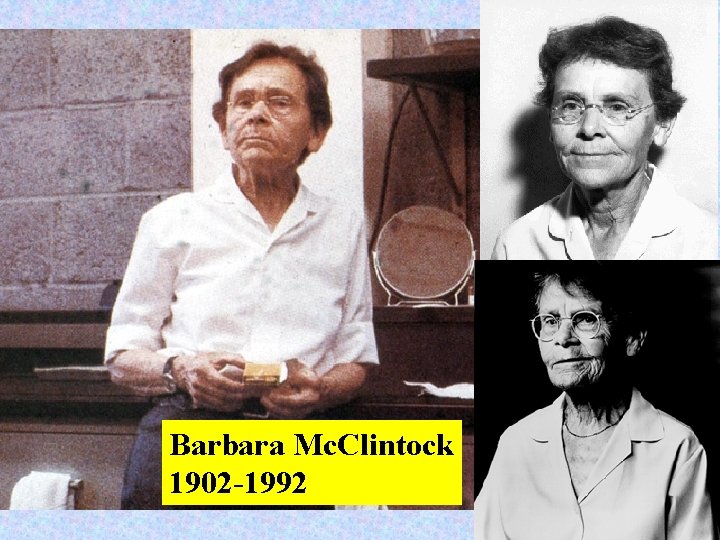
Barbara Mc. Clintock 1902 -1992 6

Barbara Mc. Clintock 1902 -1992 7
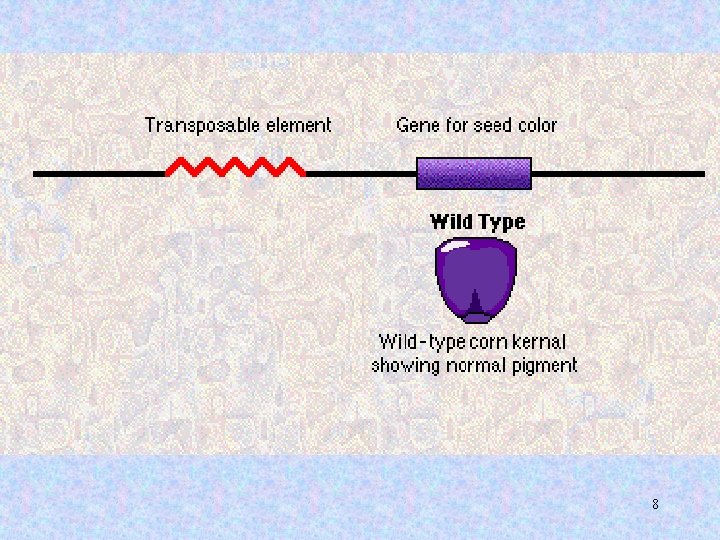
8
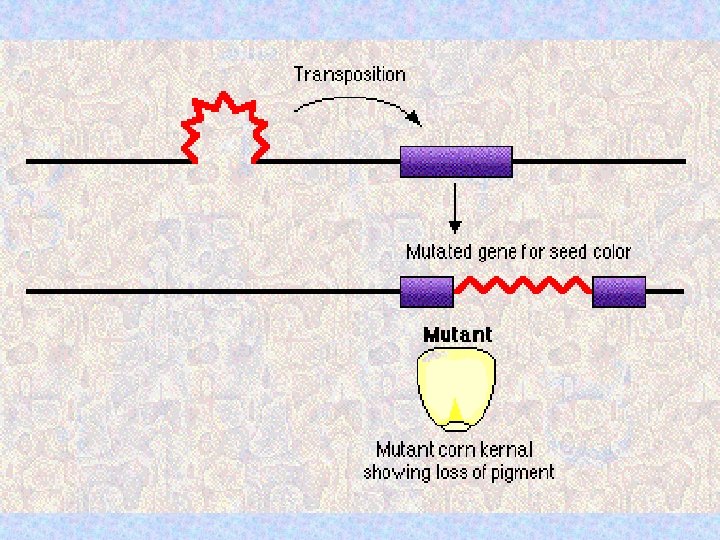
9
10
Transposition = the movement of genetic information from one chromosomal location, the donor site, to another, the target site. 11
DNA sequences that can change their genomic location intragenomically either autonomously or non-autonomously are called transposable elements. 12
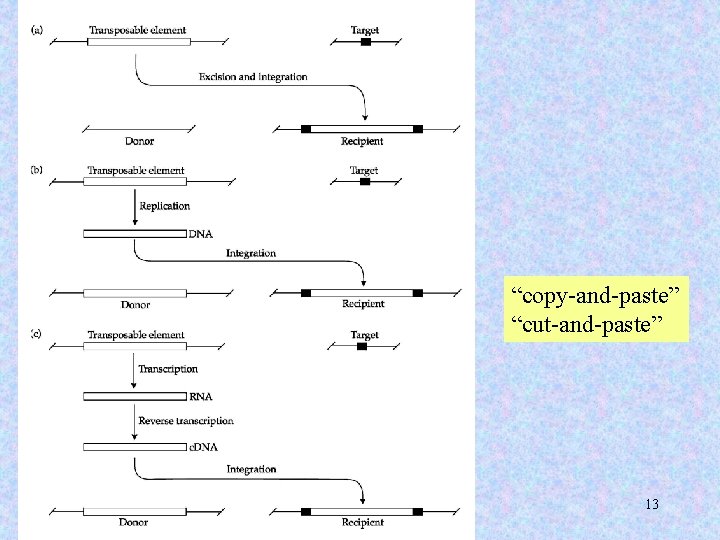
“copy-and-paste” “cut-and-paste” 13
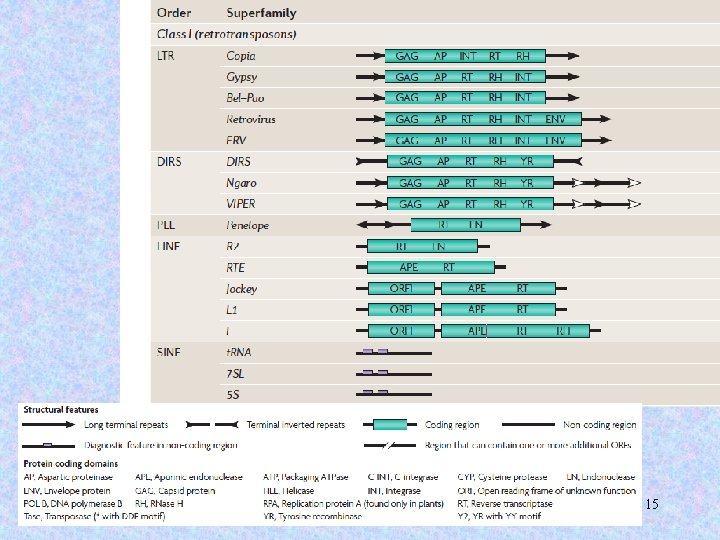
Retrotransposons can be divided into five orders on the basis of their mechanistic features, sequence organization, and reverse transcriptase phylogeny: LTR retrotransposons, DIRS-like elements, Penelope-like elements, LINEs, and SINEs. 14
15
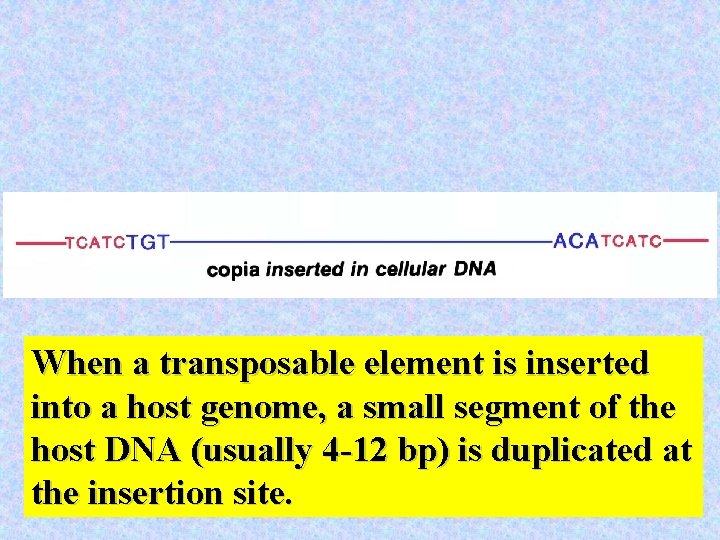
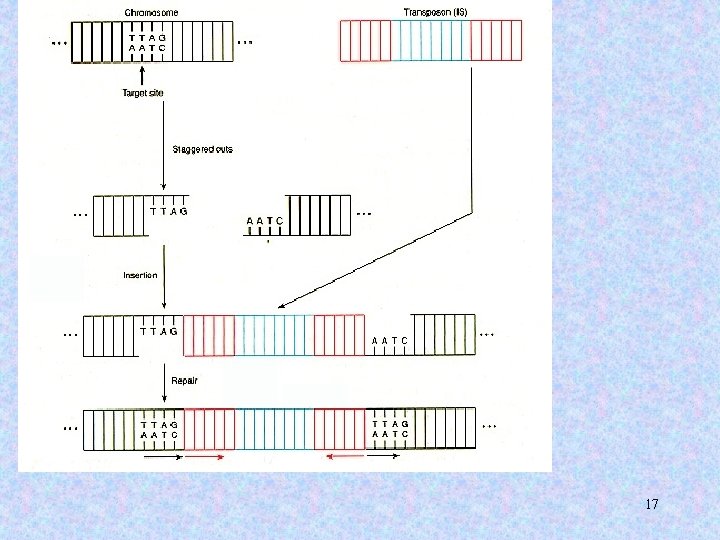
When a transposable element is inserted into a host genome, a small segment of the host DNA (usually 4 -12 bp) is duplicated at the insertion site. 16
17

18
Transposition = the movement of genetic information from one chromosomal location, the donor site, to another, the target site. 19
DNA sequences that can change their genomic location intragenomically either autonomously or non-autonomously are called transposable elements. 20
Classifications of Transposable Elements 21
Transposition may be replicative or conservative. Replicative transposition will result in two copies of the element, one at the donor site and one at the target site. Following conservative transposition the transposable element will only be found at the target site, with no change in copy number. 22
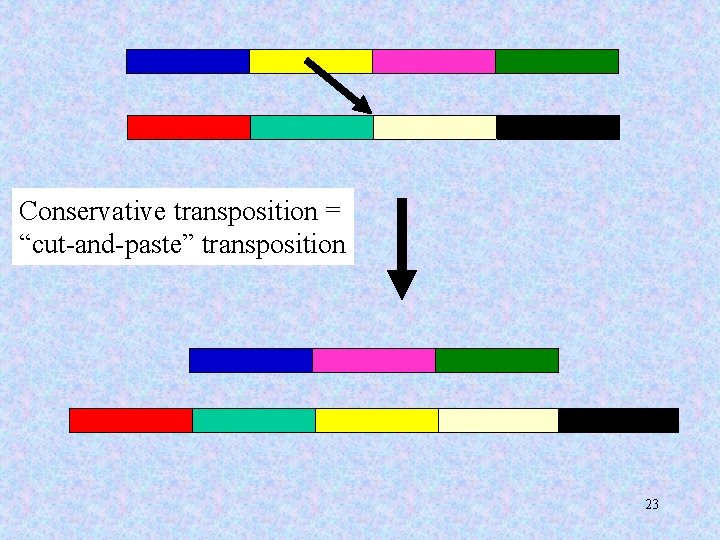
Conservative transposition = “cut-and-paste” transposition 23
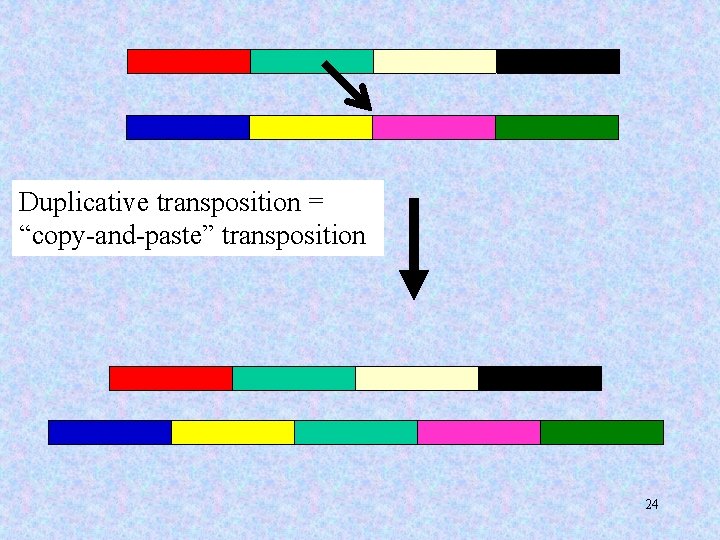
Duplicative transposition = “copy-and-paste” transposition 24
DNA-mediated and RNA-mediated transposable elements: 1. Class I transposable elements (retrotransposons). 2. Class II transposable elements (DNA transposons). 25
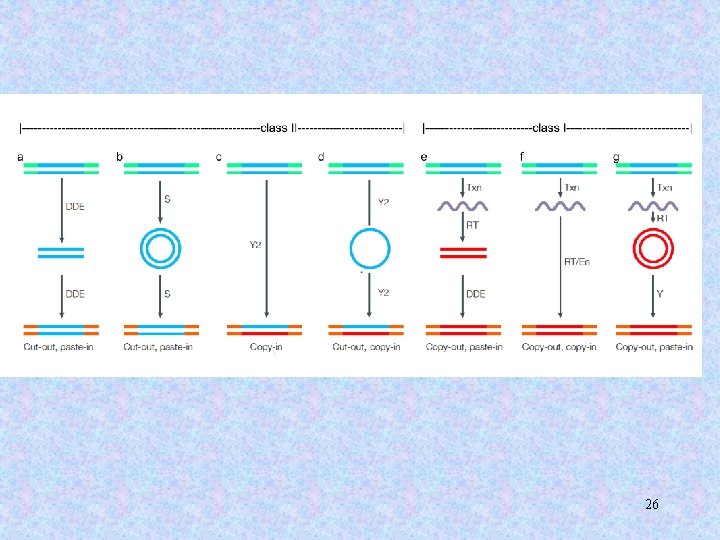
26
Autonomous and nonautonomous transposable elements Autonomous transposable elements encode all the components of the transposition machinery. Nonautonomous transposable elements appropriate the transposition machinery of autonomous transposable elements. 27
Active and fossil transposable elements A transposable element is defined as active if it contains all the necessary sequence elements for either autonomous or nonautonomous transposition. Active elements may be rendered defective by different types of mutation, in which case they are referred to as fossil transposable elements. 28
Active and fossil transposable elements A transposable-element family may contain different combinations of active autonomous, active nonautonomous, fossil autonomous, and fossil nonautonomous transposable elements. For example, the human genome contains approximately 50, 000 fossil autonomous and 200, 000 fossil nonautonomous DNA transposons. Intriguingly, the human genome seems to contain NO active DNA transposons. 29
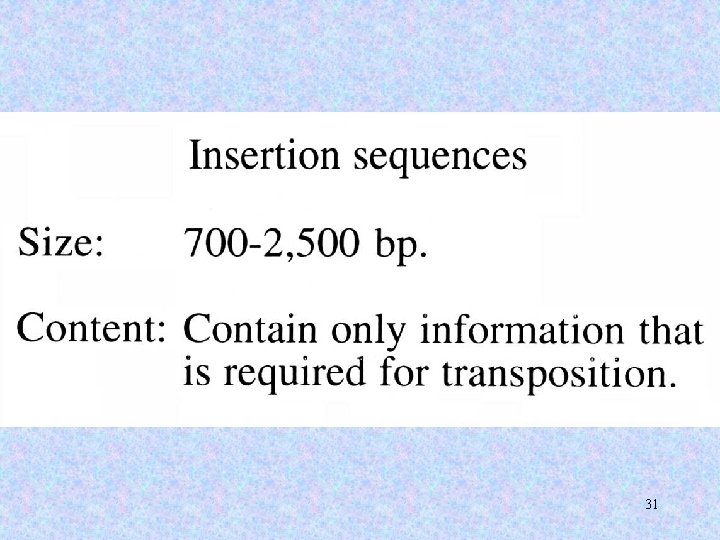
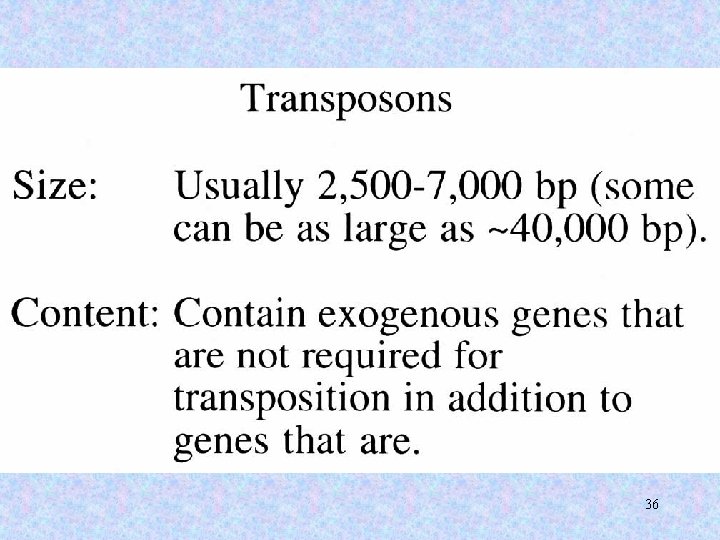
According to the numbers and kinds of genes they contain, DNA-mediated transposable elements are divided into insertion sequences and transposons. 30
31
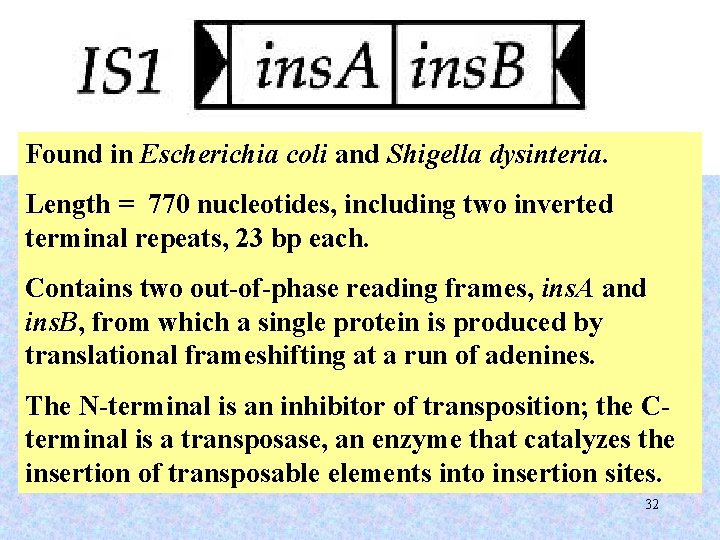
Found in Escherichia coli and Shigella dysinteria. Length = 770 nucleotides, including two inverted terminal repeats, 23 bp each. Contains two out-of-phase reading frames, ins. A and ins. B, from which a single protein is produced by translational frameshifting at a run of adenines. The N-terminal is an inhibitor of transposition; the Cterminal is a transposase, an enzyme that catalyzes the insertion of transposable elements into insertion sites. 32
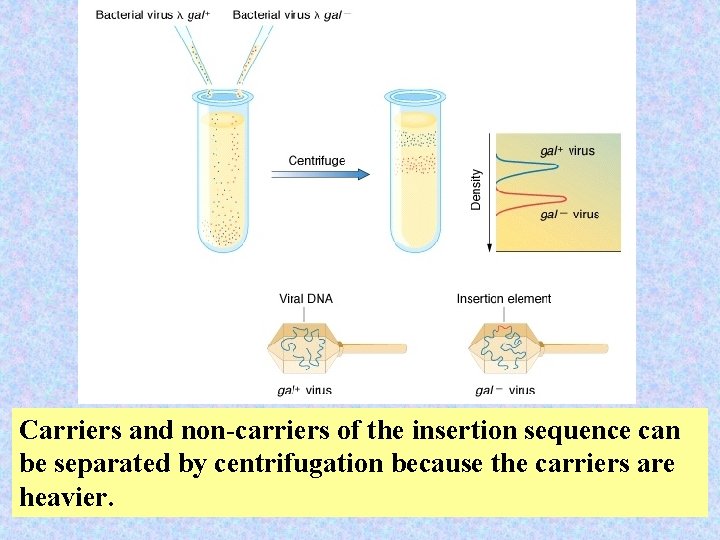
Carriers and non-carriers of the insertion sequence can be separated by centrifugation because the carriers are heavier. 33
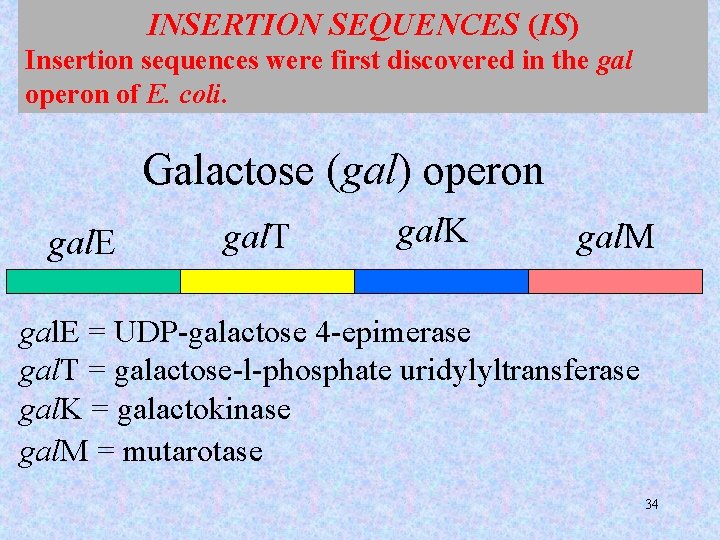
INSERTION SEQUENCES (IS) Insertion sequences were first discovered in the gal operon of E. coli. Galactose (gal) operon gal. E gal. T gal. K gal. M gal. E = UDP-galactose 4 -epimerase gal. T = galactose-l-phosphate uridylyltransferase gal. K = galactokinase gal. M = mutarotase 34
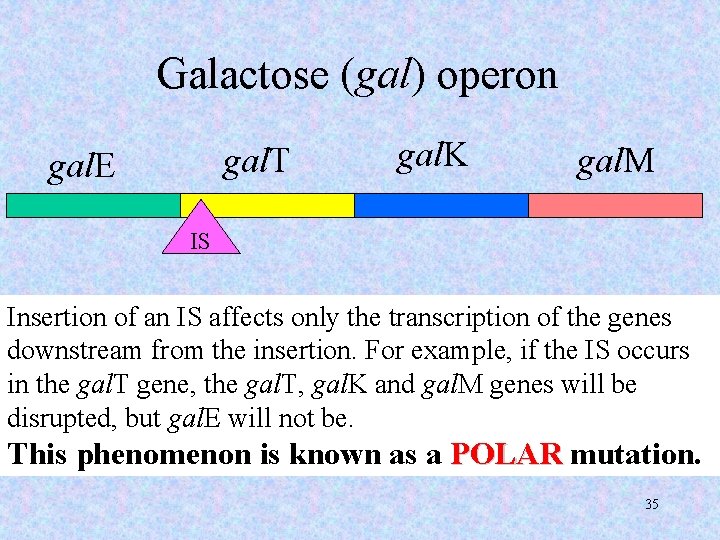
Galactose (gal) operon gal. T gal. E gal. K gal. M IS Insertion of an IS affects only the transcription of the genes downstream from the insertion. For example, if the IS occurs in the gal. T gene, the gal. T, gal. K and gal. M genes will be disrupted, but gal. E will not be. This phenomenon is known as a POLAR mutation. 35
36
37
38
39
Stupidity 40
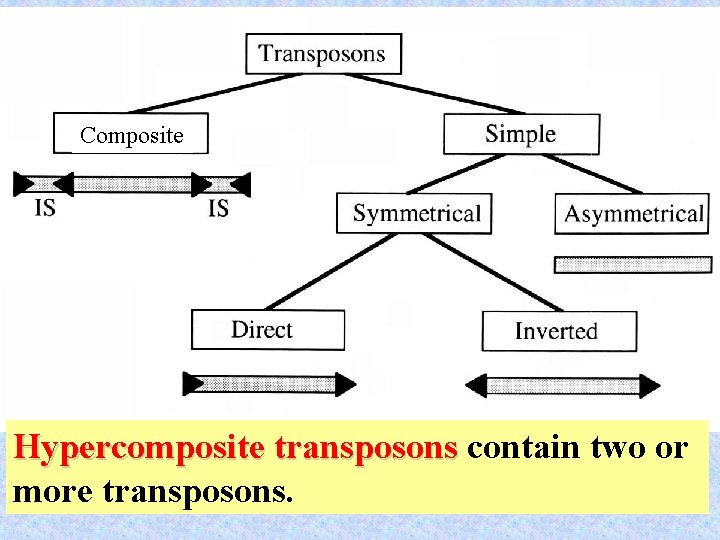
Composite Hypercomposite transposons contain two or more transposons. 41
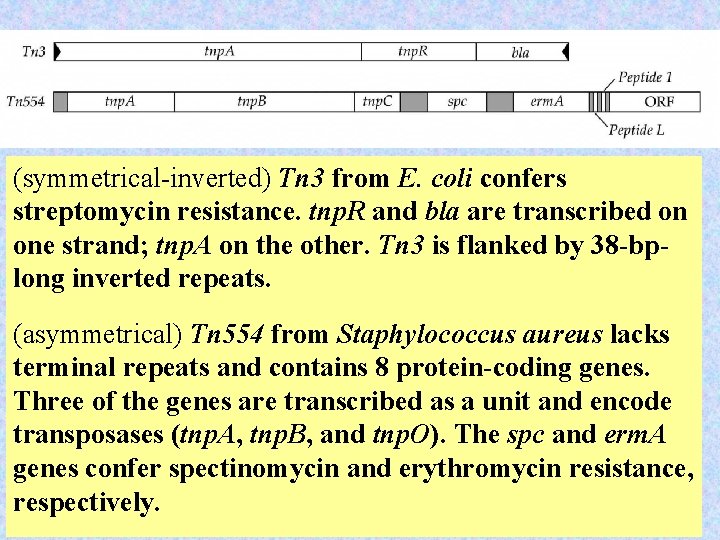
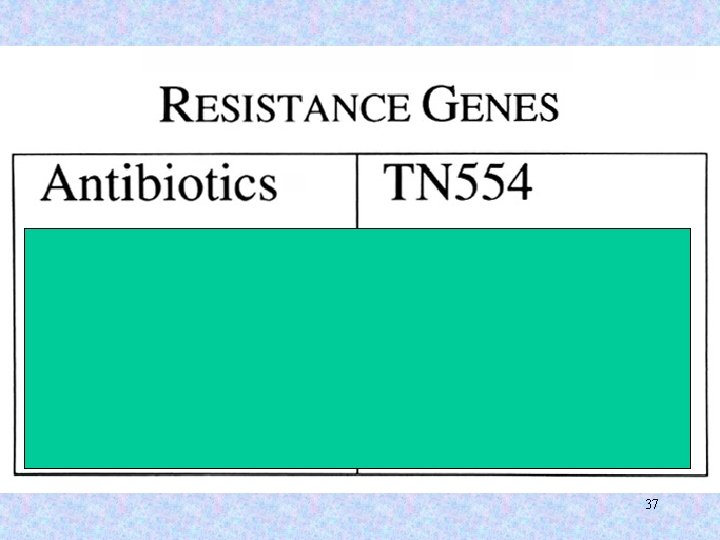
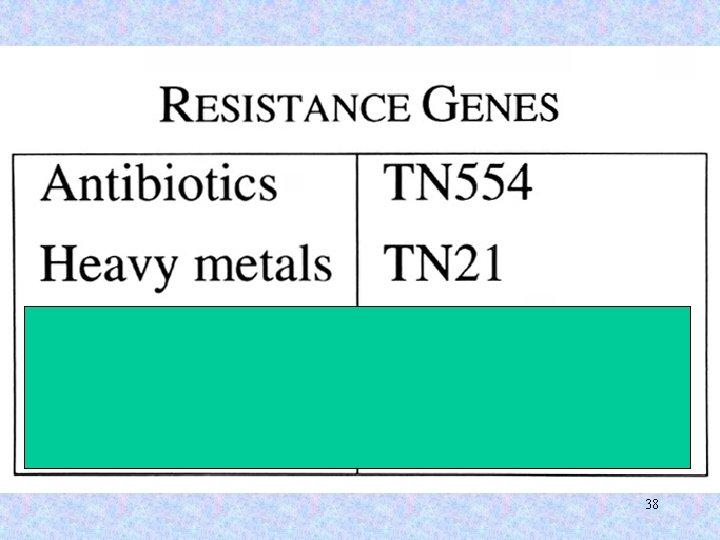
(symmetrical-inverted) Tn 3 from E. coli confers streptomycin resistance. tnp. R and bla are transcribed on one strand; tnp. A on the other. Tn 3 is flanked by 38 -bplong inverted repeats. (asymmetrical) Tn 554 from Staphylococcus aureus lacks terminal repeats and contains 8 protein-coding genes. Three of the genes are transcribed as a unit and encode transposases (tnp. A, tnp. B, and tnp. O). The spc and erm. A genes confer spectinomycin and erythromycin resistance, 42 respectively.
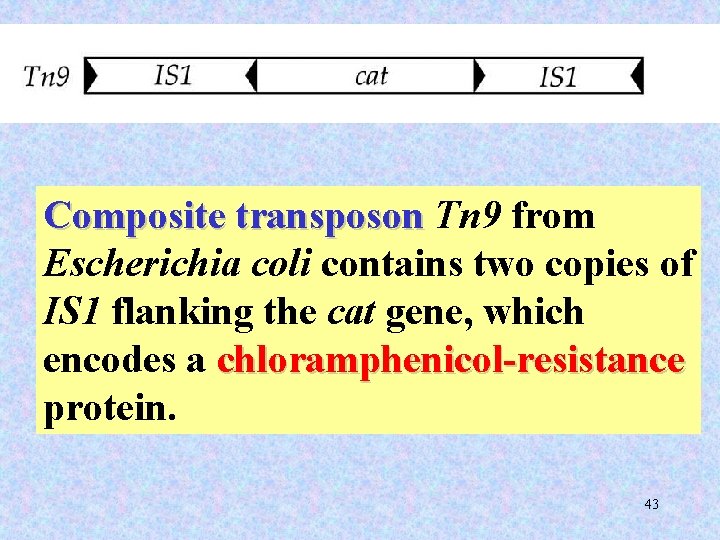
Composite transposon Tn 9 from Escherichia coli contains two copies of IS 1 flanking the cat gene, which encodes a chloramphenicol-resistance protein. 43
Some mobile elements can transpose themselves in all cells; others are cellspecific. Tc 1 elements in the nematode Caenorhabditis elegans and P elements in Drosophila melanogaster are usually mobile only in germ cells. 44
Transposition of many elements is regulated by developmental stage. From an evolutionary point of view, the developmental timing of transposition is particularly important, because it affects the propagation of the transposable element to future generations. 45
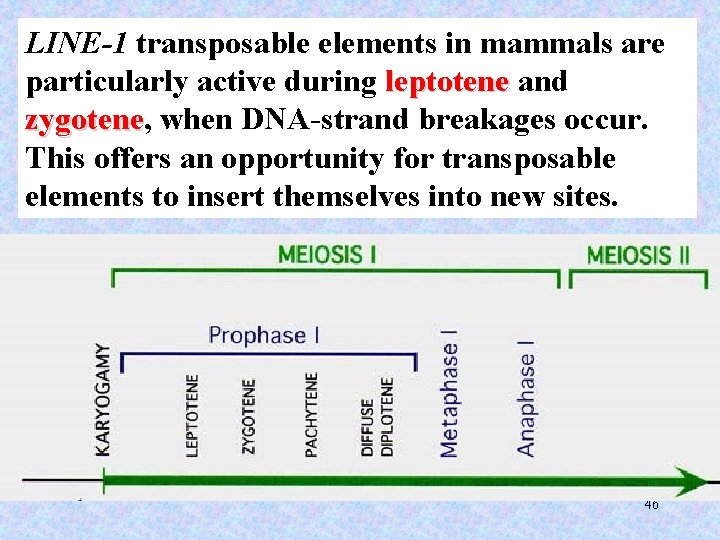
LINE-1 transposable elements in mammals are particularly active during leptotene and zygotene, zygotene when DNA-strand breakages occur. This offers an opportunity for transposable elements to insert themselves into new sites. 46
Genomic locations of target sites for transposition: Exclusive genomic preference: In the vast majority of cases IS 4 incorporates itself in the galactosidase operon of Escherichia coli, and thus each bacterium contains mostly one copy of IS 4. Complete randomness: Bacteriophage Mu transposes itself at random within the genome. Intermediate genomic preference: 40% of all Tn 10 transposons in E. coli are found in the lac. Z gene, which constitutes a minute fraction of the host genome. 47
Genomic locations of target sites for transposition: Affinity for a particular nucleotide composition: IS 1 favors AT-rich sites. Affinity for a particular sequence: IS 630 has a special affinity for 5'—CTAG— 3' sequences. Chromosomal preference: TRIM elements in Drosophila miranda exhibit a preference for the Y chromosome. 48
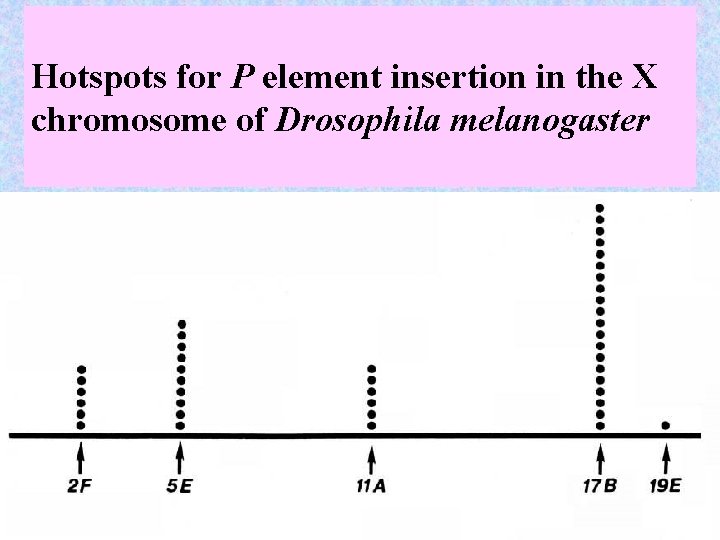
Hotspots for P element insertion in the X chromosome of Drosophila melanogaster 49
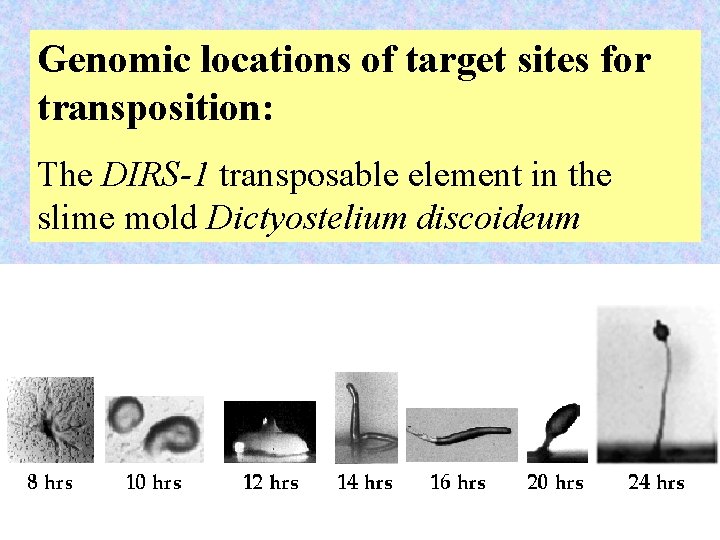
Genomic locations of target sites for transposition: The DIRS-1 transposable element in the slime mold Dictyostelium discoideum 50
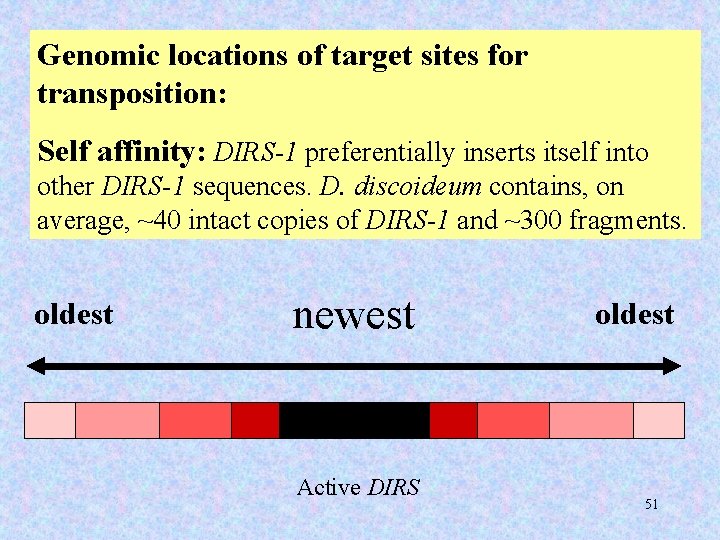
Genomic locations of target sites for transposition: Self affinity: DIRS-1 preferentially inserts itself into other DIRS-1 sequences. D. discoideum contains, on average, ~40 intact copies of DIRS-1 and ~300 fragments. oldest newest Active DIRS oldest 51
Species specificity: DIRS in Dictyostelium discoideum only. mariner moves from species to species, even if the species belong to different taxonomic kingdoms. 52
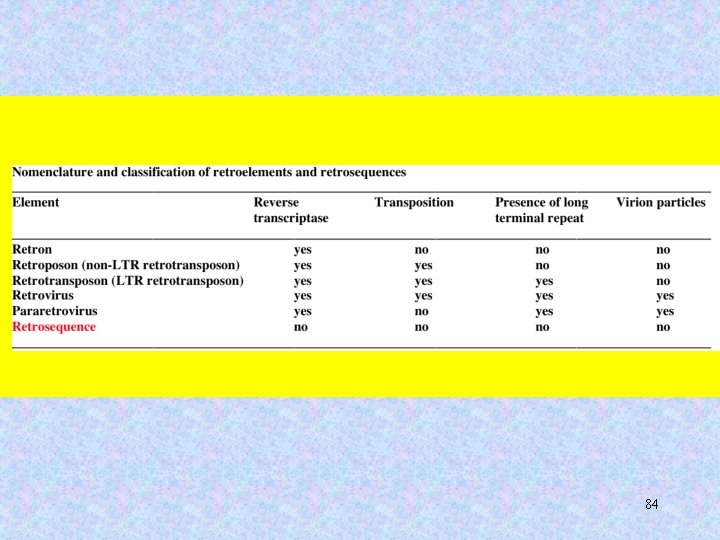
Retroelements are sequences that contain a gene for reverse transcriptase, which catalyzes the synthesis of c. DNA from an RNA template. Not all retroelements possess the intrinsic capability to transpose. Therefore, not all retroelements are transposable elements. Retroelements that transpose do so by retroposition. 53
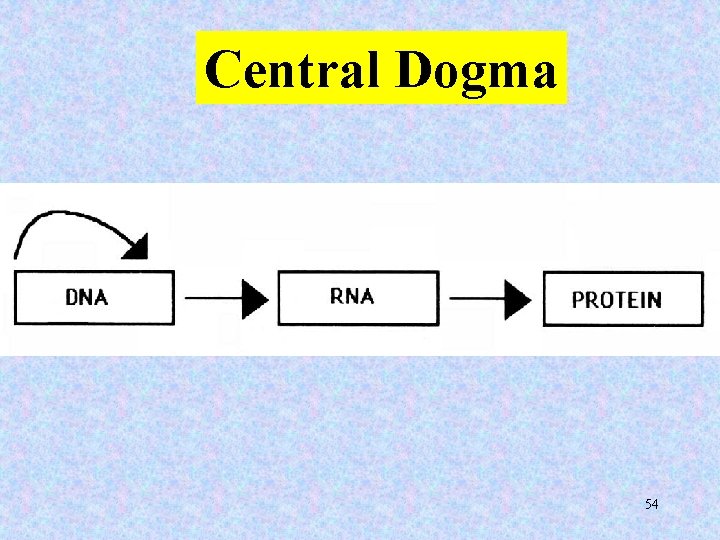
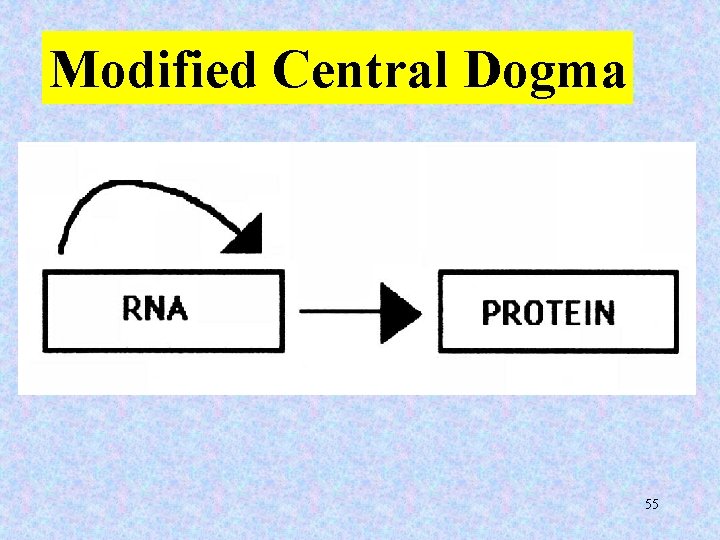
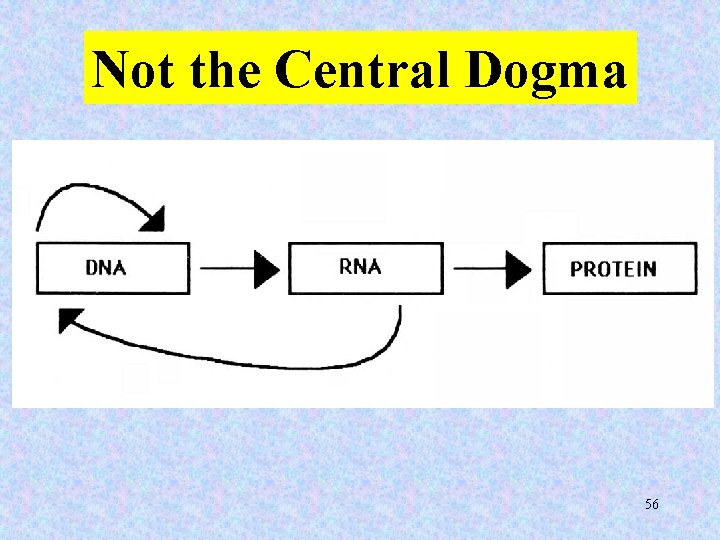
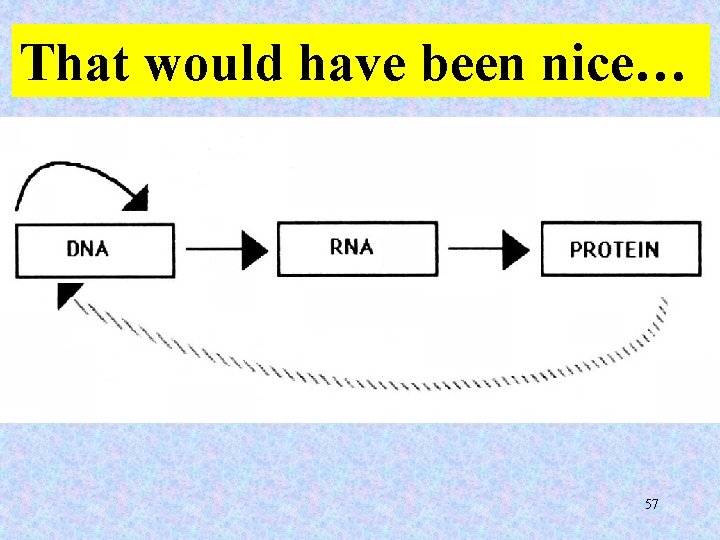
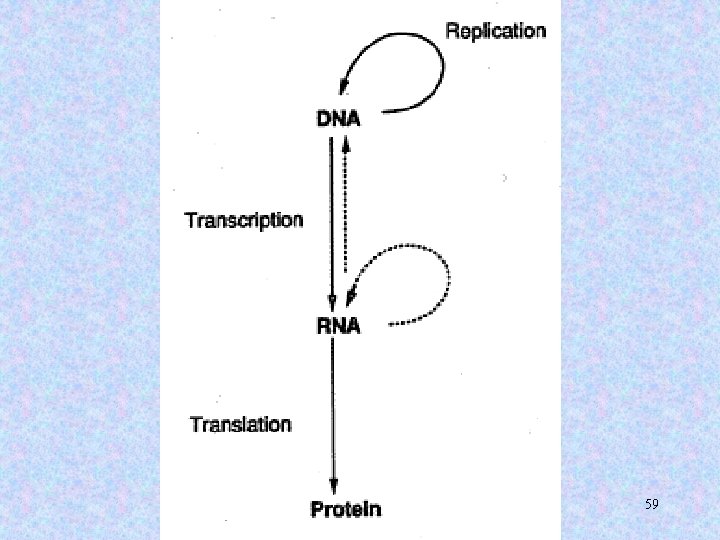
Central Dogma 54
Modified Central Dogma 55
Not the Central Dogma 56
That would have been nice… 57
That would have been nice… Joanna Masel 58
59
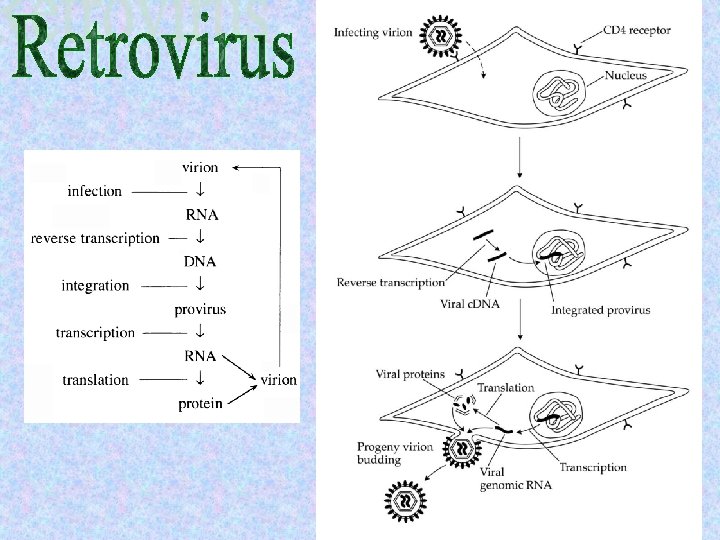
Retroelements are DNA or RNA sequences that contain a gene encoding the enzyme reverse transcriptase, which catalyzes the synthesis of DNA from an RNA template. The resulting DNA molecule is called complementary DNA (c. DNA). Not all retroelements are transposable or mobile. Retroelements can be divided into three categories: (1) transposable elements that move within a genome by replicative RNA-mediated transposition (but may also move intergenomically) (2) mobile nontransposable elements that only move intergenomically (3) non-mobile elements 60
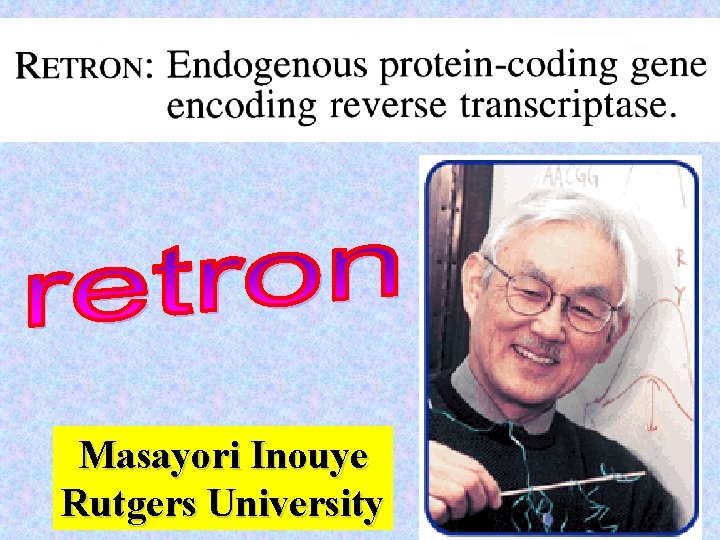
Masayori Inouye Rutgers University 61
Retrons are widely distributed among bacterial species. Within each bacterial species retrons tend to be rare. Natural populations of retron-carrying genomes possess a single retron copy, either in the intergenic part of the genome or inside a prophage (a viral genome that had became integrated into the bacterial chromosome). 62
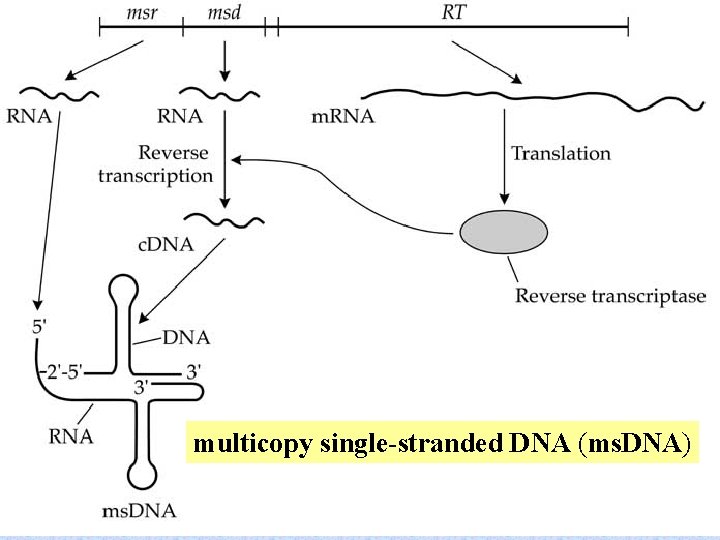
multicopy single-stranded DNA (ms. DNA) 63
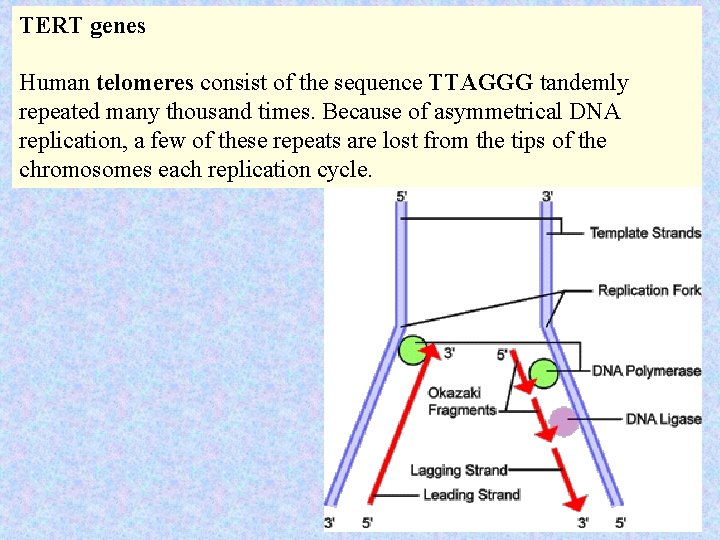
TERT genes Human telomeres consist of the sequence TTAGGG tandemly repeated many thousand times. Because of asymmetrical DNA replication, a few of these repeats are lost from the tips of the chromosomes each replication cycle. 64
TERT genes Telomerases are nucleoproteins whose function is to add DNAsequence repeats to the 3' end of the DNA strands in the telomeres at the ends of linear eukaryotic chromosomes. The de novo addition of TTAGGG repeats by the enzyme telomerase partially or wholly compensates for telomere shortening. Telomerases in all eukaryotic species share at least two components essential for catalytic activity: a telomerase reverse transcriptase protein (TERT) and a telomerase RNA. The TERT encoding gene is a retroelement. In humans, this retroelement is located on chromosome 5. 65
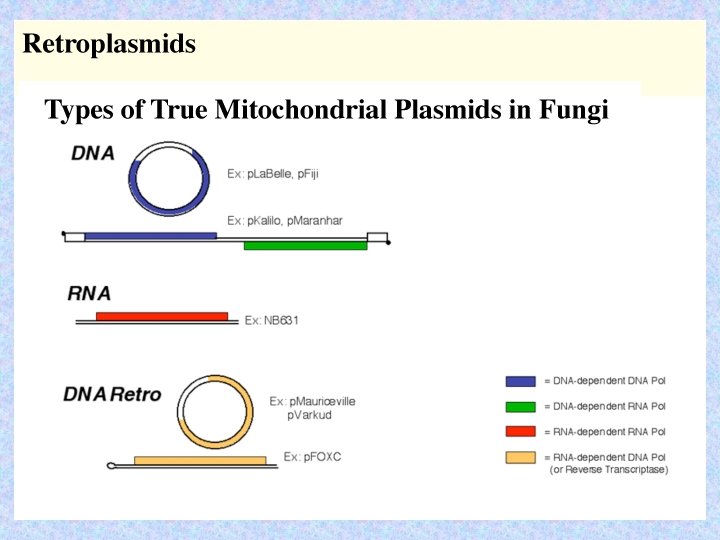
Retroplasmids Extragenomic DNA and RNA molecules (plasmids) are frequently detected in fungal mitochondria. They can be divided into: - Genomically derived plasmids (similar in sequence to the mitochondrial sequence) - Autonomously-replicating true plasmids that exhibit no sequence similarity with the host mitochondrial genome. 66
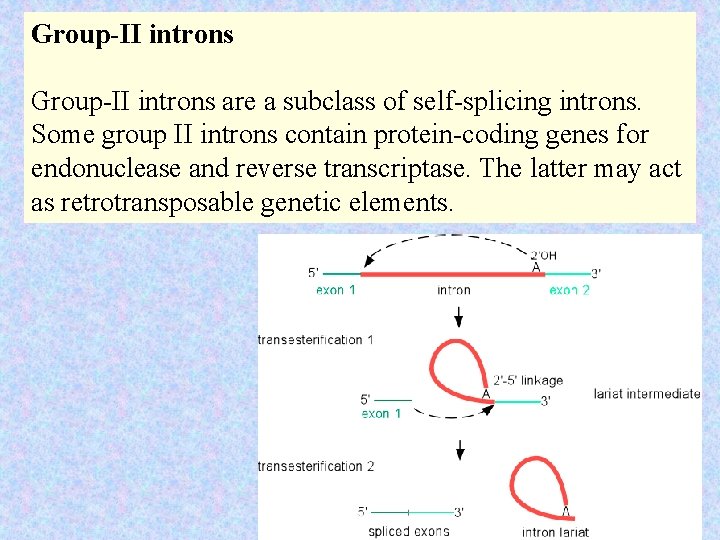
Group-II introns are a subclass of self-splicing introns. Some group II introns contain protein-coding genes for endonuclease and reverse transcriptase. The latter may act as retrotransposable genetic elements. 68
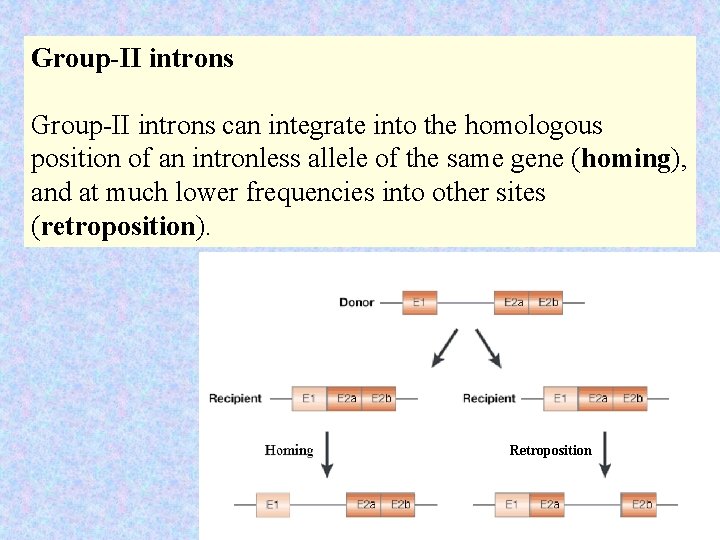
Group-II introns can integrate into the homologous position of an intronless allele of the same gene (homing), and at much lower frequencies into other sites (retroposition). Retroposition 69
Twintrons are introns-within-introns excised by sequential splicing reactions. Group II twintrons have presumably been formed by the insertion of a group II intron into an existing group II intron. 70
Group-III introns are short ORF-less introns found in a small number of protist eukaryotes, such as Euglena gracilis. They appear to be group-II introns from which the central ORF-containing portion has been removed. Thus, group-III introns are essentially nonautonomous group-II introns. Group III twintrons are known. 71
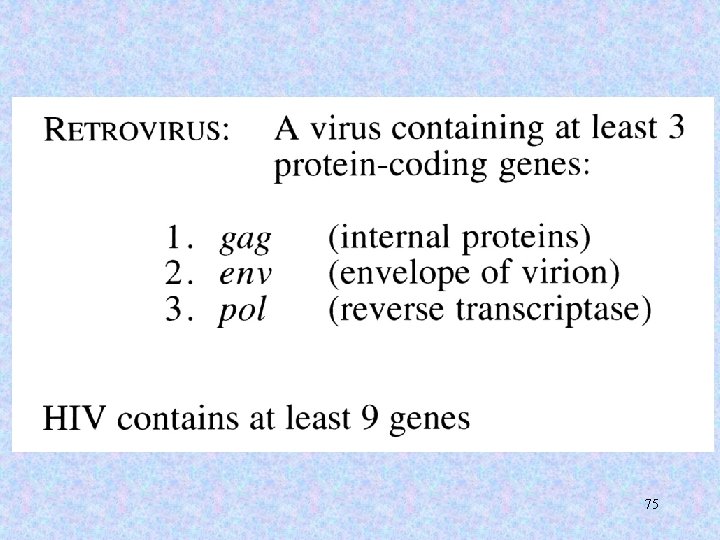
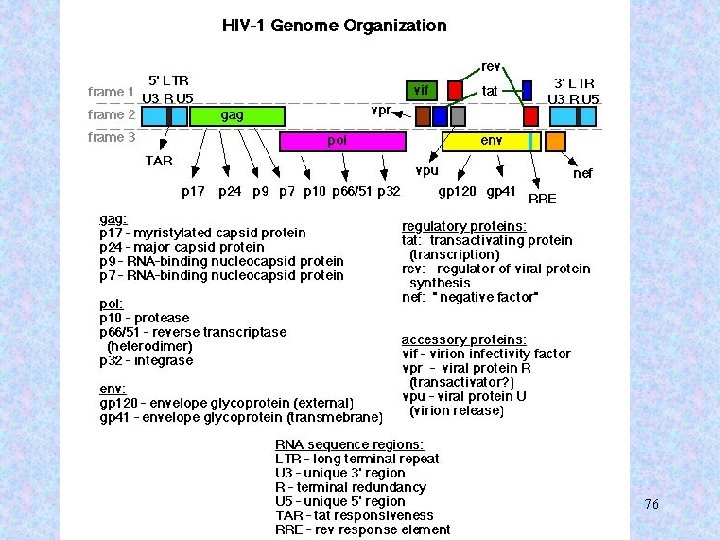
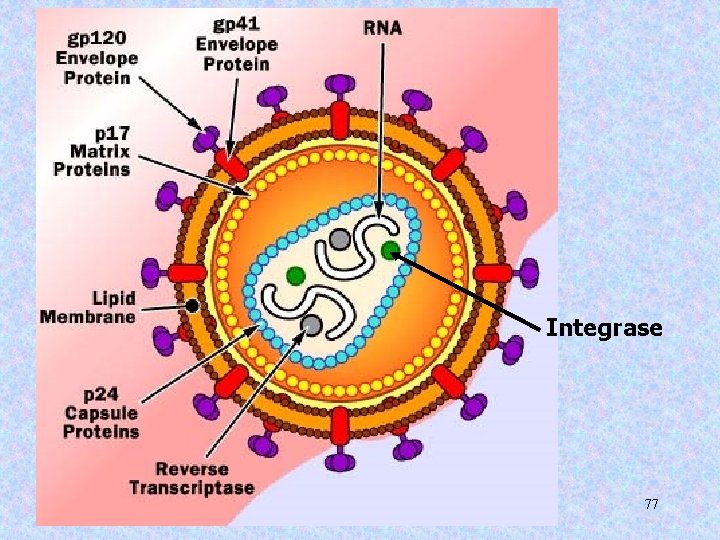
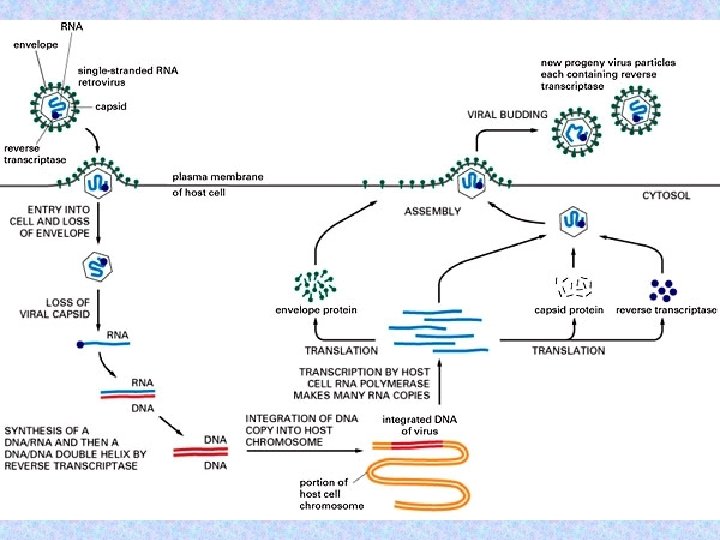
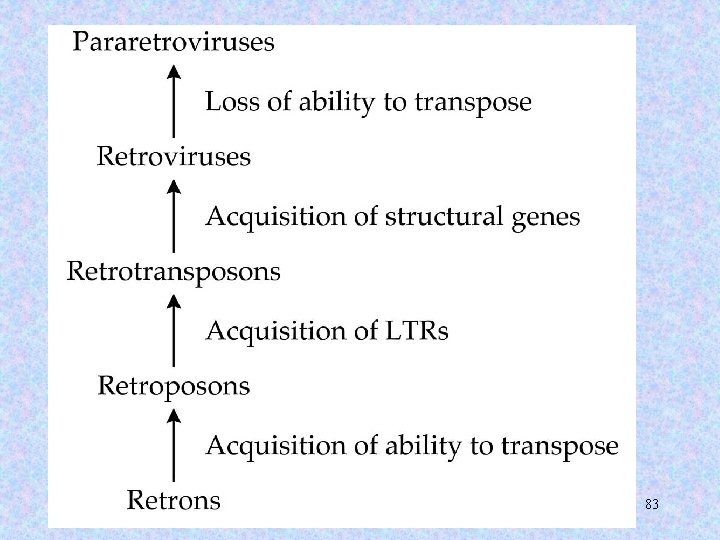
Retrotransposons are transposable elements that use RNAmediated transposition, but do not construct virion particles, i. e. , they lack the env (envelope) gene, and so, unlike retroviruses, cannot independently transport themselves across cells. Initially, the retrotransposons were divided into LTR retrotransposons and non-LTR retrotransposons (or retroposons) according to whether or not their coding sequences were flanked by long terminal repeats (LTRs). Subsequent evolutionary studies indicated that while most non. LTR retrotransposons constitute a monophyletic group, the LTR -retrotransposons are paraphyletic. Some LTR-retrotransposons have secondarily acquired env-like reading frames that may enable them to move from cell to cell (i. e. , 72 they are in practice viruses).
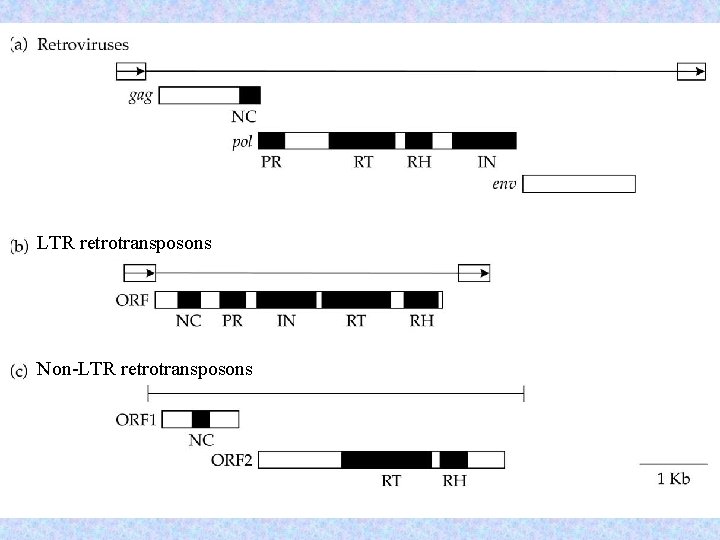
LTR retrotransposons Non-LTR retrotransposons 73
74
75
76
Integrase 77
78
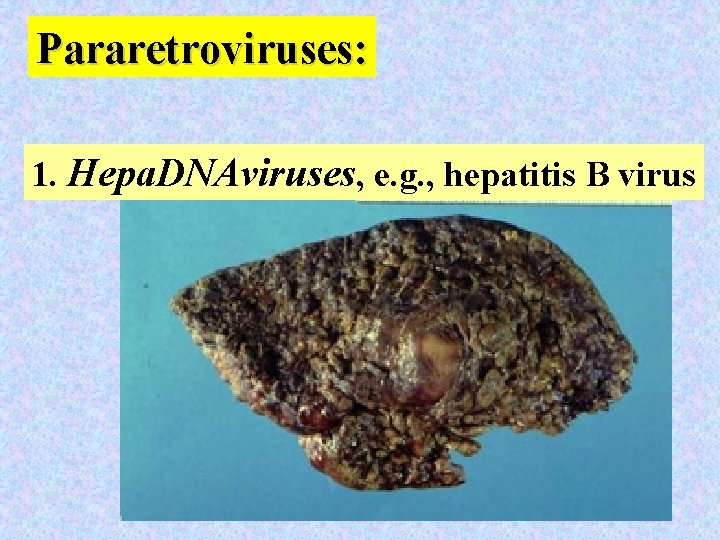
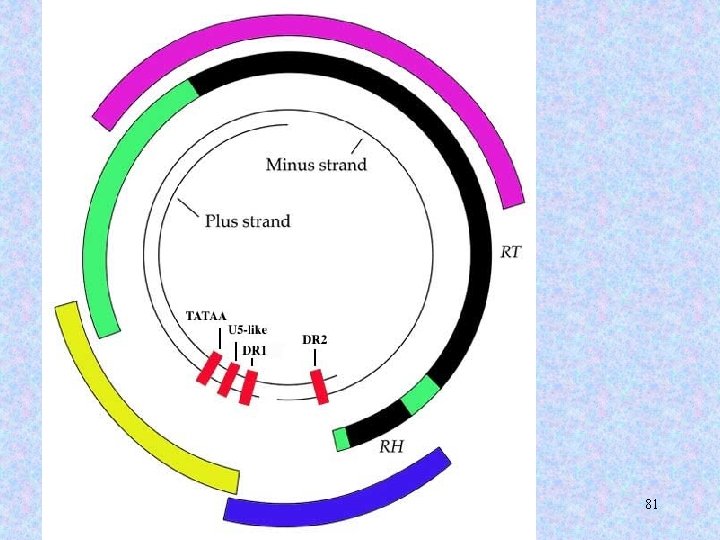
Pararetroviruses: 1. Hepa. DNAviruses, e. g. , hepatitis B virus 79
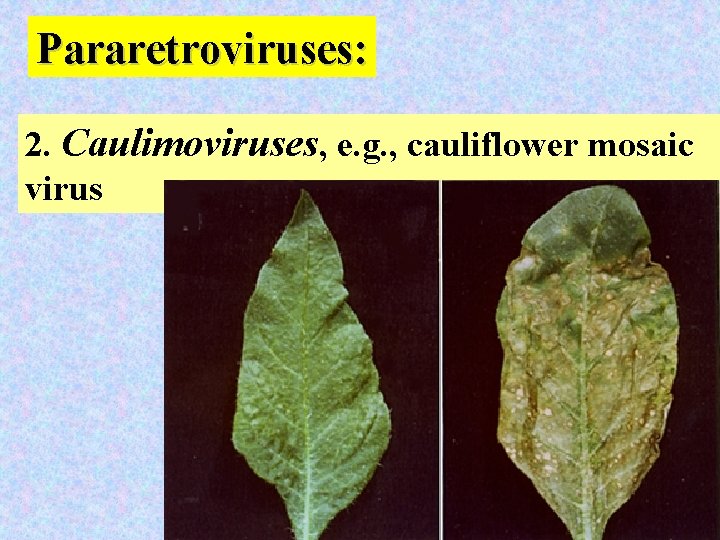
Pararetroviruses: 2. Caulimoviruses, e. g. , cauliflower mosaic virus 80
81
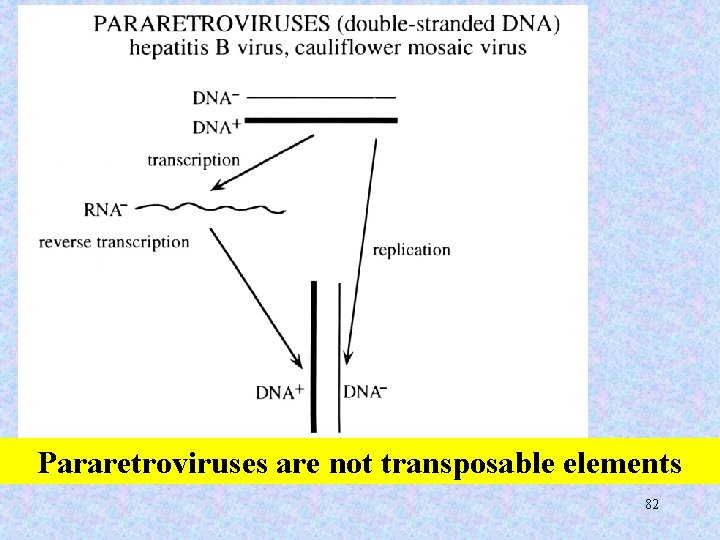
Pararetroviruses are not transposable elements 82
83
84
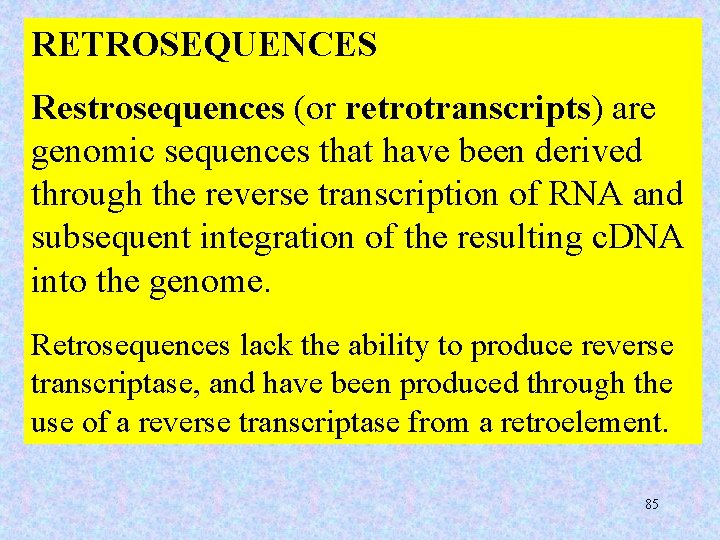
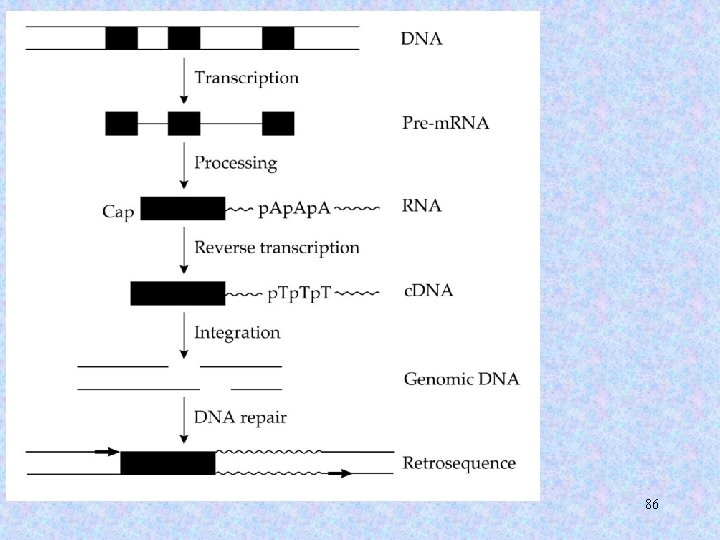
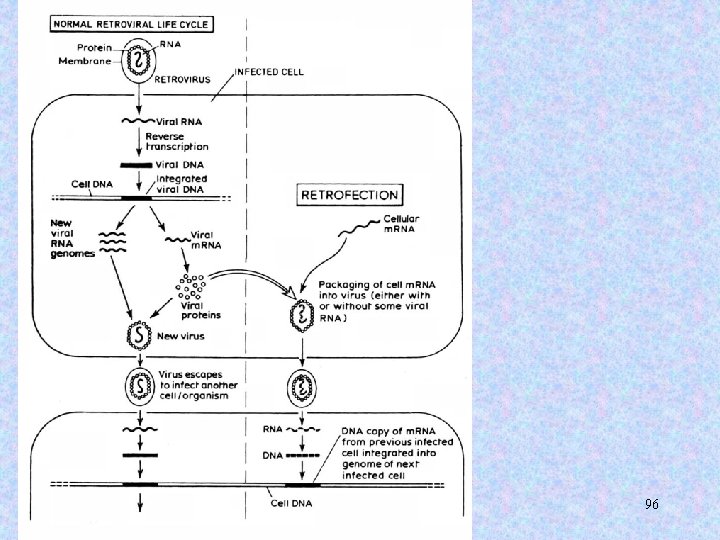
RETROSEQUENCES Restrosequences (or retrotranscripts) are genomic sequences that have been derived through the reverse transcription of RNA and subsequent integration of the resulting c. DNA into the genome. Retrosequences lack the ability to produce reverse transcriptase, and have been produced through the use of a reverse transcriptase from a retroelement. 85
86
Diagnostic features of m. RNA derived retrosequences 1. lack of introns 2. precise boundaries coinciding with the transcribed regions 3. stretches of poly(A) at the 3’ end 4. short direct repeats at both ends 5. truncations 6. posttranscriptional modifications 87
88
many few 89
Retrosequences: Retrogenes Processed genes Semiprocessed genes Retropseudogenes Processed pseudogenes Semiprocessed pseudogenes 90
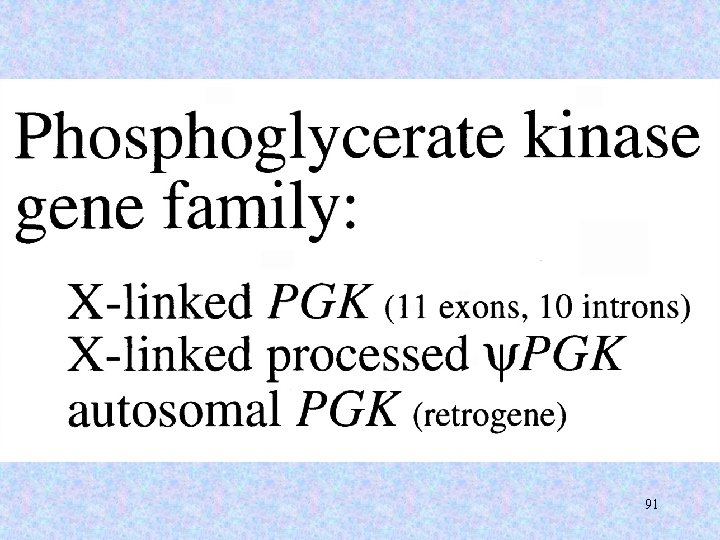
91
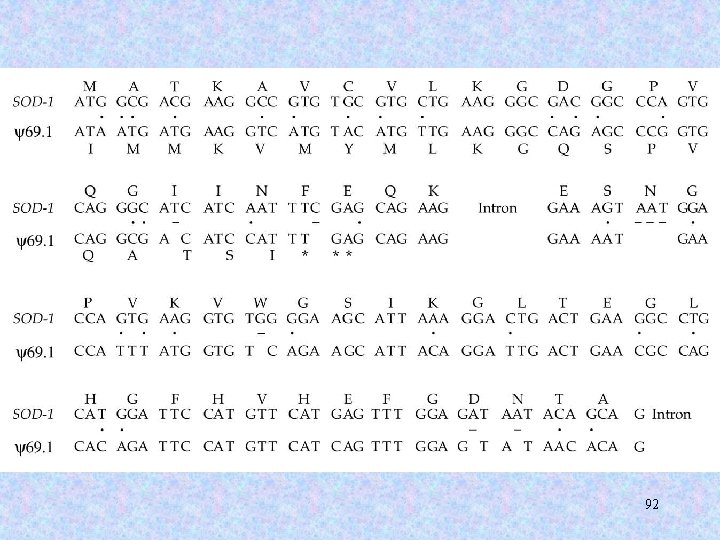
92
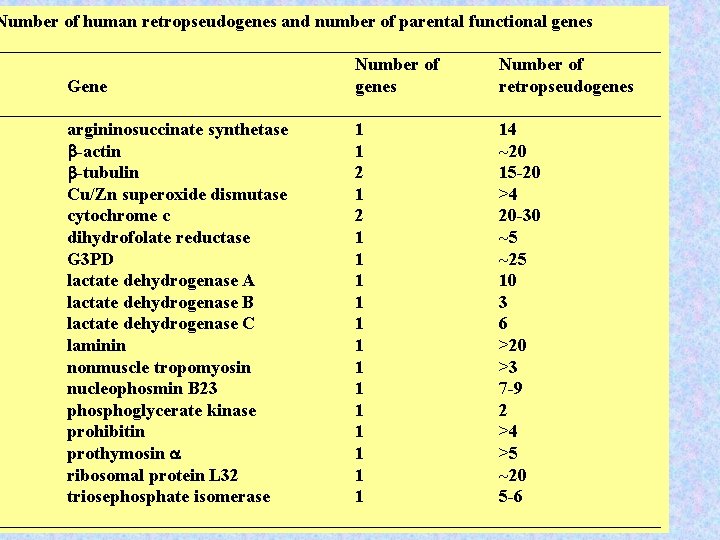
Number of human retropseudogenes and number of parental functional genes _____________________________________ Number of Gene genes retropseudogenes _____________________________________ argininosuccinate synthetase 1 14 -actin 1 ~20 -tubulin 2 15 -20 Cu/Zn superoxide dismutase 1 >4 cytochrome c 2 20 -30 dihydrofolate reductase 1 ~5 G 3 PD 1 ~25 lactate dehydrogenase A 1 10 lactate dehydrogenase B 1 3 lactate dehydrogenase C 1 6 laminin 1 >20 nonmuscle tropomyosin 1 >3 nucleophosmin B 23 1 7 -9 phosphoglycerate kinase 1 2 prohibitin 1 >4 prothymosin 1 >5 ribosomal protein L 32 1 ~20 triosephosphate isomerase 1 5 -6 93 _____________________________________
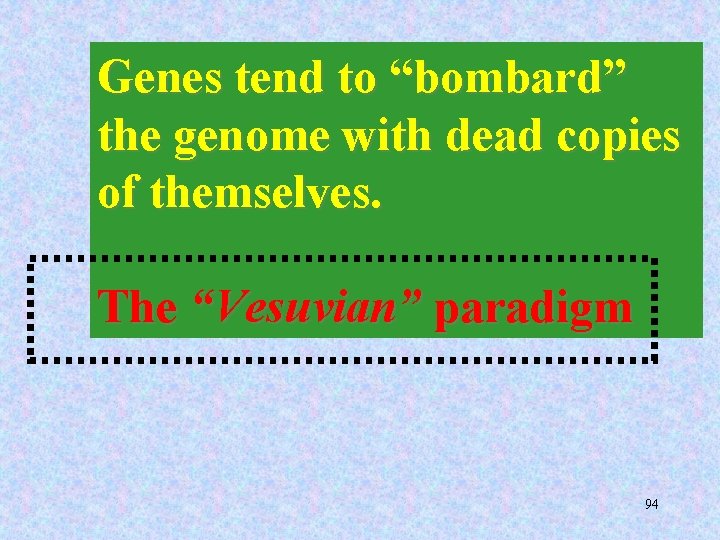
Genes tend to “bombard” the genome with dead copies of themselves. The “Vesuvian” paradigm 94
How do you get reverse transcribed sequences to become incorporated into the germline genome if the gene itself is not transcribed in the germline? 95
96
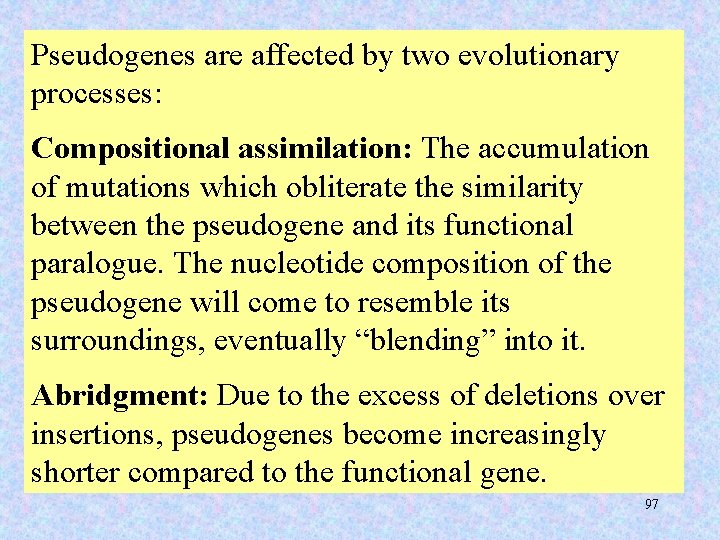
Pseudogenes are affected by two evolutionary processes: Compositional assimilation: The accumulation of mutations which obliterate the similarity between the pseudogene and its functional paralogue. The nucleotide composition of the pseudogene will come to resemble its surroundings, eventually “blending” into it. Abridgment: Due to the excess of deletions over insertions, pseudogenes become increasingly shorter compared to the functional gene. 97
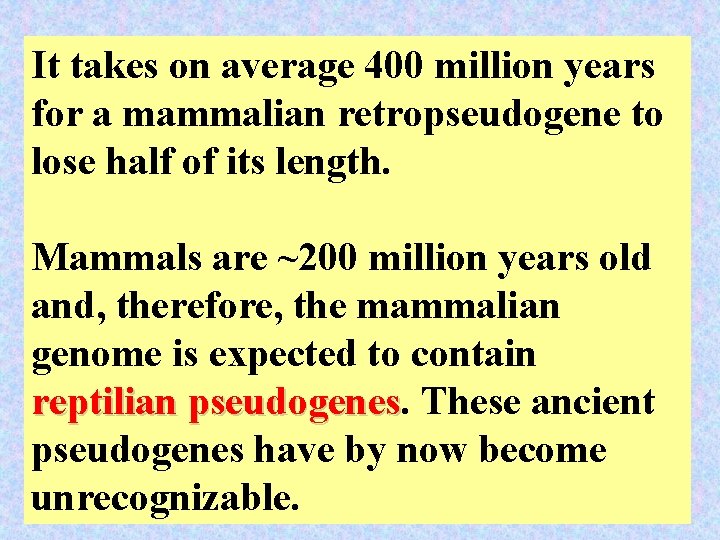
It takes on average 400 million years for a mammalian retropseudogene to lose half of its length. Mammals are ~200 million years old and, therefore, the mammalian genome is expected to contain reptilian pseudogenes These ancient pseudogenes have by now become unrecognizable. 98
Mammalian processed pseudogenes are created at a much faster rate than the rate by which they are obliterated by deletion. 99
Processed pseudogenes are abundant in mammals. Processed pseudogenes are rare in amphibians, rarer in birds, and even rarer in Drosophila. 100
Creation rates Deletion 101
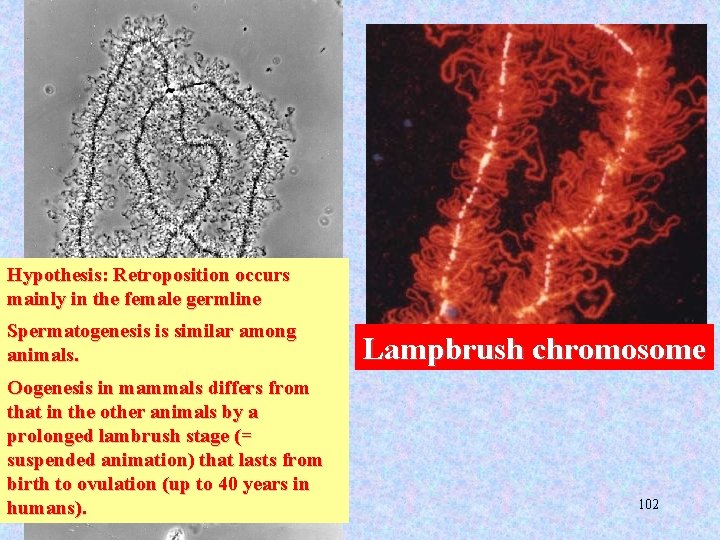
Hypothesis: Retroposition occurs mainly in the female germline Spermatogenesis is similar among animals. Oogenesis in mammals differs from that in the other animals by a prolonged lambrush stage (= suspended animation) that lasts from birth to ovulation (up to 40 years in humans). Lampbrush chromosome 102
Creation rates are determined by the length of the suspended animation during oogenesis 20 -40 years in humans. 2 -4 months in amphibians. Less than 3 weeks in birds. Less than 1 day in Drosophila. 103
Prediction: Retrosequences should be found in high numbers on the X chromosome, chromosome in intermediate numbers on autosomes, autosomes and be rare on the Y chromosome 104
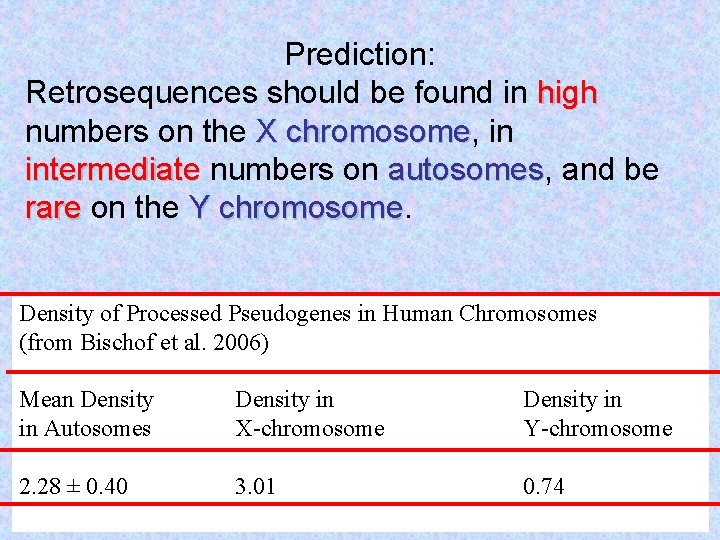
Prediction: Retrosequences should be found in high numbers on the X chromosome, chromosome in intermediate numbers on autosomes, autosomes and be rare on the Y chromosome Density of Processed Pseudogenes in Human Chromosomes (from Bischof et al. 2006) Mean Density in in Autosomes X-chromosome Y-chromosome 105 2. 28 ± 0. 40 3. 01 0. 74
Differences among organisms in numbers of retropseudogenes can also be due to deletion rate DNA loss in Drosophila is ~75 times faster than that in mammals. This high rate may explain the dearth of pseudogenes in Drosophila. 106
- Slides: 106