
Julius Caesar Literary Terms to Know Dramatic Structure
- Slides: 18
Julius Caesar Literary Terms to Know
Dramatic Structure Act III Crisis or turning point Act II Rising Acting (Complications) Act IV Falling Action Act I Exposition Act V Climax and resolution
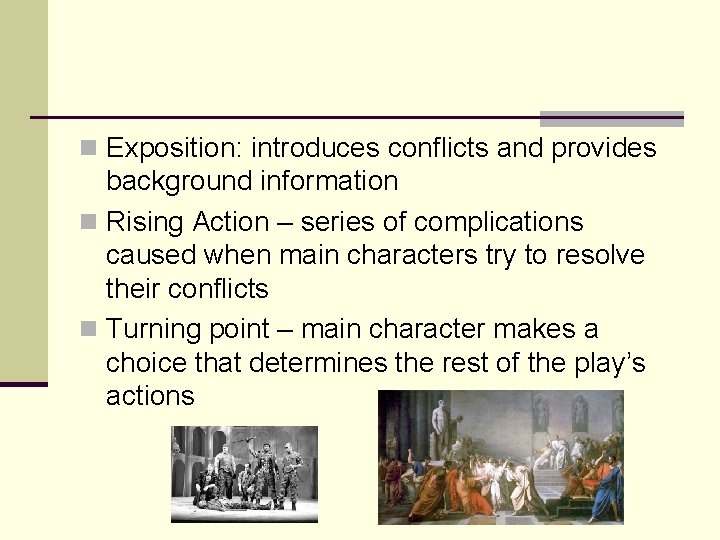
n Exposition: introduces conflicts and provides background information n Rising Action – series of complications caused when main characters try to resolve their conflicts n Turning point – main character makes a choice that determines the rest of the play’s actions
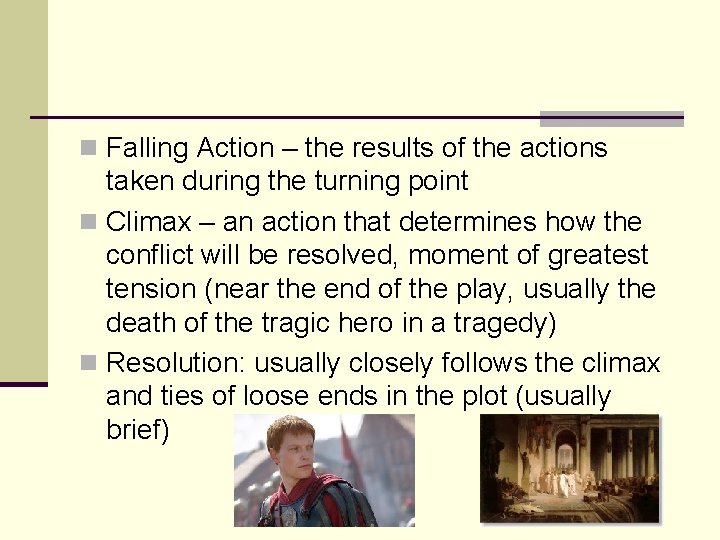
n Falling Action – the results of the actions taken during the turning point n Climax – an action that determines how the conflict will be resolved, moment of greatest tension (near the end of the play, usually the death of the tragic hero in a tragedy) n Resolution: usually closely follows the climax and ties of loose ends in the plot (usually brief)
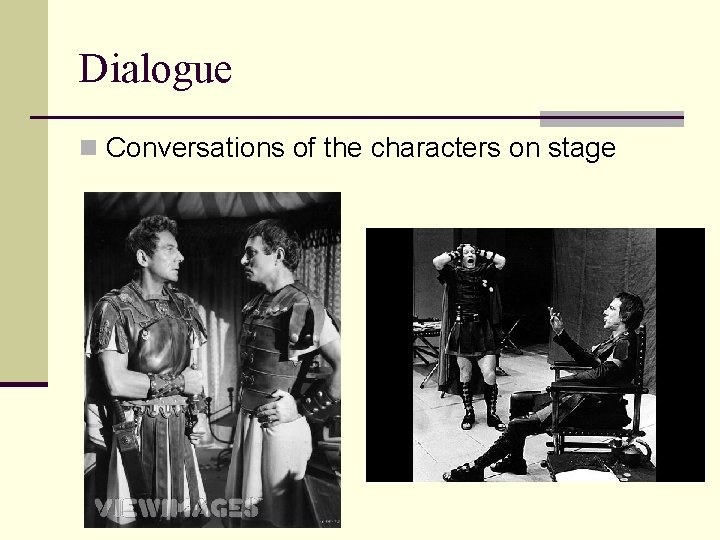
Dialogue n Conversations of the characters on stage
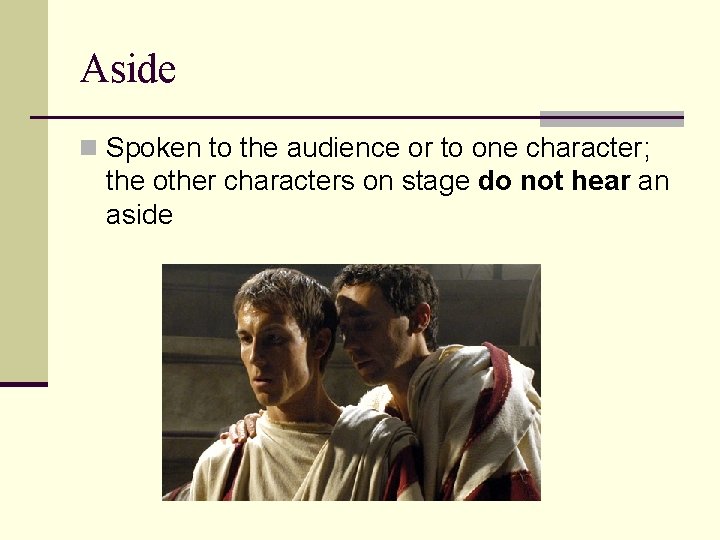
Aside n Spoken to the audience or to one character; the other characters on stage do not hear an aside
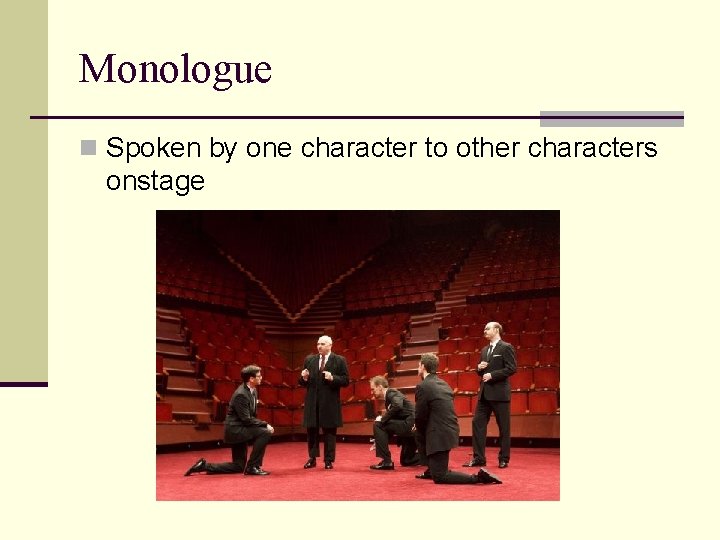
Monologue n Spoken by one character to other characters onstage
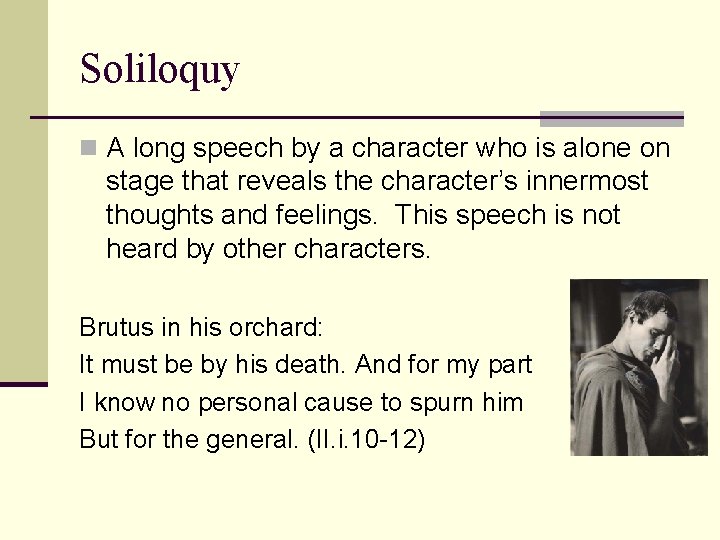
Soliloquy n A long speech by a character who is alone on stage that reveals the character’s innermost thoughts and feelings. This speech is not heard by other characters. Brutus in his orchard: It must be by his death. And for my part I know no personal cause to spurn him But for the general. (II. i. 10 -12)
Irony n The contrast between appearance and reality, between expectation and fulfillment. What is ironic about Caesar’s confidence in his own unassailability?
Dramatic Irony n When the audience knows something that a character does not Anthony says this to Caesar: Fear him [Cassius] not, Caesar, he’s not dangerous. He is a noble Roman, and well given (I. ii. 196 -197)
Verbal Irony n When the words spoken are the opposite of what is meant Decius says to Caesar to get him to the Capitol: Pardon me, Caesar, for my dear love To your proceeding bids me tell you this, And reason to my love is liable. II. iv. 102 -4. What is ironic about Anthony’s statement when he says, “Good friends, sweet friends, let me not stir you up/To such as sudden flow of mutiny”?
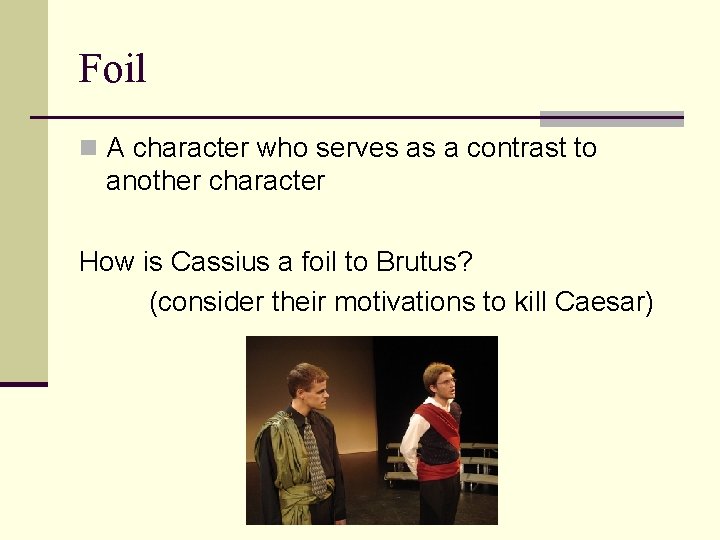
Foil n A character who serves as a contrast to another character How is Cassius a foil to Brutus? (consider their motivations to kill Caesar)
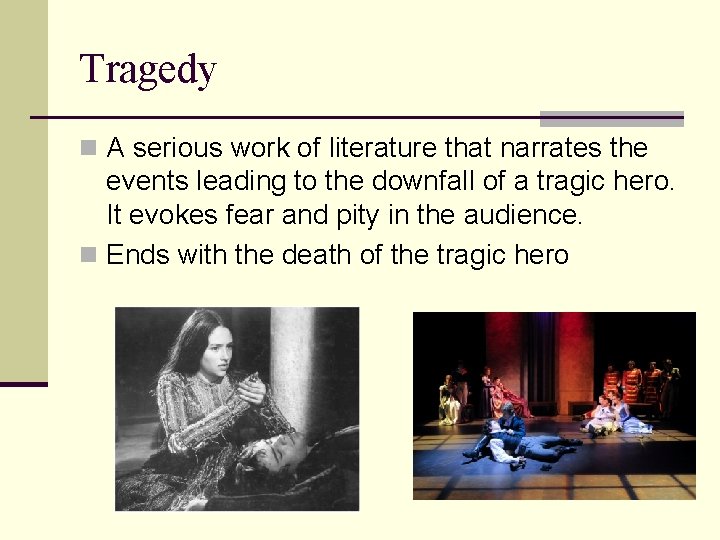
Tragedy n A serious work of literature that narrates the events leading to the downfall of a tragic hero. It evokes fear and pity in the audience. n Ends with the death of the tragic hero
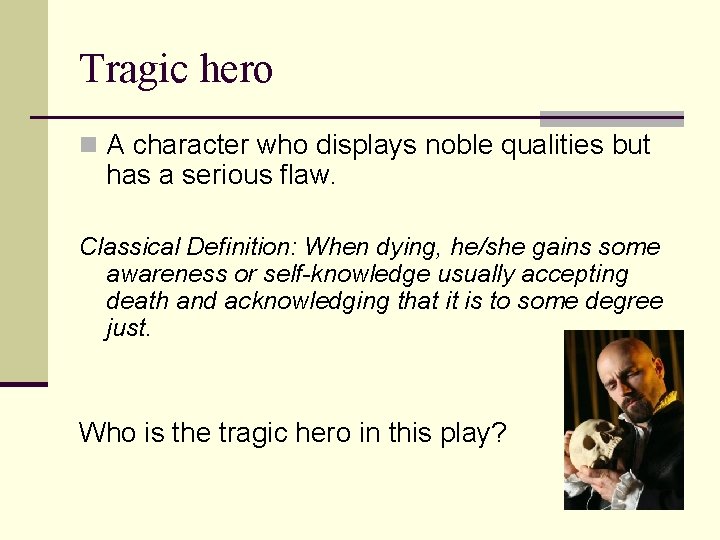
Tragic hero n A character who displays noble qualities but has a serious flaw. Classical Definition: When dying, he/she gains some awareness or self-knowledge usually accepting death and acknowledging that it is to some degree just. Who is the tragic hero in this play?
Tragic flaw n A defect in character or judgment in the tragic hero that directly causes the hero’s downfall (usually death) Examples: pride, rebelliousness, jealousy What is Brutus’ tragic flaw?
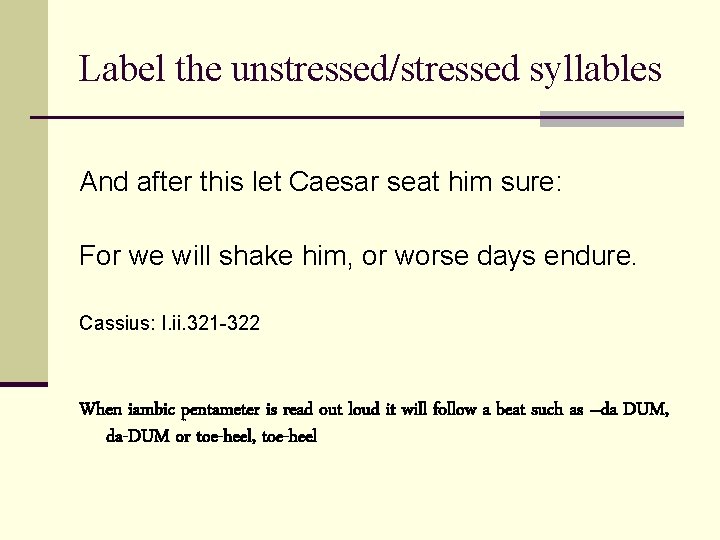
Iambic Pentameter “The Art of the Poet” n 10 -syllable lines of rhymed, unstressed/stress meter. The stressed syllables are red. ‘T’is three o’clock; and, Romans, yet ere night We shall try fortune in a second fight FYI: Shakespeare’s plays are about 90 % verse and 6% prose
Label the unstressed/stressed syllables And after this let Caesar seat him sure: For we will shake him, or worse days endure. Cassius: I. ii. 321 -322 When iambic pentameter is read out loud it will follow a beat such as –da DUM, da-DUM or toe-heel, toe-heel
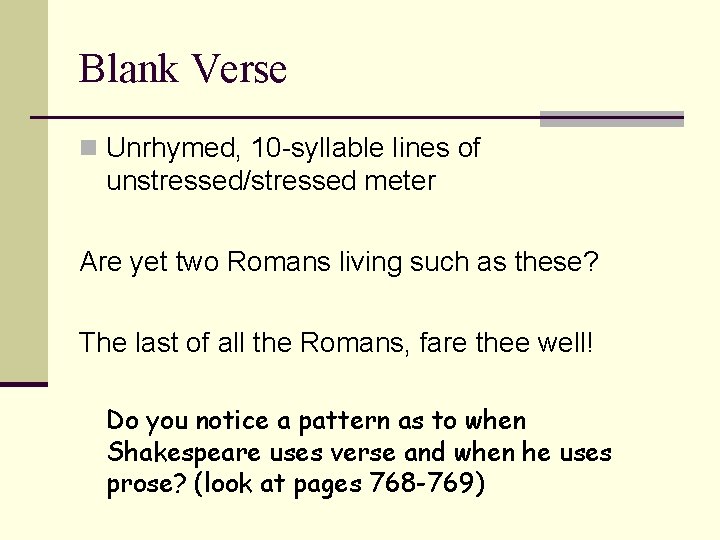
Blank Verse n Unrhymed, 10 -syllable lines of unstressed/stressed meter Are yet two Romans living such as these? The last of all the Romans, fare thee well! Do you notice a pattern as to when Shakespeare uses verse and when he uses prose? (look at pages 768 -769)