
Julie Larson LCSW www julielarsonlcsw com SURVIVORS GUILT



- Slides: 14
Julie Larson, LCSW www. julielarsonlcsw. com
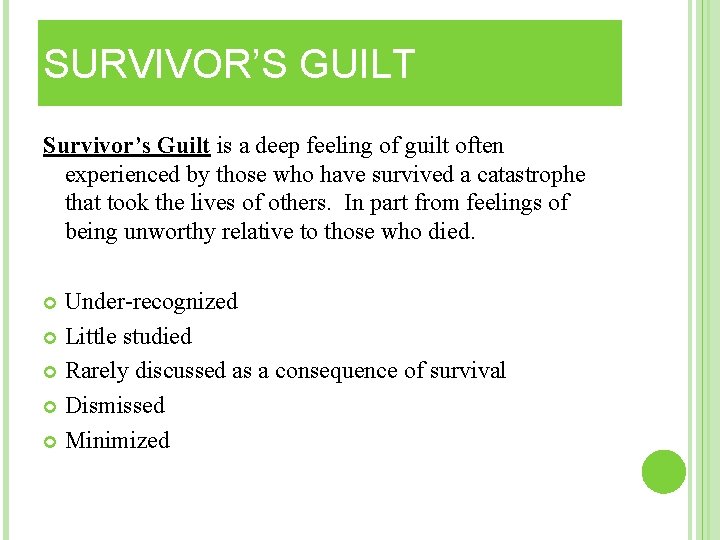
SURVIVOR’S GUILT Survivor’s Guilt is a deep feeling of guilt often experienced by those who have survived a catastrophe that took the lives of others. In part from feelings of being unworthy relative to those who died. Under-recognized Little studied Rarely discussed as a consequence of survival Dismissed Minimized
WHY?
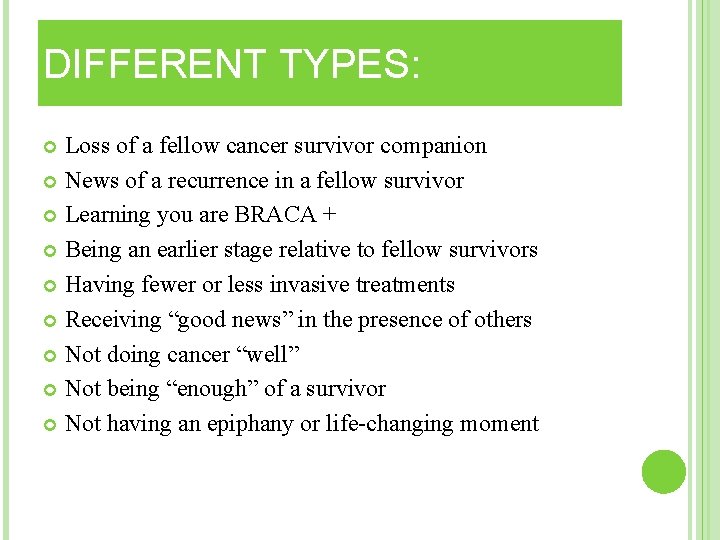
DIFFERENT TYPES: Loss of a fellow cancer survivor companion News of a recurrence in a fellow survivor Learning you are BRACA + Being an earlier stage relative to fellow survivors Having fewer or less invasive treatments Receiving “good news” in the presence of others Not doing cancer “well” Not being “enough” of a survivor Not having an epiphany or life-changing moment
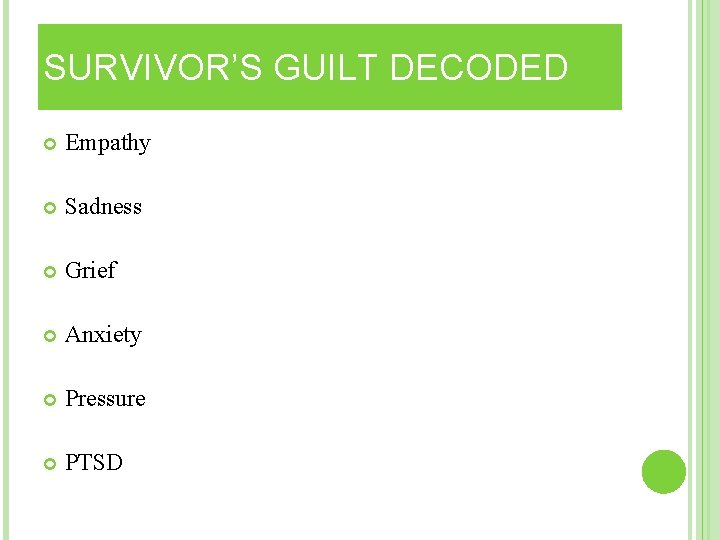
SURVIVOR’S GUILT DECODED Empathy Sadness Grief Anxiety Pressure PTSD
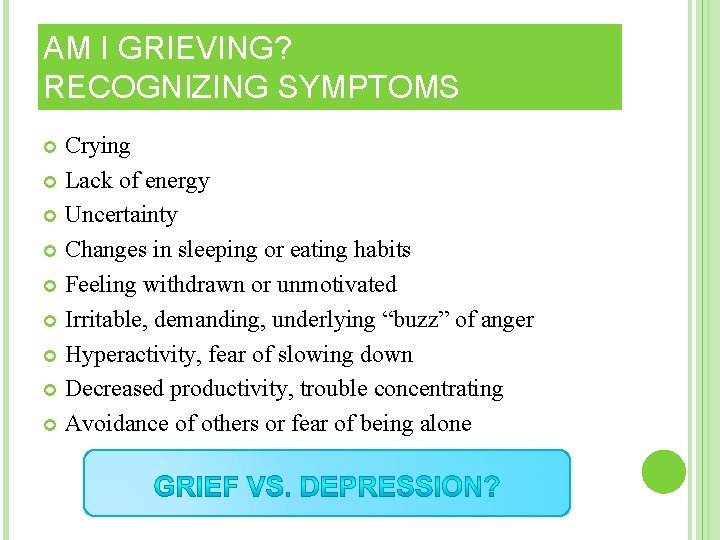
AM I GRIEVING? RECOGNIZING SYMPTOMS Crying Lack of energy Uncertainty Changes in sleeping or eating habits Feeling withdrawn or unmotivated Irritable, demanding, underlying “buzz” of anger Hyperactivity, fear of slowing down Decreased productivity, trouble concentrating Avoidance of others or fear of being alone
THROUGH THE MIDDLE OF GRIEF…
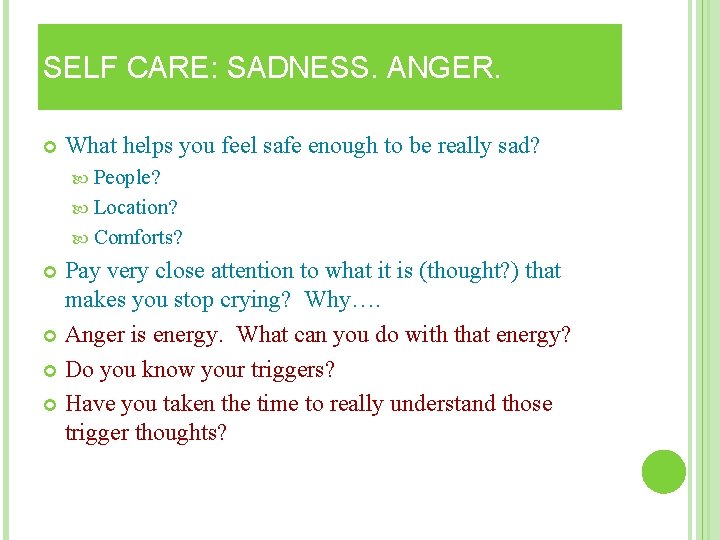
SELF CARE: SADNESS. ANGER. What helps you feel safe enough to be really sad? People? Location? Comforts? Pay very close attention to what it is (thought? ) that makes you stop crying? Why…. Anger is energy. What can you do with that energy? Do you know your triggers? Have you taken the time to really understand those trigger thoughts?
SELF CARE: ANXIETY, PRESSURE Can you recognize what the anxiety and pressure feel like in your body? What are you thinking? Is that thought accurate… Separate your experience from that of another. Ground yourself in your value, worth, uniqueness (get affirmation of those truths!)
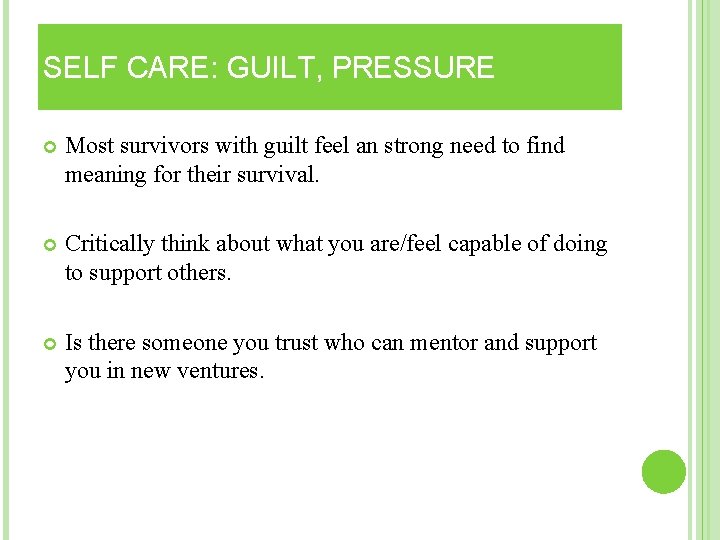
SELF CARE: GUILT, PRESSURE Most survivors with guilt feel an strong need to find meaning for their survival. Critically think about what you are/feel capable of doing to support others. Is there someone you trust who can mentor and support you in new ventures.
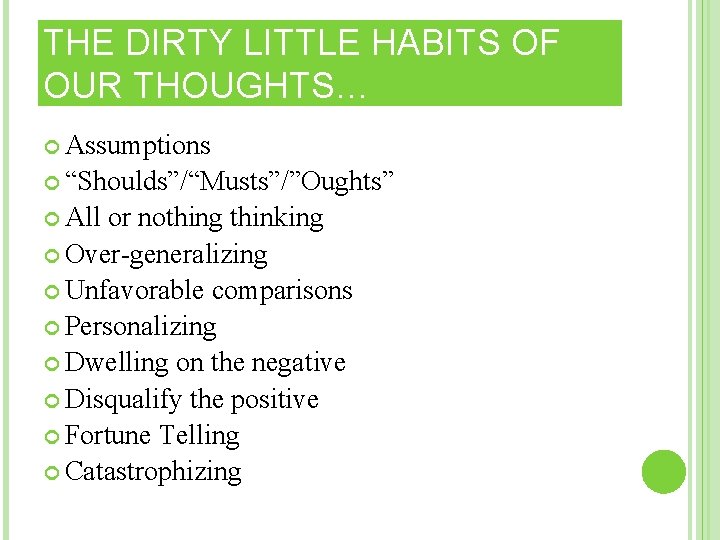
THE DIRTY LITTLE HABITS OF OUR THOUGHTS… Assumptions “Shoulds”/“Musts”/”Oughts” All or nothing thinking Over-generalizing Unfavorable comparisons Personalizing Dwelling on the negative Disqualify the positive Fortune Telling Catastrophizing
Remember your feelings about talking about your diagnosis will likely change day to day. Try not to ignore your need to share your worries, fears and questions. Often talking with others helps you work through concerns or uncertainties in a natural way. Try not to put on a “happy face” if you are not feeling that way. Your true feelings are more helpful to everyone. Remember when others have awkward or hurtful responses it likely has nothing to do with you but is more related to their own feelings or past experiences. Talking about cancer can be complicated. Most conversations are not a one shot deal, they are an ongoing dialogue. Keep being as open as you can.
IN SUMMARY: 1. 2. 3. 4. 5. 6. Listen to yourself. Come to understand what you are feeling, thinking and needing. Learn how to care for yourself. Decide who the best audience is for you today related to what you need to express. Prepare yourself for important conversations. Know your emotional “hot spots”. Reach out to good friends or a therapist to help you better understand your feelings and support you as you