
Jules Verne Automated Transfer Vehicle Robert Lain ESA
Jules Verne Automated Transfer Vehicle Robert Lainé, ESA project manager Jean-Yves Heloret, EADS-LV project manager Jules Verne
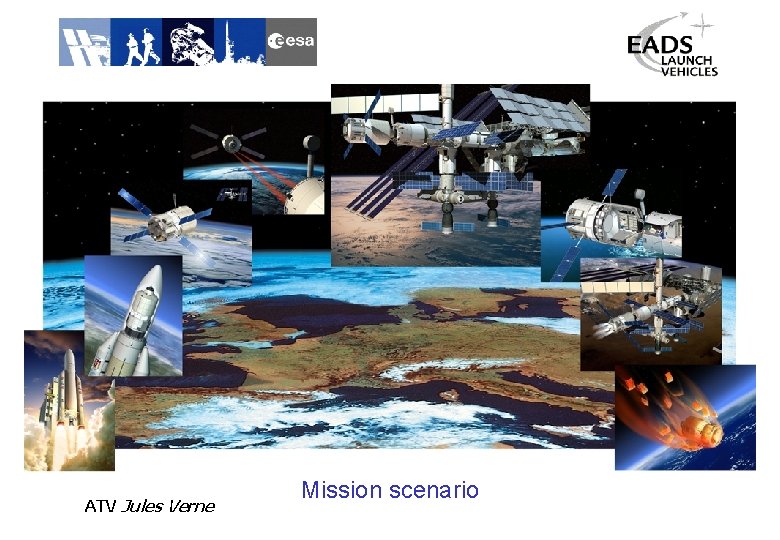
ATV mission: ESA contribution to ISS operations • Rendezvous, Re-supply and Re-boost the International Space Station – up to 5500 kg of equipment, food, water and air for ISS crew – up to 860 kg of refuelling for ISS – up to 4700 kg of fuel to re-boost the Space Station and steer it away from debris and meteorites • At the end of its mission ATV will be loaded with waste material, undocked and sent on a self-destructing return flight into the Earth’s atmosphere • First flight scheduled for second half 2004 on Ariane 5 • Control of ATV automatic approach and docking, attached phase operations and its safe re-entry into earth atmosphere will be in CNES Toulouse. ATV Jules Verne
ATV Jules Verne Mission scenario
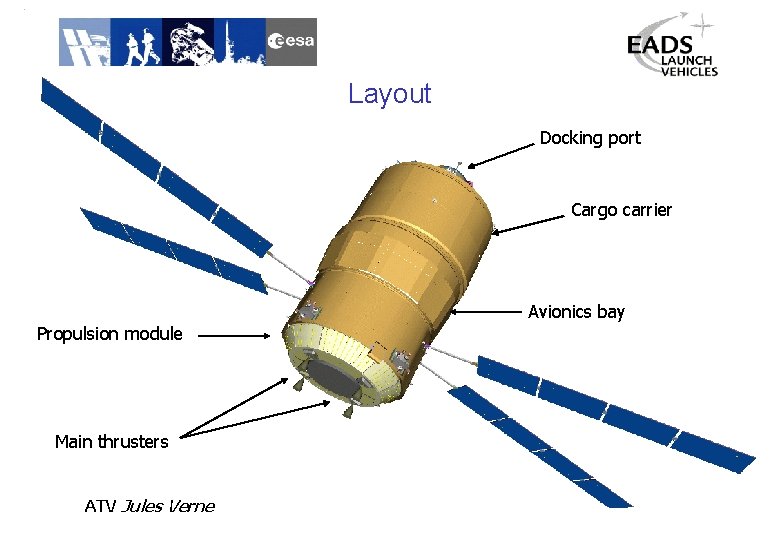
Layout Docking port Cargo carrier Propulsion module Main thrusters ATV Jules Verne Avionics bay
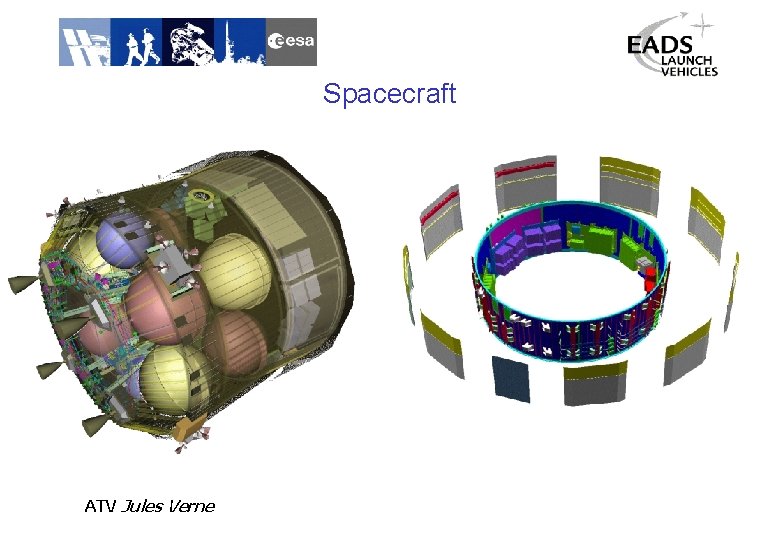
Spacecraft ATV Jules Verne
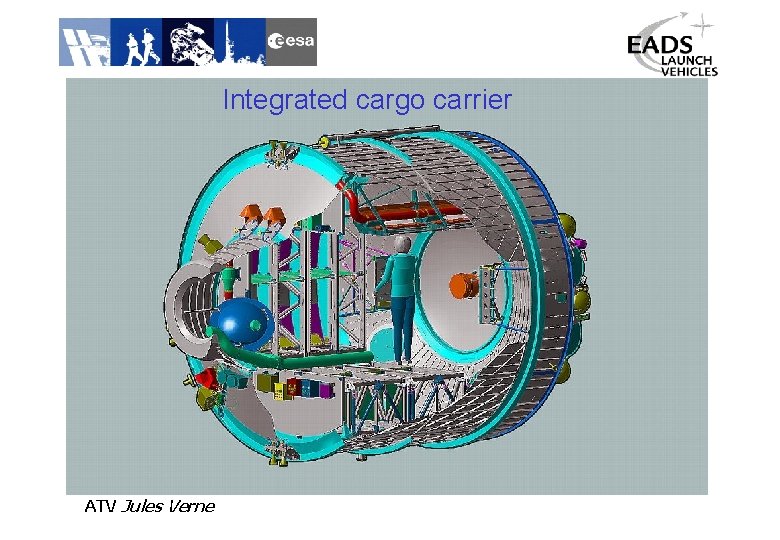
Integrated cargo carrier ATV Jules Verne
Jules Verne development • After an intensive engineering and manufacturing phase the integration and verification process has begun using: – Structural and Thermal Model (tests completed) – Electrical Test Model (finished, used for software validation) – Proto-Flight Model (integration in progress) – Eight incremental versions of flight software ATV Jules Verne
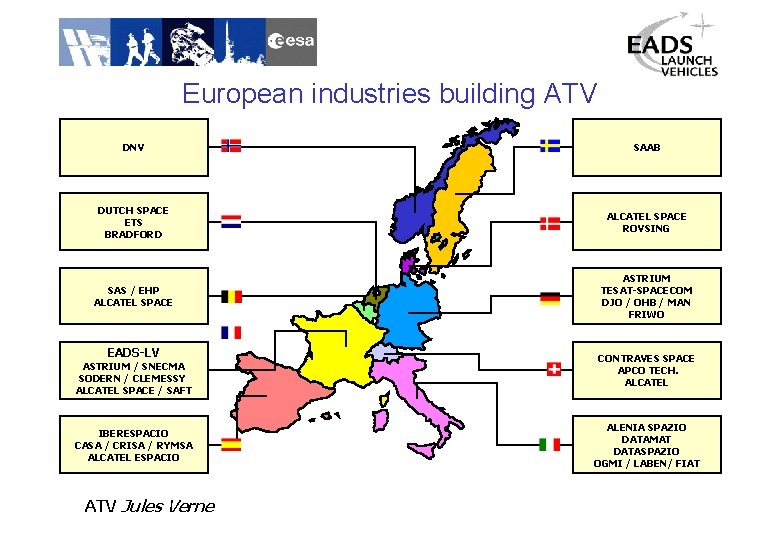
European industries building ATV DNV SAAB DUTCH SPACE ETS BRADFORD ALCATEL SPACE ROVSING SAS / EHP ALCATEL SPACE ASTRIUM TESAT-SPACECOM DJO / OHB / MAN FRIWO EADS-LV ASTRIUM / SNECMA SODERN / CLEMESSY ALCATEL SPACE / SAFT IBERESPACIO CASA / CRISA / RYMSA ALCATEL ESPACIO ATV Jules Verne CONTRAVES SPACE APCO TECH. ALCATEL ALENIA SPAZIO DATAMAT DATASPAZIO OGMI / LABEN/ FIAT
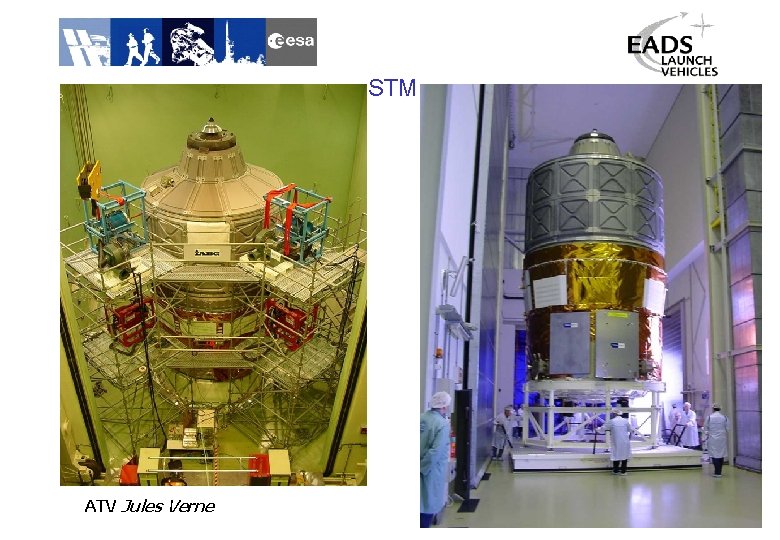
STM ATV Jules Verne
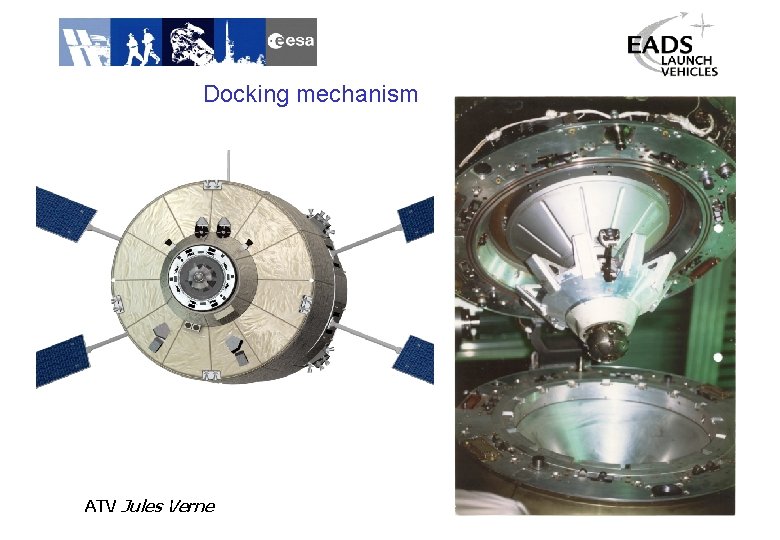
Docking mechanism ATV Jules Verne
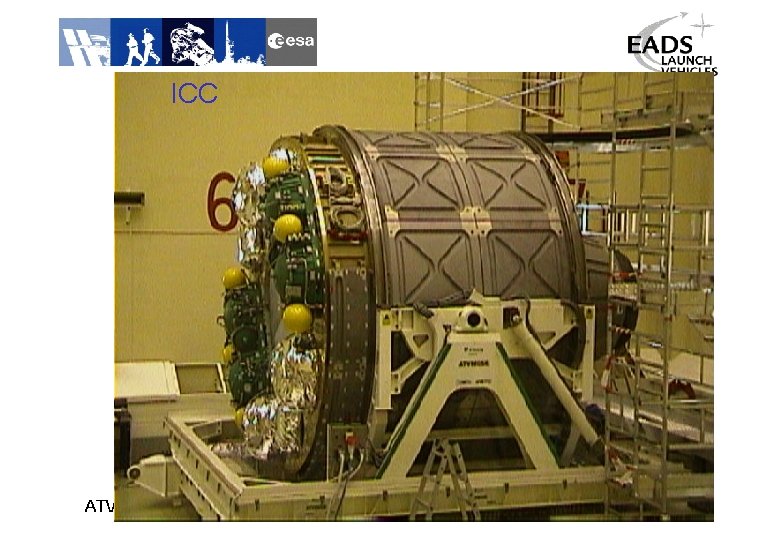
ICC ATV Jules Verne
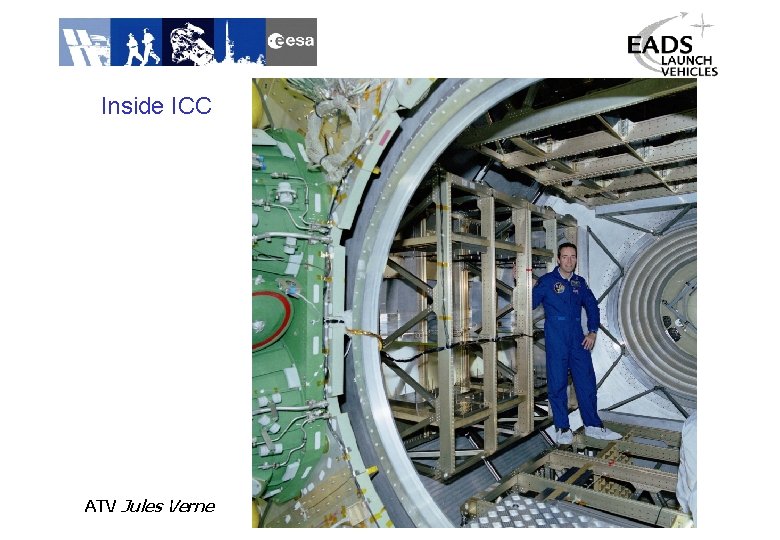
Inside ICC ATV Jules Verne
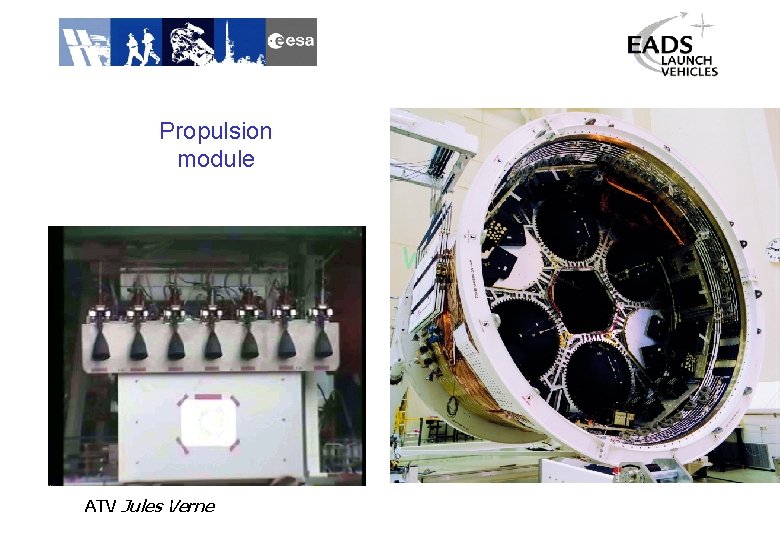
Propulsion module ATV Jules Verne
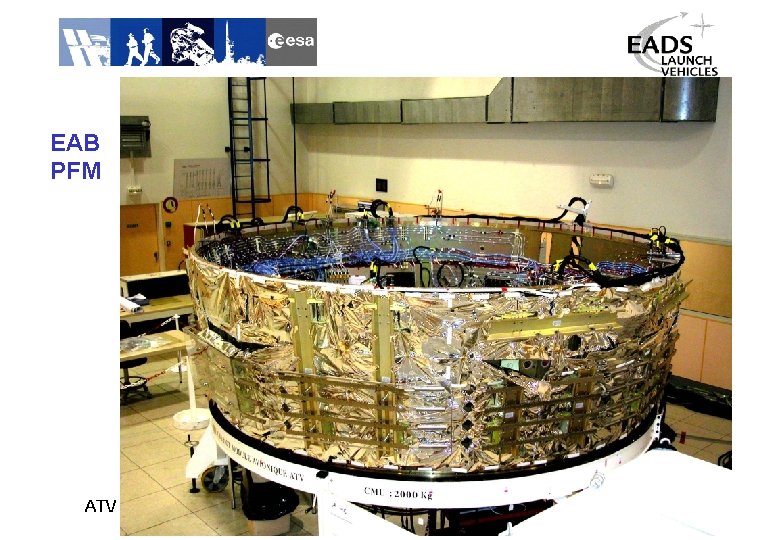
EAB PFM ATV Jules Verne
Flight Model status • Integration of the modules on going: – Avionics Bay in Toulouse (F), – Cargo Carrier in Torino (I), – Propulsion Bay in Bremen (D). • Complete Vehicle integration will be done in Bremen before ground tests in ESTEC. • Shipping to Kourou will be done in two parts (due to the size of the vehicle) where the vehicle will be reassembled and cargo integrated. • First version of the flight software is written and is under test in Les Mureaux (F). ATV Jules Verne
Main assets of ATV • Versatility and autonomy – Payload elements can vary on each flight depending upon ISS needs – De-docking and re-docking capability – Autonomous manoeuvring up to docking • Precise navigation and guidance – Stellar and GPS navigation, optical systems for finding and homing to docking port High docking accuracy: +/-1 cm = 50%, 10 cm = 100% • Safety – Fully redundant architecture – Independent safety monitoring – Autonomous anti collision system (intelligent airbag equivalent) ATV Jules Verne
Synthesis • ATV Jules Verne is a fantastic vehicle –Very large cargo ship –Very powerful tug –Combination of manned-unmanned technologies • New experience for Europe –Space rendezvous –In orbit refuelling –Optical guidance ATV Jules Verne
Prospective Jules Verne paves the way towards “extraordinary voyages” – Transportation of crew between space stations/modules – Man tended free flyer laboratory – Orbital safe haven – Automatic in orbit assembly of large space vessels • Earth application satellites • Very large space telescopes • Missions toward other planets ATV Jules Verne
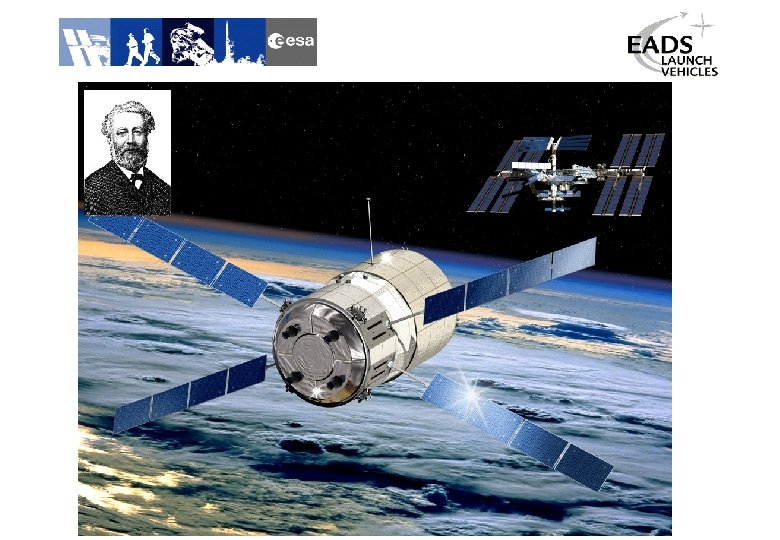
ATV-ISS ATV Jules Verne
- Slides: 19