
Judith Huber Department of English Philology LMU Mnchen
Judith Huber Department of English Philology LMU München Sound changes and irregularities in English spelling and morphology
1. 2. 3. 4. Introduction Common sound changes The Great Vowel Shift Sound change leading to irregularities I: spelling and pronunciation 5. Sound change leading to irregularities II: morphology
". . . beware of heard, a dreadful word, that looks like beard and sounds like bird"
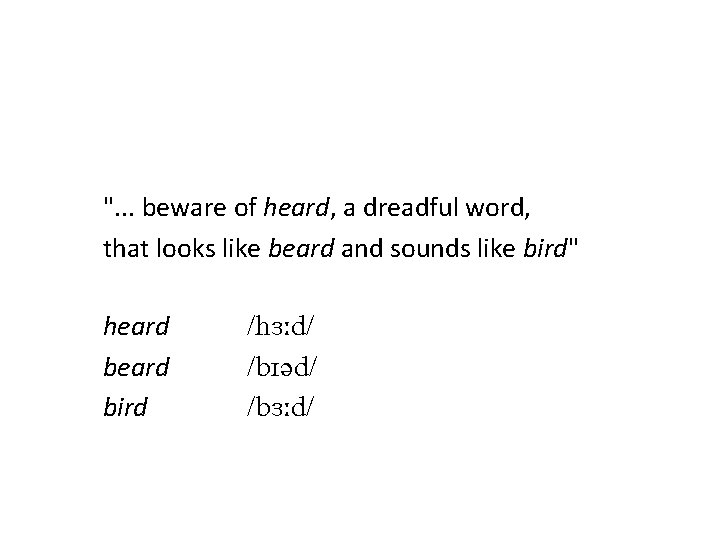
". . . beware of heard, a dreadful word, that looks like beard and sounds like bird" heard bird /h 3: d/ /b. I@d/ /b 3: d/
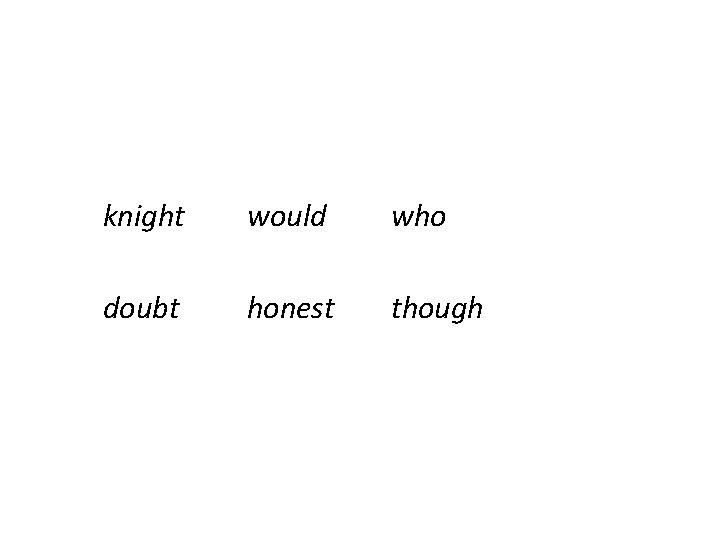
knight would who doubt honest though
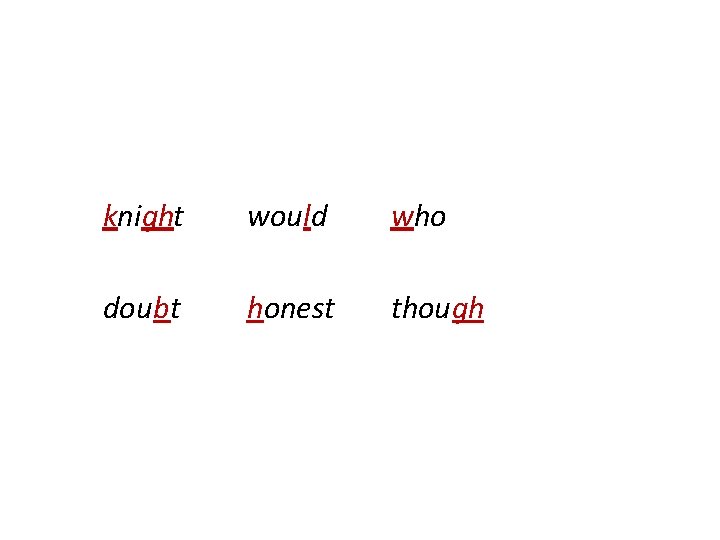
knight would who doubt honest though
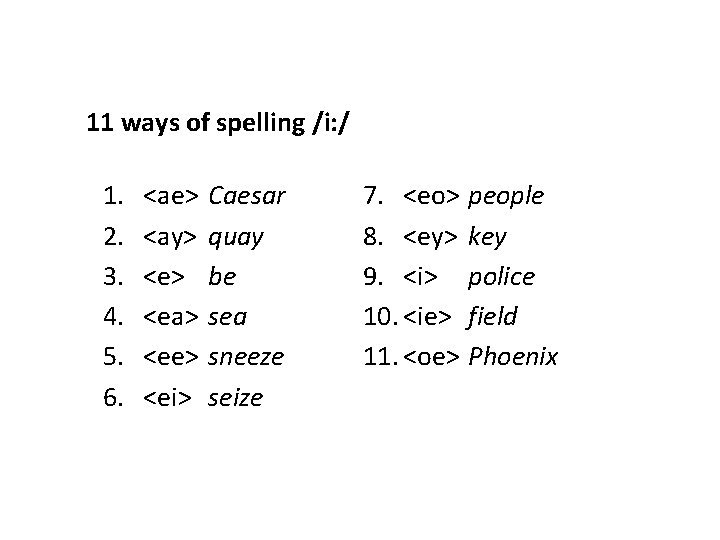
11 ways of spelling /i: / 1. 2. 3. 4. 5. 6. <ae> <ay> <ea> <ee> <ei> Caesar quay be sea sneeze seize 7. <eo> people 8. <ey> key 9. <i> police 10. <ie> field 11. <oe> Phoenix
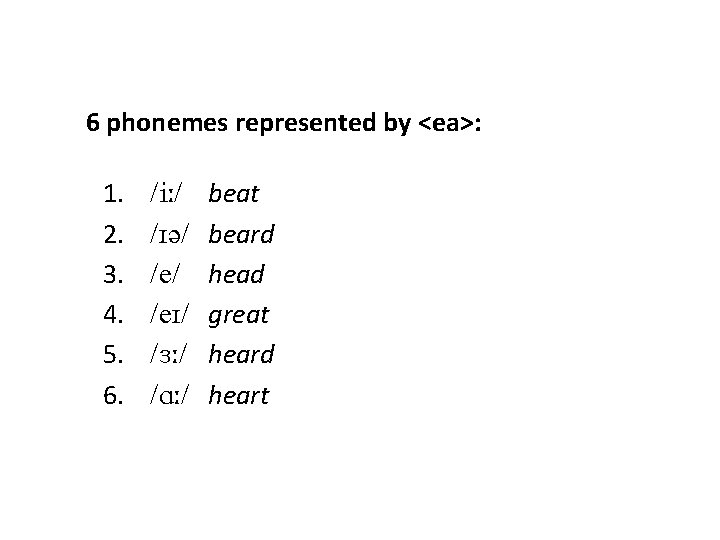
6 phonemes represented by <ea>: 1. 2. 3. 4. 5. 6. /i: / /I@/ /e. I/ /3: / /A: / beat beard head great heard heart
And some real exaggerations
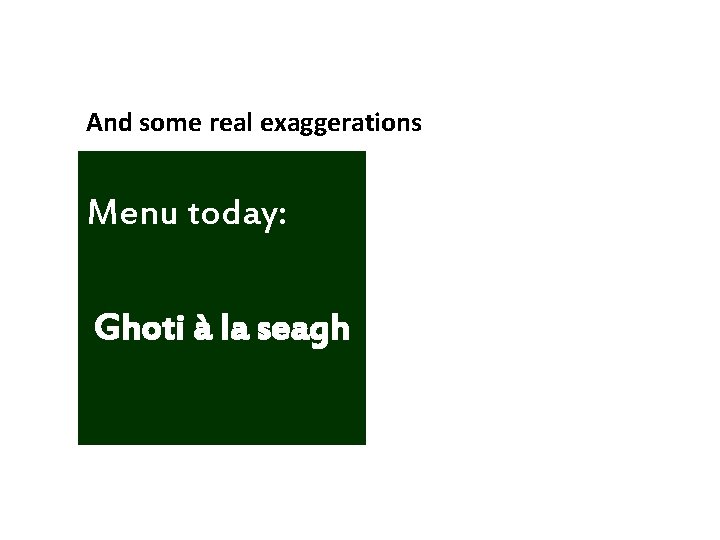
And some real exaggerations Menu today: Ghoti à la seagh
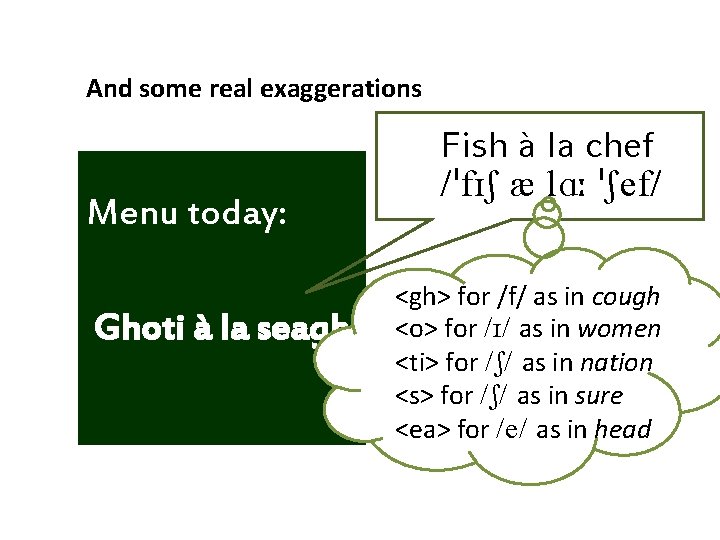
And some real exaggerations Menu today: Ghoti à la seagh Fish à la chef /"f. IS l. A: "Sef/ <gh> for /f/ as in cough <o> for /I/ as in women <ti> for /S/ as in nation <s> for /S/ as in sure <ea> for /e/ as in head
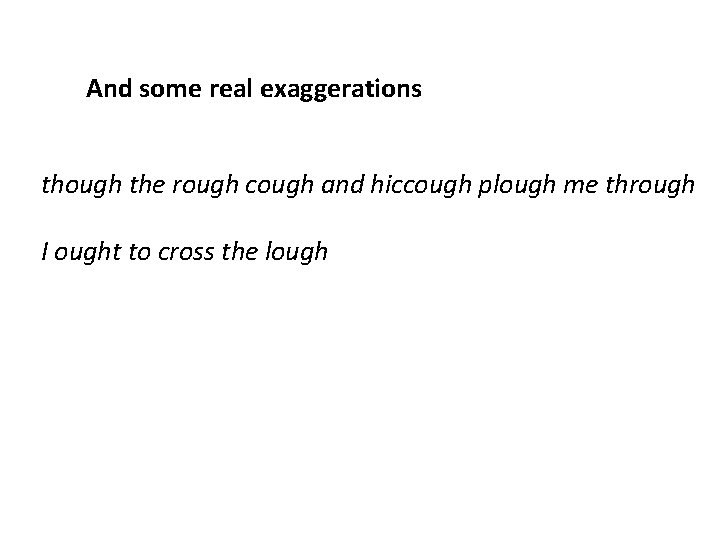
And some real exaggerations though the rough cough and hiccough plough me through I ought to cross the lough
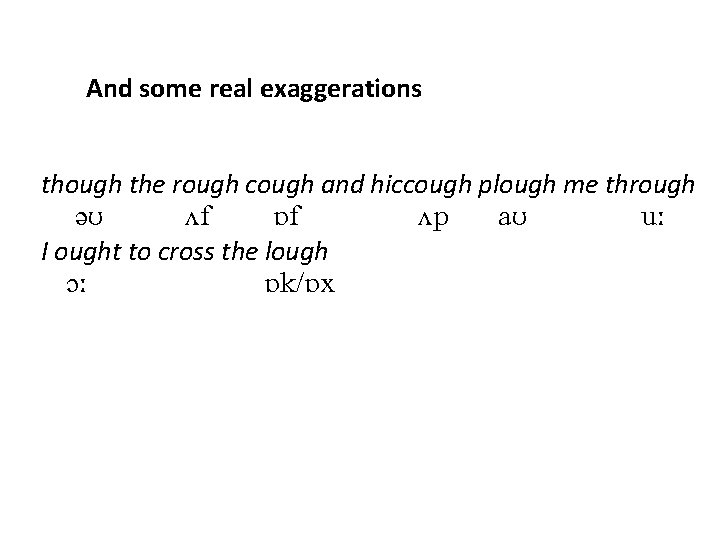
And some real exaggerations though the rough cough and hiccough plough me through @U f Qf p a. U u: I ought to cross the lough O: Qk/Qx
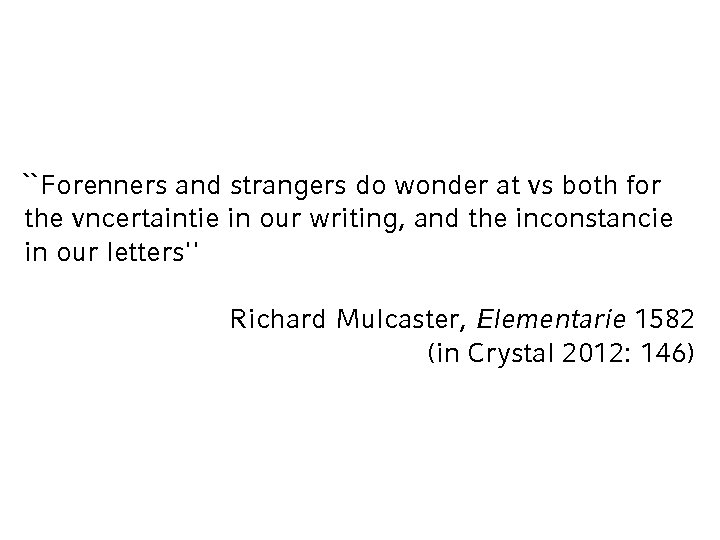
``Forenners and strangers do wonder at vs both for the vncertaintie in our writing, and the inconstancie in our letters'' Richard Mulcaster, Elementarie 1582 (in Crystal 2012: 146)
2. Common sound changes
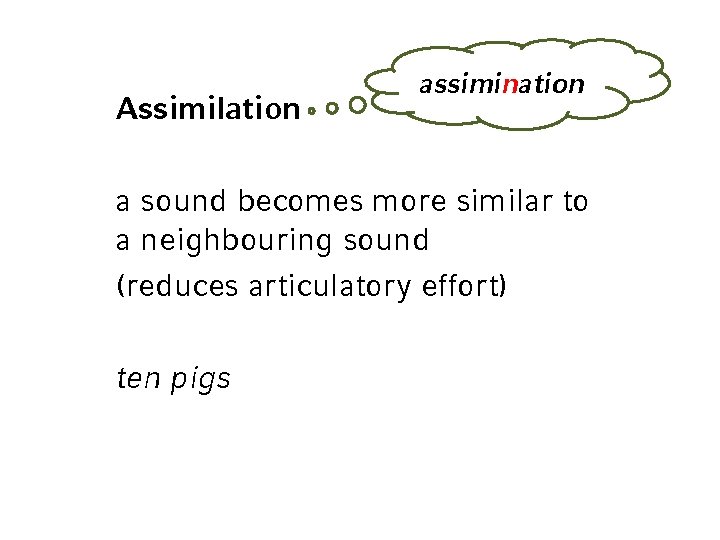
Assimilation assimination a sound becomes more similar to a neighbouring sound (reduces articulatory effort) ten pigs
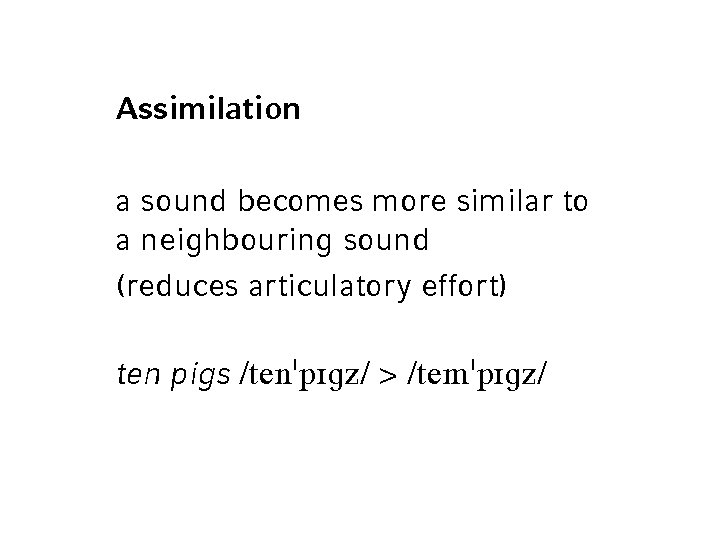
Assimilation a sound becomes more similar to a neighbouring sound (reduces articulatory effort) ten pigs /ten"p. Igz/ > /tem"p. Igz/
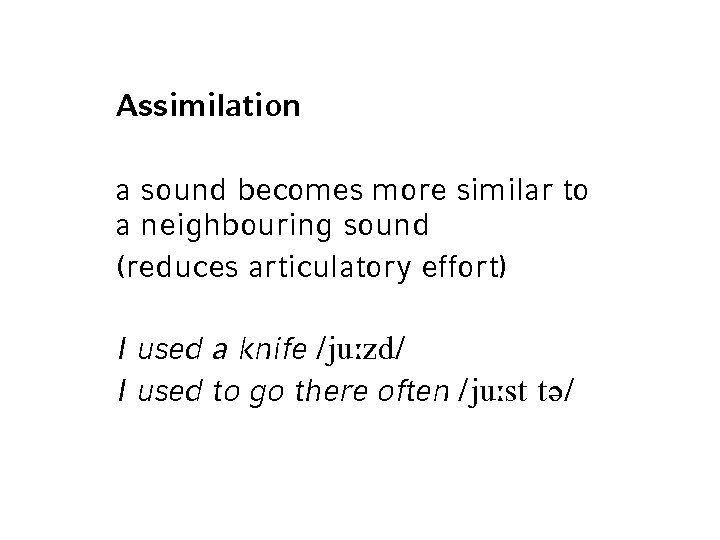
Assimilation a sound becomes more similar to a neighbouring sound (reduces articulatory effort) I used a knife /ju: zd/ I used to go there often /ju: st t@/
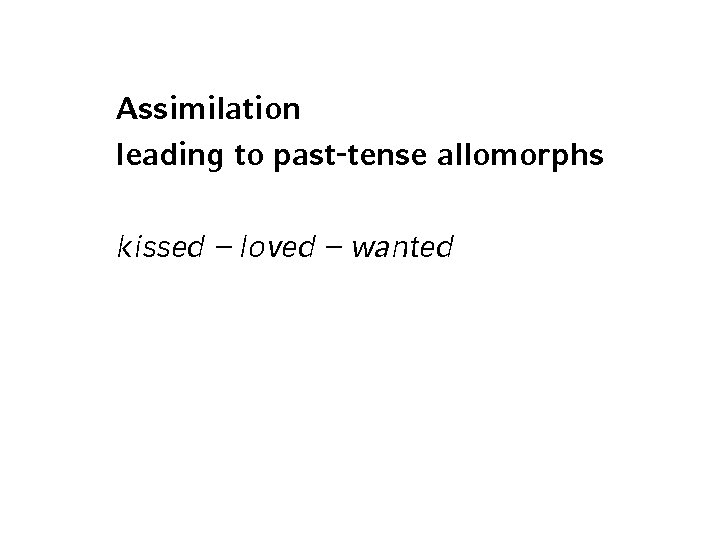
Assimilation leading to past-tense allomorphs kissed – loved – wanted
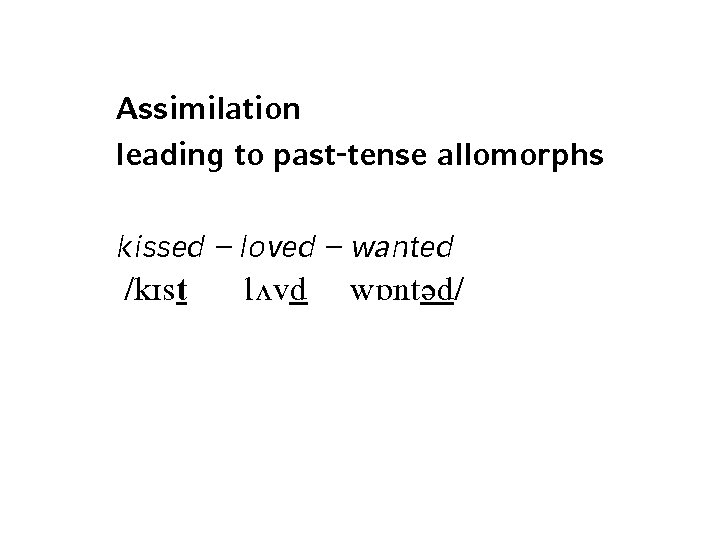
Assimilation leading to past-tense allomorphs kissed – loved – wanted /k. Ist l vd w. Qnt@d/
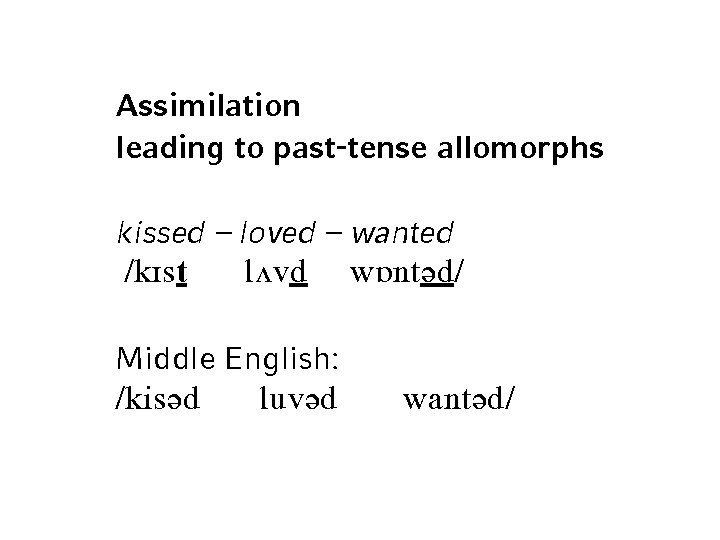
Assimilation leading to past-tense allomorphs kissed – loved – wanted /k. Ist l vd w. Qnt@d/ Middle English: /kis@d luv@d want@d/
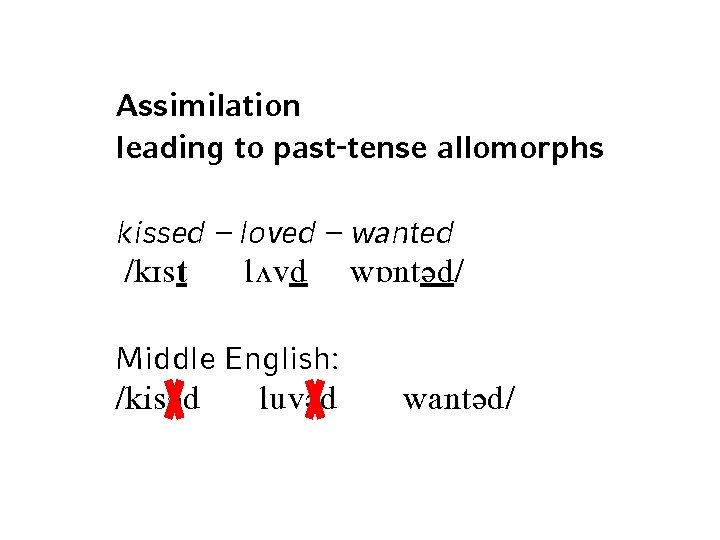
Assimilation leading to past-tense allomorphs kissed – loved – wanted /k. Ist l vd w. Qnt@d/ Middle English: /kis@d luv@d want@d/
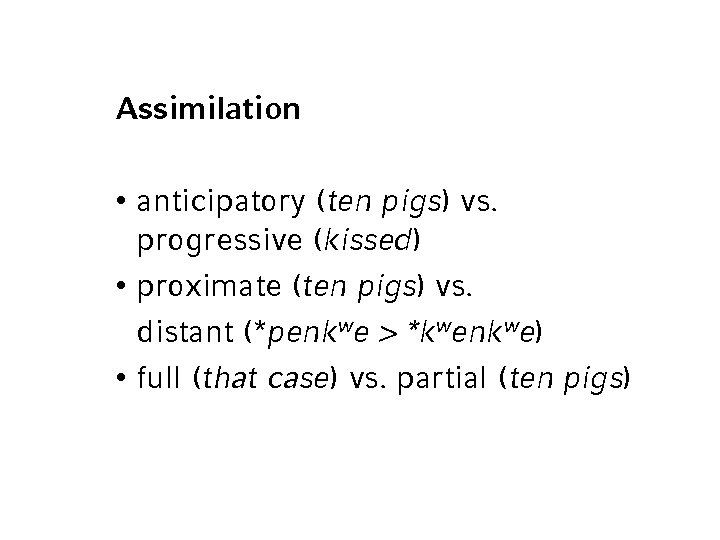
Assimilation • anticipatory (ten pigs) vs. progressive (kissed) • proximate (ten pigs) vs. distant (*penkwe > *kwenkwe) • full (that case) vs. partial (ten pigs)
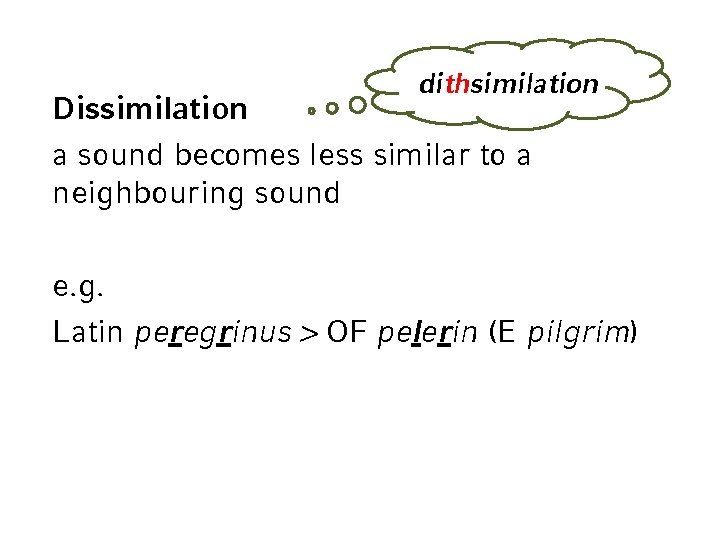
dithsimilation Dissimilation a sound becomes less similar to a neighbouring sound e. g. Latin peregrinus > OF pelerin (E pilgrim)
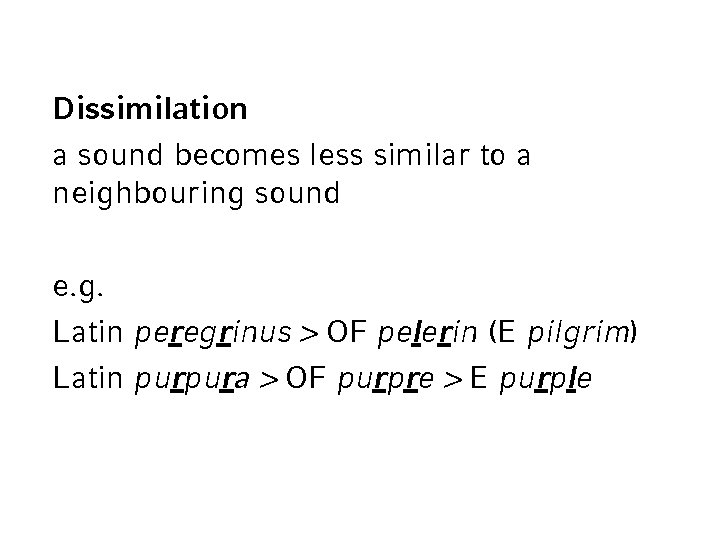
Dissimilation a sound becomes less similar to a neighbouring sound e. g. Latin peregrinus > OF pelerin (E pilgrim) Latin purpura > OF purpre > E purple
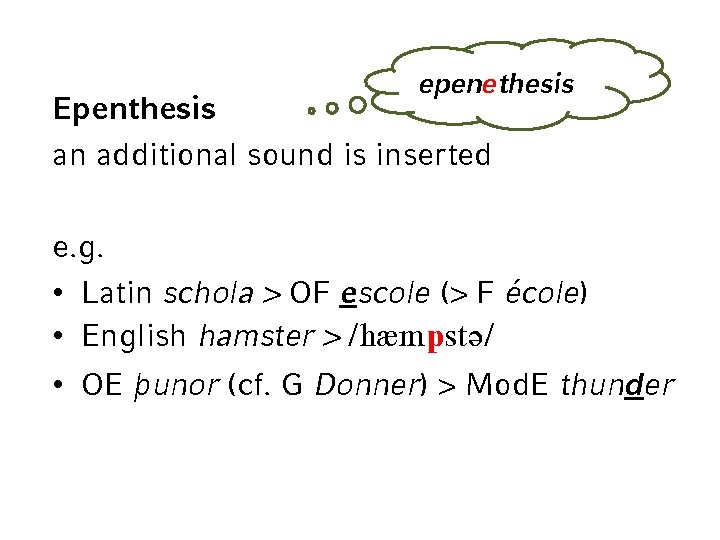
epenethesis Epenthesis an additional sound is inserted e. g. • Latin schola > OF escole (> F école) • English hamster > /h mpst@/ • OE þunor (cf. G Donner) > Mod. E thunder
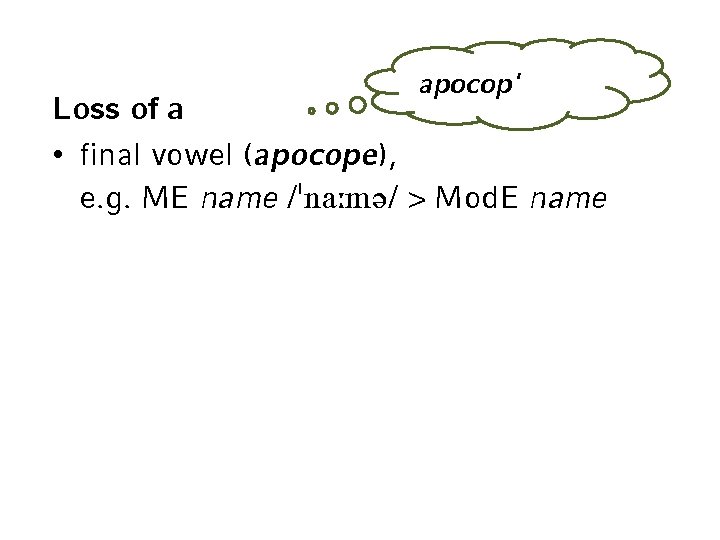
apocop' Loss of a • final vowel (apocope), e. g. ME name /"na: m@/ > Mod. E name
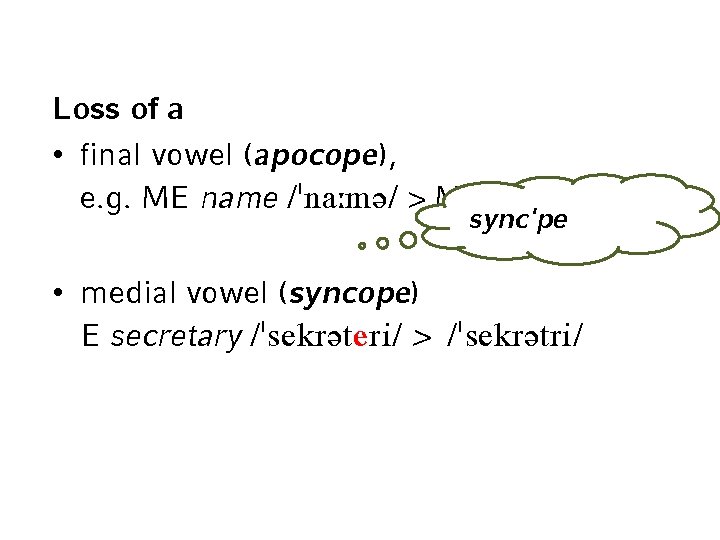
Loss of a • final vowel (apocope), e. g. ME name /"na: m@/ > Mod. E name sync'pe • medial vowel (syncope) E secretary /"sekr@teri/ > /"sekr@tri/
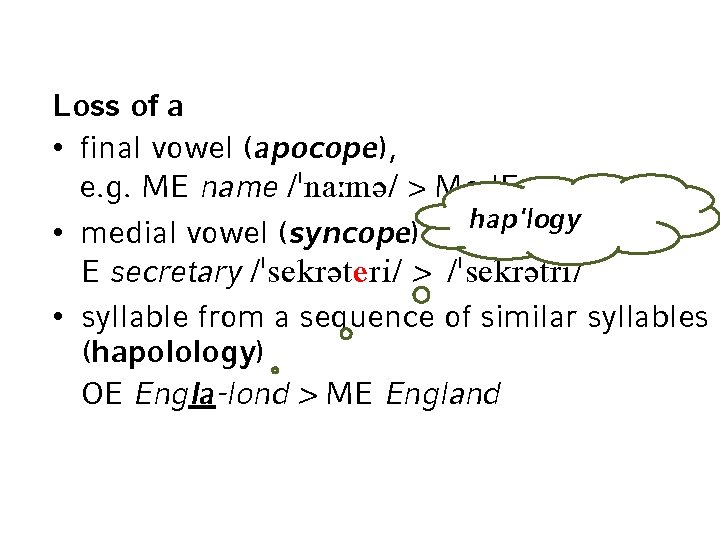
Loss of a • final vowel (apocope), e. g. ME name /"na: m@/ > Mod. E name hap'logy • medial vowel (syncope) E secretary /"sekr@teri/ > /"sekr@tri/ • syllable from a sequence of similar syllables (hapolology) OE Engla-lond > ME England
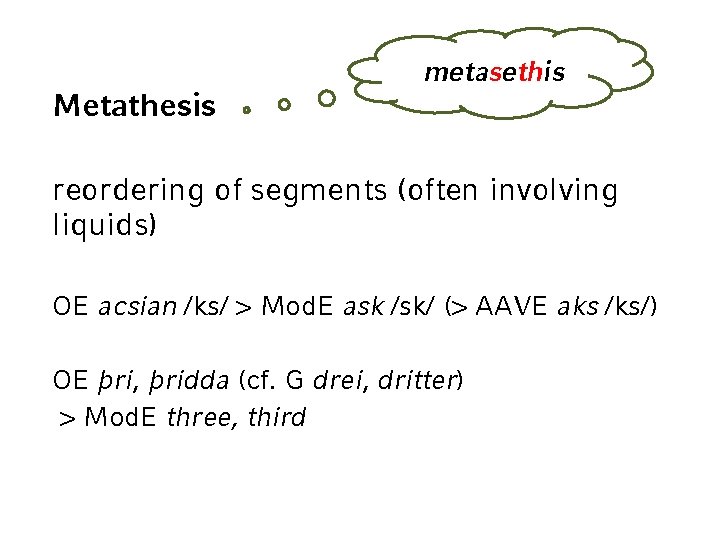
Metathesis metasethis reordering of segments (often involving liquids) OE acsian /ks/ > Mod. E ask /sk/ (> AAVE aks /ks/) OE þri, þridda (cf. G drei, dritter) > Mod. E three, third
3. The Great Vowel Shift
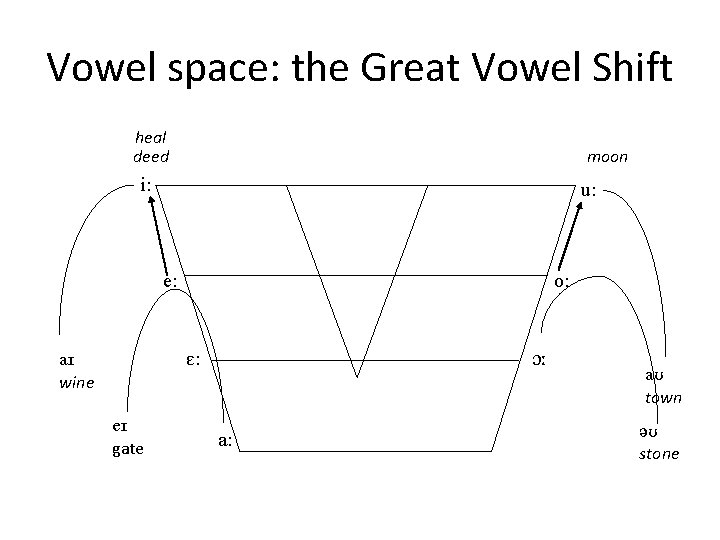
Vowel space: the Great Vowel Shift heal deed moon i: u: e: o: E: a. I wine e. I gate O: a. U town @U stone
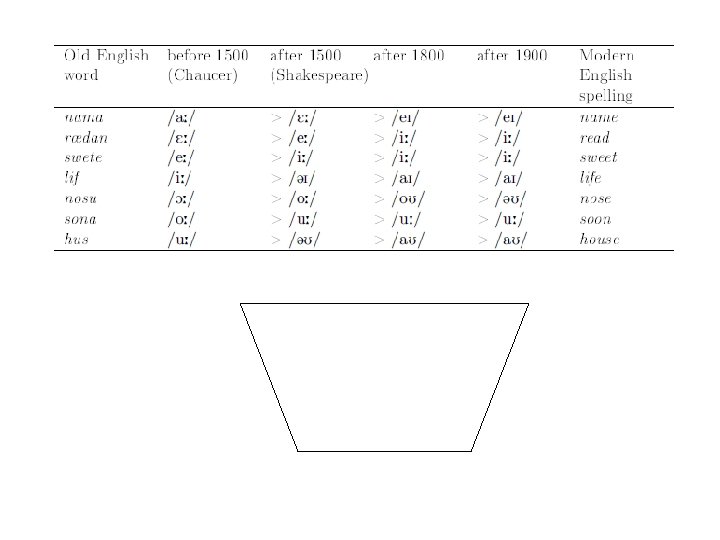
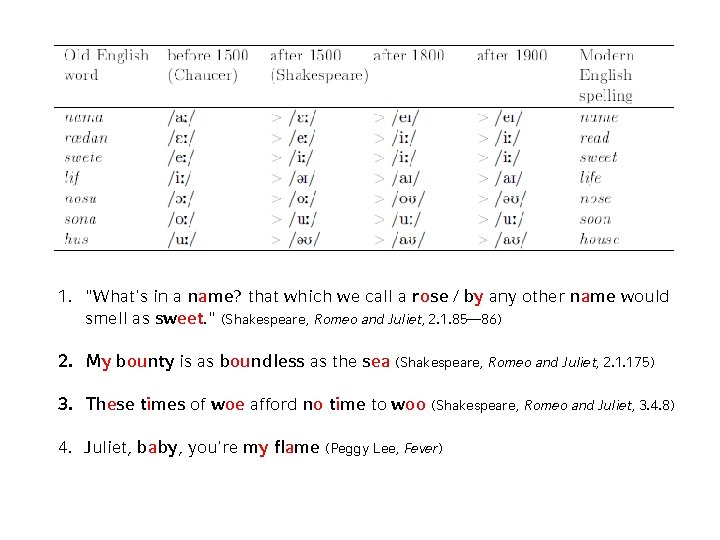
1. "What's in a name? that which we call a rose / by any other name would smell as sweet. " (Shakespeare, Romeo and Juliet, 2. 1. 85— 86) 2. My bounty is as boundless as the sea (Shakespeare, Romeo and Juliet, 2. 1. 175) 3. These times of woe afford no time to woo (Shakespeare, Romeo and Juliet, 3. 4. 8) 4. Juliet, baby, you're my flame (Peggy Lee, Fever)
4. Sound change leading to irregularities I: spelling and pronunciation
Modern English spelling ≈ Middle English pronunciation
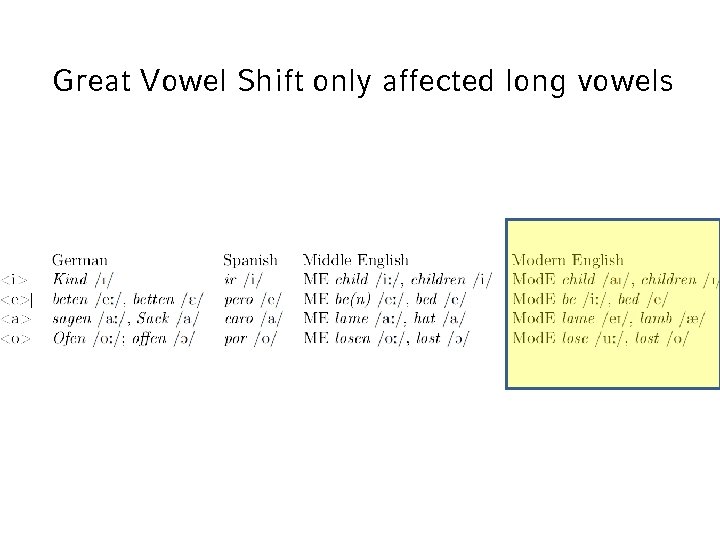
Great Vowel Shift only affected long vowels
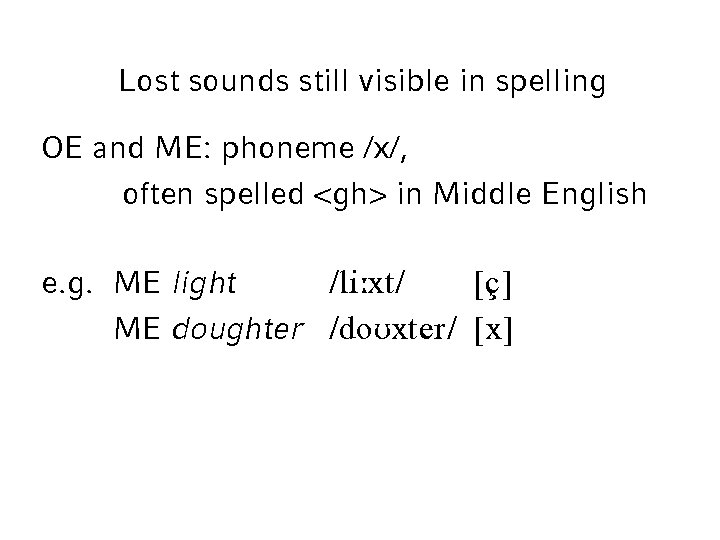
Lost sounds still visible in spelling OE and ME: phoneme /x/, often spelled <gh> in Middle English e. g. ME light /li: xt/ [C] ME doughter /do. Uxter/ [x]
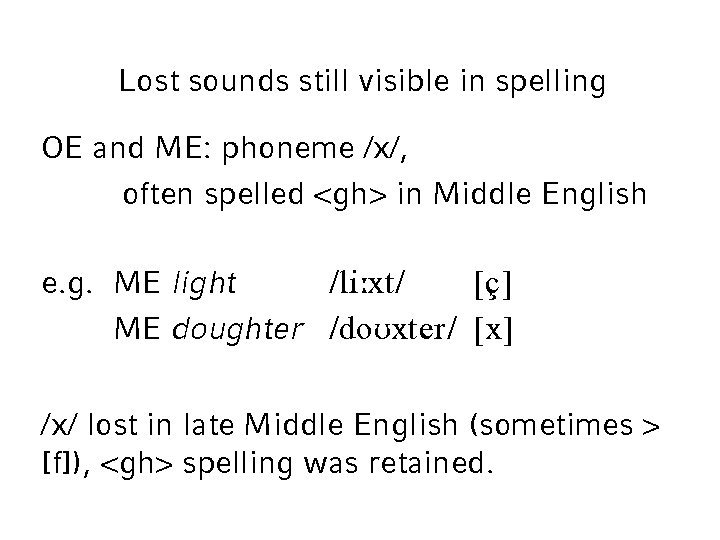
Lost sounds still visible in spelling OE and ME: phoneme /x/, often spelled <gh> in Middle English e. g. ME light /li: xt/ [C] ME doughter /do. Uxter/ [x] /x/ lost in late Middle English (sometimes > [f]), <gh> spelling was retained.
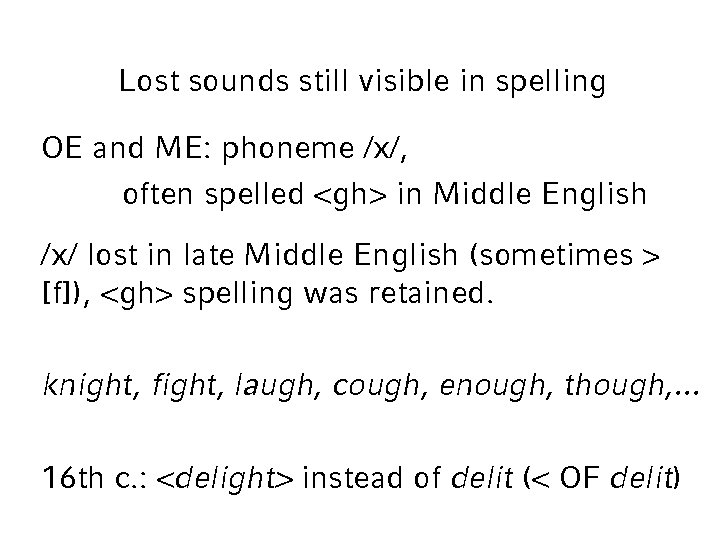
Lost sounds still visible in spelling OE and ME: phoneme /x/, often spelled <gh> in Middle English /x/ lost in late Middle English (sometimes > [f]), <gh> spelling was retained. knight, fight, laugh, cough, enough, though, . . . 16 th c. : <delight> instead of delit (< OF delit)
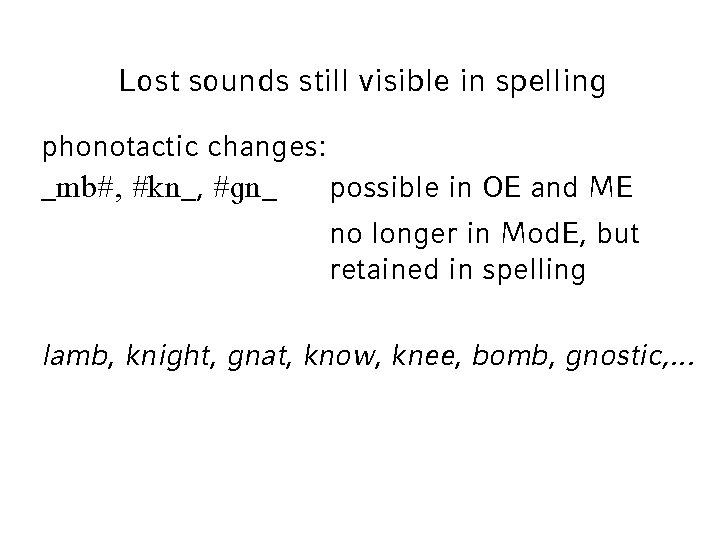
Lost sounds still visible in spelling phonotactic changes: _mb#, #kn_, #gn_ possible in OE and ME no longer in Mod. E, but retained in spelling lamb, knight, gnat, know, knee, bomb, gnostic, . . .
5. Sound change leading to irregularities II: i -Umlaut and English morphology
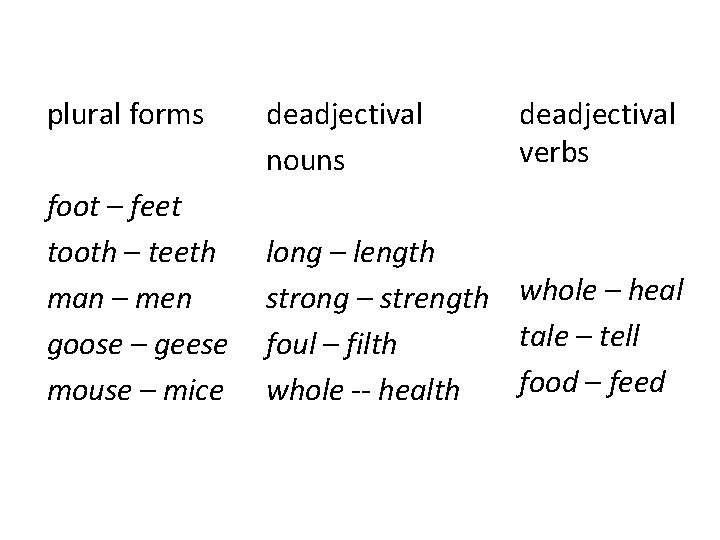
plural forms foot – feet tooth – teeth man – men goose – geese mouse – mice deadjectival nouns deadjectival verbs long – length strong – strength whole – heal tale – tell foul – filth food – feed whole -- health
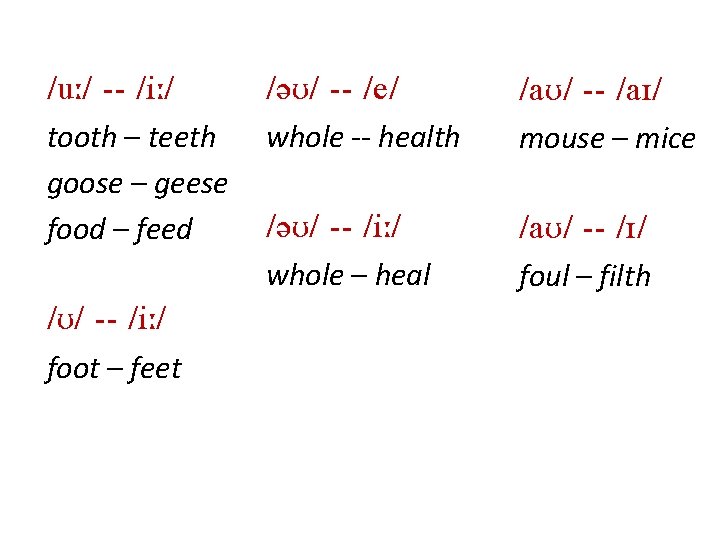
/u: / -- /i: / /@U/ -- /e/ /a. U/ -- /a. I/ tooth – teeth goose – geese food – feed whole -- health mouse – mice /@U/ -- /i: / /a. U/ -- /I/ whole – heal foul – filth /U/ -- /i: / foot – feet
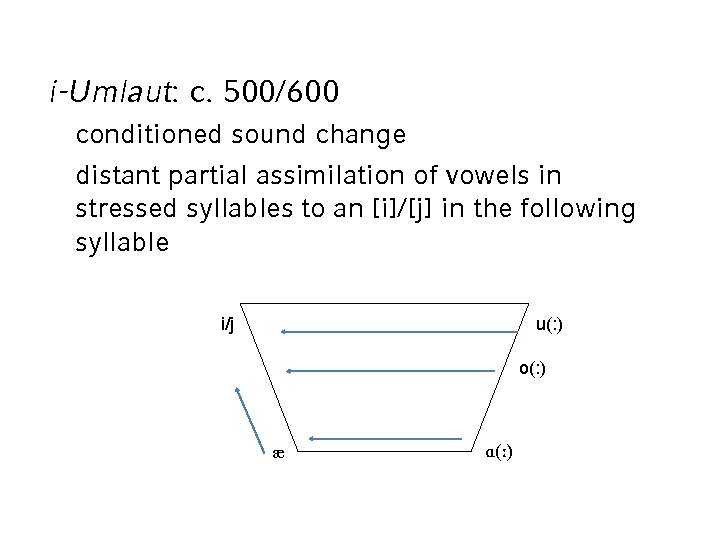
i-Umlaut: c. 500/600 conditioned sound change distant partial assimilation of vowels in stressed syllables to an [i]/[j] in the following syllable i/j u(: ) o(: ) A(: )
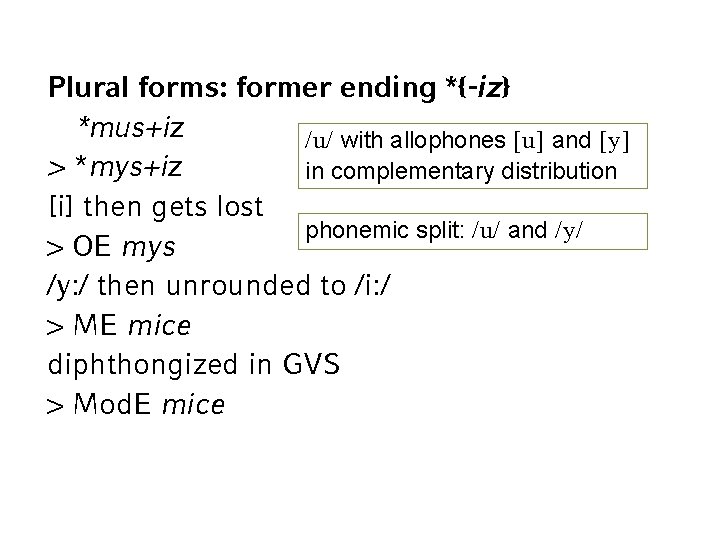
Plural forms: former ending *{-iz} *mus+iz /u/ with allophones [u] and [y] > *mys+iz in complementary distribution [i] then gets lost phonemic split: /u/ and /y/ > OE mys /y: / then unrounded to /i: / > ME mice diphthongized in GVS > Mod. E mice
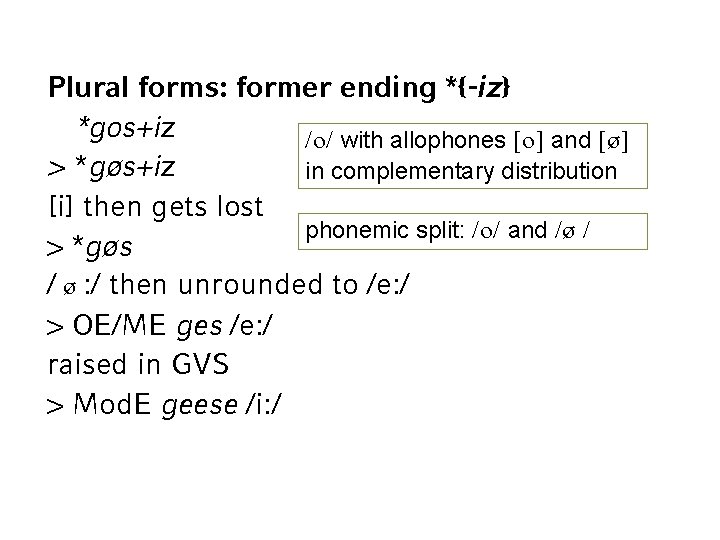
Plural forms: former ending *{-iz} *gos+iz /o/ with allophones [o] and [ ] > *gøs+iz in complementary distribution [i] then gets lost phonemic split: /o/ and / / > *gøs / : / then unrounded to /e: / > OE/ME ges /e: / raised in GVS > Mod. E geese /i: /
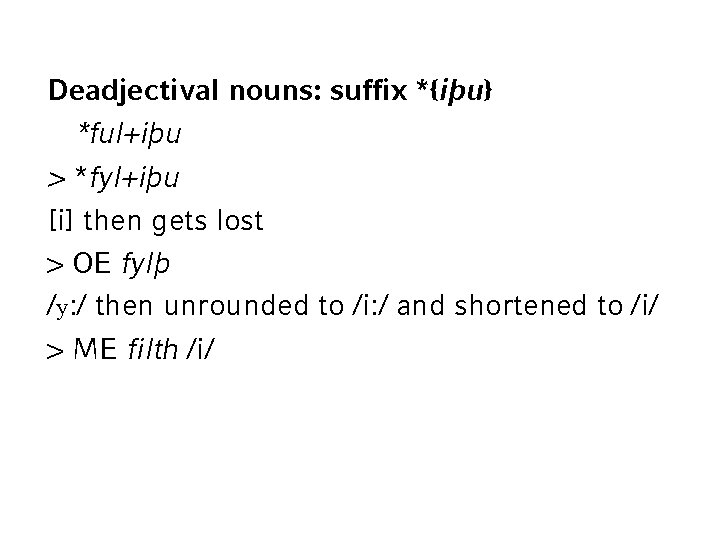
Deadjectival nouns: suffix *{iþu} *ful+iþu > *fyl+iþu [i] then gets lost > OE fylþ /y: / then unrounded to /i: / and shortened to /i/ > ME filth /i/
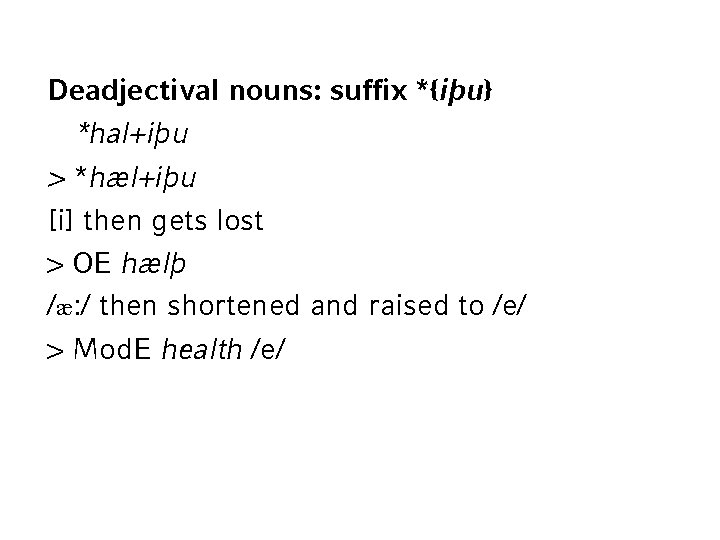
Deadjectival nouns: suffix *{iþu} *hal+iþu > *hæl+iþu [i] then gets lost > OE hælþ / : / then shortened and raised to /e/ > Mod. E health /e/
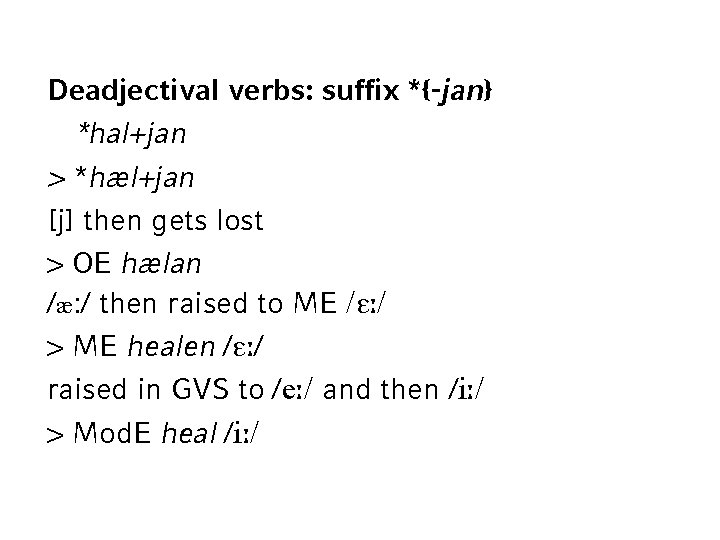
Deadjectival verbs: suffix *{-jan} *hal+jan > *hæl+jan [j] then gets lost > OE hælan / : / then raised to ME /E: / > ME healen /E: / raised in GVS to /e: / and then /i: / > Mod. E heal /i: /
- Slides: 50