
Judging Market Steers Developed by Richard Coffey Extension

Judging Market Steers Developed by: Richard Coffey, Extension Swine Specialist, University of Kentucky Kevin Laurent, Extension Associate, University of Kentucky Warren Beeler, Kentucky Department of Agriculture Edited for Georgia by Frank B. Flanders Georgia Agriculture Education Curriculum Office March 2002
Steps to Judging Market Steers 1. Evaluate steers from the ground up and from the rump (rear) forward 2. Rank the traits for their importance 3. Evaluate the most important traits first 4. Eliminate any easy placings in the class 5. Place the class based on the volume of the important traits Slide 1
Ranking of Traits for Market Steers 1. 2. 3. 4. 5. 6. Degree of muscling Degree of finish (fat cover) Growth capacity Soundness and structural correctness Balance Frame size Slide 2
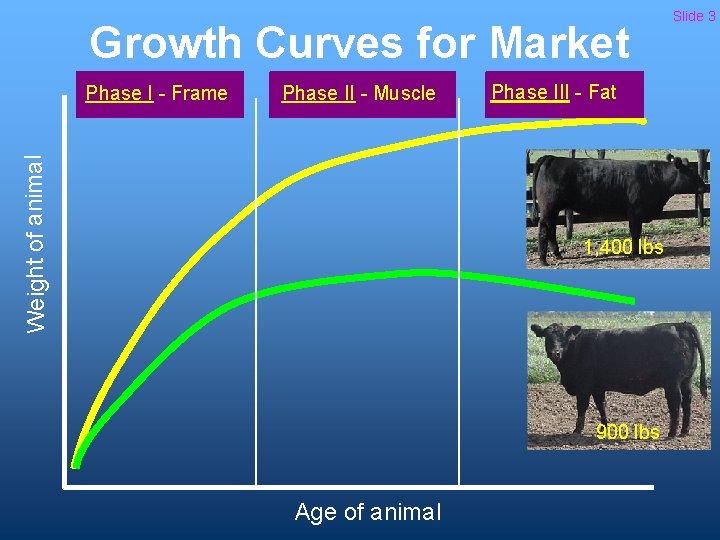
Weight of animal Growth Curves for Market Phase I - Frame Phase II - Muscle Steers Phase III - Fat 1, 400 lbs 900 lbs Age of animal Slide 3

Slide 4 Evaluating Degree of Muscling Degree of muscling in steers is best determined by evaluating: 1. Thickness through the center of quarter 2. Width between rear feet when steer stands and(or) walks 3. Shape over the top (butterfly shape desired)

Slide 5 Evaluating Degree of Muscling Thin Muscle Very narrow width Average Muscle Thick Muscle Average width Good width Super Thick Very good width
Slide 6 Evaluating Degree of Finish Areas to consider when evaluating degree of finish include: 1. Top line 2. Underline 3. Body depth 4. Brisket 5. Tailhead 6. Udder or cod 7. Shoulder 8. Over the ribs

Evaluating Degree of Finish Smooth over top Slide 7 Fat tailhead Miss Fatty 950 lbs 0. 8 inches backfat Choice 50 4. 0 yield grade Full brisket Loose underline Udder fat

Slide 8 Evaluating Degree of Finish Trim tailhead Clean over ribs Mister Muscle $ 1, 250 lbs $ 0. 2 inches backfat $ 1. 6 yield grade $ Standard quality Empty brisket grade Indentation behind shoulder Tight, clean underline Empty cod Shallow rear flank

Evaluating Degree of Finish Nice brisket Full brisket (near ideal) Slide 9 Too trim Empty brisket (lacks finish)
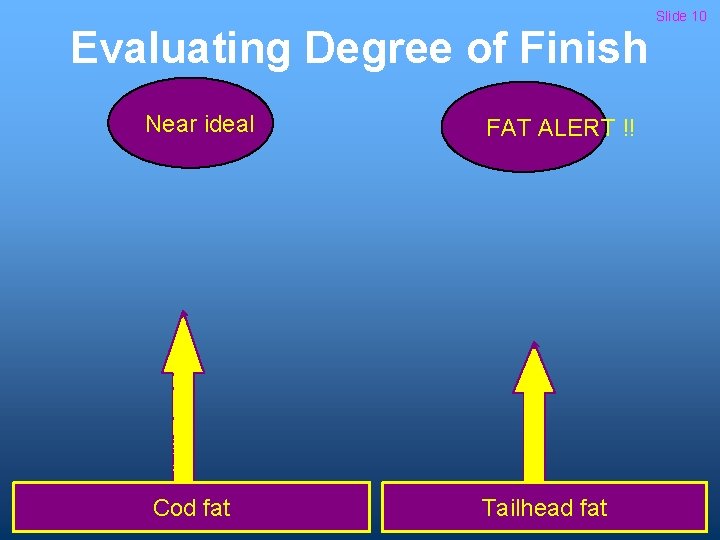
Evaluating Degree of Finish Near ideal Cod fat FAT ALERT !! Tailhead fat Slide 10

Slide 11 Evaluating Growth Capacity Market steers with high growth capacity will be: 1. Wide through the chest 2. Wide between feet when walking or standing 3. Uniform in their body depth 4. Open through the ribs 5. Long bodied
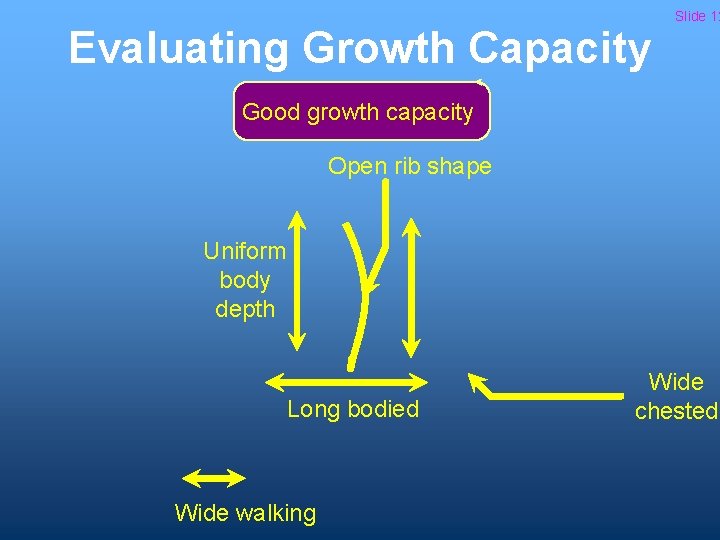
Evaluating Growth Capacity Slide 12 Good growth capacity Open rib shape Uniform body depth Long bodied Wide walking Wide chested
Evaluating Soundness and Structural Correctness Sound and structurally correct animals will have: 1. Flexible, clean, flat joints 2. Long powerful stride 3. Strong pasterns 4. Good set to hocks and knees 5. Big feet that sit flat on the ground 6. Long, straight top line 7. Long, level rumps Slide 13
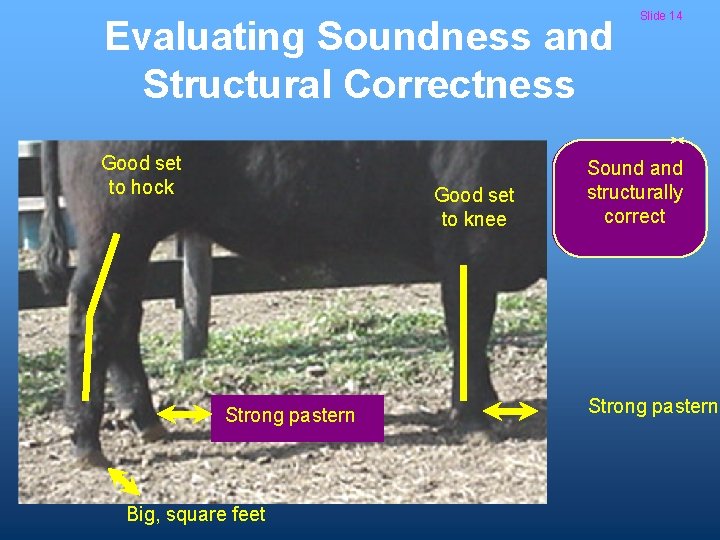
Evaluating Soundness and Structural Correctness Good set to hock Good set to knee Strong pastern Big, square feet Slide 14 Sound and structurally correct Strong pastern
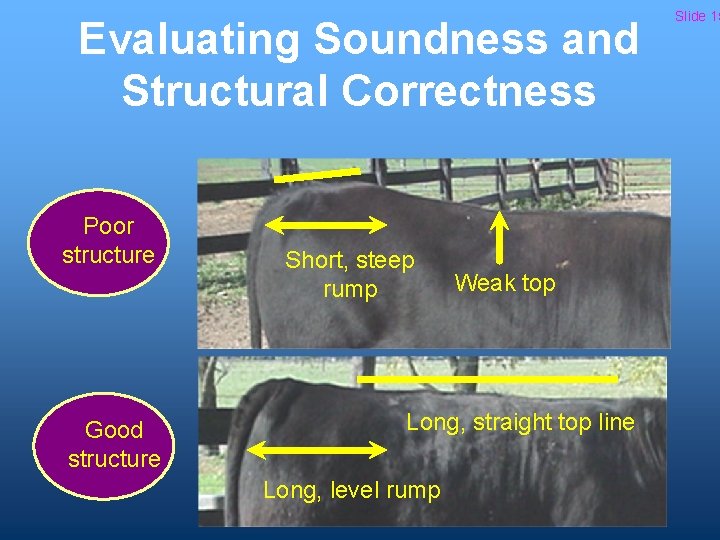
Evaluating Soundness and Structural Correctness Poor structure Good structure Short, steep rump Weak top Long, straight top line Long, level rump Slide 15
Slide 16 Evaluating Balance L Balance refers to market steers having the correct portions of width, depth, and length # Width, depth, and length should be in equal proportions that blend together
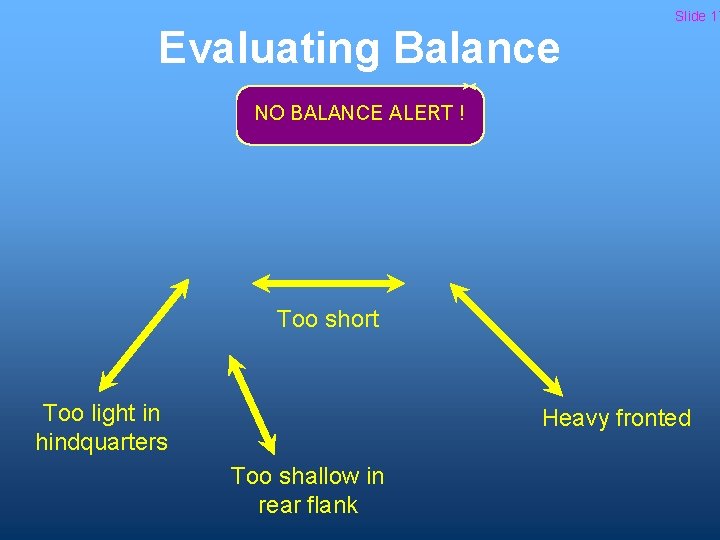
Evaluating Balance Slide 17 NO BALANCE ALERT ! Too short Too light in hindquarters Heavy fronted Too shallow in rear flank
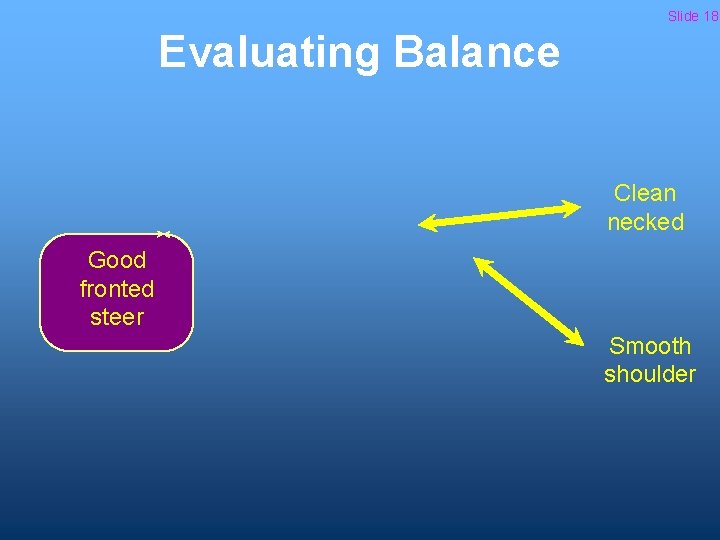
Slide 18 Evaluating Balance Clean necked Good fronted steer Smooth shoulder

Evaluating Balance Well Balanced Steer All the parts (width, depth, and length) fit together nicely Slide 19
Slide 20 Evaluating Frame Size L The optimum steer for today=s market should be medium framed and finish at about 1, 200 lbs # Large framed steers will get too big before developing adequate finish # Small framed steers will be early maturing and get too fat before they reach optimum weight
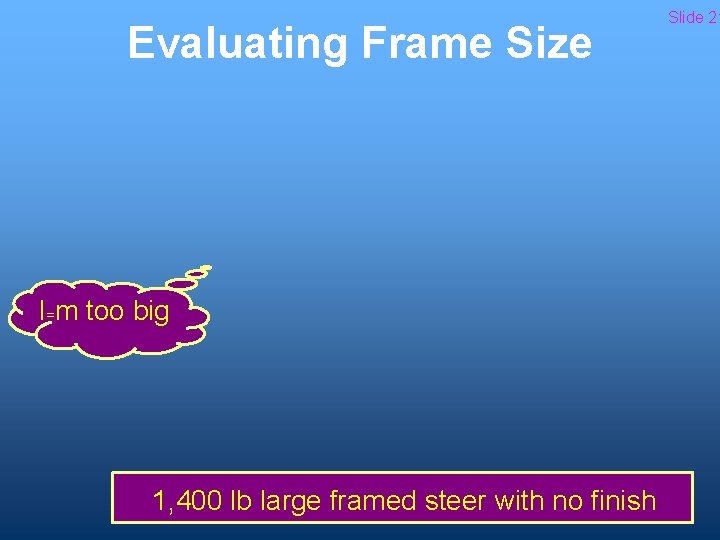
Evaluating Frame Size I=m too big 1, 400 lb large framed steer with no finish Slide 21
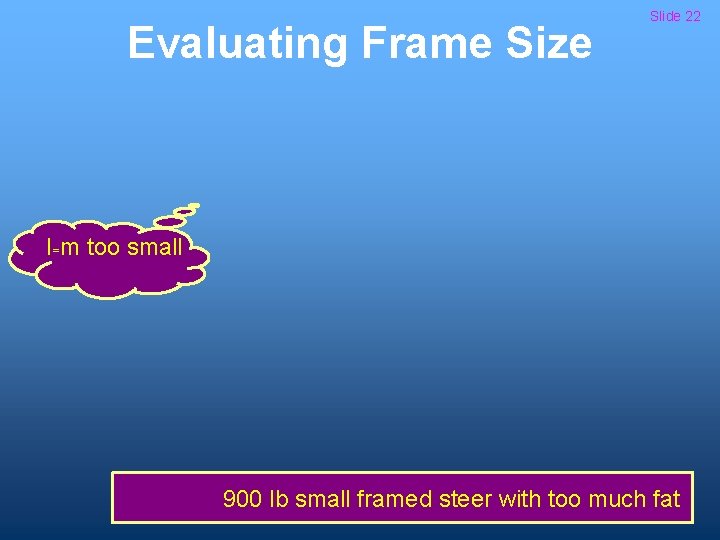
Evaluating Frame Size Slide 22 I=m too small 900 lb small framed steer with too much fat
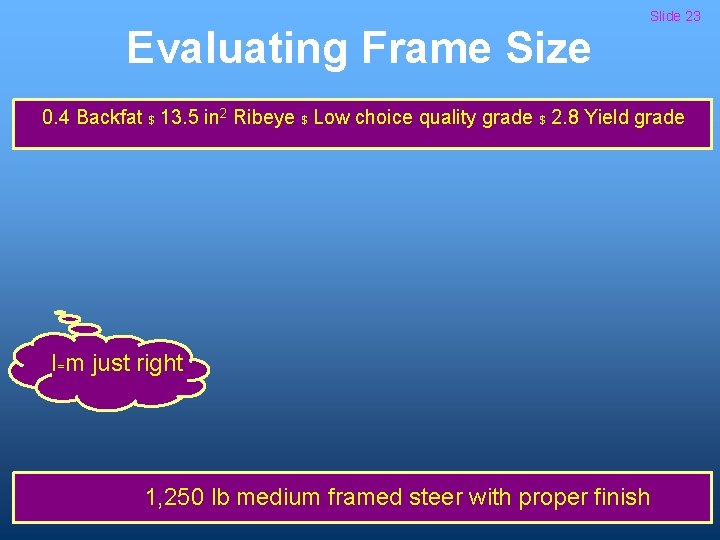
Evaluating Frame Size Slide 23 0. 4 Backfat $ 13. 5 in 2 Ribeye $ Low choice quality grade $ 2. 8 Yield grade I=m just right 1, 250 lb medium framed steer with proper finish

Slide 24 Example Market Steer Class I
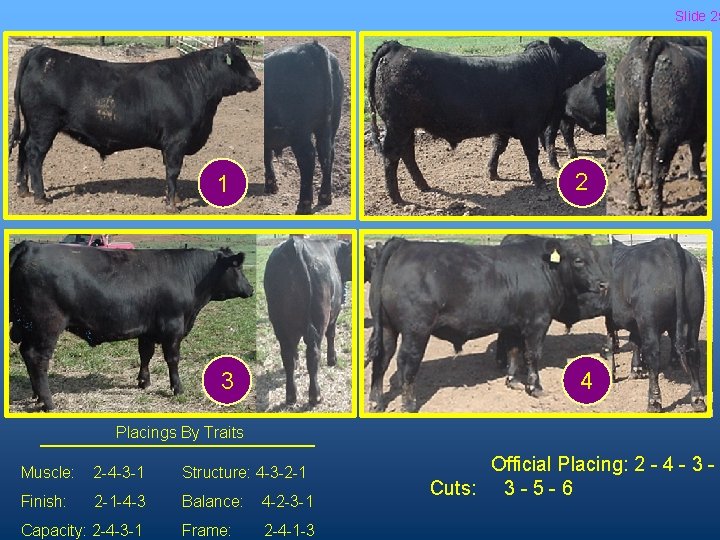
Slide 25 1 2 3 4 Placings By Traits Muscle: 2 -4 -3 -1 Structure: 4 -3 -2 -1 Finish: 2 -1 -4 -3 Balance: 4 -2 -3 -1 Frame: 2 -4 -1 -3 Capacity: 2 -4 -3 -1 Official Placing: 2 - 4 - 3 Cuts: 3 - 5 - 6

Slide 26 Example Market Steer Class II
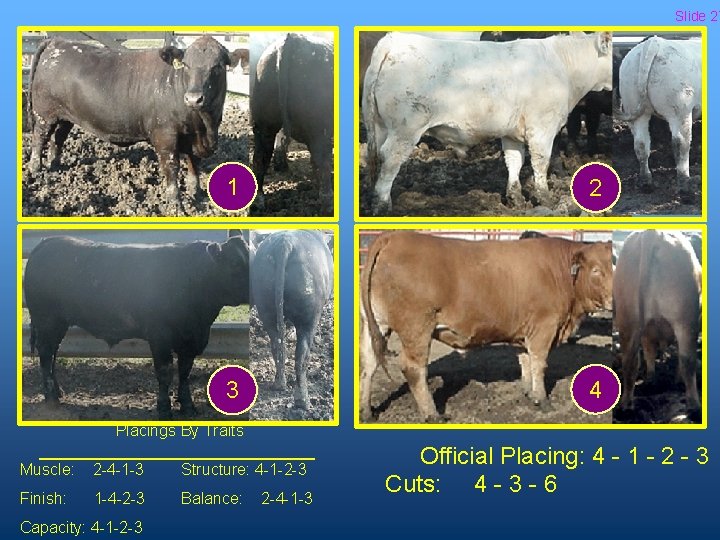
Slide 27 1 2 3 4 Placings By Traits Muscle: 2 -4 -1 -3 Structure: 4 -1 -2 -3 Finish: 1 -4 -2 -3 Balance: Capacity: 4 -1 -2 -3 2 -4 -1 -3 Official Placing: 4 - 1 - 2 - 3 Cuts: 4 - 3 - 6
- Slides: 28