
JudeoChristian GrecoRoman Influence on government Forms of Government
- Slides: 24
Judeo-Christian & Greco-Roman Influence on government
Forms of Government • Monarchy: rule by a king or monarch • Aristocracy: rule by small group of noble, landowning families • Oligarchy: rule by wealthy people • Democracy: rule by the people ØWhat does –ocracy & -archy mean? ØWhat does demo mean?
Types of Democracy • Direct Democracy: people make laws themselves • Representative Democracy/ Republic: people elect representatives to make laws for them
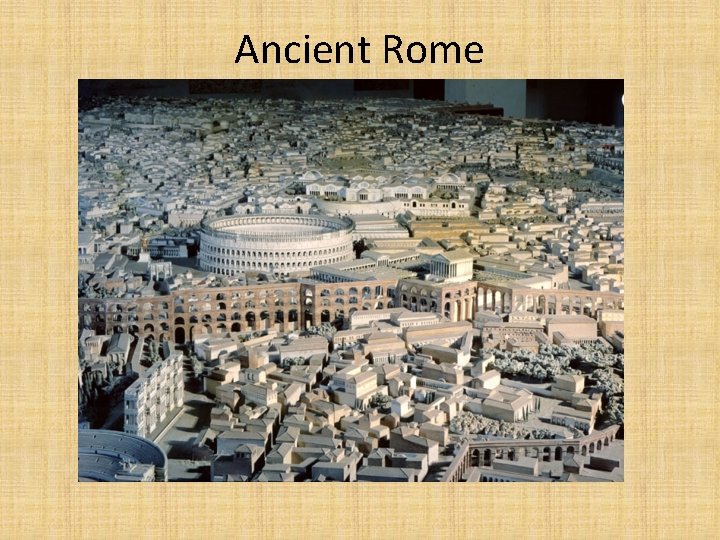
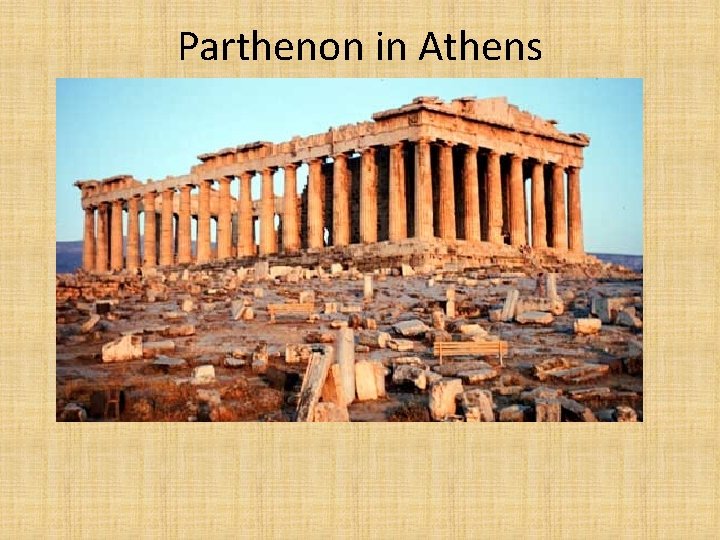
Background • Ancient Greece: limited direct democracy • Ancient Rome: republic ØWhat type of government do we have in the United States?
Ancient Rome
Parthenon in Athens
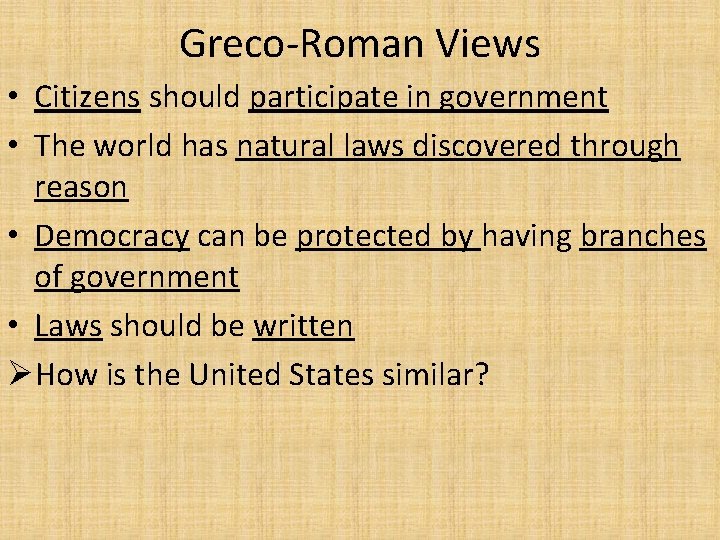
Greco-Roman Views • Citizens should participate in government • The world has natural laws discovered through reason • Democracy can be protected by having branches of government • Laws should be written ØHow is the United States similar?
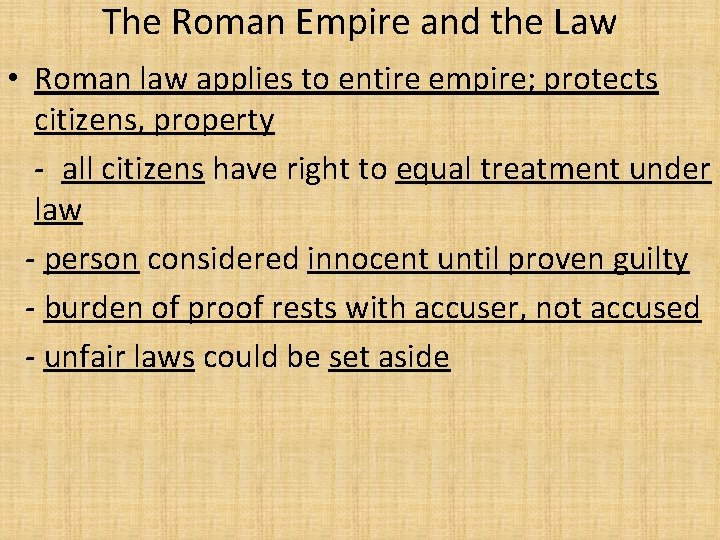
The Roman Empire and the Law • Roman law applies to entire empire; protects citizens, property - all citizens have right to equal treatment under law - person considered innocent until proven guilty - burden of proof rests with accuser, not accused - unfair laws could be set aside
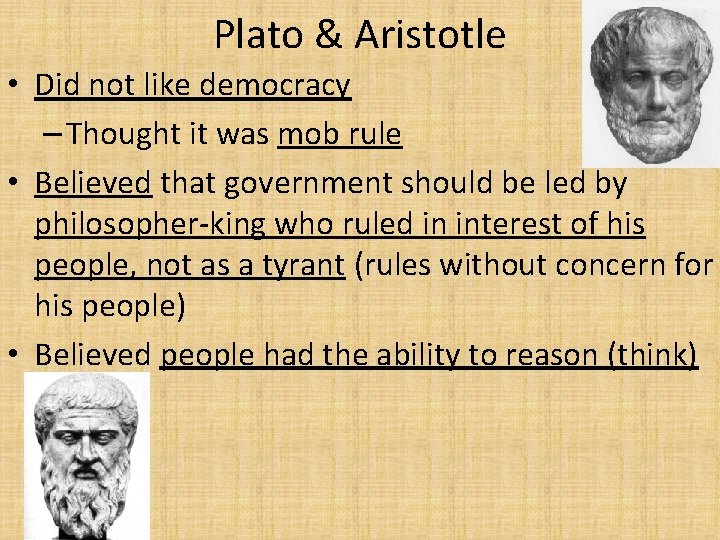
Plato & Aristotle • Did not like democracy – Thought it was mob rule • Believed that government should be led by philosopher-king who ruled in interest of his people, not as a tyrant (rules without concern for his people) • Believed people had the ability to reason (think)
Judeo-Christian Views • Every person has: – Worth & dignity because they were created by God – Ability to choose between right & wrong – Responsibility to help others in need & the community • Ten Commandments: set of written moral rules
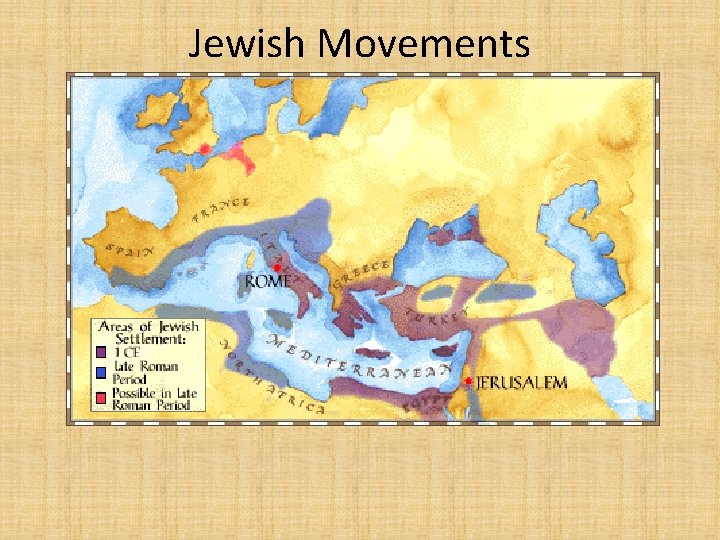
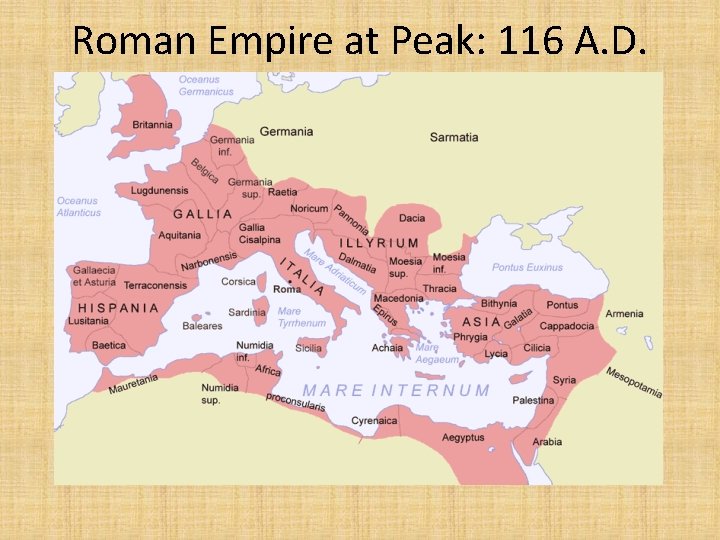
Romans spread of Judeo-Christian Ideas • Jews expelled from homeland by Romans, spread their ideas as they moved around • Apostle Paul spread ideas around Mediterranean (including Rome) • Roman Empire later adopted Christianity & spread ideas around empire
Jewish Movements
Roman Empire at Peak: 116 A. D.
1) What was groundbreaking about the development of democracy? A People were able to govern without using written laws. B People were governed by councils, instead of by an absolute ruler. C Democracy brought together religious faith and government. D Democracy balanced power among religious leaders and kings.
1) What was groundbreaking about the development of democracy? B People were governed by councils, instead of by an absolute ruler.
2) A political system in which representatives are elected by the people follows the model of A direct democracy. B a republic. C branches of government. D Judeo-Christian tradition.
2) A political system in which representatives are elected by the people follows the model of B a republic.
3) In the Greco-Roman view, the world is governed by natural laws that can be discovered through A reason. B tradition. C faith. D citizen participation.
3) In the Greco-Roman view, the world is governed by natural laws that can be discovered through A reason.
4) In Judeo-Christian tradition, helping others in need should be the A only duty of political leaders. B sole mission of religion. C responsibility of government. D responsibility of every person.
4) In Judeo-Christian tradition, helping others in need should be the D responsibility of every person.
5) What was one means by which Greco- Roman and Judeo-Christian values spread throughout Europe in the first centuries A. D. ? A explorers in the Age of Discovery B expansion of the Roman Empire C missionaries building churches D conversion by the sword in Africa
5) What was one means by which Greco- Roman and Judeo-Christian values spread throughout Europe in the first centuries A. D. ? B expansion of the Roman Empire
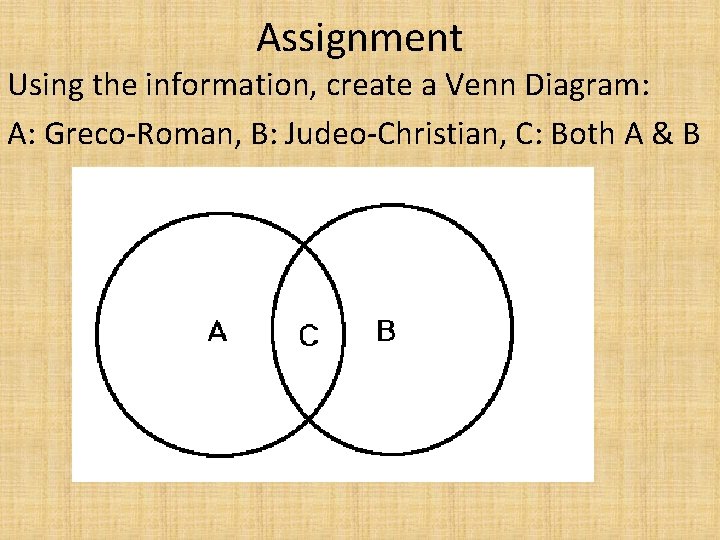
Assignment Using the information, create a Venn Diagram: A: Greco-Roman, B: Judeo-Christian, C: Both A & B