
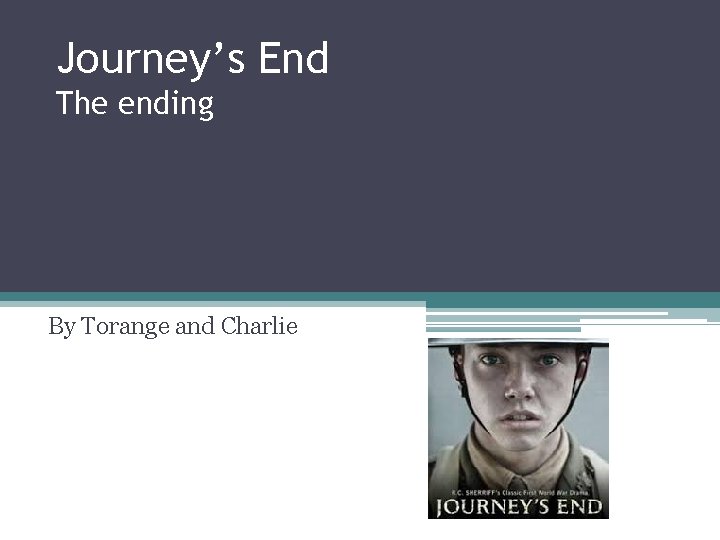
Journeys End The ending By Torange and Charlie
Journey’s End The ending By Torange and Charlie
Raleigh Within the ending Raleigh gets hit during the final raid. Once he is hit Sherriff reveals the futility of war by showing the innocence taken away from Raleigh and Sheriff suggests that ruined innocence was a consequence of war.
Raleigh has little opportunity to develop beyond the unquestioning boyish idealism and enthusiasm that he brings with him: “I say – it’s most frightfully exciting”. This portrayal of Raleigh aides the audience’s understanding of the brevity of a soldiers short life.
In the ending scene, we see his childlike character which adds pathos when he compares his injury to a kick at ‘rugger’, this demonstrates that he along with many other young boys were forced to fight alongside men in a war that they were not ready for.
Stanhope Sherriff’s portrayal of Stanhope’s character depicts a heavily affected attitude which we now know was the case of many soldiers after the war. He discharges his mounting fear and distress partly through a combination of calculated hardness and anger. However within the ending scenes Sherriff exposes Stanhope's character.
When Raleigh gets hit Stanhope begins to call him Jimmy, Sherriff shows that this situation has forced Stanhope to finally face his fears and be personal with Raleigh. Sherriff does this to convey to the audience the corrosive effects war has on a person and that it should never be glorified.
Everyone dies Before the raid begins it is morning and the scene is in contrast to the previous scene: it is dark and there are no candles burning. Hibbert’s fears resurface and he is reluctant to leave the dugout but with kind encouragement from Stanhope and Mason, he leaves to fight.
The short raid ends with a sudden blackout - The dugout collapses on Raleigh’s dead body and becomes his tomb. The presumed death of all the soldiers signified how being a part of the army meant inevitable death. Their death represented millions of other soldiers who died fighting a purposeless war.
The fact that the audience presumes that the soldiers die only goes to show that the audience in 1930’s would never expect them to live. It could be said that when the play first came out, the audience knew the characters would die as they were so used to death.
- Slides: 9