
Journaling Vs Soft Updates Asynchronous Metadata Protection in
- Slides: 31
Journaling Vs. Soft Updates: Asynchronous Meta-data Protection in File Systems Margo I. Seltzer, Gregory R. Ganger, M. Kirk Mc. Kusick, Keith A. Smith, Craig A. N. Soules, Christopher A. Stein Presented By: Abhijit Deodhar 1
Overview n n Key Points Approaches n n Soft updates Journaling Comparison Evaluation 2
Key Points n n n Meta-data integrity Journaling systems record metadata operations on an auxiliary log Soft updates uses ordered writes 3
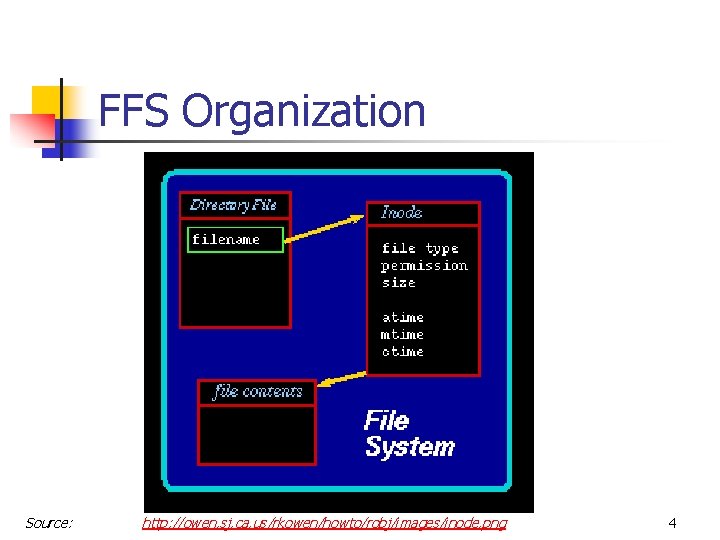
FFS Organization Source: http: //owen. sj. ca. us/rkowen/howto/robj/images/inode. png 4
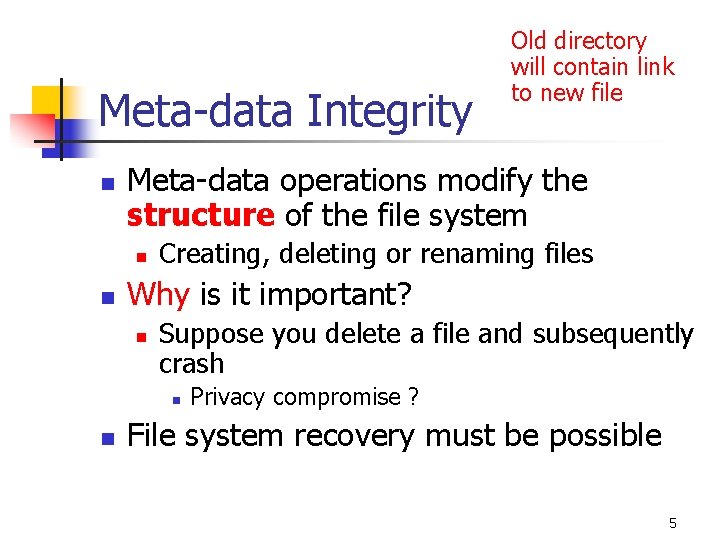
Meta-data Integrity n Meta-data operations modify the structure of the file system n n Creating, deleting or renaming files Why is it important? n Suppose you delete a file and subsequently crash n n Old directory will contain link to new file Privacy compromise ? File system recovery must be possible 5
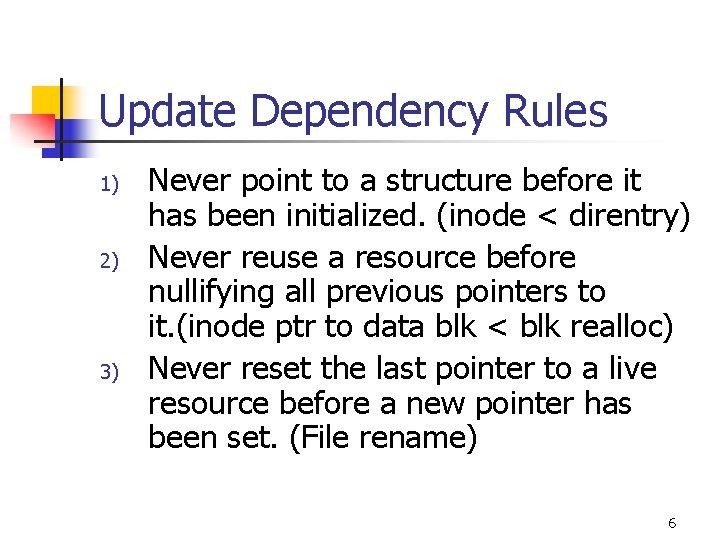
Update Dependency Rules 1) 2) 3) Never point to a structure before it has been initialized. (inode < direntry) Never reuse a resource before nullifying all previous pointers to it. (inode ptr to data blk < blk realloc) Never reset the last pointer to a live resource before a new pointer has been set. (File rename) 6
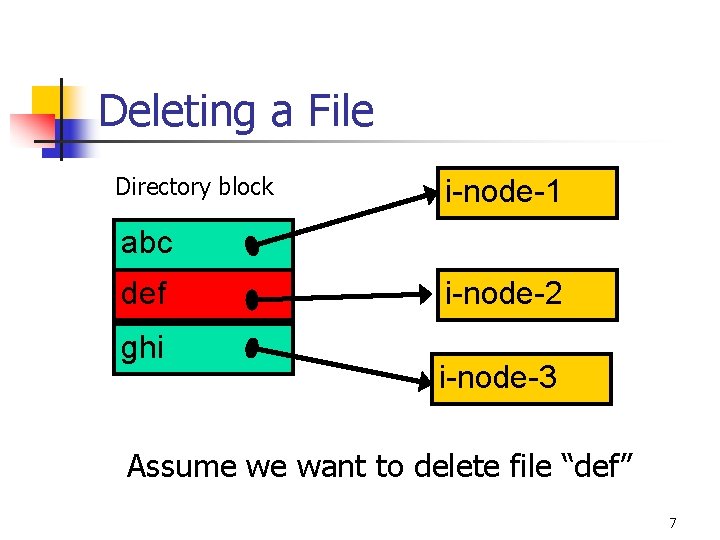
Deleting a File Directory block i-node-1 abc def ghi i-node-2 i-node-3 Assume we want to delete file “def” 7
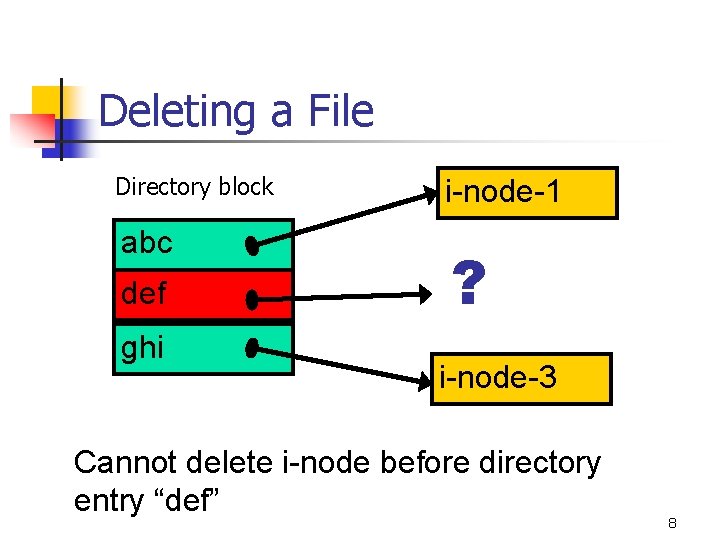
Deleting a File Directory block abc def ghi i-node-1 ? i-node-3 Cannot delete i-node before directory entry “def” 8
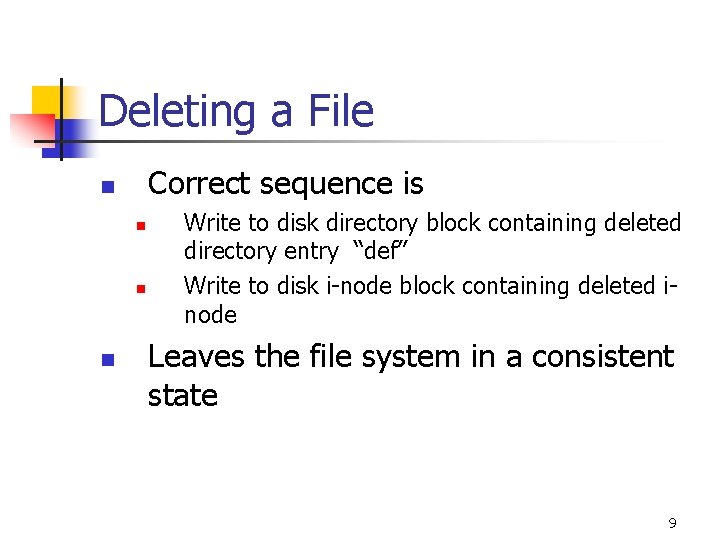
Deleting a File Correct sequence is n n Write to disk directory block containing deleted directory entry “def” Write to disk i-node block containing deleted inode Leaves the file system in a consistent state 9
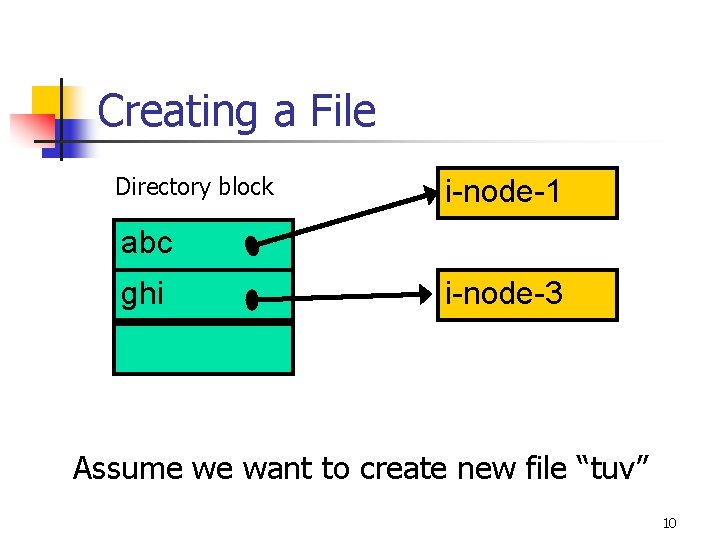
Creating a File Directory block i-node-1 abc ghi i-node-3 Assume we want to create new file “tuv” 10
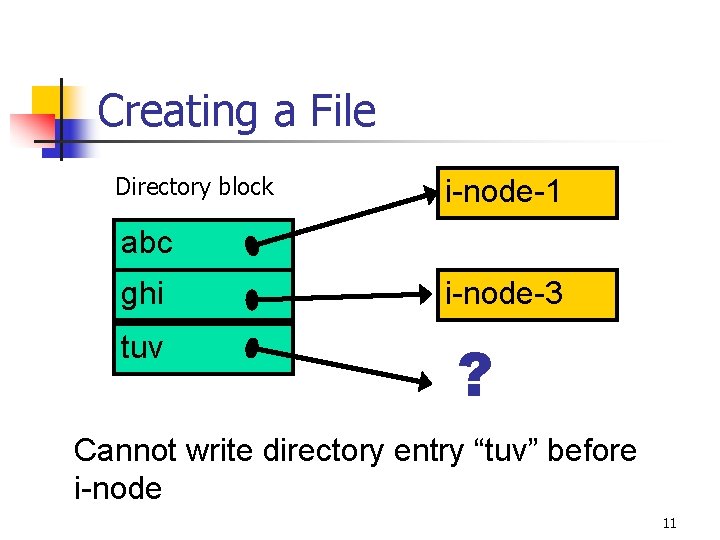
Creating a File Directory block i-node-1 abc ghi tuv i-node-3 ? Cannot write directory entry “tuv” before i-node 11
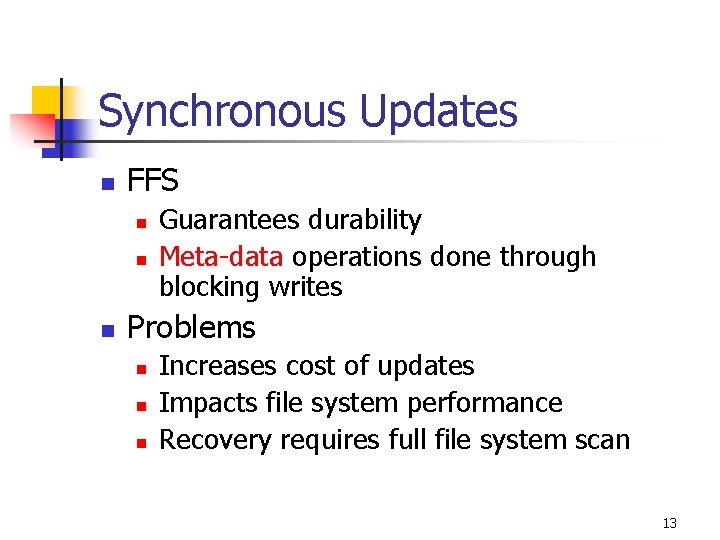
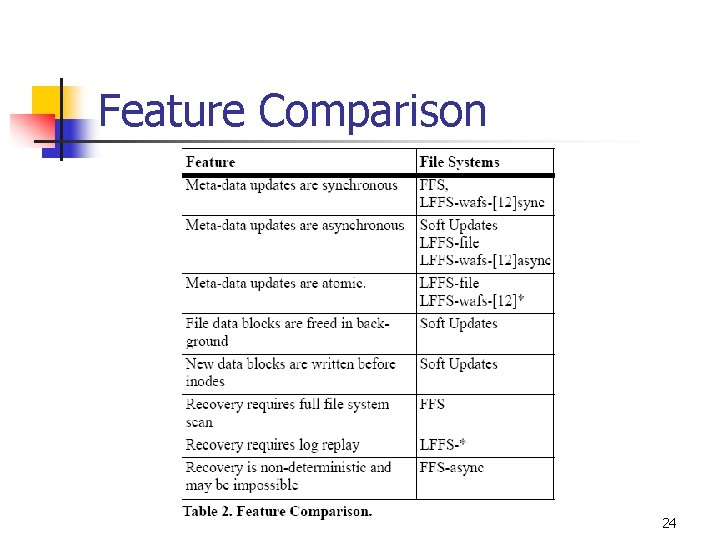
Synchronous Updates n FFS n n n Guarantees durability Meta-data operations done through blocking writes Problems n n n Increases cost of updates Impacts file system performance Recovery requires full file system scan 13
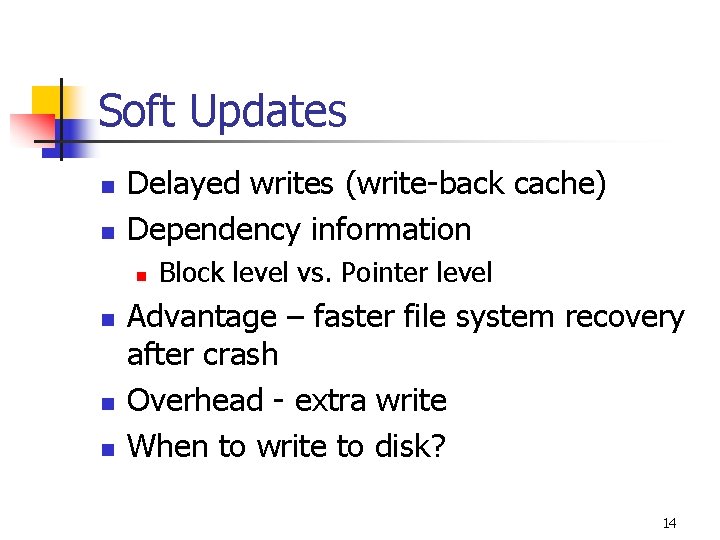
Soft Updates n n Delayed writes (write-back cache) Dependency information n n Block level vs. Pointer level Advantage – faster file system recovery after crash Overhead - extra write When to write to disk? 14
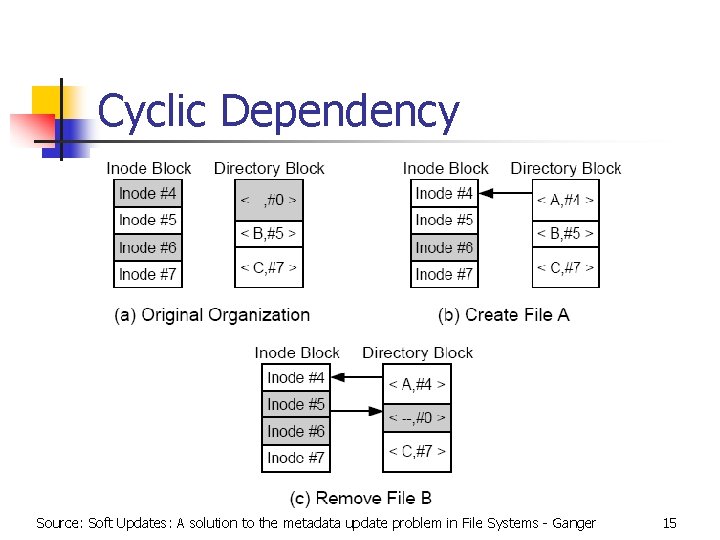
Cyclic Dependency Source: Soft Updates: A solution to the metadata update problem in File Systems - Ganger 15
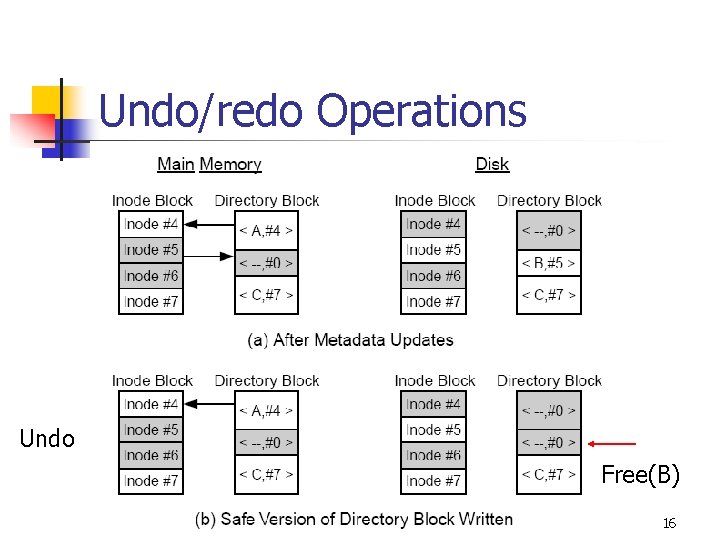
Undo/redo Operations Undo Free(B) 16
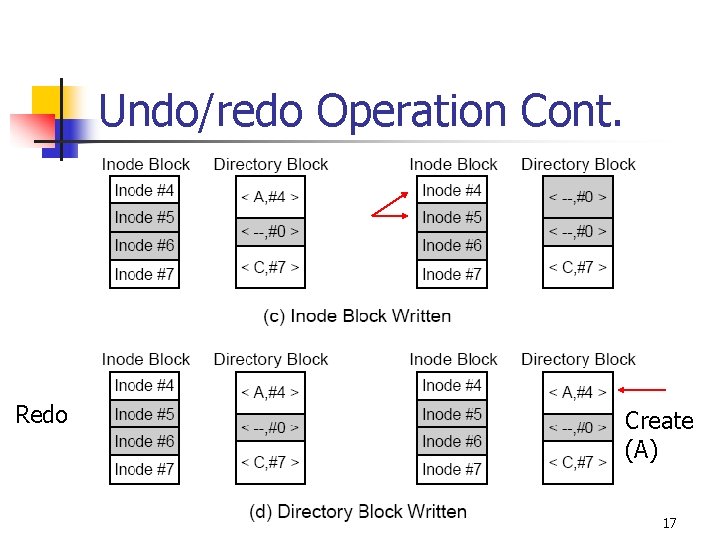
Undo/redo Operation Cont. Redo Create (A) 17
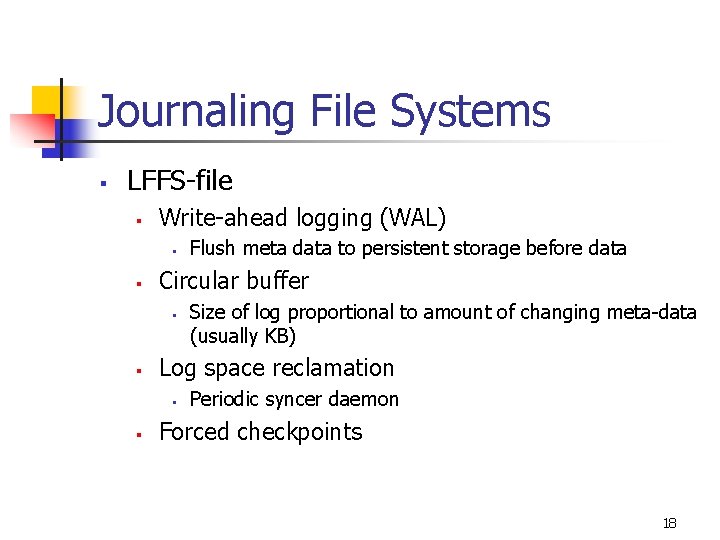
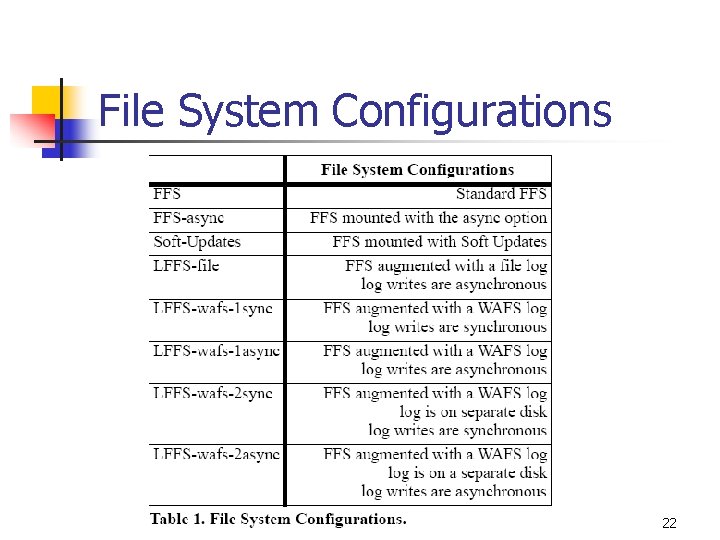
Journaling File Systems § LFFS-file § Write-ahead logging (WAL) § § Circular buffer § § Size of log proportional to amount of changing meta-data (usually KB) Log space reclamation § § Flush meta data to persistent storage before data Periodic syncer daemon Forced checkpoints 18
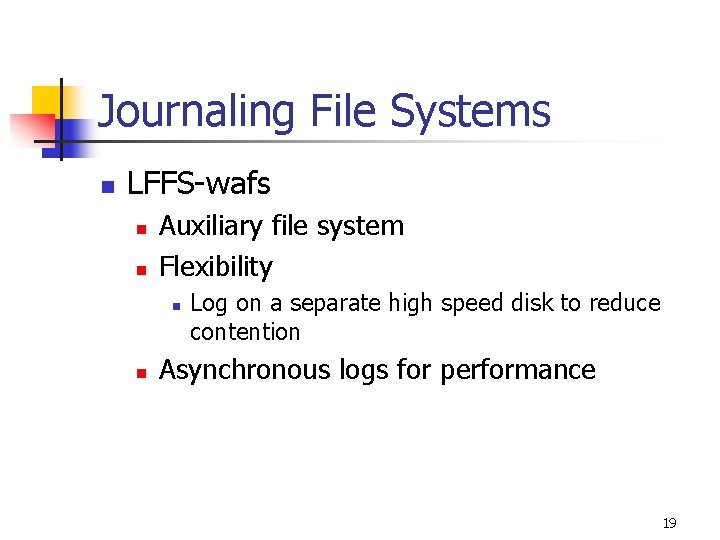
Journaling File Systems n LFFS-wafs n n Auxiliary file system Flexibility n n Log on a separate high speed disk to reduce contention Asynchronous logs for performance 19
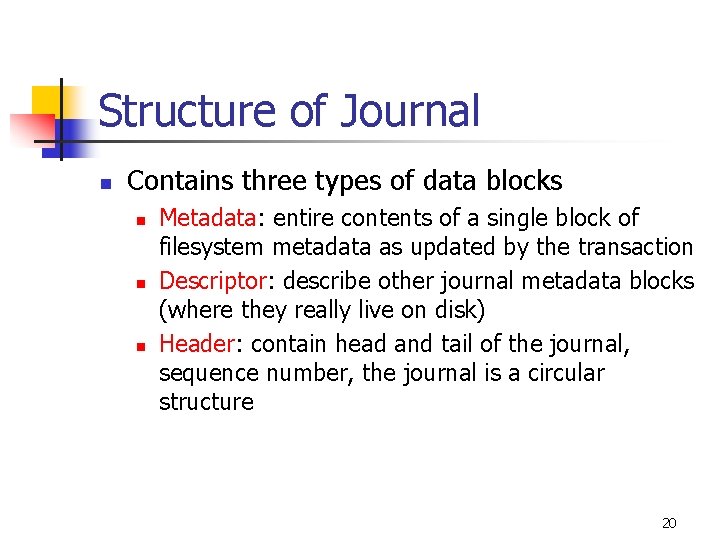
Structure of Journal n Contains three types of data blocks n n n Metadata: entire contents of a single block of filesystem metadata as updated by the transaction Descriptor: describe other journal metadata blocks (where they really live on disk) Header: contain head and tail of the journal, sequence number, the journal is a circular structure 20
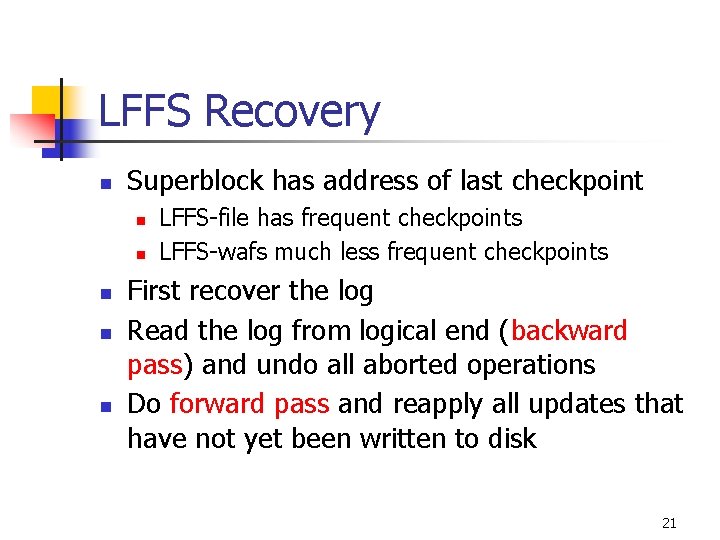
LFFS Recovery n Superblock has address of last checkpoint n n n LFFS-file has frequent checkpoints LFFS-wafs much less frequent checkpoints First recover the log Read the log from logical end (backward pass) and undo all aborted operations Do forward pass and reapply all updates that have not yet been written to disk 21
File System Configurations 22
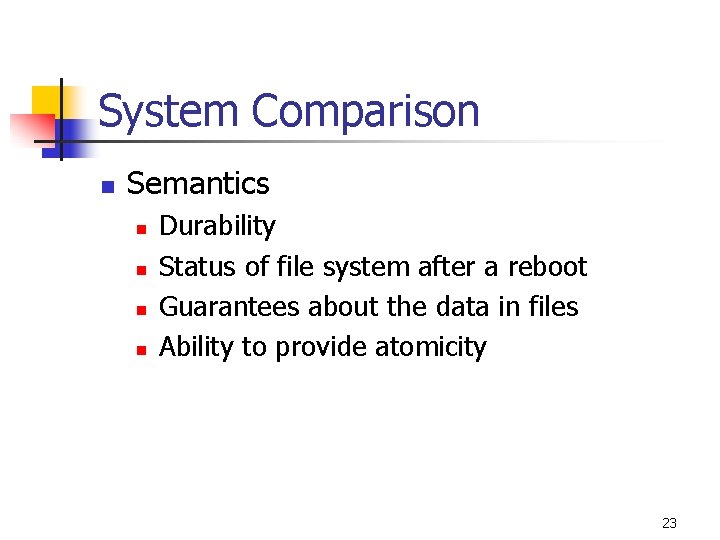
System Comparison n Semantics n n Durability Status of file system after a reboot Guarantees about the data in files Ability to provide atomicity 23
Feature Comparison 24
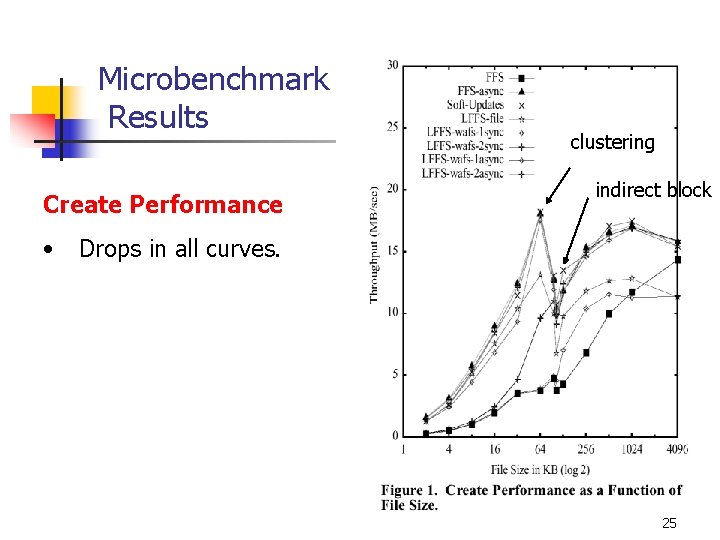
Microbenchmark Results Create Performance • clustering indirect block Drops in all curves. 25
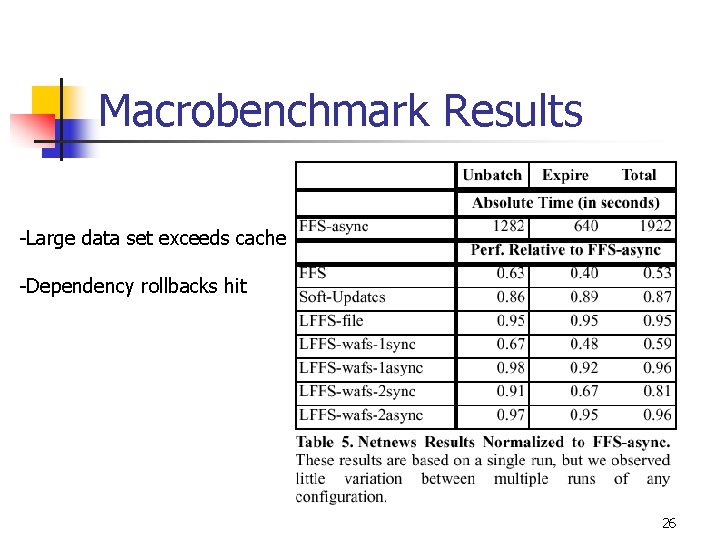
Macrobenchmark Results -Large data set exceeds cache -Dependency rollbacks hit 26
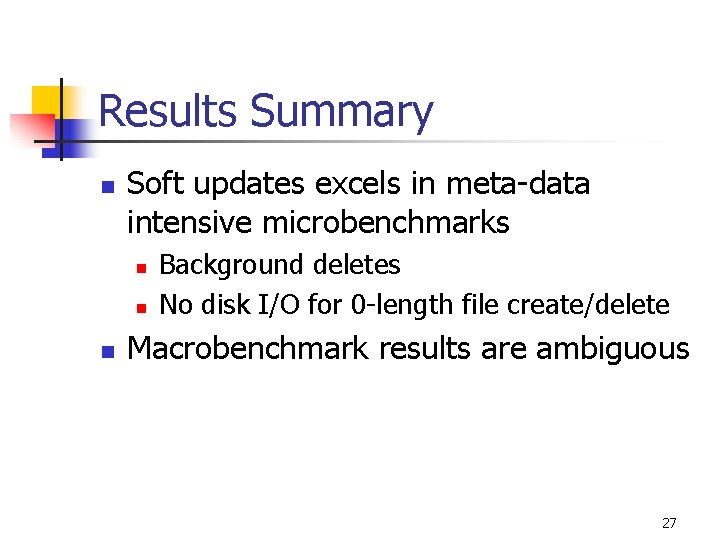
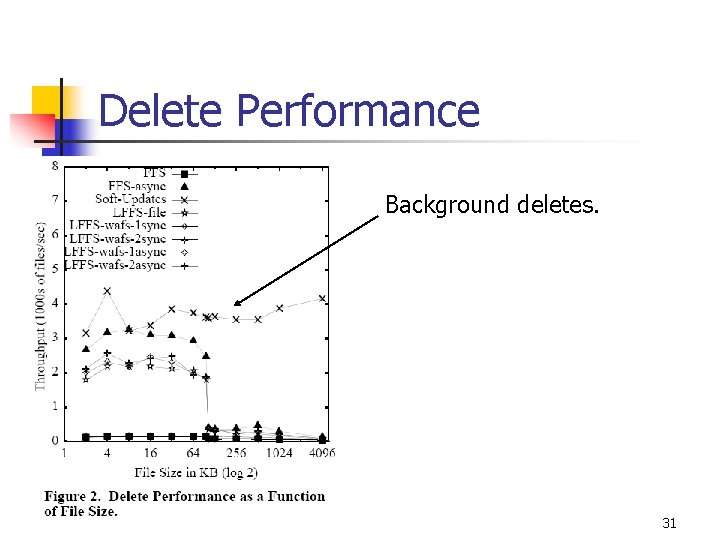
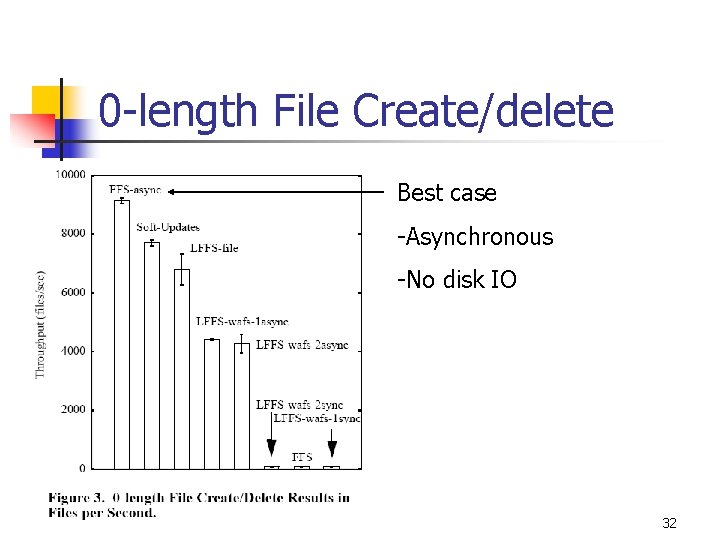
Results Summary n Soft updates excels in meta-data intensive microbenchmarks n n n Background deletes No disk I/O for 0 -length file create/delete Macrobenchmark results are ambiguous 27
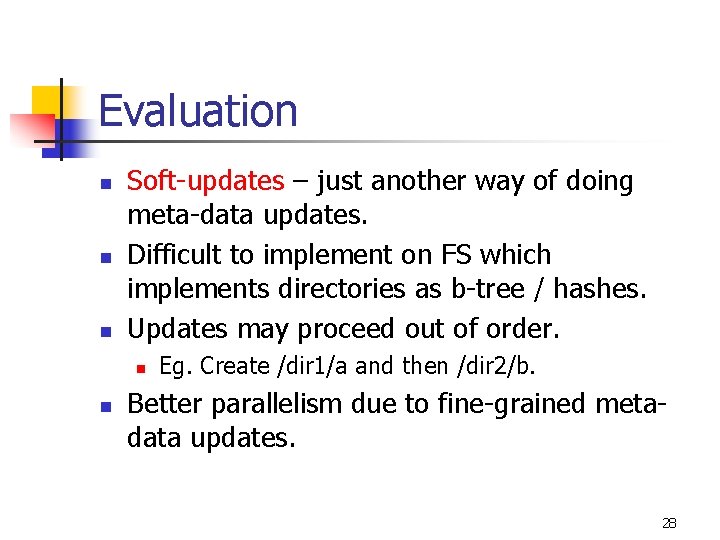
Evaluation n Soft-updates – just another way of doing meta-data updates. Difficult to implement on FS which implements directories as b-tree / hashes. Updates may proceed out of order. n n Eg. Create /dir 1/a and then /dir 2/b. Better parallelism due to fine-grained metadata updates. 28
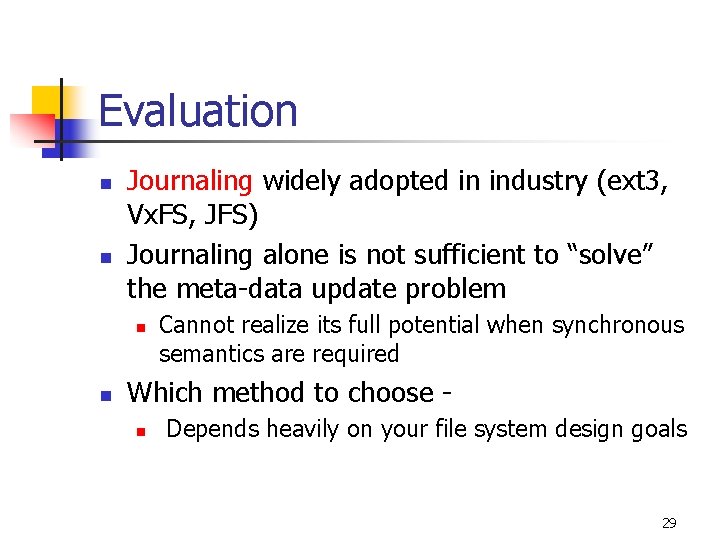
Evaluation n n Journaling widely adopted in industry (ext 3, Vx. FS, JFS) Journaling alone is not sufficient to “solve” the meta-data update problem n n Cannot realize its full potential when synchronous semantics are required Which method to choose n Depends heavily on your file system design goals 29
Questions 30
Delete Performance Background deletes. 31
0 -length File Create/delete Best case -Asynchronous -No disk IO 32