
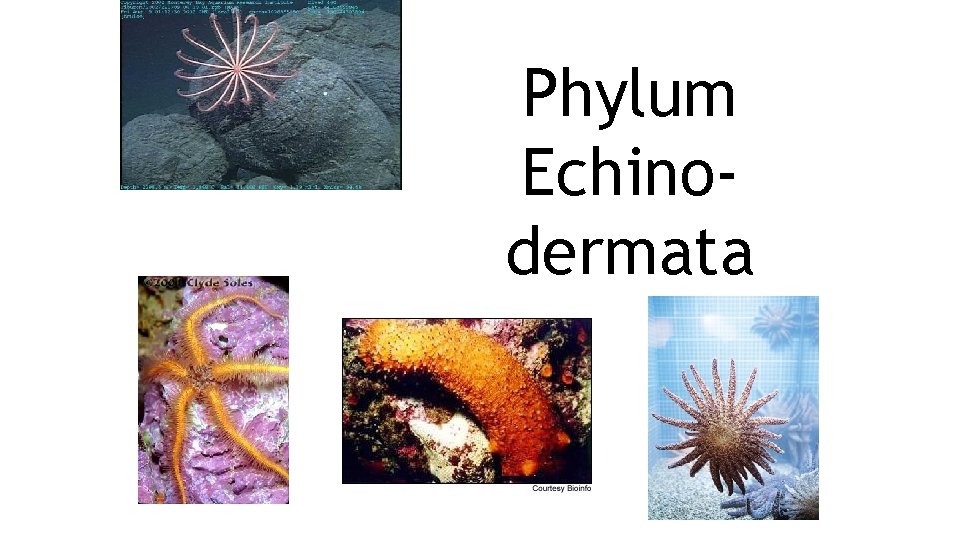
Journal What Phylum do all of these organisms
- Slides: 25
Journal: What Phylum do all of these organisms have Echinoin common? dermata
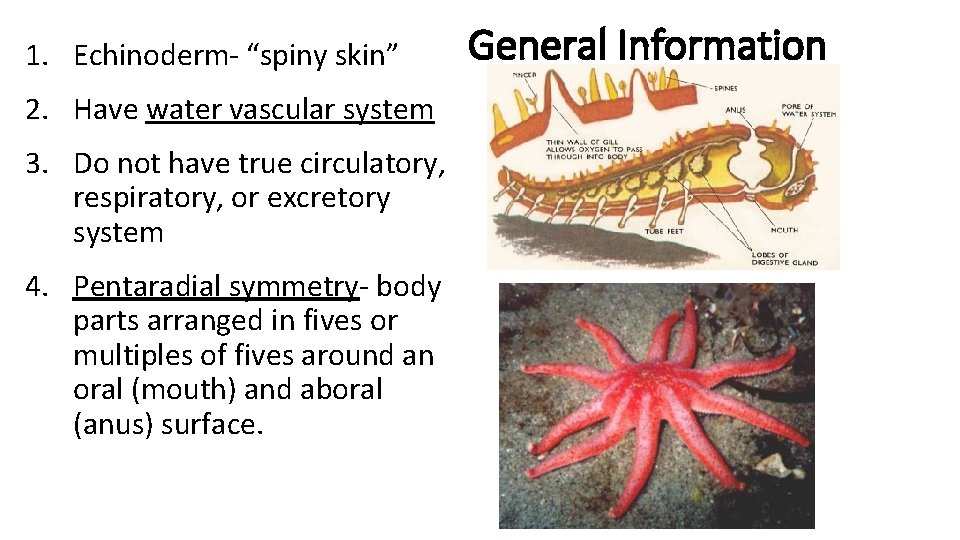
1. Echinoderm- “spiny skin” 2. Have water vascular system 3. Do not have true circulatory, respiratory, or excretory system 4. Pentaradial symmetry- body parts arranged in fives or multiples of fives around an oral (mouth) and aboral (anus) surface. General Information
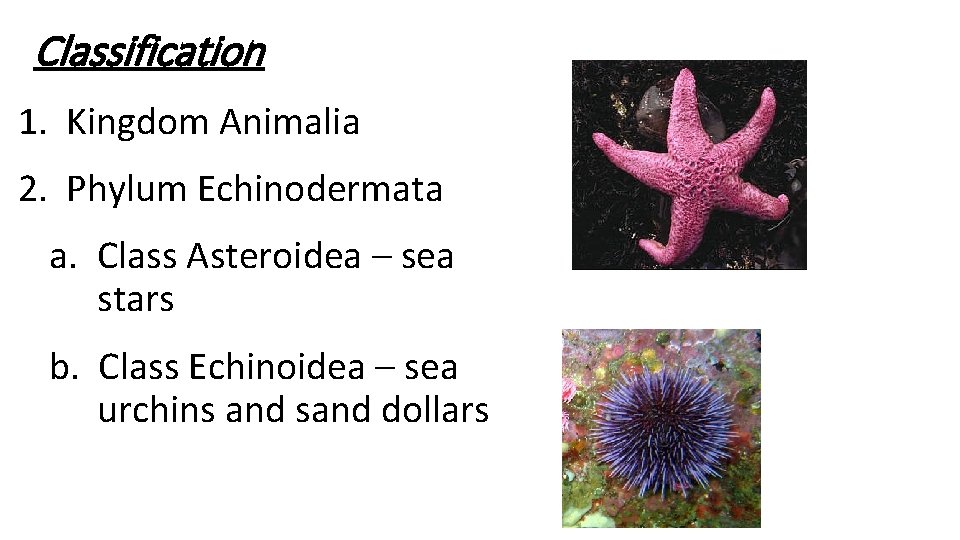
Classification 1. Kingdom Animalia 2. Phylum Echinodermata a. Class Asteroidea – sea stars b. Class Echinoidea – sea urchins and sand dollars
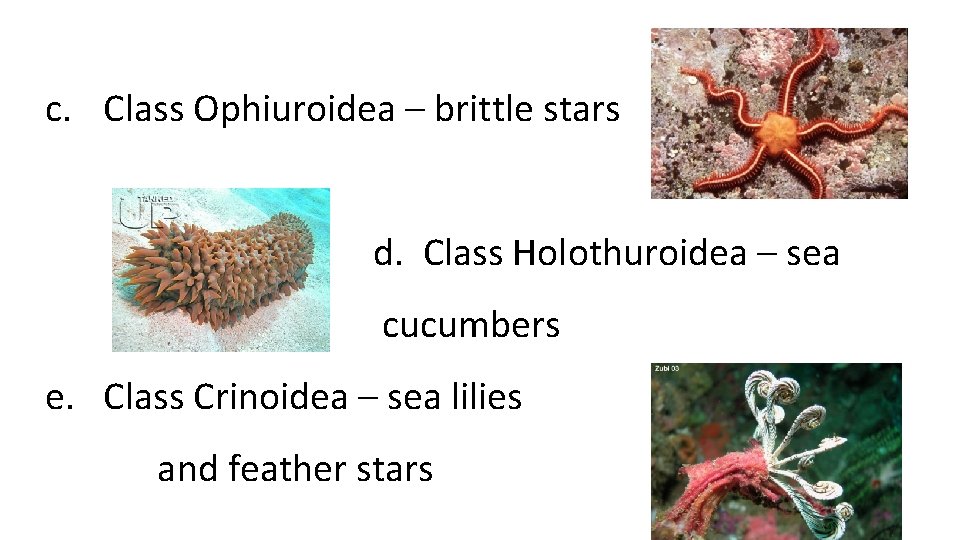
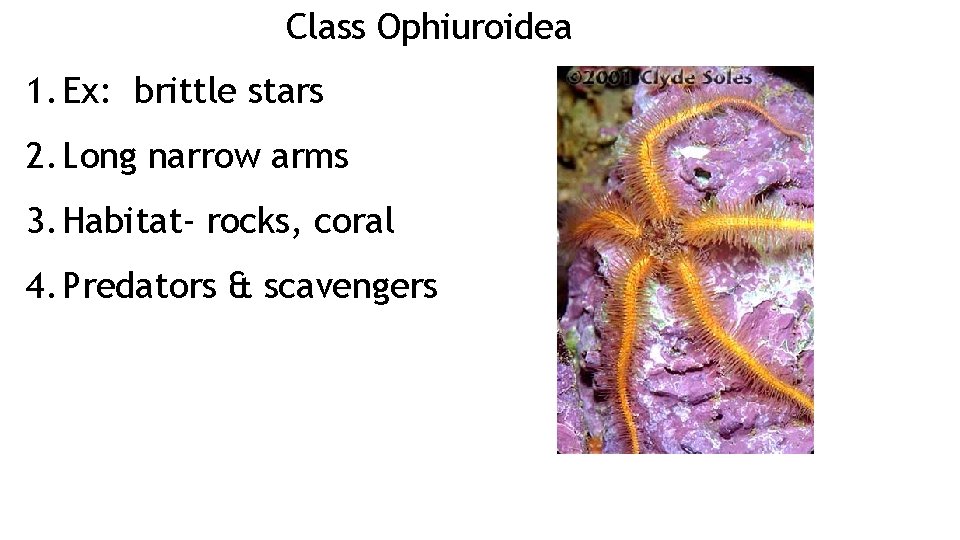
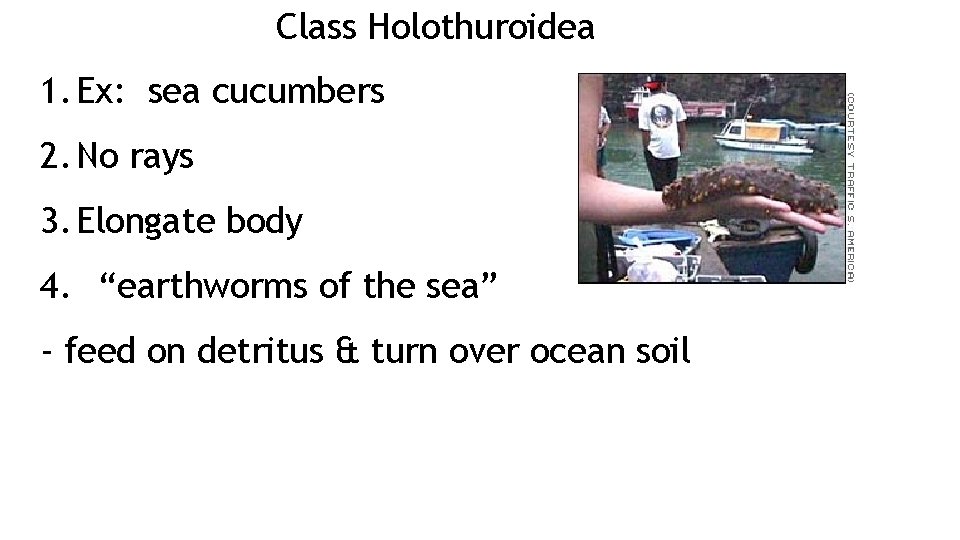
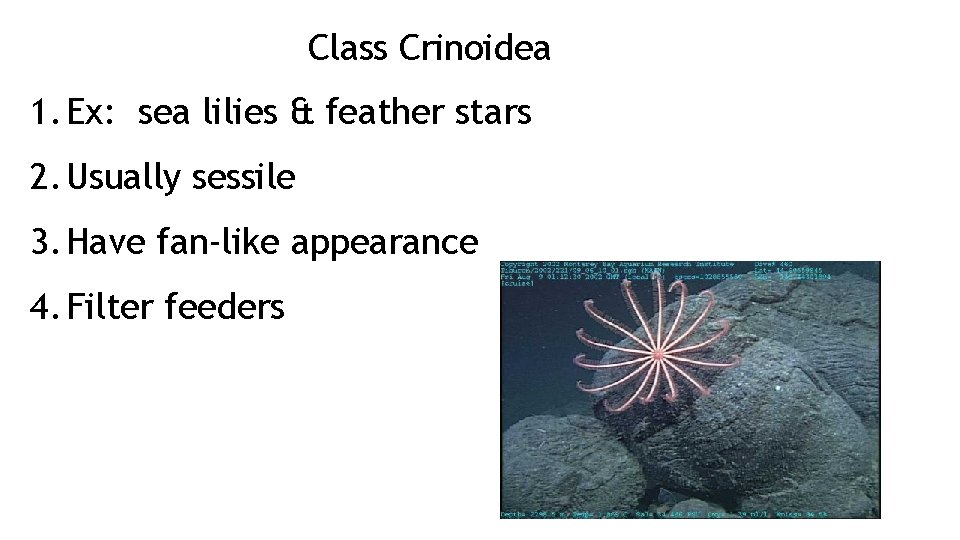
c. Class Ophiuroidea – brittle stars d. Class Holothuroidea – sea cucumbers e. Class Crinoidea – sea lilies and feather stars
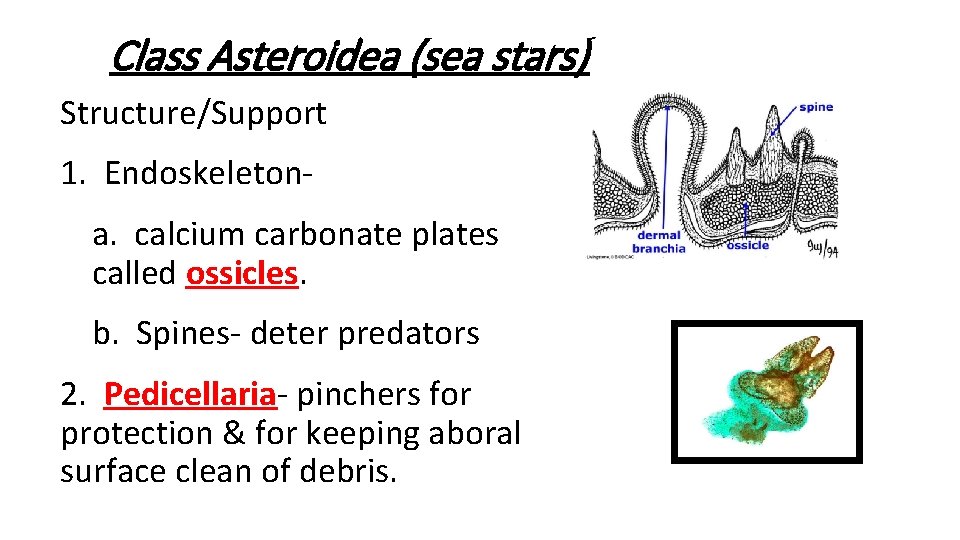
Class Asteroidea (sea stars) A. Structure/Support 1. Endoskeletona. calcium carbonate plates called ossicles. b. Spines- deter predators 2. Pedicellaria- pinchers for protection & for keeping aboral surface clean of debris.
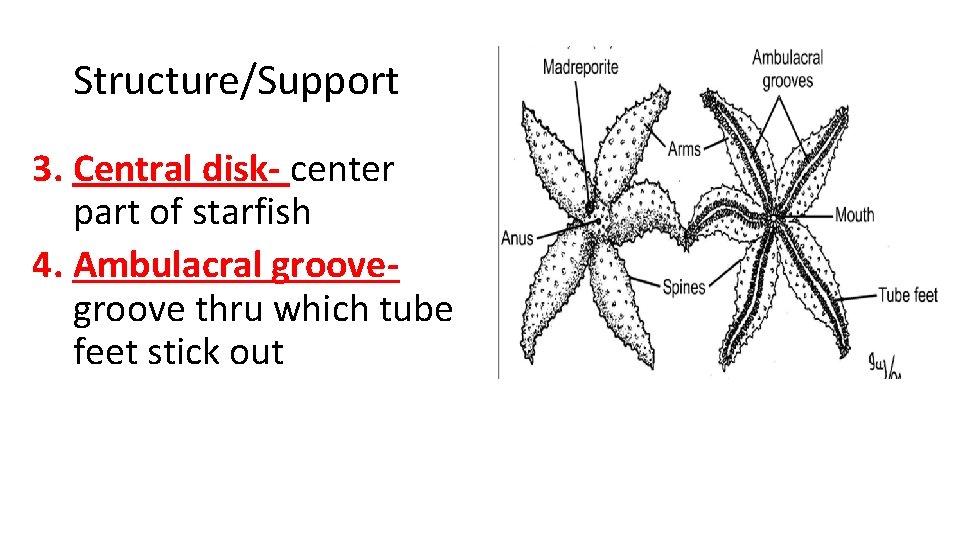
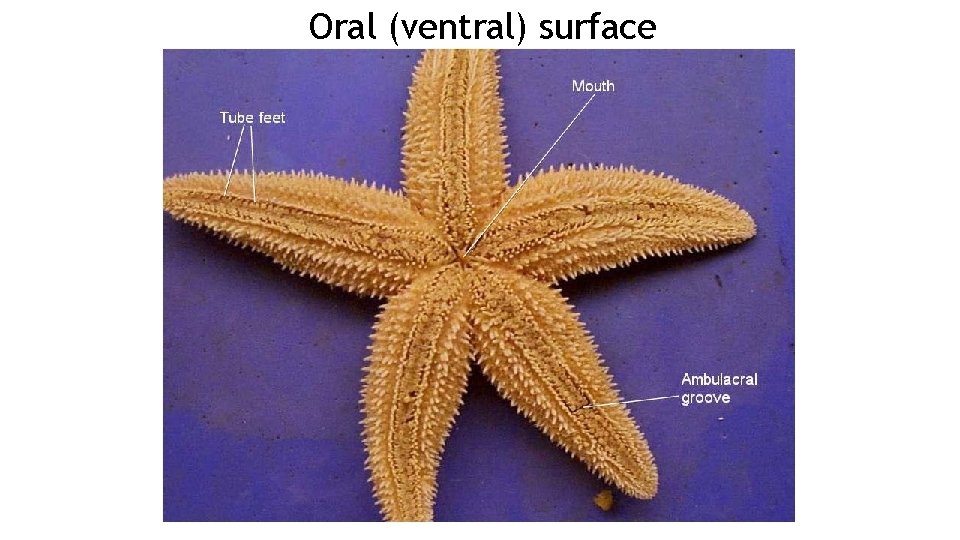
Structure/Support 3. Central disk- center part of starfish 4. Ambulacral groove thru which tube feet stick out
Oral (ventral) surface
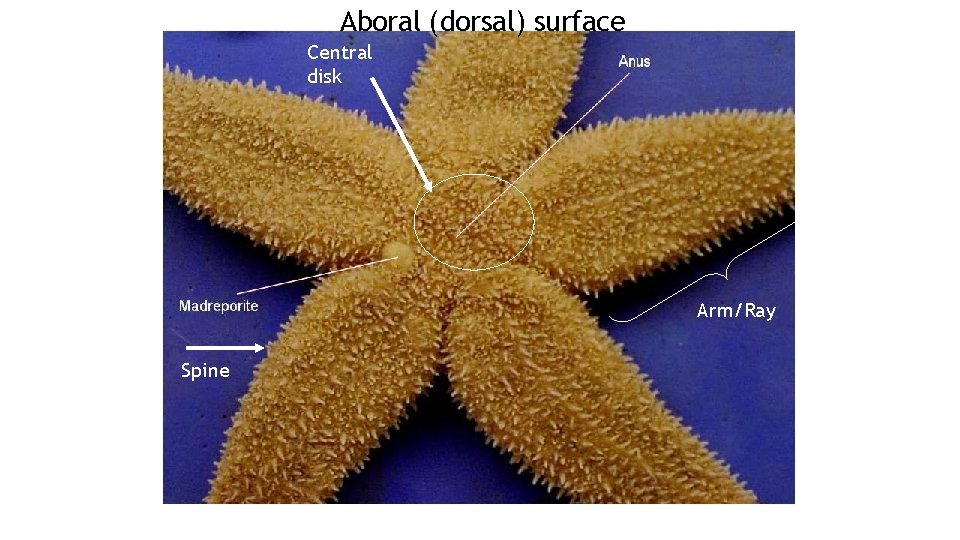
Aboral (dorsal) surface Central disk Arm/Ray Spine
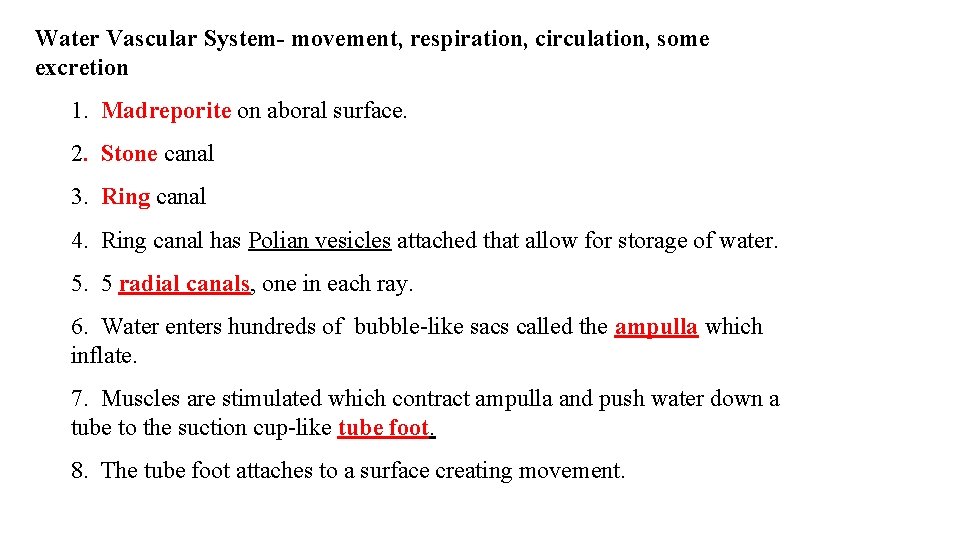
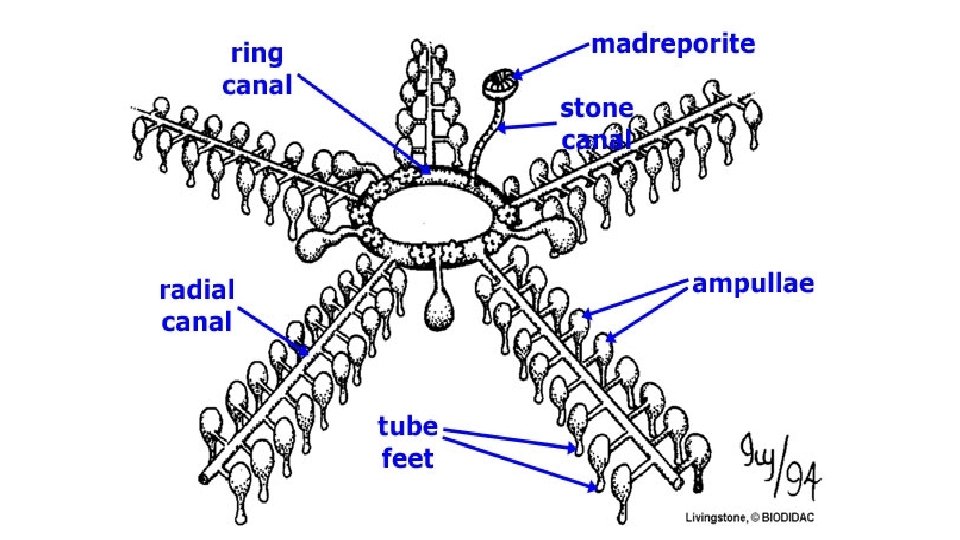
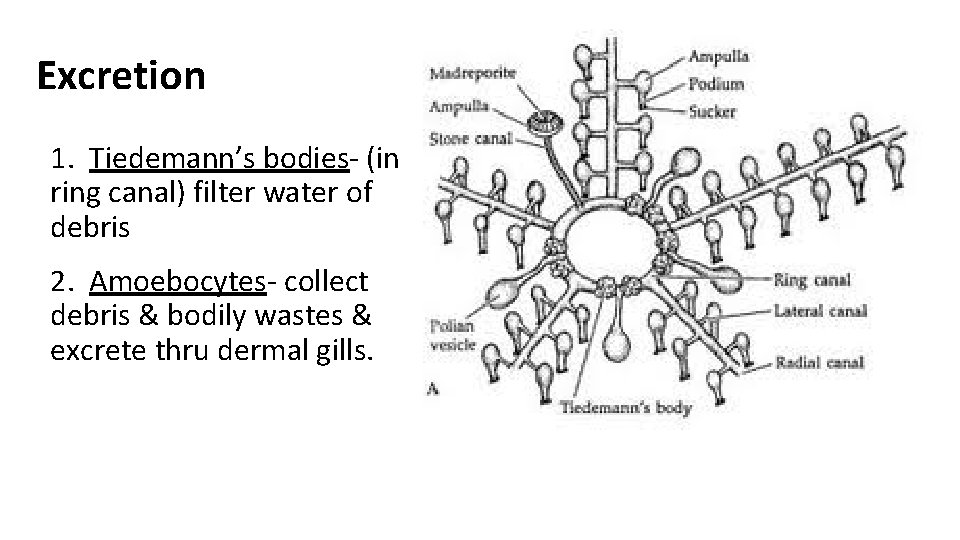
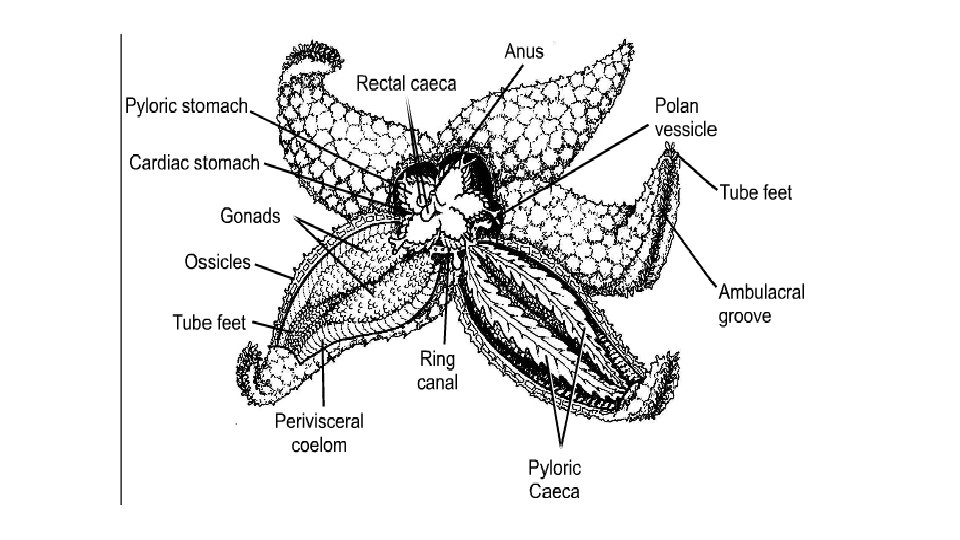
Water Vascular System- movement, respiration, circulation, some excretion 1. Madreporite on aboral surface. 2. Stone canal 3. Ring canal 4. Ring canal has Polian vesicles attached that allow for storage of water. 5. 5 radial canals, one in each ray. 6. Water enters hundreds of bubble-like sacs called the ampulla which inflate. 7. Muscles are stimulated which contract ampulla and push water down a tube to the suction cup-like tube foot. 8. The tube foot attaches to a surface creating movement.
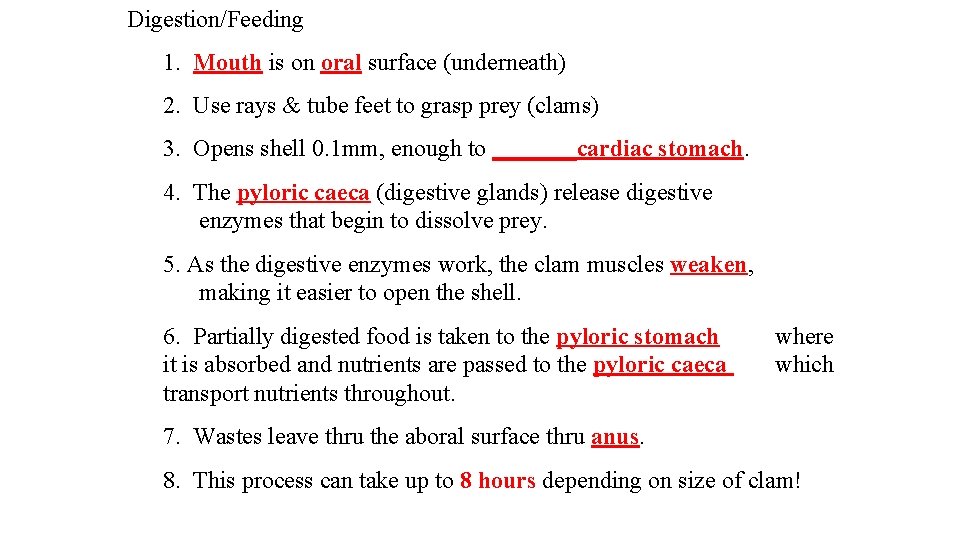
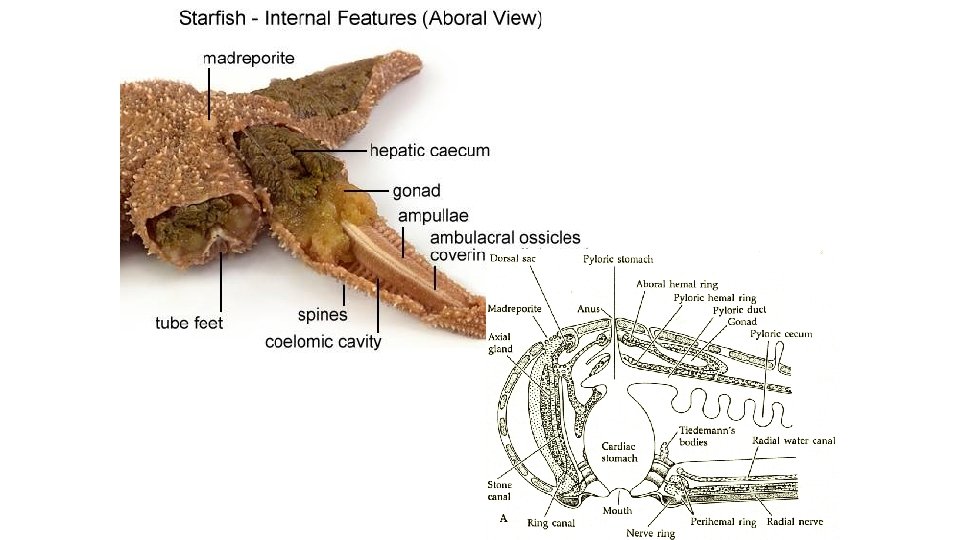
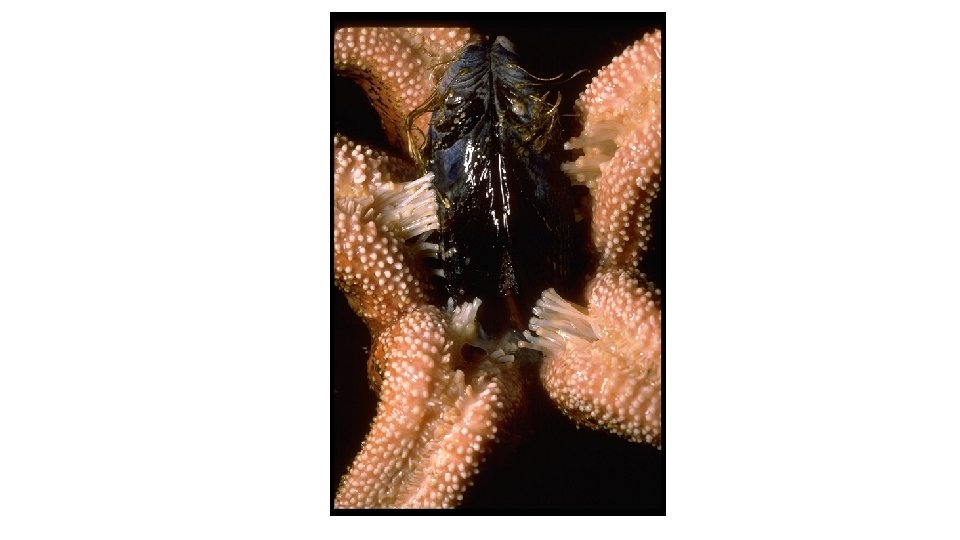
Digestion/Feeding 1. Mouth is on oral surface (underneath) 2. Use rays & tube feet to grasp prey (clams) 3. Opens shell 0. 1 mm, enough to _______cardiac stomach. 4. The pyloric caeca (digestive glands) release digestive enzymes that begin to dissolve prey. 5. As the digestive enzymes work, the clam muscles weaken, making it easier to open the shell. 6. Partially digested food is taken to the pyloric stomach it is absorbed and nutrients are passed to the pyloric caeca transport nutrients throughout. where which 7. Wastes leave thru the aboral surface thru anus. 8. This process can take up to 8 hours depending on size of clam!
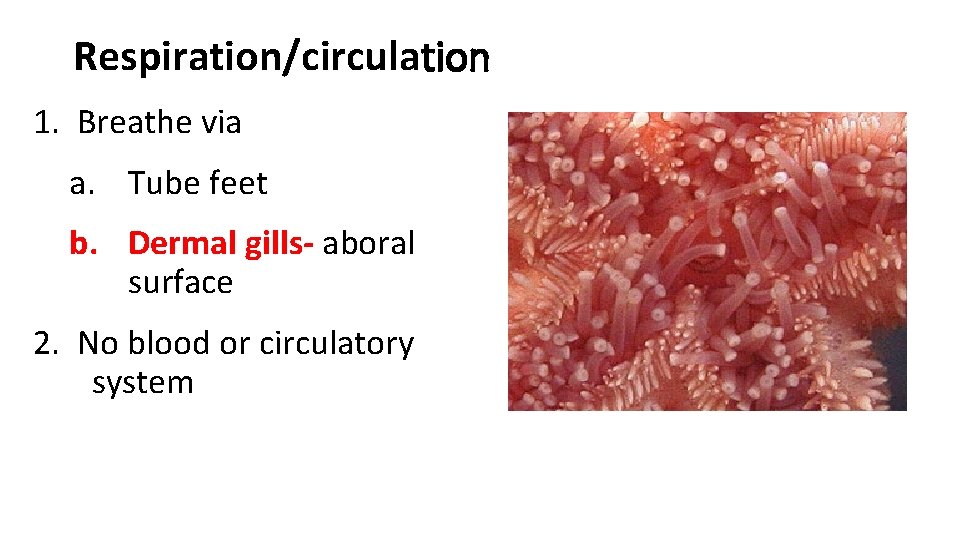
Respiration/circulation 1. Breathe via a. Tube feet b. Dermal gills- aboral surface 2. No blood or circulatory system
Excretion 1. Tiedemann’s bodies- (in ring canal) filter water of debris 2. Amoebocytes- collect debris & bodily wastes & excrete thru dermal gills.
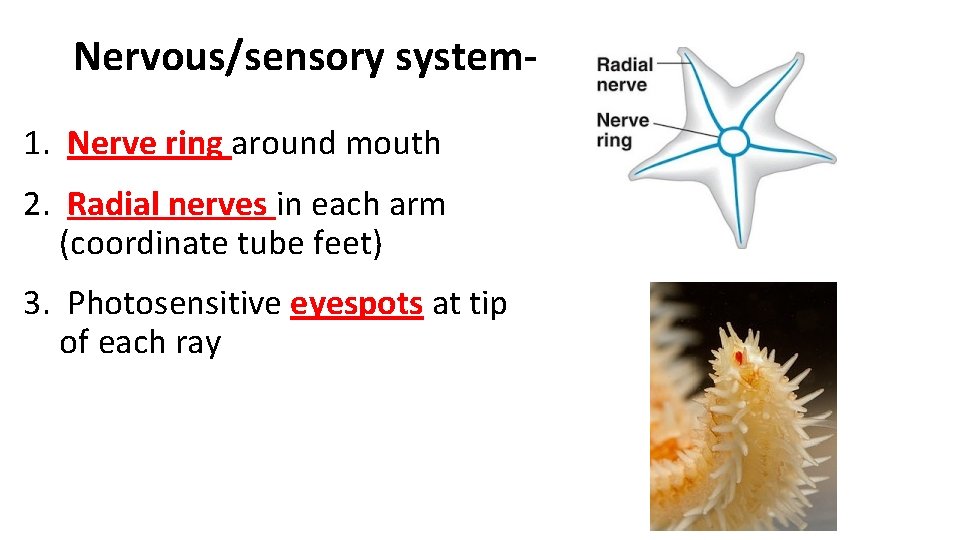
Nervous/sensory system 1. Nerve ring around mouth 2. Radial nerves in each arm (coordinate tube feet) 3. Photosensitive eyespots at tip of each ray
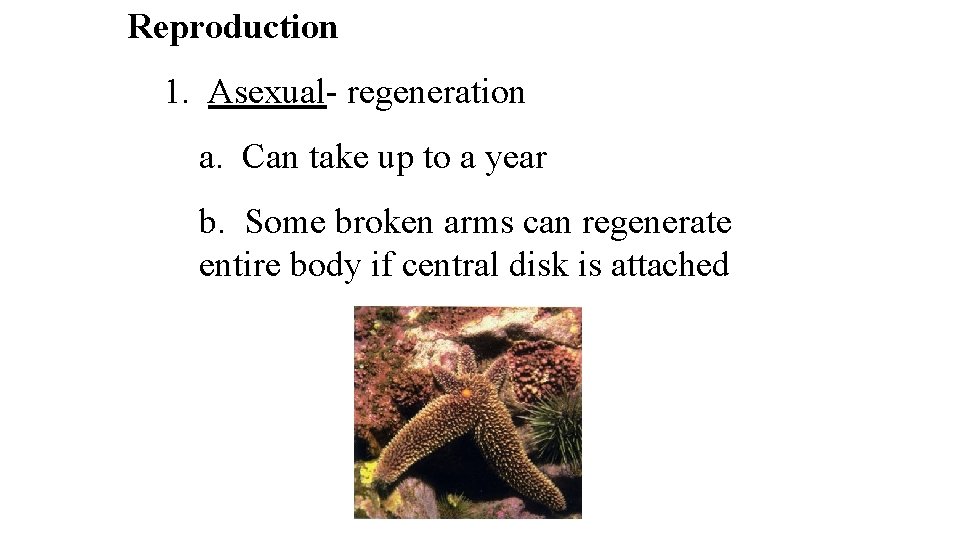
Reproduction 1. Asexual- regeneration a. Can take up to a year b. Some broken arms can regenerate entire body if central disk is attached
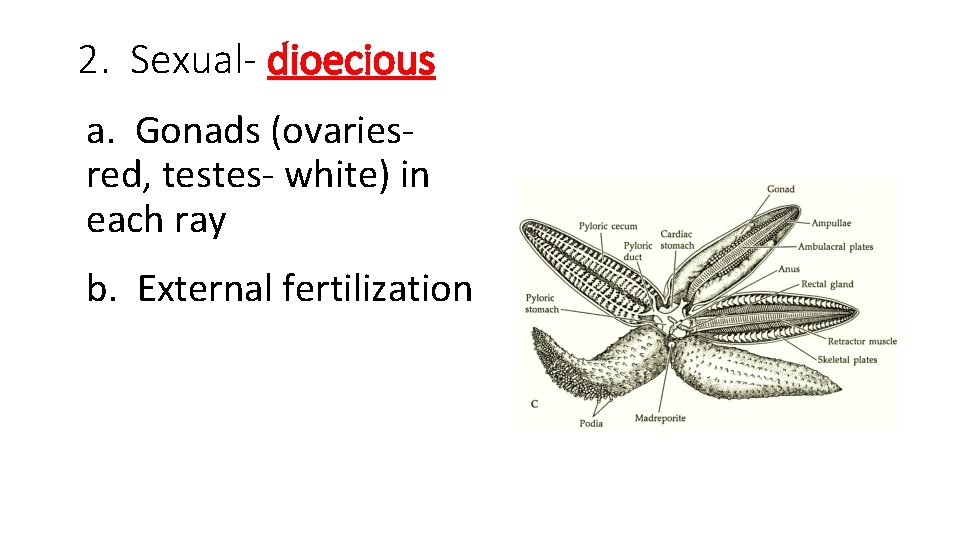
2. Sexual- dioecious a. Gonads (ovariesred, testes- white) in each ray b. External fertilization
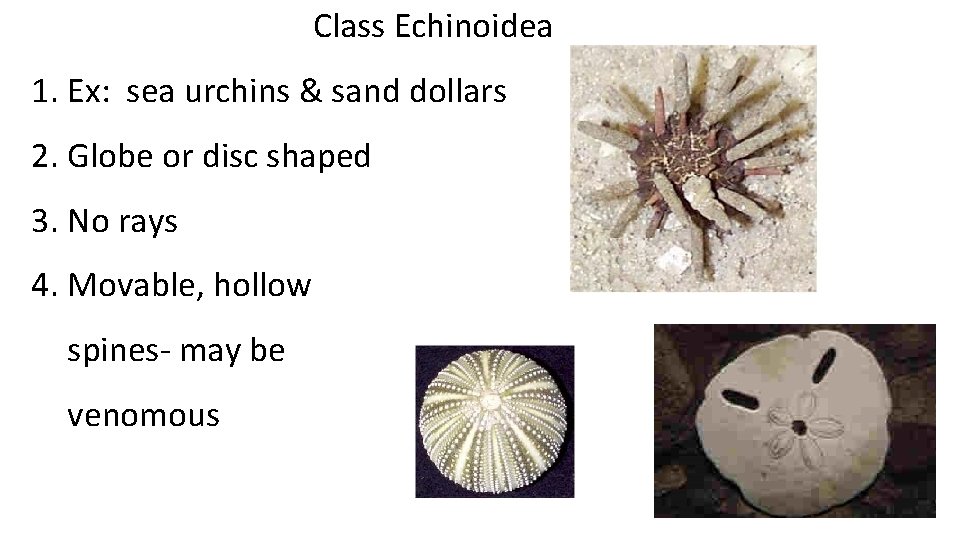
Class Echinoidea 1. Ex: sea urchins & sand dollars 2. Globe or disc shaped 3. No rays 4. Movable, hollow spines- may be venomous
Class Ophiuroidea 1. Ex: brittle stars 2. Long narrow arms 3. Habitat- rocks, coral 4. Predators & scavengers
Class Holothuroidea 1. Ex: sea cucumbers 2. No rays 3. Elongate body 4. “earthworms of the sea” - feed on detritus & turn over ocean soil
Class Crinoidea 1. Ex: sea lilies & feather stars 2. Usually sessile 3. Have fan-like appearance 4. Filter feeders
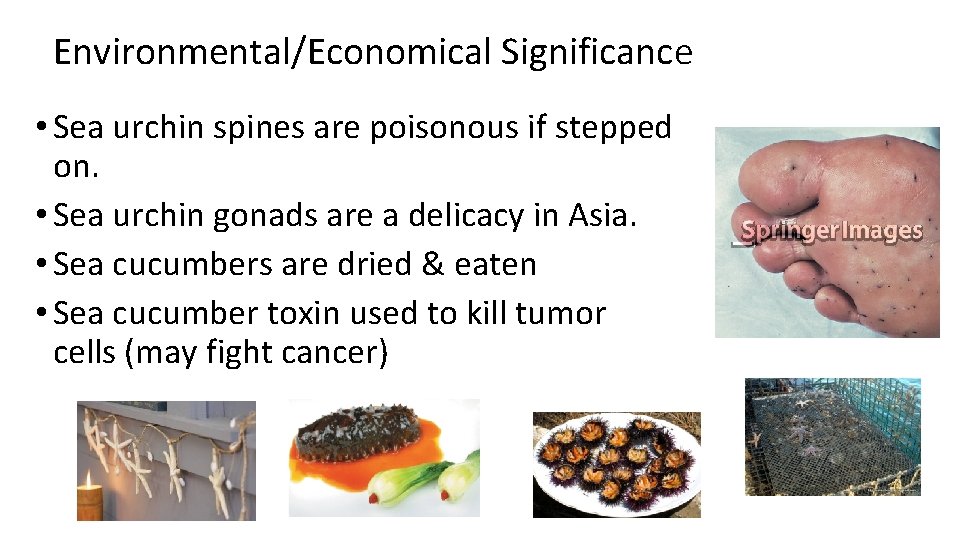
Environmental/Economical Significance • Sea urchin spines are poisonous if stepped on. • Sea urchin gonads are a delicacy in Asia. • Sea cucumbers are dried & eaten • Sea cucumber toxin used to kill tumor cells (may fight cancer)
Environmental/Economical Significance • Starfish are pests in oyster beds • Echinoderm carbonate skeletons can be ground up and used as lime to enrich soil • Source of food for many organisms in food web • Decorations