
Journal Think about your experiences with analysisliterary essays
Journal: • Think about your experiences with analysis/literary essays in the past. Describe this process. What sorts of things do you look for? How can you tell something is worth uncovering or analyzing in a text?
Stuff We Know to Pay Attention To in Analysis:
Formalism: The Science of Literature
What is Formalism? • Relies solely on the text for analysis (no author biography, no historical background) • Breaks down literary/poetic devices • How they’re used • Why they’re used • Examines how the author is creating emotion within the text • Why is it funny/sad/infuriating? • What language creates this feeling?
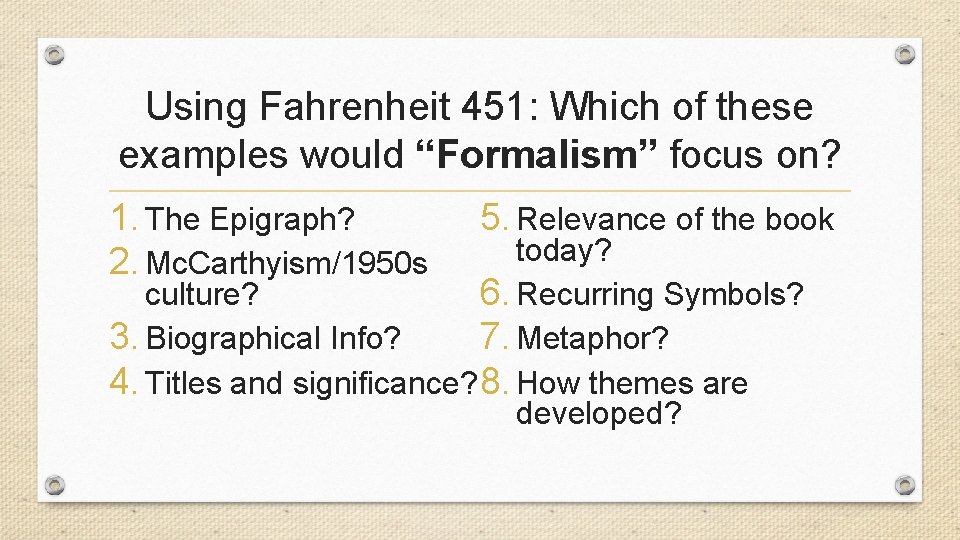
Using Fahrenheit 451: Which of these examples would “Formalism” focus on? 1. The Epigraph? 2. Mc. Carthyism/1950 s 5. Relevance of the book today? culture? 6. Recurring Symbols? 3. Biographical Info? 7. Metaphor? 4. Titles and significance? 8. How themes are developed?
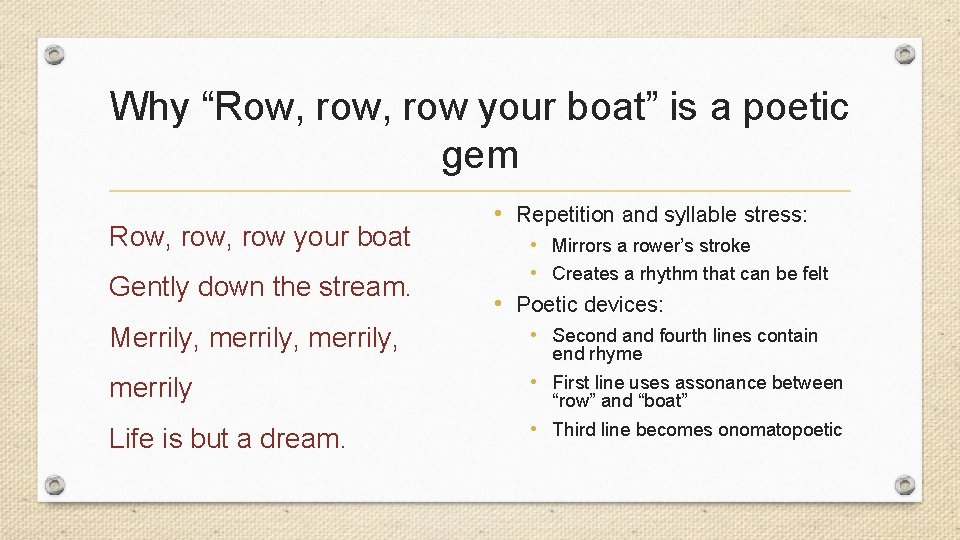
Why “Row, row your boat” is a poetic gem Row, row your boat Gently down the stream. Merrily, merrily, • Repetition and syllable stress: • Mirrors a rower’s stroke • Creates a rhythm that can be felt • Poetic devices: • Second and fourth lines contain end rhyme merrily • First line uses assonance between Life is but a dream. • Third line becomes onomatopoetic “row” and “boat”
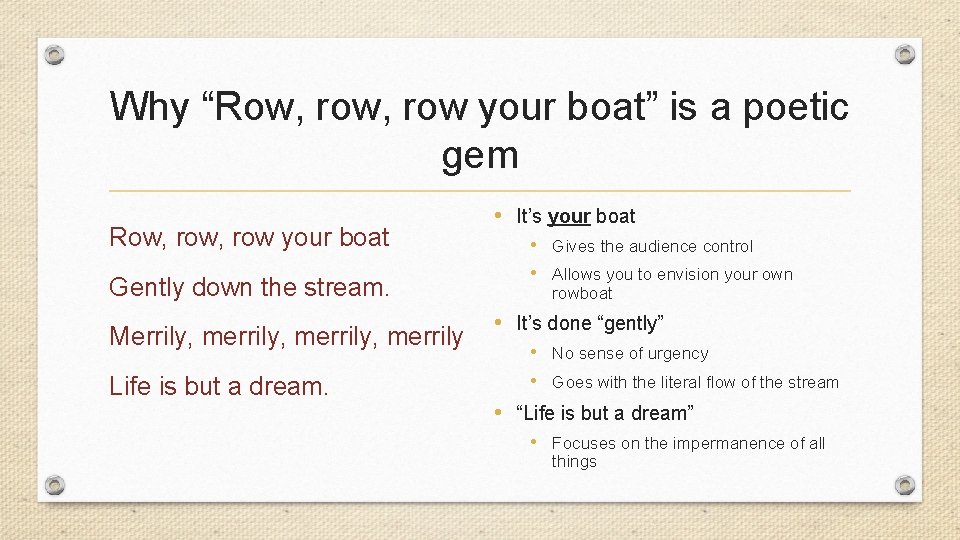
Why “Row, row your boat” is a poetic gem Row, row your boat Gently down the stream. Merrily, merrily, merrily Life is but a dream. • It’s your boat • Gives the audience control • Allows you to envision your own rowboat • It’s done “gently” • No sense of urgency • Goes with the literal flow of the stream • “Life is but a dream” • Focuses on the impermanence of all things
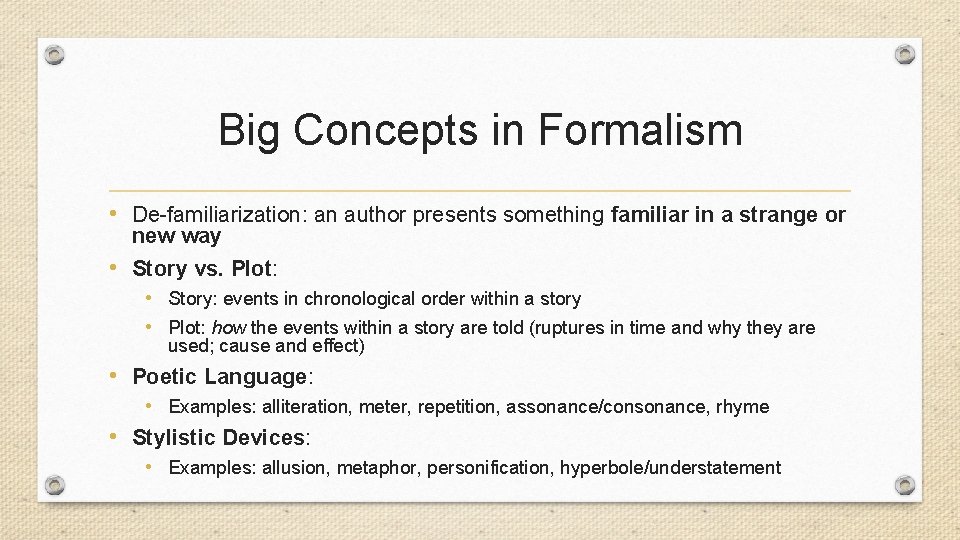
Big Concepts in Formalism • De-familiarization: an author presents something familiar in a strange or new way • Story vs. Plot: • Story: events in chronological order within a story • Plot: how the events within a story are told (ruptures in time and why they are used; cause and effect) • Poetic Language: • Examples: alliteration, meter, repetition, assonance/consonance, rhyme • Stylistic Devices: • Examples: allusion, metaphor, personification, hyperbole/understatement
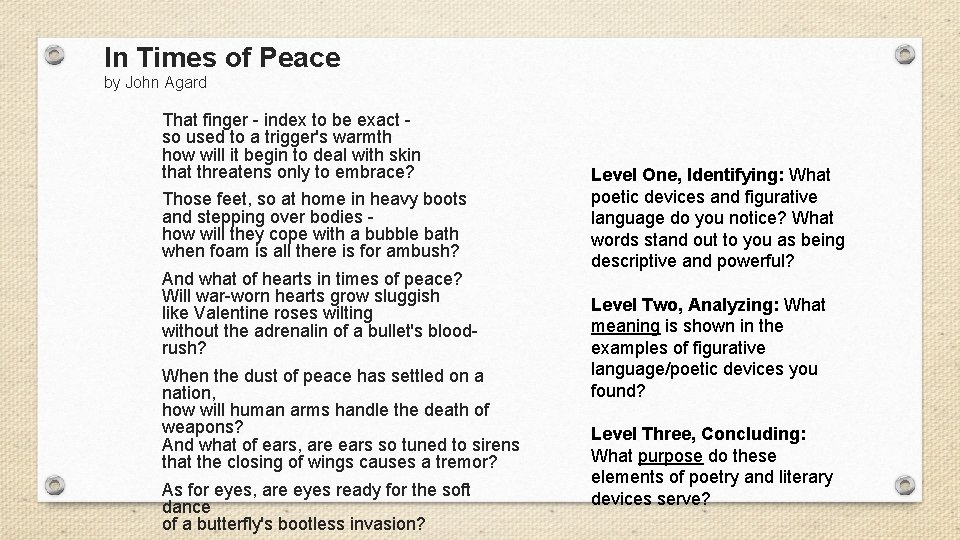
In Times of Peace by John Agard That finger - index to be exact so used to a trigger's warmth how will it begin to deal with skin that threatens only to embrace? Those feet, so at home in heavy boots and stepping over bodies how will they cope with a bubble bath when foam is all there is for ambush? And what of hearts in times of peace? Will war-worn hearts grow sluggish like Valentine roses wilting without the adrenalin of a bullet's bloodrush? When the dust of peace has settled on a nation, how will human arms handle the death of weapons? And what of ears, are ears so tuned to sirens that the closing of wings causes a tremor? As for eyes, are eyes ready for the soft dance of a butterfly's bootless invasion? Level One, Identifying: What poetic devices and figurative language do you notice? What words stand out to you as being descriptive and powerful? Level Two, Analyzing: What meaning is shown in the examples of figurative language/poetic devices you found? Level Three, Concluding: What purpose do these elements of poetry and literary devices serve?
Homework: Next Round of Dialectical Journals Chapters 8 -14 • Read Chapters 8 -9 at home • Use the “Formalism Asks” handout to guide your Double Entry Journal Entries • Try out at least 1 Dialectical Journal Entry and bring it to next class. This round of dialectical journals must incorporate formalism by answering questions from the list I handed out at the beginning of class. We will go over them at the beginning of next class.
- Slides: 10