
Journal Status Using the Page Rank Algorithm to

- Slides: 17
Journal Status* Using the Page. Rank Algorithm to Rank Journals * J. Bollen, M. Rodriguez, H. Van de Sompel Scientometrics, Volume 69, n 3, pp 669 -687, 2006
Motivation: Why Rank Journals? n We need methods to compare the impact of research done by scientists n Examples: • Hiring or promoting researchers • Assigning funding to different research groups n Publications are often the only direct output of academic research n Rank of a journal can be used as a measure of the quality of the research published in it
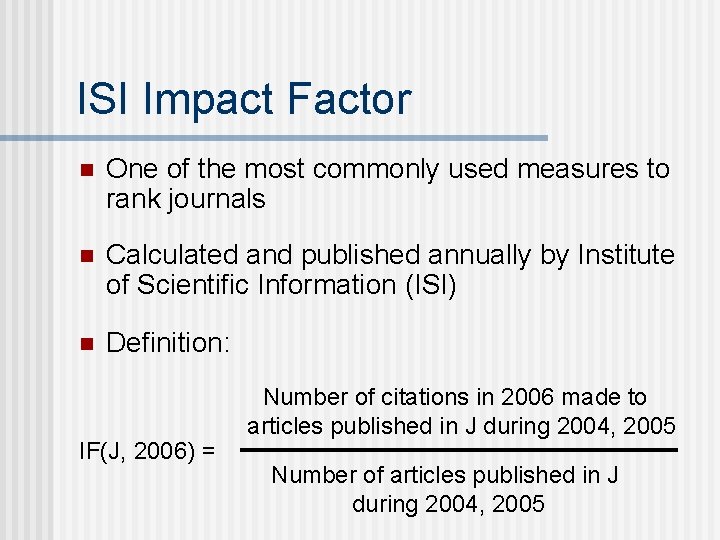
ISI Impact Factor n One of the most commonly used measures to rank journals n Calculated and published annually by Institute of Scientific Information (ISI) n Definition: IF(J, 2006) = Number of citations in 2006 made to articles published in J during 2004, 2005 Number of articles published in J during 2004, 2005
Assumptions and Limitations of Impact Factor n Citations count as a measure of quality of research n Ignores the context of citations n Arbitrary time limit n High variance within different research areas n Popularity vs. Prestige
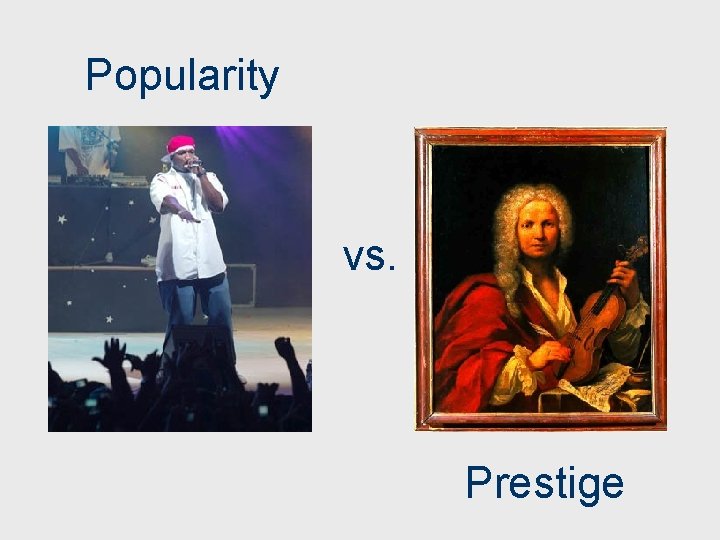
Popularity vs. Prestige
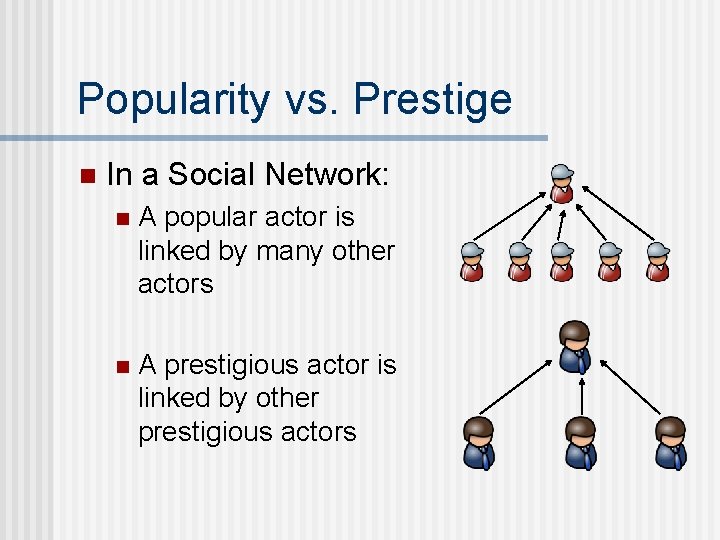
Popularity vs. Prestige n In a Social Network: n A popular actor is linked by many other actors n A prestigious actor is linked by other prestigious actors
Popularity vs. Prestige
Popularity vs. Prestige n Impact Factor counts the number of citations, regardless of the prestige of the citing articles, and therefore is a measure of Popularity of journals n We want a measure of Prestige for journals
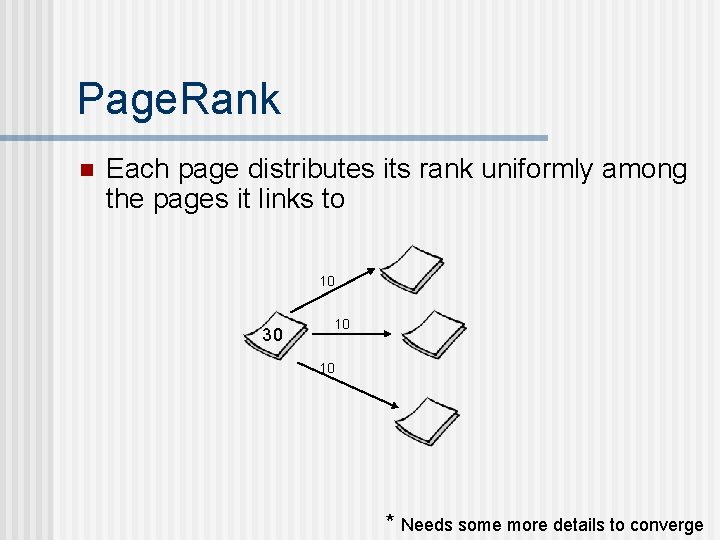
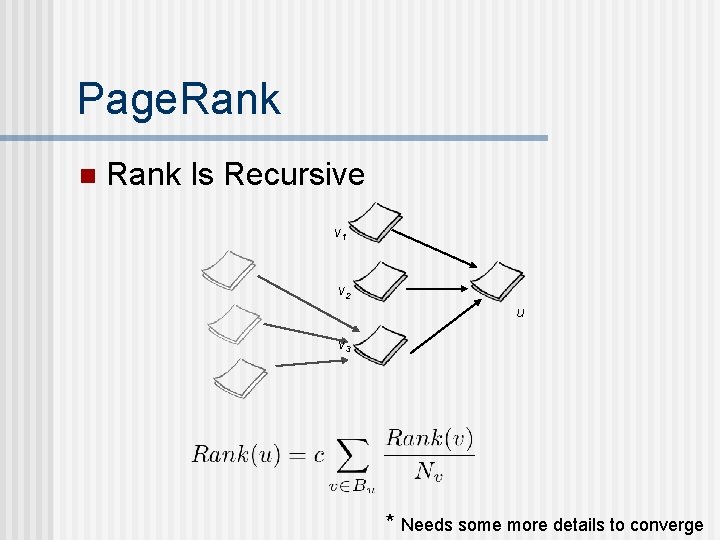
Page. Rank n Page. Rank* calculates a measure of importance for web pages based on the link structure of the web n The importance of a page is not only based on the number of other pages that link to it, but also their importance * Page, Lawrence; Brin, Sergey; Motwani, Rajeev; Winograd, Terry. The Page. Rank Citation Ranking: Bringing Order to the Web. Stanford Digital �Library Technologies Project
Page. Rank n Each page distributes its rank uniformly among the pages it links to 10 30 10 10 * Needs some more details to converge
Page. Rank n Rank Is Recursive v 1 v 2 u v 3 * Needs some more details to converge
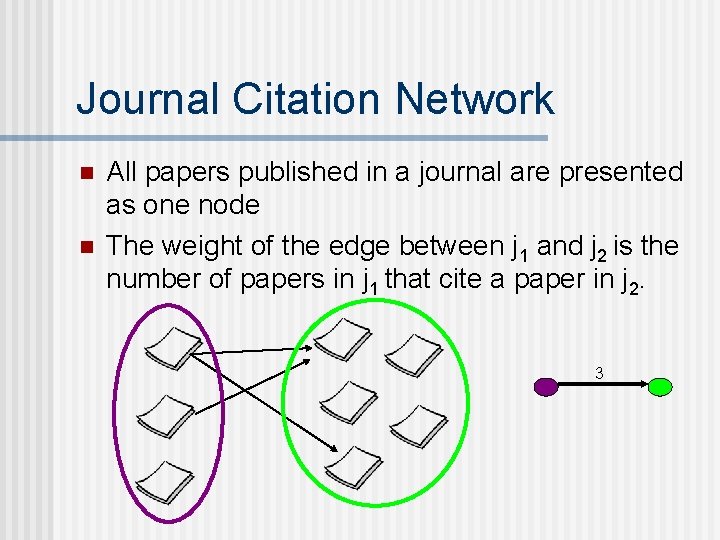
Journal Citation Network n n All papers published in a journal are presented as one node The weight of the edge between j 1 and j 2 is the number of papers in j 1 that cite a paper in j 2. 3
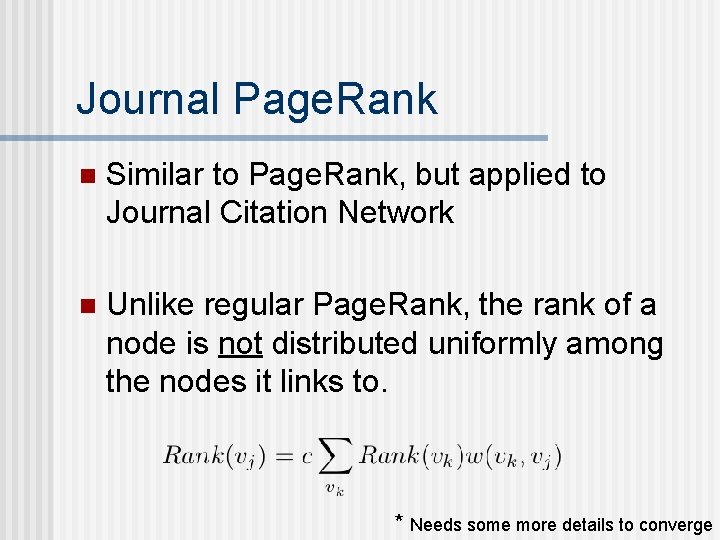
Journal Page. Rank n Similar to Page. Rank, but applied to Journal Citation Network n Unlike regular Page. Rank, the rank of a node is not distributed uniformly among the nodes it links to. * Needs some more details to converge
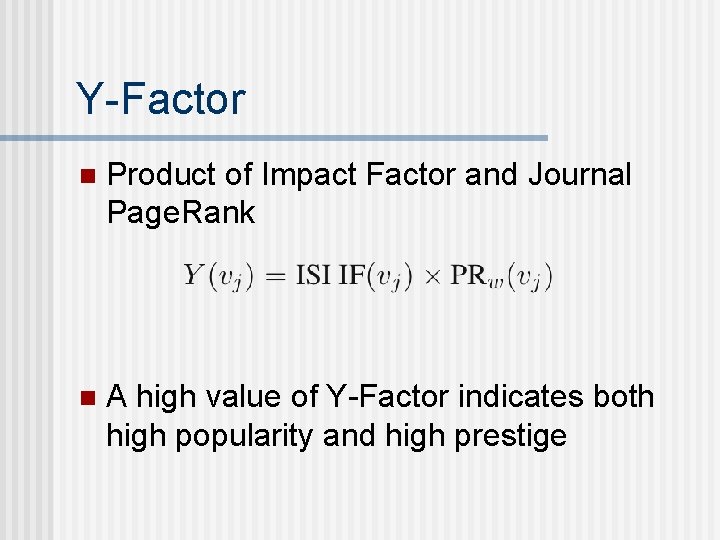
Y-Factor n Product of Impact Factor and Journal Page. Rank n A high value of Y-Factor indicates both high popularity and high prestige
Experimental Results n Created the journal citation network on the journal citations in 2003 to publications in 2001 and 2002. n Ranked journals in different fields, according to their Impact Factor and Journal Page. Rank
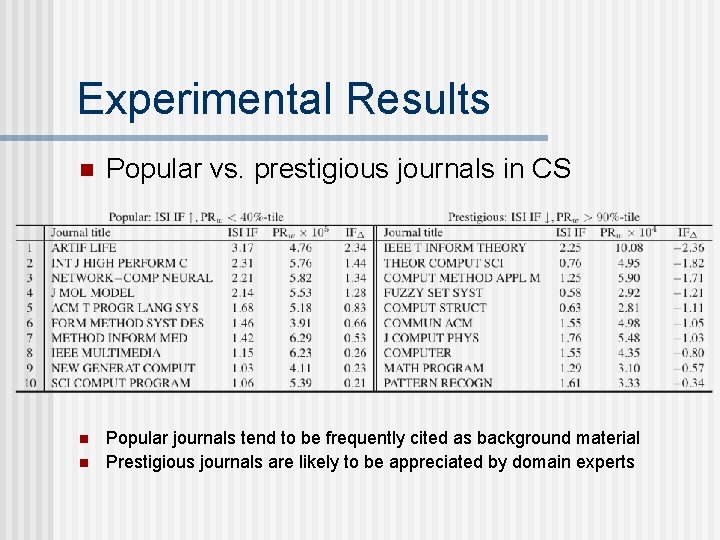
Experimental Results n Popular vs. prestigious journals in CS n Popular journals tend to be frequently cited as background material Prestigious journals are likely to be appreciated by domain experts n
Conclusion n Impact factor treats all citations as equal It is a measure of Popularity of journals n Journal Page. Rank takes into account the importance of citing source It is a measure of Prestige of journals n Is it a better measure ?